
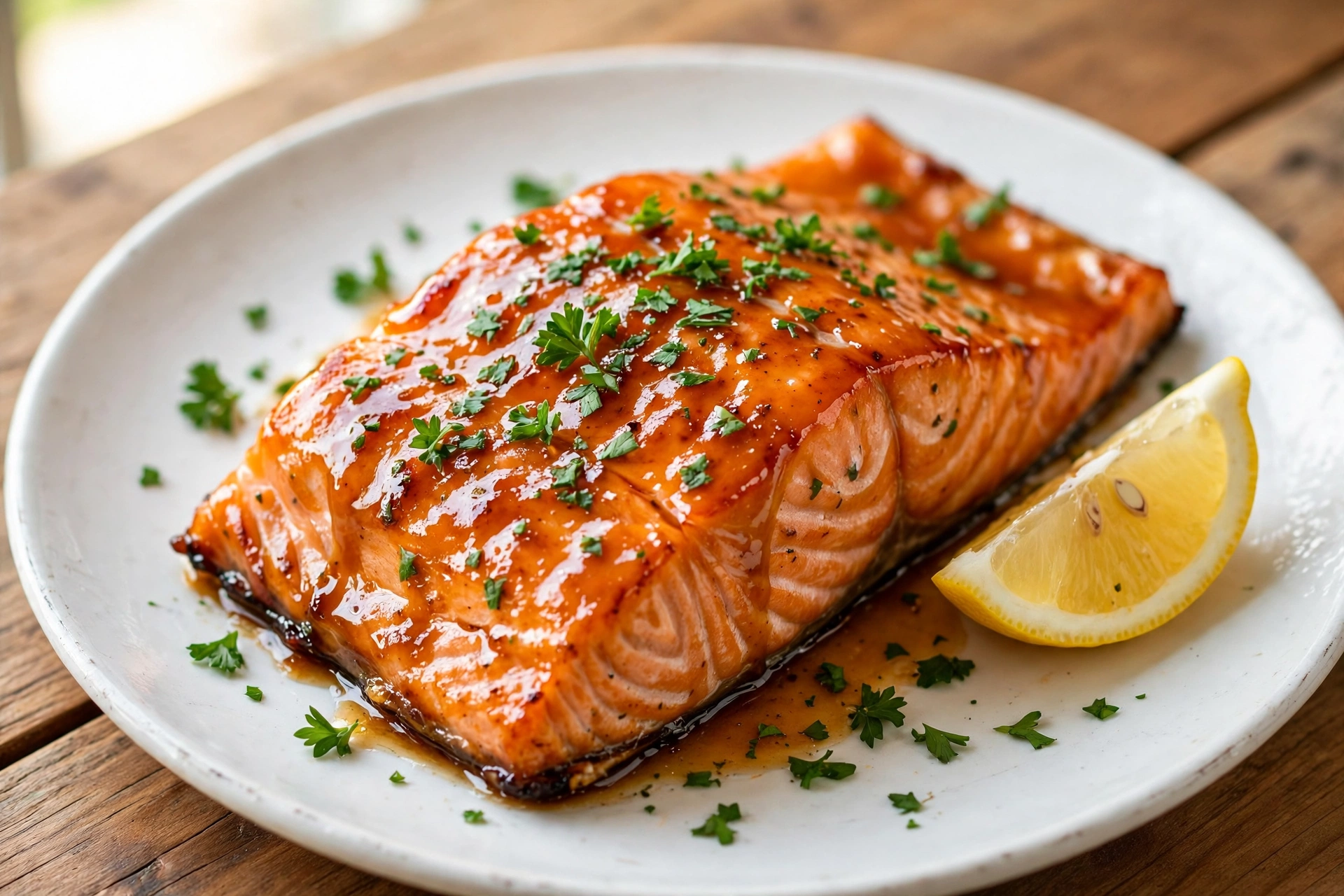
Some dinners just feel like a warm hug after a long day, and this maple glazed salmon is exactly that kind of dinner. In just 25 minutes, plain salmon fillets turn into something glossy, golden and sticky-sweet, with a savory edge that keeps everyone coming back for one more bite. The glaze is simple — pure maple syrup, soy sauce, Dijon mustard and garlic — but together they make a sauce that coats the back of a spoon and caramelizes into the most beautiful amber shine. If you have ever thought salmon was too fancy for a weeknight, this easy 25-minute dinner will change your mind.
Recipe at a Glance
Prep Time: 10 minutes | Cook Time: 15 minutes | Total Time: 25 minutes | Servings: 4
Why You Will Love It
First, it is fast — genuinely fast, not “fast if you are a professional chef” fast. The whole thing comes together in one pan, so there is barely any washing up. Second, the flavor balance is spot on: the maple syrup brings a deep, caramel sweetness, the soy sauce adds salt and umami, the Dijon gives a gentle tang, and the garlic ties it all together. Third, it looks impressive. A glossy, golden fillet with a lemon wedge on the side looks like something from a nice restaurant, yet it costs a fraction of eating out. It is also wonderfully flexible — serve it with rice, roasted vegetables or a simple salad, and it fits right in. Fans of sweet-savory fish will also love our honey garlic salmon, which uses the same sticky-glaze idea with honey instead of maple.

Ingredients
- 4 salmon fillets, about 6 oz each (about 1.5 lb total), skin on or off
- 1/3 cup pure maple syrup
- 2 tablespoons soy sauce
- 1 tablespoon Dijon mustard
- 2 garlic cloves, minced
- 1 tablespoon olive oil
- 1/2 teaspoon salt
- 1/4 teaspoon black pepper
- 1 tablespoon lemon juice, freshly squeezed
- Fresh parsley, chopped, for garnish
- Lemon wedges, for serving
Directions
The 2-minute rest in the final step is included in the 15-minute cook time.
- Pat the salmon dry and season. Pat the fillets dry with paper towels so the skin crisps instead of steaming. Season both sides with salt and black pepper.
- Whisk the glaze. In a small bowl, whisk together the maple syrup, soy sauce, Dijon mustard, minced garlic and lemon juice until smooth. Set aside.
- Heat the pan. Heat the olive oil in a large skillet over medium-high heat for about 1 minute, until it shimmers.
- Sear skin-side down. Place the fillets skin-side down (or presentation-side down if skinless) and cook without moving them for 5 minutes, until the skin is crisp and golden and the flesh has turned opaque about halfway up the sides.
- Flip and cook through. Flip the fillets carefully and cook for 3 minutes more, until the salmon is nearly cooked through.
- Add the glaze. Pour the maple glaze into the pan and spoon it over the fillets as it bubbles and thickens, about 4 minutes. The glaze should coat the back of a spoon and cling to the fish in a glossy amber layer.
- Rest and serve. Remove the pan from the heat and rest the salmon for 2 minutes so the juices settle and the glaze sets. Garnish with chopped parsley and serve with lemon wedges.

Why This Method Works
Three small decisions make all the difference here. First, searing skin-side down in a hot pan gives you that crisp, golden skin that holds the fillet together and adds real texture — moving the fish too early tears the skin and lets the juices escape, so patience pays off. Second, the glaze goes in late, not early. Maple syrup is mostly sugar, and sugar burns fast over high heat; adding it in the last few minutes lets it thicken into a glossy coat instead of turning bitter and dark. Third, the short rest matters more than it looks: the fish finishes cooking gently in its own heat, the glaze firms up so it clings instead of sliding off, and the flesh stays moist. Salmon is a delicate fish, and this gentle finish is what keeps it tender rather than dry. The same late-glaze trick is why the sauce on our creamy garlic butter shrimp pasta stays silky instead of splitting — heat control is everything with quick sauces.
Pro Tips
- Use pure maple syrup, not pancake syrup. Pancake syrup is mostly corn syrup and will not caramelize the same way; real maple syrup gives the glaze its deep, woodsy sweetness.
- Bring the salmon out of the fridge 10 minutes before cooking so it cooks evenly. Ice-cold centers overcook on the outside before the middle catches up.
- Do not crowd the pan. If your skillet is small, cook in two batches — crowded fish steams instead of searing.
- Watch the glaze in the last minute. It goes from glossy to burnt quickly, so keep spooning it over the fish and pull the pan off the heat as soon as it thickens.
- An instant-read thermometer takes the guesswork out: the thickest part of the fillet should read 145°F (63°C), and the flesh should flake easily with a fork.
Common Mistakes
- Adding the glaze too early. Maple sugars burn over high heat. Always sear first, glaze last.
- Skipping the pat-dry step. Wet fish steams and never crisps, and the glaze slides right off a damp surface.
- Overcooking. Salmon keeps cooking off the heat. Pull it when it is just opaque and flakes easily — dry, chalky salmon is almost always overcooked salmon.
- Using high heat for the whole cook. Medium-high for the sear, then medium once the glaze goes in, keeps the sauce glossy instead of scorched.
Substitutions
- No Dijon? Wholegrain mustard works, or a teaspoon of yellow mustard plus a pinch of extra lemon juice.
- No soy sauce? Tamari or coconut aminos swap in one-for-one.
- No maple syrup? Honey is the closest swap and makes a lovely honey glaze, though the flavor will be floral rather than woodsy.
- Different fish? Arctic char or steelhead trout fillets cook the same way; adjust the time slightly for thinner fillets.
- Want it spicy? A pinch of red pepper flakes in the glaze adds warmth without changing the method.
Storage & Make-Ahead
Leftovers keep in an airtight container in the fridge for up to 2 days. Reheat gently in a covered skillet over low heat with a splash of water until just warmed through — the microwave tends to dry salmon out. Do not leave cooked salmon at room temperature for more than 2 hours, and do not refreeze cooked salmon, as the texture turns mushy and the quality drops sharply. The glaze itself can be whisked ahead and kept in the fridge for up to 3 days; just warm it briefly before using. If you need a quick chicken dinner for another night, our easy garlic butter chicken bites are another one-pan, 25-minute win.

Frequently Asked Questions
Can I use skinless salmon fillets for this recipe?
Yes, skinless fillets work well. Sear them presentation-side down first, handle them gently when flipping so they do not break, and reduce the sear time by about 1 minute since there is no skin to crisp.
What temperature should salmon be cooked to?
Salmon should reach an internal temperature of 145°F (63°C) in the thickest part, following the USDA safe minimum for fish. The flesh should also flake easily with a fork and look opaque throughout.
Can I make maple glazed salmon ahead of time?
You can whisk the glaze up to 3 days ahead and keep it in the fridge, but cook the salmon fresh for the best texture. Cooked leftovers keep in the fridge for up to 2 days, and cooked salmon should not be refrozen.
What should I serve with maple glazed salmon?
Rice, roasted vegetables, and a simple green salad all pair beautifully with the sweet-savory glaze. Steamed broccoli, roasted carrots, or garlic butter green beans are easy sides that let the salmon shine.
Rate this recipe
Be the first to rate it!