
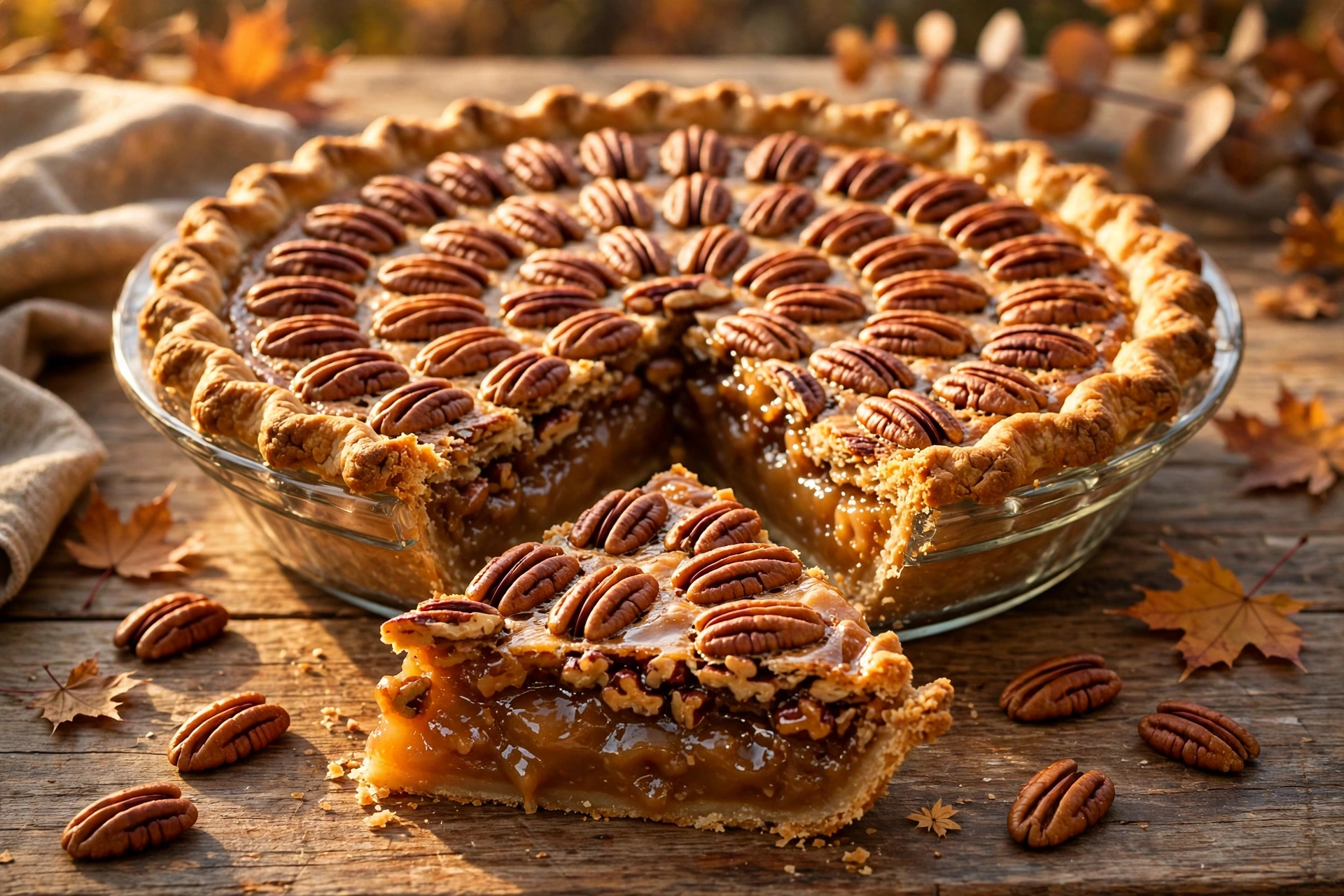
There is a moment, about forty minutes into baking, when the whole kitchen starts to smell like a Vermont sugar shack collided with a Southern bakery. Warm maple, toasting pecans, butter browning at the edges of a flaky crust. That smell is this pie. If pecan pie is already the undisputed heavyweight of the Thanksgiving dessert table, this maple version is the one that makes people put down their forks, close their eyes, and ask for the recipe before they have even finished their slice.
Here is the twist that makes it special: we skip the corn syrup entirely and build the filling on pure maple syrup instead. The result is a pie with real depth, less one-note sweetness, and a gorgeous amber filling that tastes like fall decided to show off. Dark, robust maple syrup brings caramel and woodsy notes that corn syrup simply cannot fake, and it pairs with toasted pecans the way they were always meant to be paired.
And before you picture a fussy, all-day project, relax. This is a one-bowl, no-blind-baking, twenty-minutes-of-actual-work kind of pie. You whisk the filling, pour it into a crust, and let the oven do the rest. The only hard part is the three-hour cooling wait while it sets, which is exactly enough time to eat Thanksgiving dinner.
Recipe at a Glance
Prep: 20 minutes | Bake: 55 to 65 minutes | Cooling: 3 hours | Total: about 4 hours 20 minutes | Yield: one 9-inch pie (8 servings)
Ingredients
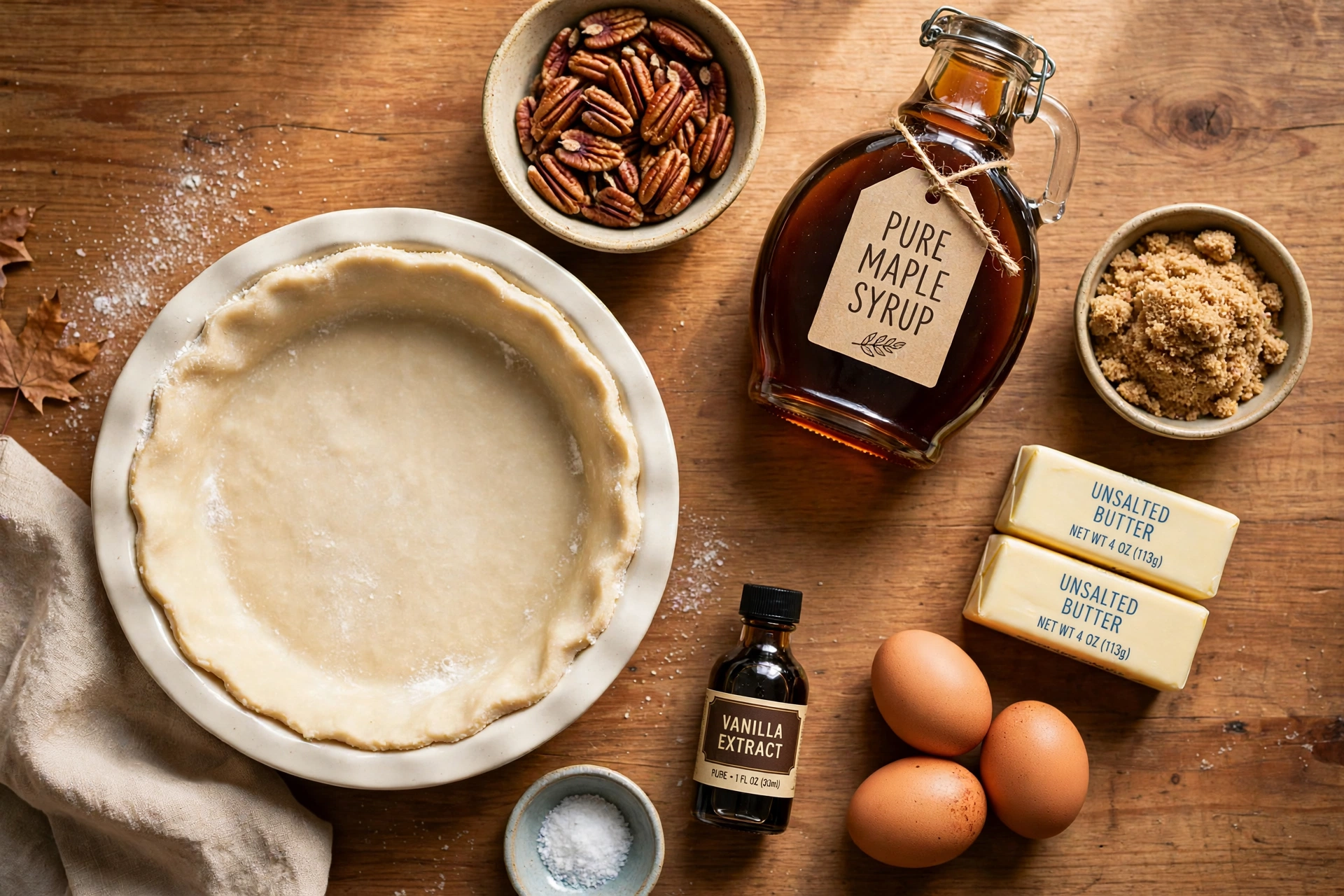
- 1 unbaked 9-inch pie crust, homemade or store-bought refrigerated (thawed if frozen)
- 1 cup pure maple syrup, preferably dark or robust grade
- 1/2 cup packed light brown sugar
- 5 tablespoons unsalted butter, melted and slightly cooled
- 3 large eggs, at room temperature
- 1 1/2 teaspoons pure vanilla extract
- 1/4 teaspoon fine salt
- 2 cups pecan halves (about 8 ounces), divided: 1 1/2 cups roughly chopped for the filling, 1/2 cup perfect halves reserved for the decorative top
Directions
- Heat the oven and prep the crust. Position a rack in the lower third of the oven and preheat to 350°F (175°C). Fit the pie crust into a 9-inch pie plate, crimp the edges the way you like them, and set the whole plate on a rimmed baking sheet. Slide it into the refrigerator to chill while you mix the filling. That cold rest is doing real work: cold butter in the crust hitting a hot oven is what creates flaky layers instead of a sad, shrunken shell.
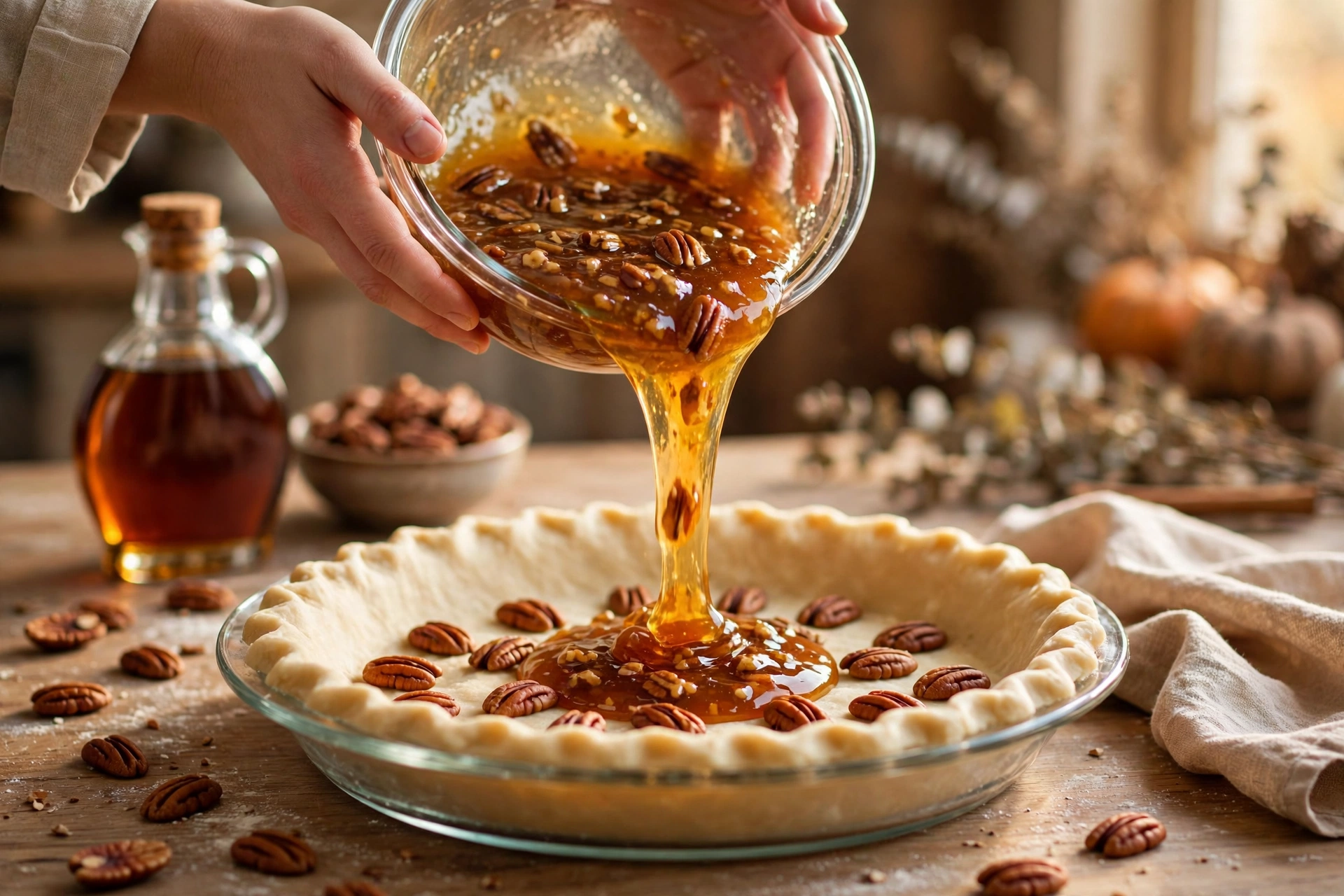
- Whisk the maple base. In a large mixing bowl, whisk together the maple syrup, brown sugar, and melted butter until completely smooth and glossy, about 30 seconds. No lumps of brown sugar should remain. This is your flavor foundation, so take the extra few seconds to get it silky.
- Add the eggs. Whisk in the eggs one at a time, beating well after each addition until the mixture looks uniform and slightly thickened. Room-temperature eggs matter here: cold eggs can make the melted butter seize into little flecks instead of blending into a smooth custard. Stir in the vanilla and salt.
- Fold in the chopped pecans. Add the 1 1/2 cups of roughly chopped pecans and fold them through the filling. Chopped nuts in the body of the pie mean every single bite has pecan crunch, while the pretty halves go on top where everyone can admire them.
- Fill and decorate. Pour the filling into the chilled pie crust. Now arrange the reserved 1/2 cup of pecan halves in neat concentric circles over the surface, starting at the outer edge and working inward. They will shift a little as the pie bakes, but they settle into a bakery-window pattern that looks incredibly impressive for about ninety seconds of effort.
- Bake until just set. Bake for 55 to 65 minutes. The pie is done when the edges are fully set and puffed, and the very center still has the faintest jiggle when you gently nudge the pan, like set gelatin rather than liquid. If you own an instant-read thermometer, the center should read about 200°F (93°C), which is well past the USDA’s 160°F safety mark for egg custards, so the filling is both food-safe and sliceable. If the pecans or crust edge start browning too deeply before the center sets, tent the pie loosely with aluminum foil for the remaining bake time.
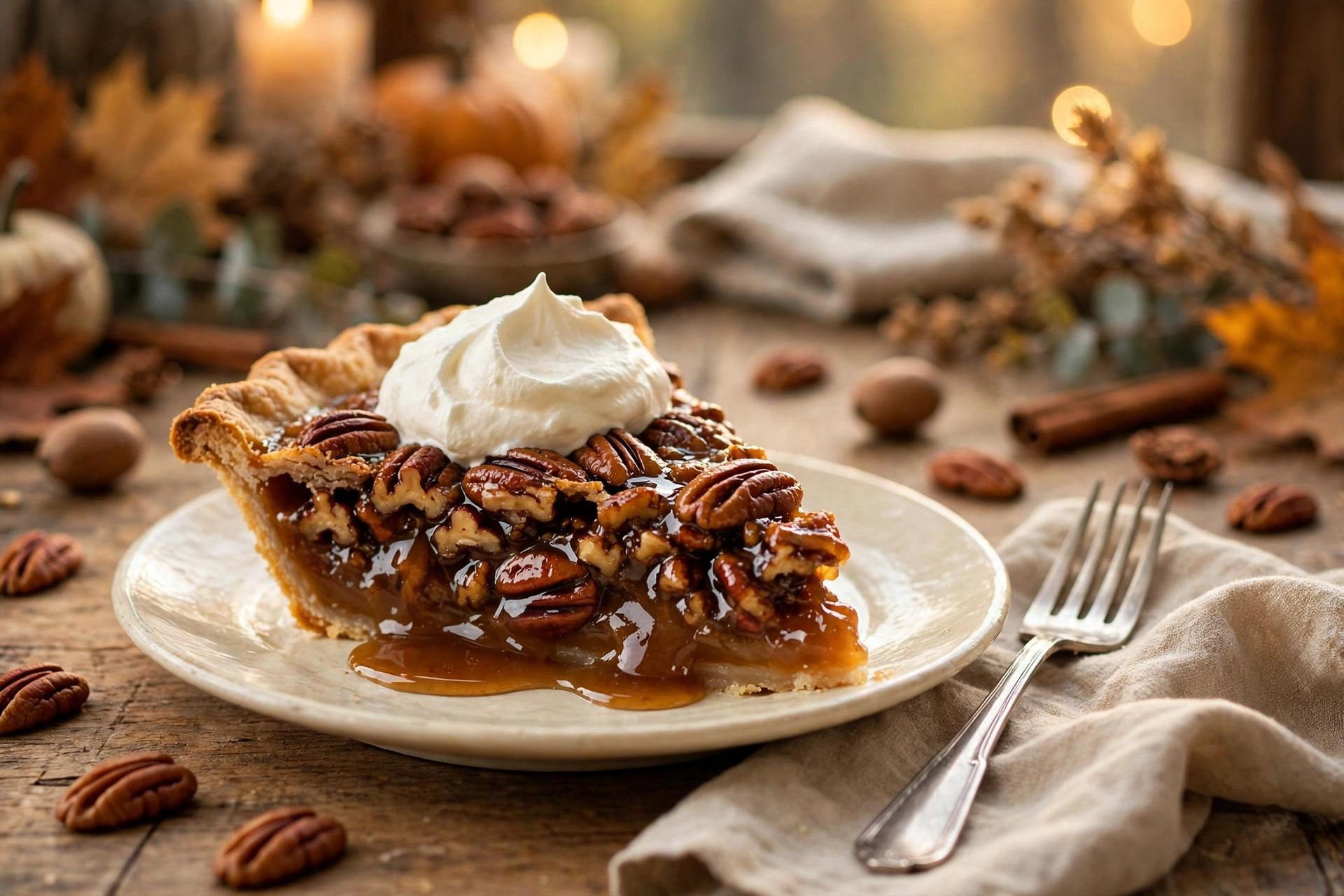
- Cool completely before slicing. Transfer the pie to a wire rack and cool for at least 3 hours. This wait is non-negotiable: the filling is a custard, and it finishes setting as it cools. Slice too early and you will have maple-pecan soup (delicious, but soup). Serve warm or at room temperature with softly whipped cream or vanilla ice cream.
Why This Works
Classic pecan pie leans on corn syrup because corn syrup is predictable: thick, stable, and nearly foolproof to set. Maple syrup is thinner and carries more water, which is exactly why this version tastes better and why the method matters a little more. The brown sugar adds back the dissolved solids that maple lacks, the three eggs contribute protein structure, and baking until the center hits 200°F drives off just enough moisture for the custard to slice cleanly. You are essentially building a maple custard that happens to be studded with pecans, and every one of those choices is load-bearing.
The chilled crust on a preheated baking sheet is the other quiet hero. Pecan pie filling is wet and heavy, which is a recipe for a pale, soggy bottom crust. Starting with a cold crust on a hot sheet gives the bottom a head start: the butter layers steam and set before the filling has a chance to soak in. Combined with the lower-third oven rack, which puts the pie’s base closest to the oven’s heat source, you get a bottom crust that is actually golden and crisp instead of gummy.
Finally, the pecan arrangement is not just vanity. Nuts toast faster than custard sets, which is why whole pecan pies so often emerge with scorched tops. Tenting with foil for the last stretch of baking shields the decorative halves while the center finishes, so you get deep golden nuts instead of bitter, blackened ones.
Pro Tips
- Use dark, robust maple syrup. The grading changed a few years back: “Dark” and “Very Dark” (sometimes labeled Robust) have the strongest maple flavor and stand up to baking. Golden or delicate grades will bake into near-invisibility.
- Toast the pecans first. Five minutes in the 350°F oven while it preheats deepens their flavor enormously. Cool them before chopping so they do not melt the butter in the filling.
- Do not skip the thermometer check. Ovens lie, and “golden brown” is a terrible doneness cue for a custard pie. The 200°F center reading is the difference between a clean slice and a puddle.
- A glass pie plate is your friend. You can peek at the bottom crust through the glass to confirm it is browning, which you cannot do with ceramic or disposable pans.
- Crimp tall. This is a generous filling for a 9-inch crust. A tall, sturdy crimp keeps everything contained and looks beautiful doing it.
Common Mistakes and How to Fix Them
Runny center: The pie was underbaked. The jiggle test is everything: the center should wobble like set gelatin, not slosh like liquid. Next time, trust the thermometer over the timer and give it the full 65 minutes if needed. If it is already baked and cooled runny, serve it in bowls over ice cream and call it deconstructed. No one will complain.
Burnt pecans on top: The nuts toasted faster than the filling set. Tent loosely with foil once the top reaches a deep golden brown, usually around the 35 to 40 minute mark, and leave it tented until the pie is done.
Soggy bottom crust: The filling soaked in before the crust set. Bake on the lower-third rack on a preheated baking sheet, and make sure the crust went into the oven cold. A metal or glass pan also browns the bottom far better than ceramic.
Cracked filling: The pie overbaked. Pull it when the center still has that faint jiggle; carryover heat finishes the job during cooling. A crack is purely cosmetic anyway. Whipped cream covers a multitude of sins.
Shrinking crust: The crust was not rested cold before baking. Always chill the fitted crust for at least 15 minutes, and do not stretch the dough to fit the plate or it will spring back in the heat.
Substitutions
- Walnuts for pecans: A 1:1 swap works, though you will lose the signature buttery pecan flavor. Toast them the same way.
- Honey for maple syrup: Possible in a pinch, but the pie becomes honey pecan pie, which is a different, milder dessert. Do not use pancake syrup: it is flavored corn syrup and will not set or taste the same.
- Store-bought crust: Completely fine and honestly smart on Thanksgiving week. Look for an all-butter refrigerated crust for the flakiest result.
- Gluten-free: Use your favorite gluten-free 9-inch pie crust; the filling itself is naturally gluten-free.
- A splash of bourbon: One tablespoon added with the vanilla gives the filling a warm, oaky depth that adults will notice and love. The alcohol bakes off.
- Dark brown sugar: Swap it 1:1 for light brown sugar for an even deeper molasses note.
Storage and Make-Ahead
Because the filling is an egg custard, treat this pie with a little food-safety respect: do not leave it at room temperature for more than 2 hours. Once cooled, cover it and refrigerate for up to 4 days. It slices beautifully straight from the fridge, or you can bring slices to room temperature for 30 minutes before serving.
For longer storage, this pie freezes wonderfully, which makes it a genuine make-ahead Thanksgiving hero. Cool it completely, wrap it tightly in two layers of plastic wrap followed by a layer of aluminum foil, and freeze for up to 3 months. Thaw overnight in the refrigerator. To revive that just-baked warmth, heat individual slices in a 300°F oven for about 10 minutes. The crust crisps back up and the filling turns lusciously gooey again.
Yes, you can absolutely bake this pie two days before Thanksgiving. Cool it fully, refrigerate it covered, and serve it at room temperature on the big day. One less thing to juggle while the turkey rests.
More Thanksgiving Desserts to Love
If this pie earns a permanent spot in your holiday rotation, you will want backup for the rest of the season. For the same maple-pecan flavor in grab-and-go form, our Easy Pecan Pie Bars deliver all the gooey goodness without a fork. Round out the dessert table with our 3-Ingredient Cranberry Sauce, which cuts through rich desserts beautifully, and when pie season winds down, browse our 6 Easy No-Bake Cream Pie Recipes for year-round inspiration.
A little background for the curious: pecan pie is a classic of Southern American baking with roots stretching back to the late 1800s, and pecans themselves bring heart-friendly monounsaturated fats and fiber to the party, which is a nice bonus in a dessert this indulgent.
Frequently Asked Questions
Can I make maple pecan pie ahead of time?
Yes, this is an excellent make-ahead Thanksgiving dessert. Bake the pie up to two days in advance, cool it completely for at least 3 hours, then cover and refrigerate. Serve it at room temperature or warm individual slices in a 300°F oven for 10 minutes. It also freezes beautifully for up to 3 months when double-wrapped.
Why is my pecan pie runny in the middle?
A runny center means the pie was underbaked. The center should reach about 200°F (93°C) on an instant-read thermometer and have only the faintest jiggle when you nudge the pan. Just as important, the pie must cool for a full 3 hours, because the custard filling finishes setting as it cools. Slicing warm is the most common cause of a soupy slice.
Can I use pancake syrup instead of pure maple syrup?
No, stick with pure maple syrup. Pancake syrup is flavored corn syrup, not maple at all, and it will change both the flavor and the way the filling sets. For the deepest maple flavor, choose a dark or robust grade of pure maple syrup rather than a golden or delicate one.
How do I keep the pecans from burning on top?
Tent the pie loosely with aluminum foil once the top reaches a deep golden brown, usually around the 35 to 40 minute mark of baking. The foil shields the nuts while the center finishes setting, so you get toasted, sweet pecans instead of bitter, scorched ones.
Rate this recipe
Be the first to rate it!