
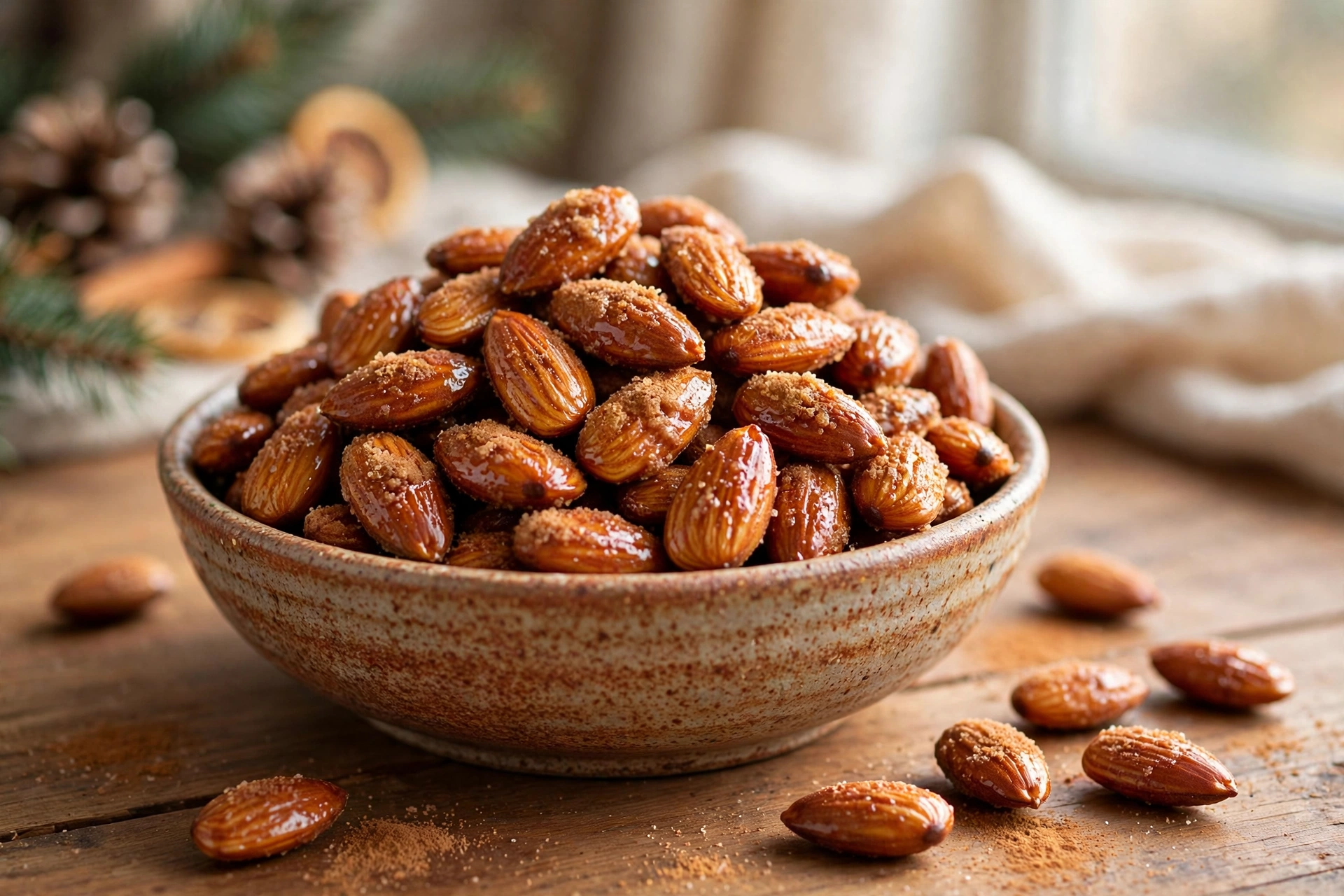
Warm cinnamon drifting off a pan of roasting almonds turns an ordinary kitchen into a holiday market. These easy cinnamon roasted almonds taste like the crunchy, sugary nuts from the fairground stall, except you made them at home with six simple ingredients, one bowl, and forty minutes.
The almonds roast low and slow until deeply toasted and crisp all the way through, and the egg-white coating bakes into a thin, crackly shell that holds the cinnamon sugar in place. One batch fills about three cups, which sounds like a lot until you watch it disappear. They are perfect for lunchboxes, for a bowl on the coffee table, and for little jars tied with twine as homemade holiday gifts. If you love make-ahead snacks, our Easy Kids School Snacks and Lunchbox Ideas has plenty more treats that pack just as well.
What makes this recipe such a keeper is how forgiving it is. There is no candy thermometer, no hot sugar syrup, and no fussy timing. You whisk one egg white until frothy, toss the almonds in it, shower them with cinnamon sugar, and let a low oven do the rest. Stir them every ten minutes so every almond roasts evenly, then let them cool on the pan and listen to them crisp up as they cool. That cooling time is part of the recipe, because the coating sets into its signature crunch as the almonds cool. Forty minutes from start to finish, and the hardest part is waiting for them to cool before you taste one.
Recipe at a Glance
Prep Time: 10 minutes | Cook Time: 30 minutes | Total Time: 40 minutes (plus 15 minutes cooling) | Servings: 12 (about 1/4 cup each) | Yield: About 3 cups | Category: Snacks | Method: Oven-roasted | Course: Snack
Ingredients
- 3 cups whole raw almonds (about 1 pound / 450 g, skins on)
- 1 large egg white
- 1 teaspoon pure vanilla extract
- 1/2 cup granulated sugar
- 1 tablespoon ground cinnamon
- 1/4 teaspoon fine sea salt
- To serve (optional): extra cinnamon sugar for dusting, small jars or cellophane bags for gifting
A quick note on the almonds themselves: buy whole raw almonds with their skins on, the plain kind sold in the baking aisle or the bulk bins, not roasted, salted, or flavored ones. Raw almonds roast evenly in the oven and turn a deep golden brown, while already-roasted almonds would overcook and taste bitter before the coating ever sets. The skins matter too, because they give the cinnamon sugar something to grip, so keep them on.
The egg white is the quiet hero of this recipe. It is not there for flavor. It is the glue that holds the cinnamon sugar to the almonds and bakes into a thin, crackly shell around each one. One large egg white is exactly right for three cups of almonds: enough to coat every nut in a thin, even film, but not so much that the almonds turn soggy. Whisk it until it is loose and frothy, with soft bubbles across the surface, before you add the almonds. Stiff peaks will clump instead of coating, and unwhisked egg white will pool at the bottom of the bowl. Frothy is the sweet spot. The almond itself brings the crunch and a gentle buttery richness that pairs beautifully with warm spice, and the cinnamon does the aromatic heavy lifting, so use fresh ground cinnamon that still smells strong.

Directions
- Heat the oven to 250°F (120°C) and line a large rimmed baking sheet with parchment paper. A rimmed sheet matters, because the almonds need to stay in one layer.
- Whisk the egg white and vanilla in a large bowl until loose and frothy, about 30 seconds, then add the almonds and toss well with a spatula until every almond is evenly coated in a thin, glossy film.
- Mix the sugar, cinnamon, and salt in a small bowl, then sprinkle the mixture over the almonds a little at a time, tossing between additions, until every almond is dusted. Tossing in stages keeps the coating even, so no almond ends up bare while another wears a thick clump.
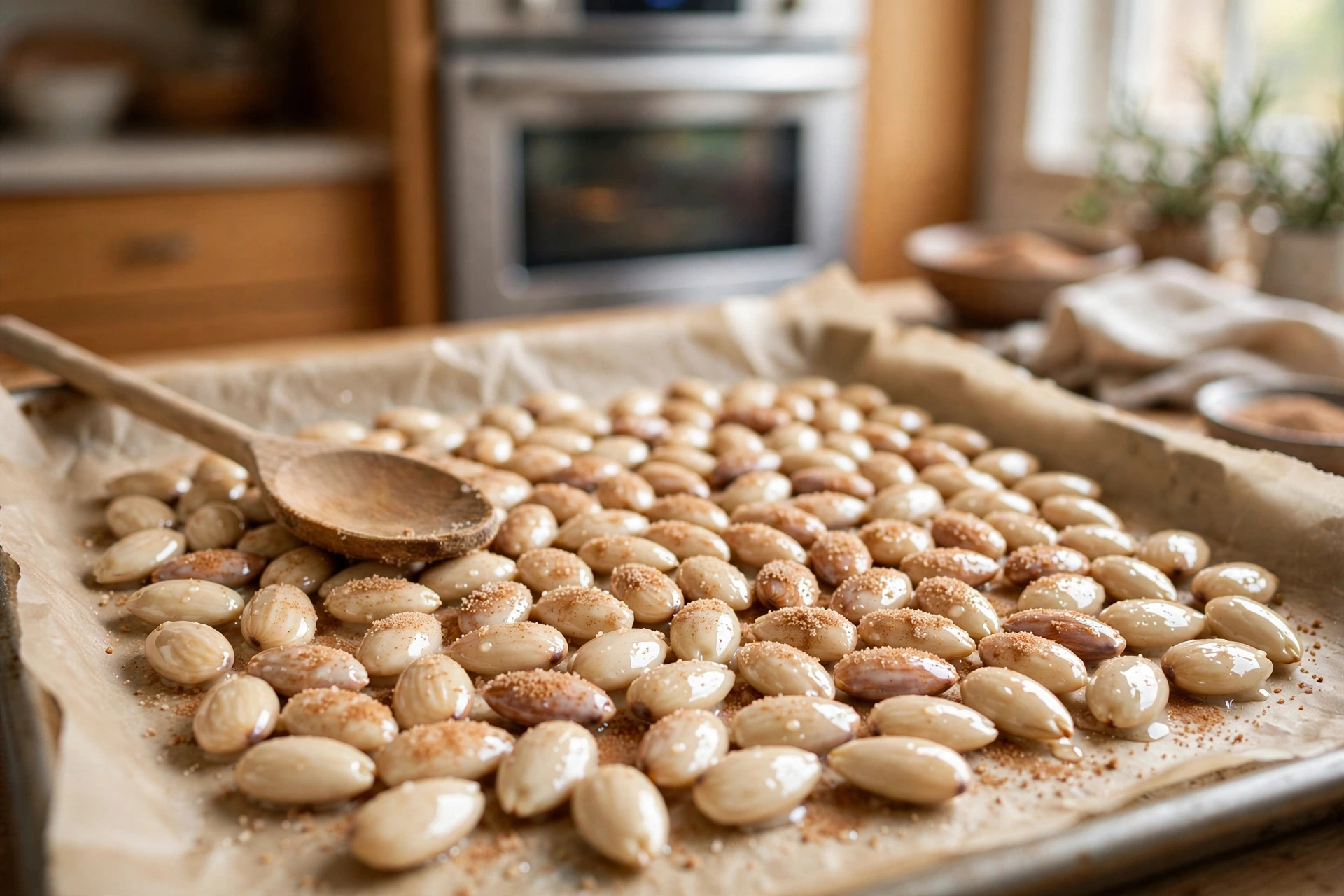
- Spread the almonds in a single layer on the prepared baking sheet. Give the pan a gentle shake so they settle into one even layer with a little space between them, because piled almonds steam instead of roasting and never get crisp.
- Roast for 30 minutes, stirring well every 10 minutes. Use a spatula to scrape the edge almonds toward the center and flip them over, then spread them back into a single layer. The almonds at the edges roast fastest, so stirring keeps the whole batch evenly golden.
- Take the pan out when the almonds smell deeply toasty and the coating looks dry and set, with no wet or glossy patches left. The almonds will still feel slightly soft when hot, which is normal. They firm up as they cool, and over-roasting turns cinnamon sugar bitter.
- Cool the almonds on the baking sheet for 15 minutes, stirring once halfway through so they do not stick together. As they cool, the sugar shell hardens into its signature crunch. Taste one after the full 15 minutes: it should snap cleanly with a sweet cinnamon finish. Store once they are completely cool.
Why This Works
The first thing to understand is why this recipe roasts at 250°F instead of the hotter oven most roasted-nut recipes use. Almonds are rich in natural oils that turn bitter fast at high heat, especially once sugar joins the pan. At 250°F the almonds toast slowly and evenly, their oils warming gently until the whole nut tastes deeply roasted. The low temperature also protects the cinnamon sugar, which begins to burn above about 350°F and turns sharp and acrid. Thirty minutes at 250°F is the sweet spot: long enough to crisp the almonds through, gentle enough to keep the coating sweet and warmly spiced. The oven temperature is the technique here.
The second piece of the method is the egg white, and it works because of what egg white is made of. Egg white is mostly water and protein, and as it heats, the protein sets into a thin, firm film while the water steams away. That film glues the cinnamon sugar to the almond and dries into the crackly shell you hear when you bite down. Without it, the sugar would fall off the smooth almond skins and pool on the pan. The egg white is fully cooked in the process: after thirty minutes at 250°F, the coating is dry and set and the almonds are far hotter than the 160°F point at which egg is safely cooked. Like a meringue shell, it turns crisp as it dries, which is why the almonds stay crunchy for weeks instead of turning sticky.
Finally, there is the stirring, and it matters more than it looks. The almonds at the edges of the pan sit closest to the oven walls and roast fastest, while the ones in the middle lag behind. Stirring every ten minutes moves the hot edge almonds to the cooler center and brings the pale middle ones out to the edges, so the whole batch finishes together. It also breaks up clumps before the sugar shell sets, so you end up with separate almonds instead of one sugary slab. The same logic applies to cooling: one stir halfway through the fifteen-minute cool keeps them from gluing together as the coating hardens. Our Easy Green Beans Almondine uses the same idea, toasting almonds in a dry pan and watching them closely. Even heat, even coating, even crunch.
Pro Tips
Use a large rimmed baking sheet, even if the almonds look lost on it at first. Three cups in a single layer need the space, and crowding is the number one reason roasted nuts turn out soft instead of crisp. If your sheet is small, split the batch across two sheets. A crowded pan steams the almonds in their own moisture, and no extra oven time will rescue them once they have steamed.
Set a timer for the stirring, because ten minutes passes faster than you think. Stir at ten minutes and again at twenty, scraping the edges toward the center each time. When the kitchen smells like a bakery and the coating looks dry, the almonds are done, even if they still feel slightly soft. They firm up as they cool, so trust the timer and the smell rather than squeezing a hot almond.
Let the almonds cool completely before you pack them away. Warm almonds trapped in a jar or bag release steam, and that steam is the fastest way to turn a crisp coating soft and sticky. Fifteen minutes on the pan, one stir halfway through, and they should feel room temperature and sound crisp when tapped together. Once fully cool, pack them into airtight jars or bags right away, because almonds pick up moisture from the air, and a loosely closed container will soften a batch overnight. For a holiday gift, a small jar tied with twine and a handwritten tag looks beautiful, and the almonds keep for two weeks.
Common Mistakes
The most common mistake is roasting the almonds too hot or too long. Cranking the oven to 350°F to speed things up burns the cinnamon sugar long before the almonds are toasted through, and the whole batch tastes bitter and sharp. The same thing happens when you add extra minutes because the hot almonds feel soft. They are supposed to feel soft when hot, and they firm up as they cool. If the coating looks dry and set and the kitchen smells deeply toasty, take the pan out. Fifteen minutes later the almonds will snap cleanly.
The second mistake is skipping the stirring. The edges roast much faster than the middle, so an unstirred batch comes out with burnt almonds at the corners and pale, soft ones in the center, glued into clumps. Stirring every ten minutes takes less than a minute, and it is the difference between an evenly golden batch and one where half the almonds taste scorched. Spread the almonds back into a single layer after every stir, because piled almonds steam instead of roasting and never get crisp.
Using already-roasted or salted almonds is the third trap, because they look like a shortcut and they are not. Already-roasted almonds have already given up their moisture, so thirty more minutes in the oven dries them out and turns them bitter. Salted almonds throw off the seasoning balance, and the extra salt fights the sweet cinnamon coating. Start with plain raw almonds, skins on, and let the oven do the roasting. Finally, do not pack the almonds away while warm. Warm almonds in a closed jar release steam that softens the sugar shell overnight, so cool them completely on the pan first.
Substitutions
If you cannot find whole almonds, this same method works beautifully with other nuts, with one adjustment to the timing. Pecans and cashews are softer and roast faster, so check them at twenty minutes and pull them when the coating is dry, usually around twenty-five minutes. Walnuts roast at about the same pace as almonds and take the cinnamon sugar wonderfully, though their slightly bitter edge pairs better with a little extra sugar, about two extra tablespoons. Mixed nuts work for a party bowl, but keep the pieces roughly the same size so they roast evenly.
For the sweetener, light brown sugar is the best substitute for granulated sugar, and it adds a gentle molasses note that suits the cinnamon. Use the same half cup, packed. Maple sugar, if you can find it, is another lovely option with a warm, woody sweetness. Honey and maple syrup are not good swaps here, because liquid sweeteners make the coating wet and sticky instead of dry and crackly. If you want a spicier version, add a pinch of cayenne pepper or a quarter teaspoon of ground ginger to the cinnamon sugar. The cayenne adds a slow warmth that makes the sweetness taste even sweeter, and the ginger adds a bright, peppery lift. For a sugar-free version, use a granulated sugar substitute that measures cup for cup like sugar.
Storage & Make-Ahead
Let the almonds cool completely, then store them in an airtight jar or container at room temperature for up to two weeks. Keep the container in a cool, dry cupboard, because heat and humidity are the enemies of crunch. A jar with a tight-fitting lid is ideal. Do not refrigerate them unless your kitchen is very warm, because the fridge adds moisture every time you open the container, and that moisture softens the coating. If a batch goes slightly soft, warm it on a baking sheet at 250°F for five to eight minutes, then cool it completely again, and the crunch comes right back.
These almonds freeze beautifully, which makes them a great make-ahead snack for the holidays. Cool them completely, pack them into freezer bags with the air pressed out, and freeze for up to three months. Thaw on the counter in the unopened bag for about an hour. The flavor holds up so well that nobody will guess they were made weeks ago.
For a party, make the almonds up to two weeks ahead and pack them into small jars or cellophane bags tied with twine and a handwritten tag. Set out a bowl next to a mug of our Gingerbread Hot Chocolate and the two taste made for each other. For a full snack table, pair them with our Spooky Halloween Chex Mix so guests can graze between sweet crunch and salty crunch. One food-safety note for any snack left out at a party: these almonds are a dry, shelf-stable snack, safe at room temperature for the whole party, but keep the serving bowl covered if the room is very warm, and wash your hands before reaching in for a handful.

Frequently Asked Questions
Do I have to use egg white, or can I make cinnamon roasted almonds without egg?
You can skip the egg white, but the coating will not stick as well. The best swap is 2 tablespoons of aquafaba, the liquid from a can of chickpeas, whisked until foamy and used like the egg white. It sets into a similar thin shell as it bakes. You can also brush the almonds with 1 tablespoon of maple syrup instead, but the coating will be softer and stickier, so let the almonds cool fully on the pan first.
Why are my roasted almonds sticky instead of crunchy?
Sticky almonds usually mean one of three things: the oven was too cool or the bake was too short, the almonds were crowded on the pan and steamed, or they were packed away while still warm. Give them the full 30 minutes at 250°F with a stir every 10 minutes, spread them in a single layer, and cool them completely on the pan for 15 minutes before storing. If a batch is already sticky, warm it on a baking sheet at 250°F for 5 to 8 minutes, then cool it completely again, and the crunch usually comes right back.
How long do cinnamon roasted almonds keep?
In an airtight jar or container at room temperature, cinnamon roasted almonds stay crunchy for up to 2 weeks. Keep the container in a cool, dry cupboard, and let the almonds cool completely before you pack them, or trapped steam will soften the coating. They also freeze well for up to 3 months in freezer bags with the air pressed out; thaw on the counter in the unopened bag for about an hour.
Can I make these ahead for holiday gifts, and how do I package them?
Yes, these almonds are made for gifting. Make them up to 2 weeks ahead, let them cool completely, and pack them into small glass jars or cellophane bags tied with twine and a handwritten tag. One batch fills about three cups, enough for three small gift jars of about 1 cup each. Keep the jars sealed until gifting so the coating stays crisp, and include a little note listing the ingredients for anyone with a nut allergy.
Rate this recipe
Be the first to rate it!
1 thought on “Easy Cinnamon Roasted Almonds (40-Minute Snack)”