
There is a particular kind of weeknight magic that happens when a pot of lasagna soup starts bubbling on the stove. The kitchen fills with the smell of garlic, tomatoes and Italian seasoning, the broth turns a deep, rich red, and the broken lasagna noodles curl up in the simmer like little ribbons of comfort. Everyone wanders in before you even call them. This easy lasagna soup is that dinner, the one that tastes exactly like your favourite baked lasagna but lands on the table in 30 minutes, in one pot, with no layering and no waiting for a casserole to bake.
This is a hearty, spoonable one-pot dinner built for real family life. Ground beef browns right in the pot, then crushed tomatoes, tomato sauce and beef broth simmer together into a rich, savoury base. Broken lasagna noodles cook directly in the broth, soaking up all that flavour and releasing a little starch that thickens the soup just enough to coat the spoon. Each bowl gets finished with a cool, creamy dollop of ricotta, a shower of melted mozzarella and a snowfall of Parmesan, plus torn basil on top. It is cosy without being heavy, and it tastes like you spent all afternoon on it. If you love the one-pot comfort of our easy chicken enchilada soup, this is its Italian cousin, and it belongs on the same weeknight rotation.
What makes this recipe so reliable is how forgiving it is. The noodles do not need to be broken into perfect pieces, the beef does the heavy lifting in five minutes, and the soup forgives a little extra simmering if the phone rings. You do not need a single special skill, and you do not need to babysit anything. Brown, pour, simmer, serve. That is the whole job, and dinner is on the table in 30 minutes.
Recipe at a Glance
Prep Time: 10 minutes | Cook Time: 20 minutes | Total Time: 30 minutes (plus 2 minutes resting) | Servings: 6 (about 1 1/2 cups each) | Difficulty: Easy

Why This Works
The secret to lasagna soup that actually tastes like lasagna is the order of operations, and the first one matters more than anything else in this recipe. Browning the ground beef before anything else goes into the pot builds the whole flavour base. When beef hits a hot, oiled pot, the surface browns through the Maillard reaction, creating hundreds of savoury, roasted flavour compounds that no amount of seasoning added later can imitate. That is why the beef goes in first, spread out in a single layer, and why you let it sit undisturbed for a minute or two before breaking it up. Those browned bits left on the bottom of the pot are pure gold, and the tomatoes and broth you pour in next lift them right back into the soup.
Next comes the part that makes this soup taste like lasagna instead of tomato soup with pasta in it. The broken lasagna noodles cook directly in the broth, and as they cook they release starch into the liquid. That starch is the quiet hero of this recipe. It thickens the broth just enough that it clings to the noodles and the beef instead of running thin, and it gives every spoonful that silky, almost creamy body that a proper lasagna has. This is also why the noodles should go in broken rather than whole. Smaller pieces cook evenly, fit neatly on a spoon, and release their starch faster. Break each sheet into two-inch pieces, and do not worry about making them identical. The ragged, uneven edges are part of the charm.
The cheese strategy is the third piece of the puzzle, and it works because the three cheeses do three different jobs. The ricotta goes on top as a cool, creamy dollop rather than being stirred into the pot, so it stays soft and pillowy and melts slowly into each bite instead of disappearing into the broth. The mozzarella goes in two places: half stirred into the hot soup, where it melts into long, stretchy ribbons, and half sprinkled over each bowl, where it softens on contact. The Parmesan is the salty, nutty finishing note that ties the whole bowl together. If you stir all the cheese in at once, you lose the contrast, and contrast is what makes this soup taste like lasagna.
Food safety is simple here and worth stating plainly. Ground beef must be cooked to 160 degrees Fahrenheit, the USDA safe minimum internal temperature for ground meat, with no pink remaining and the crumbles browned all the way through. That is exactly what happens in step one, when the beef browns in the hot pot for five to six minutes before anything else joins it. Leftovers should be refrigerated within two hours of serving, the same two-hour rule that applies to every cooked dinner.
Ingredients
- 2 tablespoons olive oil
- 1 pound ground beef (80/20 works beautifully)
- 1 medium yellow onion, diced
- 3 cloves garlic, minced
- 1 teaspoon Italian seasoning
- 1/2 teaspoon red pepper flakes (optional, for gentle warmth)
- 1 teaspoon salt, plus more to taste
- 1/2 teaspoon black pepper
- 1 can (28 ounces) crushed tomatoes
- 1 can (15 ounces) tomato sauce
- 4 cups low-sodium beef broth
- 8 ounces lasagna noodles, broken into 2-inch pieces (about 8 sheets)
- 1 cup ricotta cheese
- 1 1/2 cups shredded mozzarella cheese, divided
- 1/2 cup grated Parmesan cheese, plus more for serving
- 1/4 cup chopped fresh basil, for serving

Directions
- Heat the olive oil in a large pot or Dutch oven over medium-high heat until it shimmers. Add the ground beef and the diced onion, breaking the beef into crumbles with a wooden spoon. Cook for 5 to 6 minutes, stirring occasionally, until the beef is browned all the way through with no pink remaining and the onion is soft and translucent. Ground beef must reach 160 degrees Fahrenheit, the USDA safe minimum, and the crumbles will tell you when they are there: fully browned, with clear juices. If the pot looks greasy, drain off the excess fat.
- Stir in the garlic, Italian seasoning, red pepper flakes, salt and pepper. Cook for 30 seconds, just until the garlic smells fragrant and the spices bloom in the hot fat. This short bloom is what wakes the dried herbs up and keeps the soup from tasting flat.
- Pour in the crushed tomatoes, tomato sauce and beef broth. Stir well, scraping the bottom of the pot with the spoon to lift up all the browned bits the beef left behind. Those bits are flavour, and they dissolve straight into the broth. Bring the soup to a gentle boil over medium-high heat.
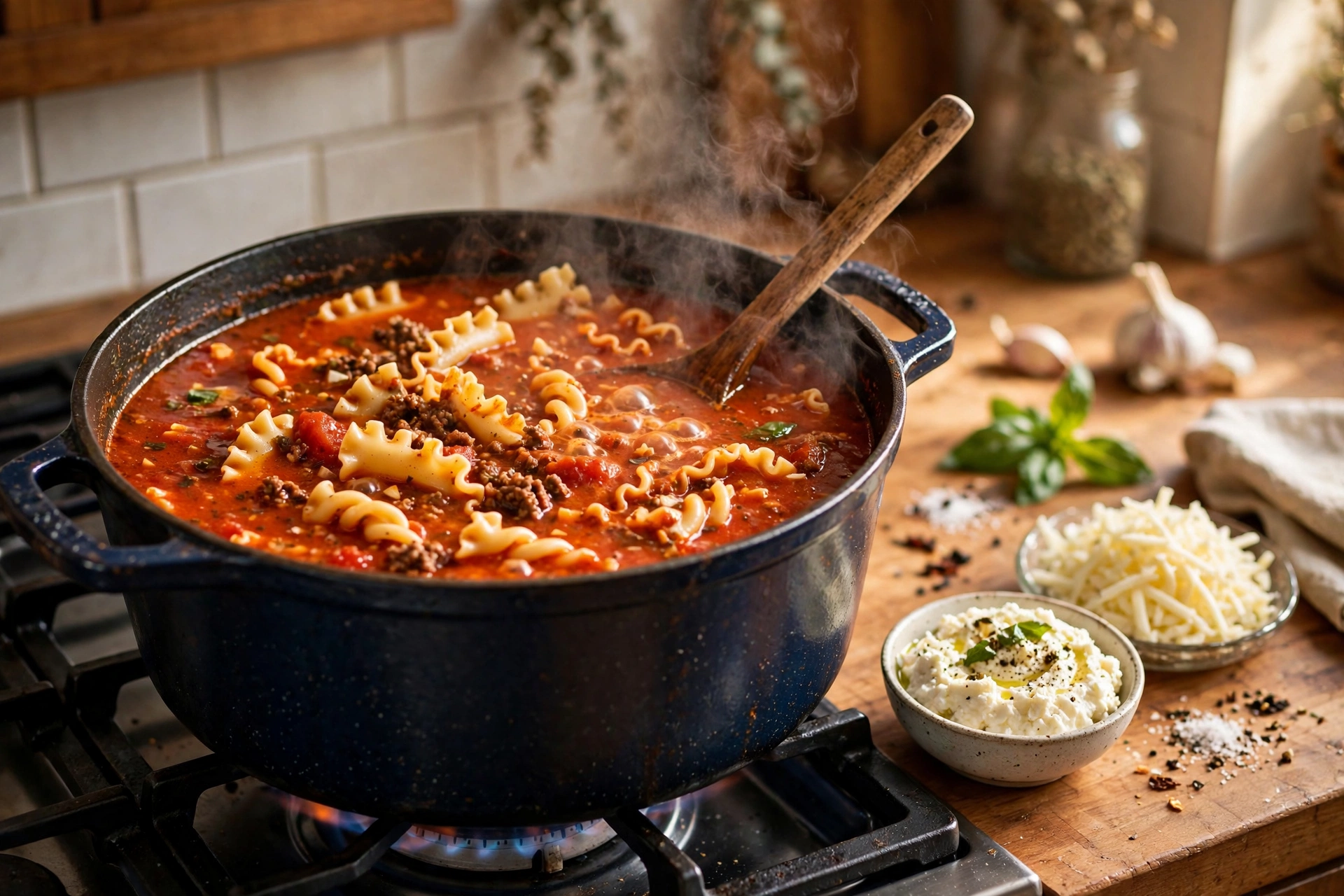
- Add the broken lasagna noodles and stir well so none of them stick together. Reduce the heat to medium-low and simmer for 10 to 12 minutes, stirring every few minutes, until the noodles are tender and the broth has thickened slightly. The soup will look a little thin at first and come together as the noodles release their starch, so trust the process and keep stirring.
- Stir in half of the shredded mozzarella (3/4 cup) and cook for 1 minute more, just until it melts into the soup. Taste a spoonful and adjust the salt if needed. The Parmesan and the broth both bring salt, so taste before you add more.
- Ladle the soup into bowls and top each one with a generous dollop of ricotta, a sprinkle of the remaining mozzarella, a snowfall of Parmesan and torn fresh basil. Let the bowls rest for 2 minutes so the cheese softens and the soup settles, then serve hot with crusty bread for dunking.
Pro Tips
Break the noodles over the pot, not over the counter. Hold each sheet over the open pot and snap it into two-inch pieces so every shard lands in the broth, and the uneven sizes give the soup its rustic, homemade look. If a piece is a little big, it softens and folds as it cooks, so do not stress about precision.
Use freshly shredded mozzarella if you can. Pre-shredded cheese is coated in anti-caking starch that can make the soup slightly grainy, while a block of mozzarella grated at home melts into long, silky ribbons. It takes two extra minutes and the difference is real.
Do not skip scraping the bottom of the pot in step three. Those browned bits, called fond, are concentrated beef flavour, and the tomatoes and broth dissolve them straight into the soup. A flat wooden spoon does the job best, and thirty seconds of scraping is worth more than any extra seasoning.
Common Mistakes
Adding the noodles too early. If the noodles go in before the broth is simmering, they clump together in a starchy lump. Always bring the soup to a gentle boil first, then add the noodles and stir right away so they separate.
Stirring the ricotta into the pot. Ricotta is a finishing cheese, not a cooking cheese. Stirred into hot broth it vanishes into a thin, milky haze and you lose the creamy dollop that makes each bowl taste like lasagna. Spoon it on top of each serving instead.
Under-seasoning the broth. Tomatoes and beef broth both need salt to taste like themselves, and the noodles dilute the seasoning as they absorb liquid. Taste after the mozzarella goes in and adjust the salt then, not before. A soup that tastes flat at the end almost always needs a pinch of salt, not more cheese.
Cooking the noodles until they fall apart. The noodles keep cooking in the hot broth even after you turn the heat off, so pull the pot off the stove when the noodles are just tender, not soft. They will be perfect by the time the bowls reach the table.
Substitutions
Ground turkey or chicken: Swap the beef for 1 pound of ground turkey or chicken and cook it to 165 degrees Fahrenheit, the USDA safe minimum for poultry. The soup will be a little lighter and just as comforting.
Italian sausage: Use 1 pound of mild or sweet Italian sausage, removed from its casings, for a richer, more seasoned soup. Brown it the same way and reduce the Italian seasoning to 1/2 teaspoon, since sausage already brings its own spice.
Vegetarian: Skip the meat entirely and use vegetable broth instead of beef broth. Add 8 ounces of sliced mushrooms with the onion and a can of drained white beans with the tomatoes for a hearty, meat-free pot. This is the same trick that makes our easy chicken and rice soup so flexible, and it works beautifully here too.
Cottage cheese for ricotta: If you are out of ricotta, small-curd cottage cheese makes a fine stand-in. Spoon it on top the same way, and give it a quick stir with a fork first so it spreads smoothly.
Gluten-free noodles: Gluten-free lasagna sheets or gluten-free mafalda work well, but they cook faster, so start checking them at 8 minutes and pull the pot off the heat as soon as they are tender.
Storage & Make-Ahead
This soup keeps beautifully, but the noodles need a little planning. Refrigerate leftovers in an airtight container for 3 to 4 days. The noodles will drink up broth as they sit, so when you reheat, add a splash of beef broth or water and warm the soup gently over medium heat until it is steaming hot all the way through. Top with fresh ricotta, mozzarella and basil when you serve, just like the first time.
For make-ahead cooking, the smartest move is to cook the soup base without the noodles. Brown the beef, add the tomatoes and broth, and simmer for 10 minutes, then cool and refrigerate the base for up to 3 days. When dinner time comes, bring the base back to a boil, add the broken noodles, and simmer for 10 to 12 minutes. The soup tastes freshly made, and the noodles are perfectly tender.
To freeze, let the soup base (without noodles and without the ricotta topping) cool completely, then freeze it in portions for up to 3 months. Thaw overnight in the fridge, bring to a boil, and cook the noodles fresh in the reheated base. Do not freeze the finished soup with noodles in it, because the noodles turn mushy on thawing. Ricotta and mozzarella do not freeze well either, so always add them fresh at serving time.

Frequently Asked Questions
Can I make lasagna soup ahead of time?
Yes, and the best way is to cook the soup base without the noodles. Brown the beef, add the tomatoes and broth, simmer for 10 minutes, then cool and refrigerate the base for up to 3 days. When you are ready to serve, bring the base back to a boil, add the broken lasagna noodles, and simmer for 10 to 12 minutes until tender. Top with fresh ricotta, mozzarella and basil, and the soup tastes freshly made.
What ground meat can I use instead of beef?
Ground turkey, ground chicken or Italian sausage all work well. Cook ground turkey or chicken to 165 degrees Fahrenheit, the USDA safe minimum for poultry. For Italian sausage, remove the casings, brown it the same way as the beef, and reduce the Italian seasoning to 1/2 teaspoon, since sausage already brings its own spice. Each swap keeps the soup hearty and comforting.
Why do the noodles soak up all the broth?
Lasagna noodles keep absorbing liquid as they sit in the hot broth, which is completely normal. That is why this soup is at its best served fresh from the pot. If you are reheating leftovers, add 1/2 to 1 cup of beef broth or water and warm the soup gently until it is steaming hot. For make-ahead cooking, cook the soup base without the noodles and add them fresh when you serve.
Can I make this lasagna soup vegetarian?
Yes. Skip the ground beef and use vegetable broth instead of beef broth. Add 8 ounces of sliced mushrooms with the onion and a can of drained white beans with the tomatoes for a hearty, meat-free pot. The ricotta, mozzarella and Parmesan stay the same, and the soup keeps all of its lasagna flavour.
What to serve with it: Crusty bread is the classic partner, because the broth is too good to leave in the bowl. A simple green salad with a sharp vinaigrette cuts the richness nicely, and garlic bread turns the whole meal into a feast. If you want a second one-pot dinner for the week, our easy turkey noodle soup is another 45-minute bowl the whole family will love. Lasagna itself has been layered, baked and loved for centuries, and this soup is simply the fastest way to get all of that comfort into a bowl. The creamy ricotta on top is what makes each spoonful taste like the real thing.
Rate this recipe
Be the first to rate it!
1 thought on “Easy Lasagna Soup (30-Minute One-Pot Dinner)”