
Some dinners just understand the assignment. You walk in the door tired, the fridge looks uninspiring, and twenty minutes from now you want something warm, creamy, and genuinely delicious sitting in a bowl in front of you. That is exactly what this Easy Creamy Garlic Parmesan Orzo does. It is a one-pan, 30-minute dinner that tastes like you spent all evening on it, and the only real work is stirring a pot and grating some cheese.
Orzo is the little pasta that could. It looks like rice, cooks like pasta, and soaks up flavour like a sponge, which makes it perfect for this kind of cosy, risotto-style dinner. Here it simmers right in vegetable broth with garlic butter, then gets finished with heavy cream and a snowfall of freshly grated parmesan until the sauce turns silky and coats every single piece. A squeeze of lemon wakes the whole thing up, and a shower of parsley makes it look like something you would happily serve to guests.
This is the dinner I make when I want comfort food without the commitment. No oven, no draining pasta water, no pile of dishes. One pan, one wooden spoon, and a bowl of something so creamy and garlicky that everyone at the table goes quiet for a minute. If your weeknights need a hero, this orzo is it.
Recipe at a Glance
- Prep Time: 10 minutes
- Cook Time: 20 minutes
- Total Time: 30 minutes
- Servings: 4 as a main dish (or 6 as a side dish)
- Course: Dinner
- Method: One-pan stovetop
- Cuisine: Italian-inspired comfort food

Why You Will Love This Orzo
First, it is fast in the way that actually matters. Ten minutes of prep, twenty minutes of gentle cooking, and dinner is on the table in thirty minutes from the moment you start. The orzo cooks directly in the broth, so there is no separate pot of water to boil and no colander to wash. Second, it uses ingredients you probably already have: pasta, garlic, butter, broth, cream, and parmesan. Third, it is a crowd-pleaser in the truest sense. Kids love the creamy, cheesy pasta, adults love the garlic butter and the lemon brightness, and because it is vegetarian as written, it works for mixed tables without anyone needing a separate meal.
There is also something deeply satisfying about watching it come together: the orzo drinking up the broth, the sauce thickening, the parmesan melting into a glossy, spoon-coating cream. It feels like real cooking, without any of the stress.
Ingredients
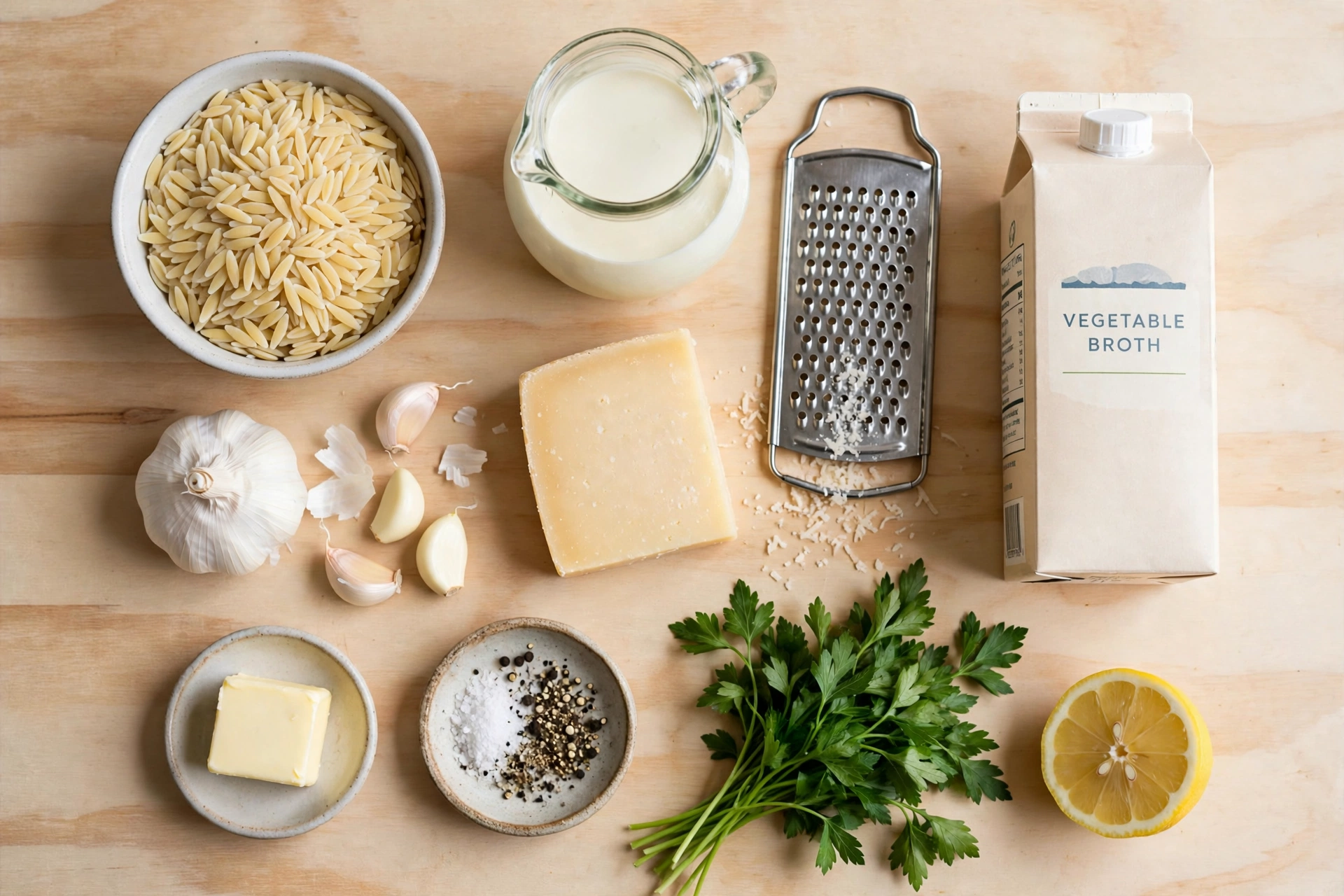
- 2 tablespoons unsalted butter
- 4 cloves garlic, finely minced (about 1 1/2 tablespoons)
- 1 1/2 cups dry orzo pasta
- 4 cups low-sodium vegetable broth
- 3/4 cup heavy cream
- 1 cup freshly grated parmesan cheese, plus extra for serving
- 1 tablespoon fresh lemon juice
- 1/2 teaspoon fine sea salt, plus more to taste
- 1/2 teaspoon freshly ground black pepper
- 1/4 teaspoon red pepper flakes (optional, for a gentle warmth)
- 1/4 cup chopped fresh parsley, for serving
A note on the parmesan: freshly grated parmesan melts into a smooth sauce, while pre-grated parmesan from a tub often contains anti-caking agents that can make the sauce grainy. If you can, grate a wedge yourself. It takes two minutes and the difference is real. USDA FoodData Central lists parmesan as a good source of protein and calcium, which is a nice bonus for a cheese this delicious.
A note on the broth: low-sodium broth matters here because the sauce reduces and concentrates as the orzo cooks. Full-salt broth can leave the finished dish too salty once the parmesan goes in, and parmesan brings plenty of salt of its own.
Directions
- Get everything ready first. Mince the garlic, grate the parmesan, chop the parsley, and measure out the broth, cream, and orzo. This recipe moves quickly once the pan is hot, and having everything within reach is the difference between calm cooking and frantic cupboard-diving.
- Soften the garlic in butter. Melt the butter in a large, deep skillet or saute pan over medium heat. Add the minced garlic and cook for 30 to 60 seconds, stirring constantly, just until it smells fragrant and sweet. Do not let it brown. Garlic goes from golden and gorgeous to bitter and burnt in seconds, and burnt garlic will flavour the whole pan.
- Toast the orzo. Pour in the dry orzo and stir to coat it in the garlic butter. Cook for about 2 minutes, stirring often, until the edges of the orzo turn lightly golden. This little toasting step is the secret to a nutty, complex flavour and it helps the orzo hold its shape instead of turning soft and starchy.
- Add the broth and simmer. Pour in the vegetable broth and stir well, scraping up any golden bits from the bottom of the pan. Bring it to a gentle simmer over medium heat, then reduce the heat to medium-low. Cook for 10 to 12 minutes, stirring every couple of minutes, until the orzo is tender and most of the broth has been absorbed. If the pan looks dry before the orzo is tender, splash in a quarter cup of warm water or extra broth.
- Stir in the cream. Reduce the heat to low and pour in the heavy cream. Stir gently and let it simmer for about 2 minutes. The sauce will turn pale gold and start to thicken around the orzo. This is the moment the dish goes from “pasta in broth” to “creamy orzo”, so give it the full two minutes.
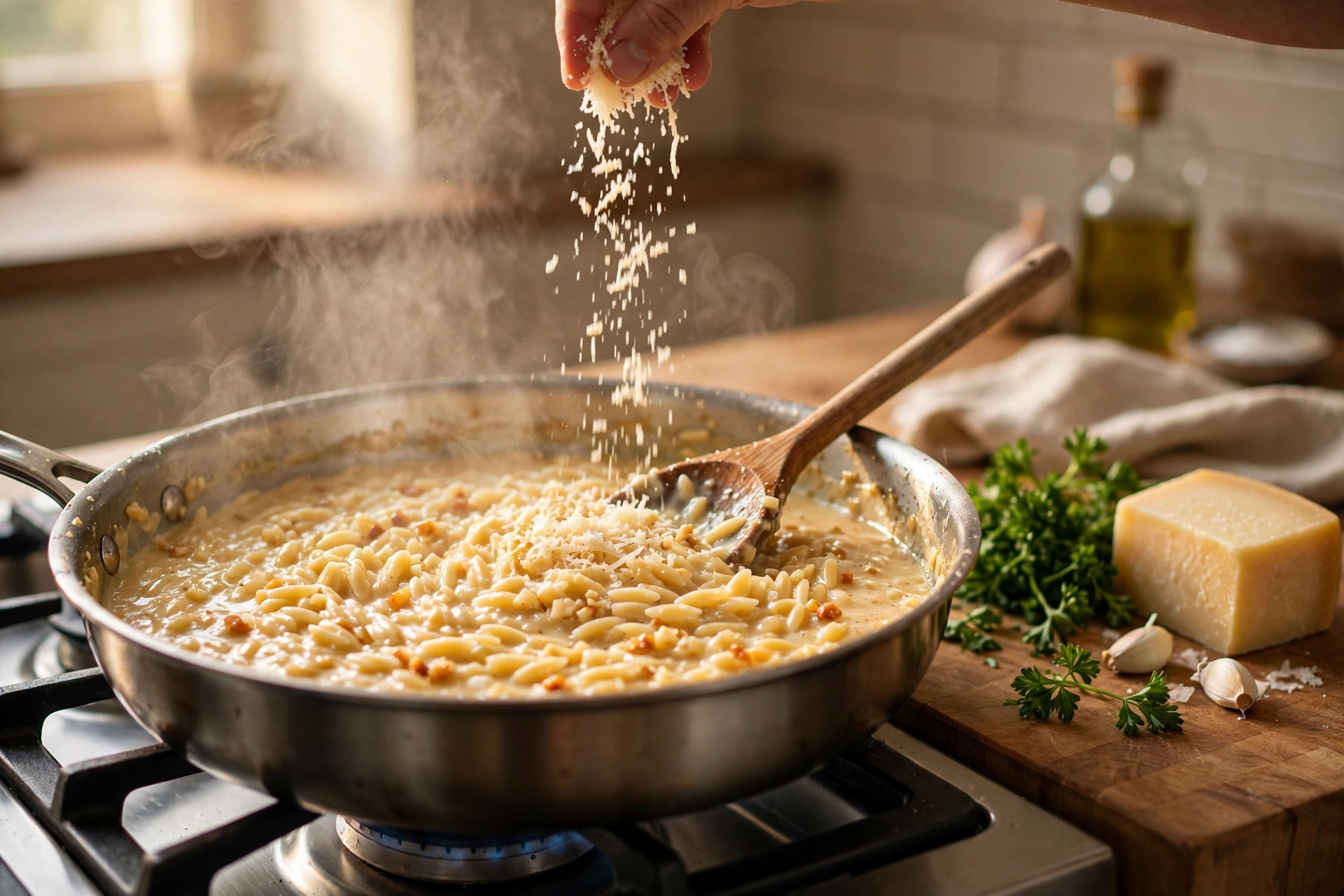
- Melt in the parmesan. Take the pan off the heat and add the grated parmesan a small handful at a time, stirring well after each addition until it melts completely before adding the next. The sauce should turn glossy and thick enough to coat the back of a spoon. Stir in the lemon juice. The lemon will not make the dish taste lemony; it simply brightens the richness so the cream and cheese do not feel heavy.
- Season and rest. Taste and add salt, black pepper, and red pepper flakes if you like a little warmth. Let the orzo rest in the pan for 2 minutes. It will thicken slightly as it cools, which is exactly what you want. If it thickens more than you like, loosen it with a splash of warm broth or cream.
- Serve it warm. Spoon the orzo into warm bowls, top with extra grated parmesan and chopped parsley, and serve right away while the sauce is at its silkiest.
Why This Works: The Technique Behind the Creaminess
The magic of this recipe is not a trick ingredient. It is the method, and it borrows a page from risotto. When orzo simmers in broth instead of a big pot of water, the starch it releases stays in the pan instead of going down the drain. That starch is what builds the sauce: as you stir, it thickens the broth into something that clings to the pasta, and the cream and parmesan simply finish what the starch started. This is why the finished sauce coats the back of a spoon.
Toasting the orzo in garlic butter matters for the same reason toasting rice matters in risotto. The hot fat coats each piece and lightly browns its surface, adding a nutty depth of flavour and helping the orzo keep a pleasant bite instead of going soft all the way through. Two minutes is all it takes.
Taking the pan off the heat before adding the parmesan is the other key move. Parmesan is a hard, aged cheese, and if it hits a boiling sauce it can seize up and turn grainy instead of melting smoothly. Off the heat, it melts slowly and evenly into the cream. Adding it a handful at a time gives each addition time to disappear before the next one lands, and thirty seconds of extra stirring is the difference between a silky sauce and a lumpy one.
The lemon juice at the end is small but mighty. Cream, butter, and parmesan are all rich, and richness without contrast gets tiring after a few bites. A tablespoon of lemon juice cuts through that richness and makes the garlic and cheese taste brighter and more like themselves.
If you love this kind of garlicky, creamy pasta, you will also love our Creamy Garlic Mushroom Pasta, which uses the same garlic-butter base with earthy mushrooms, and our One-Pan Lemon Herb Chicken Pasta, which adds juicy chicken and a lemon-herb sauce to the same easy one-pan idea.
Pro Tips for Perfect Orzo Every Time
- Stir often, not constantly. A good stir every couple of minutes keeps the orzo from sticking to the bottom and helps the starch release evenly. Constant stirring is unnecessary and can break the orzo down too much.
- Keep the simmer gentle. A rolling boil cooks the outside of the orzo too fast and leaves the centre chalky. A lazy bubble, where the surface just trembles, gives you evenly tender orzo and a sauce that thickens at the right pace.
- Warm your broth if you can. Cold broth cools the pan and adds minutes to the cooking time. A quick minute in the microwave keeps the simmer steady.
- Grate your own parmesan. It melts smoother, tastes nuttier, and avoids the grainy texture that pre-grated cheese can cause. A box grater and a wedge of parmesan are all you need.
- Serve it right away. Orzo keeps absorbing liquid as it sits, so the sauce is at its silkiest in the first ten minutes off the stove. If dinner is delayed, hold back a splash of broth to loosen it just before serving.
- Use a wide, deep pan. A large skillet gives the orzo room to spread out and cook evenly. A tall, narrow saucepan crowds it, and the bottom pieces can overcook while the top stays firm.
Common Mistakes (and How to Fix Them)
- Burning the garlic. Garlic burns fast, and burnt garlic tastes bitter through the whole dish. Keep the heat at medium, stir constantly, and move on to the orzo the moment the garlic smells fragrant, usually well under a minute.
- Adding all the parmesan at once over high heat. This is the number one cause of a grainy sauce. Take the pan off the heat and add the cheese in small handfuls, stirring until each one melts. If the sauce does turn grainy, a splash of warm cream and a vigorous stir will usually bring it back.
- Walking away during the simmer. Orzo is small and starchy, and it loves to settle and stick to the bottom of the pan. A quick stir every two minutes is all it takes to prevent a scorched layer.
- Overcooking the orzo. Orzo goes from tender to mushy quickly, especially in a hot, starchy sauce. Start tasting at 10 minutes and pull it off the heat the moment it is tender with a tiny bit of bite left. It will keep cooking in the residual heat.
- Skipping the rest. Those two minutes of resting let the sauce settle and thicken to the perfect spoon-coating consistency. Serve it straight off the boil and the sauce will look thin; wait two minutes and it turns glossy and rich.
Easy Substitutions
- No heavy cream? Half-and-half works, though the sauce will be a little thinner; simmer it an extra minute to help it thicken. Whole milk works in a pinch, but add two extra tablespoons of parmesan to help the lighter sauce along.
- No vegetable broth? Chicken broth is a fine swap if you are not keeping the dish vegetarian. Water works too, but you will lose flavour, so add an extra pinch of salt and a little more garlic to compensate.
- No fresh parmesan? Pecorino Romano is the closest swap and brings a saltier, sharper bite, so taste before adding extra salt. Grana Padano is another excellent match.
- Want it dairy-free? Use olive oil instead of butter, a plant-based cream, and a dairy-free parmesan-style cheese. The texture will be slightly different, but the garlic-butter method still delivers a comforting bowl.
- Add vegetables: a handful of baby spinach stirred in with the cream wilts beautifully in about a minute. Sun-dried tomatoes, peas, or roasted mushrooms are all lovely here. For a spicier version, see our Creamy Cajun Chicken Pasta for Cajun seasoning inspiration.
- Add protein: leftover rotisserie chicken, cooked shrimp, or crispy chickpeas all sit happily on top of this orzo. Stir them in at the end so they warm through without overcooking.
- Gluten-free: gluten-free orzo is now widely available and works well here. Start checking for doneness a minute or two earlier, as it can soften faster than wheat orzo.
Storage and Make-Ahead
Leftovers keep beautifully in the fridge for up to 3 days in an airtight container. Let the orzo cool to room temperature before sealing it up, and do not leave it sitting out for more than 2 hours. To reheat, warm it gently in a pan over low heat with a splash of broth, cream, or milk, stirring until it loosens back into a creamy sauce. The microwave works too: heat in 30-second bursts, stirring between each one, with a tablespoon of liquid added first. The sauce will never be quite as silky as it was fresh, but it will still be delicious.
This orzo is best made fresh, so I do not recommend making the full dish ahead of time. Do the prep ahead instead: mince the garlic, grate the parmesan, chop the parsley, and measure the broth and cream. I do not recommend freezing this dish, as cream sauces can separate and turn grainy when thawed.
What to Serve With Creamy Garlic Parmesan Orzo
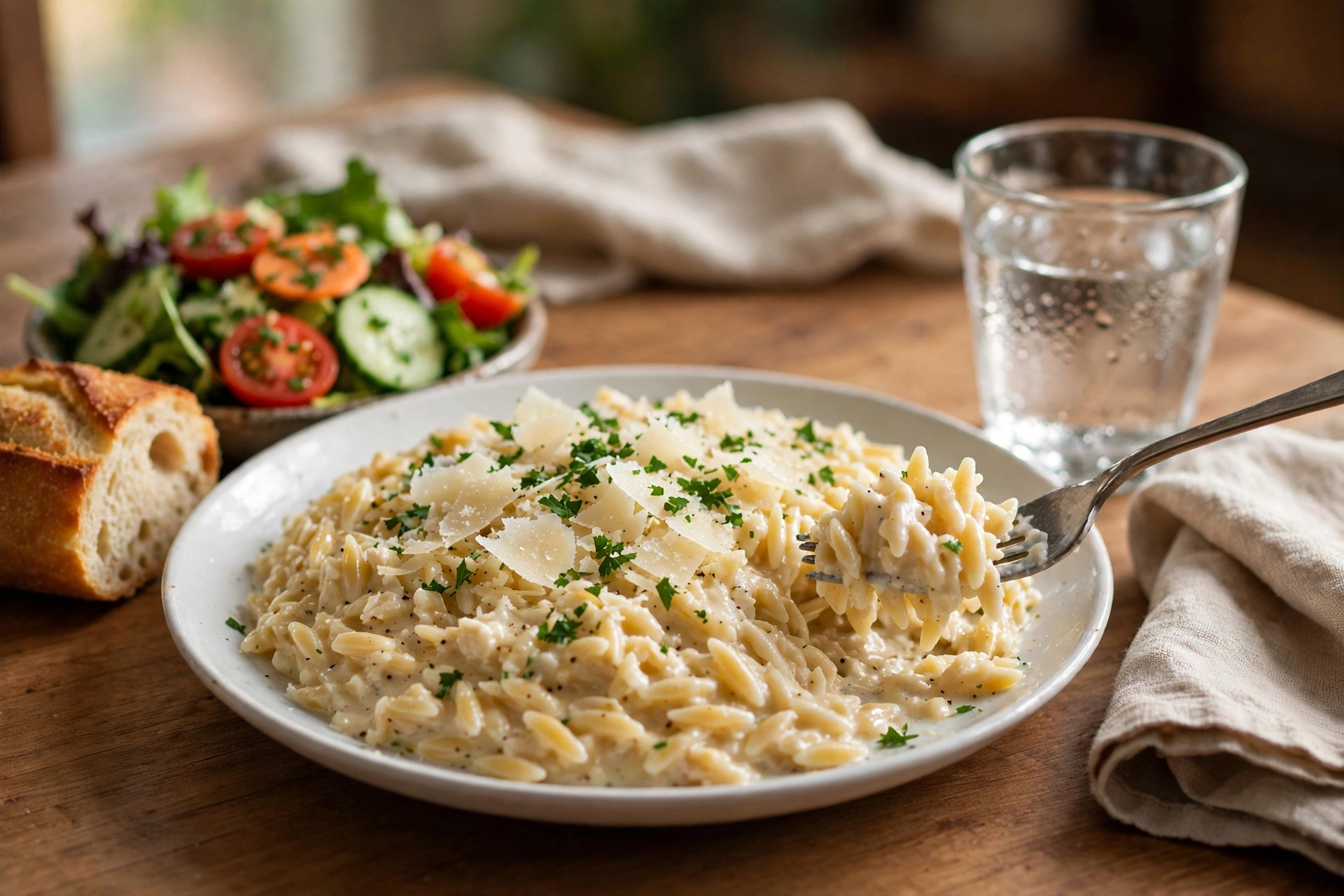
As a main dish, this orzo needs very little beside it. A simple green salad with a sharp vinaigrette cuts through the richness, a piece of crusty bread is perfect for chasing the last of the sauce around the bowl, and roasted vegetables like broccoli or green beans are lovely alongside it.
As a side dish, it pairs beautifully with roasted chicken, grilled salmon, or pan-seared pork chops, and it is a lovely addition to a holiday table. Whatever you serve it with, make a little extra: this is the dish people ask for seconds of, and then ask for the recipe.
For the record, orzo is a short-cut pasta shaped like a large grain of rice, and it takes its name from the Italian word for barley. It is a staple of Italian and Greek cooking, and it is the reason this dish feels both familiar and a little bit special at the same time.
Frequently Asked Questions
Can I make creamy garlic parmesan orzo ahead of time?
This orzo is best served fresh, because the sauce is at its silkiest in the first ten minutes off the stove and the orzo keeps absorbing liquid as it sits. If you need to get ahead, do the prep instead: mince the garlic, grate the parmesan, chop the parsley, and measure the broth and cream. With everything ready, the cooking takes twenty minutes flat. Leftovers reheat well with a splash of broth, but the fresh version is always the star.
What can I use instead of heavy cream in parmesan orzo?
Half-and-half is the best substitute and gives a slightly lighter sauce that still tastes rich; simmer it one extra minute to help it thicken. Whole milk works in a pinch, but the sauce will be thinner, so add two extra tablespoons of parmesan to help it along. I do not recommend skim milk, as it is too thin to build a proper cream sauce and can make the dish watery.
Can I add chicken or vegetables to garlic parmesan orzo?
Yes, this orzo is a wonderful base for add-ins. Stir in leftover rotisserie chicken, cooked shrimp, or crispy chickpeas at the end so they warm through without overcooking. For vegetables, a handful of baby spinach wilts in beautifully in about a minute, and peas, sun-dried tomatoes, or roasted mushrooms are all lovely. Add vegetables with the cream so they have time to soften, and add cooked proteins right at the end.
Why is my orzo sticky or mushy?
Sticky or mushy orzo usually comes from one of three things: too little stirring, too high a heat, or overcooking. Stir every couple of minutes so the pieces stay separate, keep the simmer gentle instead of a rolling boil, and start tasting at 10 minutes, pulling the pan off the heat the moment the orzo is tender with a tiny bit of bite left. If the sauce gets too thick, loosen it with a splash of warm broth or cream and it will come right back.
There you have it: one pan, thirty minutes, and a bowl of creamy garlic parmesan orzo that tastes like a hug. Make it tonight, and do not be surprised when it becomes the dinner your family asks for by name.
Rate this recipe
Be the first to rate it!