
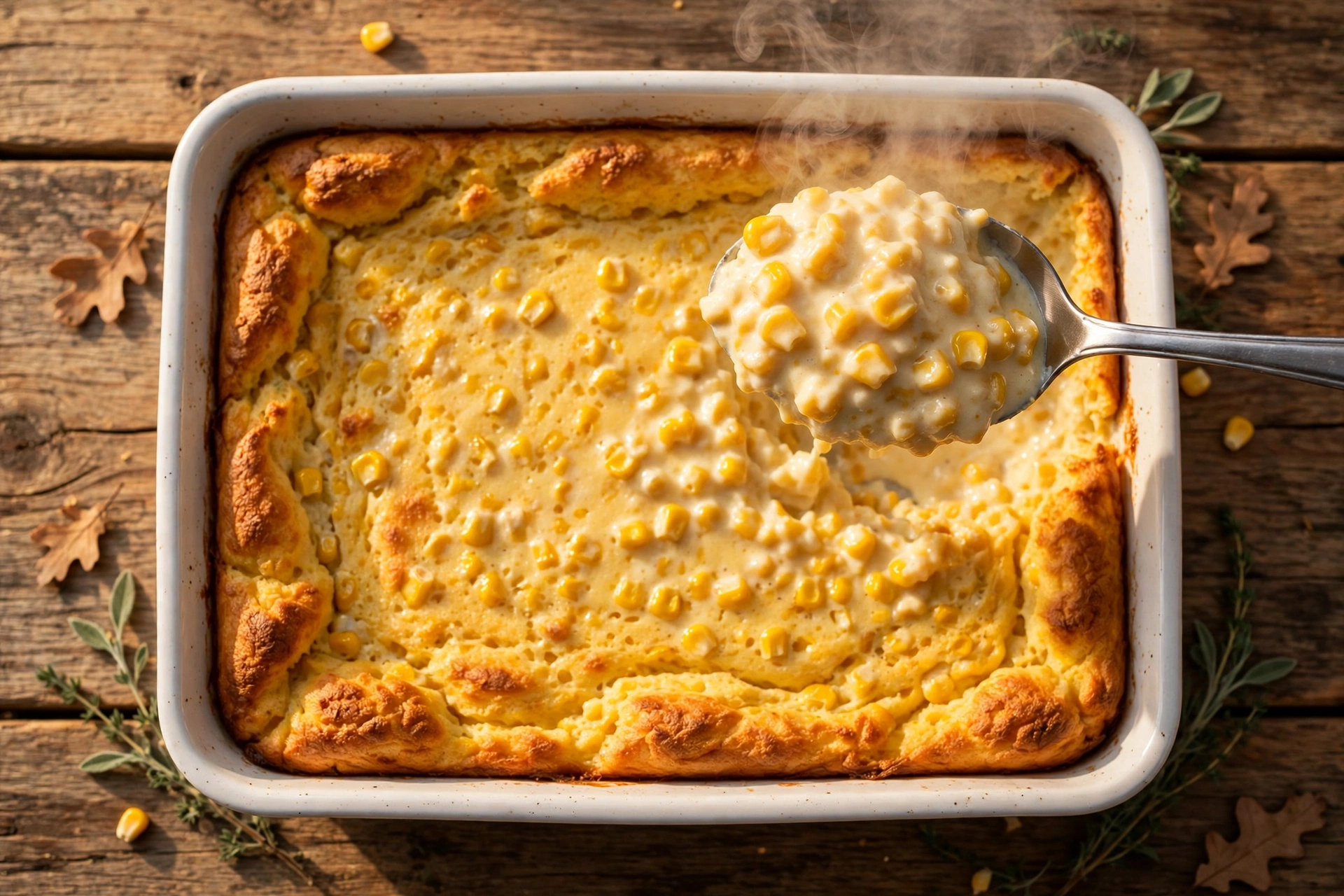
There is a particular kind of Thanksgiving magic that happens when a golden, puffed corn pudding comes out of the oven and the whole kitchen smells like sweet corn, warm butter, and toasted cornmeal. This easy corn pudding recipe is that magic, in one bowl and one baking dish, in 45 minutes flat, and it tastes like the side dish your grandmother made, even if you have never made it before. Golden edges, a soft custardy middle studded with sweet corn kernels, and a crumb that melts the moment it hits your tongue.
What makes this corn pudding so lovable is how little it asks of you for how much it delivers. There is no double boiler, no fussy custard technique, and no ingredient you cannot find at any grocery store. You whisk the wet ingredients in one bowl, stir in the corn and a box of corn muffin mix, pour it into a greased dish, and the oven does the rest. Ten minutes of prep, thirty-five minutes of baking, and dinner has a new favorite side dish. If you love sweet corn in a different form, our easy creamed corn is the stovetop cousin of this dish, rich and spoonable in twenty-five minutes, but when you want that baked, golden, sliceable comfort, this corn pudding is the one to make.
It is also the smartest forty-five minutes on your holiday table. Corn pudding is one of those rare side dishes that pleases absolutely everyone, from picky kids who love its sweet, cornbread-like flavor to grandparents who remember it from their own childhood tables. It travels well, it reheats beautifully, it can be assembled the night before, and it feeds eight people from a single 9×13-inch dish. Serve it at Thanksgiving or any Sunday dinner that deserves something special, and watch it disappear before the turkey does. This is the side dish that turns a good dinner into a remembered one.
Recipe at a Glance
- Prep Time: 10 minutes
- Cook Time: 35 minutes
- Total Time: 45 minutes (plus 5 minutes resting)
- Servings: 8 servings
- Yield: one 9×13-inch dish
- Oven Temperature: 350°F
- Category: Dinner, side dishes
Why This Recipe Works
The corn muffin mix is the secret shortcut. A box of corn muffin mix is really just cornmeal, flour, sugar, baking powder, and salt, already measured and mixed in exactly the right proportions, and that is why it works so beautifully here. The cornmeal gives the pudding its tender, slightly crumbly structure and that warm, toasty corn flavor, the flour gives it body to slice cleanly, and the baking powder gives it a gentle lift so the pudding is light and puffy instead of dense. The box gets the ratios right every single time, and it turns a from-scratch-tasting side dish into a ten-minute stir-and-bake. That is the whole point of this recipe: real, homemade flavor with none of the guesswork.
Two kinds of corn do two different jobs. The two cans of whole kernel corn and the one can of creamed corn are not a repetition, they are a partnership. The whole kernels give the pudding its texture, those sweet, juicy pops of corn in every bite that make it feel generous and hearty, and they hold their shape through baking so the finished dish has real body. The creamed corn does the opposite job: it melts into the batter and gives the pudding its soft, custardy, almost spoon-bread interior, the creamy richness that separates corn pudding from plain cornbread. Use only whole kernel corn and the pudding turns out dry and crumbly; use only creamed corn and it turns out soft and shapeless. Together, they give you a pudding that is creamy and structured at the same time. Corn pudding has been made this way for generations, and the Wikipedia article on corn pudding has a lovely overview of how this humble baked corn dish became a holiday-table classic across the American South.
Sour cream and butter make it rich without making it heavy. A cup of sour cream and half a cup of melted butter might sound like a lot, but they are doing the work that makes this pudding taste like a treat instead of a chore. The sour cream adds a gentle tang that balances the sweetness of the corn and the sugar, and its acidity keeps the crumb tender and moist, so the pudding stays soft even after it cools a little on the table. The melted butter carries flavor into every corner, browns the edges beautifully, and gives the finished pudding a rich aroma when you cut into it. The eggs tie everything together: two large eggs, beaten, set the custard as it bakes, so the pudding holds its shape on the plate instead of collapsing into a puddle. The USDA FoodData Central database lists the full nutrient profile for corn, eggs, butter, and sour cream.
The five-minute rest is not optional, it is the finish. When the pudding comes out of the oven, the center is still setting. If you cut into it straight away, the middle will slump and run, and the slices will fall apart on the serving spoon. Five minutes of resting lets the eggs finish setting, lets the steam settle back into the crumb, and lets the pudding firm up just enough to slice cleanly while it is still warm and steaming. The rest is separate from the forty-five minutes of prep and baking, and it is the difference between clean scoops and a pudding that slides apart.
A little sugar, a little salt, and the flavor snaps into focus. The optional tablespoon of sugar is a small amount, but it rounds out the natural sweetness of the corn and makes the whole dish taste more like itself, the way a pinch of sugar in tomato sauce does. The half teaspoon of salt and the quarter teaspoon of black pepper do the opposite job: they sharpen the flavors, they keep the sweetness from tasting flat, and they give the buttery crumb a savory backbone that makes people reach for a second helping.
Ingredients
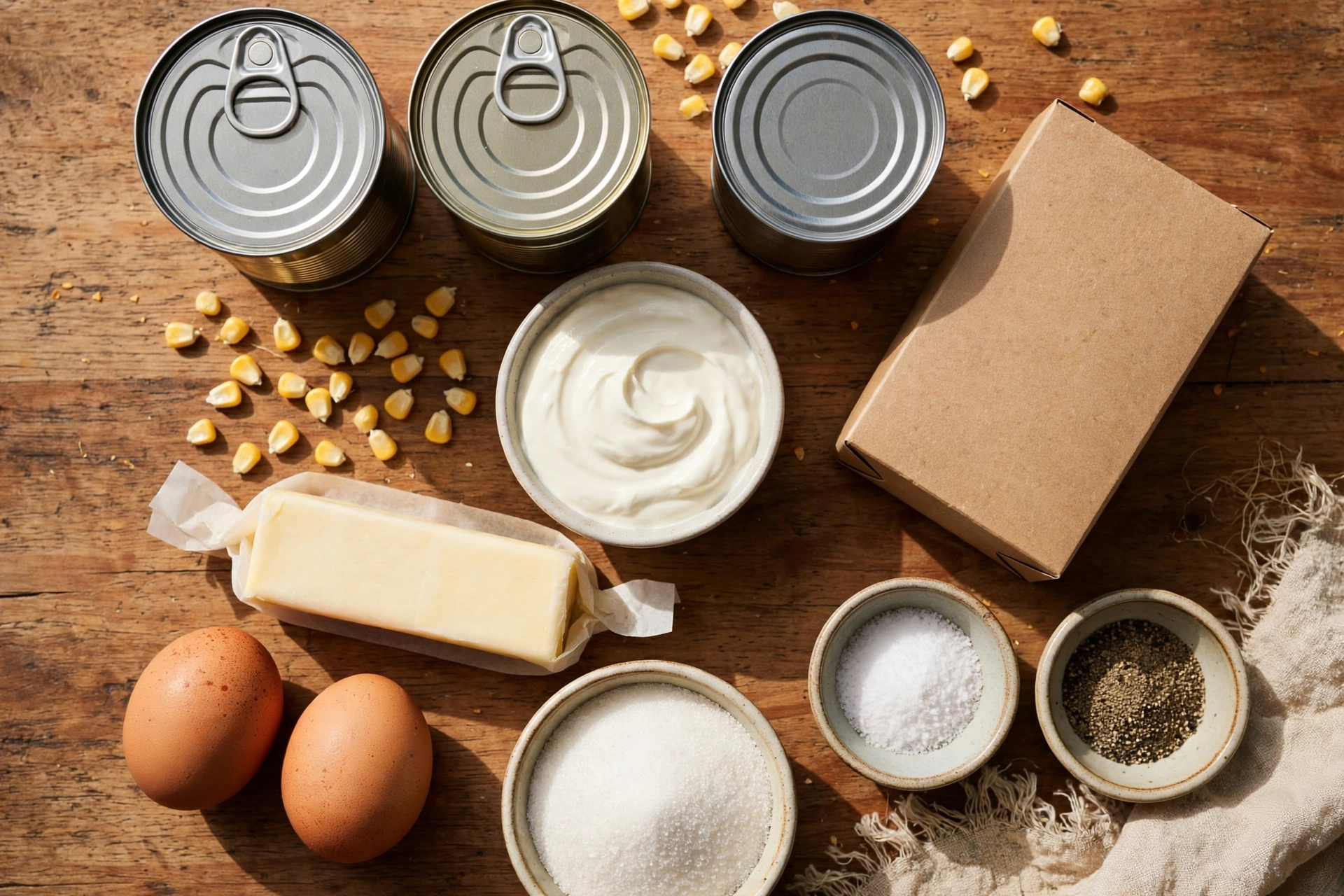
- 2 cans (15 ounces each) whole kernel corn, drained
- 1 can (15 ounces) creamed corn
- 1 box (8.5 ounces) corn muffin mix (such as Jiffy)
- 1 cup sour cream
- 1/2 cup (1 stick) unsalted butter, melted
- 2 large eggs, beaten
- 1 tablespoon granulated sugar (optional, for a touch of sweetness)
- 1/2 teaspoon salt
- 1/4 teaspoon black pepper
- Optional: a light sprinkle of paprika, for color on top
Choose standard whole kernel corn, not low-sodium or no-salt-added, because the salt in this recipe is written for regular canned corn, and if you use a low-sodium version you may want an extra pinch of salt at the end. Drain the whole kernel corn well, because any liquid left in the cans thins the batter and can make the center take longer to set. The creamed corn goes in undrained, straight from the can, because its liquid is part of the custard. Any brand of corn muffin mix works, and the familiar 8.5-ounce box is the right size for this recipe, so do not be tempted to use two boxes or the pudding will turn out dry and crumbly. Use full-fat sour cream, not light or fat-free, because the fat keeps the pudding moist, and let the eggs come to room temperature so they whisk smoothly into the batter. Let the melted butter cool for a minute before whisking it in, so it does not start cooking the eggs.
Directions
- Preheat the oven and grease the dish (about 2 minutes). Preheat the oven to 350°F and grease a 9×13-inch baking dish generously with butter or nonstick cooking spray, getting into the corners and up the sides. A well-greased dish lets the pudding release cleanly and helps the edges turn golden. Set the dish aside while you mix the batter.
- Whisk the wet ingredients (about 3 minutes). In a large mixing bowl, whisk together the sour cream, the melted butter, the beaten eggs, the sugar if you are using it, the salt, and the black pepper until the mixture is smooth and creamy, with no streaks of egg white left. The mixture should look pale, glossy, and completely combined.
- Stir in the corn and the muffin mix (about 3 minutes). Add the drained whole kernel corn, the creamed corn, and the whole box of corn muffin mix to the bowl. Stir with a wooden spoon or a spatula just until everything is combined and no dry pockets of muffin mix remain. Overmixing develops the flour in the muffin mix and turns the pudding tough instead of tender, so a few small lumps are perfectly fine and far better than a smooth, overworked batter.

- Pour into the dish and smooth the top (about 2 minutes). Pour the batter into the greased 9×13-inch dish and spread it into an even layer with the back of a spoon or a spatula, pushing it gently into the corners. If you like, give the top a very light sprinkle of paprika for a warm, golden color when it bakes. The batter will look thick and lumpy with corn kernels, and that is exactly right.
- Bake for 35 minutes (about 35 minutes). Slide the dish into the preheated 350°F oven and bake for 35 minutes, until the edges are golden brown and puffed, the top is set and lightly browned, and the center is just set with only a slight jiggle when you gently shake the dish. A knife inserted near the center should come out mostly clean, with just a few moist crumbs clinging to it.
- Rest for 5 minutes before serving (about 5 minutes). Take the pudding out of the oven and let it rest on the counter for 5 minutes before serving. This rest is separate from the 45 minutes of prep and baking, and it is what lets the custard finish setting so the pudding slices cleanly instead of slumping. Serve warm, scooped straight from the dish.
Pro Tips
- Drain the whole kernel corn, but never the creamed corn. The drained kernels give the pudding texture, and the liquid in the creamed corn is part of the custard. If you drain the creamed corn by mistake, the pudding will turn out dry, and if you forget to drain the whole kernel corn, the batter will be too wet and the center will take much longer to set.
- Do not overmix the batter. Stir just until the muffin mix disappears into the wet ingredients, then stop. The flour in the muffin mix toughens the moment it is overworked, and a pudding that was stirred for an extra minute comes out dense and rubbery instead of soft and tender.
- Use a light-colored metal or glass dish. A light-colored 9×13-inch dish bakes the pudding evenly and lets the edges turn golden without overbrowning the bottom. If a dark pan is all you have, check five minutes early.
- Check for doneness by the jiggle, not the clock. Ovens vary, and a pudding that is perfect at thirty-five minutes in one oven may need thirty-eight in another. Look for golden, puffed edges, a top that is set and lightly browned, and a center that moves only slightly when you shake the dish. If the center still sloshes, give it five more minutes.
- Let it rest, even when everyone is hungry. Five minutes feels long when the table is waiting, but it is the step that turns a soft, slumping pudding into one that holds a clean scoop. Use the five minutes to put the turkey on the platter. The pudding will still be warm and steaming when you serve it.
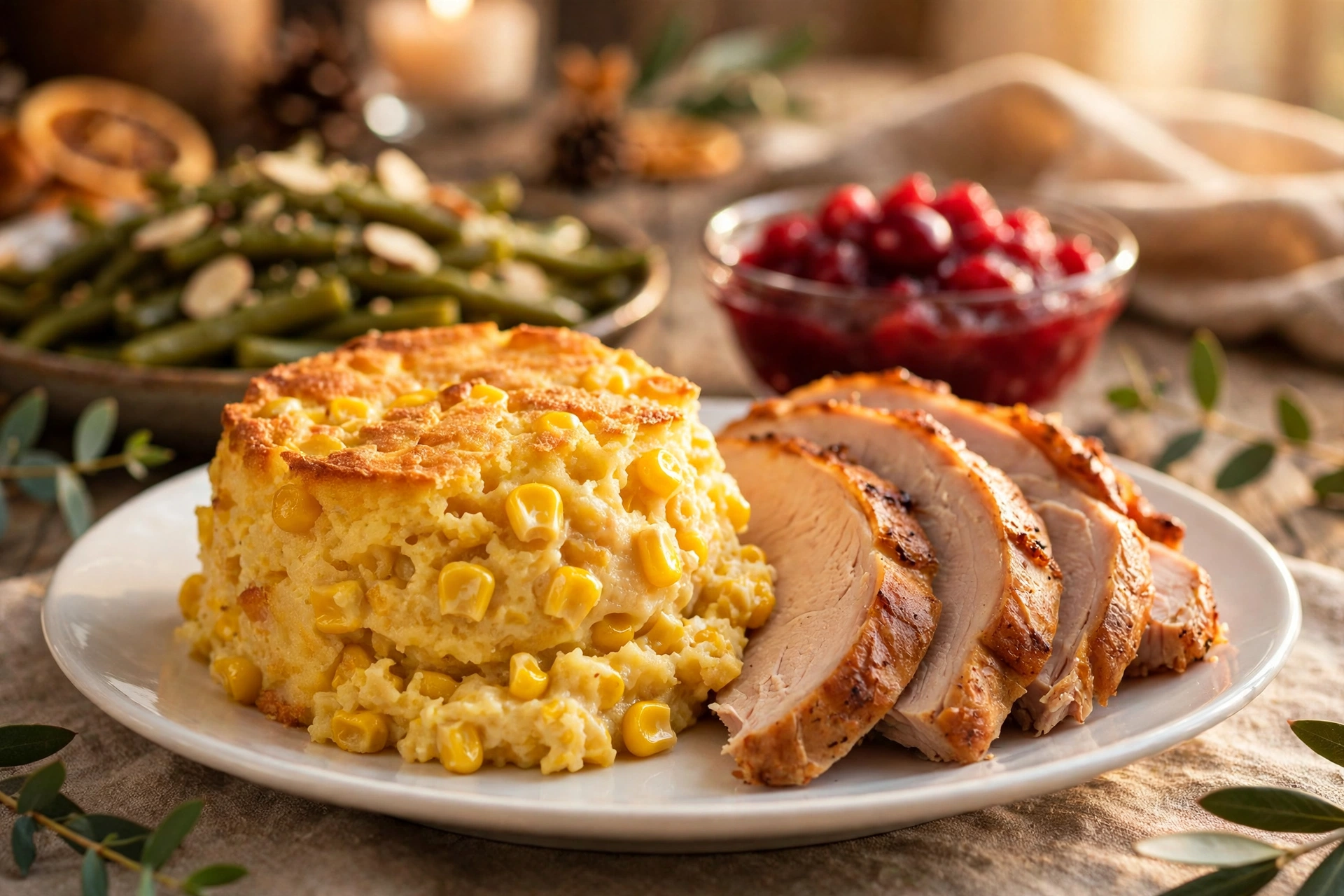
- Make it the centerpiece of a Thanksgiving side spread. Corn pudding sits beautifully between the classics, and it pairs especially well with richer sides. If you are building the full holiday table, our easy cheesy broccoli rice casserole is another 45-minute crowd-pleaser that shares the same creamy, golden comfort.
Common Mistakes and How to Fix Them
Runny or wet center. A center that will not set usually means the pudding was underbaked, the whole kernel corn was not drained, or it was cut into before the five-minute rest. The fix is simple: put it back in the oven for five to ten more minutes until the center only jiggles slightly, and always let it rest the full five minutes before serving.
Dry, crumbly pudding. A dry pudding almost always means too much muffin mix, too little creamed corn, or overbaking. Double-check that you used one 8.5-ounce box and not a larger one, make sure the creamed corn went in undrained, and pull the pudding out the moment the center is just set, because every extra minute in the oven dries it out further.
Tough, dense texture. Toughness comes from overmixing the batter after the muffin mix goes in. The fix is in the stirring: fold the ingredients together just until combined, with a few lumps left, and stop. If the batter is already overmixed, serve the pudding warm with plenty of butter on top.
Burnt top, undercooked middle. A top that browns too fast while the middle stays wet usually means the oven rack was too high or the oven runs hot. Move the dish to the center rack and lay foil loosely over the top for the last ten minutes. The foil trick is your best friend here: it stops the browning while the heat keeps working on the center.
Pudding stuck to the dish. A pudding that will not release usually means the dish was not greased well enough, especially in the corners. Grease generously with butter or cooking spray before the batter goes in, and if it is already stuck, serve it straight from the dish with a large spoon instead of trying to lift out neat slices.
Substitutions
Fresh or frozen corn: You can replace the two cans of whole kernel corn with about 3 cups of fresh or frozen corn kernels, cooked briefly and drained well. Thaw frozen corn and drain it completely first. Keep the canned creamed corn as it is, because it is doing the custard job, and the whole kernel corn is only doing the texture job.
No corn muffin mix? Whisk together 1 cup of yellow cornmeal, 1 cup of all-purpose flour, 1/3 cup of sugar, 1 tablespoon of baking powder, and 1/2 teaspoon of salt, and use that in place of the box. This is the one substitution that actually works one for one, because the box is just those five ingredients already mixed.
Greek yogurt instead of sour cream: Full-fat plain Greek yogurt works in place of the sour cream, one for one, and it gives the pudding a slightly tangier flavor and a little extra protein. Use full-fat yogurt, not fat-free, because the fat is what keeps the crumb moist.
Dairy-free version: Swap the butter for melted coconut oil or a plant-based butter, and replace the sour cream with a dairy-free sour cream or thick coconut cream. Use a dairy-free corn muffin mix if you can find one, or make the homemade mix above. The pudding will be a little less rich, but the sweet corn flavor still shines through.
Add-ins for a twist: A cup of shredded sharp cheddar stirred into the batter turns this into a cheesy corn pudding that kids especially love, and a small can of diced green chiles gives it a gentle Southwestern warmth. A handful of crumbled cooked bacon on top before baking adds a smoky, salty crunch.
Storage and Make-Ahead
This corn pudding is at its best warm from the oven, golden on the edges and soft in the middle. If you do have leftovers, let the pudding cool to room temperature within two hours, then cover the dish tightly with foil or transfer the leftovers to an airtight container and store them in the fridge for 3 to 4 days. Never leave cooked corn pudding sitting out on the counter for more than two hours, because the egg and dairy custard needs to stay cold once it has cooled.
To reheat, warm individual servings in the microwave for 45 to 60 seconds, or reheat the whole dish covered with foil in a 325°F oven for 15 to 20 minutes. Corn pudding also freezes well: wrap the cooled dish tightly in foil, then in plastic wrap, and freeze for up to 3 months. Thaw it overnight in the fridge, then reheat it covered at 325°F until hot in the center, about 20 to 25 minutes.
For make-ahead prep, you can assemble the whole pudding up to a day in advance. Mix the batter, pour it into the greased dish, cover it tightly with plastic wrap, and keep it in the fridge overnight. The next day, take it out of the fridge while the oven preheats and bake as directed, adding about 5 minutes since the batter starts cold. If you are planning the full holiday menu ahead of time, our easy roasted garlic mashed potatoes are another make-ahead-friendly side that shares the same warm, buttery comfort, and the two together cover the whole table.
Frequently Asked Questions
Is corn pudding the same as creamed corn?
No, they are different dishes. Creamed corn is a stovetop side dish made by simmering corn kernels in a creamy sauce, and it stays soft and spoonable. Corn pudding is baked in the oven with eggs and corn muffin mix, so it sets into a soft, sliceable custard with golden, puffed edges. They share the same sweet corn flavor, but corn pudding is firmer, richer, and more like a cross between cornbread and a savory custard, which is why it works so well on a holiday table.
Can I make corn pudding ahead of time?
Yes, in two ways. You can assemble the batter, pour it into the greased dish, cover it tightly, and refrigerate it overnight, then bake it the next day, adding about 5 minutes to the baking time since the batter starts cold. Or you can bake it fully, let it cool, cover it, and refrigerate it for up to 3 days, then reheat it covered at 325°F for 15 to 20 minutes until hot all the way through. It also freezes well for up to 3 months: thaw it overnight in the fridge and reheat it covered at 325°F.
Can I use fresh or frozen corn instead of canned?
Yes, replace the two cans of whole kernel corn with about 3 cups of fresh or frozen corn kernels, cooked briefly and drained well. Fresh corn cut from the cob gives the pudding a lovely sweet pop, and frozen corn works just as well if you thaw it and drain it completely first. Keep the canned creamed corn as it is, because it is doing the custard job in the recipe. If you use fresh corn, taste the batter and add the optional tablespoon of sugar only if the corn is not very sweet on its own.
Why is my corn pudding runny in the middle?
A runny middle almost always means the pudding was underbaked, the whole kernel corn was not drained, or it was cut into before the five-minute rest. Bake it until the edges are golden and puffed and the center is just set with only a slight jiggle, and a knife near the center should come out mostly clean. Then let it rest for 5 minutes before serving, because the custard keeps setting as it cools. If the center still sloshes, put the dish back in the oven for 5 to 10 more minutes, covering the top loosely with foil if it is already golden.
Rate this recipe
Be the first to rate it!