
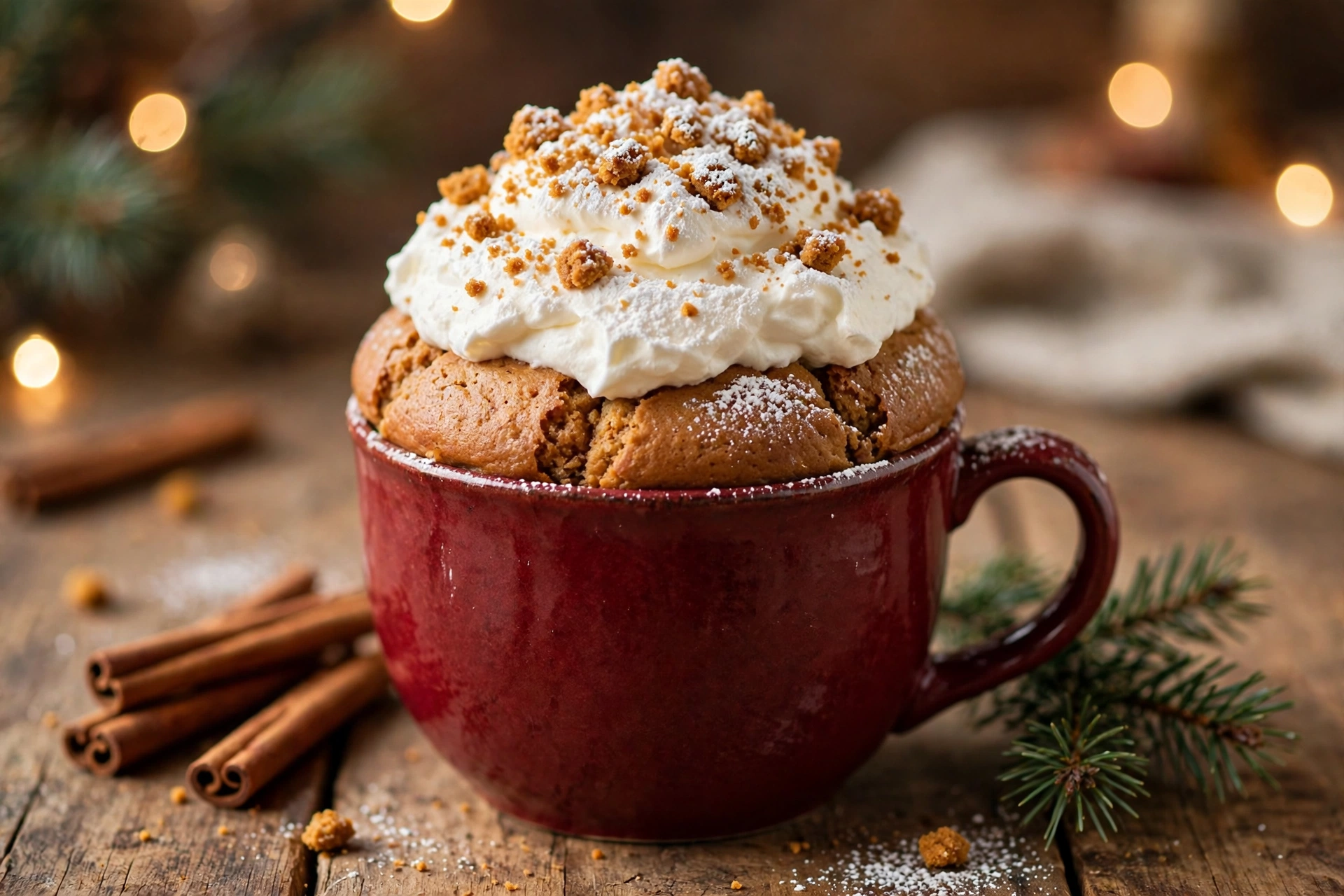
Some desserts ask you to preheat the oven, cream the butter, line the pan, and wait an hour while the whole house smells wonderful and you stand there hungry. This easy gingerbread mug cake asks for none of that. In seven minutes flat, from the moment you reach for the mug to the moment your spoon breaks through a warm, soft, molasses-dark crumb, you have a single-serve Christmas dessert that tastes like someone baked gingerbread all afternoon. It is spiced, sticky-sweet, impossibly soft in the middle, and it comes out of the microwave wearing a little crown of whipped cream like it has somewhere fancy to be. It does not. It is going straight to your couch, and that is exactly right.
There is something quietly magical about a mug cake done well. The edges set just enough to hold their shape, the center stays tender and almost pudding-like, and the spices bloom in the heat so the whole kitchen smells like December. Gingerbread is the perfect flavor for this format because it was never about delicate precision. It is about bold, warm spice, dark molasses, and a crumb that forgives you. If you can stir, you can make this. If you have a mug, a spoon, and a microwave, you are already most of the way there. Keep a little jar of the spice mix ready and this becomes the dessert you make on a Tuesday night in your slippers, no occasion required.
It is also the kind of recipe that turns a quiet evening into a small celebration. You do not need a reason, a guest list, or a special occasion, just seven minutes and a craving. The first time you lift the spoon and see the steam curl up from that dark, spiced crumb, you will understand why mug cakes have such a devoted following. They are not a compromise or a shortcut version of a real dessert. They are their own thing entirely: fast, personal, perfectly portioned, and exactly as warm and comforting as a winter dessert should be. And because everything happens in one mug, the cleanup is a spoon and a mug, which might be the best part of all on a busy December night when the sink is already full of dinner dishes.
This is also the dessert for the person who wants gingerbread but does not want a whole tray of it sitting on the counter, calling their name for three days. One mug, one serving, one happy ending. Make it after dinner, make it for a sleepy Christmas morning, make it when the rain is tapping the window and the kettle is on. It scales beautifully for a crowd too, because every guest gets their own mug, and nobody has to share, slice, or pretend they only want a small piece.
Recipe at a Glance
- Prep time: 5 minutes
- Cook time: 2 minutes
- Total time: 7 minutes
- Servings: 1 generous mug cake (serves 1, or 2 small portions)
- Difficulty: Easier than ordering takeout
- Method: Microwave, one mug, no oven
Ingredients
Everything is measured straight into the mug, so there is almost nothing to wash up. Use a large microwave-safe mug that holds at least 12 ounces, because this cake rises high while it cooks and a small mug will overflow.
For the mug cake
- 4 tablespoons all-purpose flour
- 2 tablespoons brown sugar, packed
- 1/2 teaspoon ground ginger
- 1/2 teaspoon ground cinnamon
- 1/4 teaspoon ground nutmeg
- 1/8 teaspoon ground cloves
- 1/4 teaspoon baking powder
- Pinch of fine salt
- 1 tablespoon molasses
- 3 tablespoons whole milk
- 1 tablespoon unsalted butter, melted (or neutral oil)
- 1/2 teaspoon vanilla extract
For serving (optional but wonderful)
- 2 tablespoons whipped cream
- 1 teaspoon powdered sugar, for dusting
- 1 gingersnap cookie, crushed, for crunch

Directions
- Whisk the dry ingredients (2 minutes). Add the flour, brown sugar, ground ginger, cinnamon, nutmeg, cloves, baking powder, and salt to a large microwave-safe mug. Whisk with a fork until everything is evenly mixed and there are no little pockets of brown sugar hiding at the bottom. This is the step that decides whether every bite tastes like gingerbread or only some of them do, so take the full two minutes and be thorough. The mixture should look like soft, even, sandy-brown crumbs.
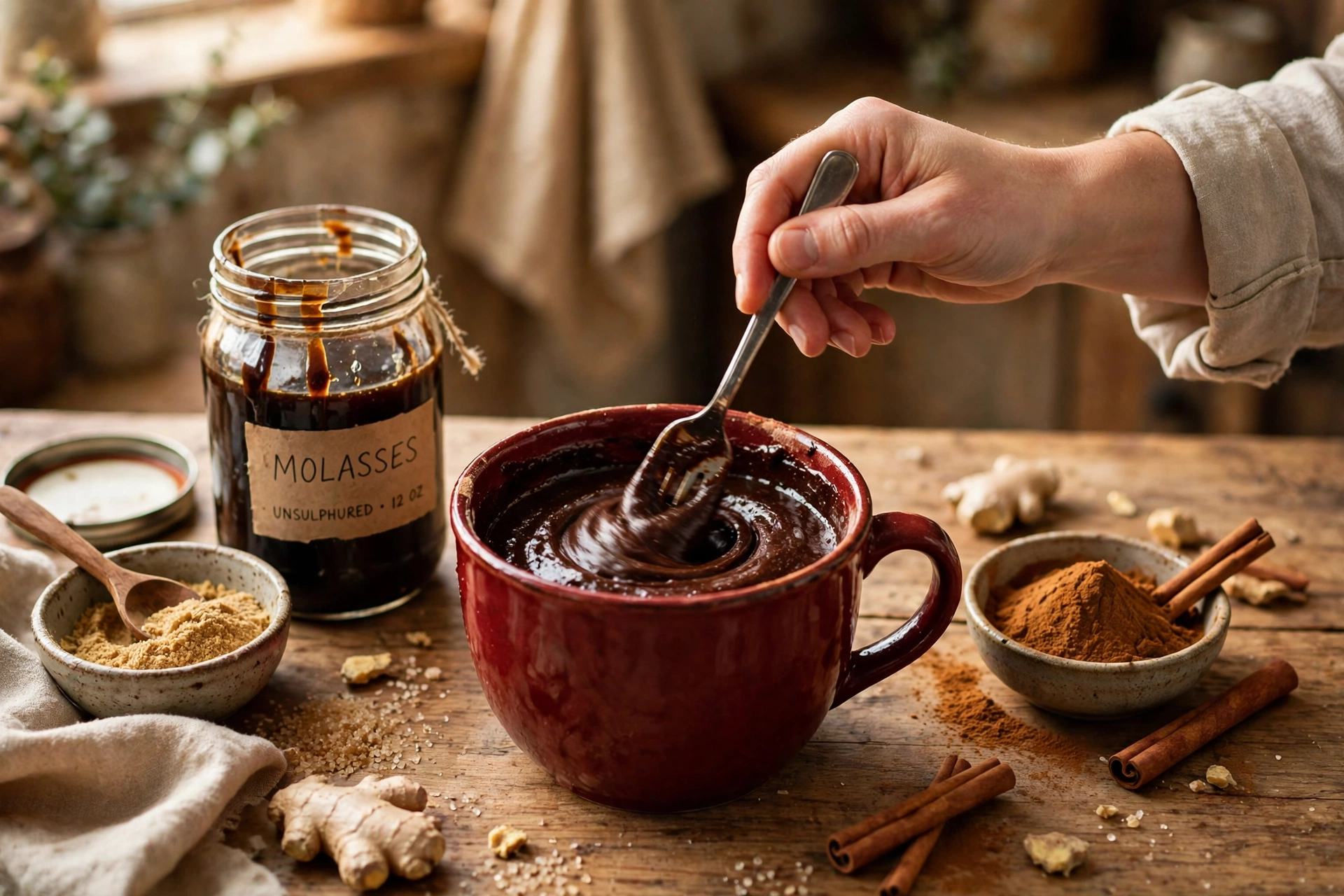
- Stir in the wet ingredients (2 minutes). Pour in the molasses, milk, melted butter, and vanilla extract. Stir with the fork until the batter is smooth, thick, and glossy, with no dry flour left at the edges. It should fall off the fork in a slow ribbon and look like melted chocolate, dark and shiny. Do not over-stir once it comes together; about 20 to 25 gentle strokes is plenty. Over-mixing is the one thing that can turn a tender mug cake tough, because it develops the gluten in the flour.
- Smooth the top and wipe the rim (1 minute). Use the back of a spoon to level the surface, then wipe any batter off the rim and the inside walls of the mug with a damp paper towel. Batter stuck high on the walls bakes into chewy strings, and a clean rim means the cake rises evenly instead of clinging to one side. Set the mug on a small microwave-safe plate to catch any enthusiastic rising.
- Microwave for 90 seconds (1 minute 30 seconds). Microwave on HIGH for 90 seconds. The cake will rise dramatically, doming well above the rim of the mug, and the top will look set and springy. Do not open the door early to peek, because the sudden rush of cool air can make the rise collapse. Every microwave is a little different: if yours runs hot, check at 75 seconds; if it runs gentle, you may need the full 90.
- Let it stand in the microwave for 30 seconds. Leave the mug right where it is, door closed, for 30 seconds. The residual heat finishes setting the very center, which is the difference between a cake that is soft and one that is wet. The dome will settle slightly as it cools, and that is exactly what you want. The total cook time is 2 minutes: 90 seconds of microwaving plus 30 seconds of standing.
- Cool for 1 minute, then top and serve. Carefully lift the mug out with oven mitts or a folded towel, because the handle and the cake itself are very hot. Let it cool for 1 minute, just long enough that the first spoonful will not burn your tongue. Dust with powdered sugar, add a cloud of whipped cream, and scatter the crushed gingersnap over the top. Eat it straight from the mug with a spoon while it is still warm.
Why This Recipe Works
A great mug cake is a balancing act, and this one is engineered for it. The molasses does three jobs at once: it sweetens, it darkens the crumb to that deep gingerbread brown, and it keeps the cake moist because it is hygroscopic, which is a fancy way of saying it holds on to water instead of letting the microwave steam it all away. That is why this cake stays soft while so many mug cakes turn rubbery. The brown sugar doubles down on the same trick, adding a gentle caramel note that white sugar simply cannot give you.
The spice blend is deliberately ginger-forward, the way real gingerbread should be. Ginger brings the warm bite, cinnamon brings the sweet roundness, nutmeg adds a nutty depth, and the small pinch of cloves is the secret ingredient that makes people say “this tastes like Christmas” without knowing why. Cloves are powerful, so a little goes a long way; any more than an eighth of a teaspoon and they would bully the other spices out of the mug.
The technique matters as much as the ingredients. Microwaves cook from the outside in and very fast, which is why the baking powder is kept modest at a quarter teaspoon: enough lift to make the crumb light, not so much that the cake erupts over the rim. Stirring just until combined keeps the gluten relaxed, and the 30-second standing time lets the center finish gently instead of overcooking into toughness. That rest is the difference between a mug cake and a mug brick. If you are curious about the nutrition behind the pantry staples in this recipe, the USDA FoodData Central database lists the nutritional values of molasses, brown sugar, and the spices used here, which is handy if you are tracking what goes into your holiday baking. If you love the science of spice, the history of gingerbread is a wonderful rabbit hole: it traveled from medieval honey cakes to the dark, molasses-rich loaves we know today, and the same warming spices have defined it for centuries.
Pro Tips
- Use a big mug. A 12 to 14 ounce mug is ideal. The batter only fills it about halfway, but it rises to the top while cooking. A small mug guarantees an overflow and a messy microwave.
- Measure the molasses properly. Lightly grease the tablespoon with a drop of oil or butter first and the molasses will slide right off instead of clinging to the spoon. You get the full tablespoon in the batter, where it belongs, instead of half of it stuck to the metal.
- Stir from the bottom. Flour loves to hide in the corners at the base of the mug. Scrape the fork right down into those corners so no dry pocket survives. A dry pocket bakes into a chalky lump, and nobody wants a chalky lump in their Christmas dessert.
- Know your microwave. A 1000-watt microwave needs about 90 seconds. A weaker 700-watt one may need 100 to 110 seconds. The first time you make this, watch through the door: the cake is done when the top looks set and springs back lightly when you touch it, with no wet, shiny batter in the middle.
- Serve it immediately. Mug cakes are at their absolute best in the first five minutes, when the center is still soft and steamy. After ten minutes the crumb firms up and the magic fades, so have your toppings ready before you press start.
- Make a spice jar. Multiply the ginger, cinnamon, nutmeg, and cloves by eight and keep the blend in a small jar labeled gingerbread spice. Then this cake is a two-minute assembly job forever, and you can sprinkle the same blend into oatmeal, hot chocolate, or pancake batter. Our gingerbread pancakes use the same warm spice family and make a wonderful slow Christmas morning to pair with this fast one.
- Warm the milk first. If your milk comes straight from the fridge, give it 10 seconds in the microwave before you pour it in. Cold milk can seize the melted butter into little flecks, and while the cake will still taste fine, warm milk blends into a silkier batter. It is a tiny step that makes the crumb noticeably smoother.
- Press a few chocolate chips into the top. If you like a melty surprise, push five or six chocolate chips into the surface of the batter right before microwaving. They sink slightly as the cake rises and turn into warm, gooey pockets. Dark chocolate works best against the molasses, but milk chocolate is lovely too if you prefer things sweeter.
Common Mistakes to Avoid
- Using a small mug. This is the number one mug cake disaster. The cake rises fast and high, and a mug that is too small will spill batter all over the microwave turntable. If your mug holds less than 12 ounces, halve the recipe or split the batter between two mugs.
- Over-mixing the batter. Once the wet and dry ingredients meet, stir only until the flour disappears. Vigorous beating develops gluten and the cake turns dense and chewy instead of soft and tender. Gentle and brief is the whole secret.
- Microwaving too long. An extra 20 seconds in the microwave is the difference between moist and rubbery. Mug cakes keep cooking from residual heat, which is why the 30-second standing time is part of the recipe, not an afterthought. If your cake came out tough, it was almost certainly overcooked, not under-mixed.
- Skipping the molasses. Honey or maple syrup will sweeten the cake, but neither one gives you the dark color, the deep flavor, or the moisture that molasses does. If you truly have no molasses, use dark treacle or an extra tablespoon of brown sugar plus a teaspoon of water, and accept that the result will be lighter in both color and flavor.
- Using cold butter. Melted butter blends evenly into the batter; cold butter stays in little lumps and leaves greasy pockets. Thirty seconds in the microwave or a quick melt in a small pan is all it takes. If you swap in oil, the cake will be just as tender, though a touch less rich.
- Eating it straight from the microwave. The mug and the cake are scorching hot for the first minute. Give it that one minute of cooling time. Your tongue will thank you, and the crumb actually sets better as it cools slightly.
Substitutions
- Dairy-free: swap the whole milk for oat milk or almond milk and use melted coconut oil or dairy-free butter instead of butter. The cake stays just as soft, and oat milk adds a lovely gentle sweetness.
- Gluten-free: use a 1-to-1 gluten-free baking flour blend in place of the all-purpose flour. Mug cakes are actually one of the kindest recipes for gluten-free flour because there is no kneading and no long bake to dry them out.
- No molasses: dark treacle is the closest swap. In a pinch, use 1 tablespoon of honey plus 1 extra teaspoon of brown sugar, knowing the flavor will be lighter and less gingery-dark.
- Less sweet: drop the brown sugar to 1 tablespoon and let the molasses carry the sweetness. The cake will be more spice-forward and less dessert-sweet, which some people prefer with a strong cup of coffee.
- Extra chocolatey: stir 1 tablespoon of cocoa powder into the dry ingredients and add a few chocolate chips on top before microwaving. It becomes a chocolate gingerbread cake, and nobody will complain. Our easy pumpkin spice mug cake uses the same one-mug method with a different spice blend, if you want to compare the two side by side.
- Egg-free by design: this recipe contains no egg at all, which is part of why it stays so tender. There is nothing to substitute, and the cake sets through the starch and baking powder alone.
Storage & Make-Ahead
Mug cakes are a make-it-and-eat-it dessert, and this one is no exception. It is best eaten within five minutes of coming out of the microwave, while the center is still soft and the whipped cream is just starting to melt into the warm crumb. If you do have leftovers, cover the mug tightly with plastic wrap and keep it at room temperature for up to a few hours, then warm it for 15 seconds in the microwave before eating. The refrigerator is not your friend here: cold turns the crumb firm and dry, and reheating never quite brings back the fresh-baked softness.
What you can make ahead is the dry mix. Stir together the flour, brown sugar, spices, baking powder, and salt for as many mugs as you like and store the blend in a sealed jar at room temperature for up to a month. Label it with the wet ingredients to add, which are 1 tablespoon molasses, 3 tablespoons milk, 1 tablespoon melted butter, and half a teaspoon of vanilla per mug. Then a gingerbread mug cake is a two-minute job on any night of the week, and it makes a lovely homemade gift: a pretty jar of the dry mix, tied with ribbon and a handwritten tag, is the kind of present people actually use. Do not store the mixed batter, wet or dry, once the milk and molasses are in, because the baking powder starts working the moment it meets liquid and the cake will not rise properly later.
Serving Ideas
The classic way is the simplest: a dusting of powdered sugar, a generous spoonful of whipped cream, and a little crunch of gingersnap on top, eaten straight from the mug with a spoon. It looks like a tiny snow-capped mountain and tastes like the best part of Christmas morning. For a fancier finish, add a drizzle of warm caramel sauce or a spoonful of vanilla ice cream that melts into the hot cake and turns into its own sauce.
Serve it as the sweet ending to a cozy winter dinner, or make it the star of a holiday movie night, one mug per person, with a toppings bar on the table so everyone can build their own. It pairs beautifully with a mug of hot chocolate, a spiced chai, or a strong black coffee, and it is a wonderful little dessert to bring out when guests stay late and someone says they fancy something sweet. If you are building a whole Christmas dessert table, our easy white chocolate peppermint pancakes make a festive partner, minty and fluffy next to this dark, spiced mug cake.
For a breakfast-for-dessert twist, serve a smaller portion in a teacup alongside a slow morning coffee, with a little extra cinnamon dusted over the whipped cream. It is rich enough to feel like a treat and small enough to feel sensible, which is a rare and wonderful combination in December. And if you are hosting a gingerbread house decorating party, these little mug cakes make the perfect snack for the builders: no oven time, no waiting, and everyone gets their own warm mug to hold while they argue about where the gumdrops go.

FAQ
Can I make this gingerbread mug cake without molasses?
You can, but the flavor will be lighter and less like true gingerbread. Dark treacle is the closest substitute, used in the same amount. In a pinch, use 1 tablespoon of honey plus 1 extra teaspoon of brown sugar, and add an extra pinch of ginger to make up for the lost depth. Avoid blackstrap molasses, which is bitter and can overpower the spices.
Why did my mug cake overflow in the microwave?
The mug was almost certainly too small, or the baking powder was over-measured. Use a mug that holds at least 12 ounces, fill it no more than halfway with batter, and measure the baking powder level, not heaped. Setting the mug on a small plate catches any overflow and saves you from scrubbing the microwave turntable.
Can I make this mug cake dairy-free?
Yes, very easily. Swap the whole milk for oat milk or almond milk and use melted coconut oil or dairy-free butter in place of the butter. The cake stays just as soft and tender, and oat milk adds a gentle sweetness that suits the spices beautifully. Top it with coconut whipped cream to keep the whole dessert dairy-free.
Can I double the recipe to make two mug cakes at once?
Yes, but mix and microwave them separately. Double the ingredients in a bowl, divide the batter evenly between two large mugs, and microwave one mug at a time for 90 seconds each. Microwaving two mugs together cooks them unevenly, so one ends up perfect and the other stays wet in the middle. Mixing them separately takes only an extra minute and guarantees both cakes rise beautifully.
A Little Mug of Christmas
That is the whole recipe: five minutes of stirring, two minutes of microwaving, and a warm, spiced, molasses-dark cake that tastes like the holidays decided to show up early. No oven, no mixing bowls to wash, no waiting around while the house fills with wonderful smells you cannot eat yet. Just you, a mug, and seven minutes between craving and first spoonful.
Make it tonight, while the idea is still warm. Then make it again next week, and the week after, because the best recipes are the ones you reach for without thinking. If you do make it, tell us in the comments how you topped yours, and whether your mug survived the rise. Happy baking, and happy holidays.
Rate this recipe
Be the first to rate it!
1 thought on “Easy Gingerbread Mug Cake”