
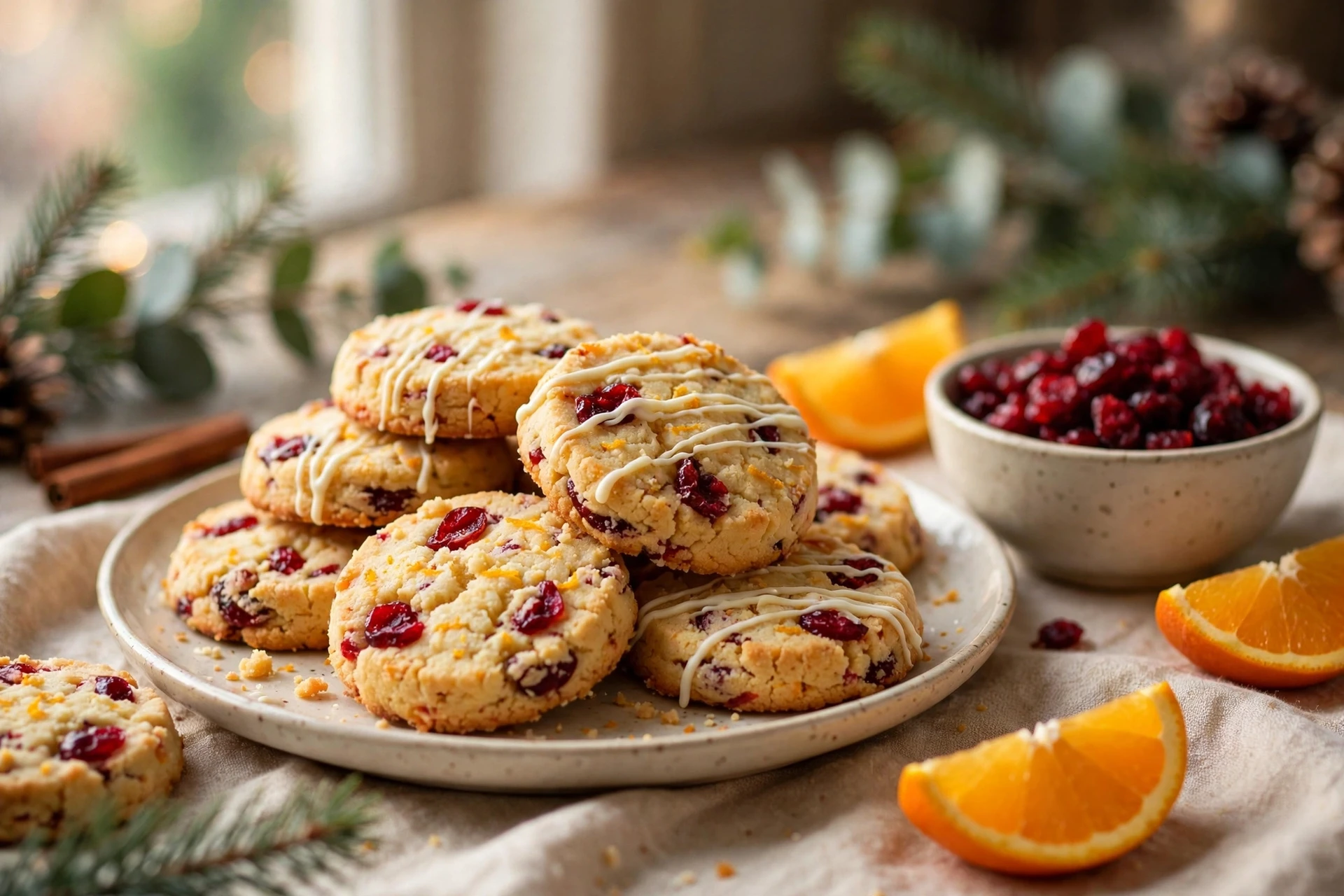
There is a particular kind of quiet magic that happens when a tray of cranberry orange shortbread cookies comes out of the oven. The whole kitchen smells like Christmas decided to move in early. Warm butter, bright orange zest, and those ruby-red dried cranberries peeking out of every golden round like little jewels. They look like they came from a fancy bakery window, and they took fifteen minutes of actual work.
These easy cranberry orange shortbread cookies are the slice-and-bake holiday cookie I make every single December, and they have never once survived a party. The dough is nothing more than softened butter creamed with sugar, fresh orange zest and juice, vanilla, flour, salt, and a generous handful of chopped dried cranberries. You roll it into a log, chill it, slice it into perfect rounds, and bake until the edges turn the palest gold. That is the whole recipe. No mixer required, no rolling pin, no cookie cutters, and no decorating skills beyond the ability to drizzle melted white chocolate in a zigzag. If you can slice a cucumber, you can make these cookies.
What makes them so good is the balance. Shortbread is famously buttery and rich, and cranberries and orange are the two flavors that keep it from tasting one-note. The dried cranberries bring a tart, chewy pop that cuts straight through the butter, and the orange zest brings a bright, sunny perfume that makes the whole cookie taste fresh instead of heavy. The optional white chocolate drizzle on top is sweet and creamy, and it makes each cookie look like it was finished by a professional. One cookie is a perfect two-bite holiday moment. Twenty-four of them disappear faster than the butter they started as.
They are also the rare holiday cookie that actually gets easier the busier you are. Make the dough on a quiet evening, stash the log in the fridge, and slice and bake whenever guests appear. The dough keeps beautifully for days, it freezes for months, and the baked cookies travel without falling apart, which makes them the ideal cookie-exchange entry, teacher gift, neighbor gift, or emergency dessert when someone texts “bringing the whole family over in an hour.” Pack them in a pretty tin with a ribbon and you have a homemade gift that looks like you spent all afternoon on it.
Recipe at a Glance
- Prep time: 15 minutes hands-on
- Chill time: 30 minutes
- Bake time: 12-14 minutes
- Cooling time: 10 minutes (the white chocolate drizzle sets as the cookies cool)
- Total time: about 1 hour
- Yield: 24 cookies
- Difficulty: Easy, slice-and-bake
- Category: Desserts
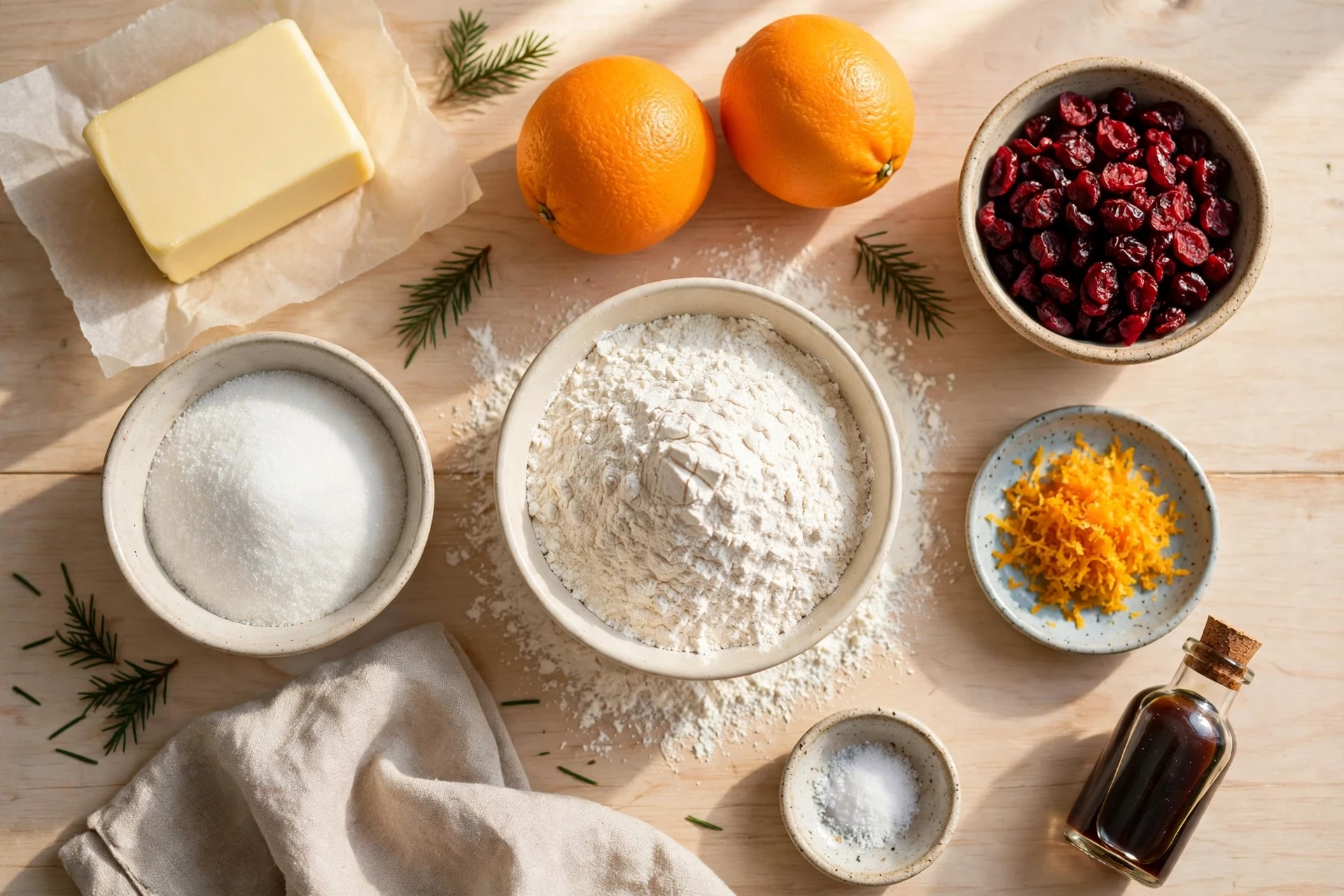
Ingredients
For the shortbread dough:
- 1 cup (2 sticks, 227 g) unsalted butter, softened to room temperature
- 3/4 cup (150 g) granulated sugar
- 2 tablespoons fresh orange zest (from 1 large orange)
- 1 tablespoon fresh orange juice
- 1 teaspoon vanilla extract
- 2 1/4 cups (280 g) all-purpose flour
- 1/2 teaspoon fine sea salt
- 3/4 cup (105 g) dried cranberries, roughly chopped
For the optional finishing touches:
- 1/4 cup coarse sparkling sugar, for rolling the log (optional, for sparkly edges)
- 4 oz (115 g) white chocolate, melted, for drizzling (optional)
- 1 teaspoon extra orange zest, for sprinkling over the drizzle (optional)
Directions
- Cream the butter and sugar (4 minutes). In a large bowl, beat the softened butter and granulated sugar together with a wooden spoon or spatula until light, fluffy, and pale, about 3 minutes. Properly creamed butter is the whole foundation of good shortbread, because the tiny air pockets you beat in now are what make the baked cookies tender instead of dense. The mixture should look creamy and almost whipped, not grainy. If your butter was properly softened, this takes almost no effort at all.
- Add the orange and vanilla, then the dry ingredients (4 minutes). Stir in the orange zest, orange juice, and vanilla extract until evenly mixed. The zest is where all the orange flavor lives, so make sure it is distributed through the butter before the flour goes in. Sprinkle the flour and salt over the top and stir gently until a soft dough forms, then fold in the chopped dried cranberries. Stop mixing the moment the flour disappears. Overmixed shortbread turns tough, and a few streaks of flour at this stage are better than a stiff dough.
- Shape the dough into a log (4 minutes). Turn the dough out onto a sheet of plastic wrap or parchment paper and shape it into a log about 2 inches wide and 10 inches long. Roll it back and forth on the counter to smooth it out, then twist the ends of the wrap closed like a candy wrapper. If you want the sparkly sugar edges, unroll the log onto a plate of coarse sparkling sugar and roll it until the outside is coated before wrapping. A neat, even log is what gives you perfectly round cookies later, so take a few seconds to smooth out any lumps now.
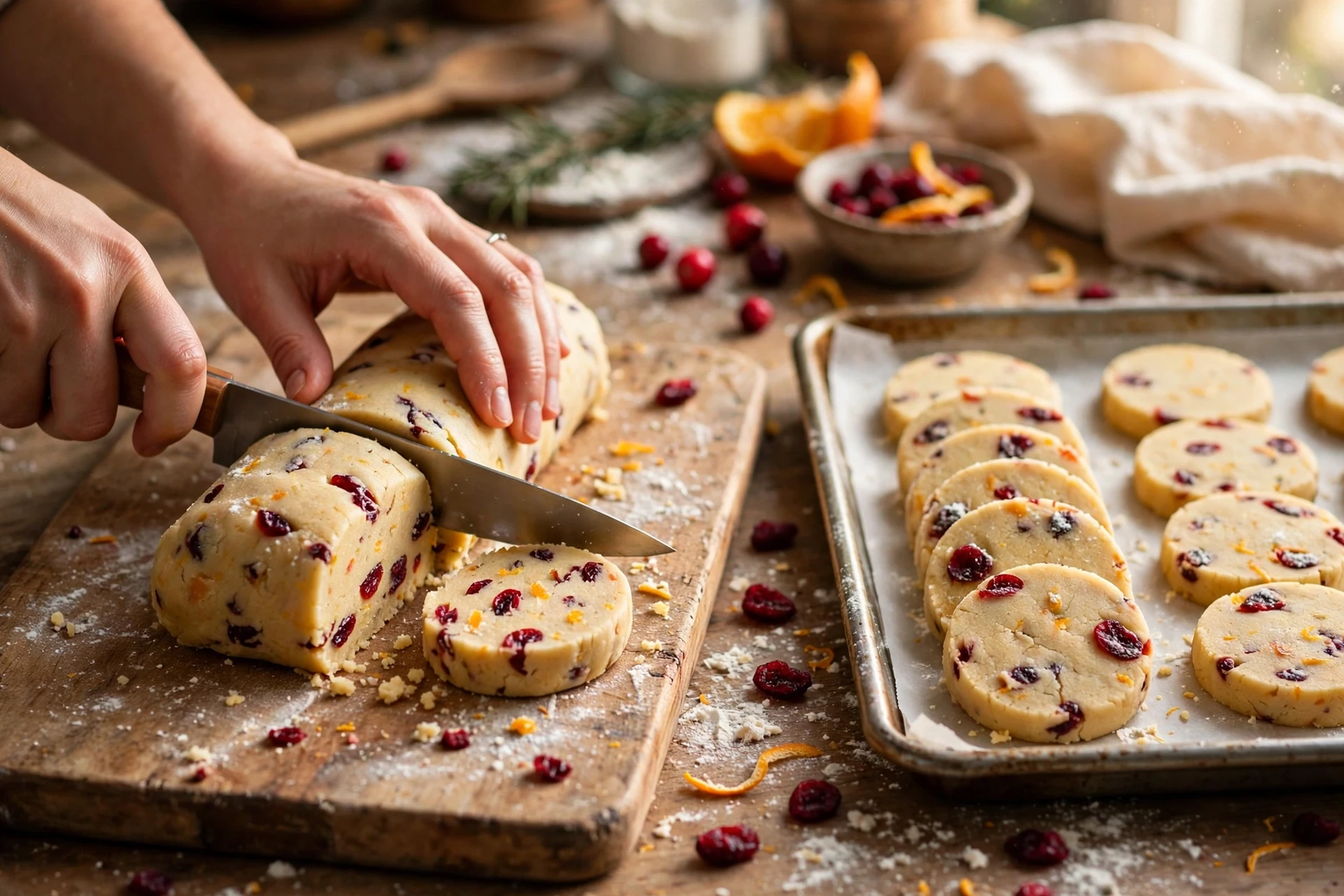
- Chill the log (30 minutes). Place the wrapped log in the refrigerator and chill for 30 minutes, until it is firm to the touch and holds its shape when you press it. This step is not optional. Cold, firm dough slices into clean, sharp-edged rounds, while soft dough squashes under the knife and bakes into ovals. While the log chills, preheat the oven to 325°F (163°C) and line two baking sheets with parchment paper.
- Slice 24 rounds (3 minutes). Unwrap the chilled log and slice it into rounds about 1/4 inch thick with a sharp knife, rotating the log a quarter turn after every few cuts so it stays round instead of flattening on one side. You should get exactly 24 slices. Place the rounds on the prepared baking sheets, spacing them about 1 inch apart. If a round crumbles at the edge, just press it back together with your fingers. Shortbread dough is very forgiving.
- Bake 12-14 minutes. Bake one sheet at a time in the center of the oven for 12 to 14 minutes, until the edges are just set and the bottoms are the palest gold. The tops should still look pale, almost underdone, because shortbread continues to firm up as it cools. Do not wait for them to turn brown. Golden brown shortbread is overbaked shortbread. Let the cookies cool on the baking sheet for 5 minutes, then transfer them to a wire rack.
- Drizzle and cool (10 minutes). While the cookies cool, drizzle the melted white chocolate over the tops in thin, quick zigzags with a spoon, and sprinkle with a pinch of extra orange zest while the chocolate is still wet. Let the cookies cool completely on the rack for about 10 minutes, until the drizzle is set and the cookies are crisp at the edges and tender in the middle. Serve at room temperature.
Why This Works
The genius of shortbread is that it is the simplest cookie in the world, and the simplest cookies are the ones where every ingredient has a job. Butter is the star, and there is no egg in this recipe, which means there is nothing to mask the flavor of the butter itself. That is why good butter matters here more than in any other cookie. When you cream it with sugar, you are beating tiny air pockets into the fat, and those pockets are what make the baked cookie crumbly and tender instead of hard and flat. This is also why the butter must be soft but not melted. Melted butter cannot hold air, and cookies made with it spread into thin, greasy discs. Soft butter, beaten properly, is the difference between shortbread and a sad puddle.
Orange zest is the second piece of technique that separates great shortbread from plain butter cookies. Zest is not just flavor. It is flavor plus aromatic oil, and that oil is fat-soluble, which means it dissolves straight into the butter and perfumes the entire cookie from the inside out. Stirring the zest into the creamed butter before the flour goes in gives those oils time to bloom into the fat, so every bite tastes like orange instead of just the bites with visible zest in them. The tablespoon of orange juice plays a quieter role. It adds a whisper of brightness and just enough moisture to help the dough come together without making it sticky. If you love this kind of bright, citrusy holiday baking, our Easy Christmas Sugar Cookies use the same zest-into-butter trick with a soft, chewy crumb.
The chill is the other piece of technique that separates clean, round cookies from lumpy, frustrating ones. Chilling firms the butter back up after all that beating and shaping, and firm butter holds its shape in the oven instead of melting out before the flour has time to set. That is why slice-and-bake cookies are so reliable. The cold log gives you perfect rounds with a knife, and the cold dough gives you thick, even cookies in the oven. Skipping the chill is the number one reason homemade shortbread spreads, and thirty minutes in the fridge costs you nothing but patience, because the oven is preheating while you wait.
Finally, the cranberries are doing real flavor work, not just looking pretty. Shortbread is rich and buttery, and richness needs contrast. The dried cranberries bring a tart, chewy pop that cuts straight through the butter, and their ruby-red color makes every cookie look festive without a single sprinkle. Chopping them roughly first matters, because whole cranberries are big enough to make the slices tear, while chopped pieces distribute evenly and let the knife glide through the log. The optional white chocolate drizzle adds a sweet, creamy finish that makes the cookies look like they came from a bakery, and the extra orange zest on top is the final bright note that ties the whole cookie together. Every layer has a job, and every job makes the bite better.
There is also a little history in every bite. Shortbread has been a Scottish celebration biscuit for centuries, and the history of shortbread traces it from medieval shortbread, a twice-baked biscuit made with leftover bread dough, to the rich butter cookie we know today, which was once so expensive that it was reserved for weddings, Christmas, and Hogmanay. Butter was precious, and a cookie made of almost nothing but butter, sugar, and flour was a luxury. These cookies borrow that same festive logic. They take the flavors people have celebrated with for hundreds of years, butter, sugar, and bright citrus, and package them in a form that takes fifteen minutes of hands-on work instead of an afternoon of baking and decorating. Tradition tastes better when it is easy enough to actually make.
Pro Tips
- Use room-temperature butter, never melted. Set the butter on the counter for 30 to 45 minutes before you start. It should dent easily when you press it with a finger but still hold its shape. Properly softened butter creams into a fluffy base in three minutes. Cold butter leaves lumps, and melted butter makes cookies that spread into thin discs.
- Zest the orange before you juice it. It is almost impossible to zest a juiced orange half, so always zest first. Use a microplane or the fine side of a box grater, and take only the bright orange outer layer. The white pith underneath is bitter and will make the whole batch taste off.
- Weigh the flour if you can. Two and a quarter cups of flour should weigh about 280 grams. Scooping flour straight from the bag packs it down and can add an extra quarter cup without you noticing, which makes dry, crumbly shortbread. Spoon the flour into the measuring cup and level it off, or weigh it for a guarantee.
- Chop the cranberries. Whole dried cranberries are big enough to catch the knife and tear the slices. A rough chop takes thirty seconds and gives you clean, even rounds with cranberry in every single bite.
- Keep the log round. Roll the log on the counter after shaping it, and rotate it a quarter turn every few slices. Logs flatten on the bottom if they sit in one position, and a flat log makes oval cookies.
- Pull them early. Shortbread should look pale and almost underdone when it comes out of the oven. The bottoms should be the palest gold and the tops should still look light. The cookies firm up as they cool, and five extra minutes in the oven turns tender shortbread into hard crackers.
Common Mistakes (and How to Fix Them)
- Cookies spread into flat discs. The butter was too warm, or the log was not chilled long enough. Fix: chill the sliced rounds on the baking sheet in the fridge for 10 minutes before baking, and make sure your oven is fully preheated to 325°F so the flour sets before the butter melts out.
- Dough is too crumbly to shape into a log. This usually means the flour was over-measured or the butter was too cold to bind. Fix: knead the dough gently with your hands for a minute until the warmth brings it together. If it is still crumbly, add 1 teaspoon of orange juice at a time until it holds together when squeezed.
- Dough is too soft and sticky to slice. The log was not chilled enough, or the kitchen is warm. Fix: put the log back in the fridge for another 15 minutes, or pop it in the freezer for 10 minutes. A firm log slices cleanly, while a soft log squashes under the knife.
- Slices tear or crumble at the edges. The cranberries were not chopped, or the knife is dull. Fix: use a sharp, thin knife and a gentle sawing motion instead of pressing straight down. Press any crumbled edges back together with your fingers. Shortbread dough is very forgiving.
- Cookies taste bland. The zest was under-measured, or the salt was skipped. Fix: next batch, use the full 2 tablespoons of zest and do not skip the 1/2 teaspoon of salt. Salt does not make cookies salty. It makes butter taste more like butter and orange taste more like orange.
- White chocolate drizzle seizes or looks dull. A single drop of water causes white chocolate to seize, so make sure the spoon and bowl are completely dry. Fix: melt the white chocolate in 20-second microwave bursts, stirring well between each burst, and stop while a few pieces are still visible, then let the residual heat finish the job. If it seizes, stir in 1 teaspoon of coconut oil at a time until it loosens.
Substitutions and Variations
- No dried cranberries? Dried cherries, chopped dried apricots, or golden raisins all work beautifully. Dried cherries keep the same tart, jewel-toned look, while apricots make a sweeter, sunnier cookie. Use the same 3/4 cup amount.
- Lemon instead of orange. Swap the orange zest and juice for lemon zest and juice, 1 to 1. Lemon shortbread is brighter and sharper, and it pairs wonderfully with a white chocolate drizzle and a sprinkle of lemon zest on top.
- Add pistachios. Fold in 1/2 cup of chopped pistachios with the cranberries for a salty crunch and a gorgeous red-and-green Christmas look. The nuts also make the cookies feel a little fancier, which is perfect for gifting.
- Chocolate-dipped instead of drizzled. Dip half of each cooled cookie into melted white or dark chocolate instead of drizzling it on top. The cookies look stunning, and the thicker chocolate layer makes them taste even richer.
- Gluten-free version. Swap the all-purpose flour for a 1-to-1 gluten-free baking flour blend. The texture is nearly identical, though the dough may feel slightly softer, so chill the log for 45 minutes instead of 30.
- Different citrus. Blood orange zest gives the cookies a gorgeous rosy tint and a slightly berry-like flavor, while clementine zest is sweeter and milder. Both work with the same measurements, so use whichever citrus looks best at the store.
- Smaller batch. Halve every ingredient for 12 cookies. The method and times stay exactly the same, which makes this the perfect recipe to test before committing to a full batch for a party.
Storage and Make-Ahead
These cookies are a make-ahead dream, which is exactly what you want in December. Store the baked cookies in an airtight container at room temperature for up to 1 week, layering them between sheets of parchment paper so the white chocolate drizzle does not stick. They taste best at room temperature, and the flavor actually deepens after a day or two, once the orange zest has had time to meld into the butter. For longer storage, keep them in the refrigerator for up to 2 weeks, and let them come back to room temperature for 15 minutes before serving so the butter softens and the flavor opens up again.
The dough itself is even more make-ahead friendly than the baked cookies. Wrap the shaped log tightly in plastic wrap and refrigerate it for up to 3 days, then slice and bake straight from the fridge. For longer storage, freeze the wrapped log for up to 3 months. Thaw it in the refrigerator overnight, then slice and bake as usual, or slice the frozen log and bake the rounds straight from frozen, adding 2 minutes to the bake time. Baked cookies freeze just as well for up to 3 months in an airtight container with parchment between the layers. Thaw them at room temperature for about 30 minutes before serving. The drizzle may lose a little of its shine after freezing, but the flavor stays perfect, and a fresh drizzle of white chocolate before serving fixes the look completely. For another freezer-friendly holiday bake that uses the same make-ahead logic, try our Easy Gingerbread Mug Cake, which is a single-serve treat you can whip up whenever the craving hits.
If you are tracking what goes into your holiday baking, the USDA FoodData Central database lists the full nutrition profile for butter, flour, sugar, and dried cranberries, so you can check the numbers for any ingredient in this recipe before you start. A single shortbread cookie is a small, portion-controlled treat, which is part of why this recipe works so well for parties. Guests can enjoy the flavor of the holidays in two bites without committing to a whole slice of cake, and you can feel good about serving something homemade where you know exactly what went into it.
Serving Ideas
Serve these cookies the way a bakery would: stacked on a tiered cake stand with a mug of hot tea or a pot of spiced cider beside them. Two cookies per person is the perfect portion for a dessert table, because they are rich, and people always come back for seconds anyway. For a cookie exchange, pack 6 cookies in a small kraft box lined with parchment and tie it with red ribbon. For a neighbor gift, fill a mason jar with a dozen cookies, add a sprig of pine and a handwritten tag, and you have the kind of gift people actually remember.
They are also wonderful alongside other holiday desserts rather than instead of them. Set them next to a plate of cut-out cookies, a bowl of peppermint bark, or a stack of our Easy Mummy Oreo Truffles for a dessert spread that looks like a magazine shoot. At a kids’ table, let them decorate their own cookies with sprinkles while the drizzle is still wet. At a grown-ups’ table, serve them with coffee, eggnog, or a small glass of dessert wine. However you serve them, put out more than you think you need, because the first person to taste one always asks for the recipe, and the second person always asks where the rest went.

Frequently Asked Questions
Can I make cranberry orange shortbread cookies ahead of time?
Yes, and you should. Make the dough up to 3 days ahead and keep the wrapped log in the refrigerator, or freeze it for up to 3 months. Baked cookies keep in an airtight container at room temperature for up to 1 week, and they actually taste better after a day or two, once the orange zest has had time to meld into the butter.
Why did my shortbread cookies spread in the oven?
Shortbread spreads when the butter is too warm or the dough is not chilled enough before baking. Make sure the butter is soft but not melted when you cream it, chill the shaped log for the full 30 minutes, and bake in a fully preheated 325°F oven so the flour sets before the butter melts out. If your kitchen is warm, chill the sliced rounds on the baking sheet for 10 minutes before they go in the oven.
Can I freeze shortbread cookie dough?
Yes. Wrap the shaped log tightly in plastic wrap, then in foil, and freeze for up to 3 months. Thaw it in the refrigerator overnight, then slice and bake as usual. You can also slice the frozen log and bake the rounds straight from frozen, adding 2 minutes to the bake time.
Do I have to chill the dough before slicing?
Yes, the 30-minute chill is essential. Cold, firm dough slices into clean, sharp-edged rounds, while soft dough squashes under the knife and bakes into ovals. Chilling also firms the butter back up after shaping, so the cookies hold their shape in the oven instead of spreading. If the log still feels soft after 30 minutes, chill it for another 15 minutes.
Rate this recipe
Be the first to rate it!