
You know that hot, bubbly spinach artichoke dip that disappears from the snack table before the party even starts? The one everyone hovers around with a chip in one hand and zero plans to share? This is that dip, all grown up and turned into dinner. Our easy spinach artichoke pasta takes everything you love about the classic dip — the creamy tang, the garlicky warmth, the tender artichoke hearts, the spinach that melts into the sauce — and tosses it with penne for a 30-minute dinner that tastes like you worked on it all evening.
Here is the best part: the whole thing comes together in one pot and one skillet, with about 10 minutes of chopping and measuring and 20 minutes of actual cooking. The pasta boils while the sauce comes together right beside it, so by the time the penne is done, dinner is basically done too. No oven, no baking dish, no waiting around for anything to brown. Just a big, cozy skillet of creamy pasta that makes the whole kitchen smell like garlic and parmesan.
This is the kind of weeknight dinner that earns a permanent spot in the rotation. It is rich enough to feel like a treat, quick enough for a Tuesday, and flexible enough that you can swap in whatever pasta shape or leafy green you already have. Kids love it because it tastes like the dip they already beg for. Grown-ups love it because it is a real dinner with real vegetables tucked inside all that creaminess. And you will love it because the ingredient list is short, the steps are simple, and the leftovers — if there are any — reheat beautifully for lunch the next day.
If your family already has a soft spot for creamy pasta nights, this one fits right in alongside our easy creamy garlic butter noodles and our easy creamy tomato pasta. And if the dip itself is what hooked you in the first place, our easy spinach artichoke dip is the party version of this exact flavor, baked hot and bubbly for sharing.
One more thing before we start: this recipe is built for real weeknights, not perfect ones. The spinach can be the bag that has been sitting in the fridge for two days. The artichokes can be the can from the back of the pantry. The Parmesan can be the wedge you meant to use last week. Nothing here needs to be fancy or freshly bought to turn out beautifully, and if the baby is crying or the homework needs checking, the sauce will wait on low heat for a few minutes without any complaint. That is the whole point of a 30-minute dinner: it bends around your evening instead of demanding that your evening bend around it.
Recipe at a Glance
- Prep Time: 10 minutes
- Cook Time: 20 minutes
- Total Time: 30 minutes
- Serves: 4
- Ingredients: 12
- Course: Dinner
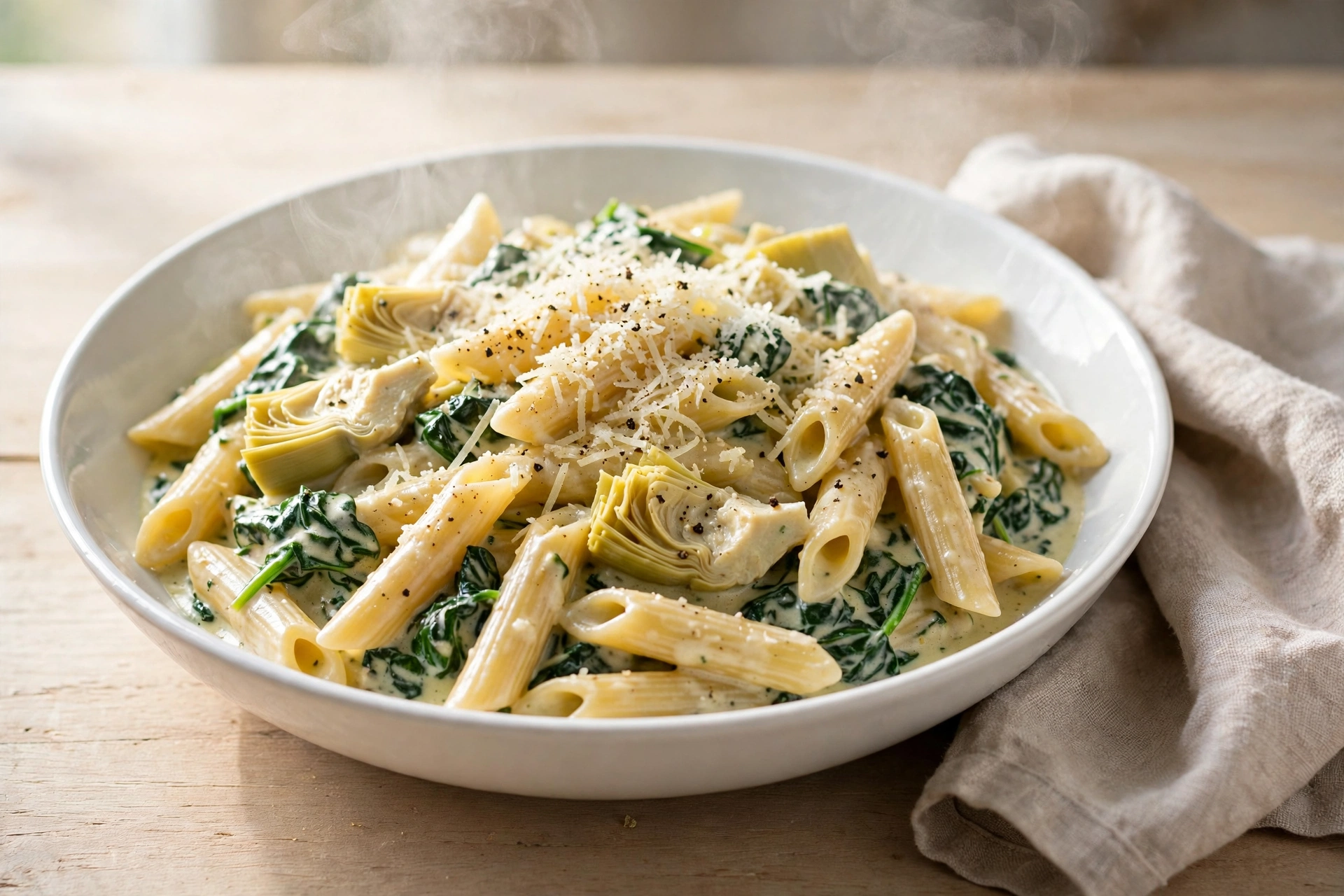
Why You Will Love This Spinach Artichoke Pasta
Some recipes ask you to choose between fast and delicious. This one refuses. The sauce is built from cream cheese and heavy cream, which means it turns thick and glossy in minutes with no flour, no roux, and no long simmer. The artichoke hearts bring a gentle tang that cuts through the richness so the pasta never feels heavy. The spinach wilts right into the sauce, so every bite has a little green in it without anyone having to think about eating their vegetables. And a squeeze of lemon at the very end wakes the whole pan up, the way a good squeeze of lemon always does.
It is also a wonderfully forgiving recipe. The sauce is hard to break, the pasta finishes cooking in the skillet so it soaks up flavor, and the ingredient list is made of things you probably already have or can grab on one quick store run. This is weeknight cooking the way it should be: fast, warm, and just a little bit indulgent.
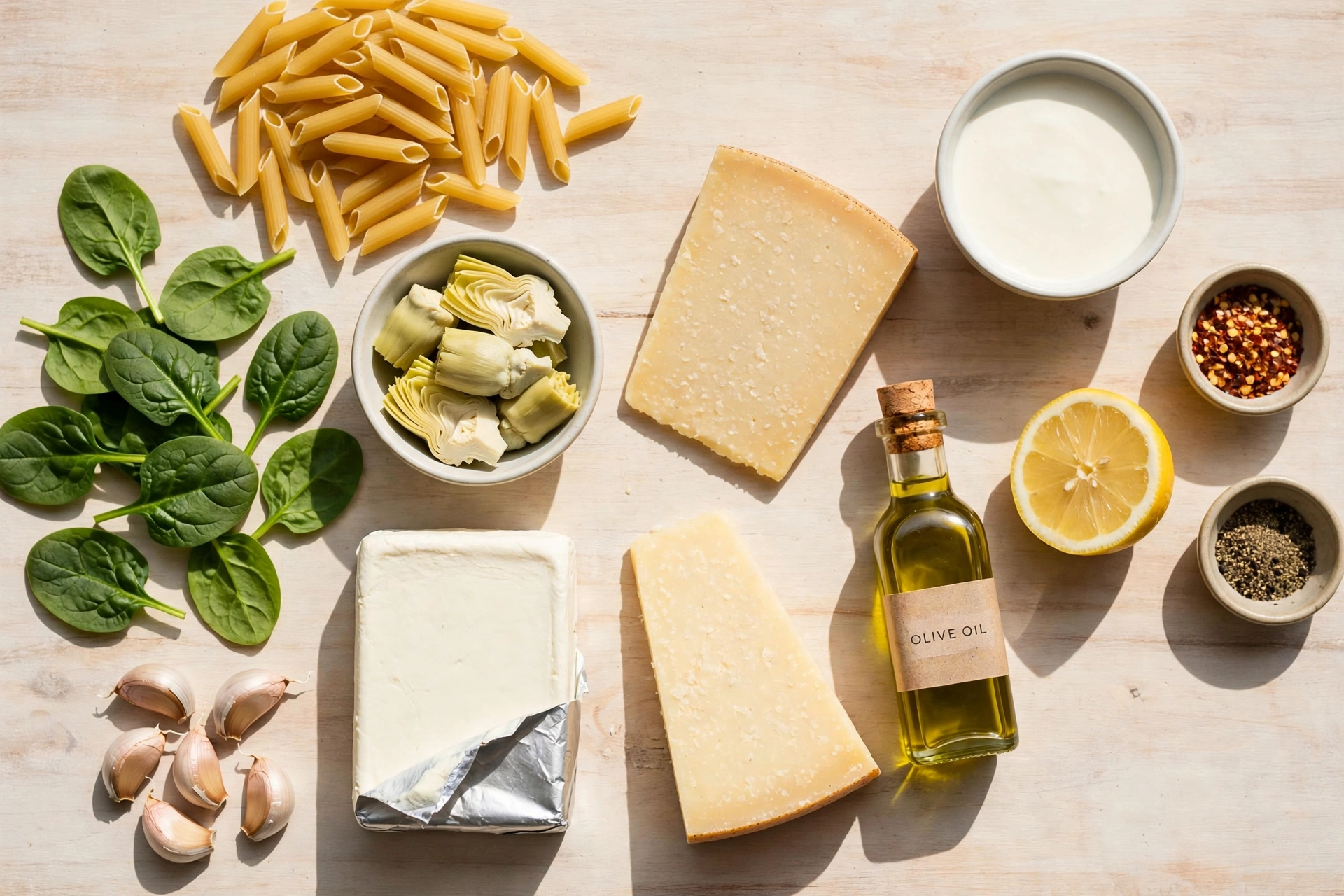
Ingredients
Everything below serves 4 generous portions. If you are cooking for two, halve the recipe and use a smaller skillet; if you are feeding a crowd, double it and use your biggest pan so the pasta has room to toss.
- 12 oz penne pasta
- 5 oz fresh baby spinach (about 5 cups, loosely packed)
- 1 can (14 oz) artichoke hearts, drained and quartered
- 4 oz cream cheese, cubed and at room temperature
- 1 cup heavy cream (or half-and-half)
- 1/2 cup freshly grated Parmesan cheese, plus more for serving
- 4 cloves garlic, minced
- 2 tablespoons olive oil
- 1 tablespoon fresh lemon juice (about half a lemon)
- 1/2 teaspoon kosher salt, plus more for the pasta water
- 1/4 teaspoon black pepper
- 1/4 teaspoon red pepper flakes (optional, for a gentle warmth)
Choosing Your Artichoke Hearts
The artichokes are the quiet star of this pasta, and the can is your best friend here. Canned artichoke hearts packed in water are tender, mild, and ready to use the second you open the can, which is exactly what a 30-minute dinner needs. Look for hearts, not bottoms, and give them a good drain and a pat dry before they go anywhere near the skillet. Frozen artichoke hearts are an excellent second choice: thaw them fully, squeeze out the extra water, and quarter them just like the canned ones. Marinated artichoke hearts work in a pinch too, but rinse them under cold water first, because their brine is salty and sharp enough to throw the whole sauce off balance. Fresh artichokes are wonderful, but trimming and steaming them turns a 30-minute dinner into an hour-long project, so save those for a slow Sunday and let the can do the work tonight.
Directions
- Prep the artichokes and garlic (4 minutes). Drain the artichoke hearts well and pat them dry with a paper towel, then quarter them. Mince the garlic. Drying the artichokes matters more than it sounds: wet artichokes water down the sauce, while dry ones stay tender and let the cream coat them properly.
- Grate the Parmesan and cube the cream cheese (3 minutes). Grate the Parmesan fresh if you can; it melts far more smoothly than the pre-grated kind. Cut the cream cheese into small cubes and set it out at room temperature while you work. Soft, cubed cream cheese melts into the sauce in about a minute, while a cold block straight from the fridge takes much longer and can leave lumps.
- Wash the spinach and measure the cream (3 minutes). Give the baby spinach a quick rinse and shake it dry. Measure out the heavy cream and squeeze the lemon. Everything should be within arm’s reach before the stove turns on, because once the garlic hits the oil, this recipe moves fast.
- Boil the penne (10 minutes). Bring a large pot of generously salted water to a rolling boil and cook the penne for 1 minute less than the package directions, usually about 9 minutes. Before draining, scoop out 1 cup of the starchy pasta water and set it aside; it is liquid gold for loosening the sauce later. Drain the pasta and set it aside.
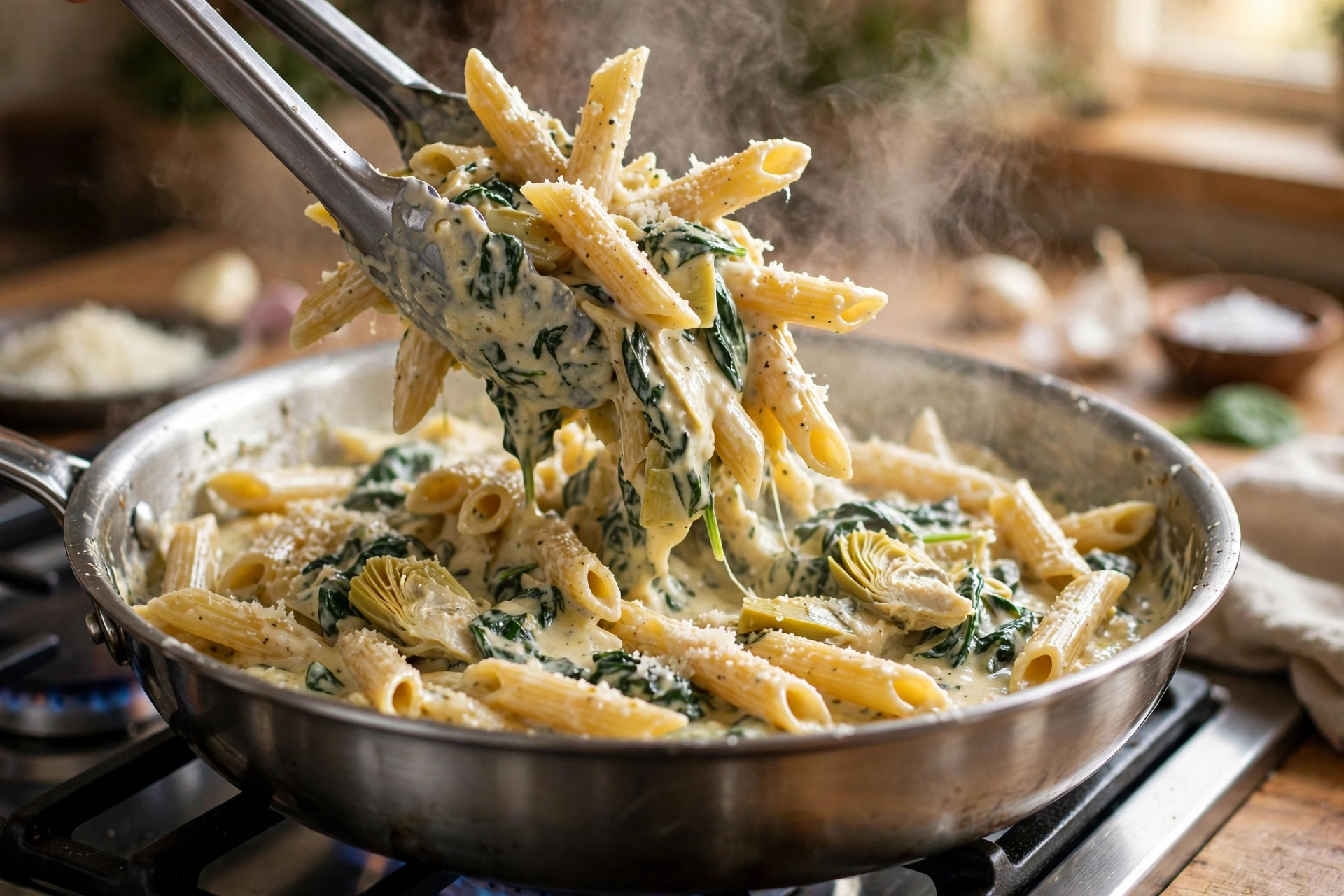
- Bloom the garlic and wilt the spinach (4 minutes). While the pasta cooks, warm the olive oil in a large, deep skillet over medium heat. Add the garlic and cook for just 30 seconds, until it smells sweet and fragrant. Add the spinach in two big handfuls, letting the first handful wilt down for about a minute before adding the second. Wilting in stages keeps the pan hot, so the spinach wilts instead of steaming into a soggy pile, and it only takes about 2 minutes total.
- Build the cream sauce (4 minutes). Pour in the heavy cream and add the cubed cream cheese. Stir gently as the cream cheese melts into the cream, about 2 minutes, until the sauce looks smooth and glossy. Sprinkle in the Parmesan, salt, black pepper, and red pepper flakes, and stir until the Parmesan melts in. Keep the heat at medium or a touch below: the sauce should simmer lazily, never boil hard, or the cheese can turn grainy.
- Toss it all together (2 minutes). Add the drained penne and the quartered artichoke hearts to the skillet. Toss everything together so every piece of pasta is coated, then stir in the lemon juice. If the sauce feels too thick, splash in a little of the reserved pasta water, a few tablespoons at a time, until it clings to the pasta like a silk scarf. The sauce should coat the back of a spoon and slide slowly off, never runny and never stiff.
- Taste, adjust, and serve. Taste a bite and adjust: a pinch more salt if it tastes flat, another squeeze of lemon if it tastes too rich, an extra spoonful of pasta water if it has thickened while you were deciding. Serve right away in warm bowls with extra Parmesan on top.
Why This Works
Every step in this recipe has a reason, and knowing the reasons is what turns a good pasta into a great one. First, blooming the garlic in olive oil before anything else goes in the pan: fat carries flavor, and 30 seconds in warm oil is enough to sweeten the garlic and perfume the whole sauce. Any longer and garlic turns bitter fast, which is why it goes in alone and the spinach follows immediately.
Second, the spinach wilts in two handfuls instead of one big heap. A whole bag of spinach dropped into a pan at once cools the pan down and steams, and steamed spinach sheds water into your sauce. Two handfuls, one after the other, keep the pan hot, so the leaves wilt in about a minute each and stay bright green instead of turning grey and watery.
Third, the cream cheese does double duty. It is not just there for flavor; it is the emulsifier that holds the sauce together. Cream cheese melts into the cream and helps the Parmesan blend in smoothly instead of clumping, which is why this sauce turns glossy with almost no effort. Cubing it and letting it soften first is the small step that makes the melting happen in about a minute instead of five.
Fourth, the pasta finishes in the sauce, not just beside it. Cooking the penne 1 minute shy of al dente and tossing it in the skillet for the last 2 minutes lets the pasta absorb a little of the sauce as it finishes cooking, so the flavor runs all the way through instead of sitting on top. The reserved pasta water helps here too: its starch loosens the sauce just enough to coat every tube without thinning the flavor.
Finally, the lemon goes in last, off the fiercest heat. Acid brightens rich food, but if lemon juice simmers for a long time it loses its sparkle and can even make a cream sauce taste sharp. Stirred in at the very end, it lifts the whole pan: the cream stays creamy, the garlic stays warm, and the finish tastes fresh instead of heavy. If you like knowing what is in your food, the USDA FoodData Central database has the full nutritional profile for spinach and artichoke hearts, and Wikipedia’s spinach page explains why this leafy green wilts down to almost nothing in the pan — fresh spinach is mostly water, which is exactly why it disappears so neatly into the sauce.
Pro Tips
- Start the pasta water first. Put the pot on before you do anything else, and build the sauce in the skillet while the penne boils. The two pans run side by side, which is how the whole dinner lands in 30 minutes.
- Salt the pasta water like the sea. The pasta absorbs that water as it cooks, so well-salted water seasons the penne from the inside out. Unsalted pasta water makes even the best sauce taste a little flat.
- Always reserve the pasta water before draining. It is the easiest fix in the kitchen: a few spoonfuls loosen a thick sauce, help it cling to the pasta, and rescue a pan that tightened up while you were setting the table. Scoop it out before you drain, because once it is down the sink, it is gone.
- Grate the Parmesan yourself. Pre-grated Parmesan is coated to keep it from clumping in the bag, and that coating keeps it from melting smoothly in a sauce. A small wedge and a box grater take 2 minutes and the difference is obvious.
- Pat the artichokes dry. Canned artichoke hearts hold a surprising amount of liquid. A quick pat with a paper towel keeps the sauce thick and glossy instead of thin and watery.
- Keep the sauce at a lazy simmer. Once the Parmesan goes in, medium-low heat is your friend. A hard boil can make cheese sauces grainy, while a gentle simmer keeps everything silky.
- Do not rinse the pasta. That cloudy starch clinging to the drained penne is exactly what helps the sauce grab hold. Rinsing washes it away and leaves the pasta slippery, so the sauce slides off instead of coating every piece.
- Warm your bowls. Cream sauces tighten up fast in a cold bowl. A quick rinse of each bowl under hot tap water, dried just before serving, keeps the pasta silky for the whole meal instead of just the first two minutes.
Common Mistakes and How to Fix Them
The sauce is too thin. This usually means the cream cheese did not fully melt in, or the artichokes brought extra water with them. Let the sauce simmer for another 1 to 2 minutes, stirring gently, and it will thicken as the cream reduces. If it still looks loose, a spoonful of extra Parmesan stirred in off the heat will tighten it right up.
The sauce turned watery after adding the spinach. All the spinach went in at once and steamed instead of wilting. Next time, add it in two handfuls and let the first wilt before the second goes in. For the pan in front of you, scoop out any liquid pooling at the edges with a spoon and simmer for a minute; the sauce will come back together.
The garlic tastes bitter. Garlic goes from sweet to bitter in seconds once it browns too far, and there is no fixing burnt garlic. If it smells sharp or looks golden-brown before the spinach goes in, start that step over with fresh oil and fresh garlic; it only costs a minute and saves the whole pan.
The sauce looks grainy. The heat was too high when the Parmesan went in. Take the skillet off the burner, add a splash of the reserved pasta water, and stir steadily for 30 seconds. The sauce usually smooths out as it cools slightly. Next time, add the Parmesan over low heat and stir it in gently.
The pasta is mushy. It cooked too long before it hit the skillet. Remember that the penne keeps cooking for 2 minutes in the hot sauce, so pulling it 1 minute shy of al dente is not a suggestion, it is the whole trick. Set a timer; pasta waits for no one.
Substitutions
- Pasta shape: Rotini, fusilli, farfalle, or rigatoni all work beautifully. Short shapes with ridges or folds grab the creamy sauce best; long shapes like spaghetti work too, but they are harder to toss with the artichoke pieces.
- Heavy cream: Half-and-half is the easiest swap and is already listed in the recipe. Whole milk works as well, but add an extra ounce of cream cheese so the sauce still turns thick and glossy.
- Cream cheese: Mascarpone makes the sauce even silkier and slightly sweeter. Neufchâtel is a fine lighter swap with a very similar texture.
- Fresh spinach: Frozen spinach works, but thaw it completely and squeeze it very dry first (see the FAQ below). Tender kale also works; it just needs an extra minute or two to wilt.
- Artichoke hearts: Frozen artichoke hearts, thawed and patted dry, are a great swap. Marinated artichoke hearts work too, but rinse them first so their brine does not make the sauce salty or sharp.
- Parmesan: Pecorino Romano is a saltier, sharper cousin that melts just as well; use a little less salt if you swap it in.
- Make it heartier: Stir in shredded rotisserie chicken, a can of drained white beans, or quickly sautéed shrimp in the last 2 minutes for extra protein without changing the timing.
Storage and Make-Ahead
Let the pasta cool for no more than 2 hours at room temperature, then pack it into an airtight container and refrigerate for 3 to 4 days. The sauce thickens as it sits, which is completely normal. To reheat, warm it gently in a skillet over low heat with a splash of milk or cream, stirring often, until it is hot all the way through. The microwave works in a pinch: reheat in 30-second bursts, stirring between each one, with a spoonful of milk to loosen the sauce.
You can also make the sauce a day ahead: cook it through step 6, cool it, and refrigerate it in a covered container. When dinner time comes, boil the pasta fresh, warm the sauce gently, and toss them together. Fresh pasta with a made-ahead sauce tastes just as good as the all-at-once version and makes a busy evening even easier.
Freezing is not recommended for this one. Cream cheese and cream sauces tend to separate and turn grainy when frozen and thawed, so the texture never quite comes back. The fridge life of 3 to 4 days covers a whole week of lunches, so freeze nothing and enjoy the leftovers instead.
Serving Ideas
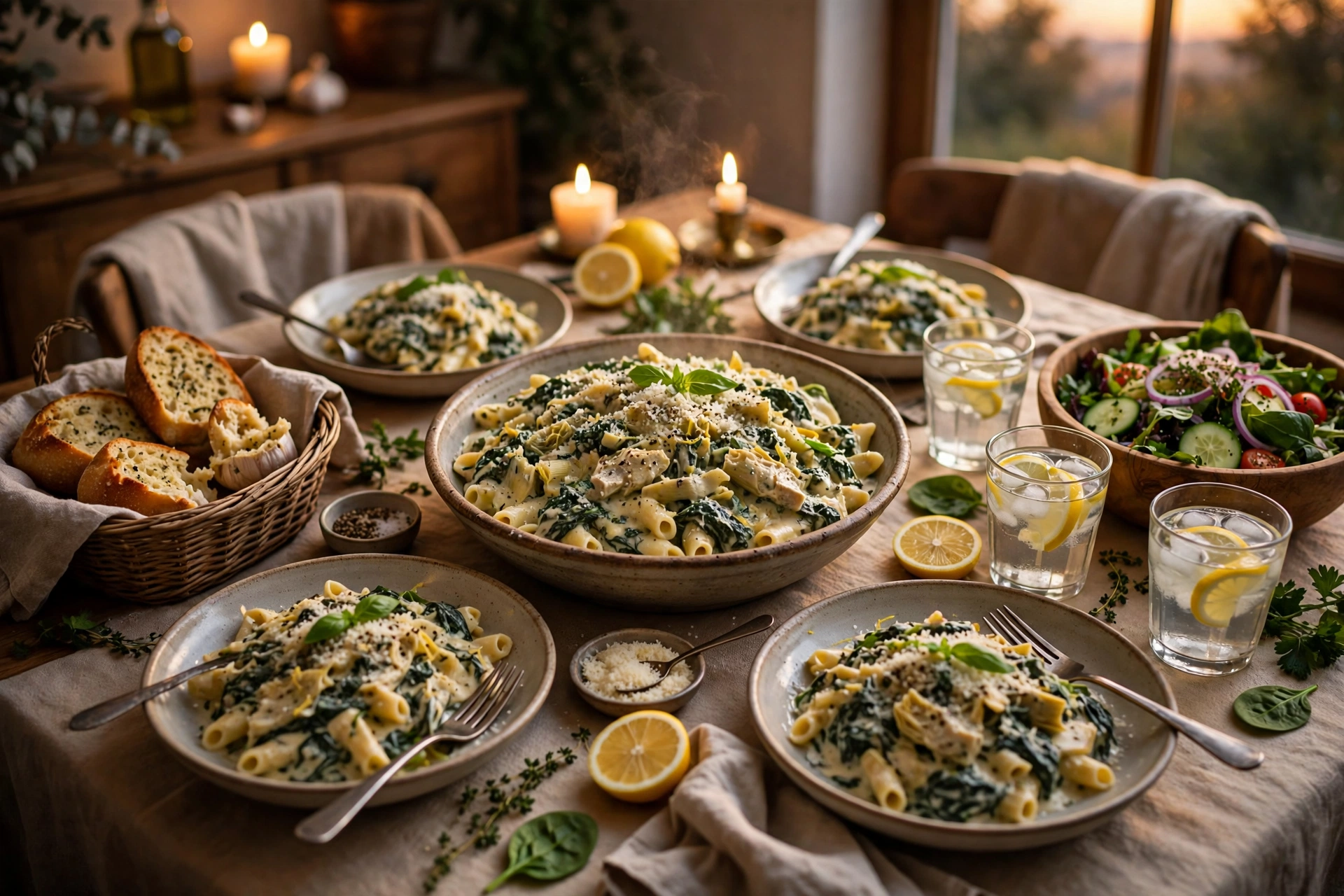
This pasta is a full dinner all by itself, but a couple of simple sides turn it into a real occasion. Warm, crusty garlic bread is the obvious partner: it is made for mopping up the last of the sauce, and nobody at the table will leave a drop behind. A simple green salad with lemon and olive oil keeps things bright and gives the plate a fresh crunch. Roasted asparagus or green beans add color and another vegetable without any extra effort. And a few lemon wedges on the table let everyone brighten their own bowl exactly the way they like it.
For a bigger spread, serve it family-style in the middle of the table with the bread basket and the salad bowl, and let everyone help themselves. That is how this pasta tastes best: passed around, second helpings encouraged, and the skillet scraped clean before anyone thinks about dessert.
Frequently Asked Questions
Can I use frozen spinach instead of fresh spinach in this pasta?
Yes. Thaw 10 ounces of frozen spinach completely, then squeeze it very dry in a clean kitchen towel before adding it. Frozen spinach holds a surprising amount of water, and skipping the squeeze is the fastest way to a watery sauce. Add the squeezed spinach with the artichoke hearts in step 7, since it only needs to heat through.
Can I make spinach artichoke pasta ahead of time?
Yes, up to 2 days ahead. Cook the pasta and sauce, combine them, and store the finished pasta in an airtight container in the fridge. Reheat it gently in a skillet over low heat with a splash of milk or cream, stirring often, until it is hot all the way through. The sauce thickens as it sits, so the extra liquid brings it back to silky. And since the whole recipe only takes 30 minutes from start to finish, making it fresh is nearly as fast as reheating it.
What can I use instead of heavy cream in spinach artichoke pasta?
Half-and-half is the easiest swap and is already listed in the recipe. Whole milk works too, but add an extra ounce of cream cheese so the sauce still turns thick and glossy. Avoid skim milk, which is too thin to coat the pasta and can split when it simmers.
Can I freeze spinach artichoke pasta?
Freezing is not recommended. Cream cheese and cream sauces tend to separate and turn grainy when frozen and thawed, so the texture never quite comes back. The pasta keeps beautifully in the fridge for 3 to 4 days instead, which covers a whole week of lunches.
Rate this recipe
Be the first to rate it!
1 thought on “Easy Spinach Artichoke Pasta (30-Minute Dinner Recipe)”