
There is a very special sound in the candy world: the crisp crack of a glassy sugar shell giving way to a burst of juicy fruit. That sweet-and-crunchy contrast is exactly why candy-coated fruit has taken over party tables, birthday spreads, and weekend treat nights everywhere. One bite is all shattering candy sparkle, the next is fresh, bright fruit. It tastes like a county fair and a fancy candy shop had a very delicious baby.
The best part? All four of these candy-coated fruit recipes use one master hard-candy syrup. Learn that single syrup and you can make glossy candy strawberries, rainbow crack grapes, candy apple slices, and classic tanghulu skewers any time the craving hits. They sit right alongside our other fruity party favorites like these easy candy corn fruit cups — fun to look at, even more fun to eat.
Total time for one batch of syrup plus dipping: about 35–40 minutes, plus drying time for the fruit. Yield: one batch of syrup coats roughly 20–25 pieces of fruit, so pick one recipe below per batch, or make a double batch in a big pot for a party platter.
First, the Golden Rule: Dry Fruit, Happy Candy
Every candy fruit success or disaster comes down to one thing: your fruit must be completely, totally, bone dry before it touches the syrup. Here is why. The syrup is cooked to 300°F (150°C). When water on the surface of a strawberry hits syrup that hot, it flashes instantly into steam. That steam blows tiny bubbles into your beautiful shell, leaving it cloudy, pitted, and dull instead of glassy. Worse, a wet surface gives the syrup nothing to grip, so the coating slides right off in a sticky puddle.
So wash your fruit well (the FDA’s guide to selecting and serving produce safely covers the basics of rinsing and handling fresh produce), then pat it dry with clean towels, spread it on a rack or paper towels, and let it air-dry for 30 to 60 minutes. Room-temperature fruit works best too — cold fruit from the fridge sweats condensation, and condensation is just sneaky water. Set a parchment-lined tray next to the stove before you start, because once the syrup is ready, everything moves fast.
Hot Syrup Safety (Please Read Before You Start)
Melted sugar is the hottest thing that will ever be in your kitchen, and it deserves real respect. Please read these points before the pot goes on the stove:
- 300°F syrup causes serious burns. It is far hotter than boiling water, and it sticks to skin. Never touch it, taste it, or test it with a finger — not even a quick lick of the spoon.
- Keep kids and pets completely out of the kitchen while the syrup cooks and while you dip. One bumped elbow is all it takes.
- Use a heavy pot with high sides and a long-handled spoon or heatproof spatula. Wear long sleeves and closed shoes, and keep pot holders within reach.
- Never leave boiling syrup unattended. In the final minutes the temperature climbs fast, and sugar goes from perfect to scorched in well under a minute.
- If syrup splashes your skin, run the spot under cool (not icy) running water right away for several minutes and seek medical care for anything more than a tiny spot. Do not try to peel set sugar off hot skin.
- Keep water away from the pot. Never pour water into hot syrup to “help it along” — it will erupt into steam and spatter.
The Master Hard-Candy Syrup (One Syrup, 4 Recipes)
This is the only syrup you need for every recipe in this post. The corn syrup is the quiet hero here: it interferes with sugar crystals forming, which keeps your finished shells clear and smooth instead of grainy. The target temperature is the hard-crack stage on the classic candy temperature chart — that is the stage where syrup sets into hard, brittle threads, and it is what gives your fruit that famous shattering crunch.
Ingredients
- 2 cups (400 g) granulated sugar
- 3/4 cup (180 ml) water
- 1/2 cup (120 ml) light corn syrup
- Gel food coloring, as needed for the recipe (optional)
- 1/2 teaspoon candy flavoring oil or extract, such as strawberry, green apple, or cotton candy (optional)
Directions
- Combine the sugar, water, and corn syrup in a heavy medium saucepan. Stir over medium heat just until the sugar fully dissolves and the syrup looks clear, about 3 to 4 minutes.
- Stop stirring completely once it comes to a boil. Dip a clean pastry brush in water and brush down any sugar crystals clinging to the sides of the pan — stray crystals can seed graininess through the whole batch.
- Clip a candy thermometer to the side of the pan, making sure the tip is submerged in syrup but not touching the bottom of the pan.
- Cook, undisturbed, until the syrup reaches 300°F (150°C), the hard-crack stage (the full stage runs 300–310°F / 150–154°C, and 300°F is the sweet spot for a glassy shell). This takes about 15 to 20 minutes. No thermometer? Drop a tiny bit of syrup into a glass of ice water: at hard crack it forms hard, brittle threads that snap cleanly instead of bending.
- Immediately remove the pan from the heat. If you are coloring or flavoring the syrup, stir it in now, gently and quickly — flavorings go in off the heat so their flavor does not cook away. Tilt the pan so the syrup pools deeply on one side.
- Dip your fruit right away, one piece at a time (details in each recipe below). The syrup stays dippable for about 10 minutes. If it thickens too much, warm it over the lowest heat for 30 to 60 seconds until it flows again — you can do this once or twice, but do not boil it hard again.
4 Candy-Coated Fruit Recipes
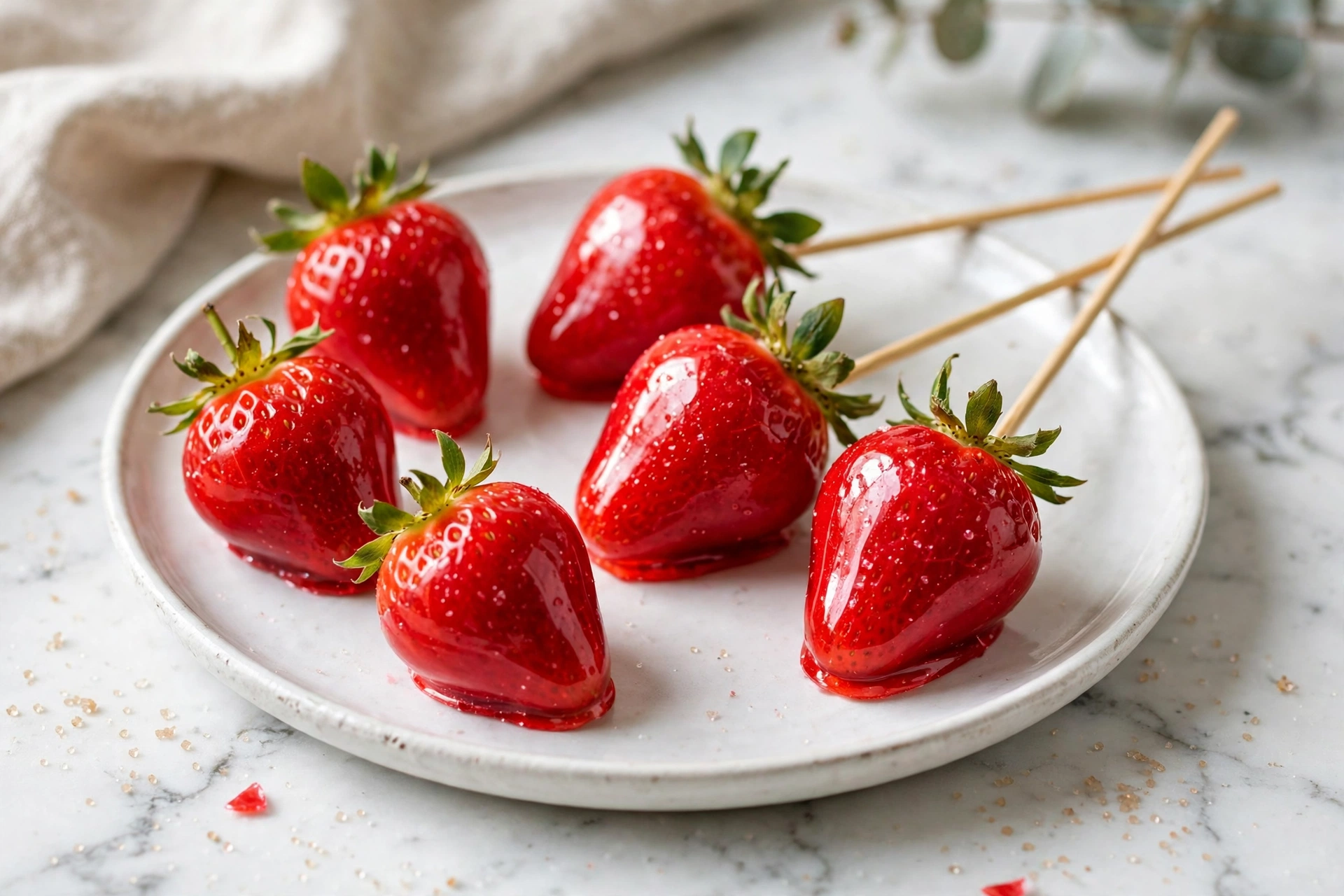
1. Candy Strawberries (Glossy Red Shell)
The showstopper. Big, ripe strawberries wrapped in a ruby-red glass shell look like they came from a fancy patisserie window, and the juicy berry center against that candy snap is pure joy.
Prep: 10 minutes, plus 30–60 minutes drying | Cook: 20 minutes | Yield: 12 candy strawberries
Ingredients
- 1 batch master hard-candy syrup (above)
- Red gel food coloring
- 12 large fresh strawberries with green tops left on, washed and dried completely
- 12 wooden skewers or lollipop sticks
Directions
- Push a skewer into the stem end of each strawberry so you have a firm handle. Check one last time that every berry is fully dry — this is the recipe where bubbles show most.
- Make the master syrup and tint it red off the heat. Work quickly: hold a strawberry by its skewer, dip it into the pooled syrup, and swirl once to coat.
- Lift it out, keep twirling slowly for about 10 seconds so the excess drips back and the shell evens out, then stand it on the parchment-lined tray.
- Repeat with the remaining berries. The shells set hard in about 5 minutes at room temperature. Serve within a few hours for maximum crunch.
2. Candy Grapes (Crack Grapes)
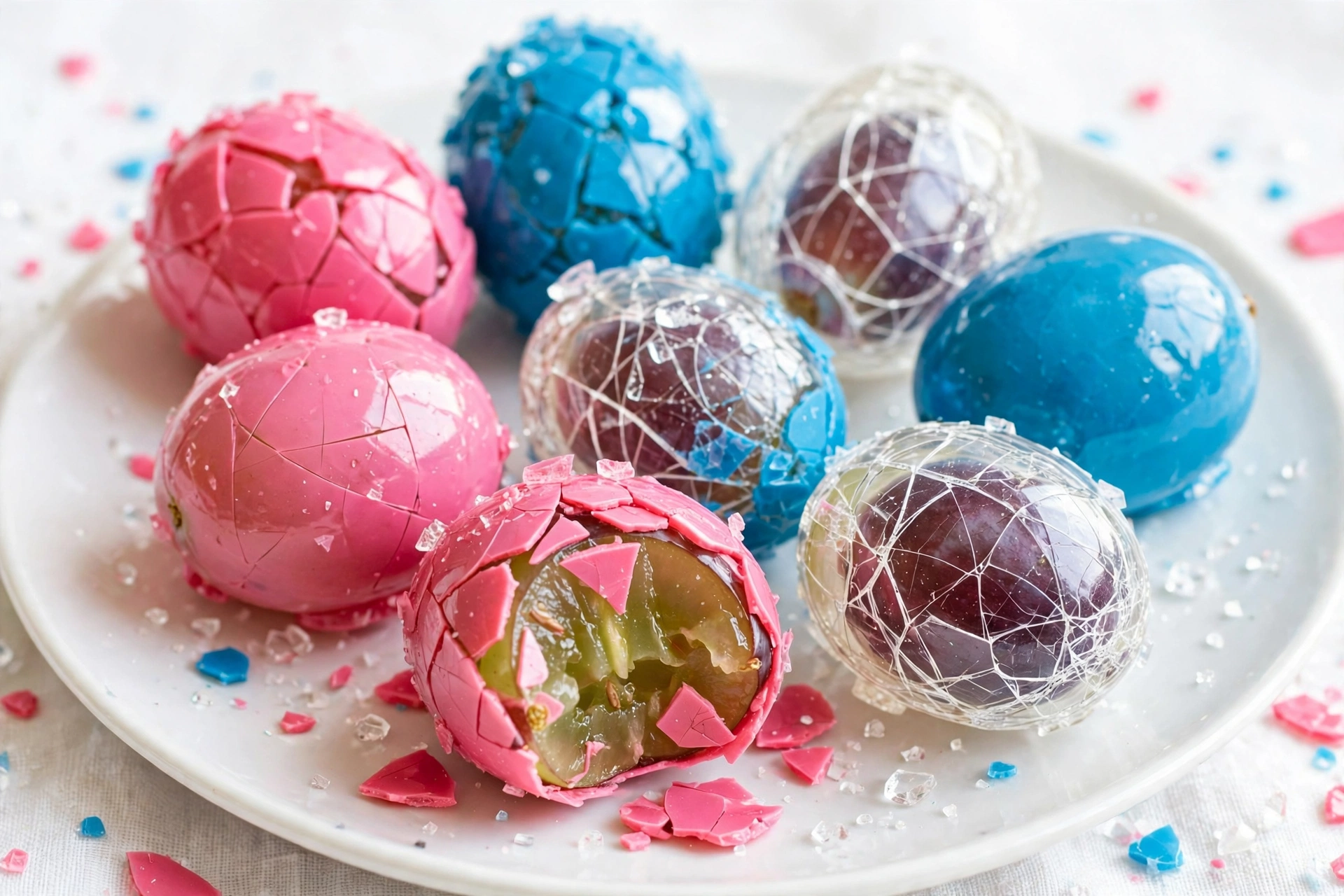
Crack grapes are the internet-famous ones, and they earn the hype. A thin, shattering candy shell around an ice-cold, juicy grape is the single most addictive bite in this whole post. Make them in two or three colors and watch them disappear.
Prep: 15 minutes, plus 30–60 minutes drying | Cook: 20 minutes | Yield: about 30 candy grapes
Ingredients
- 1 batch master hard-candy syrup (above)
- Gel food coloring in 2–3 colors (pink and blue are party favorites)
- 2 cups (about 30) seedless grapes, green, red, or a mix, washed, de-stemmed, and dried completely
- Toothpicks or short skewers
- Optional: 1/2 cup crushed hard candies (such as fruit-flavored classics) or flavored gelatin powder, for rolling
Directions
- Skewer each grape on a toothpick. Grapes must be completely dry and at room temperature — their smooth skins show every bubble, so do not rush the drying step.
- Make the master syrup. For multiple colors, divide the hot syrup between warmed heatproof measuring cups and tint each one. Work with one color at a time and keep the others in a warm (not hot) spot.
- Dip each grape with one quick dunk — in, swirl, out. A thin shell is the secret to a clean crack; thick shells are hard on teeth.
- If rolling in crushed candy or gelatin powder, roll the grape the second it comes out of the syrup, while the shell is still tacky, then set it on parchment.
- Let set about 5 minutes. These are at their crackly best within 2 to 4 hours.
3. Candy Apple Slices
Whole candy apples are gorgeous but a commitment. Slices give you the same crackly shell and tart-crisp apple in a tidy, shareable, kid-manageable bite — much kinder to small mouths and to anyone who has ever wrestled a whole candied apple. If you love the full-size classic too, our poison toffee apples are a spooky-season favorite around here.
Prep: 15 minutes | Cook: 20 minutes | Yield: about 18 slices
Ingredients
- 1 batch master hard-candy syrup (above)
- Red or green gel food coloring (optional)
- 3 firm, crisp apples such as Granny Smith or Honeycrisp
- 18 lollipop sticks or sturdy toothpicks
Directions
- Slice each apple into 6 wedges about 1/2 inch thick and cut out the seeds and core. Push a lollipop stick into the skin side of each wedge.
- Here is the slice-specific secret: cut apple flesh weeps juice constantly. Pat each slice dry with a paper towel immediately before dipping — not ahead of time, right at the stove, one slice at a time.
- Make the master syrup and tint if you like. Dip each slice quickly, coating the cut faces fully, let the excess drip off, and lay on parchment.
- Set for about 5 minutes. Serve the same day, ideally within a few hours, before the apple’s moisture softens the shell from underneath.
4. Tanghulu Skewers (Mixed Fruit)
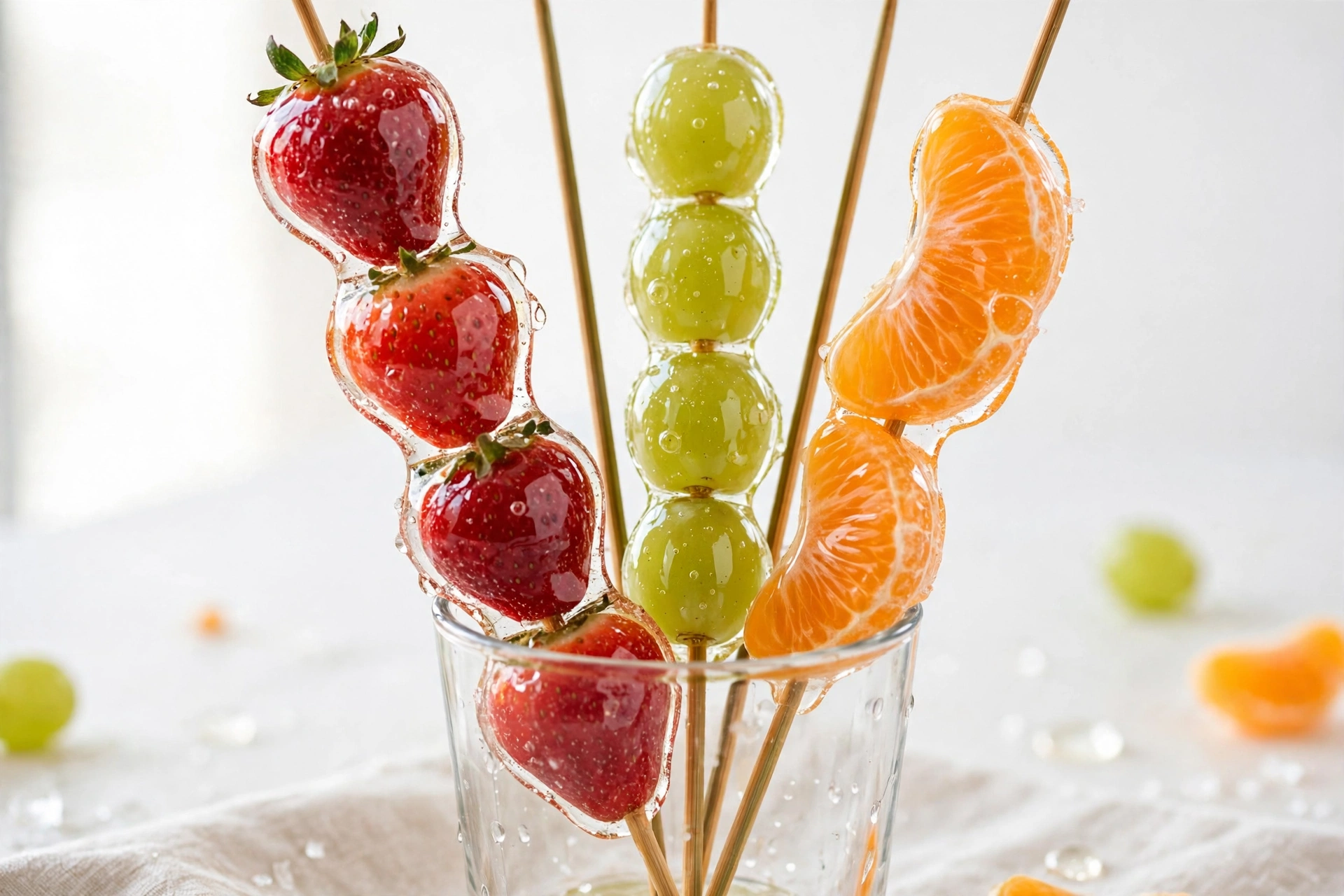
Tanghulu is the beloved Chinese street treat that started the whole candy fruit craze: skewers of fruit lacquered in a crystal-clear shell so shiny it looks like glass. No coloring needed — the fruit glows through. Around here it is also the most requested, right up there with our other fruit-on-a-stick party hero, frozen ghost banana pops.
Prep: 15 minutes, plus 30–60 minutes drying | Cook: 20 minutes | Yield: 6 skewers
Ingredients
- 1 batch master hard-candy syrup (above), left clear and uncolored
- 6 small strawberries, tops on, washed and dried completely
- 12 seedless green grapes, washed and dried completely
- 6 mandarin orange segments, patted dry (peel them carefully so the membranes stay intact)
- 6 long bamboo skewers
- A large bowl of ice water (optional, for the classic instant-set finish)
Directions
- Thread 3 to 4 pieces of fruit onto each skewer, mixing colors. Leave a bare handle at the bottom. Give every piece one final pat dry.
- Make the master syrup to 300°F (150°C) and keep it clear — tanghulu is all about that glass look.
- Hold a skewer over the pan and spoon syrup over the fruit, turning slowly, or dip the skewer into the pooled syrup and rotate for an even coat. A thin, even layer looks most like glass.
- For the classic street-stall finish, dunk the coated skewer into the ice water for about 5 seconds. The shell sets instantly, smooth and shiny.
- Stand the skewers upright in a glass or lay them on parchment. Serve within a few hours.
Tips for Bubble-Free, Glossy Shells
- Dry, dry, dry. It bears repeating: surface water is the number one cause of bubbles, pits, and cloudy shells. When in doubt, give the fruit another 15 minutes of air-drying.
- Do not stir the boiling syrup. Stirring whips in air and encourages crystals. Dissolve, brush down the sides, then hands off.
- Dip fast and thin. One quick dunk beats a long soak. A thin shell shatters cleanly; a thick one sticks to teeth.
- Twirl off the excess. Ten seconds of slow twirling above the pan gives you that smooth, even, professional finish.
- Mind the weather. Humidity is candy’s enemy. On a very humid or rainy day, shells can turn sticky as they sit. Pick a dry day, or serve them soon after making.
- Keep the syrup deep. Tilting the pan so the syrup pools on one side makes dipping smaller fruit like grapes much easier.
Food Coloring and Flavor Options
Gel food coloring is the right tool here — a little goes a long way, and unlike liquid coloring it will not thin your syrup or throw off the set. Classic red for strawberries and apples never misses, but do not stop there: baby pink and sky blue for crack grapes, pastel rainbow batches for birthdays, jewel green for apple slices, or jet black for a dramatic Halloween platter. For tanghulu, skip the color entirely and let the fruit shine through the clear glass.
Flavoring oils made for candy (the super-concentrated kind) are best, because regular extracts lose most of their punch in 300°F syrup. Add them off the heat, a few drops at a time: strawberry for the strawberries, green apple for green grapes, cotton candy for a full fairground moment, or a drop of cinnamon oil in red syrup for candy-apple nostalgia.
Storage and Make-Ahead
Let us be honest, because your crunch depends on it: candy-coated fruit is a serve-the-same-day treat. The shells are at their glassy, shattering best within 2 to 4 hours of dipping. Here is how to handle them:
- Room temperature only, in a single layer on parchment. Never stack coated fruit — the shells stick to each other and crack.
- Never refrigerate. Fridge air is humid, and the moment cold fruit meets room air it sweats condensation, which melts the shells into sticky syrup. This is the fastest way to ruin a perfect batch.
- No airtight plastic boxes and no plastic wrap touching the fruit — trapped moisture softens the shells. If you must hold them a few hours, tent loosely with foil.
- Make-ahead plan: wash, dry, and skewer the fruit a few hours ahead and keep it at room temperature. Make the syrup fresh right before dipping — it cannot be made ahead and stored.
- Leftovers will still taste sweet the next day, but expect softer, stickier shells. Nobody has ever complained, but the magic crack will be gone.
Common Mistakes to Avoid
- Dipping wet fruit. Bubbles, cloudiness, sliding shells. Dry it like you mean it.
- Undercooking the syrup. Below hard crack, the shell never truly hardens — it stays chewy and sticks to teeth. Trust the thermometer or the ice-water test.
- Overcooking it. Much past 310°F (154°C) the sugar darkens, turns amber, and tastes bitter. Pull it at 300°F (150°C).
- Walking away. The last 20 degrees arrive in a rush. Stay at the stove.
- Stirring after the boil. This is how batches turn grainy. Brush the sides down and leave it alone.
- Coating too thick. Especially on grapes — dunk once, quickly, and let the excess drip.
Frequently Asked Questions
Why is my candy coating sticky instead of crunchy?
Sticky shells almost always mean the syrup did not reach the hard-crack stage of 300°F (150°C), so too much water remained in the sugar. Humidity and refrigerating the finished fruit cause the same problem, because the set shells pull moisture from the air and turn tacky. Cook the syrup all the way to temperature and serve the fruit the same day at room temperature.
Can I make candy-coated fruit without a candy thermometer?
Yes, with the cold-water test. Drop a small spoonful of syrup into a glass of ice water. At the soft stages it forms a soft ball; at hard crack it forms hard, brittle threads that snap cleanly when you bend them. If the threads bend instead of snapping, keep cooking and test again in a minute.
How far ahead can I make candy-coated fruit?
Plan to serve it the same day, ideally within 2 to 4 hours of dipping, when the shells are at their crunchiest. You can wash, dry, and skewer the fruit a few hours ahead, but the syrup must be cooked fresh and the fruit dipped close to serving time.
Why did my syrup turn cloudy or crystallize?
Cloudiness usually comes from stirring the syrup after it boils or from stray sugar crystals on the sides of the pan seeding crystals through the batch. Dissolve the sugar fully at the start, brush the pan sides down with a wet pastry brush, then do not stir again. The corn syrup in the master recipe also helps keep the syrup clear and smooth.
What fruits work best for candy coating?
Firm fruits with dry, intact skins work best: strawberries, seedless grapes, apple slices, mandarin segments, and cherries are all excellent. Avoid very juicy cut fruit like watermelon or ripe peach slices, because they release juice under the shell and soften it from the inside within minutes.
Rate this recipe
Be the first to rate it!