
There is a special kind of dinner magic in a build-your-own mac and cheese bowl night. You set out one big pot of creamy, glossy, spoon-coating mac and cheese, line up a row of toppings, and suddenly the pickiest eater at the table is a chef. Everybody builds exactly the bowl they want — the buffalo lover goes spicy, the taco fan loads up on crunch, and the classic kid stays happily plain. Macaroni and cheese has been a comfort-food staple for centuries, and this is the most fun way we know to serve it.
It all starts with one perfect base recipe: a real stovetop mac and cheese built on a proper roux, with a silky cheddar sauce that never turns grainy. From there, you get 6 easy bowl variations — Buffalo Chicken, BBQ Pulled Pork, Taco Night, Broccoli Cheddar, Pizza Style, and Chili Cheese — each with exact topping amounts per bowl so dinner is fast, flexible, and zero-stress.
Recipe details: Prep time: 10 minutes | Cook time: 20 minutes | Total time: 30 minutes | Yield: about 6 generous bowls (base recipe; topping amounts below are per bowl)
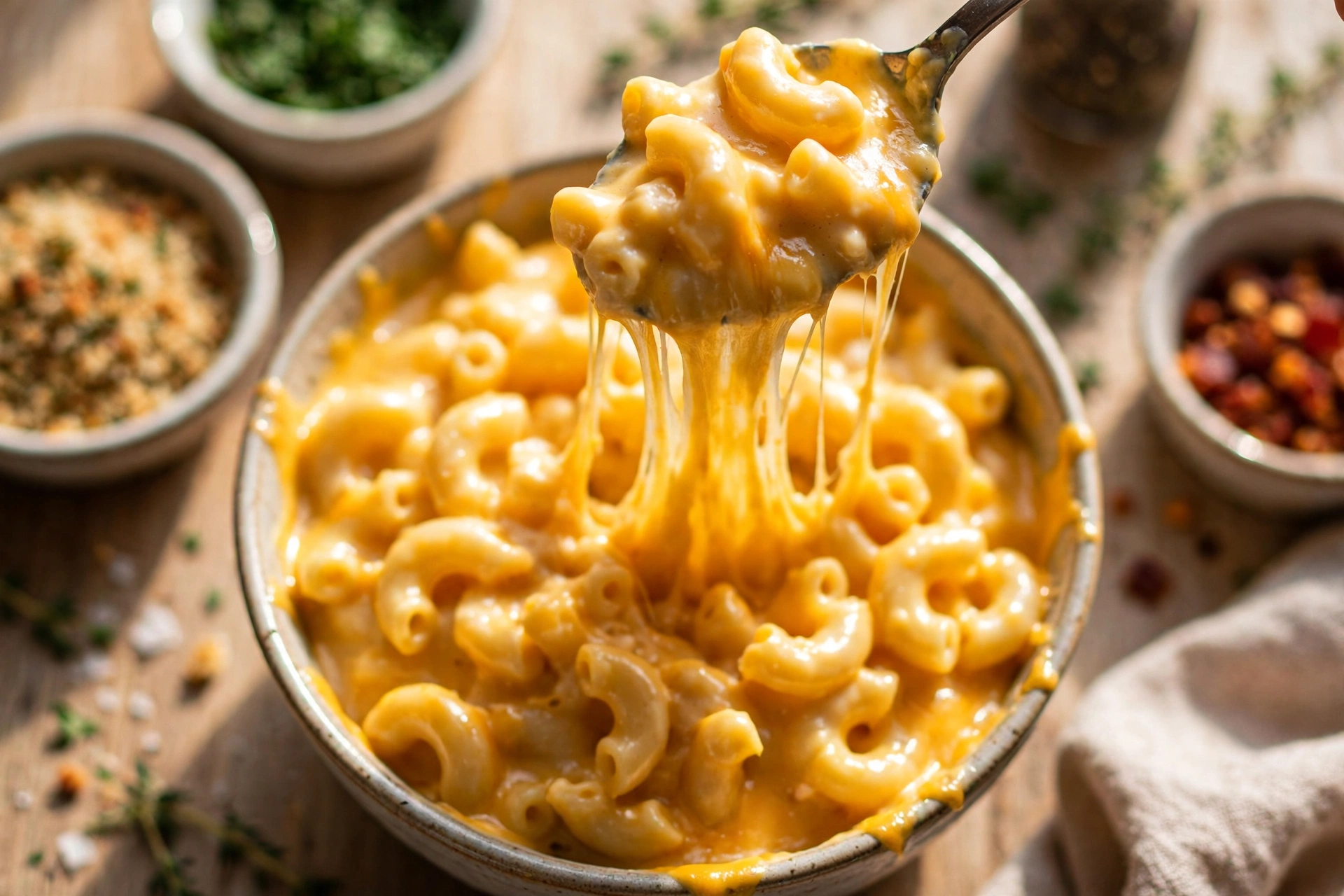
The Perfect Base: Creamy Stovetop Mac and Cheese
This is the base every bowl starts with, so it has to be flawless: tender elbows wrapped in a sauce that is rich, shiny, and clings to every curve of pasta. The secret is a classic roux — equal parts butter and flour cooked before the milk goes in. The fat coats the flour’s starch granules so they swell and thicken the sauce smoothly instead of clumping, and a minute or two of cooking drives off the raw, pasty flour taste. Simple science, spectacular mac.
Ingredients for the Base Mac and Cheese
- 1 pound (16 ounces) elbow macaroni
- 4 tablespoons unsalted butter
- 1/4 cup all-purpose flour
- 3 1/2 cups whole milk, warmed (see directions)
- 1 teaspoon Dijon mustard (or 1/2 teaspoon mustard powder)
- 1/2 teaspoon garlic powder
- 1/2 teaspoon smoked paprika (optional, for warmth and color)
- 1/2 teaspoon fine sea salt, plus more for the pasta water
- 1/4 teaspoon black pepper
- 3 cups (12 ounces) shredded sharp cheddar cheese, freshly grated from a block
- 1 cup (4 ounces) shredded Monterey Jack or low-moisture mozzarella
- 2 tablespoons cream cheese (optional, extra insurance for a silky sauce)
Directions
- Cook the pasta shy of done. Bring a large pot of well-salted water to a rolling boil. Cook the macaroni 1 minute less than the package directions for al dente. Before draining, scoop out 1 cup of the starchy pasta water. Drain the pasta but do not rinse it. Stopping a minute early matters: the pasta keeps cooking in the hot sauce and drinks some of it up, so slightly firm pasta now means perfectly tender, never mushy, mac and cheese later. The starchy water is liquid gold for loosening the sauce at the end.
- Build the roux. In the same pot (or a large Dutch oven) over medium heat, melt the butter. Whisk in the flour and cook, whisking constantly, for 1 to 2 minutes, until the mixture looks like wet sand, smells faintly nutty, and turns a shade deeper. This cooks out the raw flour flavor and creates the thickening base of your sauce.
- Add the milk slowly and simmer. Pour in the warm milk a splash at a time at first, whisking constantly until smooth, then add the rest in a steady stream. Warm milk blends in without shocking the roux, which is how you get a lump-free sauce. Bring to a gentle simmer and cook 3 to 5 minutes, whisking often, until the sauce thickly coats the back of a spoon and a finger swiped across the spoon leaves a clean line.
- Season off the boil. Take the pot off the heat. Whisk in the Dijon mustard, garlic powder, smoked paprika, salt, and pepper. The mustard will not make it taste like mustard — it sharpens the cheese flavor and adds a gentle tang that makes the whole pot taste cheesier.
- Melt the cheese low and slow. With the pot still off the heat, add the shredded cheddar and Monterey Jack a handful at a time, stirring until each handful melts completely before adding the next. Stir in the cream cheese, if using, until the sauce is glossy and smooth. Keeping the sauce off the boil is the golden rule: cheese proteins seize and turn grainy and oily at high heat, but they melt into silk when treated gently.
- Bring it together. Fold the drained pasta into the sauce and stir over low heat for 1 minute, just until every elbow is coated. Splash in reserved pasta water a little at a time until the sauce looks shiny and flows like lava. Taste and add a pinch more salt if needed. Spoon into warm bowls and build your bowls with the variations below.
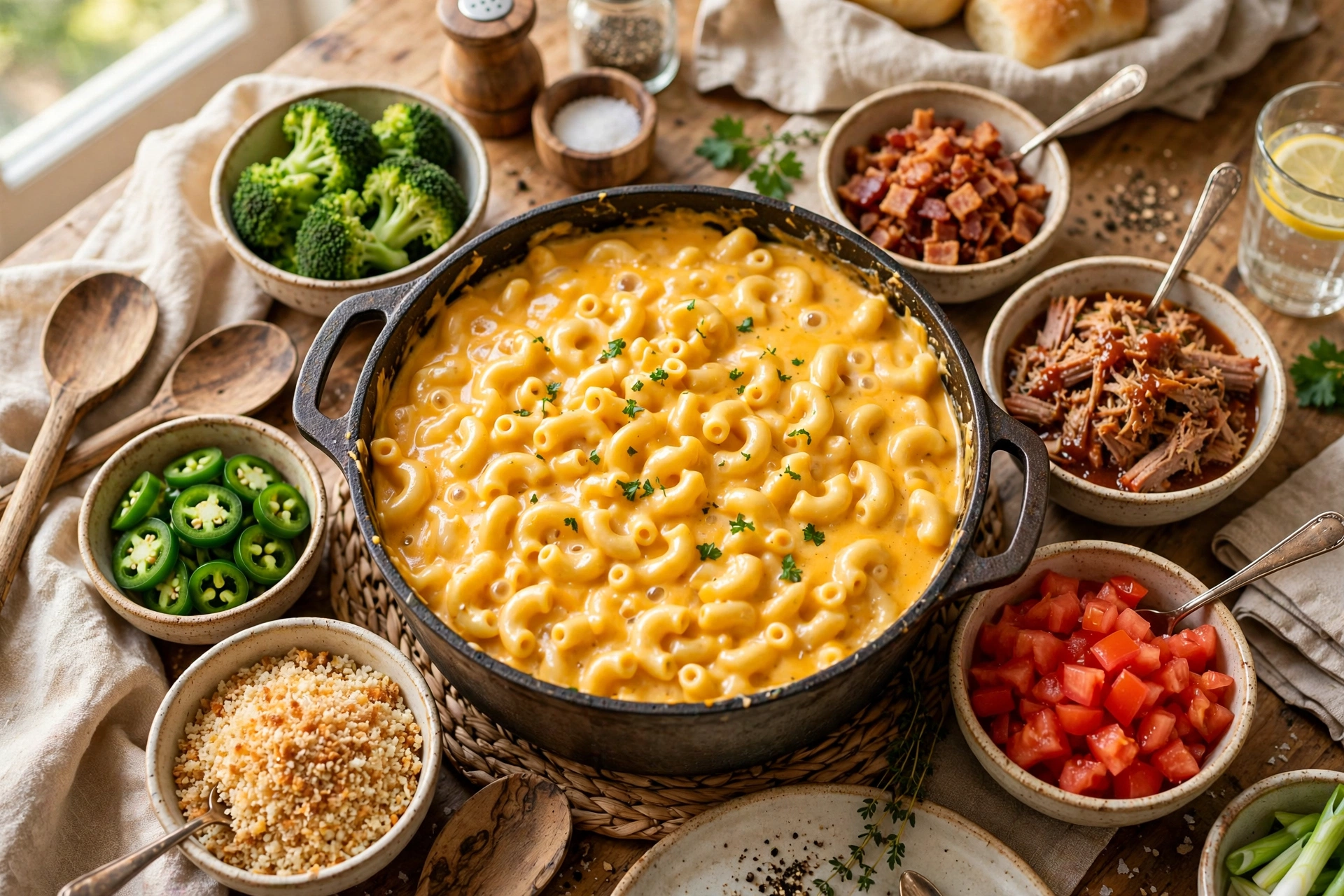
6 Easy Mac and Cheese Bowl Variations
Every variation below starts with about 1 1/2 cups of the hot base mac and cheese in a warm bowl. Amounts are per bowl, so multiply by the number of bowls you are building. Set the toppings out in small bowls and let everyone go down the line, cafeteria-style — half the fun is the building.
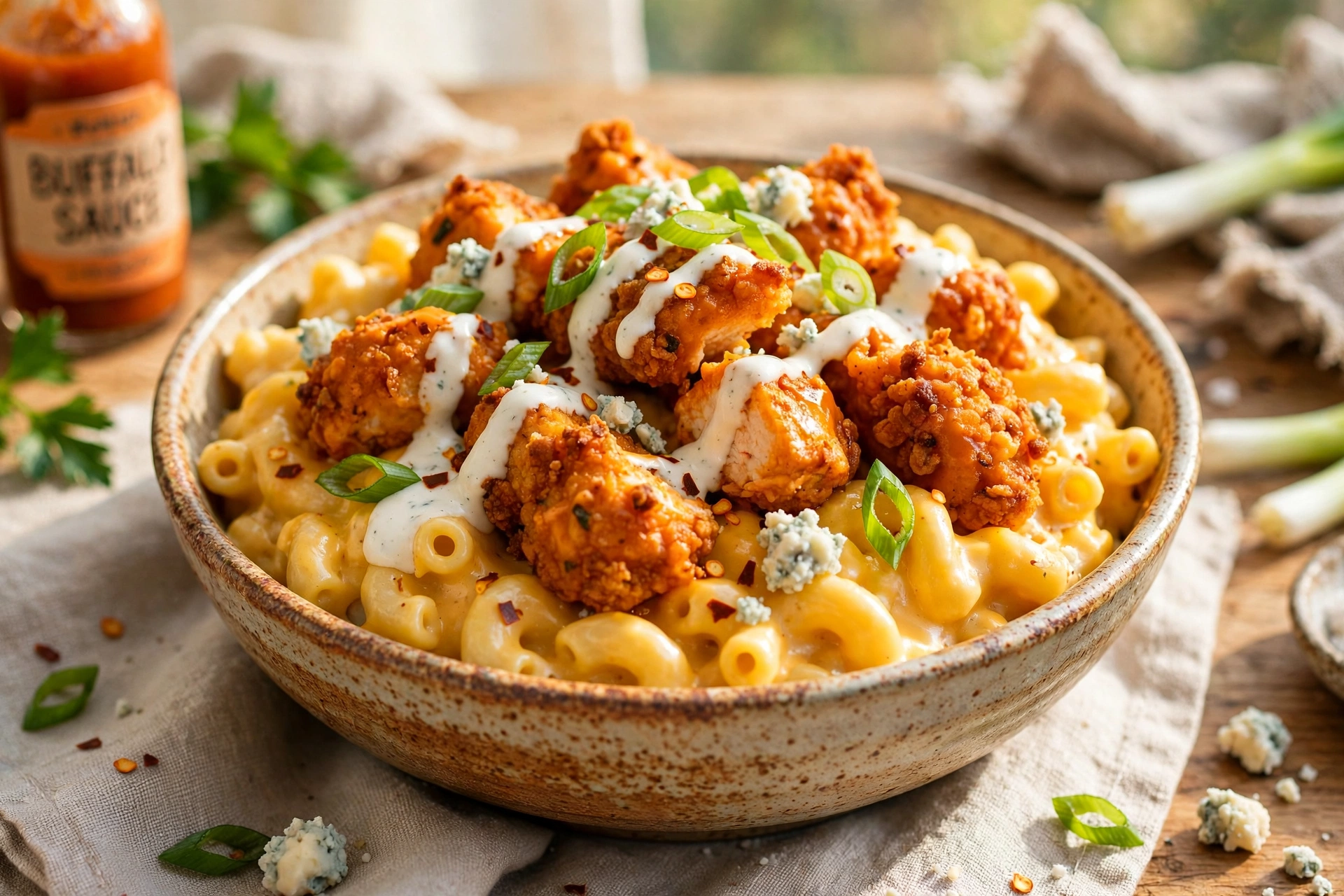
1. Buffalo Chicken Mac and Cheese Bowl
The spicy, tangy, game-day favorite. If your crew already demolishes our crispy baked buffalo chicken taquitos, this bowl is about to become their new obsession.
- 3/4 cup cooked shredded or diced chicken, warmed
- 2 tablespoons buffalo-style hot sauce, plus 1 teaspoon melted butter
- 1 tablespoon ranch or blue cheese dressing, for drizzling
- 1 tablespoon crumbled blue cheese
- 1 tablespoon sliced green onions
- 1 tablespoon finely diced celery (optional, for crunch)
To build: Toss the warm chicken with the hot sauce and melted butter until glossy. Pile it over the mac and cheese, drizzle with dressing, and finish with blue cheese crumbles, green onions, and celery. Food-safety note: cook fresh chicken to an internal temperature of 165 degrees F (74 degrees C), and reheat leftover chicken to 165 degrees F as well.
2. BBQ Pulled Pork Mac and Cheese Bowl
Smoky, sweet, and downright hearty — the best possible destiny for leftover pulled pork.
- 3/4 cup pulled pork, warmed
- 2 tablespoons barbecue sauce, plus more for drizzling
- 1 tablespoon crispy fried onions or crushed barbecue potato chips
- 2 tablespoons pickled red onions or dill pickle chips
- 1 tablespoon shredded cheddar cheese (optional)
To build: Toss the pork with the barbecue sauce and mound it over the mac and cheese. Add a drizzle of extra sauce, then the pickles for a bright, tangy bite and the crispy onions or chips for crunch. Reheat leftover pulled pork until it steams and reaches 165 degrees F (74 degrees C) before serving.
3. Taco Night Mac and Cheese Bowl
Two family favorites in one bowl. Taco Tuesday will never be the same.
- 1/2 cup seasoned taco ground beef, hot (about 1 pound of beef plus 1 packet taco seasoning makes enough for 4 bowls)
- 2 tablespoons salsa or pico de gallo
- 1 tablespoon sour cream
- 2 tablespoons diced fresh tomato
- 1 tablespoon sliced pickled jalapenos
- Small handful of crushed tortilla chips
- 1 tablespoon chopped fresh cilantro
To build: Spoon the hot taco beef over the mac and cheese, then layer on the salsa, a dollop of sour cream, tomato, and jalapenos. Shower with crushed tortilla chips and cilantro right before eating so the chips stay crunchy. Cook ground beef to a safe internal temperature of 160 degrees F (71 degrees C). Love this flavor mash-up? Our cheesy one-pot taco skillet plays the same delicious game in a single pan.
4. Broccoli Cheddar Mac and Cheese Bowl
The classic soup combo, in bowl form — and the sneakiest way to get greens onto a kid’s plate.
- 3/4 cup small broccoli florets, steamed or roasted until bright green and tender-crisp
- 2 tablespoons extra shredded sharp cheddar cheese
- 1 tablespoon toasted buttered breadcrumbs or crushed cheddar crackers
- Pinch of garlic powder (optional)
To build: Fold the hot broccoli right into the mac and cheese so every bite gets a floret, then top with the extra cheddar and a snowfall of crunchy breadcrumbs. Roasting the broccoli until the edges catch and crisp — the same trick we use for our crispy garlic parmesan roasted broccoli — gives this bowl a deeper, almost nutty flavor that steaming cannot match.
5. Pizza Style Mac and Cheese Bowl
All the Friday-night pizza flavors, scooped up with a spoon.
- 2 tablespoons warm marinara or pizza sauce
- 2 tablespoons shredded low-moisture mozzarella cheese
- 8 to 10 mini pepperoni, or 4 regular pepperoni cut into quarters
- 1/4 teaspoon Italian seasoning
- Pinch of red pepper flakes (optional)
- 2 to 3 small fresh basil leaves, torn
To build: Spoon the mac and cheese into an oven-safe bowl. Swirl the marinara over the top, scatter on the mozzarella and pepperoni, and broil on high for 1 to 2 minutes, watching closely, until the cheese bubbles and the pepperoni edges curl and crisp. Finish with Italian seasoning, red pepper flakes, and basil. Let the bowl rest 1 minute — it is molten-hot.
6. Chili Cheese Mac and Cheese Bowl
The coziest bowl of the bunch: smoky chili ladled over creamy mac, made for cold nights and big appetites.
- 3/4 cup hot beef chili, homemade or canned
- 1 tablespoon sour cream
- 1 tablespoon finely diced red onion
- 2 tablespoons shredded sharp cheddar cheese
- Corn chips or Fritos, for scooping
To build: Ladle the hot chili over the mac and cheese, add the extra cheddar so it melts into the chili, then top with sour cream and red onion. Serve with a pile of corn chips for scooping up every last bite. Heat chili until steaming hot throughout; leftovers of any kind should be reheated to 165 degrees F (74 degrees C).
Tips for Silky, Never-Grainy Cheese Sauce
- Always shred cheese from a block. Bagged pre-shredded cheese is coated with anti-caking agents like cellulose and potato starch. Those coatings keep shreds from clumping in the bag, but in your sauce they melt into a gritty, grainy texture. A block of cheddar and two minutes with a box grater is the single biggest upgrade you can make.
- Take the pot off the heat before the cheese goes in. This is the rule that saves more sauces than any other. Boiling or near-boiling sauce makes cheese proteins tighten and squeeze out fat, leaving you with a broken, oily, grainy mess. The residual heat of the sauce is plenty to melt cheese smoothly.
- Warm the milk. Two minutes in the microwave or a small saucepan keeps the roux from seizing when the milk hits it, so the sauce blends silky instead of lumpy.
- Add cheese a handful at a time. Each addition should melt fully before the next goes in. Dumping it all in at once drops the sauce temperature and encourages clumps.
- Keep acidic toppings out of the main pot. Hot sauce and salsa are acidic, and acid can split a cheese sauce. That is why the buffalo sauce gets tossed with the chicken instead of stirred into the pot — all the flavor, none of the risk.
- If the sauce thickens too much, pasta water is the fix. Its starch helps the sauce stay emulsified and glossy while it loosens. Add a splash at a time until it flows again.
- Rescue a grainy sauce. If it happens anyway, pull the pot off the heat, whisk in a splash of warm milk and a small squeeze of lemon juice or a slice of American cheese, and whisk gently over the lowest heat. The sauce often comes back together.
The Best Cheeses for Mac and Cheese
Think of it as a two-cheese team: one cheese for flavor, one for melt. Sharp cheddar brings the bold, tangy flavor everyone expects, and a younger, stretchier cheese like Monterey Jack or low-moisture mozzarella brings the creamy pull. Gruyere adds a nutty, fancy twist, smoked Gouda is gorgeous in the BBQ pork bowl, and pepper Jack melts beautifully if you like heat. One humble secret weapon: a slice or two of American cheese. Its emulsifying salts help the whole sauce stay stable and silky, even if cheddar is the star. Avoid very aged, hard cheeses as the main cheese — they taste wonderful but can melt oily and grainy.
Make-Ahead, Storage, and Reheating
Make ahead: For a party, make the base mac and cheese up to 1 day ahead, but cook the pasta 2 minutes shy of the directions and stir a splash of extra milk into the sauce — the pasta will absorb sauce as it sits. Cool, cover, and refrigerate. Toppings like pulled pork, taco beef, and shredded chicken can be cooked 2 to 3 days ahead and refrigerated separately, which makes bowl night feel effortless. Portion the base into single-serve containers and you have grab-and-go lunches, a lot like our baked mac and cheese cups.
Storage: Refrigerate leftover mac and cheese and cooked toppings separately in airtight containers within 2 hours of cooking. Leftovers keep 3 to 4 days in the refrigerator at 40 degrees F (4 degrees C) or below. Mac and cheese also freezes well for up to 2 months; thaw overnight in the fridge for the best texture.
Reheating: The stovetop is kindest. Add a splash of milk — about 1 tablespoon per cup of mac and cheese — and warm over low heat, stirring often, until steaming and creamy again. In the microwave, heat at 50 percent power in 30-second bursts, stirring between each, with that same splash of milk. Reheat meat toppings until they reach 165 degrees F (74 degrees C), and only reheat leftovers once.
Frequently Asked Questions
What is the best cheese for mac and cheese?
Sharp cheddar is the classic choice for bold flavor, but it melts best with a partner. Pair it with a young, stretchy cheese like Monterey Jack, low-moisture mozzarella, or Gruyere, and always shred it fresh from a block for the smoothest sauce.
Why did my cheese sauce turn grainy?
Almost always, the heat was too high or the cheese went into a boiling sauce, which makes the cheese proteins seize and turn gritty. Take the pot off the heat before adding cheese, add it a handful at a time, and whisk in a splash of warm milk if the sauce needs saving.
Can I make mac and cheese ahead of time?
Yes. Cook the pasta 2 minutes shy of the package directions, make the sauce, combine them with a splash of extra milk, and refrigerate up to 1 day (or store leftovers 3 to 4 days). Reheat gently on the stovetop with more milk until creamy again.
How do I reheat mac and cheese without it drying out?
Add about 1 tablespoon of milk per cup of mac and cheese and warm it low and slow on the stovetop, stirring often. In the microwave, use 50 percent power and stir every 30 seconds so the sauce turns creamy instead of oily.
Can I freeze mac and cheese?
Yes, mac and cheese freezes well for up to 2 months in an airtight container. Thaw it overnight in the refrigerator, then reheat gently with a splash of milk, stirring until the sauce is smooth and steaming hot throughout.
Rate this recipe
Be the first to rate it!