
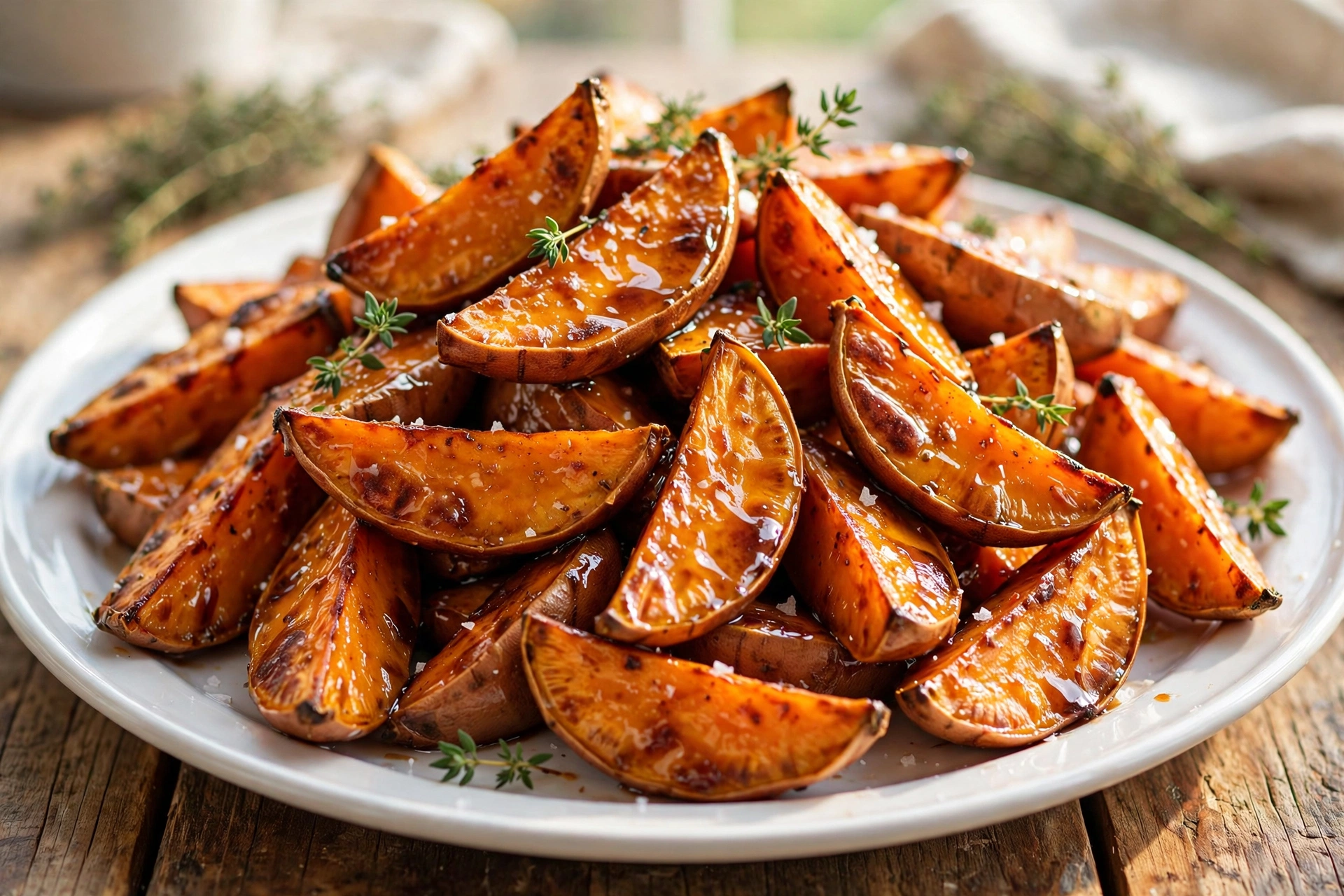
There is a very specific kind of magic that happens when sweet potatoes meet a screaming-hot oven and a bottle of pure maple syrup. The edges go deep golden and lacy-crisp, the centers turn silky and sweet, and then — right at the very end — a warm maple-butter-cinnamon glaze gets poured over everything until every single wedge glistens like it just walked off a holiday magazine cover. These maple glazed sweet potatoes are the side dish that quietly steals the Thanksgiving show, the one guests ask about before they have even finished chewing.
Here is the best part: they are ready in about 40 minutes of mostly hands-off time (45 minutes start to finish) — roasted at 400°F on a single sheet pan (okay, two pans, but still just one oven trip). No parboiling, no marshmallow topping, no fussy multi-step production. Just chop, roast, glaze, and then stand back while the platter empties before the turkey is even carved.
This is the side dish I reach for when the whole family is coming over and I need something that tastes like I labored all afternoon. It sits beautifully next to roast turkey, glazed ham, or a simple weeknight roast chicken — and the leftovers, if you are lucky enough to have any, reheat like a dream. Let me walk you through exactly how to make it.
Recipe at a Glance
- Prep time: 10 minutes
- Cook time: 35 minutes
- Total time: 45 minutes
- Servings: 8
- Calories: ~330 per serving
Ingredients
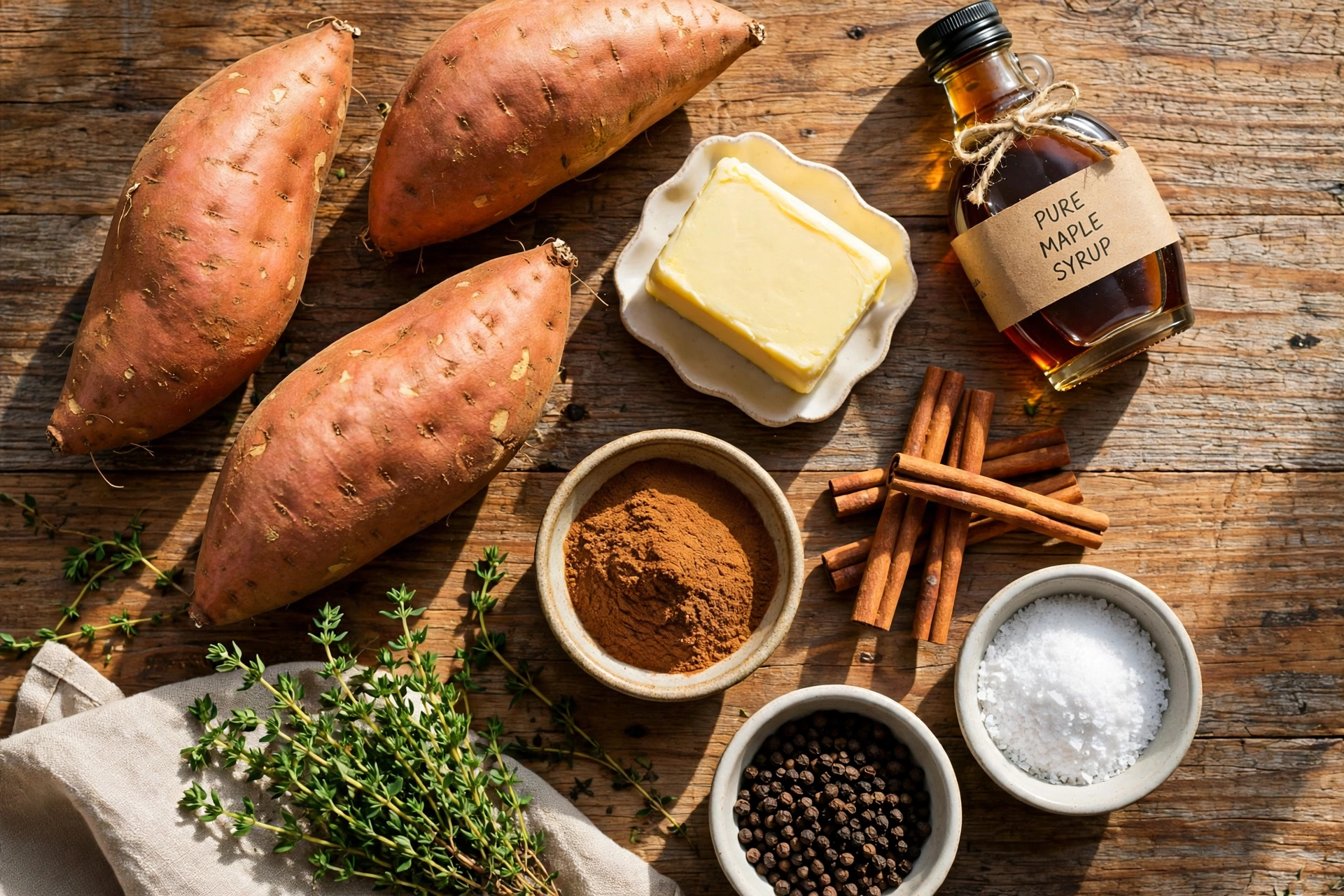
- 4 pounds sweet potatoes (5–6 medium), scrubbed, peeled, and cut into 1-inch wedges or cubes
- 2 tablespoons olive oil
- 1/2 cup pure maple syrup (the real stuff — pancake syrup is mostly corn syrup and tastes flat here)
- 4 tablespoons (1/2 stick) unsalted butter, melted
- 1 teaspoon ground cinnamon
- 1 teaspoon kosher salt
- 1/2 teaspoon freshly ground black pepper
- 1 tablespoon fresh thyme leaves, plus extra sprigs for serving (optional)
Directions
- Heat the oven to 400°F (200°C). Line two large rimmed sheet pans with parchment paper. Two pans might feel like extra dishes, but it is the whole secret — crowded potatoes steam instead of roast, and steamed sweet potatoes never caramelize.
- Toss the sweet potato wedges with the olive oil, half of the salt (1/2 teaspoon), and the black pepper in a very large bowl until every piece is lightly and evenly coated.
- Spread the wedges in a single layer across the two pans, leaving a little breathing room between the pieces. Slide the pans into the oven and roast for 20 minutes.
- Pull the pans out, flip and toss the pieces with a spatula so a fresh side hits the hot metal, then roast 10–15 minutes more, until the edges are deep golden with caramelized spots and a fork slides into the centers with zero resistance.
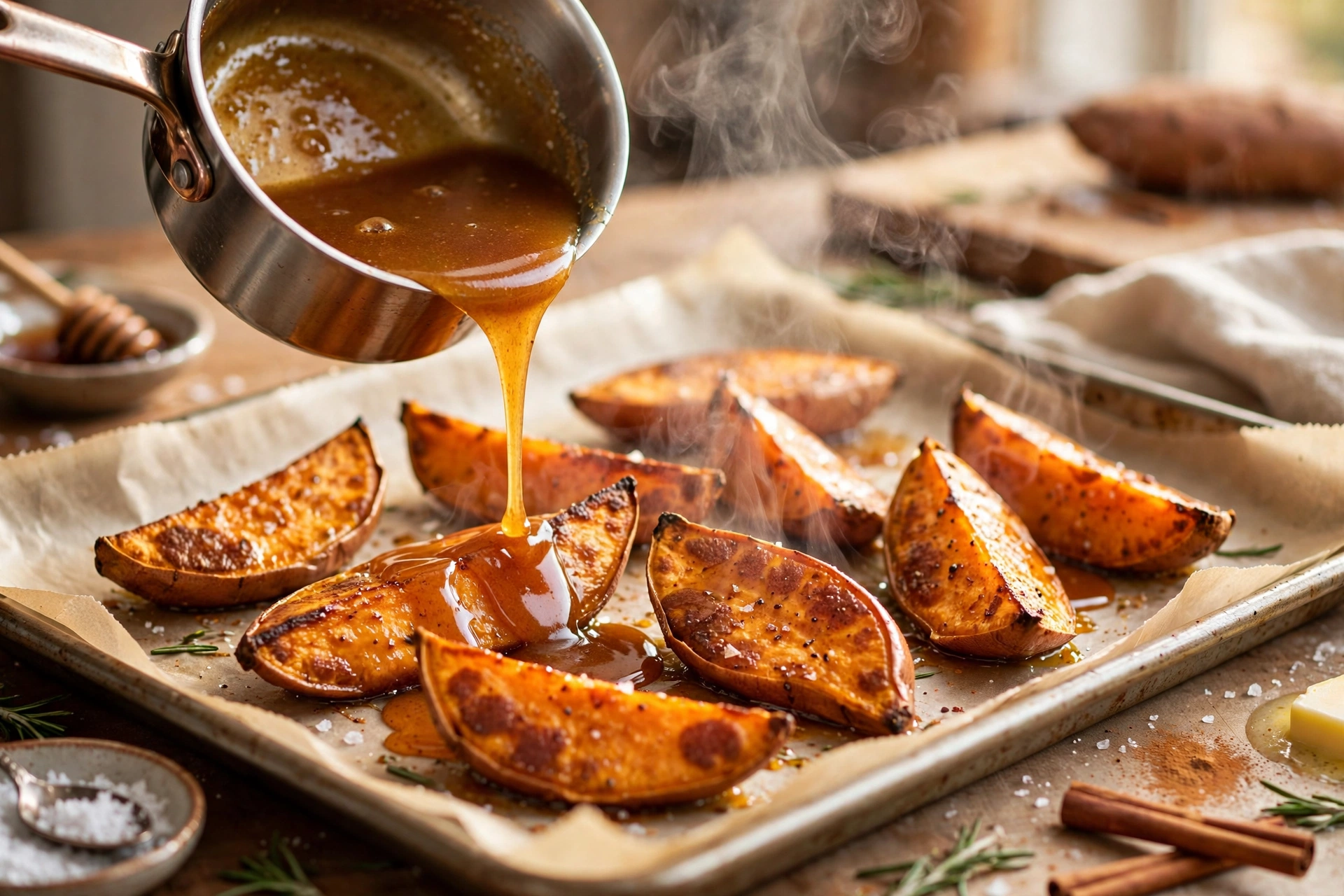
- While the potatoes finish their last stretch, warm the maple syrup, melted butter, and cinnamon in a small saucepan over low heat for 2–3 minutes, whisking gently, until glossy and just starting to bubble at the edges. Keep the heat low — this is a warm glaze, not a boiled caramel.
- Drizzle the warm glaze all over the roasted wedges right on the hot sheet pans, then toss gently with the spatula so every wedge gets coated. Shower with the fresh thyme leaves.
- Transfer the glazed wedges to a serving platter, pour over any glaze left behind on the pans, and serve warm. Then stand back and watch them vanish.
Why This Method Works
Every great roasted vegetable recipe is really a lesson in heat management, and this one has three deliberate choices that make it taste far better than the sum of its parts.
Roast high and hot at 400°F. Sweet potatoes are naturally loaded with sugars, and high heat is what turns those sugars into deep, toasty caramelization instead of a pale, soggy steam. At 400°F the exteriors brown through both the Maillard reaction and sugar caramelization while the interiors steam themselves tender from the inside out — crisp edges, silky middles, zero fuss. Drop the temperature to 350°F and you get soft potatoes with barely any browning; push it to 450°F and the natural sugars scorch before the centers cook through.
Glaze AFTER roasting, never before. This is the step most recipes get wrong. Maple syrup’s sugars burn when they sit in a 400°F oven for the full 30-plus minutes of roasting, and burnt sugar tastes bitter no matter how good the syrup was. By roasting the wedges plain first and pouring a warm (not boiled) glaze over them at the very end, the glaze stays glossy, sweet, and fragrant — it clings to the hot, rough caramelized surfaces and melts into every nook instead of scorching.
Toss halfway through. The side touching the hot pan browns fastest, so flipping the pieces at the 20-minute mark gives every wedge its own turn against the heat. It is a thirty-second job that buys you even, all-over browning instead of one dark side and one pale side.
And one more bit of kitchen logic: two pans instead of one. Sweet potatoes release moisture as they roast, and if the pieces are packed shoulder to shoulder, that moisture gets trapped and the potatoes steam in their own juices. Space is the difference between roasted and merely cooked — and if you love this sweet-and-savory roasted side formula, our honey glazed roasted carrots use the same high-heat trick with a honey-butter finish.
Pro Tips
- Keep every piece the same size. One-inch wedges or cubes cook through in exactly the same window. Mixed sizes mean some pieces burn while others are still crunchy in the middle.
- Use pure maple syrup, full stop. Imitation pancake syrup is mostly corn syrup with maple flavoring — it tastes flat and one-dimensional next to the real thing. Pure maple syrup brings a deep, almost smoky sweetness that makes the whole dish (which makes sense — sweet potatoes, Ipomoea batatas, are botanically fascinating, and Wikipedia’s sweet potato overview has the full story if you are curious).
- Do not skip the parchment. That gorgeous glaze is gloriously sticky, and parchment means the difference between sliding the wedges off the pan and chiseling them off it.
- Warm the glaze, never boil it. A hard boil drives off water too fast, thickens the glaze into candy, and can turn the milk solids in the butter bitter. Low heat and a bare simmer is all you need.
- Save the herbs for after the glaze. Fresh thyme scattered over the hot glazed potatoes stays bright green and fragrant; thyme roasted for 35 minutes just goes brown and dusty.
- Taste and adjust the salt. Sweet potatoes vary in sweetness, and a final pinch of flaky salt right before serving sharpens every flavor. Sweet potatoes are also genuinely nutritious — Healthline’s breakdown of sweet potato nutrition notes they are packed with beta-carotene (vitamin A), fiber, and potassium, which makes this a side dish you can feel good about piling high.
Common Mistakes (and How to Fix Each One)
- Crowding everything onto one pan. The pieces steam in their own moisture and come out pale and soggy instead of caramelized. Fix: use two sheet pans with breathing room, or roast in two batches — the second batch can go in while the first rests.
- Glazing before roasting. The syrup’s sugars scorch during the long hot roast and the whole dish tastes faintly bitter. Fix: roast plain first, glaze at the very end when the wedges are hot and ready.
- Uneven cuts. Thin shards burn to crisps while thick chunks stay raw in the middle. Fix: take the extra two minutes to cut everything to a uniform 1 inch — it is the highest-leverage two minutes in the recipe.
- Pouring cold glaze over the potatoes. Cold glaze seizes on contact and sits on top in a dull layer instead of melting into a glossy coat. Fix: warm the glaze right before serving and drizzle it over the potatoes while both are hot.
- Skipping the mid-roast toss. One side gets deeply browned and gorgeous while the other stays pale. Fix: flip at the 20-minute mark — set a timer so you do not forget.
Substitutions
- Honey for maple syrup: use the same 1/2 cup. The glaze turns deeper and more floral — delicious, just a different personality.
- Dairy-free: swap the butter for a good vegan butter or simply use 3 tablespoons of olive oil in the glaze instead. The result is still glossy and rich.
- Spice swaps: replace the cinnamon with pumpkin pie spice for a warmer holiday profile, or add a pinch of nutmeg alongside the cinnamon.
- Herb swaps: fresh rosemary or sage work beautifully — tuck sturdy rosemary sprigs among the wedges before roasting so the needles crisp up.
- Savory twist: skip the cinnamon entirely and add 1 teaspoon smoked paprika plus 1/2 teaspoon garlic powder to the glaze for a smoky-sweet version that pairs brilliantly with barbecue.
Storage & Make-Ahead
- Room temperature: do not leave cooked sweet potatoes out for more than 2 hours — the standard food-safety rule for cooked food. Get leftovers into the fridge promptly.
- Refrigerator: store in an airtight container for up to 4 days. The glaze soaks in a little overnight, which honestly makes day-two leftovers even more flavorful.
- Freezer: freeze in freezer-safe bags or containers for up to 3 months. The texture softens slightly after thawing, so these are best enjoyed fresh or refrigerated — freeze only what you must.
- Reheating: spread on a sheet pan and warm at 400°F for 10–12 minutes to re-crisp the edges, then drizzle with a little freshly warmed glaze. The microwave works in a pinch but you will lose the crispy edges.
- Make-ahead for holidays: roast the wedges a day ahead and refrigerate them unglazed. On serving day, reheat at 400°F for 12–15 minutes, warm a fresh batch of glaze, toss, and serve — nobody will ever know. They round out a holiday spread perfectly next to our easy 5-ingredient corn casserole, and if you are feeding serious potato lovers, make it a double feature with our cheesy scalloped potatoes.
What to Serve With Them
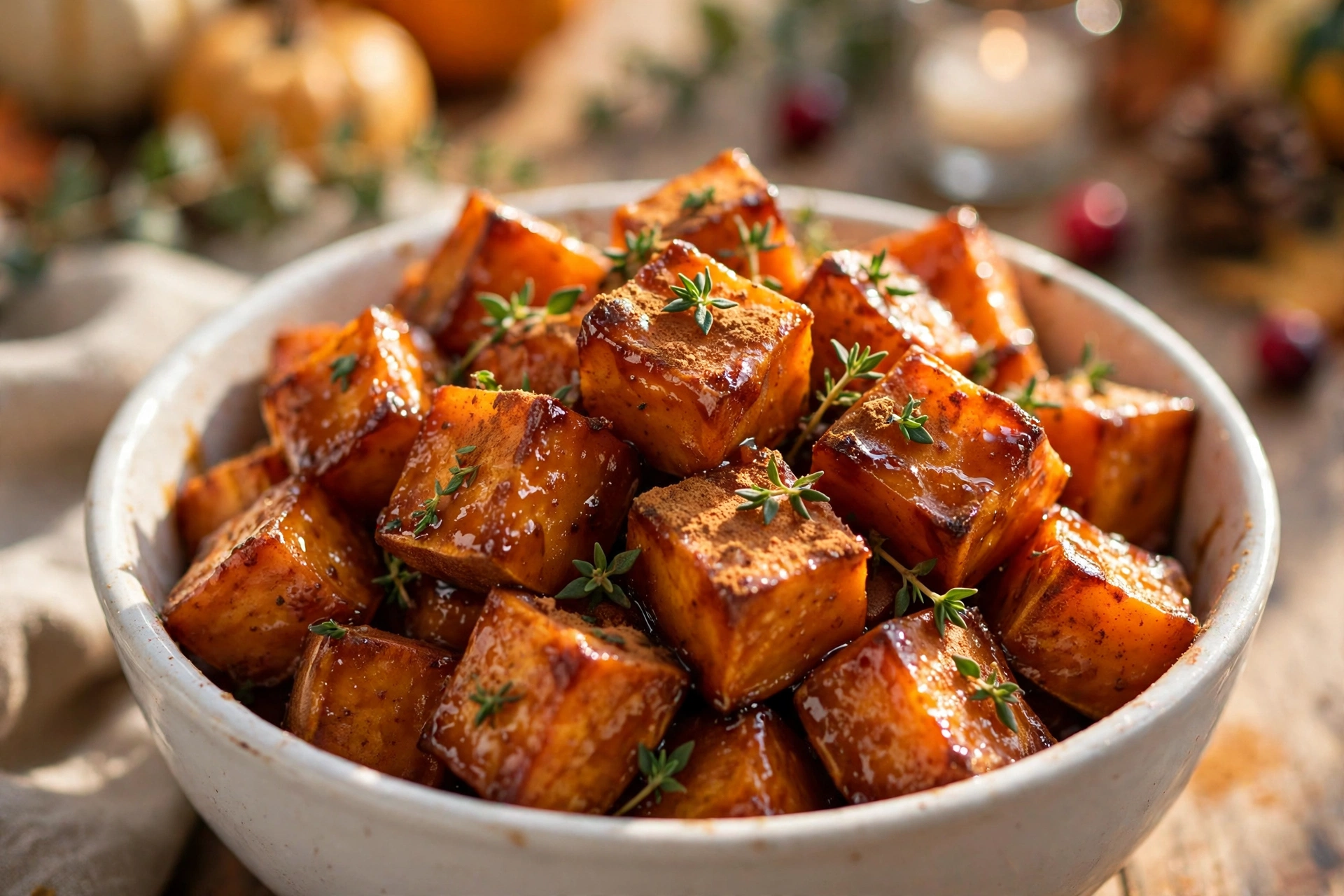
These maple glazed sweet potatoes were born for a holiday table, but they earn their place on busy weeknights too. At Thanksgiving, they slide right in next to roast turkey, brown-sugar glazed ham, or a cider-brined pork loin — the maple-cinnamon notes echo all the classic fall flavors without repeating anything else on the plate. For a regular Tuesday, pair them with a simple roast chicken or pork chops and a crisp green salad to cut the richness.
Vegetarian friends are covered as well: serve the wedges over a bed of garlicky sautéed kale or massaged kale salad, or tuck them into warm grain bowls with black beans and a squeeze of lime. And if there is a crowd of kids at the table, lean into the sweetness — little ones who turn their noses up at vegetables tend to change their tune when those vegetables arrive glossy with maple glaze.
Frequently Asked Questions
Can I make maple glazed sweet potatoes ahead of time?
Yes. Roast the wedges up to 2 days ahead and refrigerate them unglazed in an airtight container. When you are ready to serve, spread them on a sheet pan, reheat at 400°F for 12–15 minutes until hot and re-crisped, then drizzle with freshly warmed maple-butter glaze and serve. Glazing fresh keeps the shine and flavor at their best.
Do I have to peel the sweet potatoes?
No — peeling is optional. Sweet potato skins get nicely crisp in a hot oven and add a lovely rustic texture. Just scrub them well, trim any blemishes, and cut as directed. If you prefer a silky, uniform bite (or you are feeding picky eaters), peel first. Both ways work with the same roasting time.
Why did my maple glaze burn and taste bitter?
The glaze almost certainly went on too early or the heat was too high. Maple syrup’s sugars scorch when they sit in a 400°F oven for the full roast. Always roast the wedges plain first, warm the glaze gently over low heat (never a hard boil), and drizzle it over the hot potatoes right at the end. Warm glaze on hot potatoes melts into a glossy coat instead of burning.
Can I use honey instead of maple syrup?
Yes, honey works beautifully and gives the glaze a deeper, more floral sweetness — use the same 1/2 cup. The flavor will lean a little less classic-maple and a little more honeyed, so pick whichever matches your menu. Avoid pancake syrup either way: it is mostly corn syrup and will not caramelize or taste the same.
Rate this recipe
Be the first to rate it!