
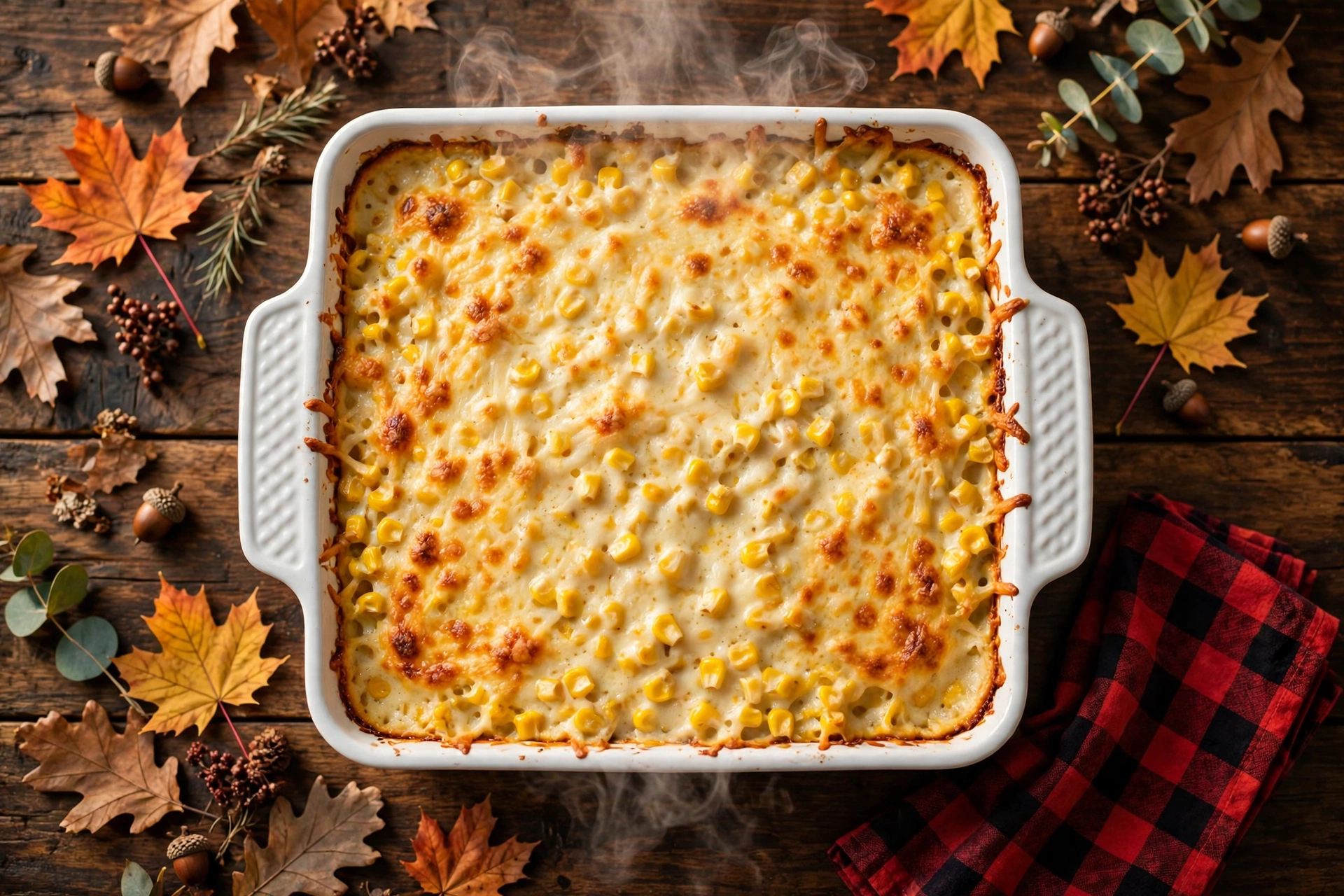
Some side dishes are delicious. This one is a legend. If you have ever sat at a Thanksgiving table and watched a pan of golden corn casserole disappear before the turkey even got carved, you already know exactly what all the fuss is about: a scoopable, buttery, sweet-meets-savory bake that is somehow creamy and custardy in the middle, puffed and golden on top, and studded with juicy pops of whole corn in every single bite. It is the dish guests ask for by name, the one that never comes home with leftovers, and the quiet hero of more holiday spreads than we can count.
Here is the best part: this classic 5-ingredient corn casserole asks almost nothing of you. One bowl. One whisk-free stir. Five ingredients you probably already have, and about 45 minutes from pantry to table. That is it. There is no chopping, no sauteing, no finicky technique — just the kind of dump-and-bake magic that makes weeknight cooking and holiday chaos both survivable. If your oven works and you can stir a spoon, you can make this recipe perfectly on your very first try.
This is the old-fashioned Jiffy-style corn casserole your grandmother brought to every potluck, except we are walking you through exactly why it works, the one mistake that ruins it, and how to make it ahead so Thanksgiving Day is one less thing on your mind. Whether you are feeding eight around a holiday table or just craving a cozy corn side on a Tuesday, grab a box of corn muffin mix and let us make the easiest crowd-pleaser you will bake all year.
Recipe at a Glance
- Course: Side Dish
- Prep Time: 5 minutes
- Cook Time: 40 to 45 minutes
- Total Time: 45 to 50 minutes
- Servings: 8 servings
- Pan: 8 x 8-inch baking dish
- Oven: 350°F (175°C)
Ingredients
Five ingredients. That is the whole shopping list, and there is a beautiful logic to each one. The corn muffin mix builds the structure, the two kinds of corn deliver the texture, and the sour cream and butter bring the richness. No eggs, no milk, no flour — the batter mixes up thick and spoonable, which is exactly how this classic is supposed to be.
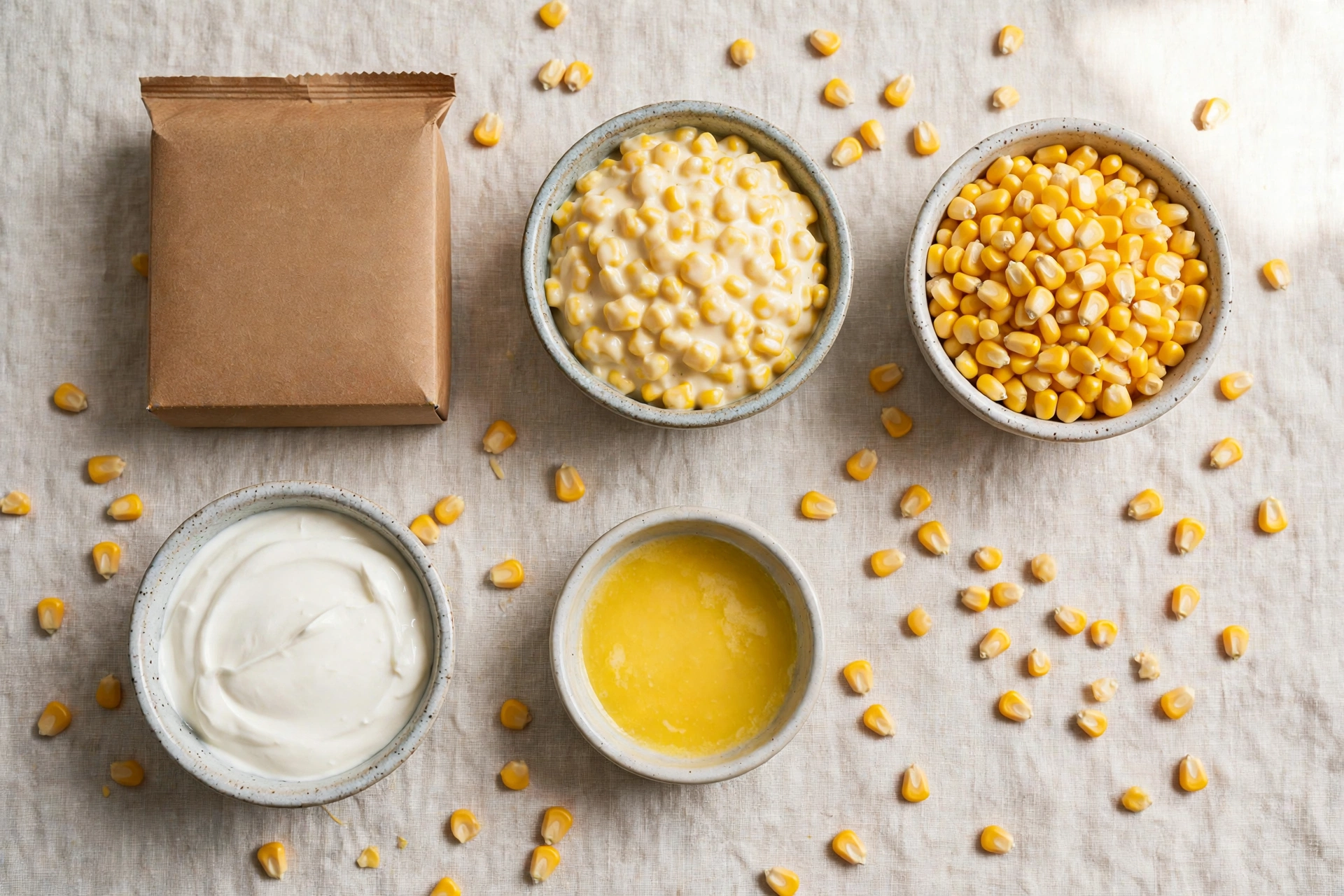
- 1 box (8.5 oz) corn muffin mix — the classic Jiffy Corn Muffin Mix is the traditional pick. It is a balanced blend of cornmeal, flour, sugar, and leavening that absorbs moisture predictably and bakes up tender with a lightly sweet, golden top.
- 1 can (15 oz) creamed corn, undrained — this is the moisture engine of the whole dish. Creamed corn is whole corn kernels scraped and blended with the sweet, starchy liquid from the cob, and it melts into the batter as it bakes, turning the interior silky and custardy instead of crumbly.
- 1 can (15 oz) whole-kernel corn, drained — drained well. These are the juicy pops of texture scattered through every bite, the bright bursts that keep the creamy interior from feeling one-note.
- 1 cup sour cream — full-fat, please. Sour cream is the tenderizer: its fat and gentle acidity keep the crumb soft and moist, and it helps the top brown beautifully without drying out.
- 1/2 cup (1 stick) unsalted butter, melted — butter carries flavor better than any other fat here. It coats the cornmeal starches, keeps the crumb rich, and gives that irresistible buttery aroma when the pan comes out of the oven.
A note on quantities: this recipe is scaled for an 8 x 8-inch pan and serves 8 as a side dish. Doubling it? Use a 9 x 13-inch pan and add about 10 to 15 minutes to the bake time, checking for doneness the same way (more on that below).
How to Make Corn Casserole
Preheat, stir, pour, bake. That really is the whole dance. The single most important moment in this recipe is step 3, where restraint pays off: stir just until the dry mix disappears and stop. Ten calm strokes beats two minutes of enthusiastic mixing every single time.
- Heat and prep. Set the oven to 350°F (175°C). Grease an 8 x 8-inch baking dish with butter or nonstick spray. If you are using a glass dish, no temperature adjustment is needed — it bakes right alongside metal at 350°F.
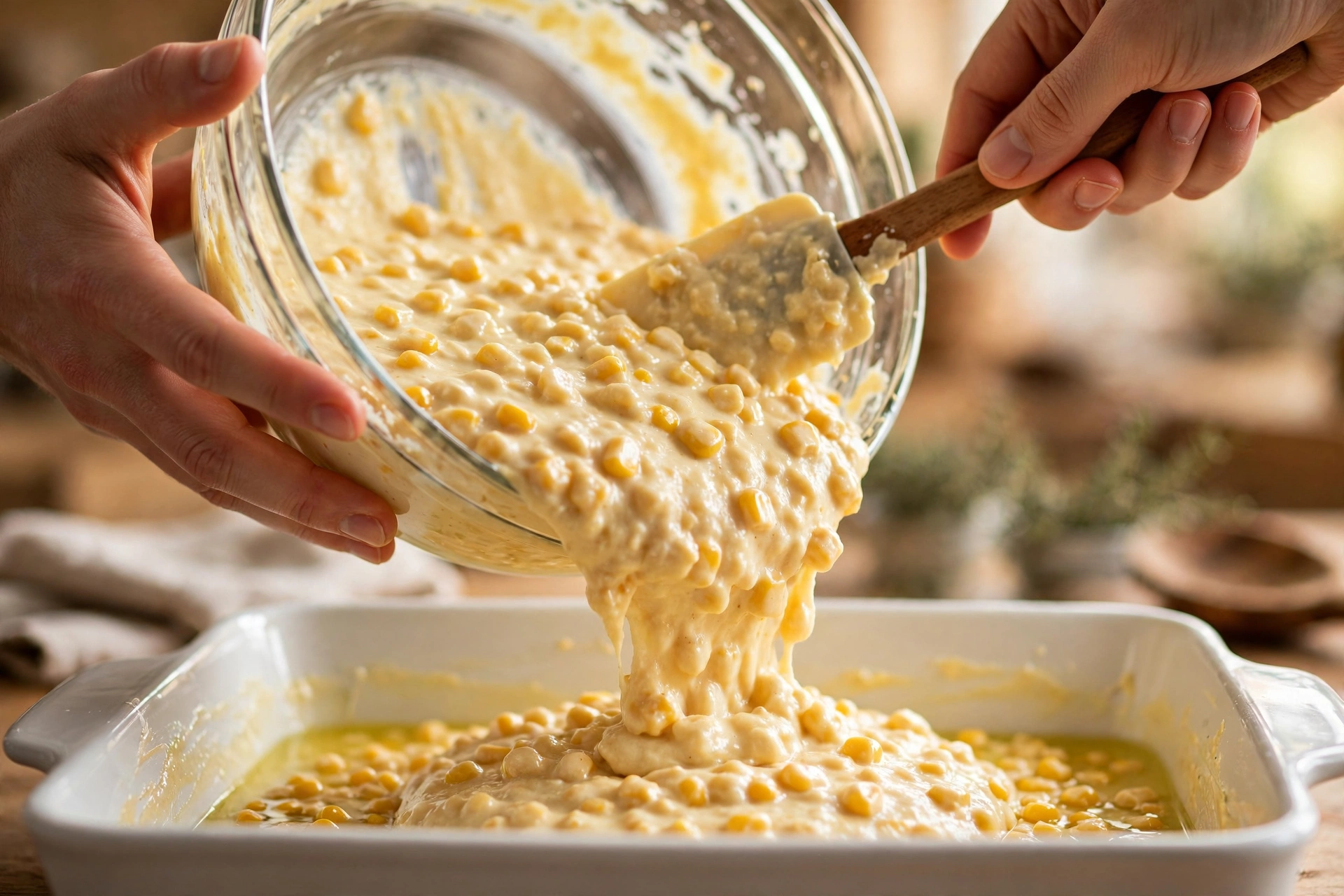
- Mix the wet ingredients. In a large bowl, stir together the creamed corn (liquid and all), the drained whole-kernel corn, the sour cream, and the melted butter until smooth and evenly combined. It will look thick and glossy — that is exactly right.
- Add the corn muffin mix — gently. Sprinkle the dry corn muffin mix over the top and stir with a spoon just until you no longer see dry pockets, about 8 to 10 strokes. A few small lumps are perfectly fine. Stop here. Over-stirring develops gluten and turns a tender casserole dense and chewy, with tunnels running through it.
- Pour and smooth. Scrape the thick batter into the prepared dish and smooth the top with the back of a spoon. The batter will be heavy and spoonable, not pourable like pancake batter — that thickness is what gives you the custardy center.
- Bake 40 to 45 minutes. Slide the dish into the oven and bake until the top is deep golden brown, the edges pull away from the sides of the dish, and the center jiggles only slightly when you gently nudge the pan. If the center is still sloshing like liquid, give it 5 more minutes.
- Rest 10 minutes, then serve. This rest is part of the magic: the residual heat finishes setting the custardy center, so slices hold their shape instead of sliding apart. Serve warm, straight from the dish.
Why This Works: The Science of a Perfect Corn Casserole
Five ingredients sounds too simple to be this good, but each one is doing a very specific job. Once you understand the roles, you will never fumble this recipe again — and you will know exactly which ingredient to adjust if you ever want to tweak it.
The corn muffin mix is a precision tool
A box of corn muffin mix is not just cornmeal in a packet. It is a calibrated formula: fine-ground cornmeal for flavor and color, wheat flour for structure, sugar for sweetness and browning, and a measured dose of leavening (baking powder) that tells the batter exactly how high to rise. That balance is why the boxed mix version is more reliable than most from-scratch corn casseroles — the proportions were dialed in decades ago, and they work. When the mix hits the wet ingredients, the flour and cornmeal start hydrating immediately, the leavening wakes up, and you get a crumb that is sturdy enough to scoop but tender enough to melt in your mouth.
Creamed corn is the moisture engine
Whole-kernel corn gives you pops of texture, but it does not release enough liquid to hydrate the batter on its own. Creamed corn does the heavy lifting: as the dish bakes, the scraped kernels and their starchy liquid loosen into the batter, thickening it from the inside into something closer to a custard than a cornbread. This is the ingredient that separates a moist, spoonable casserole from a dry, crumbly one. Pour it in with all its liquid — draining it is one of the most common mistakes, and we cover it below.
Sour cream is the tenderizer
Sour cream brings two things the batter desperately needs: fat and gentle acidity. The fat coats the flour proteins and shortens the gluten strands, which keeps the crumb soft instead of tough. The mild acidity from the cultured cream further relaxes the structure and brightens the flavor so the dish tastes rich but not heavy. It also nudges the Maillard reaction along on the surface, which is part of why the top turns that gorgeous deep gold. Full-fat sour cream matters here — light versions carry extra water and stabilizers that thin the batter.
The single-stir rule prevents tunneling
Here is the one technique moment: once the dry mix hits the wet batter, every extra stroke of the spoon develops more gluten. Over-mixed batter bakes up dense, springy, and riddled with long air tunnels instead of the tender, even crumb you want. The fix is beautifully simple — sprinkle, stir 8 to 10 times until the dry pockets disappear, and walk away. Lumps are not the enemy; they hydrate in the oven and disappear. Aggressive mixing is the only enemy.
Melted butter does what oil cannot
Butter is about 80 percent fat with milk solids and water that evaporate into flavor as the casserole bakes. Those milk solids brown gently and perfume the whole dish, and the fat gives the finished crumb that luxurious, almost spoon-bread richness. You can taste the difference against oil-based versions immediately — the crust is deeper, the aroma is better, and the mouthfeel is unmistakably buttery.
Pro Tips for the Best Corn Casserole
- Use full-fat sour cream. Light sour cream adds water and gums, which makes the batter thinner and the finished texture less creamy. Full-fat is non-negotiable for the classic result.
- Drain the whole-kernel corn completely. Tip the can into a colander, shake it, and let it sit for a full minute. Extra canning liquid is the number-one cause of a soupy casserole. The creamed corn stays undrained; the whole kernels must be dry.
- Do not skip the 10-minute rest. The center finishes setting off the heat. Cut into it the second it leaves the oven and it will spread into a puddle; wait ten minutes and you get clean, scoopable squares.
- Brown it under the broiler if you want extra color. If your top is pale at the 40-minute mark, a 1 to 2-minute blast under a hot broiler gives you that bakery-window golden crust. Watch it like a hawk — it goes from golden to scorched fast.
- Serve it in the baking dish. Corn casserole is at its most appealing spooned straight from the warm dish, family-style. It loses heat and charm when transferred to a serving platter, so keep it where it baked.
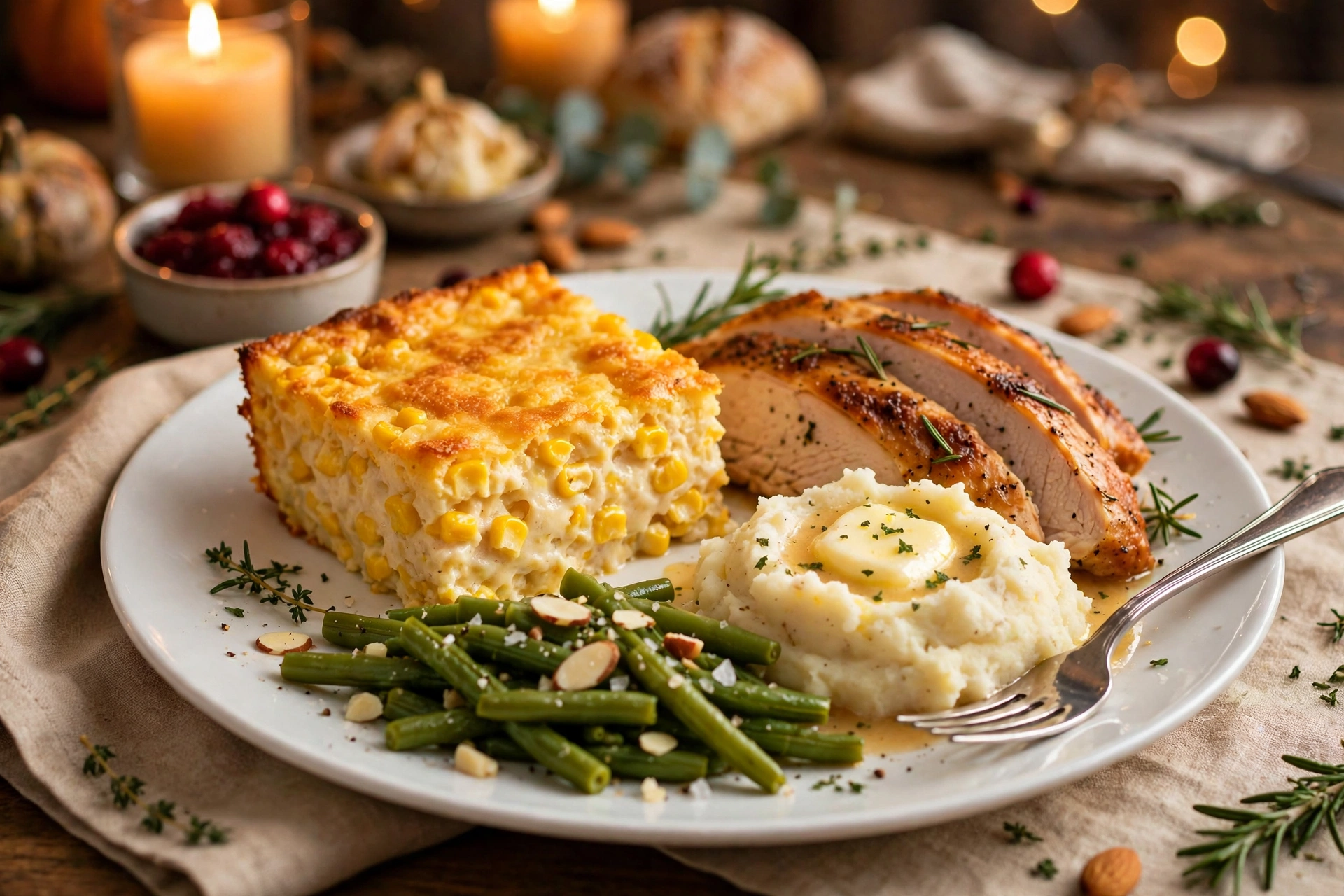
On a holiday table, this casserole sits happiest next to the classics. It is the perfect partner for easy make-ahead mashed potatoes — together they cover the creamy-carby corner of the plate that guests always come back for. And if your family loves that sweet cornmeal flavor, our honey butter cornbread makes a wonderful bread-basket companion on the same menu.
Common Mistakes and How to Fix Them
- Stirring the batter too long. The symptom: a dense, chewy casserole with long air tunnels when you slice it. The fix is prevention — 8 to 10 gentle strokes after adding the dry mix, then stop. If you already over-mixed, there is no rescue mid-bake, but the flavor is still there; serve it as a scoop rather than slices and nobody will complain.
- Draining the creamed corn (or not draining the whole corn). These two get swapped constantly. Keep the creamed corn’s liquid — it is essential moisture. Drain the whole kernels thoroughly. If your finished casserole came out watery, this mix-up is almost certainly why.
- Pulling it out too early. A casserole that sloshes when nudged is not done, even if the top looks golden. The edges will look set first; trust the center test. Give it 5-minute increments until the jiggle is slight and lazy, not liquid.
- Using a 9 x 13-inch pan for a single batch. The batter spreads too thin, the top over-browns, and the center dries out. An 8 x 8-inch (or a similar 2-quart) dish is the sweet spot. Save the big pan for doubled recipes.
- Cutting into it piping hot. Impatience turns perfect slices into a sloppy spread. Ten minutes of rest lets the custardy center firm up enough to hold a square. Set a timer if you must — future you will be grateful.
Easy Substitutions
- No sour cream? Plain full-fat Greek yogurt swaps in 1:1 and bakes up almost identically, with a touch more tang. Do not use nonfat yogurt — it is too watery.
- Gluten-free? Use a gluten-free corn muffin mix in place of the standard box. The rest of the ingredients are naturally gluten-free, and the method does not change.
- No creamed corn? Blitz half of the whole-kernel corn (before draining) in a blender with a splash of milk until creamy, then add it in place of the canned creamed corn. It is a solid stand-in, though the canned version has a smoother, more consistent result.
- Want a cheesy version? Fold in 1 cup of shredded sharp cheddar with the dry mix. It pushes the dish toward six ingredients, but the melty, savory payoff is worth the rule-breaking.
- Like it sweeter? Stir 2 tablespoons of honey or sugar into the wet ingredients. The Jiffy mix is already lightly sweet, so taste the batter before adding more — most families find the classic sweetness just right.
- Salted butter instead of unsalted? Fine — just skip any extra salt. With only five ingredients, the butter choice is the whole seasoning story, and salted works beautifully.
Storage and Make-Ahead
This is one of the best make-ahead sides in the holiday playbook, which is half the reason it shows up at every Thanksgiving. Here is how to handle it like a pro:
- Make it ahead (unbaked): Assemble the batter in the baking dish, cover tightly with foil or plastic wrap, and refrigerate up to 24 hours. Bake straight from the fridge, adding 5 to 8 minutes to the time. This is the move for Thanksgiving Day — one less dish competing for oven space in the morning.
- Refrigerate leftovers: Cool the casserole, then cover the dish or transfer squares to an airtight container. Food-safety guidance is clear: do not leave it at room temperature for more than 2 hours. Refrigerated, it keeps for up to 4 days.
- Freeze it: Cool completely, wrap the dish tightly in plastic wrap and then foil, or freeze individual squares in a freezer-safe container. It keeps for up to 2 months. Thaw overnight in the refrigerator before reheating.
- Reheat: Warm the whole dish, covered with foil, in a 350°F oven for about 20 minutes until heated through. Individual squares reheat in the microwave in 1 to 2 minutes. A tiny pat of butter on top while reheating brings back that fresh-from-the-oven richness.
A quick nutrition note, honestly sourced: corn is a whole grain that provides fiber along with some B vitamins and antioxidants like lutein and zeaxanthin, as Healthline’s review of corn nutrition explains. This is a comfort-food side dish, not a health food — but it is nice to know the sweet stuff brings a little something to the table. And if you are building the full Thanksgiving spread, easy creamed spinach rounds out the green-and-gold side-dish lineup beautifully next to this casserole.
Frequently Asked Questions
Can you make corn casserole ahead of time?
Yes, and it is one of the best make-ahead holiday sides. Assemble the batter in the greased baking dish, cover it tightly, and refrigerate for up to 24 hours. Bake straight from the fridge at 350°F, adding 5 to 8 extra minutes, until the top is deep golden and the center jiggles only slightly.
Why is my corn casserole watery?
The most common cause is not draining the whole-kernel corn before mixing. Tip the can into a colander and let it sit for a full minute so all the canning liquid runs off. The other culprit is underbaking — if the center sloshes when you nudge the pan, it needs 5 more minutes. Remember: keep the creamed corn’s liquid (it is essential moisture) and drain the whole kernels completely.
Can I use fresh or frozen corn instead of canned?
You can. For the whole kernels, swap in 1 and 1/2 cups of frozen corn, thawed and patted very dry — extra water is the enemy here. For the creamed corn, pulse 1 and 1/2 cups of fresh or thawed frozen kernels in a blender with 3 to 4 tablespoons of milk until creamy. The texture will be slightly less silky than the canned version, but the flavor is wonderful.
How do you know when corn casserole is done?
Look for three signs: a deep golden-brown top, edges that pull away from the sides of the dish, and a center that jiggles only slightly when you gently nudge the pan. If the center still sloshes like liquid, bake in 5-minute increments until the jiggle is lazy, not watery. Let it rest 10 minutes before serving so the custardy center finishes setting.
Rate this recipe
Be the first to rate it!
2 thoughts on “Easy 5-Ingredient Corn Casserole (Creamy Thanksgiving Side Dish)”