
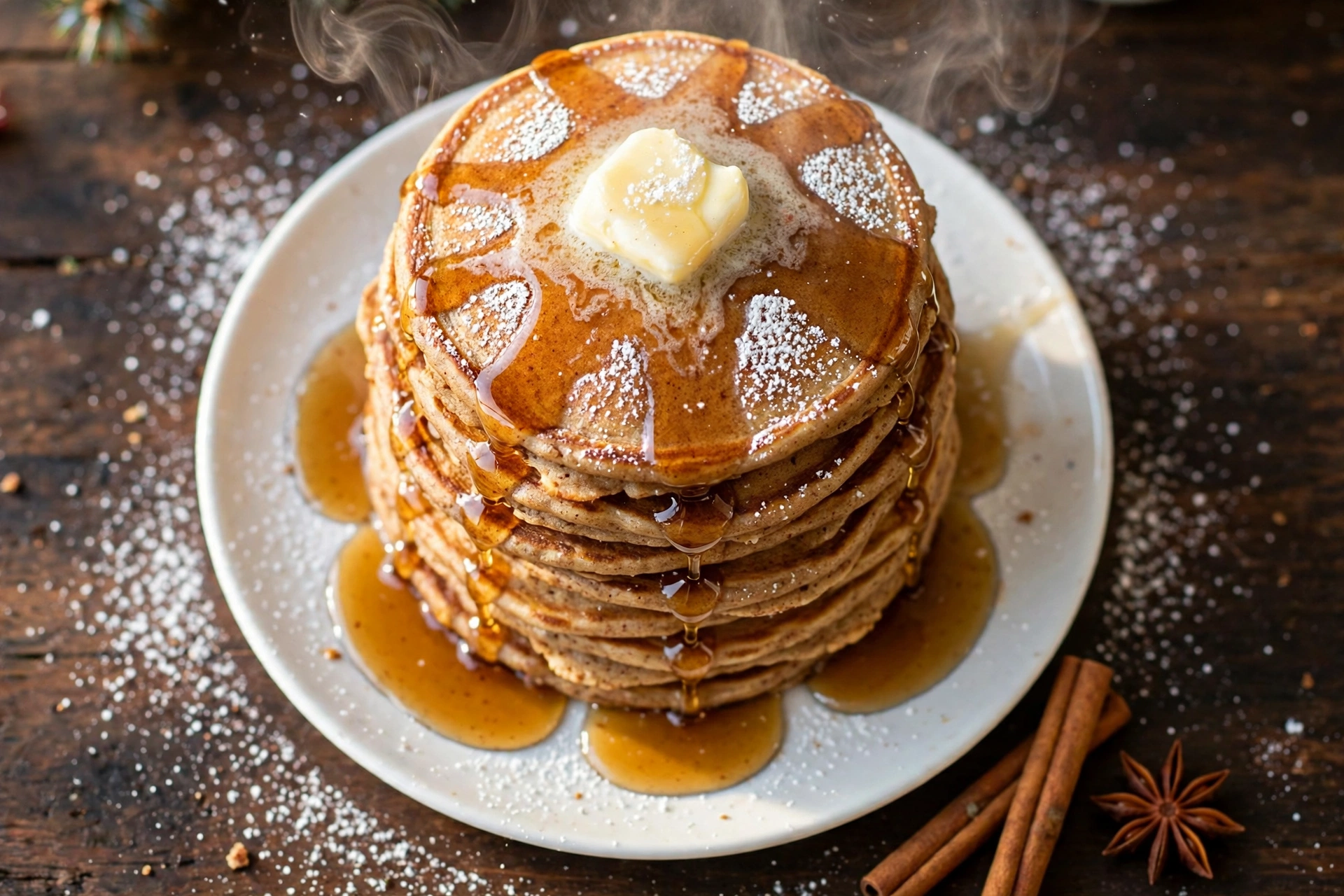
There is a smell that means Christmas morning has officially started, and it is not the tree or the wrapping paper. It is warm gingerbread drifting out of the kitchen while everyone is still in pajamas, and these easy gingerbread pancakes bottle that exact feeling. They are tall, golden, and impossibly fluffy, with deep molasses sweetness and the cozy warmth of ginger, cinnamon, nutmeg, and cloves. One bowl, one griddle, twenty-five minutes, and a stack of pancakes so good they taste like the holidays decided to show up for breakfast.
If your family loves gingerbread cookies at Christmas, these pancakes are their breakfast twin. The batter comes together in minutes, the spices bloom in the melted butter, and the molasses gives each pancake that dark, caramel-colored crumb and old-fashioned gingerbread flavor that plain pancakes simply cannot match. Serve them with a pat of salted butter, warm maple syrup, and a cloud of whipped cream, and watch the whole table go quiet in the best possible way.
This is also one of the easiest Christmas breakfasts you can make. There is no yeast, no chilling, no piping, and no decorating. The recipe makes twelve fluffy pancakes, three per person for four servings, and it doubles beautifully when the whole family is home for the holidays. Keep the first batch warm in a low oven while you cook the rest, and let the morning feel slow and special, even though breakfast took less than half an hour.
Recipe at a Glance
- Prep time: 10 minutes
- Cook time: 15 minutes
- Total time: 25 minutes
- Servings: 4 servings (12 pancakes, 3 per person)
- Best for: Christmas morning breakfast, holiday brunch, cozy winter weekends
Why This Works
Great pancakes are not luck. They are kitchen chemistry, and this recipe leans on four ideas that make the difference between flat, tough pancakes and tall, tender ones.
Molasses and baking soda are a team
Molasses is naturally acidic, and baking soda is a base. The moment the two meet in the batter, they react and release tiny carbon dioxide bubbles, and those bubbles are what lift the pancakes. That is why this recipe uses both baking powder and baking soda: the baking powder gives steady lift, and the baking soda works with the molasses for extra rise and that deep golden-brown color. Use unsulphured molasses here, not blackstrap, which is bitter and overpowering. The same warm-spice tradition behind gingerbread is what makes these pancakes taste like Christmas instead of just tasting sweet.
A five-minute rest makes tender pancakes
Once the batter is mixed, let it sit for five minutes before it touches the griddle. In that short rest, the flour fully hydrates, the baking powder starts working, and the gluten relaxes, so the pancakes cook up soft and pillowy instead of chewy. You will see the batter thicken slightly and a few bubbles appear on the surface. That is your signal that it is ready. Do not skip this step, and do not stir the batter again after it rests, or you will knock out the very bubbles you just created.
Medium heat protects the molasses
Molasses is mostly sugar, and sugar burns fast. A screaming-hot griddle will scorch the outside of a gingerbread pancake long before the inside cooks through, leaving you with dark, bitter pancakes and a wet center. Medium heat, about 350°F on an electric griddle, is the sweet spot: hot enough to set the edges and build golden color, gentle enough to let the middle cook all the way through. If your first pancake browns too fast, turn the heat down a notch and wipe the griddle clean before the next batch.
Lumps are your friend
The single biggest pancake mistake is overmixing. Stir the wet ingredients into the dry ones only until the flour disappears, and stop while the batter still looks a little lumpy. Those lumps are pockets of flour that finish hydrating on the griddle, and they are the reason the crumb stays light. A perfectly smooth batter has been stirred too much, the gluten has tightened up, and the pancakes will come out flat and rubbery. Lumpy batter is correct batter.
Ingredients
For the pancakes
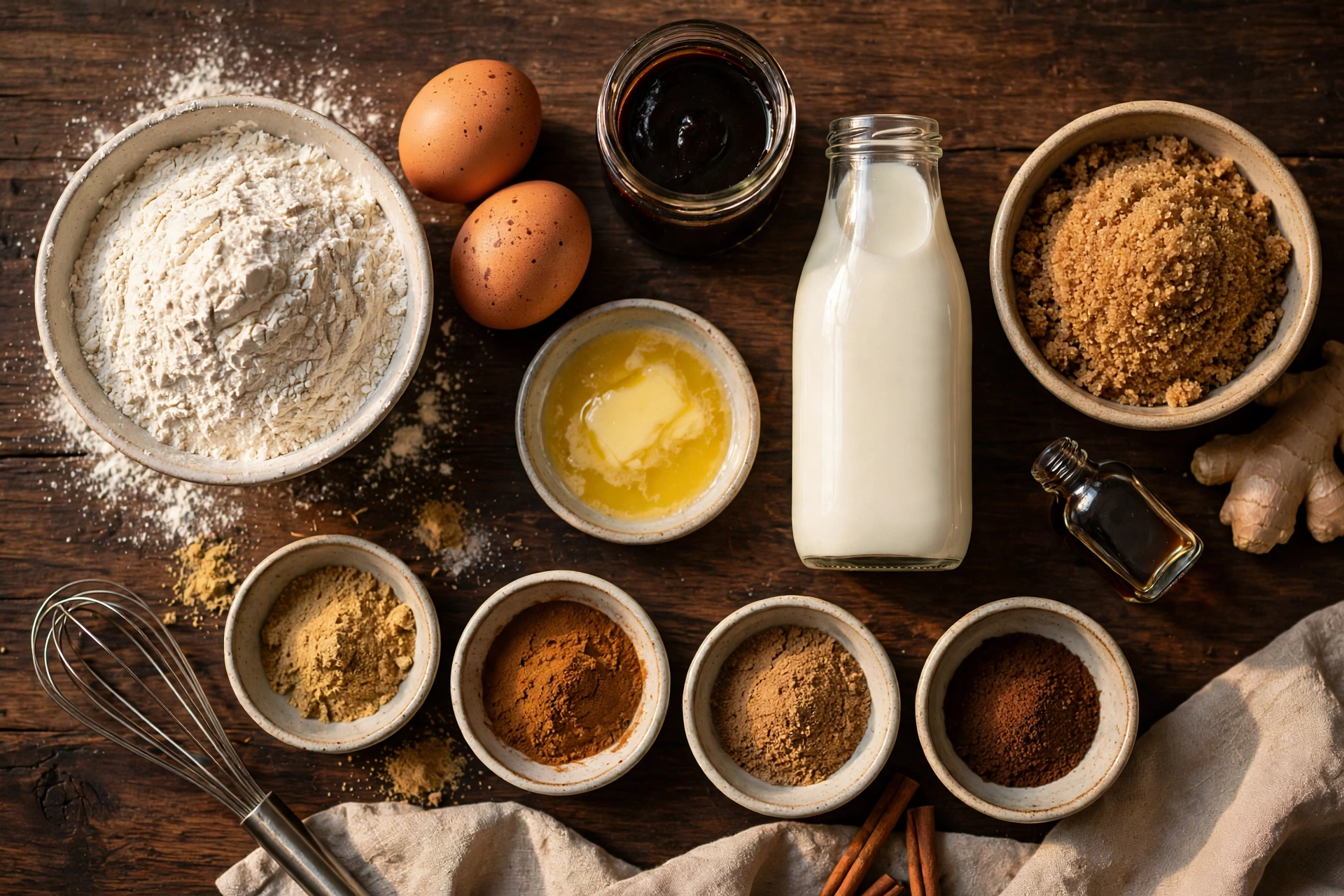
- 2 cups all-purpose flour, spooned and leveled
- 2 teaspoons baking powder
- 1/2 teaspoon baking soda
- 1 teaspoon ground ginger
- 1 teaspoon ground cinnamon
- 1/2 teaspoon ground nutmeg
- 1/4 teaspoon ground cloves
- 1/2 teaspoon fine salt
- 2 large eggs
- 1 1/4 cups whole milk
- 1/3 cup unsulphured molasses
- 3 tablespoons unsalted butter, melted and slightly cooled
- 2 tablespoons packed brown sugar
- 1 teaspoon vanilla extract
To serve
- Salted butter, for the griddle and serving
- Warm maple syrup
- Whipped cream, optional
- Powdered sugar, for dusting, optional
Directions
- Whisk the dry ingredients. In a large mixing bowl, whisk together the flour, baking powder, baking soda, ginger, cinnamon, nutmeg, cloves, and salt until the spices are evenly distributed and there are no clumps of baking soda. A quick whisk here saves you from a pancake with a bitter soda pocket later.
- Whisk the wet ingredients. In a second bowl or a large measuring jug, whisk the eggs until the yolks and whites are fully combined. Add the milk, molasses, melted butter, brown sugar, and vanilla, and whisk until smooth. If your milk is cold from the fridge, warm it for twenty seconds in the microwave first, so the molasses pours easily and the melted butter does not seize.
- Combine, but do not overmix. Pour the wet ingredients into the dry ingredients and stir gently with a wooden spoon or spatula just until the flour disappears. The batter should look thick and slightly lumpy, with a few small flour streaks still visible. Stop stirring now. Overmixing is the fastest way to tough pancakes.
- Rest the batter for five minutes. Set the bowl aside and let the batter rest while you heat the griddle. The batter will thicken slightly and small bubbles will appear on the surface. Do not stir it again after this rest.
- Heat the griddle. Place a large nonstick griddle or skillet over medium heat, about 350°F on an electric griddle, and add a thin smear of butter. The butter should sizzle gently and foam, not smoke or brown instantly. If it browns right away, the pan is too hot, so turn the heat down and wipe it out.
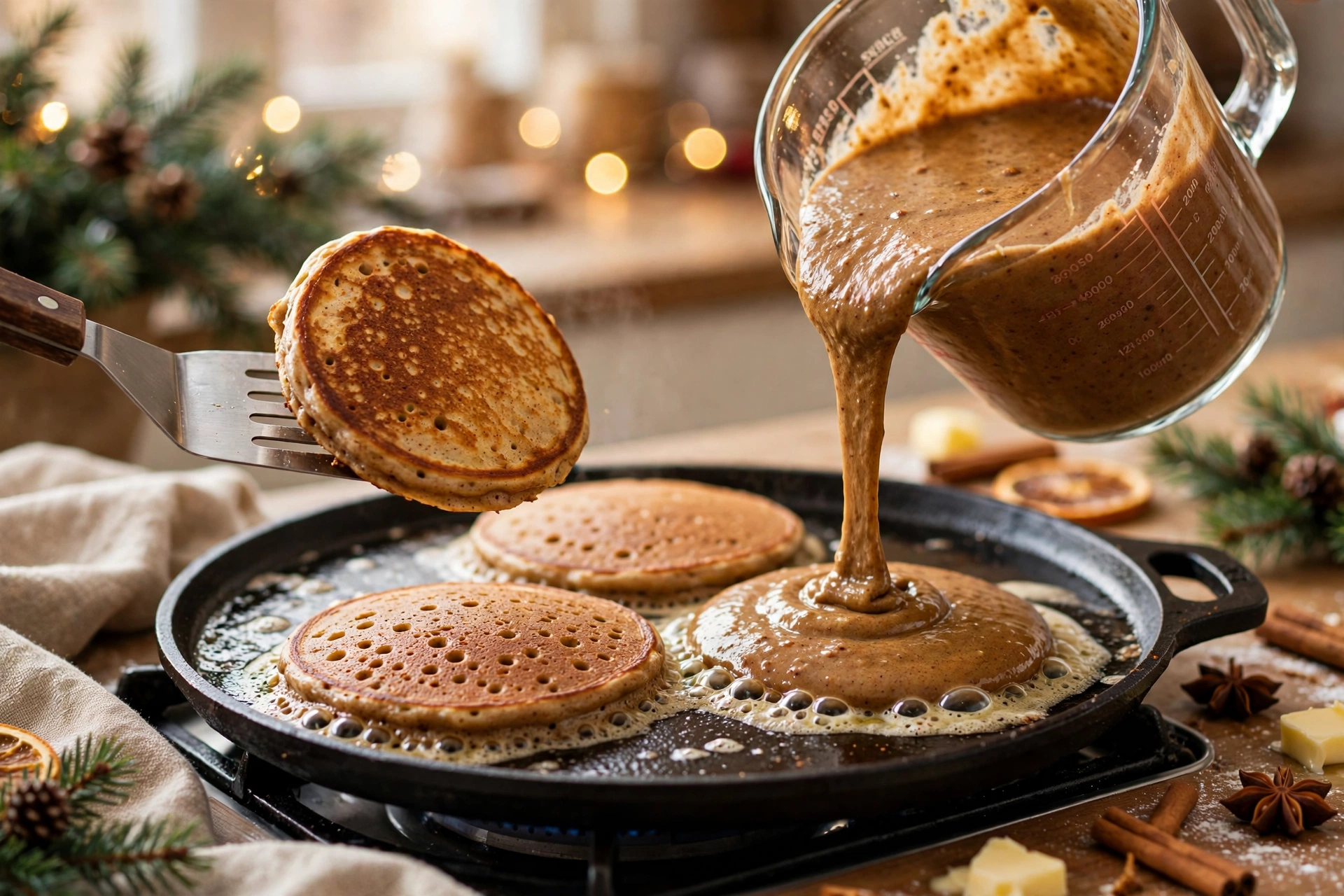
- Cook the pancakes. Scoop about 1/4 cup of batter per pancake onto the hot griddle, leaving space between them. Cook for 2 to 3 minutes, until bubbles appear across the surface and the edges look dry and set. Flip once with a thin spatula and cook for 1 to 2 minutes more, until the second side is golden brown and the pancake springs back when pressed lightly in the center. There should be no wet batter anywhere, and the inside should be fully cooked through, well past the 160°F mark where eggs are safely set. Transfer finished pancakes to a plate and keep them warm in a 200°F oven while you cook the rest, wiping the griddle and re-buttering between batches.
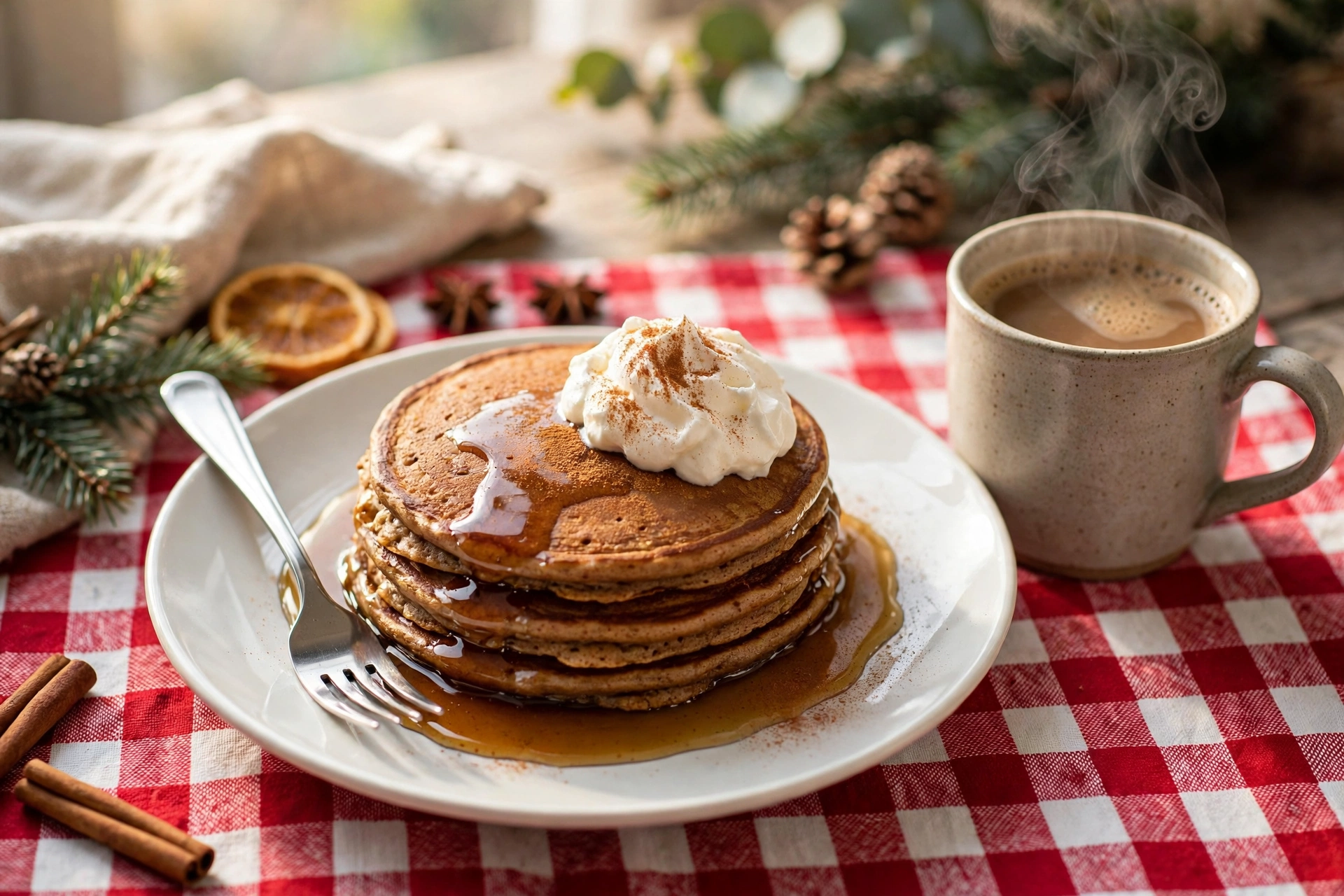
- Serve warm. Stack three pancakes per plate, top with a pat of salted butter, and pour over warm maple syrup. Add a dollop of whipped cream and a light dusting of powdered sugar if you like, and serve right away while they are hot, fluffy, and steaming.
Pro Tips
- Measure flour the right way. Spoon the flour into your measuring cup and level it off with a knife. Scooping straight from the bag packs in up to 25 percent extra flour, and that extra flour is the difference between fluffy and dense. This one habit fixes more pancake problems than anything else.
- Warm the milk slightly. Cold milk makes the melted butter firm up into little beads and makes the molasses thick and stubborn. Twenty seconds is enough, and the batter will come together silky smooth.
- Cook a test pancake first. Your first pancake is the thermometer for the whole batch. If it browns too fast, the heat is too high; if it stays pale after three minutes, turn the heat up a touch. Adjust once, and the other eleven will be perfect.
- Keep them warm without drying them out. A 200°F oven keeps them hot and fluffy while you finish cooking. Do not stack them while they wait, or the steam will make the bottom ones soggy.
- Make the dry mix ahead. Whisk all the dry ingredients together and store the mix in a jar for up to a month. On Christmas morning, all you have to do is whisk in the wet ingredients, and breakfast is ten minutes away. It also makes a lovely food gift tied with a ribbon and a handwritten tag.
Common Mistakes
- Overmixing the batter. Stirring until smooth develops gluten and knocks out the lift. Stop as soon as the flour disappears. Lumpy batter is correct batter, and the lumps vanish on the griddle.
- Cooking on heat that is too high. Molasses sugars caramelize quickly, so high heat burns the outside before the inside sets. If the pancakes are dark after one minute, turn the heat down, wipe the griddle, and start the next batch at medium. Golden brown is the goal, not dark brown.
- Skipping the five-minute rest. Batter that goes straight to the griddle has not hydrated, so the pancakes cook up flat and a little gummy in the middle. Five minutes of patience is the cheapest upgrade in this recipe.
- Pressing pancakes with the spatula. Squashing a pancake to make it cook faster only squeezes out the air bubbles that make it fluffy. Let the heat do the work, flip once, and leave it alone.
- Using blackstrap molasses. Blackstrap is intensely bitter and will overpower the spices. Unsulphured molasses is sweet, mild, and dark, and it is the one that gives gingerbread its classic flavor.
- Flipping too early. If the pancake tears or folds when you try to flip it, it is not ready. Wait until the bubbles on top have popped and the edges look dry and set.
Storage & Make-Ahead
Cooked gingerbread pancakes keep well, which makes them a smart choice for busy holiday mornings. Let them cool completely, then store them in an airtight container in the fridge for up to 3 days. Reheat them in the toaster on a low setting or in a dry skillet over medium heat for a minute per side, and they come back warm, soft, and fragrant. The microwave works in a pinch, about twenty seconds per pancake.
For longer storage, freeze the pancakes in a single layer on a baking sheet until solid, about an hour, then stack them in a freezer bag with a small square of parchment paper between each one. They keep for up to 2 months. Reheat straight from frozen in the toaster, no thawing needed.
The dry mix can be made up to a month ahead and stored in a sealed jar at room temperature. The mixed batter, on the other hand, is best used the same morning, because the baking soda starts reacting with the molasses the moment the wet and dry ingredients meet, and that lift fades if the batter sits overnight. If you want another make-ahead holiday breakfast in your rotation, our pumpkin overnight oats are built for exactly that.
Substitutions
- Buttermilk instead of whole milk: swap it in one-for-one. The extra tang is lovely with molasses, and the acidity gives the baking soda even more lift. The pancakes will be a touch tangier and a little taller.
- Honey or maple syrup instead of molasses: use the same 1/3 cup. The pancakes will be lighter in color and milder in flavor, more like a spice pancake than a true gingerbread one, but still delicious. Add an extra 1/2 teaspoon of ginger to make up for the lost depth.
- Half whole wheat flour: replace 1 cup of the all-purpose flour with whole wheat flour for a heartier, nuttier pancake. Add an extra tablespoon of milk, because whole wheat absorbs more liquid.
- Dairy-free: use oat milk or almond milk and a plant-based butter. The flavor stays warm and spiced, and the texture is nearly identical.
- Gluten-free: use a cup-for-cup gluten-free flour blend with xanthan gum already included. Let the batter rest for ten minutes instead of five, since gluten-free flours hydrate more slowly.
- Egg-free: replace each egg with one flax egg, made by mixing 1 tablespoon of ground flaxseed with 3 tablespoons of water and resting it for five minutes. The pancakes will be slightly denser, but they will still be soft, spiced, and satisfying.
Frequently Asked Questions
Can I make gingerbread pancake batter the night before?
It is best to mix the batter fresh in the morning. The baking soda starts reacting with the acidic molasses as soon as the wet and dry ingredients meet, and that lift fades overnight, leaving you with flatter pancakes. Instead, mix the dry ingredients the night before and store them in a covered bowl, then whisk in the wet ingredients in the morning. You get all the convenience with none of the lost fluff.
Why are my gingerbread pancakes burning?
Molasses is high in sugar, and sugar caramelizes and then burns quickly on a hot griddle. The fix is medium heat, about 350°F, a thin smear of butter rather than a pool of it, and wiping the griddle clean between batches so old butter and sugar do not scorch. If the first pancake comes out dark in under a minute, turn the heat down one notch and try again. Golden brown is the target, not dark brown.
Can I freeze gingerbread pancakes?
Yes, they freeze beautifully. Cool the pancakes completely, freeze them in a single layer on a baking sheet for about an hour, then stack them in a freezer bag with parchment paper between each one. They keep for up to 2 months. Reheat them straight from frozen in the toaster on a low setting or in a dry skillet, and they taste almost freshly made.
What do you serve with gingerbread pancakes?
Start with salted butter and warm maple syrup, then add whipped cream and a dusting of powdered sugar for a festive touch. For a full Christmas breakfast, add crispy bacon or sausage links, fresh fruit, and something warm to drink. Our gingerbread smoothie doubles down on the same cozy spice, and it is ready in five minutes while the pancakes cook.
Rate this recipe
Be the first to rate it!