
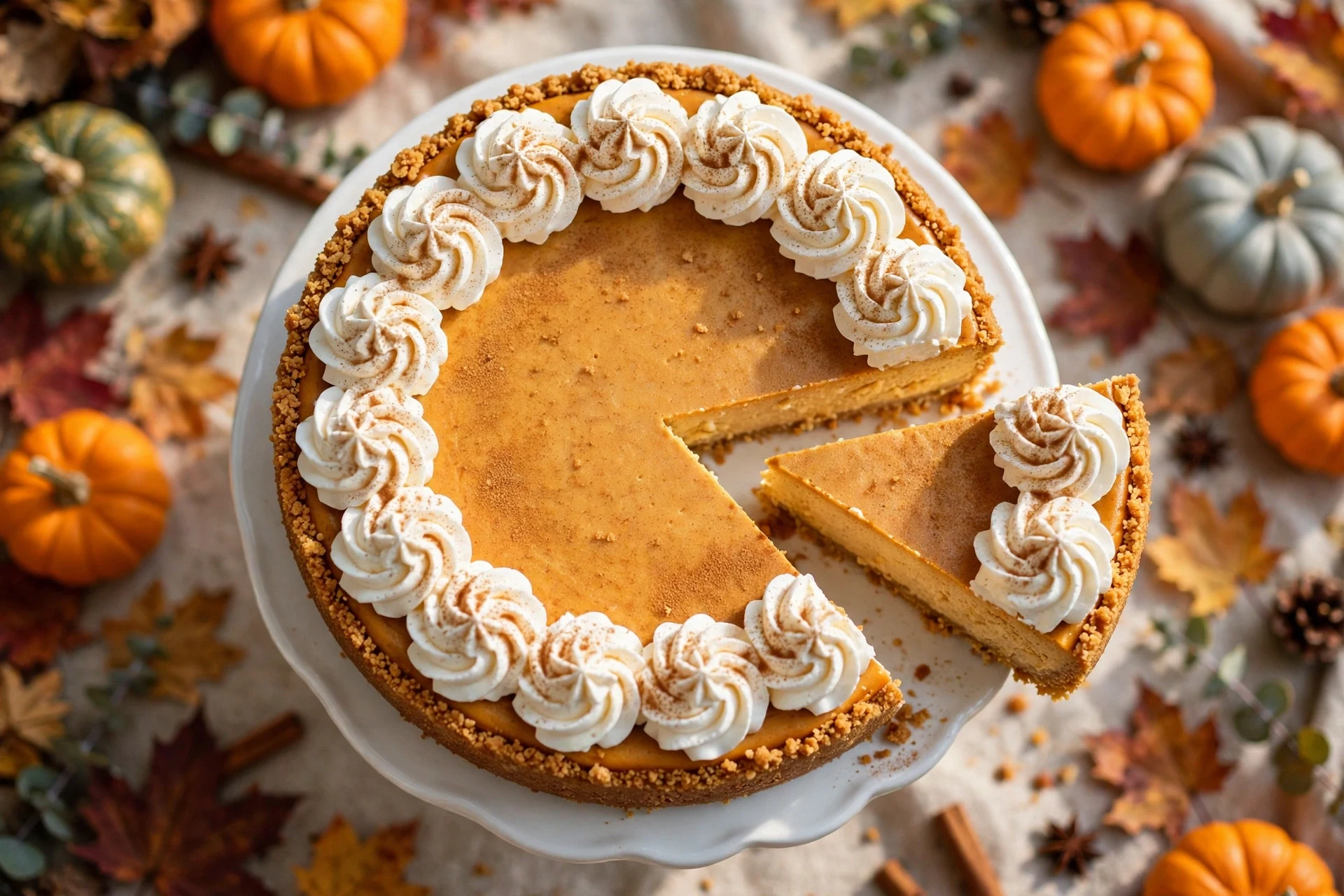
There is a moment every Thanksgiving when the table goes quiet, forks pause mid-air, and someone says the words every host dreams of hearing: “This cheesecake is unreal.” That is exactly what this Easy Pumpkin Cheesecake does. It is tall, silky, and deeply spiced, with a buttery graham cracker crust that crunches gently under a filling so creamy it practically melts on your tongue. And here is the best part: it is a real baked cheesecake, made in a springform pan, low and slow in the oven, with no water bath and no cracks to hide.
This is the first baked pumpkin cheesecake on RecipeNest, and it is worth the wait. Our Easy No-Bake Pumpkin Cheesecake is a wonderful 20-minute fridge dessert for busy days, and our Easy No-Bake Pumpkin Cheesecake Bars are the grab-and-go version for parties. But this one is different. Baking transforms the filling into something richer and more custardy, with the warm, toasty edges and deep spice flavor that only an oven can build.
The active work takes just 25 minutes of prep and 65 minutes in the oven, for a total active time of 1 hour 30 minutes, plus 1 hour cooling in the oven and at least 4 hours chilling in the fridge. The oven does the hard work while you relax, and the long chill is what turns a good cheesecake into a great one. Make it the day before Thanksgiving and you will be the calmest person there.
Recipe at a Glance
- Prep Time: 25 minutes
- Cook Time: 65 minutes
- Total Time: 1 hour 30 minutes, plus 1 hour cooling in the oven and at least 4 hours chilling
- Servings: 12 servings
- Yield: 1 (9-inch) cheesecake
- Oven Temperature: 325°F (163°C)
- Pan: 9-inch springform pan
Why You Will Love This Easy Pumpkin Cheesecake
First, the flavor is pure fall comfort. Real pumpkin puree, cinnamon, ginger, nutmeg, and a whisper of cloves give every bite that warm pumpkin pie spice character, while tangy cream cheese and sour cream keep it bright instead of heavy. Second, the texture: dense but silky, with a top that sets smooth and golden. Third, it is genuinely easy. There is no water bath to wrestle with, no foil-wrapped pan leaking into your oven, and no thermometer anxiety. You mix, pour, bake low and slow, then let the oven cool down with the cheesecake still inside. That slow cool is the secret to a crack-free top, and it asks nothing of you except patience.
It is also a make-ahead dream. Cheesecake actually tastes better on day two, once the flavors have settled and the texture has firmed up, so this is one Thanksgiving dessert you can finish before the big day even starts.
Ingredients
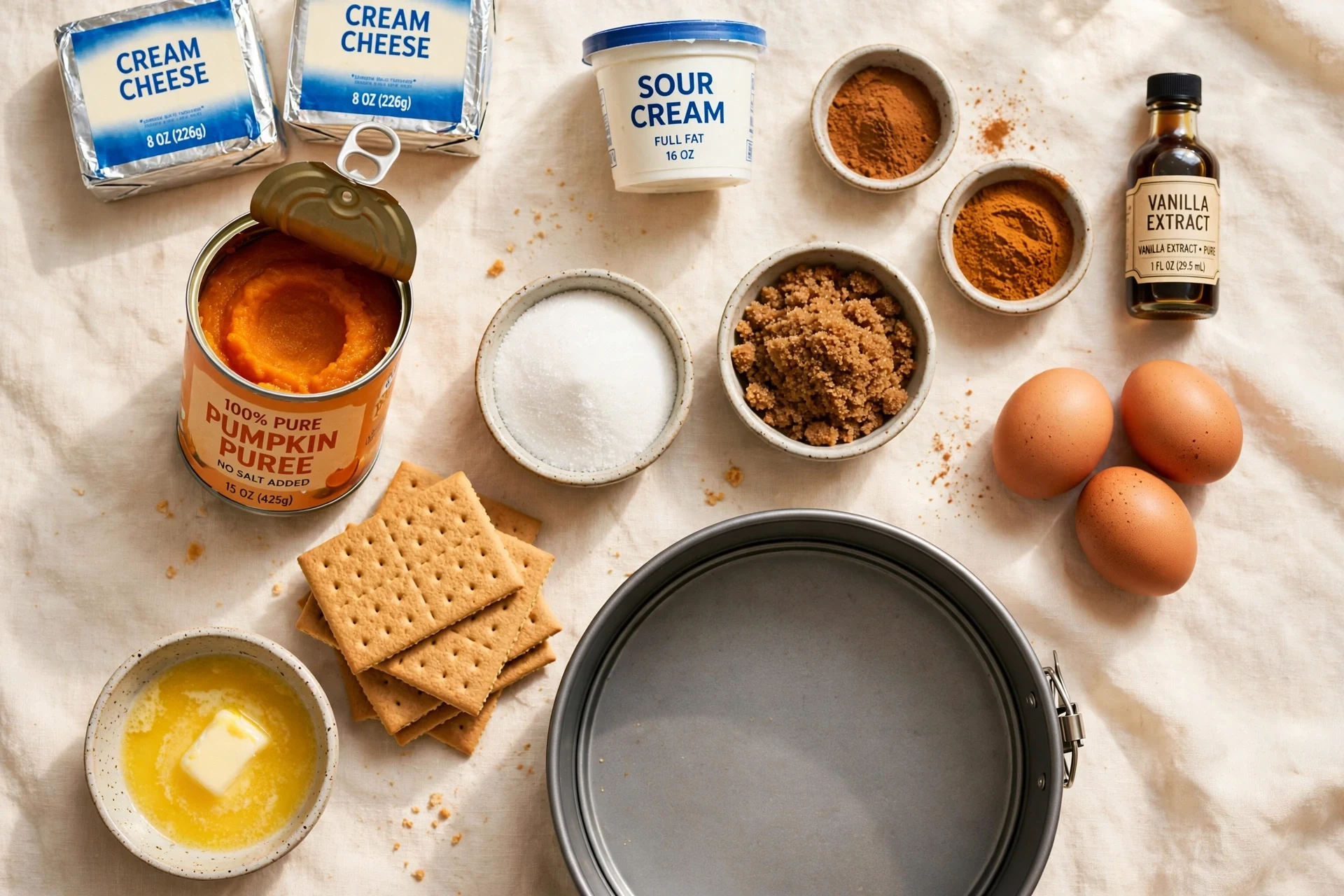
Everything here is a pantry or fridge staple, and every ingredient earns its place. Use full-fat cream cheese and full-fat sour cream for the richest, creamiest result. Low-fat versions hold more water and can make the filling soft or weepy.
For the Graham Cracker Crust
- 1 1/2 cups graham cracker crumbs (about 10 full graham cracker sheets, finely crushed)
- 1/4 cup granulated sugar
- 6 tablespoons unsalted butter, melted
- 1/4 teaspoon fine salt
For the Pumpkin Cheesecake Filling
- 24 ounces (3 blocks) full-fat cream cheese, softened to room temperature
- 1 cup granulated sugar
- 1/4 cup packed light brown sugar
- 1 can (15 ounces) 100% pure pumpkin puree (not pumpkin pie filling)
- 3/4 cup full-fat sour cream, at room temperature
- 4 large eggs, at room temperature
- 2 teaspoons pure vanilla extract
- 1 1/2 teaspoons ground cinnamon
- 1/2 teaspoon ground ginger
- 1/4 teaspoon ground nutmeg
- 1/4 teaspoon ground cloves
- 1/4 teaspoon fine salt
For Serving
- 1 1/2 cups heavy whipping cream, whipped to soft peaks (or store-bought whipped cream)
- Ground cinnamon, for dusting
Directions
- Heat the oven and prepare the pan. Preheat the oven to 325°F (163°C). Lightly grease a 9-inch springform pan with butter or nonstick spray, and set it on a rimmed baking sheet. The baking sheet catches any drips and makes the pan easy to move in and out of the oven.
- Make the graham cracker crust. Stir the graham cracker crumbs, granulated sugar, melted butter, and salt together in a medium bowl until the mixture looks like damp sand and holds together when you squeeze a handful. Tip it into the springform pan and press it firmly and evenly across the bottom and about 1 inch up the sides, using the flat bottom of a measuring cup to pack it tight. A firmly packed crust slices cleanly instead of crumbling.
- Pre-bake the crust. Bake the crust for 10 minutes, until it smells toasty and looks slightly darker at the edges. Set it aside to cool while you make the filling. Leave the oven on at 325°F.
- Beat the cream cheese and sugars. In a large bowl, beat the room-temperature cream cheese with an electric mixer on medium speed for about 2 minutes, until completely smooth and fluffy with no lumps. Add the granulated sugar and brown sugar and beat for another minute until creamy. Scrape down the bowl and beater well.
- Add the pumpkin and sour cream. Beat in the pumpkin puree, sour cream, and vanilla extract on low speed until smooth and evenly orange, scraping the bowl once halfway through. The batter should look thick, glossy, and completely uniform.
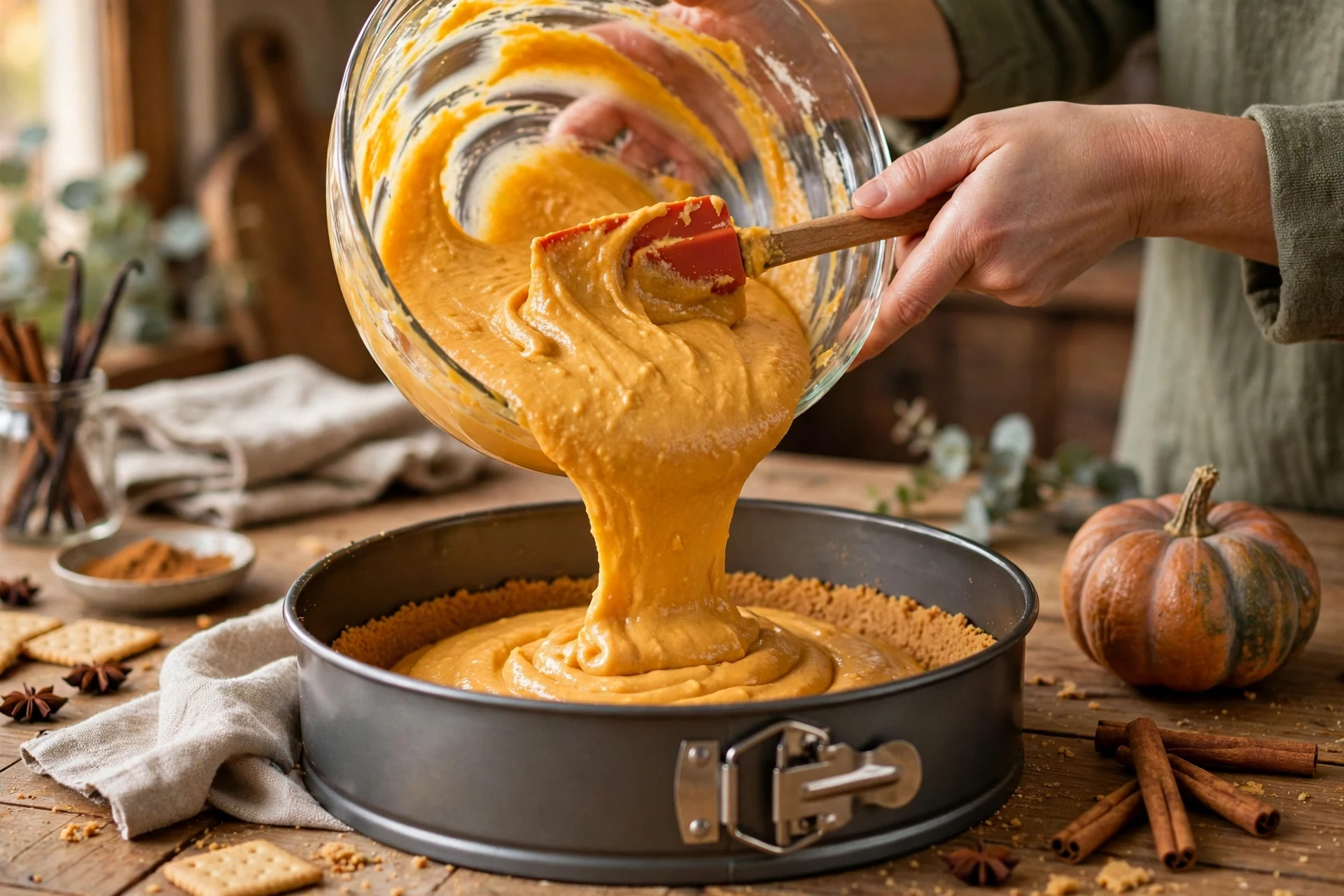
- Add the eggs and spices. Add the eggs one at a time, beating on low speed just until each one disappears into the batter. Then beat in the cinnamon, ginger, nutmeg, cloves, and salt on low speed until just combined. Stop as soon as the spices are mixed in. Overbeating after the eggs go in whips air into the batter, and that air is what makes cheesecakes puff up in the oven and crack as they cool.
- Pour and smooth. Pour the filling over the cooled crust and smooth the top with an offset spatula or the back of a spoon. Tap the pan gently on the counter two or three times to pop any large air bubbles.
- Bake low and slow. Bake at 325°F for 65 minutes. The cheesecake is done when the outer 2 to 3 inches look set and the center still wobbles gently when you nudge the pan, like set gelatin. The center will look slightly underdone, and that is exactly right. If you use an instant-read thermometer, the center should read 150°F to 160°F. Do not bake until the center is firm, or the cheesecake will be dry and cracked.
- Cool slowly in the oven. Turn the oven off, crack the door open about 2 inches with a wooden spoon, and leave the cheesecake inside for 1 hour. This slow cool-down is the single best crack-prevention trick there is. After 1 hour, remove the cheesecake and run a thin knife around the edge of the pan to release it, which lets the cake contract freely as it cools instead of pulling and splitting.
- Chill until firm. Let the cheesecake cool to room temperature on the counter, then cover it loosely and refrigerate for at least 4 hours, or overnight for the best flavor and the cleanest slices. Keep it in the springform pan while it chills so it holds its shape.
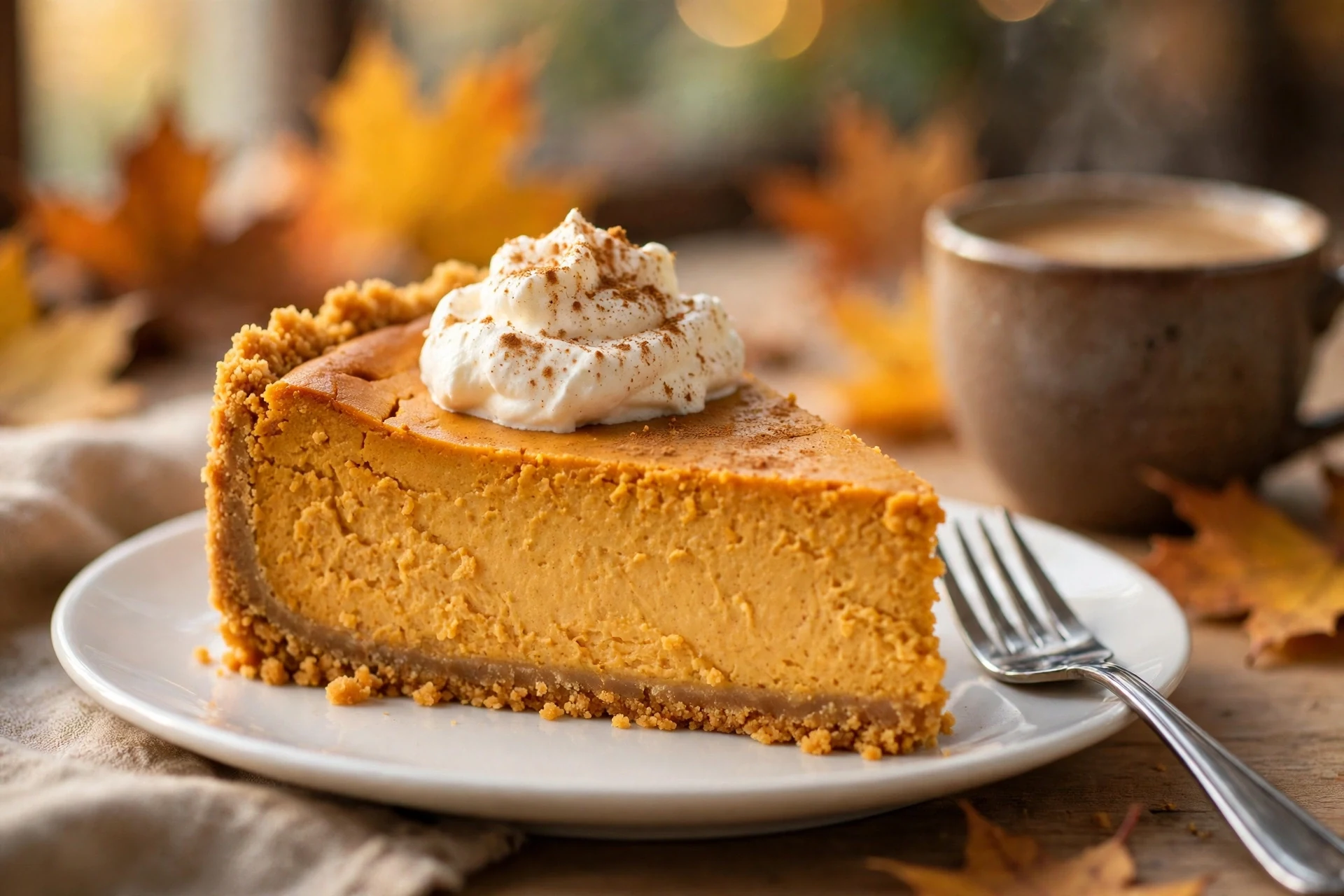
- Serve cold. Release the springform ring, transfer the cheesecake to a serving plate, and slice with a long, thin knife dipped in hot water and wiped clean between cuts. Top each slice with whipped cream and a dusting of cinnamon.
Why This Works
Great cheesecake is less about fancy technique and more about understanding what the filling actually is: a custard. Cream cheese, eggs, and pumpkin puree set the same way any custard does, by gentle heat coagulating the egg proteins into a soft, creamy network. That is why this recipe bakes at 325°F instead of a hotter oven. A gentle oven heats the filling evenly from the edges inward, so the outside does not overcook and toughen while the center is still liquid. A hot oven does the opposite: it sets the edges hard, the center keeps expanding, and the top splits open to release the pressure. Low and slow is not a suggestion here; it is the whole method.
Room-temperature cream cheese matters for the same reason. Cold cream cheese never beats truly smooth, and the little lumps that survive the mixer stay in the finished cheesecake as pale specks. Soft cream cheese blends into a uniform batter in two minutes, and that smooth batter bakes into a smooth slice.
The slow cool in the turned-off oven is the step most recipes skip and the one that saves the top. A cheesecake straight from a hot oven into a cool kitchen contracts fast, and that sudden contraction is what cracks the surface. Letting the oven cool down gradually around the cake, with the door cracked, eases it down gently, so the top stays smooth and golden. Skipping the water bath works because the low oven temperature and the slow cool do the water bath’s job: they protect the custard from harsh, sudden heat.
Finally, the sour cream is not just flavor. Its acidity brightens the rich filling and keeps the sweetness in balance, and its extra fat and moisture help the custard stay creamy rather than rubbery.
Pumpkin brings more than color to the filling. Canned pumpkin puree is simply cooked, mashed pumpkin, and its deep orange hue comes from beta-carotene; USDA FoodData Central lists pumpkin as a source of vitamin A and fiber — a nice bonus in a dessert. Pumpkin desserts have anchored the Thanksgiving table for generations, and the classic pumpkin pie is the ancestor this cheesecake is riffing on, swapping a pastry crust for graham crumbs and a custard filling for a creamy baked cheesecake.
Pro Tips and Common Mistakes
Use 100% pure pumpkin puree, not pumpkin pie filling. This is the most important ingredient note in the whole recipe. Pumpkin pie filling comes pre-sweetened and pre-spiced, and it will throw off both the sugar and the spice balance. The can should say “100% Pure Pumpkin” on the label. Our Easy Pumpkin Pie uses the same puree, so if you have a can left over from pie baking, it is perfect here.
Do not overbeat once the eggs are in. Beat the cream cheese and sugar as much as you like, but after the eggs go in, mix on low and stop the moment each egg disappears. Extra air is the number one cause of puffing, sinking, and cracking.
Do not open the oven door during baking. Every peek drops the temperature and lets in a draft, which can make the top sink or crack. Trust the 65-minute bake time and check only at the end.
Judge doneness by the jiggle, not the clock alone. Ovens vary, so use the wobble test: the outer ring set, the center jiggling like gelatin. A fully firm center at the end of baking means an overbaked, dry cheesecake after chilling.
Chill the full 4 hours. Slicing warm cheesecake is a mess: the filling smears, the crust crumbles, and the slices slump. Four hours is the minimum for clean, tall slices; overnight is even better.
Slice with a hot, clean knife. Dip a long, thin knife in hot water, wipe it dry, and cut in one smooth motion, cleaning the blade between slices. It is a small step that makes every slice look bakery-perfect.
Fixing a crack. If a small crack does appear, do not worry. Let the cheesecake chill fully, then cover the top with whipped cream rosettes or a thin layer of sweetened sour cream. Nobody will ever know, and it will taste exactly the same.
Substitutions
Crust swaps: Gingersnap crumbs make a spicier, darker crust that is wonderful with pumpkin; vanilla wafer crumbs make a milder, buttery one. Use the same amounts. A gluten-free graham cracker works cup for cup for a gluten-free crust.
Spice swaps: Replace the individual spices with 2 1/4 teaspoons of pumpkin pie spice if that is what you have. The flavor will be very close.
Sour cream swaps: Full-fat plain Greek yogurt works in place of the sour cream, cup for cup, with a slightly tangier result. Do not use low-fat sour cream or yogurt, which can make the filling watery.
Butter swaps: Salted butter works in the crust; just leave out the 1/4 teaspoon of salt in the crust mixture.
Egg-free note: This recipe is built around eggs as the setting agent, so there is no simple egg-free swap that keeps the same baked texture. For an egg-free pumpkin dessert, our Easy Pumpkin Pie Dip is a no-bake, 15-minute option that needs no eggs at all.
Storage and Make-Ahead
This cheesecake is made for making ahead. Bake it up to 2 days ahead and keep it covered in the springform pan in the fridge; the flavor actually improves overnight as the spices settle. Once sliced, store leftovers in an airtight container in the fridge for 4 to 5 days. Because this is a dairy and egg dessert, never leave it at room temperature for more than 2 hours, including serving time.
To freeze, chill the cheesecake completely, then wrap the whole cake (or individual slices) tightly in plastic wrap and then foil, and freeze for up to 1 month. Thaw overnight in the fridge, never on the counter, and add the whipped cream topping only after thawing.
Frequently Asked Questions
Can I make pumpkin cheesecake ahead of time?
Yes, and you should. Bake this pumpkin cheesecake up to 2 days before serving and keep it covered in the springform pan in the fridge. The flavor improves overnight as the spices settle, and the texture firms up for the cleanest slices. Add the whipped cream topping just before serving.
Why did my pumpkin cheesecake crack?
Cracks almost always come from overbaking or cooling too fast. Bake at 325°F for 65 minutes and take the cheesecake out while the center still jiggles gently, then cool it slowly in the turned-off oven with the door cracked for 1 hour. Do not overbeat the batter after adding the eggs, because extra air makes the cake puff up and split as it cools.
Can I use pumpkin pie filling instead of pumpkin puree?
No. Pumpkin pie filling is already sweetened and spiced, so it will make the cheesecake too sweet and throw off the spice balance. Use a can labeled 100% pure pumpkin puree, which is plain cooked pumpkin with nothing added. Check the label before you buy, because the cans look almost identical on the shelf.
Do I need a water bath for pumpkin cheesecake?
No. This recipe skips the water bath on purpose. Baking low and slow at 325°F for 65 minutes, then cooling the cheesecake in the turned-off oven with the door cracked for 1 hour, protects the custard from sudden heat changes and gives you a smooth, crack-free top without wrapping a pan in foil or risking a leak.
Rate this recipe
Be the first to rate it!