
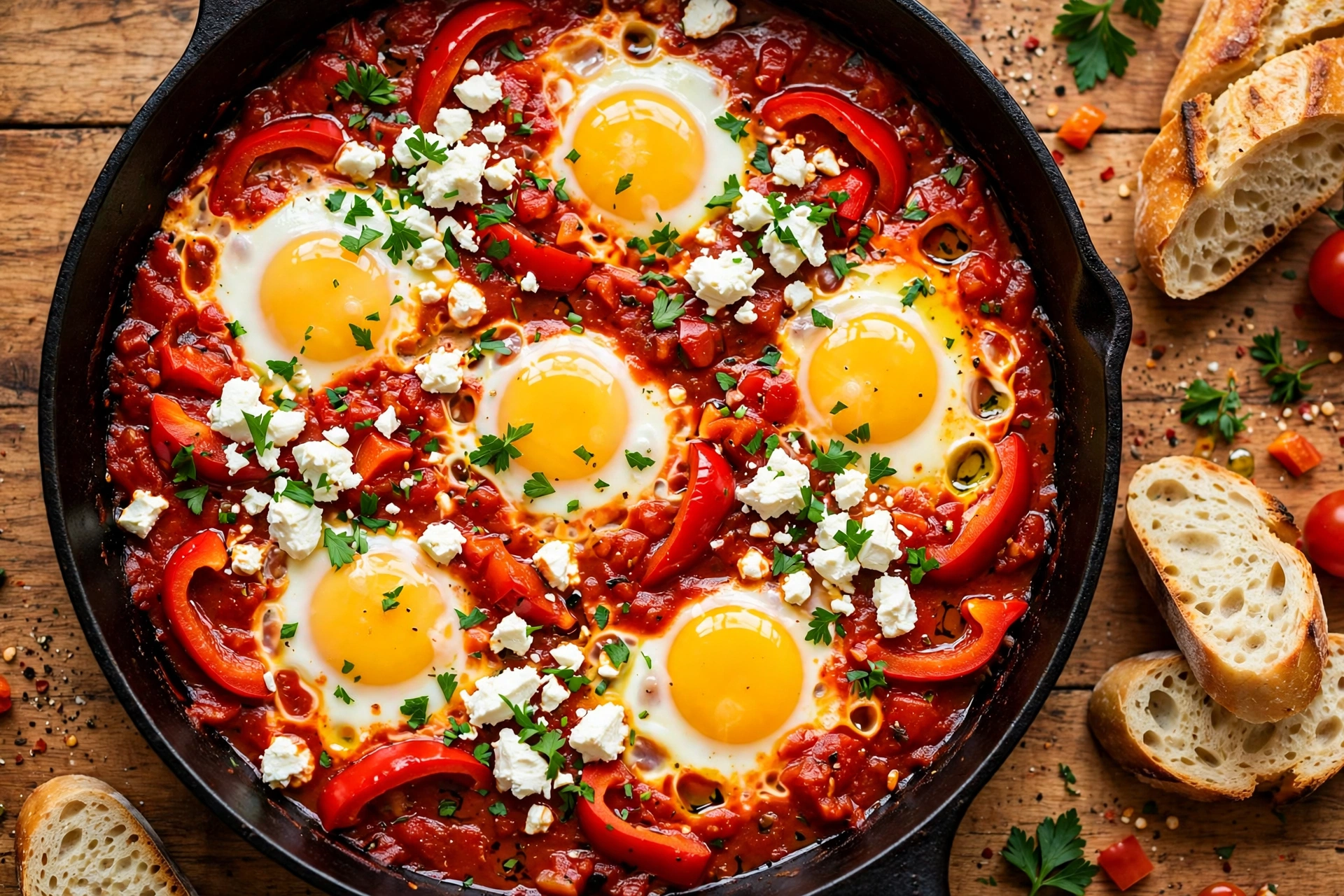
There is a special kind of breakfast magic that happens when eggs meet a simmering pan of spiced tomatoes, and this Easy Shakshuka is exactly that kind of magic. Picture it: six golden eggs nestled into a rich, brick-red tomato and red pepper sauce, the whites just set, the yolks still gloriously jammy, crumbled feta melting softly at the edges and a shower of fresh parsley over the top. Crusty bread waits at the side, ready to mop up every last spoonful of sauce. It looks like something from a sunny cafe in Tel Aviv, yet it comes together in one pan in 30 minutes, with 10 minutes of prep and 20 minutes of cooking, and it feeds four people generously.
Shakshuka has travelled a long way to reach breakfast tables around the world. The dish has deep roots across North Africa and the Middle East, and shakshuka’s history stretches from Tunisia and Libya through Israel and beyond, with every region adding its own small twist. What never changes is the heart of the dish: eggs poached gently in a warmly spiced tomato sauce. That is the whole beautiful idea, and it is why this recipe works so well on a busy morning, a slow weekend brunch, or even a quick weeknight dinner when breakfast-for-dinner sounds like the best plan anyone has had all day.
This version keeps everything simple and honest. One pan, pantry spices, a can of crushed tomatoes, and six eggs. The sauce builds its flavour in layers: sweet onion and red pepper softened in olive oil, garlic and spices bloomed until fragrant, then tomatoes simmered down until the sauce is thick enough to cradle an egg. There is no oven, no extra dishes, and no fussy technique. If you can stir a pot and crack an egg, you can make shakshuka, and once you have made it, you will understand why it has become one of the most loved egg dishes on the planet.
What makes this Easy Shakshuka such a reliable favourite is how forgiving it is. The sauce welcomes small changes, the eggs cook in their own little wells, and the whole pan goes straight from the stove to the table, which means less washing up and more time actually eating. Serve it straight from the skillet with thick slices of crusty bread, and watch how fast it disappears. Four servings, 30 minutes, one pan, and a breakfast that tastes like a holiday morning.
Recipe at a Glance
Prep time: 10 minutes | Cook time: 20 minutes | Total time: 30 minutes | Servings: 4 servings | Yield: 1 large skillet, 6 eggs in spiced tomato-pepper sauce
Why This Recipe Works
Great shakshuka is not an accident. It is the result of a few small technique choices that each do a real job, and once you understand the why behind them, the recipe becomes yours forever. The first choice is blooming the spices in oil. Ground cumin, sweet paprika, and ground coriander are fat-soluble, which means their flavour compounds dissolve into oil far better than they dissolve into water or tomato juice alone. When you stir them into the hot olive oil with the garlic for about a minute, the oil turns a deep rusty red and the whole kitchen fills with a warm, smoky aroma. That single minute is where most of the flavour of the finished sauce is born. Skip it, and the spices stay flat and dusty. Bloom them, and the sauce tastes layered and rich.
The second choice is simmering the sauce before the eggs ever go in. Crushed tomatoes straight from the can are bright and sharp, and they need time to mellow. Seven minutes of gentle simmering does three things at once: it cooks off the raw, tinny edge of the tomatoes, it lets the tomato paste deepen the colour and body, and it thickens the sauce just enough that an egg cracked into a well will sit on top instead of sinking and disappearing. A sauce that is too thin makes watery eggs. A sauce simmered for seven minutes holds the eggs proudly, and the eggs in turn cook in flavour instead of plain water.
The third choice is covering the pan once the eggs are in. The lid traps steam, and that steam is what sets the egg whites from above while the hot sauce cooks them from below. Without a lid, the tops of the whites stay glassy and raw while the bottoms overcook. With a lid, five minutes gives you whites that are fully set and opaque, with yolks that are still soft and jammy in the middle. That is the exact doneness cue to watch for: the whites must be completely set with no clear, jelly-like patches left anywhere, while the yolks stay soft and golden. If you prefer your eggs fully firm the way the USDA describes for egg safety, simply cook them a couple of minutes longer with the lid on, until both the yolk and the white are firm. The sauce will not mind the extra time.
The fourth choice is the two-minute rest after the feta and parsley go on. Taking the pan off the heat and letting it sit, covered, for two minutes lets the feta soften into creamy crumbles against the warm sauce, lets the parsley wilt just slightly so its flavour blooms, and lets the eggs finish setting gently in the residual heat. It also gives you time to slice the bread and call everyone to the table, which is exactly how long it takes.
Eggs and tomatoes are a naturally strong pair nutritionally as well as in flavour. Eggs supply high-quality protein, while tomatoes bring vitamin C and lycopene, the pigment that gives them their red colour. The USDA FoodData Central database lists the nutrient profiles for eggs and tomatoes, and it is a useful reminder that a simple breakfast built from real ingredients can be both satisfying and nourishing without any effort at all. Nothing here makes a medical claim; it is simply good food, made from good ingredients, in a sensible portion for four people.
Finally, this recipe works because it respects the one-pan promise. Everything happens in a single large skillet, from softening the onion to serving at the table. The sauce is the star, the eggs are the joy, and the feta and parsley are the finishing flourish that makes the pan look like a feast. It is a breakfast that feeds a family, a brunch that impresses guests, and a dinner that saves a tired evening, all in 30 minutes.
Ingredients
- 2 tablespoons olive oil
- 1 medium yellow onion, diced (about 1 cup)
- 1 large red bell pepper, diced (about 1 cup)
- 4 garlic cloves, minced
- 1 teaspoon ground cumin
- 1 teaspoon sweet paprika
- 1/2 teaspoon ground coriander
- 1/4 teaspoon cayenne pepper (optional, for gentle heat)
- 1 tablespoon tomato paste
- 1 can (28 ounces) crushed tomatoes
- 1 teaspoon sugar (optional, to balance the tomatoes)
- 3/4 teaspoon fine sea salt
- 1/2 teaspoon black pepper
- 6 large eggs
- 1/2 cup crumbled feta cheese
- 1/4 cup chopped fresh parsley, plus extra for garnish
- Crusty bread, for serving

Directions
- Prep the vegetables and spices (10 minutes). Dice the yellow onion and the red bell pepper into small, even pieces, about the size of a pea, so they soften at the same speed. Mince the garlic cloves. Measure the cumin, paprika, coriander, and cayenne into one small bowl so they can all go into the pan together. Open the can of crushed tomatoes and set everything within reach of the stove, because once the pan is hot, this recipe moves quickly.
- Soften the onion and pepper (5 minutes). Warm the olive oil in a large skillet over medium heat until it shimmers. Add the diced onion and red bell pepper with a pinch of the salt, and cook, stirring often, for 5 minutes, until the onion turns soft and translucent and the pepper pieces lose their raw crunch. The vegetables should look glossy and sweet, not browned. If the pan starts to colour too fast, lower the heat a touch; gentle heat is what builds sweetness here.
- Bloom the garlic and spices (1 minute). Stir in the minced garlic, cumin, paprika, coriander, and cayenne, and cook for 1 minute, stirring constantly, until the mixture smells warm and fragrant and the oil turns a deep red. This is the blooming step, and it is the most important minute in the recipe, so do not walk away. Garlic burns quickly, and burnt garlic turns bitter, so keep the spoon moving and move to the next step the moment the spices smell toasty.
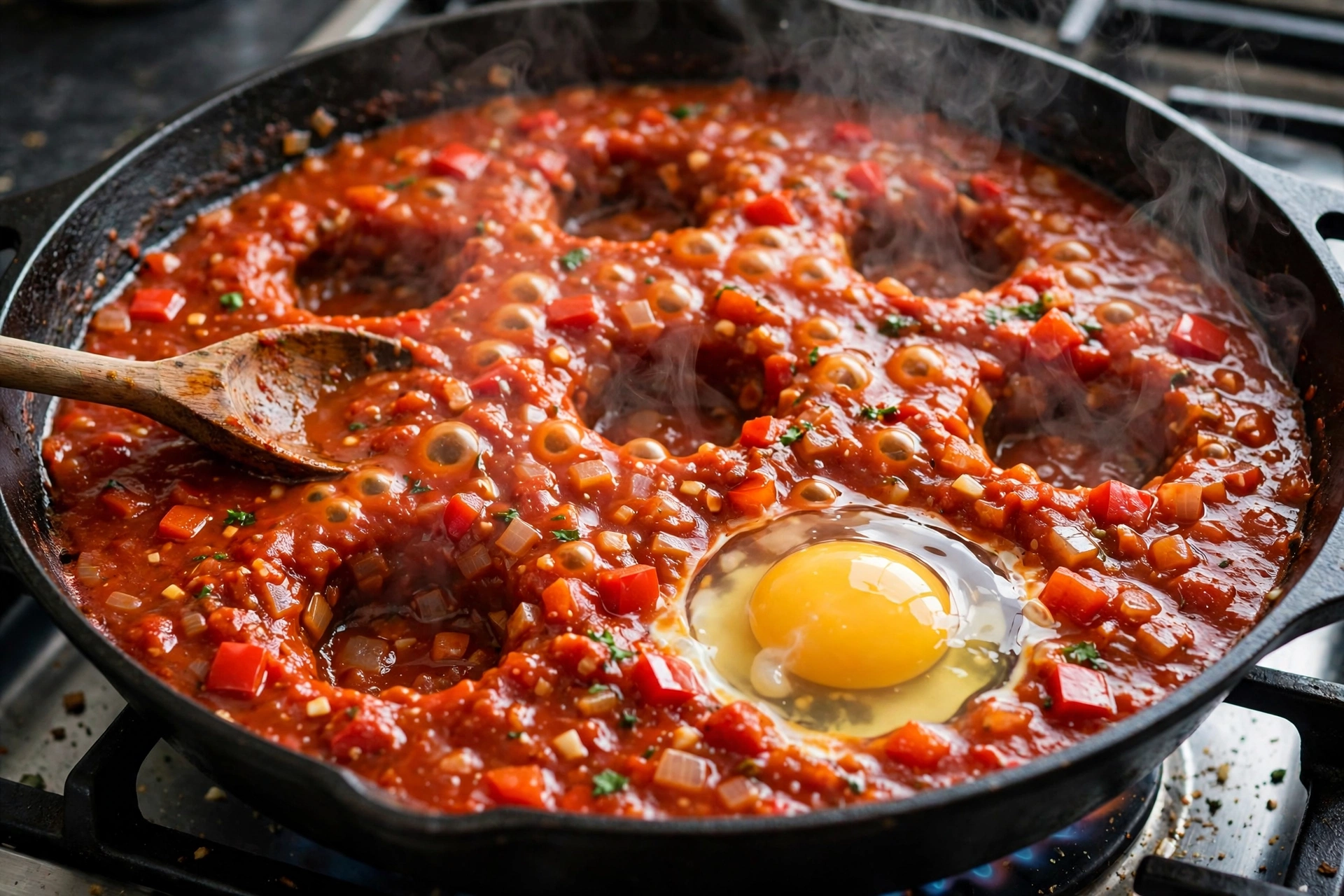
- Simmer the tomato sauce (7 minutes). Stir in the tomato paste and cook it for 30 seconds so it darkens slightly, then pour in the crushed tomatoes, the sugar, the remaining salt, and the black pepper. Stir well, scraping up any browned bits from the bottom of the pan, and bring the sauce to a gentle simmer. Lower the heat to medium-low and simmer for 7 minutes, stirring now and then, until the sauce thickens enough that a spoon dragged through it leaves a trail that holds for a second before closing. Taste and add a little more salt if the tomatoes need it.
- Add the eggs and cover (5 minutes). Use the back of a spoon to make six small wells in the sauce, spaced evenly around the pan. Crack one egg into a small bowl first, then slide it gently into a well, and repeat for all six eggs. This little bowl trick means no shell ever sneaks into the pan. Season the eggs lightly with a pinch of salt and pepper, cover the pan with a tight lid, and cook for 5 minutes over medium-low heat. The eggs are done when the whites are fully set and opaque with no clear patches, while the yolks are still soft and jammy. For fully firm eggs, cook 2 minutes longer with the lid on.
- Finish with feta and parsley, then rest (2 minutes). Take the pan off the heat. Scatter the crumbled feta and the chopped parsley over the top, cover the pan again, and let it rest for 2 minutes so the feta softens and the eggs finish setting gently. Serve straight from the skillet at the table with thick slices of crusty bread for scooping up the sauce. Four servings, six eggs, one very happy table.
Pro Tips
The difference between good shakshuka and unforgettable shakshuka lives in the small details, and these are the ones that matter most. First, use a large skillet, at least 12 inches wide, so the six eggs have room to sit in their own wells without crowding each other. In a small pan the eggs run together into one big egg, and while that still tastes good, it does not look or serve nearly as well. A wide pan also gives the sauce more surface to simmer and thicken in its seven minutes.
Second, crack each egg into a small bowl before it goes into the pan. This is not fussy, it is practical. It lets you check for shell, it keeps a broken yolk from landing in the sauce, and it lets you slide the egg gently into its well instead of dropping it from a height. If a yolk does break, do not worry. That egg will still taste wonderful, and nobody at the table will mind.
Third, keep the heat gentle once the eggs go in. Medium-low heat with the lid on is the sweet spot. High heat makes the sauce bubble violently, which can break the yolks and make the whites rubbery at the edges. Gentle heat and steam give you tender whites and jammy yolks, which is the whole point of the dish. If your stove runs hot, err on the lower side and add a minute rather than turning the heat up.
Fourth, taste the sauce before the eggs go in. Tomatoes vary from can to can, and some are sharper than others. The optional teaspoon of sugar is there to round off a sharp can, not to make the sauce sweet, and you may not need it at all. Taste, adjust the salt, and only then add the eggs, because once the eggs are in, you cannot stir the sauce anymore.
Fifth, serve it the moment the two-minute rest is over. Shakshuka waits for no one. The eggs keep cooking in the hot sauce even off the heat, so a five-minute delay turns jammy yolks into firm ones. Slice the bread while the pan rests, set the table before you start cooking, and bring the skillet straight to the table. For a bigger brunch spread, this shakshuka sits beautifully beside easy pumpkin French toast, which uses the same warm spice feeling in a sweet direction, and the two together make a brunch table feel generous without doubling the work.
Sixth, if you love meal-prep breakfasts, the sauce is your friend. Make a double batch of the sauce on Sunday, keep it in the fridge, and each morning you can reheat a portion and poach fresh eggs into it in five minutes. The eggs themselves should always be cooked fresh, which brings us to the storage section below. And if eggs are your favourite breakfast protein, our easy veggie egg muffin cups are the grab-and-go cousin of this recipe, baked in a muffin tin for busy weekday mornings.
Common Mistakes
The most common shakshuka mistake is adding the eggs to a thin, watery sauce. If the sauce has not simmered for its full seven minutes, it will not hold the eggs, and the whites will spread and turn cloudy through the whole pan. The fix is simple: simmer until the sauce is thick enough that a spoon leaves a visible trail. If you have already added the eggs and the sauce looks thin, just cook it a little longer with the lid slightly ajar so steam escapes and the sauce tightens.
The second mistake is cooking the eggs without a lid. The sauce cooks the eggs from below, but only trapped steam cooks them from above, and without a lid the tops of the whites stay clear and jelly-like while the bottoms overcook. Always use a tight-fitting lid, and if your skillet has no lid, a large baking sheet or a plate turned upside down over the pan works in a pinch. The goal is whites that are fully set and opaque everywhere, with no raw patches.
The third mistake is burning the garlic and spices. Garlic goes from fragrant to bitter in under a minute, and ground spices scorch even faster. The one-minute bloom is a real one minute, not three, and the spoon should keep moving the whole time. If the garlic smells sharp or the spices look dark, start the bloom again in a clean pan rather than carrying a bitter flavour through the whole dish.
The fourth mistake is over-salting early. The feta on top is salty, and the sauce reduces as it simmers, which concentrates the salt. Season the sauce lightly at first, taste it before the eggs go in, and remember the feta is still coming. You can always add more salt at the table, but you cannot take it out.
The fifth mistake is serving it too late. Shakshuka is a serve-it-now dish. The eggs continue to cook in the hot sauce after the pan leaves the heat, so every extra minute on the counter firms the yolks a little more. The two-minute rest is part of the recipe. A ten-minute wait is not. Have the bread sliced and the table set before the eggs go in, and the timing will take care of itself.
Substitutions
This recipe is wonderfully flexible, and most swaps keep the spirit of the dish intact. If you do not have feta, crumbled goat cheese melts in the same creamy way, and a handful of grated Parmesan gives a saltier, nuttier finish. If you need it dairy-free, simply leave the cheese off and add a drizzle of good olive oil and extra parsley at the end; the sauce is rich enough to carry the dish on its own.
The peppers are flexible too. A yellow or orange bell pepper works exactly like the red one, and a green bell pepper gives a slightly sharper, more savoury note. If you like heat, add a diced jalapeno with the peppers, or increase the cayenne to half a teaspoon. If you dislike heat entirely, leave the cayenne out completely and the dish stays warm and gentle, which is how many families prefer it.
Fresh tomatoes can replace the canned ones when they are ripe and sweet: use about 2 pounds of chopped fresh tomatoes and simmer them for 10 minutes instead of 7, since fresh tomatoes release more water. Fire-roasted canned tomatoes are another excellent swap and add a lovely smoky depth. Diced tomatoes work too, though the sauce will be chunkier; crushed tomatoes give the smoothest, most classic texture.
For the herbs, parsley is traditional and bright, but cilantro is equally good if your family loves it, and a little fresh dill adds a lovely fresh note. Dried herbs are not a good swap here, since the fresh garnish is part of the flavour. If you are out of cumin, a teaspoon of chili powder gives a different but still delicious warmth, and a pinch of smoked paprika in place of sweet paprika adds a gentle campfire note that suits a cold morning.
The bread is the only part that is truly non-negotiable in spirit, though the form can change. Crusty bread, warm pita, naan, or even thick toast all do the same job: scooping up sauce and runny yolk. For a low-carb table, serve it with a simple green salad and a spoon instead, and it is just as satisfying. And if you want a sweet finish to the same brunch, gingerbread pancakes make a lovely second course after the savoury skillet.
Storage & Make-Ahead
Shakshuka is at its best fresh from the pan, but the sauce is a brilliant make-ahead cook. Make the tomato-pepper sauce through step 4, let it cool completely, and store it in an airtight container in the fridge for up to 3 days. When you want breakfast, reheat the sauce gently in the skillet until it simmers, then make the wells and poach fresh eggs into it exactly as written. The eggs should always be cooked fresh, never reheated from raw, because a poached egg does not hold its texture overnight.
If you do have leftover finished shakshuka, store it in an airtight container in the fridge and eat it within 2 days. The 2-hour room-temperature rule applies here as it does to all egg dishes: never leave the pan sitting out on the counter for more than 2 hours. Reheat leftovers gently in a covered skillet over low heat until the sauce is steaming all the way through, and expect the yolks to be firm rather than jammy after reheating. That is normal and still delicious, especially scooped onto toast.
Do not freeze finished shakshuka. Eggs change texture in the freezer and turn rubbery when thawed, and the sauce separates in a way that reheating cannot fix. The sauce alone, without eggs, freezes beautifully for up to 3 months in a freezer-safe container. Thaw it overnight in the fridge, reheat until simmering, and poach fresh eggs into it for a breakfast that tastes like you cooked it from scratch, because the hard part already was.
For a busy week, the smartest move is a double batch of sauce on Sunday. One batch becomes Sunday brunch, and the second batch waits in the fridge for a five-minute Tuesday breakfast that feels like a treat. The spices, the simmer, and the thickening are already done; all that is left is the joyful part, cracking eggs into a bubbling pan.

Frequently Asked Questions
Can I make shakshuka ahead of time?
Yes, make the tomato-pepper sauce ahead through step 4 and keep it in an airtight container in the fridge for up to 3 days. Reheat the sauce gently in the skillet until it simmers, then make the wells and poach fresh eggs into it exactly as written. The eggs should always be cooked fresh, because a poached egg does not hold its texture overnight.
How do I know when the eggs are done?
The eggs are done when the whites are fully set and opaque with no clear, jelly-like patches left anywhere, while the yolks are still soft and jammy in the middle. That takes about 5 minutes with the lid on over medium-low heat. If you prefer fully firm eggs, cook them 2 minutes longer with the lid on, until both the yolk and the white are firm.
Is shakshuka spicy?
As written, this shakshuka is mild and warm rather than hot. The only heat comes from 1/4 teaspoon of cayenne pepper, which adds a gentle background warmth. Leave the cayenne out completely for a no-heat version, or add a diced jalapeno with the peppers and increase the cayenne to 1/2 teaspoon if your family likes a real kick.
What do you serve with shakshuka?
Thick slices of crusty bread are the classic partner, perfect for scooping up the sauce and the runny yolks. Warm pita, naan, or thick toast work just as well. For a fuller brunch, add a simple green salad, fresh fruit, and a second sweet dish like pancakes or French toast, and serve the shakshuka straight from the skillet at the centre of the table.
That is the whole joy of this Easy Shakshuka: one pan, 30 minutes, six eggs, and a sauce that tastes like it simmered all morning. It is the kind of breakfast that turns an ordinary day into a small celebration, and once it is on your table, it will not stay there for long. Make the sauce, crack the eggs, cover the pan, and let the smell of cumin and tomatoes do the inviting. Breakfast is ready.
Rate this recipe
Be the first to rate it!