
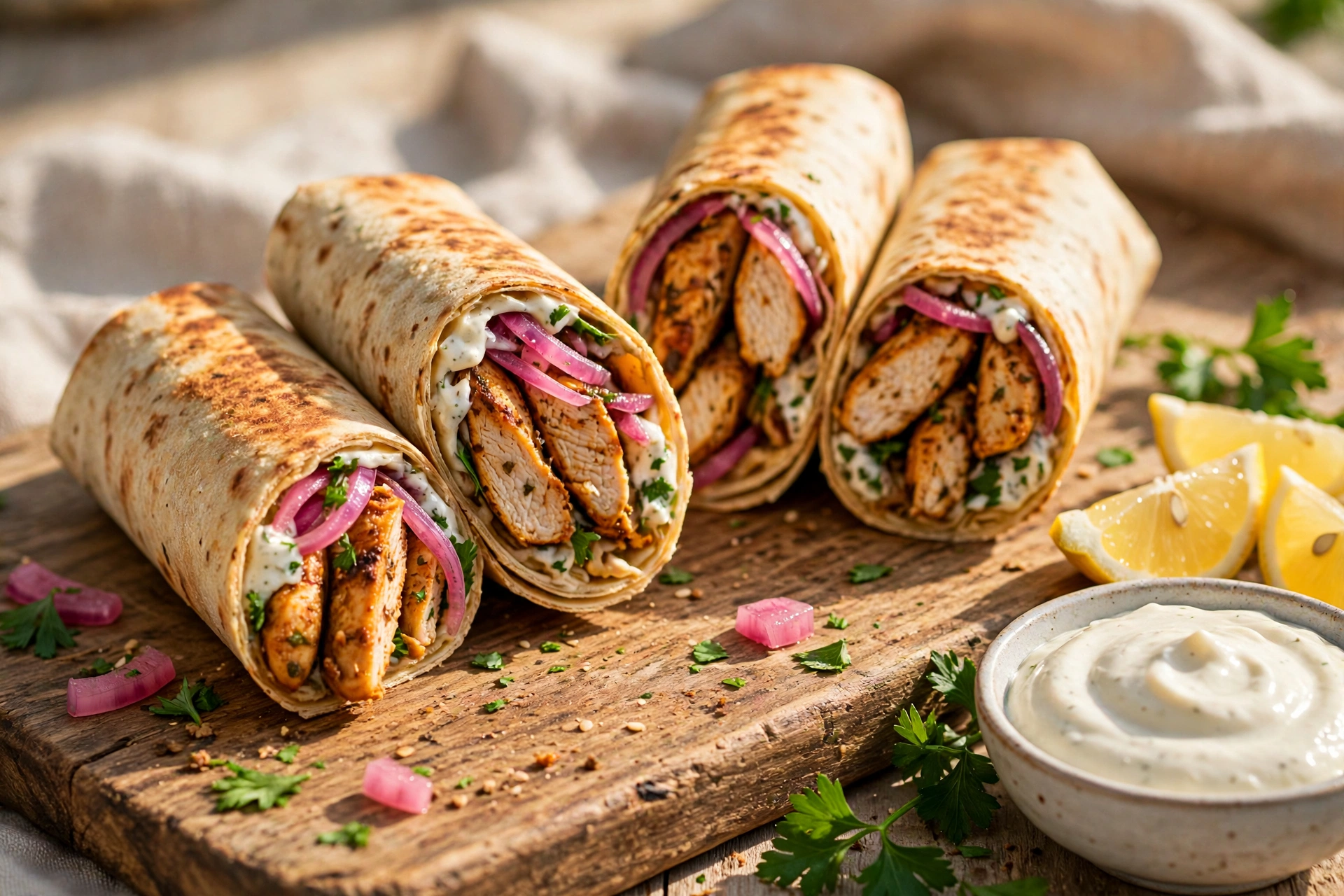
There is a smell that stops people in their tracks outside a shawarma stand, warm and spiced and impossible to ignore, and this Easy Chicken Shawarma Wraps recipe brings that exact smell into your own kitchen in 30 minutes. Picture it: strips of golden chicken, coated in cumin, paprika and turmeric, seared until the edges are crisp and caramelised, then tucked into warm flatbread with creamy garlic sauce, pink pickled onions, cool cucumber and fresh parsley. Every bite is warm, garlicky, bright with lemon, and just a little bit smoky. It tastes like street food, it eats like a proper lunch, and it comes together with one pan and a cutting board.
Shawarma has travelled a long way from the spit-roasted meat stands of the Levant to lunchboxes and weeknight tables all over the world. Shawarma traditionally means meat stacked and roasted slowly on a vertical spit, shaved off in thin, juicy slices and wrapped in flatbread with sauce and pickles. This home version keeps the spirit of the dish and skips the spit entirely. Thin strips of chicken breast, a quick spice marinade, and a screaming-hot skillet give you the same golden edges and juicy middle in 8 minutes of cooking, which is the whole point of a 30-minute lunch.
This version keeps everything simple and honest. One pan, pantry spices, a five-minute garlic sauce, and four warm flatbreads. The chicken marinates while you whisk the sauce and slice the vegetables, so no minute is wasted. There is no oven, no special equipment, and no fussy technique. If you can stir a bowl and flip chicken in a pan, you can make shawarma wraps, and once you have made them, you will understand why they have become one of the most loved quick lunches on the planet.
What makes these Easy Chicken Shawarma Wraps such a reliable favourite is how forgiving they are. The spice blend welcomes small changes, the sauce can be made days ahead, and the whole meal rolls up in minutes once the chicken is cooked. Serve the wraps cut in half on a plate with extra garlic sauce for dipping, and watch how fast they disappear. Four wraps, 30 minutes, one pan, and a lunch that tastes like your favourite takeaway, made better at home.
Recipe at a Glance
Prep time: 15 minutes | Cook time: 15 minutes | Total time: 30 minutes | Servings: 4 wraps | Yield: 4 large wraps
Why This Recipe Works
Great shawarma wraps are not an accident. They are the result of a few small technique choices that each do a real job, and once you understand the why behind them, the recipe becomes yours forever. The first choice is slicing the chicken thin before it ever meets the pan. Thin strips, about half an inch wide, cook in minutes, and every strip gets maximum contact with the hot skillet, which means more golden, caramelised edges and less time for the inside to dry out. Thick chicken breasts steam in their own juices and turn pale and rubbery. Thin strips sear, and searing is where the flavour lives.
The second choice is the spice marinade, and the timing of it. Ground cumin, smoked paprika, turmeric, coriander, garlic powder and onion powder are mixed with olive oil, lemon juice and fresh garlic, and the chicken sits in that mixture while you make the sauce and slice the vegetables. The oil carries the fat-soluble flavour compounds of the spices into every strip, the lemon juice brightens the whole blend and helps tenderise the surface, and the salt draws a little moisture to the surface, which then browns beautifully in the pan. Seven minutes of marinating is genuinely enough for thin strips, because the flavour does not have far to travel. A long overnight marinade is lovely, but it is not what makes this recipe work on a busy day.
The third choice is a genuinely hot pan. The skillet should be hot enough that the first strip sizzles loudly the moment it lands, and the strips should go in a single layer with a little space between them. Crowding the pan drops the temperature, and crowded chicken steams instead of searing, which is how you end up with grey, wet chicken and a puddle in the pan. Cooked in a single layer over medium-high heat, each strip gets 4 minutes per side, which is exactly enough to build a deep golden crust while the inside cooks through to a safe 165 degrees Fahrenheit. That crust is not decoration. It is the Maillard reaction, the browning that creates hundreds of new flavour compounds, and it is the difference between chicken that tastes seasoned and chicken that tastes like shawarma.
The fourth choice is the three-minute rest after the chicken leaves the pan. When chicken cooks, its muscle fibres tighten and squeeze juices toward the centre. If you slice it immediately, those juices run straight onto the board and the meat eats dry. Three minutes of rest lets the fibres relax and the juices redistribute through the strip, so the chicken stays juicy when you slice it and when it goes into the wrap. The wraps warm in the same three minutes, in the same hot pan, which means the rest costs no extra time at all.
The fifth choice is the garlic sauce, and it earns its place. A good shawarma sauce does three jobs at once: it cools the warm spices, it adds creaminess so the wrap never eats dry, and its lemon and garlic cut through the richness of the chicken. Greek yogurt gives it body and a gentle tang, mayonnaise makes it silky, tahini adds a nutty depth that tastes unmistakably Middle Eastern, and a finely grated garlic clove gives it a warm bite. Spread generously, it is the glue that holds the wrap together and the flavour that ties every bite into one.
Chicken and fresh vegetables are a naturally strong pair nutritionally as well as in flavour. Chicken breast supplies lean protein, while cucumber, tomato and parsley add freshness, fibre and vitamin C to the plate. The USDA FoodData Central database lists the nutrient profiles for chicken breast, yogurt and fresh vegetables, and it is a useful reminder that a simple lunch built from real ingredients can be both satisfying and nourishing without any effort at all. Nothing here makes a medical claim; it is simply good food, made from good ingredients, in a sensible portion for four people.
Finally, this recipe works because it respects the 30-minute promise. The chicken marinates while the sauce comes together, the wraps warm while the chicken rests, and the assembly takes two minutes at the end. Every step overlaps with the next, which is how 15 minutes of prep and 15 minutes of cooking add up to a lunch that tastes like it took all afternoon.
Ingredients
For the spiced chicken
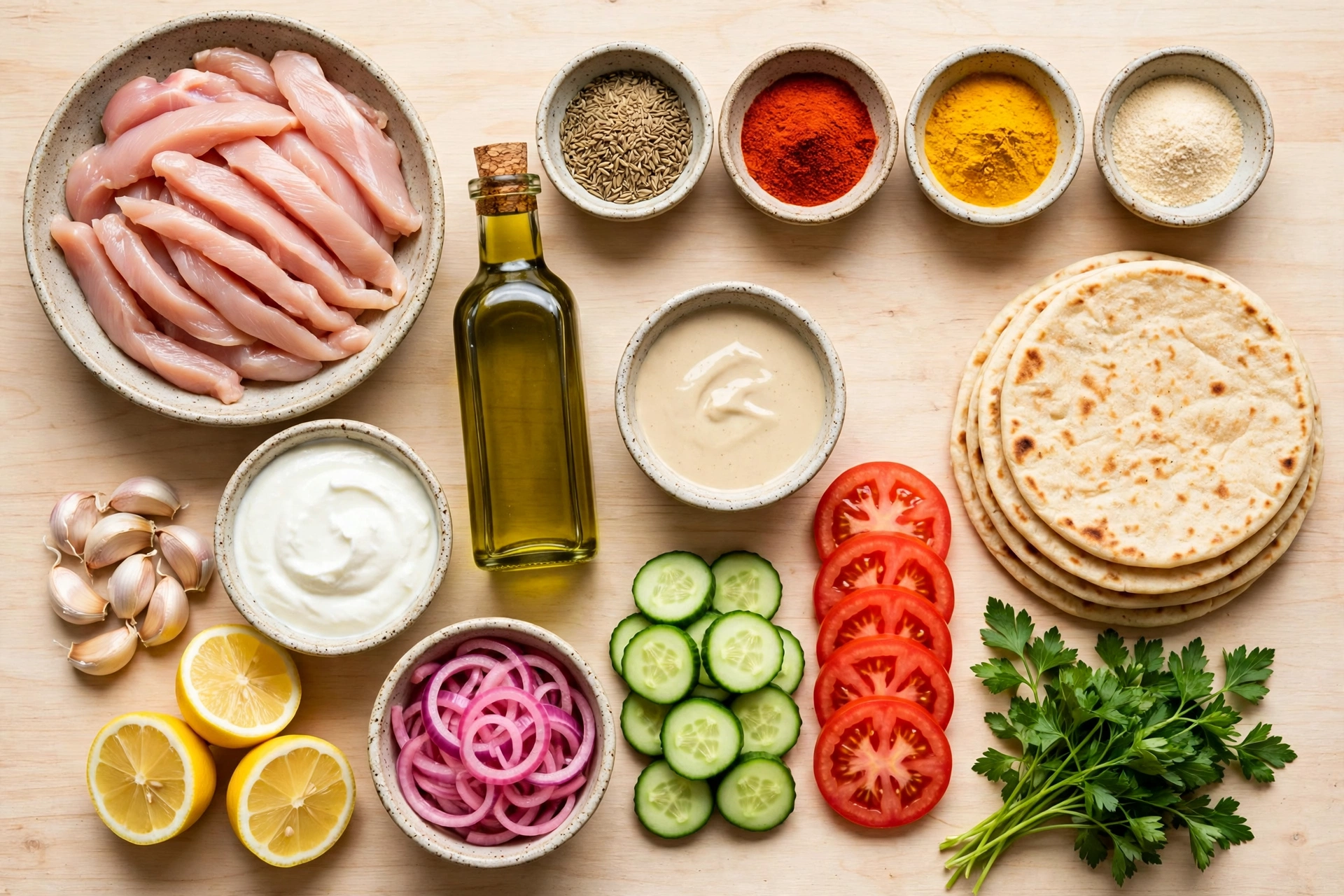
- 1 1/2 pounds boneless, skinless chicken breasts (about 3 breasts), sliced into thin strips
- 3 tablespoons olive oil
- 1 tablespoon lemon juice (from 1 lemon)
- 3 garlic cloves, minced
- 1 1/2 teaspoons ground cumin
- 1 teaspoon smoked paprika
- 1/2 teaspoon ground turmeric
- 1/2 teaspoon ground coriander
- 1/2 teaspoon garlic powder
- 1/2 teaspoon onion powder
- 3/4 teaspoon fine sea salt
- 1/2 teaspoon black pepper
- 1/4 teaspoon cayenne pepper (optional, for gentle heat)
For the garlic sauce
- 1/2 cup plain Greek yogurt
- 2 tablespoons mayonnaise
- 1 tablespoon tahini
- 1 tablespoon lemon juice
- 1 small garlic clove, finely grated
- 1/4 teaspoon fine sea salt
To assemble
- 4 large flour tortillas or flatbreads (10-inch)
- 1 cup shredded lettuce or thinly sliced cucumber
- 1 medium tomato, thinly sliced
- 1/2 small red onion, thinly sliced, or 1/2 cup pickled red onions
- 1/4 cup chopped fresh parsley
- Lemon wedges, for serving
Directions
- Slice the chicken and mix the marinade (8 minutes). Pat the chicken breasts dry with paper towels, then slice them across the grain into thin strips about half an inch wide. Dry chicken browns far better than wet chicken, so do not skip the patting. In a large bowl, whisk together the olive oil, lemon juice, minced garlic, cumin, smoked paprika, turmeric, coriander, garlic powder, onion powder, salt, black pepper and cayenne. Add the chicken strips and toss until every strip is coated in the rusty-red spice mixture. Set the bowl aside to marinate while you make the sauce.
- Whisk the garlic sauce and prep the fillings (7 minutes). In a small bowl, whisk the Greek yogurt, mayonnaise, tahini, lemon juice, grated garlic and salt until completely smooth. Taste and add a pinch more salt or another squeeze of lemon if it needs it. The sauce should be thick enough to spread but loose enough to drizzle, so add a teaspoon of water if it feels too stiff. Slice the cucumber and tomato, thinly slice the red onion, chop the parsley, and set everything out in small bowls near the stove. The chicken has now marinated for about 7 minutes, which is exactly enough for thin strips.
- Sear the chicken (8 minutes). Heat a large skillet over medium-high heat for 2 minutes until it is properly hot, then add a thin drizzle of olive oil. Lay the chicken strips in a single layer with a little space between them, working in two batches if your pan is not wide enough. Cook for 4 minutes without moving them, until the undersides are deeply golden with crisp edges, then flip and cook for 4 more minutes. The chicken is done when the strips are golden brown on the outside, the juices run clear, and the thickest strip reads 165 degrees Fahrenheit on an instant-read thermometer, with no pink meat anywhere. Move the cooked chicken to a clean plate.
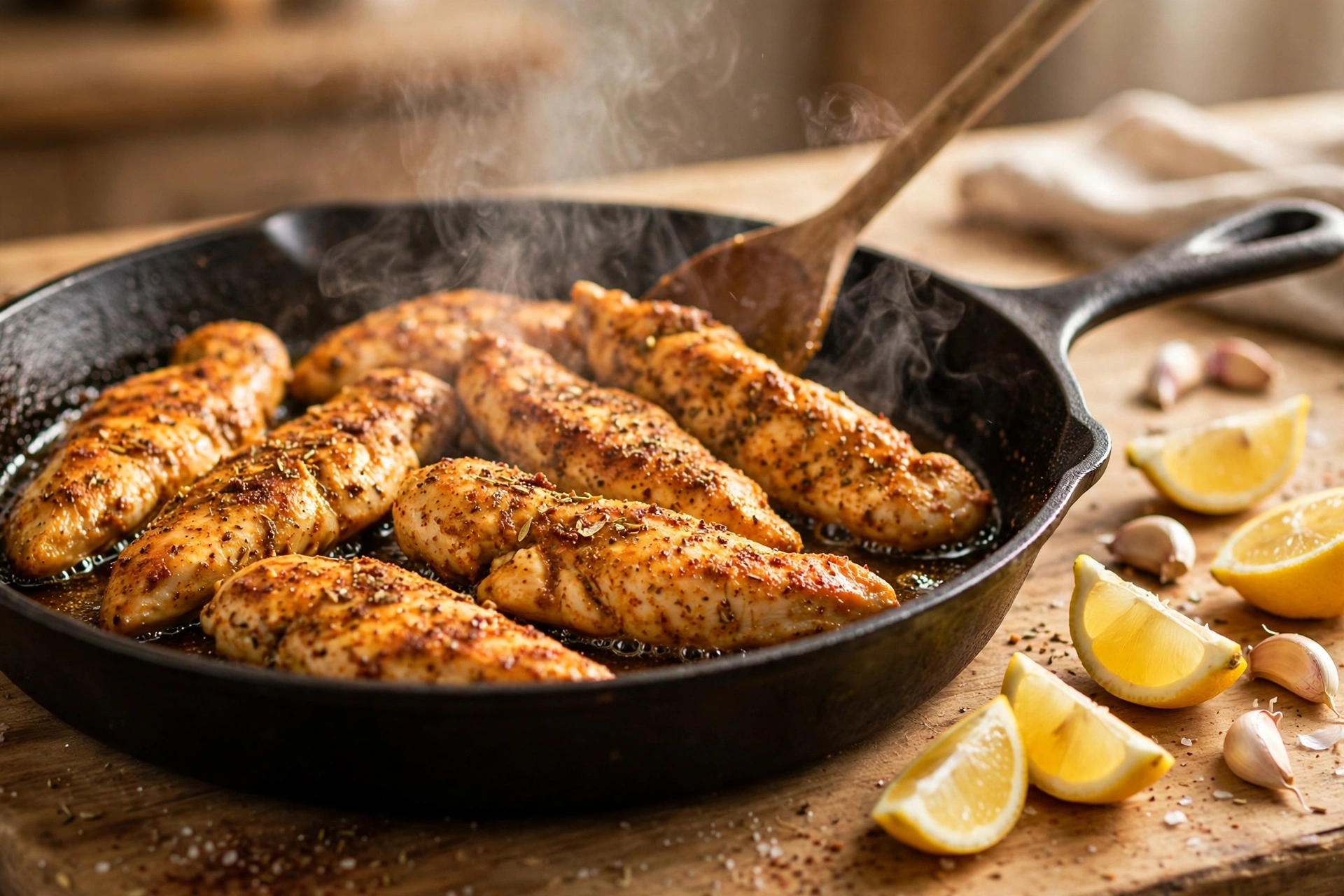
- Rest the chicken and warm the wraps (5 minutes). Let the chicken rest on the plate for 3 minutes so the juices redistribute and the strips stay juicy when sliced. While it rests, wipe the skillet quickly with a paper towel and warm the flatbreads one at a time over medium heat for about 30 seconds per side, until they are soft, pliable and lightly toasted in spots. Stack the warm flatbreads under a clean kitchen towel so they stay soft while you finish.
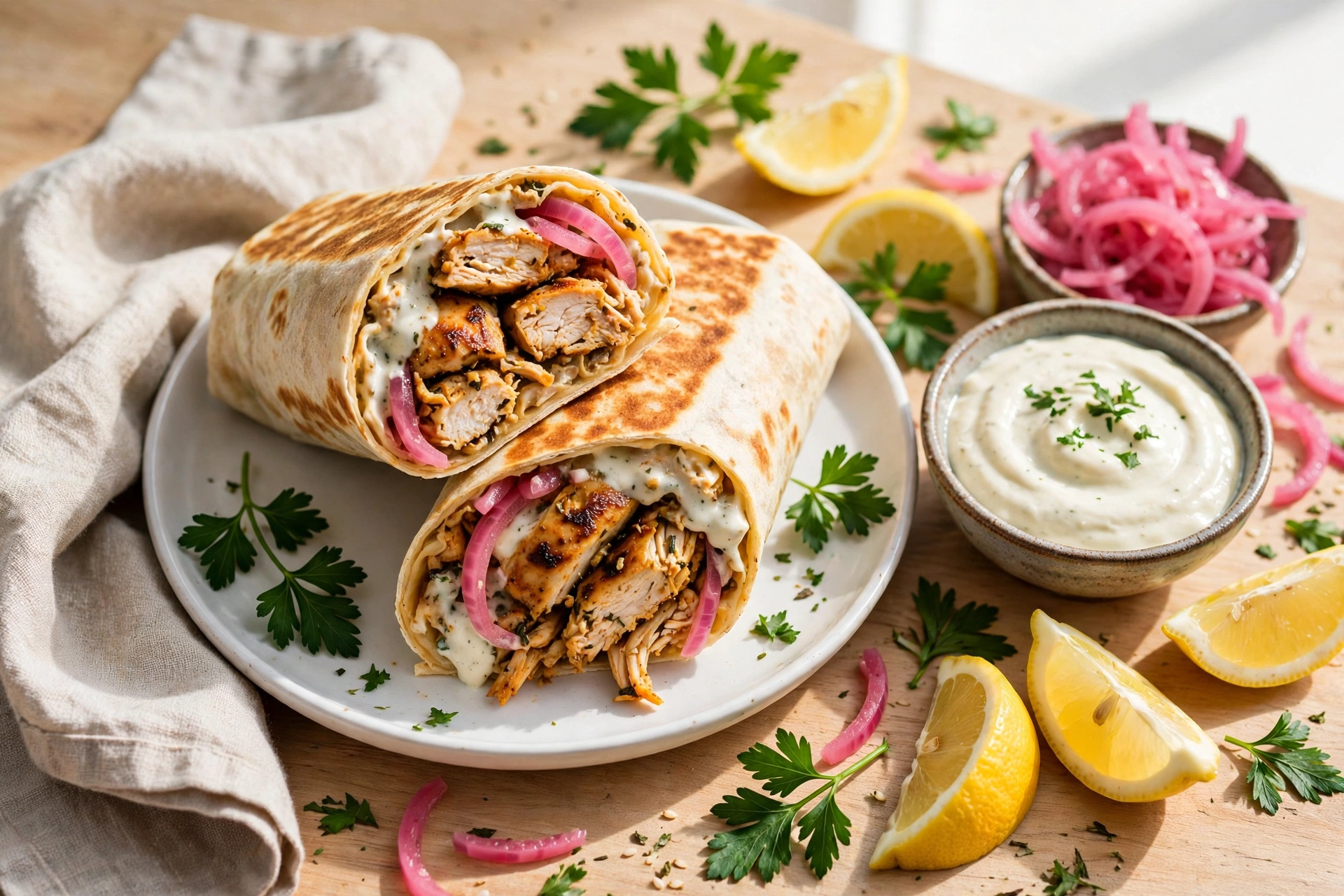
- Slice and assemble the wraps (2 minutes). Slice the rested chicken into bite-size pieces. Lay a warm flatbread flat, spread 2 tablespoons of garlic sauce down the centre, and pile on a quarter of the chicken, a handful of lettuce or cucumber, a few tomato slices, some red onion and a sprinkle of parsley. Fold the sides in, roll it up snugly from the bottom, and cut in half on the diagonal. Repeat with the remaining three wraps, and serve immediately with lemon wedges and extra garlic sauce for dipping.
Pro Tips
The difference between good shawarma wraps and unforgettable shawarma wraps lives in the small details, and these are the ones that matter most. First, slice the chicken across the grain, not along it. Cutting across the short muscle fibres gives you strips that are tender to bite through, while cutting along the grain leaves long, chewy fibres that pull apart in strings. Hold your knife at a slight angle and slice thin, and the chicken will eat as tender as the shawarma stand version.
Second, do not crowd the pan. This is the single most common reason home shawarma turns grey instead of golden. A large skillet holds about half of this chicken in one layer, so cook in two batches if you need to, and let the pan come back to full heat for a minute between batches. The extra four minutes are worth it, because a proper sear is the whole flavour of the dish. If the pan starts to smoke, lower the heat a touch, but do not add the chicken to a lukewarm pan.
Third, use an instant-read thermometer if you have one. Chicken breast goes from perfect to dry in a very small window, and guessing is how it happens. Pull the strips at 165 degrees Fahrenheit in the thickest part, and trust the thermometer over the clock, because strips vary in thickness and stoves vary in heat. If you do not have a thermometer, cut the thickest strip in half and look for clear juices and no pink anywhere, which is the same safety standard the USDA describes for poultry.
Fourth, warm the flatbreads properly. A cold, stiff tortilla cracks when you roll it and tears at the seam, while a warm one bends and seals. Thirty seconds per side in a dry skillet is enough, and stacking them under a towel keeps them soft until assembly. If you want the cafe finish, brush the rolled wrap lightly with oil and toast it seam-side down in the hot pan for a minute, which seals the wrap and adds crisp golden marks.
Fifth, spread the sauce edge to edge. A stripe of sauce down the middle leaves dry bites at the ends, and dry ends are the saddest part of any wrap. Two tablespoons per wrap, spread across the whole flatbread before the fillings go on, means every bite has chicken, sauce and crunch together. Keep a little extra sauce in a bowl on the table for dipping, because someone always asks for more.
Sixth, if you love chicken wraps in general, this recipe is a gateway. The same spiced chicken works beautifully in a salad bowl, over rice, or tucked into pita pockets for school lunches. And if your family loves wrap-style dinners, our easy white chicken enchiladas are the baked, cheesy cousin of this recipe, rolled in tortillas and finished in the oven for a cozy weeknight dinner. For another fast chicken dinner that uses the same one-pan thinking, try our easy one-pan garlic butter chicken and rice, which puts chicken and rice in the same skillet for an even easier clean-up.
Common Mistakes
The most common shawarma mistake is slicing the chicken too thick. Thick strips take longer to cook through, so by the time the inside reaches 165 degrees Fahrenheit, the outside is overcooked and dry. The fix is simple: slice thin, about half an inch wide, and let the hot pan do the work quickly. If your breasts are very thick, slice them in half horizontally first, like opening a book, and then cut them into strips.
The second mistake is moving the chicken too soon. Chicken releases from the pan on its own when the crust is ready, and if you try to flip it after one minute, it sticks and tears. Leave the strips completely alone for the full 4 minutes per side. If a strip resists when you slide a spatula under it, give it another 30 seconds and try again, and it will come away cleanly with a golden crust attached.
The third mistake is skipping the rest. Slicing hot chicken the second it leaves the pan sends all its juices onto the cutting board, and no amount of sauce can fix dry chicken. Three minutes feels like a long time when lunch is nearly ready, but it is the difference between juicy strips and dry ones. Use those three minutes to warm the flatbreads, and the timing works out perfectly.
The fourth mistake is overfilling the wrap. It is tempting to pile in every filling at once, but an overstuffed wrap tears, leaks sauce down your wrist, and falls apart halfway through. A quarter of the chicken, a small handful of vegetables and two tablespoons of sauce per wrap is the right amount. If you have fillings left over, serve them on the side as a little salad, and everyone can add more as they go.
The fifth mistake is assembling the wraps too early. A wrap filled and left sitting goes soft within minutes, because the sauce and the tomato juices soak into the flatbread. Assemble the wraps at the very last moment, right before they are eaten, and if you are packing them for lunch, wrap each one snugly in foil or parchment and keep the sauce in a separate small container to add at lunchtime.
Substitutions
This recipe is wonderfully flexible, and most swaps keep the spirit of the dish intact. If you do not have chicken breast, boneless skinless chicken thighs work beautifully and are even more forgiving, because their extra fat keeps them juicy. Slice them the same way and cook them for the same 8 minutes, checking that the thickest piece reaches 165 degrees Fahrenheit. Turkey breast strips are another good swap, cooked exactly the same way.
The flatbread is flexible too. Flour tortillas, pita bread, lavash, or naan all roll into excellent wraps. Pita pockets are the most traditional choice and hold the fillings neatly for lunchboxes, while naan gives a softer, chewier wrap that feels a little more indulgent. For a low-carb table, skip the wrap entirely and serve the spiced chicken over a big salad or in lettuce cups, with the same garlic sauce drizzled over the top.
For the sauce, the yogurt and tahini base can shift to suit your fridge. Swap the Greek yogurt for sour cream, or use all mayonnaise with lemon and garlic for a richer, more classic toum-style sauce. A drizzle of tahini thinned with lemon juice and water makes a lovely dairy-free alternative. If you like heat, stir a spoonful of harissa or sriracha into the garlic sauce, or add a diced jalapeno to the fillings.
The vegetables are flexible as well. Swap the cucumber for shredded cabbage, which stays crunchier in a wrap, or add shredded carrots for sweetness and colour. Pickled red onions are the brightest choice, but plain thinly sliced red onion works fine, and a spoonful of pickled jalapenos adds a lovely tang. If parsley is not your herb, cilantro is equally good, and a little fresh mint adds a cool, fresh note that suits the warm spices.
The spice blend can flex too. If you are out of smoked paprika, sweet paprika works, and a pinch of cinnamon, about an eighth of a teaspoon, adds a warm, traditional note that many shawarma stands use. If you are out of turmeric, the chicken will be less golden but just as delicious. And if your family loves global chicken dinners, our easy chicken lo mein uses the same quick-sear chicken thinking in a noodle dinner, which makes a great second night for the same bag of chicken breasts.
Storage & Make-Ahead
Chicken shawarma wraps are at their best fresh from the pan, but every part of them is a brilliant make-ahead cook. Cook the chicken as written, let it cool completely, and store it in an airtight container in the fridge for up to 3 to 4 days. Whisk the garlic sauce ahead too, and it keeps for up to 4 days in the fridge in a sealed jar. Slice the vegetables and keep them in a separate container, and warm the flatbreads fresh when you are ready to eat. Assembling takes two minutes, so a weekday lunch can be ready before the kettle boils.
When you reheat the chicken, do it gently in a skillet over medium heat with a splash of water, until it is steaming all the way through and reaches 165 degrees Fahrenheit again. The 2-hour room-temperature rule applies here as it does to all cooked chicken: never leave the chicken or the finished wraps sitting out on the counter for more than 2 hours. Reheated chicken will be slightly less juicy than fresh, so an extra spoonful of garlic sauce goes a long way.
Do not freeze assembled wraps. The flatbread goes soggy, the vegetables turn limp, and the sauce separates in a way that reheating cannot fix. The cooked chicken alone, however, freezes beautifully for up to 3 months in a freezer-safe bag with the air pressed out. Thaw it overnight in the fridge, reheat it gently until steaming, and build fresh wraps with new sauce and vegetables for a lunch that tastes like you cooked it from scratch, because the hard part already was.
For a busy week, the smartest move is a double batch of chicken on Sunday. One batch becomes Sunday lunch, and the second batch waits in the fridge for a two-minute Monday wrap that feels like a treat. The spices, the sear, and the slicing are already done; all that is left is the joyful part, rolling a warm wrap and cutting it in half to see the golden chicken inside.
Frequently Asked Questions
Can I make chicken shawarma wraps ahead of time?
Yes, cook the chicken ahead and keep it in an airtight container in the fridge for up to 3 days, and whisk the garlic sauce ahead too — it keeps for up to 4 days in the fridge. Slice the vegetables and keep them in a separate container. When you are ready to eat, reheat the chicken gently in a skillet until it is steaming and reaches 165 degrees Fahrenheit, warm the flatbreads, and assemble fresh wraps. Do not assemble the wraps ahead of time, because the sauce softens the flatbread and the wraps go soggy within an hour.
How do I know when the chicken is done?
The chicken is done when the strips are golden brown on the outside, the juices run clear, and the thickest strip reads 165 degrees Fahrenheit on an instant-read thermometer. That takes about 8 minutes in a hot skillet, roughly 4 minutes per side, and the strips should feel firm when you press them with a spoon. If you do not have a thermometer, cut the thickest strip in half — there should be no pink meat anywhere and the juices should be clear, never cloudy or pink.
What is shawarma seasoning made of?
This shawarma seasoning is a warm, fragrant blend of ground cumin, smoked paprika, turmeric, ground coriander, garlic powder, onion powder, salt, black pepper and a pinch of cayenne for gentle heat. The cumin brings the earthy backbone, the paprika adds colour and smokiness, the turmeric gives the chicken its golden glow, and the lemon juice and garlic in the marinade add brightness. It is a pantry-spice version of the classic Middle Eastern blend, and you can mix a double batch and keep it in a jar for next time.
What do you serve with chicken shawarma wraps?
These wraps are a full meal on their own, but they love company. Serve them with crispy fries or roasted potato wedges, a simple cucumber tomato salad, or a bowl of hummus with warm pita for dipping. Pickled red onions and extra garlic sauce on the side let everyone build their wrap exactly how they like it. For a lighter lunch, serve the same spiced chicken over rice or a green salad instead of in a wrap, with the same sauce drizzled over the top.
That is the whole joy of these Easy Chicken Shawarma Wraps: one pan, 30 minutes, four wraps, and a lunch that tastes like your favourite street-food stand. It is the kind of lunch that turns an ordinary weekday into a small celebration, and once it is on your table, it will not stay there for long. Mix the spices, heat the pan, listen for the sizzle, and let the smell of cumin and garlic do the inviting. Lunch is ready.
Rate this recipe
Be the first to rate it!
1 thought on “Easy Chicken Shawarma Wraps”