
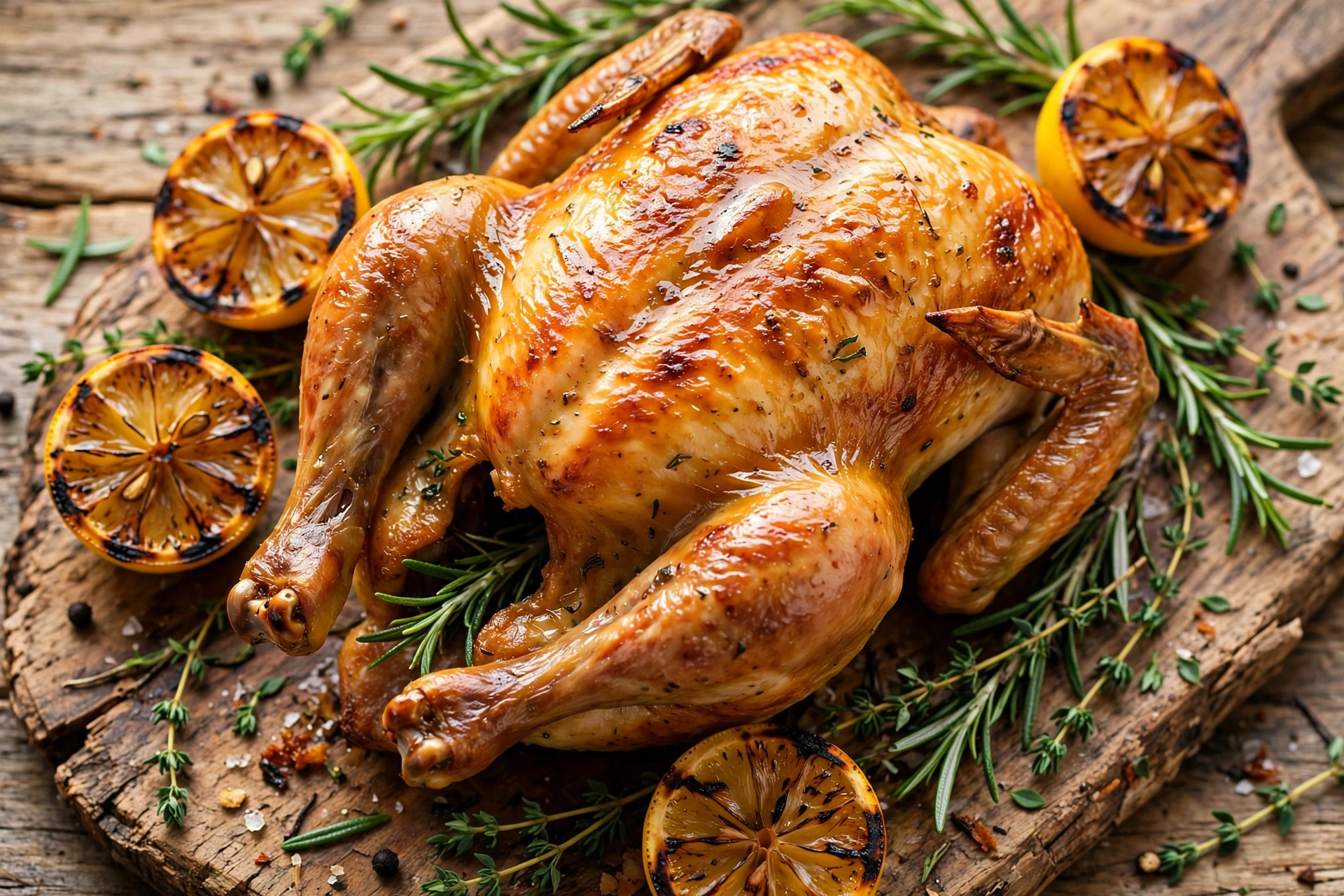
There is a roast chicken, and then there is the roast chicken that makes the whole house smell like a Sunday dinner at your favorite aunt’s place. This easy lemon herb roasted chicken is the second kind. Picture it: golden skin so crisp it crackles when you press it with a fork, juicy meat that practically falls off the bone, bright lemon and garlicky herb butter melting into every bite, and pan juices so good you will be spooning them over everything on the plate. One bite and you get savory, buttery, citrusy, and herby all at once, and somehow it still only takes 75 minutes from fridge to table, with most of that time hands-off while the oven does the work.
That is the whole magic of this recipe. It tastes like something from a little countryside bistro, the kind of place with chalkboard menus and the smell of roasting chicken in the air, but it is built from a short list of everyday ingredients and one hot oven. No brining overnight, no special equipment, no fussy steps. You rub the chicken with lemon herb butter, tuck lemons and herbs inside, slide it into the oven, and let the heat do the heavy lifting. Dinner is ready before anyone has time to ask what is for dinner, which is exactly how a weeknight dinner or a lazy weekend meal should work.
The lemon herb butter does most of the heavy lifting here, and that is a good thing. Good herb butter is already a complete sauce: softened butter, garlic, fresh rosemary, fresh thyme, and lemon zest, all mashed together into something golden and fragrant and deeply savory. Rubbed under the skin, it bastes the breast meat from the inside out, so the leanest part of the bird stays juicy. Spread over the skin, it crisps up into a crackly golden shell. Paired with a whole chicken and bright, caramelized lemons, the butter turns a humble bird into the kind of dinner people remember.
If you have ever been nervous about roasting a whole chicken, this is the recipe that will make you feel like a hero. There is no carving-class skill required, no thermometer anxiety once you know the one number that matters, and no pile of dishes at the end. One pan, one chicken, one hour, and a dinner that looks like you spent all afternoon on it. Let us get cooking.
Why You Will Love This Easy Lemon Herb Roasted Chicken
First, the flavor is pure comfort with a bright twist. The lemon cuts through the richness of the butter and the chicken skin, so every bite tastes fresh instead of heavy. The rosemary and thyme bring that warm, woodsy note that makes a roast chicken smell like home, and the garlic melts into the pan juices and turns them into a sauce you will want to drizzle over your potatoes, your bread, and honestly, your fork.
Second, it is genuinely easy. The active work is about 15 minutes: pat the chicken dry, mix the butter, rub it on, tie the legs, and into the oven it goes. After that, you baste it once and let the oven finish the job. There is no babysitting, no flipping, no complicated technique. If you can spread butter on toast, you can make this chicken.
Third, it feeds the whole family from one pan. A 3.5 to 4 pound chicken generously serves four people. And it looks spectacular on the table. Bring the whole bird out on a board with the roasted lemons and herbs around it, and everyone at the table will think you pulled off something fancy. The secret is that the oven did the fancy part.
Finally, it is endlessly flexible. Swap the herbs for whatever is in your garden, add potatoes and carrots to the pan so they roast in the drippings, or turn the leftovers into soup, sandwiches, or a quick chicken salad the next day. This is a base recipe you will come back to again and again, and it only gets better the second time you make it.
Why This Recipe Works: The Science Behind the Juicy Bird
Great roast chicken is not luck. It is three small decisions, each with a reason, and once you understand them you will never roast a dry chicken again.
Butter Under the Skin Keeps the Breast Juicy
The breast is the leanest part of the chicken, so it dries out first. Rubbing the lemon herb butter directly under the breast skin puts a layer of fat between the heat and the meat, and that fat melts slowly as the chicken roasts, basting the breast from the inside. The skin itself becomes a little tent that holds the butter in place. This is why the breast in this recipe stays juicy even after a full hour in a hot oven, while a plain roasted chicken breast often turns chalky.
A Hot Oven Means Crispy Skin, Not a Dry Bird
Roasting at 425°F sounds high, and that is the point. High heat drives moisture off the surface of the skin quickly, so the skin renders and crisps instead of steaming and staying pale and rubbery. The inside of the bird is protected by its own mass, so it cooks gently even while the outside gets golden and crackly. If you roast at a low temperature, the skin never quite gets there, and you end up with a pale, flabby bird that looks unfinished. Trust the hot oven.
Lemon Inside the Cavity Steams the Chicken from Within
Stuffing lemon halves and garlic into the cavity does two jobs at once. As the chicken roasts, the lemons heat up and release gentle steam inside the bird, which keeps the meat moist from the inside while the outside crisps. At the same time, the lemon’s bright oils perfume the meat with a fresh citrus note that no amount of lemon squeezed on top afterward can match. The roasted lemons that come out of the pan are soft, sweet, and caramelized, and they are wonderful squeezed over the carved chicken at the table.
Resting Is Not Optional
When the chicken comes out of the oven, its juices are still moving fast, pushed toward the surface by the heat. If you cut into it right away, those juices run out onto the board and the meat dries out. A 10-minute rest lets the juices settle back into the fibers, so every slice stays moist. It also lets the temperature even out, and the chicken actually finishes cooking gently during the rest. Ten minutes of patience is the difference between a good roast chicken and a great one.
Recipe at a Glance
Prep time: 15 minutes | Cook time: 60 minutes | Total time: 75 minutes (plus a 10-minute rest) | Servings: 4 | Oven temperature: 425°F (220°C) | Course: Dinner | Cuisine: Classic American with Mediterranean herbs
Ingredients
Everything here is a pantry or produce-aisle staple. Fresh herbs make a real difference in this recipe, so grab a bunch of rosemary and thyme if you can, but dried herbs will still give you a delicious chicken in a pinch.
- 1 whole chicken, 3 1/2 to 4 pounds, giblets removed
- 2 lemons, 1 halved and 1 cut into wedges for serving
- 4 tablespoons unsalted butter, softened to room temperature
- 6 garlic cloves, 4 minced and 2 left whole
- 1 tablespoon fresh rosemary, finely chopped, plus a few sprigs for the pan
- 1 tablespoon fresh thyme leaves, plus a few sprigs for the pan
- 1 teaspoon finely grated lemon zest
- 1 tablespoon olive oil
- 1 1/2 teaspoons kosher salt
- 1 teaspoon freshly ground black pepper
- 1/2 teaspoon sweet paprika
- Kitchen twine, for tying the legs

Directions
Read through the steps once before you start. The whole active part takes about 15 minutes, then the oven takes over for an hour.
Prep (15 minutes total)
- Preheat the oven and prepare the pan (2 minutes). Move an oven rack to the lower-middle position and preheat the oven to 425°F (220°C). Set a roasting pan or a large cast-iron skillet on the counter. If you are roasting vegetables alongside the chicken, scatter them in the pan now so they catch the drippings.
- Dry and season the chicken (5 minutes). Remove the giblets from the cavity and pat the chicken very dry inside and out with paper towels. Dry skin is the secret to crispy skin, so take your time here. Sprinkle 1 teaspoon of the kosher salt and 1/2 teaspoon of the black pepper inside the cavity. Stuff the cavity with the 2 whole garlic cloves, one lemon half, and a few sprigs of rosemary and thyme.
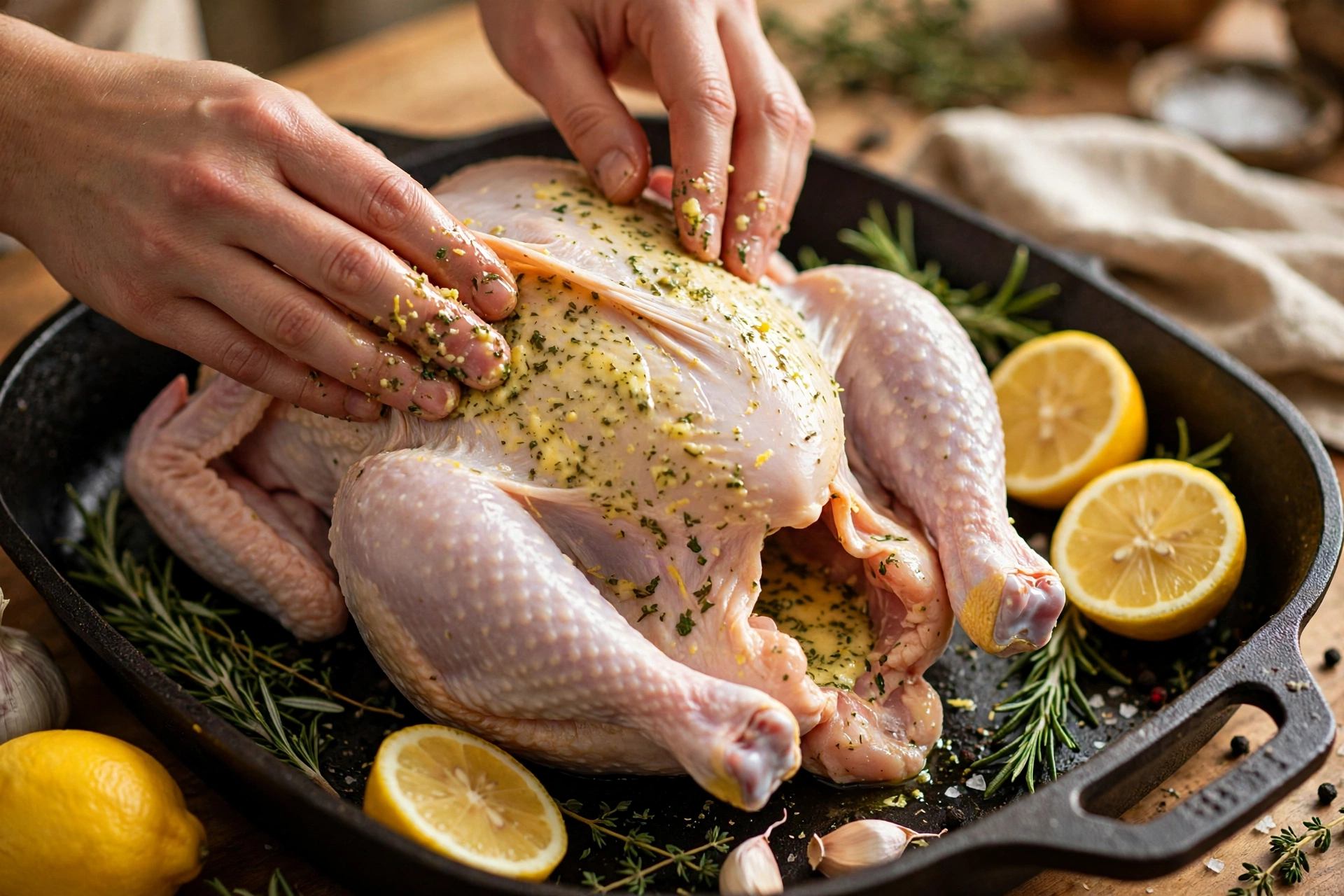
- Make the lemon herb butter and rub the chicken (8 minutes). In a small bowl, mash together the softened butter, minced garlic, chopped rosemary, thyme leaves, lemon zest, and paprika until it is a smooth, speckled spread. Gently loosen the skin over the breast with your fingers, being careful not to tear it, and push about two-thirds of the butter underneath the skin, spreading it evenly over the breast meat. Rub the remaining butter all over the outside of the skin, then drizzle with the olive oil and sprinkle with the remaining 1/2 teaspoon of salt and 1/2 teaspoon of pepper. Tie the legs together with kitchen twine and tuck the wing tips under the body so they do not burn.
Roast (60 minutes total)
- Roast for the first 40 minutes (40 minutes). Place the chicken breast-side up in the prepared pan and slide it into the hot oven. Roast for 40 minutes without opening the oven door. The skin will start to turn golden and the kitchen will begin to smell wonderful.
- Baste and finish roasting (20 minutes). After 40 minutes, pull the pan out just far enough to baste the chicken generously with the pan juices, spooning the buttery drippings over the breast and legs. Tuck the lemon wedges and the remaining lemon half around the chicken in the pan. Return the pan to the oven and roast for 20 more minutes, until the skin is deeply golden and crisp and an instant-read thermometer inserted into the thickest part of the thigh reads 165°F (74°C). The juices should run clear when you pierce the thigh, with no trace of pink. If the skin is browning too fast, tent the chicken loosely with foil for the last 10 minutes.
- Rest the chicken (10 minutes, not counted in the 60-minute cook time). Transfer the chicken to a cutting board and let it rest for 10 minutes before carving. This rest is what keeps the juices in the meat instead of running out onto the board. While it rests, spoon the pan juices into a small jug for serving.
- Carve and serve. Carve the chicken into breasts, thighs, drumsticks, and wings. Arrange on a platter with the roasted lemon wedges and fresh herb sprigs, and pour the warm pan juices over the top. Serve immediately while the skin is still crackly.
Pro Tips for the Best Lemon Herb Roasted Chicken
- Start with a dry bird. Moisture is the enemy of crispy skin. Pat the chicken dry with paper towels, and if you have time, leave it uncovered in the fridge for a few hours or overnight. The dry air in the fridge dries the skin even further, and the result is shatteringly crisp.
- Soften the butter properly. The butter should be soft enough to spread easily but not melted. Leave it on the counter for 30 minutes before you start. If it is too cold, it tears the skin; if it is melted, it slides right off.
- Use a thermometer, not a timer. Ovens vary and chickens vary. The only reliable doneness test is temperature: 165°F (74°C) in the thickest part of the thigh, away from the bone. A 15-dollar instant-read thermometer removes all guesswork and guarantees a safe, juicy bird every single time.
- Do not skip the baste. That one baste at the 40-minute mark does real work. It re-coats the skin with hot, buttery drippings, which deepens the color and the flavor, and it keeps the breast from drying out during the final stretch.
- Save the pan juices. The drippings in the pan are liquid gold: butter, lemon, garlic, and chicken juices all mixed together. Spoon them over the carved chicken, over mashed potatoes, or over crusty bread. Do not let them go to waste.
- Let the chicken come to room temperature first. Take the chicken out of the fridge 20 to 30 minutes before roasting so it is not ice cold when it hits the oven. A cold bird cooks unevenly, with the legs done before the breast catches up. (Never leave raw chicken out for more than 2 hours.)
Common Mistakes to Avoid
- Skipping the pat-dry step. A wet chicken steams instead of roasting, and the skin stays pale and rubbery. Dry skin is the single biggest factor in getting that golden, crackly finish.
- Stuffing the cavity too full. A lemon half, two garlic cloves, and a few herb sprigs are plenty. Overstuffing blocks hot air from circulating inside the bird, so the inside cooks slowly and unevenly while the outside overcooks.
- Roasting at too low a temperature. A 350°F oven will cook the chicken eventually, but the skin will never get truly crisp. The 425°F oven is what gives you that golden, crackly shell. Trust it.
- Cutting into the chicken too soon. Slicing a hot chicken the second it leaves the oven lets all the juices run out onto the board. Ten minutes of rest is the difference between juicy slices and dry ones.
- Forgetting to check the thigh, not just the breast. The breast cooks faster than the thigh. Always test the thickest part of the thigh, and make sure the thermometer does not touch bone, or you will get a false high reading.
- Using dried herbs the same way as fresh. Dried herbs are more concentrated, so use one-third the amount: 1 teaspoon dried rosemary and 1 teaspoon dried thyme instead of a tablespoon of each fresh. Too much dried rosemary turns bitter and piney.
Substitutions and Variations
- Herb swaps: No rosemary or thyme? Use fresh oregano, sage, or parsley. A mix of Italian seasoning (1 tablespoon) works in a pinch, though fresh herbs give the brightest flavor.
- Butter-free option: Swap the butter for the same amount of olive oil or ghee. The flavor will be slightly lighter and the skin still crisps beautifully, though the butter gives the richest taste.
- Citrus swaps: Try an orange instead of a lemon for a sweeter, softer citrus note, or use half a lemon and half an orange for the best of both. Lime works too, but it is sharper, so use a little less zest.
- Add vegetables to the pan: Toss baby potatoes, carrots, and red onion wedges in olive oil and salt, scatter them around the chicken, and they will roast in the drippings into the best side dish you have ever had. Add them at the start; they need the full hour.
- Spicy version: Add 1/2 teaspoon of red pepper flakes or a pinch of cayenne to the herb butter for a gentle warmth that plays beautifully against the lemon.
- Garlic lovers: Double the garlic in the butter and add a whole head of garlic, halved crosswise, to the pan. The roasted cloves turn soft and sweet and are wonderful spread on bread.
Storage and Make-Ahead
Roast chicken is one of the best make-ahead dinners, because the leftovers are just as useful as the first serving. Let the chicken cool to room temperature, but never leave it sitting out for more than 2 hours. Carve what is left and store the meat in an airtight container in the fridge for 3 to 4 days. The carcass and bones make a wonderful stock: cover them with water, add an onion, a carrot, and a celery stalk, and simmer gently for 2 to 3 hours.
To reheat, warm the chicken in a 350°F oven, covered loosely with foil, until it is steaming hot all the way through (165°F in the center). A splash of chicken broth or pan juices in the dish keeps the meat from drying out. Avoid the microwave if you can; it turns crispy skin rubbery in seconds.
For freezing, pull the meat off the bone, pack it in freezer bags with as much air pressed out as possible, and freeze for up to 3 months. Thaw overnight in the fridge and reheat in the oven. The skin will not stay crisp after freezing, so frozen leftovers are best in soups, sandwiches, pasta, and casseroles, where the juicy meat is the star.
You can also prep ahead. Season the chicken and rub it with the herb butter up to 24 hours before roasting, then keep it uncovered in the fridge. The uncovered rest dries the skin for extra crispness, and the salt has time to season the meat more deeply. Just take it out of the fridge 20 to 30 minutes before roasting so it is not ice cold when it goes into the oven.
Serving Ideas
This easy lemon herb roasted chicken is a whole meal on its own, but it truly shines with the right sides. For a classic Sunday dinner, serve it with creamy mashed potatoes and garlicky green beans, and let the pan juices do the work of a gravy. For a lighter weeknight plate, pair it with a crisp salad and crusty bread for soaking up the drippings.
Roasted potatoes cooked in the same pan are the easiest win: they soak up the lemony chicken drippings and turn golden and crisp at the edges. If you love lemon as much as we do, try it with Easy Lemon Herb Roasted Potatoes for a double-lemon dinner that still tastes balanced. For a heartier spread, a bowl of Easy Creamy Garlic Parmesan Orzo turns the chicken into a restaurant-style plate.
If you want more chicken dinners in your weekly rotation, this roast sits beautifully next to our Maple Dijon Roasted Chicken Breast, which uses the same roast-and-baste rhythm with a sweet mustard glaze, and our One-Pan Lemon Herb Chicken Pasta, which takes the same lemon and herb flavors into a creamy weeknight pasta. For a quicker chicken night when a whole bird is too much, our Easy Honey Mustard Chicken is on the table in about half the time.

Frequently Asked Questions
How do I know when my lemon herb roasted chicken is done?
The only reliable test is temperature. Insert an instant-read thermometer into the thickest part of the thigh, away from the bone, and look for 165°F (74°C). The juices should run clear when you pierce the thigh, and the leg should wiggle freely in its joint. The skin should be deeply golden and crisp. If you do not have a thermometer, the clear-juices and no-pink checks are your backup, but a thermometer is the safest bet every time.
Can I use chicken pieces instead of a whole chicken?
Yes, absolutely. Use bone-in, skin-on thighs, drumsticks, or breasts and rub them with the same lemon herb butter. Roast at 425°F for 35 to 40 minutes, until the thickest piece reads 165°F (74°C) and the juices run clear. Boneless pieces cook faster, usually 25 to 30 minutes, so start checking early. The flavor will be just as good, and it is a great option when a whole bird feels like too much.
Can I make lemon herb roasted chicken ahead of time?
You can prep it up to 24 hours ahead. Rub the chicken with the herb butter, season it, and keep it uncovered in the fridge. The salt seasons the meat more deeply overnight and the dry fridge air crisps the skin even better. Leftovers keep in the fridge for 3 to 4 days in an airtight container, and the meat freezes well for up to 3 months. Reheat gently in a 350°F oven until steaming hot, with a splash of broth to keep it juicy.
What should I serve with lemon herb roasted chicken?
Classic pairings are mashed potatoes, roasted potatoes, or crusty bread to catch the pan juices, plus a green vegetable like green beans, asparagus, or a simple salad. The chicken’s bright lemon and herb flavors go with almost any side, from rice pilaf to roasted carrots. If you roast potatoes, carrots, and onions in the same pan, they cook in the drippings and you get your side dish with zero extra work.
Final Thoughts
This easy lemon herb roasted chicken is the recipe that turns an ordinary evening into a small celebration. It is simple enough for a Tuesday, impressive enough for guests, and forgiving enough for a first-time whole-chicken roaster. The lemon keeps it bright, the herbs keep it warm and fragrant, and the butter keeps it juicy and golden. Make it once, and it will become the roast chicken your family asks for by name.
If you loved this recipe, you might also enjoy learning more about the classic technique behind it. Roast chicken has been a centerpiece dish in kitchens around the world for centuries, and the simple combination of high heat, butter, and citrus is one of the oldest tricks in the book. For nutrition details on the chicken itself, the USDA FoodData Central database lists the protein, vitamins, and minerals in cooked chicken, a lean source of protein and B vitamins when the skin is enjoyed in moderation.
Rate this recipe
Be the first to rate it!