
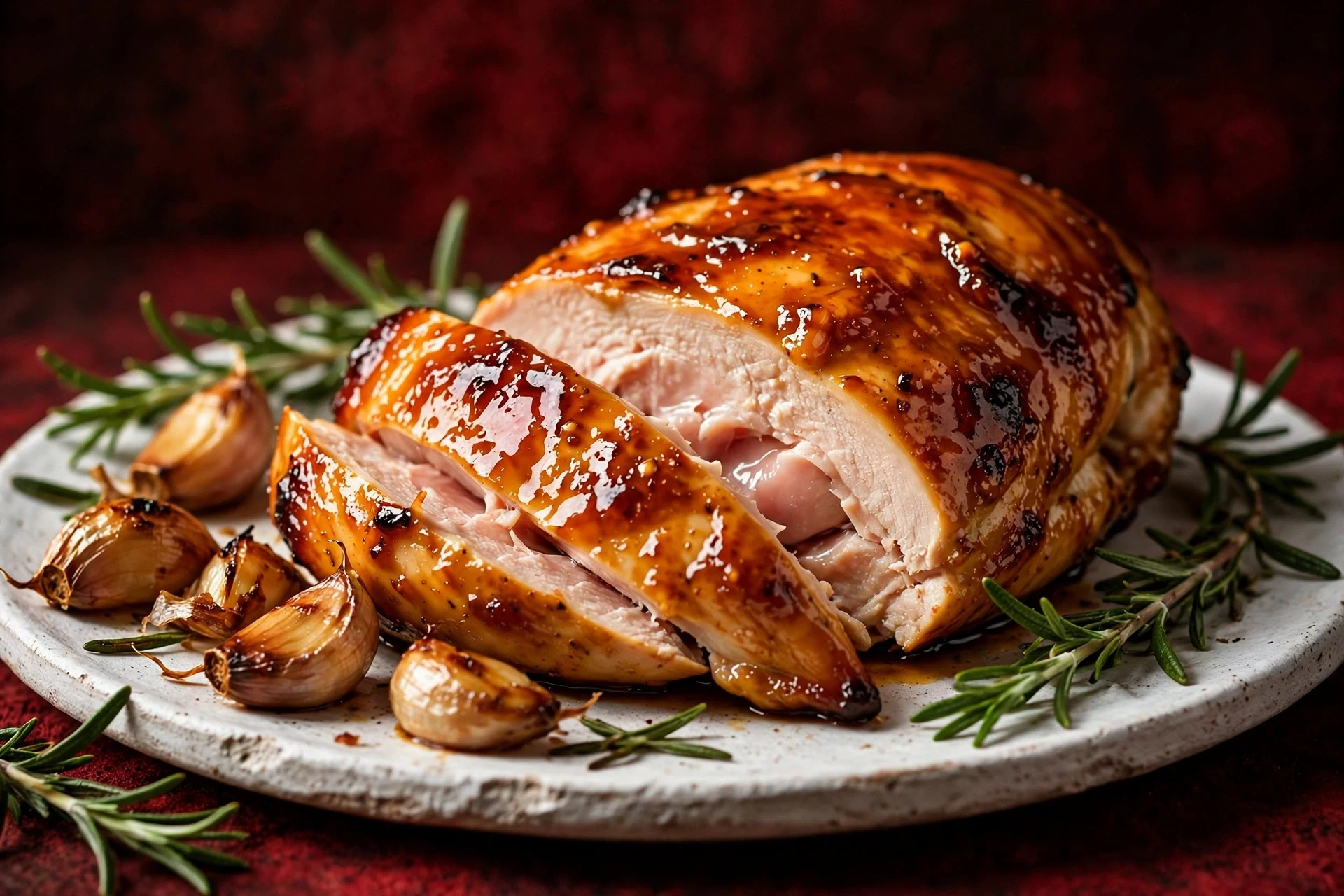
There are weeknight dinners, and then there are the kind of weeknight dinners that make everyone at the table go quiet for a minute because the first bite is that good. This maple Dijon roasted chicken breast is firmly in the second camp. Picture it: golden, caramelized chicken breasts with a glossy amber glaze that is sweet from real maple syrup and punchy from tangy Dijon mustard, the edges just a little charred and sticky, the inside impossibly juicy. It tastes like something from a cozy little bistro, but it is on your table in 35 minutes with one skillet and zero fuss.
Chicken breast gets a bad reputation for being dry and boring, and honestly, most of the time that reputation is earned. But here is the secret: dry chicken breast is not a chicken problem, it is a method problem. A quick hot sear locks in a deeply browned crust, the maple Dijon glaze goes on at exactly the right moment so the sugars caramelize instead of burn, and a proper rest lets all the juices settle back into the meat. Follow this method once and you will never look at a sad, pale baked chicken breast the same way again.
This is also one of those rare dinners that works for literally everyone. Kids love the sweet sticky glaze (it is basically a grown-up version of their favorite honey-mustard situation), adults love the Dijon kick, and the cook loves that the ingredient list is short, the cleanup is one pan, and leftovers are even better the next day. File this one under “recipes that make it look like you tried way harder than you did.”
Recipe at a Glance
- Prep time: 10 minutes
- Cook time: 20 minutes
- Rest time: 5 minutes
- Total time: 35 minutes
- Servings: 4 (one chicken breast per person)
- Oven temperature: 400°F (200°C)
- Method: sear + oven-roast in a skillet
Ingredients
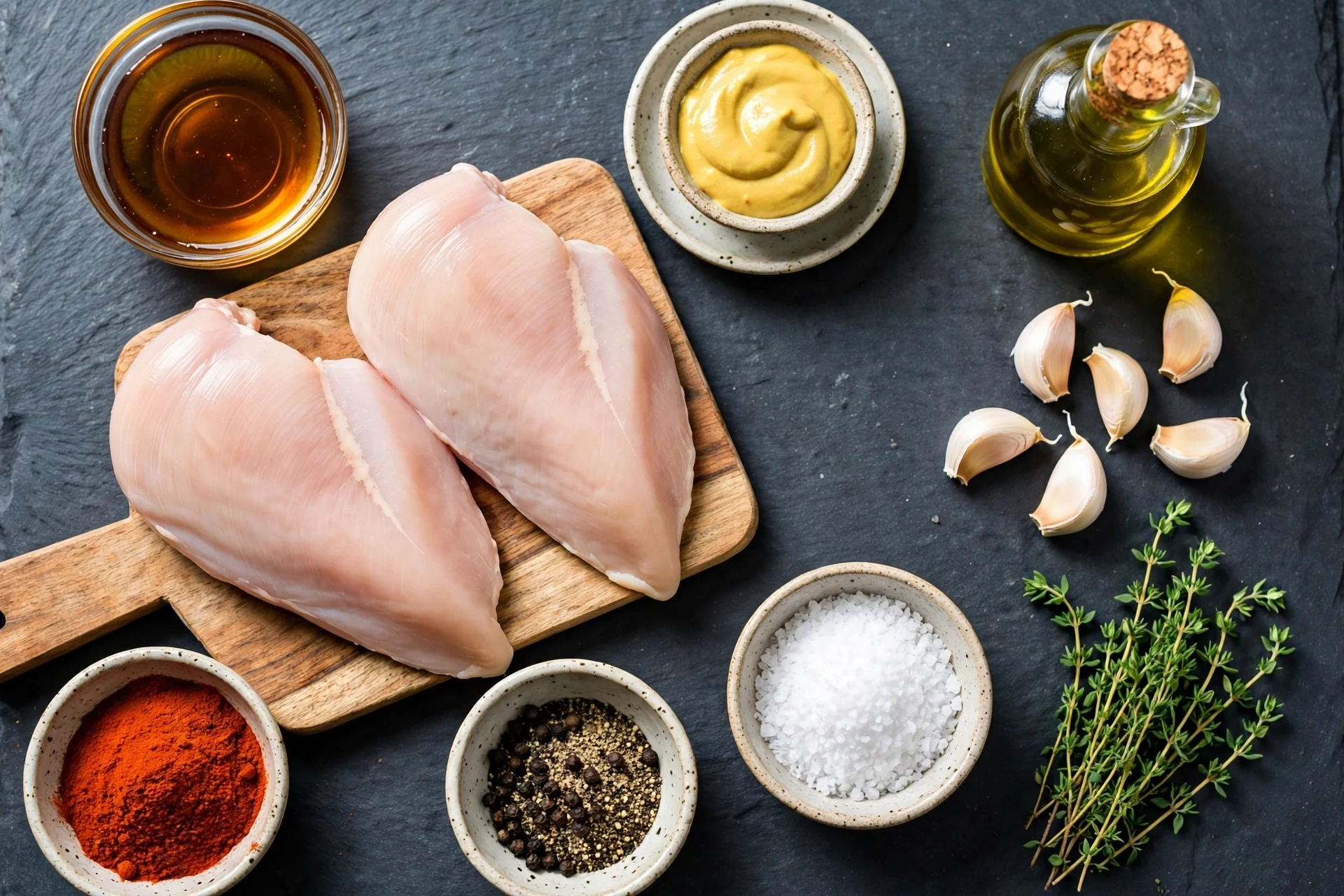
Everything on this list probably lives in your kitchen already, which is exactly the point. The magic here is not exotic ingredients, it is how maple and Dijon behave together: the maple caramelizes into a lacquered glaze while the Dijon keeps it from tasting like dessert.
- 4 boneless, skinless chicken breasts (6 to 8 oz / 170 to 225 g each), pounded to an even 3/4-inch thickness
- 1/3 cup pure maple syrup (not pancake syrup)
- 1/4 cup Dijon mustard
- 2 tablespoons olive oil
- 1 tablespoon apple cider vinegar
- 3 cloves garlic, minced
- 1 teaspoon dried thyme (or 1 tablespoon fresh thyme leaves)
- 1 teaspoon kosher salt
- 1/2 teaspoon freshly ground black pepper
- 1/2 teaspoon smoked paprika
- Fresh thyme or rosemary sprigs, for garnish
Directions
- Heat the oven. Position a rack in the center and preheat to 400°F (200°C). Place an oven-safe skillet (cast iron is ideal) on the stove so it is ready to go.
- Even out the chicken. Place each breast between sheets of plastic wrap or parchment and pound the thick end gently until the whole breast is an even 3/4 inch thick. This is the single biggest insurance policy against dry chicken: even thickness means the thin end does not overcook while the thick end catches up.
- Whisk the glaze. In a small bowl, whisk together the maple syrup, Dijon mustard, apple cider vinegar, minced garlic, thyme and smoked paprika until smooth. Divide it: pour about 1/4 cup into a separate small dish and set aside for serving. The rest stays in the bowl for glazing during cooking. Never brush the chicken with the serving glaze after it has touched raw poultry.
- Season and sear. Pat the chicken breasts completely dry with paper towels, then season all over with the salt and pepper. Heat the olive oil in the skillet over medium-high heat until it shimmers. Lay the breasts in and sear undisturbed for 2 to 3 minutes per side, until deeply golden. You are building the crust here, not cooking through.
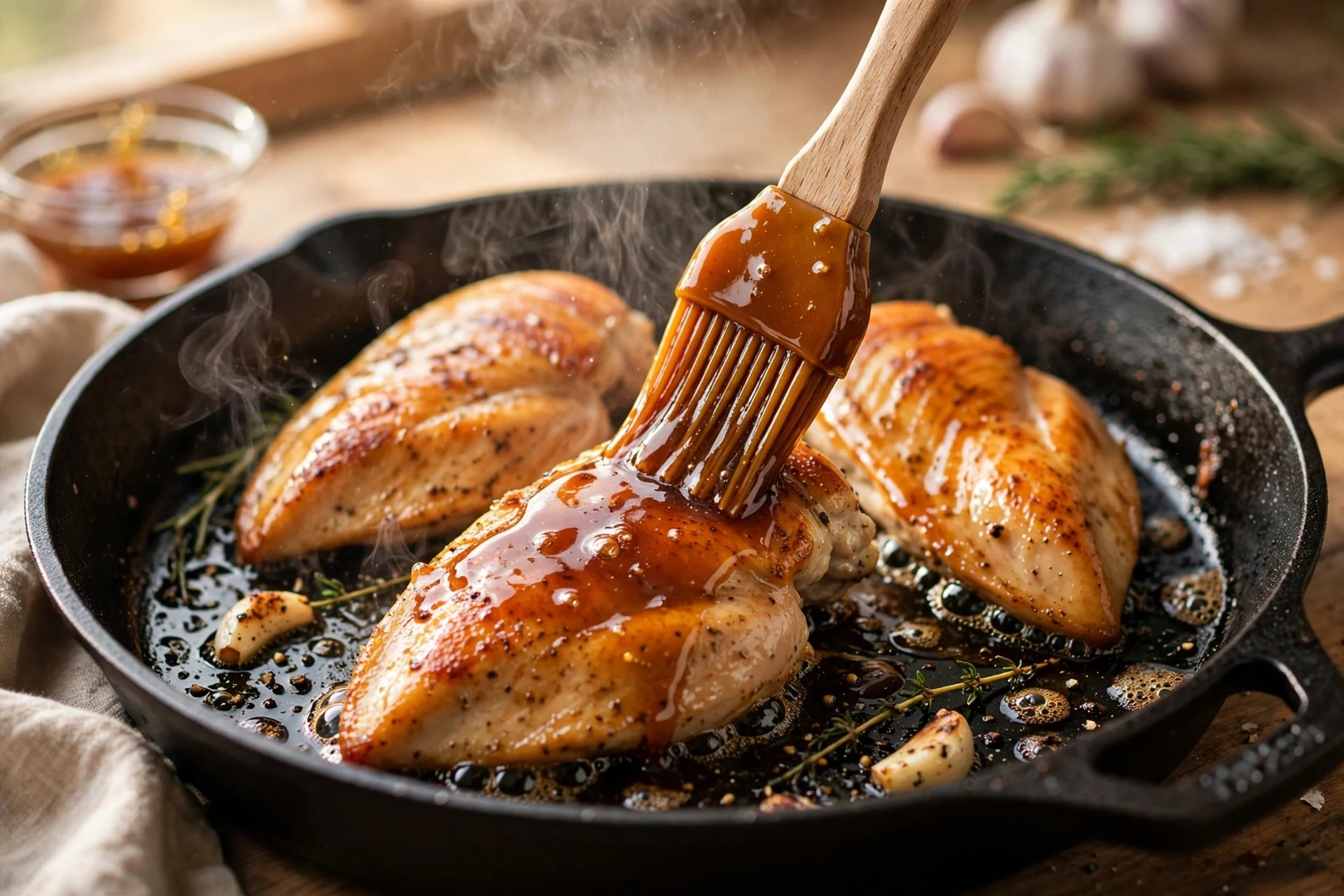
- Glaze and roast. Brush the seared breasts generously with about half the cooking glaze, transfer the skillet to the oven, and roast for 8 minutes. Pull the skillet out, brush on the remaining cooking glaze, and roast 7 to 10 minutes more, until the thickest part of the largest breast reads 165°F (74°C) on an instant-read thermometer and the juices run clear with no pink inside.
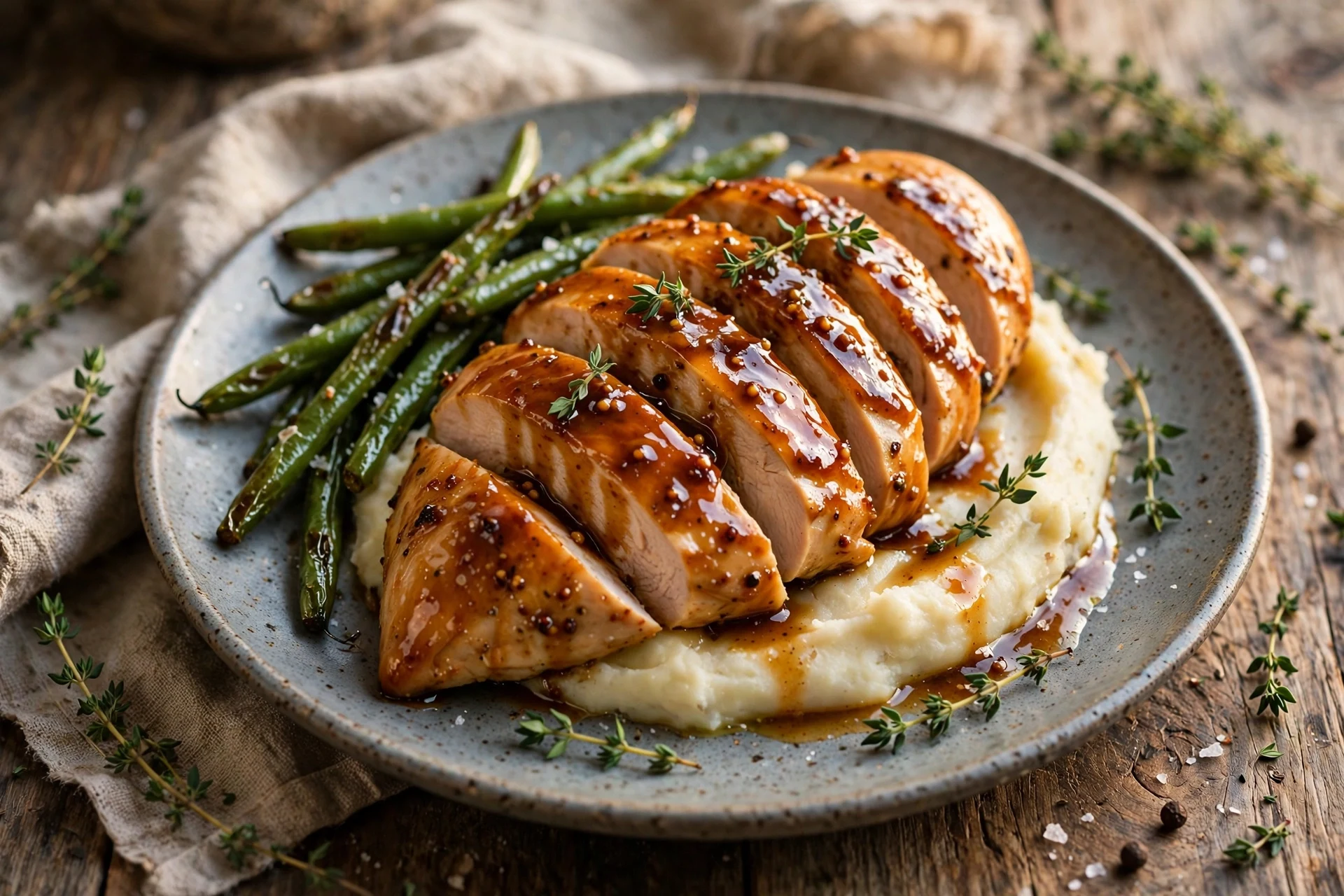
- Rest and serve. Transfer the chicken to a cutting board and rest for 5 minutes. Slice against the grain, fan over mashed potatoes or rice, and drizzle with the reserved serving glaze. Scatter fresh thyme or rosemary over the top.
Why This Works: The Technique Behind the Juicy
Most roasted chicken breast recipes fail in the same two places: uneven thickness and a glaze added too early. Understanding the why behind each step is what separates a good version of this dinner from a great one.
Even thickness is everything
A chicken breast is naturally tapered: thick at one end, thin at the other. Left alone, the thin end hits 165°F and keeps climbing into chalky territory while the thick end is still raw. Pounding to a uniform 3/4 inch means the whole breast finishes at the same moment. It takes 90 seconds and pays for itself in juiciness.
Sear first for the Maillard crust
That deep golden crust is the Maillard reaction, the browning that happens when proteins and sugars meet high, direct heat. The oven alone cannot do this well on chicken breast, because by the time the outside browns in oven heat, the inside is overcooked. A 2 to 3 minute sear per side builds the crust fast, and then the gentler oven heat finishes the interior. This is the same principle behind every great restaurant chicken dish.
The glaze goes on late, never early
Here is the chemistry lesson that matters: maple syrup is mostly sugar, and sugar burns. Brush a sugary glaze onto raw chicken and sear it, and by the time the chicken is done you have a bitter, blackened crust instead of a glossy one. Adding the glaze after the sear, then basting again halfway through roasting, lets the sugars caramelize gently in the oven heat instead of scorching. Sweet, sticky and amber: that is the target.
Resting is non-negotiable
When chicken comes out of a hot oven, its juices are concentrated in the center, pushed there by the heat. Cut immediately and those juices flood the cutting board. Rest the meat 5 minutes and the muscle fibers relax, reabsorbing the juices. The result is visibly juicier slices, and the difference is dramatic enough that you can see it.
Common Mistakes (and How to Fix Them)
Mistake: Using pancake syrup instead of pure maple
Pancake syrup is corn syrup with maple flavoring, and it behaves nothing like the real thing: it is thinner, sweeter and burns faster. Pure maple syrup is thicker, with warm caramel notes that actually caramelize. If pure maple is all you have changed, this recipe changes with it.
Mistake: Brushing the glaze on before searing
As covered above, sugar plus screaming-hot skillet equals burnt. The fix is built into the recipe: sear the seasoned chicken naked first, then glaze. If you want extra caramelization, broil the glazed breasts for the last 1 to 2 minutes of roasting, watching closely.
Mistake: Cooking to exactly 165°F in the oven
Chicken keeps cooking after it leaves the heat, rising another 3 to 5 degrees as it rests (carryover cooking). Pulling the breasts at 160 to 162°F and letting the rest finish the job lands you at a perfect, food-safe 165°F without overshooting. Per the USDA safe minimum internal temperature chart, poultry must reach 165°F (74°C); a thermometer is the only reliable way to know, since color alone can fool you.
Mistake: Reusing the glazing brush for the serving sauce
Any glaze that touched raw chicken is raw-chicken juice, full stop. That is why the recipe has you reserve 1/4 cup of clean glaze before cooking starts. It takes ten seconds and it is the difference between safe and sorry.
Mistake: Skipping the rest
It smells incredible and you want to cut in. Do not. Five minutes. Tent loosely with foil if the kitchen is cool, then slice. Your patience will be rewarded with juice that stays in the meat instead of on the board.
Storage and Make-Ahead
This recipe is a meal-prep dream because the glaze actually soaks into the chicken overnight and tastes even better on day two. Refrigerate leftovers in an airtight container within 2 hours of cooking, and they keep well for 3 to 4 days. For the freezer, wrap each breast individually in plastic wrap, then slide them into a freezer bag with the air pressed out; they hold their quality for up to 3 months. Thaw overnight in the refrigerator before reheating.
To reheat without drying the chicken out, warm it gently: 325°F (165°C) oven, covered with foil, for about 12 to 15 minutes, with a spoonful of the reserved glaze (or a fresh spoonful) drizzled over each breast. The microwave works in a pinch, but go in short 30-second bursts at medium power and stop as soon as it is steaming.
Make-ahead option: whisk the glaze up to 3 days in advance and keep it in a jar in the fridge. You can also season and pound the breasts the night before, covered on a plate. Dinner then becomes a 20-minute affair.
Substitutions
- Out of maple syrup? Honey works in the same amount, though the flavor shifts from warm-caramel to floral-sweet and the glaze will be slightly thicker. Brown sugar is a distant third choice; dissolve 1/3 cup packed brown sugar with 2 tablespoons water first.
- Out of Dijon? A coarse whole-grain mustard is the closest swap and adds lovely texture. Yellow mustard works but is sharper and less complex, so use 3 tablespoons instead of 1/4 cup. Spicy brown mustard is also fine.
- Chicken thighs instead of breasts? Absolutely. Use bone-in, skin-on thighs for maximum juiciness; sear skin-side down 4 minutes, then roast at 400°F for 20 to 25 minutes to 165°F internal. Boneless thighs roast in about 15 minutes after searing.
- No apple cider vinegar? Fresh lemon juice (1 tablespoon) gives a brighter tang. White wine vinegar works too.
- Herb swaps: Fresh rosemary, sage or oregano all love maple and mustard. Dried herbs are about three times as potent as fresh, so keep the 1-teaspoon dried to 1-tablespoon fresh ratio.
- Dairy-free and gluten-free: As written, this recipe is naturally both. Dijon mustard, which gets its signature bite from brown mustard seeds and traditionally verjuice, contains no gluten or dairy, so serve confidently to guests with those needs (always check your specific brand label).
Serving Ideas
This chicken is begging for something creamy to catch the glaze, so creamy mashed potatoes are the classic pairing, exactly as pictured. Roasted green beans, a crisp apple-and-walnut salad, or buttery dinner rolls all work beautifully. Speaking of rolls, warm garlic butter dinner rolls are made for mopping up the extra sauce. Leftover slices are fantastic the next day: layer them into sandwiches with arugula and a smear of Dijon, or serve them alongside creamy tuscan chicken skillet when one chicken dinner is simply not enough this week. And if maple-glazed dinners are becoming your personality, the maple glazed salmon is this recipe’s 25-minute seafood cousin and equally weeknight-friendly.
Frequently Asked Questions
Can I make maple Dijon chicken breast ahead of time?
Yes, and it reheats beautifully. Cook the recipe fully, cool within 2 hours, and refrigerate in an airtight container for up to 4 days. The glaze soaks in overnight, so day-two slices are arguably better. You can also whisk the glaze up to 3 days ahead and keep it in a jar in the fridge, then cook fresh the day of.
How do I keep chicken breast from drying out?
Three things matter most: pound the breasts to an even 3/4-inch thickness so they cook uniformly, use an instant-read thermometer and pull the chicken at 160 to 162°F so carryover cooking finishes it at a safe 165°F, and rest the meat 5 minutes before slicing. Follow those three and dry chicken breast becomes a thing of the past.
Can I use chicken thighs instead of breasts?
Yes. Bone-in, skin-on thighs are the juiciest swap: sear skin-side down for 4 minutes, then roast at 400°F for 20 to 25 minutes until the internal temperature reaches 165°F. Boneless, skinless thighs need about 15 minutes of roasting after searing. The maple Dijon glaze is equally wonderful on dark meat.
Can I grill maple Dijon chicken instead of roasting it?
You can, with one adjustment: grill the seasoned chicken over medium heat first, and brush the glaze on only during the last 2 to 3 minutes, flipping often. Maple syrup dripping onto open flames will flare and char, so late glazing is the rule on the grill too. Finish at 165°F internal, rest 5 minutes, and serve with the reserved clean glaze.
Rate this recipe
Be the first to rate it!