
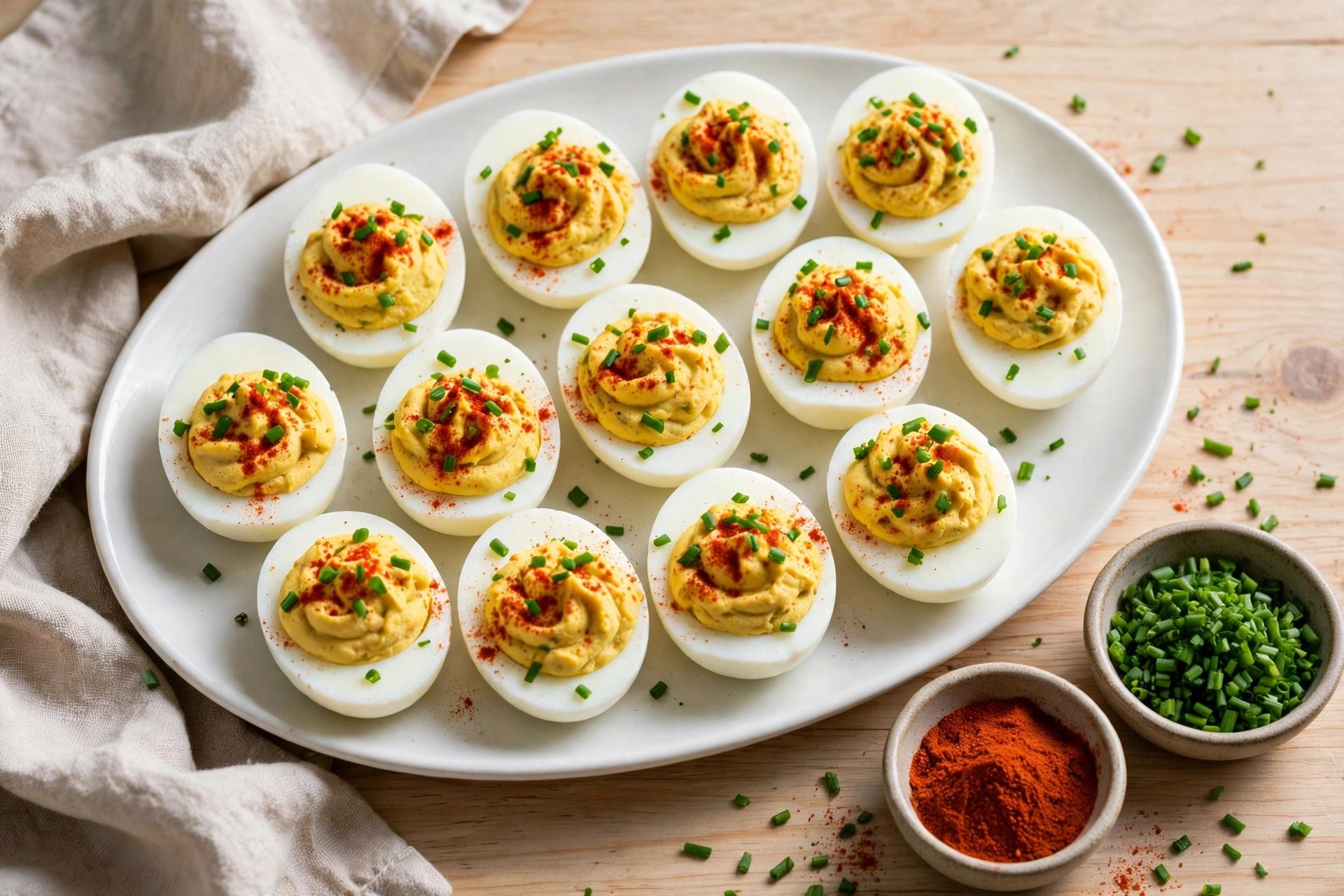
There is a moment at every good party, right after the platter hits the table, when the whole room quietly agrees on what to eat first. It is never the fanciest dish. It is the deviled eggs. Someone reaches for one, then another, and within minutes the platter is empty and somebody is asking who made them. These easy deviled eggs are that dish: creamy, tangy, and ready in 30 minutes, with a silky mustard filling, a dusting of paprika, and fresh chives on top.
Here is the thing about deviled eggs: they look like they took real effort, and they taste like they took real skill, but the whole recipe is just six eggs and a handful of things you already have in the kitchen. The secret is not a fancy ingredient. It is the method. Eggs boiled for a full 12 minutes, so the yolks are completely firm and never green around the edges. A 10-minute ice bath, so the shells slip off cleanly and the whites stay smooth and unpitted. Yolks mashed until they are completely smooth, then mixed with mayonnaise, Dijon mustard, and a spoonful of white vinegar, so the filling is creamy with a bright little tang that keeps it from tasting flat. That is the whole trick, and it works every single time.
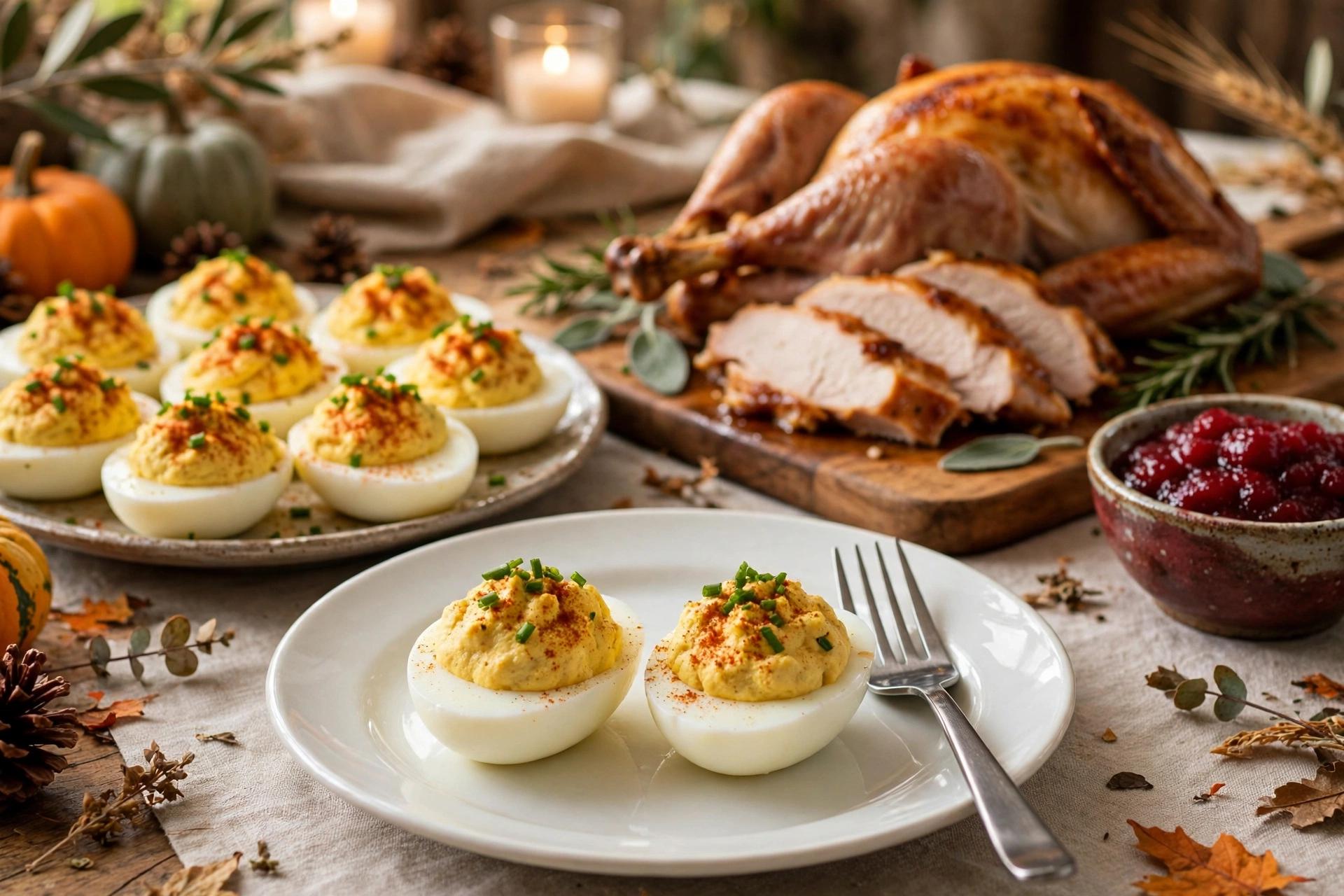
What you get for those 30 minutes is the appetizer that disappears first at Thanksgiving, at potlucks, at picnics, and at every family gathering in between: tender egg whites filled high with a smooth, golden filling, dusted with paprika and scattered with chives. They are light enough to eat standing up, rich enough to feel like a treat, and they sit happily next to the turkey and the mashed potatoes on a holiday table. Make a double batch if you are feeding a crowd, because one batch of twelve halves never lasts as long as you think it will.
Recipe at a Glance
- Prep Time: 8 minutes (3 minutes peeling and halving the eggs, 3 minutes mashing and mixing the filling, 2 minutes filling the whites and garnishing)
- Cook Time: 12 minutes (boiling the eggs)
- Chill Time: 10 minutes (ice bath, so the eggs cool completely and peel cleanly)
- Total Time: 30 minutes
- Serves: 6 (2 deviled egg halves per serving, as a party side or appetizer)
- Yield: 12 deviled egg halves (from 6 large eggs)
- Course: Appetizer, side dish, party snack
- Cuisine: American classic, holiday table
- Diet: Gluten-free, vegetarian, low-carb, keto-friendly
- Equipment: Medium saucepan with a lid, large bowl for the ice bath, slotted spoon, small bowl, fork, piping bag or zip-top bag (optional), serving platter
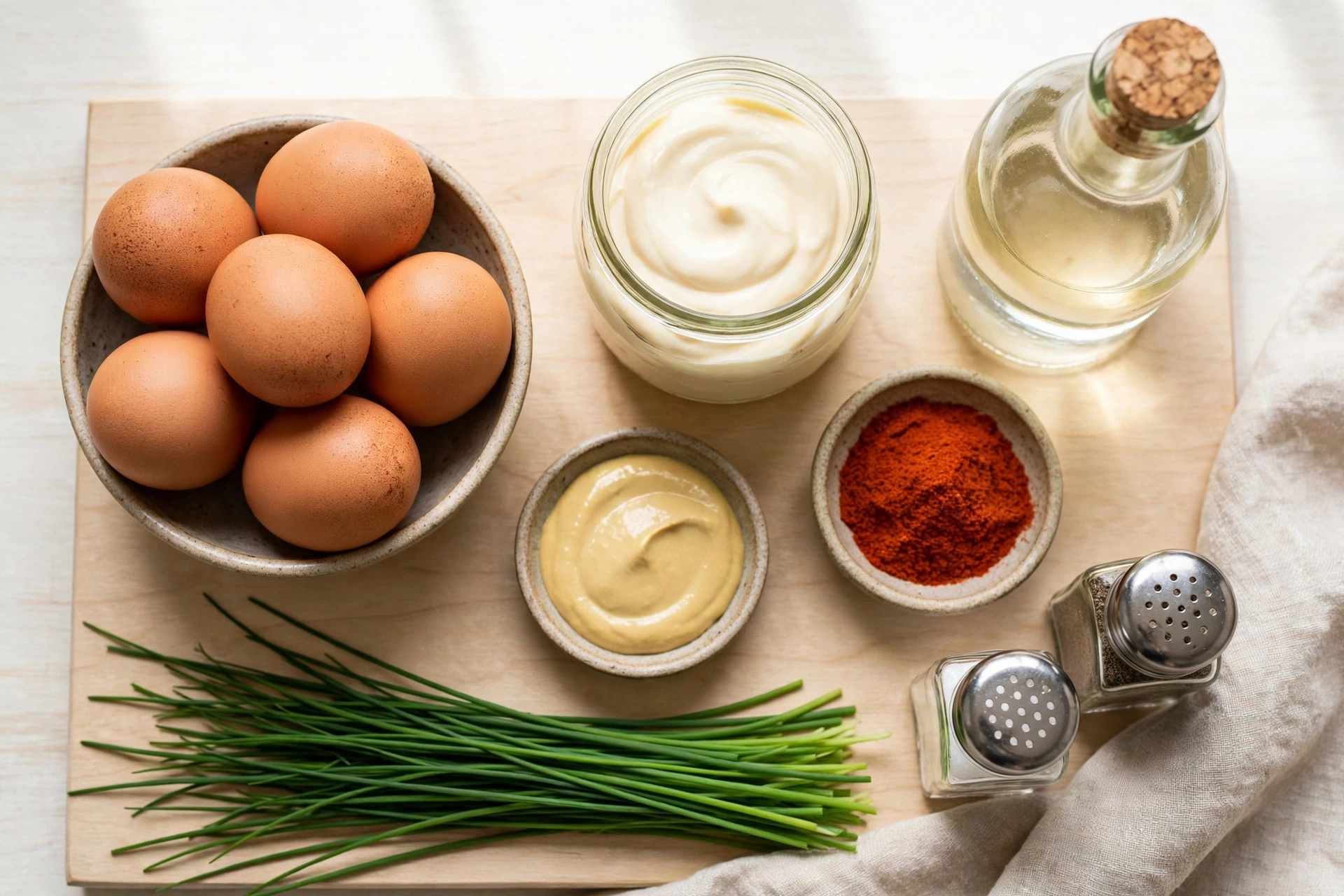
Ingredients
Almost all of this is probably in your kitchen already. Use real mayonnaise, not a light or fat-free version, because the filling needs the richness to turn silky; use Dijon mustard, not yellow mustard, because Dijon brings a gentle sharpness without the harsh vinegar bite. The quantities below make twelve deviled egg halves, enough for six people at two halves each.
- 6 large eggs
- 3 tablespoons mayonnaise
- 1 teaspoon Dijon mustard
- 1 teaspoon white vinegar (or fresh lemon juice)
- 1/4 teaspoon fine sea salt
- 1/8 teaspoon freshly ground black pepper
- Paprika, for dusting (about 1/4 teaspoon)
- 1 tablespoon chopped fresh chives, for garnish
A note on the eggs: eggs that are a few days old peel far more easily than eggs bought the same morning, because the egg white slowly pulls away from the shell membrane as the egg ages. If your eggs are very fresh, add an extra minute to the ice bath and peel them under a slow stream of cool running water.
Directions
Read the steps once before you start, because the timing is the whole recipe: 12 minutes in the pot, 10 minutes in the ice bath, and 8 minutes of hands-on work to peel, fill, and garnish. Set a timer for the boiling and the chilling, because guessing at either one is how you end up with green yolks or torn whites.
- Boil the eggs (12 minutes). Place the 6 eggs in a medium saucepan in a single layer and add enough cold water to cover them by about an inch. Set the pan over high heat and bring the water to a full rolling boil. As soon as it boils, put the lid on, take the pan off the heat completely, and set a timer for 12 minutes. The eggs finish cooking in the hot water, gently and evenly, which is why the yolks come out fully firm and golden all the way through, with no green ring. While the eggs cook, fill a large bowl with cold water and plenty of ice cubes for the ice bath.
- Chill in an ice bath (10 minutes). When the timer goes off, lift the eggs out of the hot water with a slotted spoon and lower them straight into the ice bath. Leave them there for a full 10 minutes. This fast chill does two jobs at once: it stops the cooking instantly, so the yolks never overcook and turn green, and it makes the egg white contract slightly away from the shell, so the shells come off in big, clean pieces instead of tiny stubborn shards. Do not skip the ice bath, and do not cut it short.
- Peel and halve the eggs. Take the eggs out of the ice bath and pat them dry. Tap each egg gently on the counter to crack the shell all over, then roll it lightly under your palm to loosen the shell. Peel from the wider end, where the air pocket sits, slipping the shell off under a slow stream of cool running water if it sticks. Slice each peeled egg in half lengthwise with a sharp knife, wiping the blade clean between cuts so the halves stay neat. Pop the yolks out into a small bowl, and set the 12 white halves cut side up on your serving platter.
- Make the filling. Mash the yolks with a fork until they are completely smooth and crumbly, with no lumps left at all. This is the step that decides whether the filling is silky or gritty, so take a full minute on it and press the yolks against the side of the bowl until they look like fine golden crumbs. Add the mayonnaise, the Dijon mustard, the white vinegar, the salt, and the black pepper, and stir until the mixture is smooth, creamy, and thick enough to hold its shape on a spoon. If the filling feels too stiff, add another teaspoon of mayonnaise; if it feels too loose, mash in one more yolk’s worth of patience and a pinch more salt.
- Taste and adjust the seasoning. Taste the filling now, before it goes into the whites, because this is the only moment you can fix it easily. It should taste creamy first, then bright and tangy from the mustard and vinegar, with the salt quietly underneath. If it tastes flat, add a tiny pinch more salt. If it tastes too rich, add a few more drops of vinegar. If you want a little more kick, add another half teaspoon of Dijon mustard. The filling should make you want a second spoonful straight from the bowl.
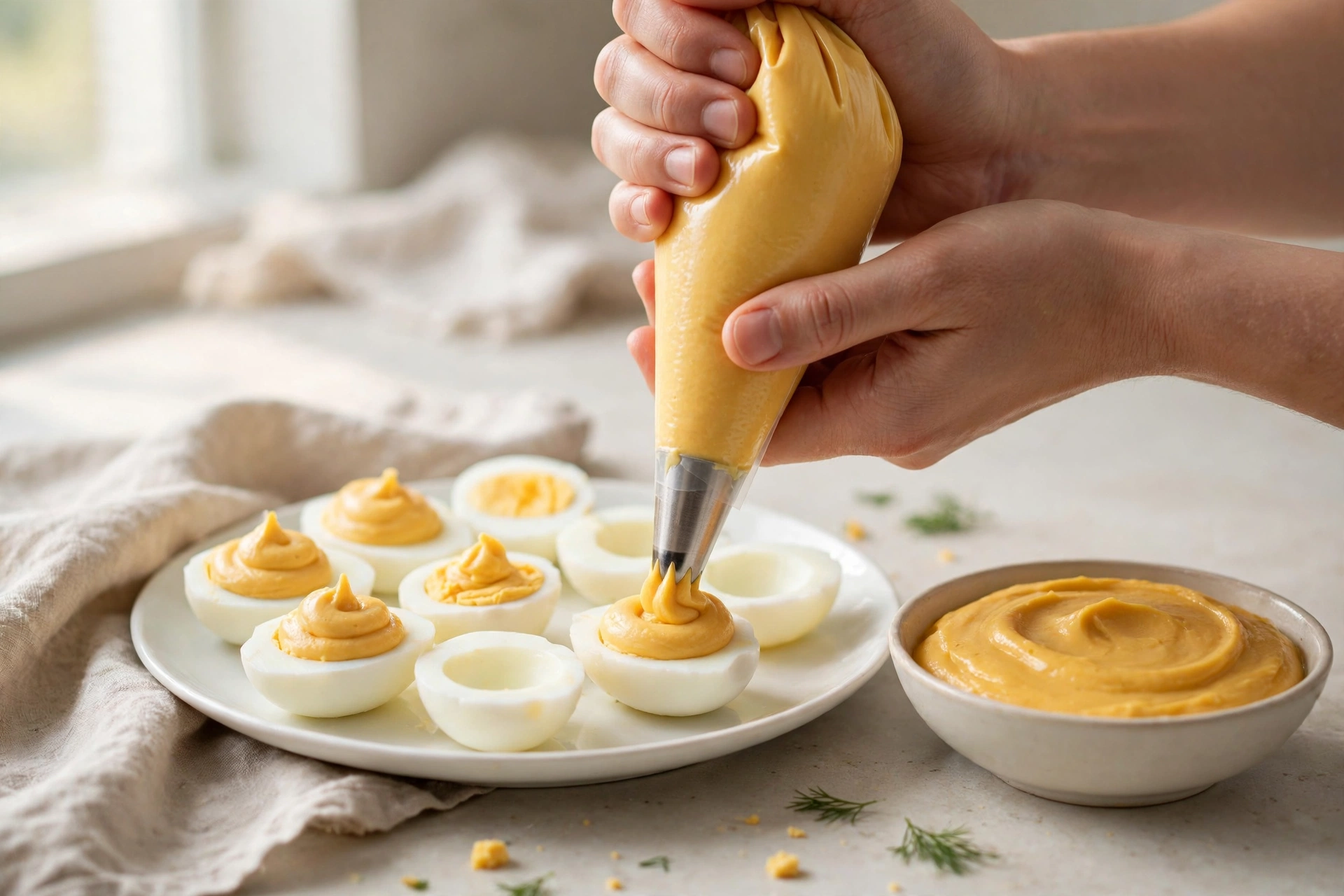
- Fill the egg whites. Spoon the filling into the egg white halves, dividing it evenly so all 12 halves get a generous mound, or pipe it in for a prettier finish: spoon the filling into a piping bag fitted with a large star tip, or into a zip-top bag with one corner snipped off, and pipe a neat swirl into each white. Piping takes about a minute longer than spooning and makes the eggs look like they came from a caterer, which is exactly the point at a party. Fill them generously, mounding the filling slightly above the rim of each white.
- Garnish with paprika and chives. Dust the tops lightly with paprika, just a pinch over each half, and scatter the chopped chives over the platter. The paprika is not just for looks: its warm, smoky note is the classic finish on a deviled egg, and the chives add a fresh, mild onion flavor and a pop of green against the golden filling. A little goes a long way here, so dust, do not pour.
- Serve right away. Serve the deviled eggs as soon as they are garnished, while the filling is cool and creamy and the whites are still firm. If you have an extra 30 minutes before the party, you can cover the platter loosely with plastic wrap and chill the finished eggs in the fridge; that extra chill deepens the flavor a little, but it is optional time on top of the 30 minutes above, not part of it. Set the platter out, step back, and watch it empty.
Why These Deviled Eggs Work So Well
Great deviled eggs are not about a secret ingredient. They are about understanding what an egg needs and giving it to it in the right order. The filling is an emulsion of yolk, mayonnaise, and mustard, and everything in this recipe is a small, deliberate answer to keeping that filling smooth, creamy, and bright.
First, the cooking method. Boiling the eggs hard for 12 minutes, then taking the pan off the heat and letting them finish in the hot water, cooks the yolks all the way through without overcooking them. An overcooked yolk turns green around the edges and tastes chalky, and no amount of mayonnaise can fix that. The 10-minute ice bath stops the cooking dead and makes peeling easy, which is why the whites in this recipe come out smooth and unpitted instead of torn and ragged.
Second, the mashing. Mashing the yolks completely smooth before anything wet goes in is the difference between a silky filling and a lumpy one. Mayonnaise can coat lumps, but it cannot dissolve them, so any lump that survives the fork will survive all the way to the table. Third, the vinegar. A single teaspoon of white vinegar, or fresh lemon juice, lifts the whole filling: the acid cuts through the richness of the yolk and mayonnaise and makes the flavor taste bright instead of heavy. Without it, deviled eggs taste flat and one-note; with it, they taste finished.
Finally, the ratio. Three tablespoons of mayonnaise to six yolks is the sweet spot: enough to make the filling creamy and pipeable, not so much that it turns runny or tastes like mayonnaise with egg in it. The Dijon mustard adds its own gentle sharpness, the salt wakes everything up, and the black pepper gives the filling a quiet warmth underneath. Deviled eggs have been a party-table classic for generations precisely because this balance is so simple at heart, and because a plate of them feels generous without costing much or taking long.
Pro Tips for the Creamiest Deviled Eggs
- Use eggs that are a few days old. Very fresh eggs are the hardest to peel, because the white clings tightly to the shell membrane. Eggs bought three to seven days ago peel far more cleanly, and the difference is dramatic.
- Set a timer for the 12 minutes and the 10 minutes. The boil and the ice bath are the two timed steps in this recipe, and guessing at either one is how yolks turn green or whites tear. Twelve minutes off the heat, ten minutes in ice, every time.
- Mash the yolks until they are completely smooth before adding anything wet. Press the yolks with a fork against the side of the bowl until they look like fine golden crumbs. If you want a truly silky filling, push the mashed yolks through a fine mesh sieve with the back of a spoon.
- Taste the filling before you fill the whites. Seasoning is easy to fix in the bowl and impossible to fix once the filling is piped. Creamy first, bright second, salt underneath: if any one of those is missing, add a pinch of salt, a few drops of vinegar, or half a teaspoon of mustard.
- Pipe for parties, spoon for weeknights. A piping bag with a star tip makes the eggs look professional and takes about a minute longer. A spoon makes them in seconds and tastes exactly the same. Both are correct; choose based on who is coming to dinner.
Common Mistakes to Avoid
Boiling the eggs hard for the whole time. Eggs left at a rolling boil for 12 minutes overcook, and overcooked yolks turn green and chalky. Bring the water to a boil, then take the pan off the heat and let the eggs finish gently in the hot water.
Skipping the ice bath. Eggs left to cool slowly on the counter keep cooking from their own heat, and their shells stick. The ice bath stops the cooking instantly and makes the shells come off cleanly.
Leaving lumps in the yolks. Mayonnaise coats lumps; it does not dissolve them. Mash the yolks until they are completely smooth before the mayonnaise goes in, or the filling will be gritty no matter how long you stir it.
Overfilling with mayonnaise. More mayonnaise does not make a creamier filling; it makes a runnier one that slides off the whites and tastes like mayonnaise. Three tablespoons for six yolks is the right amount, and if the filling feels stiff, add it a teaspoon at a time.
Leaving the finished eggs out for hours. Deviled eggs are an egg dish, and egg dishes should not sit at room temperature for more than 2 hours. Put the platter out when guests arrive, and put leftovers straight back in the fridge.
Substitutions and Variations
- Swap the vinegar: Use fresh lemon juice instead of white vinegar for a softer, citrusy brightness, or use apple cider vinegar for a slightly sweeter tang. All three work in the same amount.
- Make them a little spicy: Stir a pinch of cayenne pepper or a few drops of hot sauce into the filling, or dust the tops with smoked paprika instead of sweet paprika for a warm, smoky finish.
- Add crunch: Fold 1 tablespoon of finely diced celery or finely chopped pickles into the filling for a little crunch and a briny note. Keep the pieces tiny, so the filling still pipes smoothly.
- Swap the herbs: Use finely chopped fresh dill or parsley instead of chives, or a mix of all three. Dill gives the eggs a fresh, pickle-like note that is lovely in summer.
- A richer filling: Replace 1 tablespoon of the mayonnaise with sour cream or full-fat Greek yogurt for a tangier, slightly lighter filling. The texture stays creamy and pipeable.
- A spooky cousin to try next: If you love this classic version, our Monster Eyeball Deviled Eggs use the same creamy filling dressed up with olives and red food coloring for a Halloween party, and they are proof of how versatile this little egg really is.
Storage and Make-Ahead
Deviled eggs are one of the easiest party dishes to make ahead, because the eggs and the filling can wait separately in the fridge and come together in minutes. If you are cooking for Thanksgiving, making the eggs a day early is one of the best gifts you can give yourself on a day when the oven is already doing five jobs at once.
- Fridge: Store finished deviled eggs in an airtight container in the fridge for 3 to 4 days. Keep them covered so the filling does not dry out or pick up smells from the fridge. Never leave deviled eggs sitting out on the counter for more than 2 hours, and put leftovers straight back in the fridge.
- Make-ahead: Boil, peel, and halve the eggs up to 2 days ahead, and store the whites and the mixed filling separately in airtight containers in the fridge. Fill and garnish the whites up to 4 hours before serving, then cover loosely and keep them cold until the party starts.
- Freezer: Do not freeze deviled eggs. The whites turn rubbery and the filling separates when it thaws, and there is no way to bring them back. This is a make-it-fresh dish, and at 30 minutes, it is a quick one.
Food safety note: eggs must be cooked until both the yolk and the white are firm, which is exactly what the 12 minutes in hot water does here; there is no runny yolk in a deviled egg. Once filled, the eggs should not sit at room temperature for more than 2 hours, and they keep in the fridge for 3 to 4 days. Nutrition values for eggs and mayonnaise vary by brand; the USDA FoodData Central database is a reliable place to look up the values for the exact products you use.
Serving Ideas
Deviled eggs are a team player, and the right partners turn a good appetizer into a spread everyone remembers. At Thanksgiving, they sit happiest right at the start of the table, next to the turkey, because guests can eat them while the turkey rests and the gravy is finished. Our Easy Baked Mac and Cheese is their natural partner on a holiday table, rich and golden next to these cool, creamy eggs, and our Easy Make-Ahead Mashed Potatoes round out the same classic spread.
Beyond Thanksgiving, deviled eggs love anything smoky or tangy next to them. A platter of cured meats, a cheese board, or a bowl of pickles all play beautifully against the creamy filling, and a crisp green salad keeps the plate from feeling too heavy. For a picnic, pack the whites and the filling separately in the cooler and fill them on site, so they arrive looking perfect. For a potluck, double the recipe to twelve eggs and watch all twenty-four halves disappear before the main dish is served.
If you are building a holiday spread around this recipe, add one more comfort dish for variety. A warm, hearty casserole or a slow-cooked main gives the table a hot anchor next to these cool, creamy eggs, and the two temperatures together make the whole meal feel considered rather than thrown together.
Frequently Asked Questions
How long do deviled eggs last in the fridge?
Deviled eggs keep for 3 to 4 days in the fridge in an airtight container. Keep them covered so the filling does not dry out or pick up smells from the fridge. Never leave deviled eggs sitting out at room temperature for more than 2 hours, and put any leftovers straight back in the fridge.
Can I make deviled eggs ahead of time?
Yes, you can. Boil, peel and halve the eggs up to 2 days ahead, and store the whites and the mixed filling separately in airtight containers in the fridge. Fill and garnish the whites up to 4 hours before serving, then cover them loosely and keep them cold until the party starts.
Why is my deviled egg filling lumpy, and how do I fix it?
A lumpy filling almost always means the yolks were not mashed smooth enough before the mayonnaise went in. Mayonnaise coats lumps, but it cannot dissolve them. Mash the yolks with a fork until they look like fine golden crumbs, or push them through a fine mesh sieve with the back of a spoon for a truly silky filling. If the filling is already mixed and lumpy, press it through the sieve now, then stir in the mayonnaise again.
How do I keep deviled eggs from sliding around on the platter?
Slice a very thin sliver off the rounded bottom of each egg white half so it sits flat, or line the platter with a bed of lettuce leaves, shredded cabbage, or crinkled parchment paper. The eggs nestle into the leaves and stay put, and the green underneath makes the golden filling look even better.
Rate this recipe
Be the first to rate it!