
There is a moment, about twenty minutes into roasting, when the kitchen starts to smell like a restaurant. The garlic turns sweet, the Parmesan starts to crackle and brown at the edges, and the cauliflower, plain old cauliflower, becomes something nobody can leave alone. That is the magic of this easy parmesan roasted cauliflower, and once you make it, you will understand why it disappears from the serving bowl before the main dish even hits the table.
This is the side dish for people who think they do not like cauliflower. High heat does the heavy lifting here. At 425 degrees Fahrenheit, the florets caramelize instead of steaming, their edges turn golden and crisp, and the Parmesan melts into a lacy, salty crust that clings to every nook. A squeeze of lemon at the end wakes everything up, and a shower of fresh parsley makes the whole pan look like it came from a bistro. It takes ten minutes of hands-on work and one sheet pan, which means it fits into a busy weeknight just as easily as it fits onto a holiday table.
What I love most about this recipe is how forgiving it is. You do not need fancy equipment, you do not need to blanch anything, and you do not need to stand over the stove. Cut the cauliflower, toss it with oil and seasonings, spread it out, and let the oven work. The hardest part is waiting for it to finish, because the smell alone will bring everyone into the kitchen asking when dinner is ready.
Twelve simple ingredients are all it takes, and most of them are probably in your pantry already. The cauliflower stays the star, the Parmesan brings the salty crunch, and the garlic, paprika and Italian seasoning build a warm, savory background that makes every bite taste like more than the sum of its parts. Serve it next to roast chicken, tuck it beside a holiday turkey, or pile it onto a plate all by itself with a little extra lemon. However you serve it, this easy parmesan roasted cauliflower earns its place on the table.
It is also the rare side dish that pleases everyone at once. Kids who push plain vegetables around the plate will happily eat the crispy, cheesy edges. Guests who eat low-carb will love that it is naturally light and satisfying. And the cook will love that the whole thing comes together in one bowl and one pan, with almost no cleanup. That combination is why this recipe has become a regular in so many kitchens, and why it works just as well for a Tuesday night as it does for Thanksgiving dinner.
Recipe at a Glance
- Prep Time: 10 minutes
- Cook Time: 25 minutes
- Total Time: 35 minutes
- Servings: 4 servings (about 1 cup per serving, as a side dish)
- Difficulty: Easy
- Oven Temperature: 425°F (218°C)
- Method: Roasted on a sheet pan
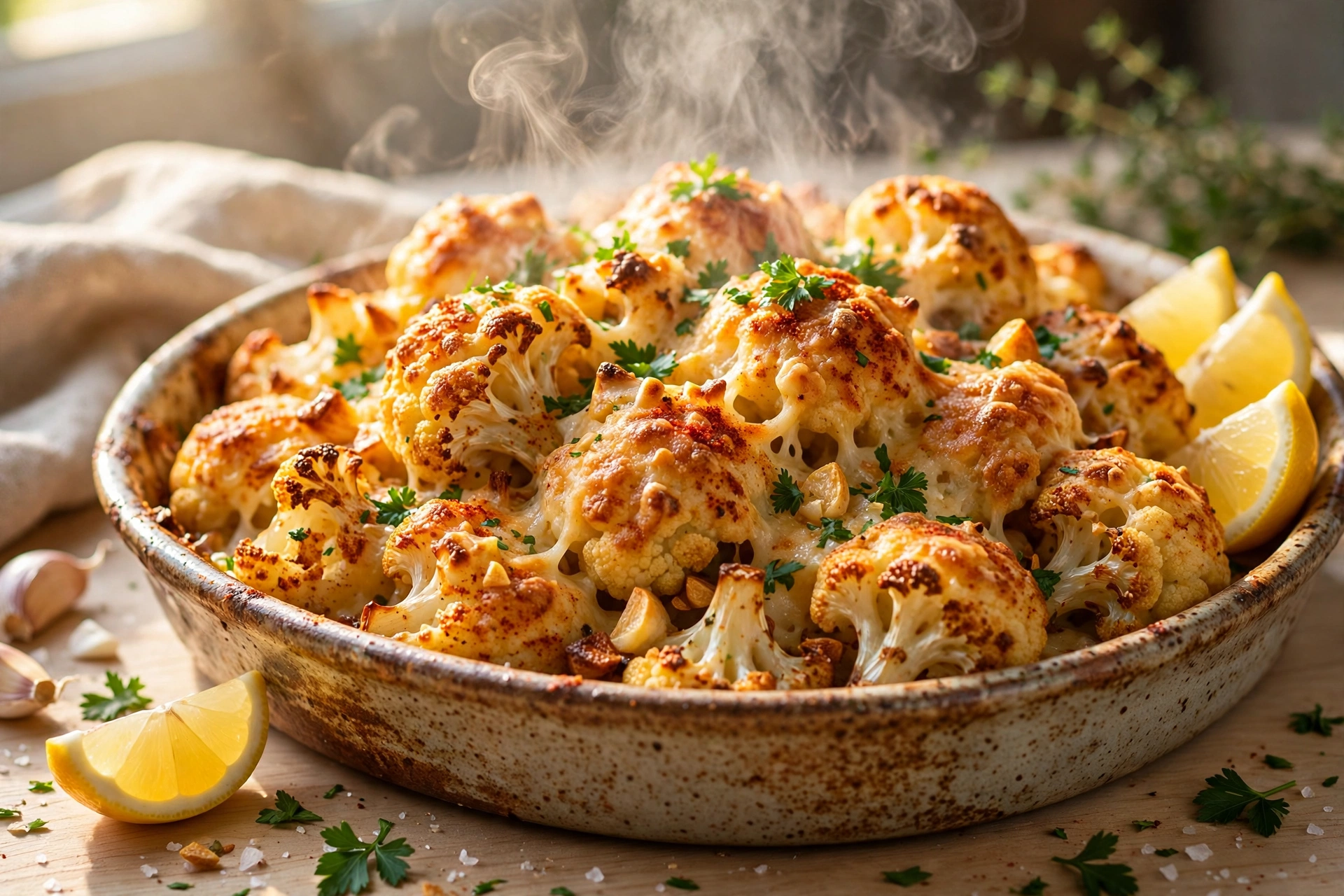
How to Pick a Good Cauliflower
A great roasted cauliflower starts at the store, and picking a good head takes about ten seconds once you know what to look for. Choose a head that feels heavy for its size, because weight means density and moisture, and a dense head roasts into tender, creamy florets instead of drying out. The curds should be tight, compact and creamy white, with no dark spots, no soft patches and no loose, crumbly pieces falling off.
Look at the leaves too. Fresh, green, snappy leaves wrapped around the head are a sign the cauliflower was picked recently, while wilted or yellowing leaves suggest it has been sitting for a while. A few small brown speckles on the surface are harmless and will roast away, but large brown or black patches mean the head is past its best. If you can, buy the cauliflower the day before you cook it and keep it in the crisper drawer, unwashed, until you are ready to cut it. Washing it early just adds moisture you will have to dry off later.
Size matters for this recipe. One large head, about 2 pounds, gives you roughly 8 cups of florets, which is exactly right for 4 generous side servings. If your store only has small heads, buy two and use the best florets from both, saving any extra for soup or a stir-fry later in the week.
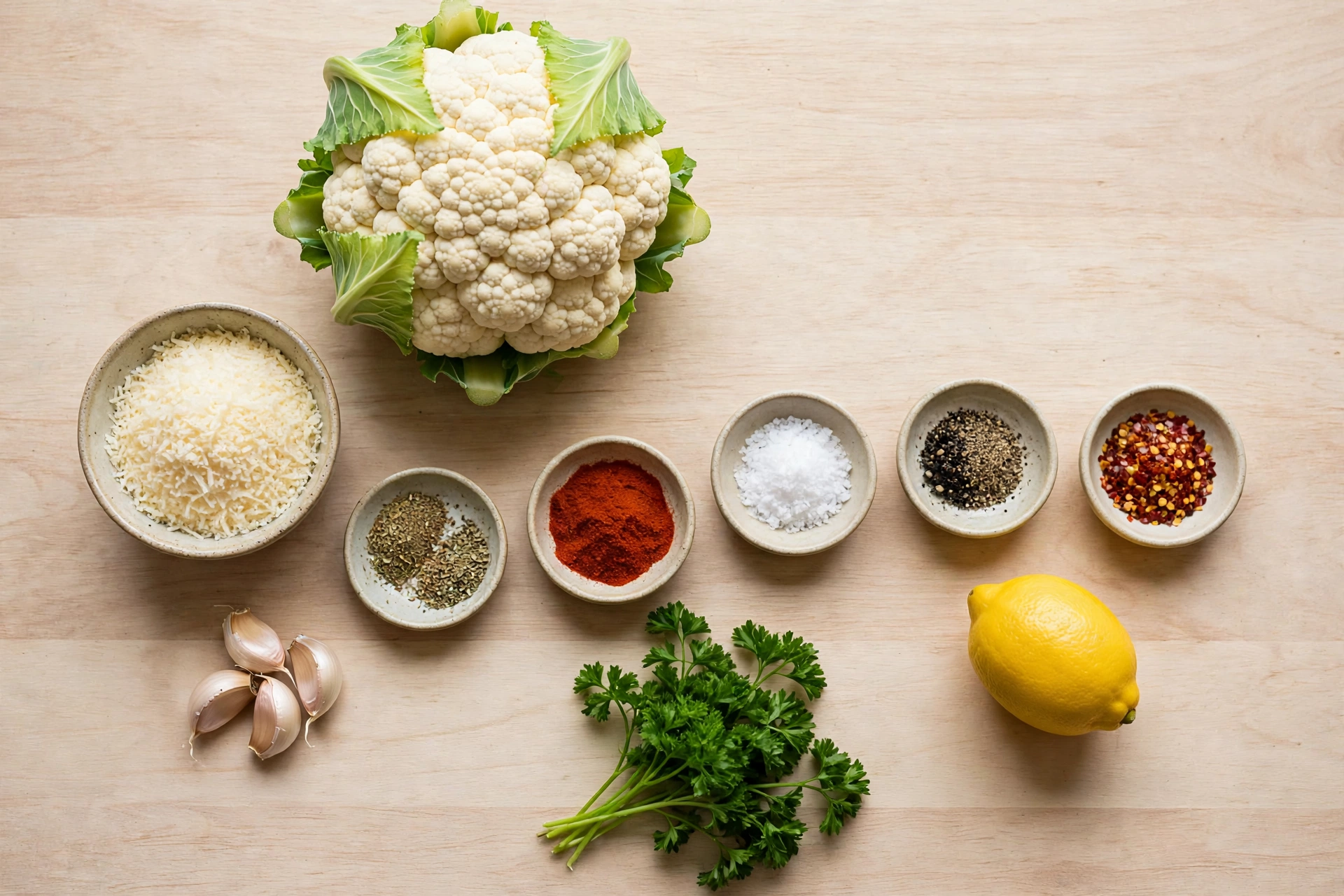
Ingredients
Everything is measured for one large head of cauliflower, about 2 pounds, which serves 4 people generously as a side dish. If your cauliflower is small, closer to 1 1/2 pounds, use a little less oil and Parmesan, and check it a few minutes early.
- 1 large head cauliflower (about 2 pounds), cut into bite-size florets
- 3 tablespoons olive oil
- 1/2 cup finely grated Parmesan cheese, divided
- 3 cloves garlic, minced
- 1 teaspoon Italian seasoning
- 1/2 teaspoon paprika
- 3/4 teaspoon kosher salt
- 1/2 teaspoon black pepper, freshly ground
- 1/4 teaspoon red pepper flakes (optional, for a gentle warmth)
- 1 tablespoon lemon juice, freshly squeezed
- 2 tablespoons chopped fresh parsley
- Lemon wedges, to serve
Directions
- Preheat the oven to 425°F. Place a rack in the center of the oven and line a large rimmed sheet pan with parchment paper. A hot oven is the whole secret here, so let it fully preheat before the cauliflower goes in.
- Cut the cauliflower into even florets. Trim the leaves and the thick core, then cut the head into bite-size florets, roughly 1 1/2 to 2 inches across. Try to keep them similar in size so they cook at the same pace. If a floret is much bigger than the rest, slice it in half through the stem.
- Toss with oil and seasonings. Put the florets in a large bowl and drizzle with the olive oil. Add the minced garlic, Italian seasoning, paprika, kosher salt, black pepper and red pepper flakes, if using. Toss with your hands or a big spoon until every floret is glossy and evenly coated. Stir in half of the Parmesan, 1/4 cup, so it sticks to the oiled florets.
- Spread in a single layer. Tip the florets onto the prepared sheet pan and spread them out so none are touching. Flat sides down gives the best browning. Crowding is the enemy of crisp cauliflower, so use a second pan if everything does not fit in one layer.
- Roast for 20 minutes. Slide the pan into the oven and roast for 20 minutes, until the undersides are golden and the florets are starting to turn tender. Do not open the oven to peek more than once, because every peek drops the temperature and slows the browning.
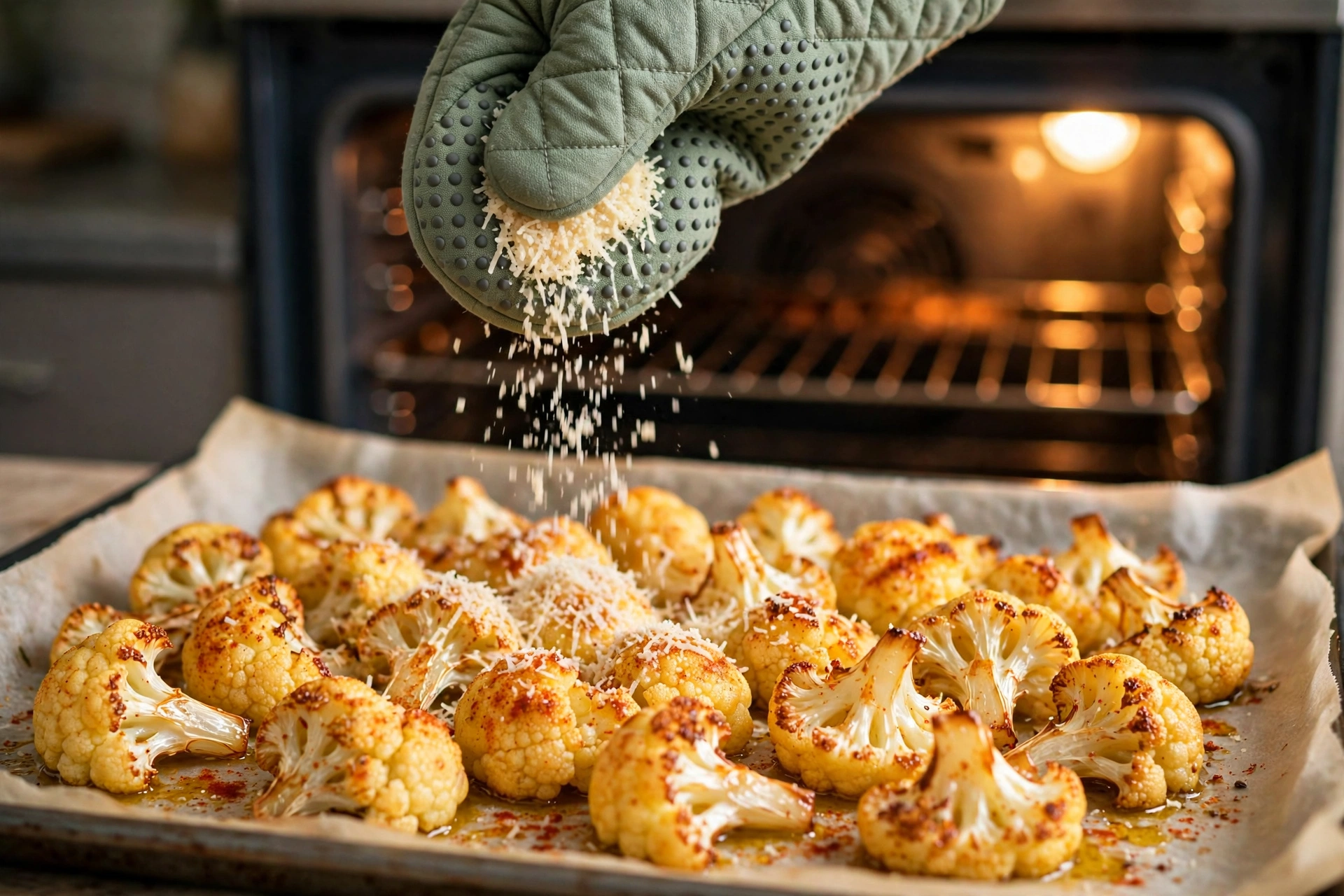
- Flip and add the rest of the Parmesan. Take the pan out, flip each floret with tongs so a fresh side faces down, and sprinkle the remaining 1/4 cup of Parmesan evenly over the top. The cheese will melt onto the hot florets and crisp as it finishes roasting.
- Roast 5 minutes more. Return the pan to the oven for 5 minutes, until the Parmesan is melted, golden and crisp at the edges and a knife slides easily into the thickest floret. The total cook time is 25 minutes.
- Finish with lemon and parsley. Squeeze the lemon juice over the hot cauliflower, scatter the chopped parsley on top, and serve right away with lemon wedges on the side. The lemon brightens the rich, salty cheese and the parsley adds a fresh green finish.
Why This Works
Roasting cauliflower is really a lesson in water management. Cauliflower is mostly water, and if that water has nowhere to go, the florets steam in their own moisture and turn soft and pale. High heat fixes that. At 425 degrees Fahrenheit, the surface water evaporates fast, the natural sugars in the cauliflower caramelize, and the edges brown through the Maillard reaction, the same browning that makes toast taste better than plain bread and seared meat taste better than boiled meat. That is why the oven temperature matters so much here, and why a lukewarm oven gives you limp, gray cauliflower no matter how long you wait.
Cutting the florets to a similar size matters for the same reason. Even pieces cook evenly, so the small ones do not burn while the big ones are still crunchy in the middle. Slicing the florets so they have a flat side, and placing that flat side down on the pan, gives the heat a broad surface to brown, which is where the deep golden color and the nutty flavor come from.
The Parmesan goes on in two stages for a reason. The first 1/4 cup is tossed with the oiled florets before roasting, so it melts into the crevices and seasons the cauliflower from the inside out. The second 1/4 cup goes on after the flip, when the florets are already hot and partly browned, so it melts fast and crisps into a lacy crust instead of burning during the long first roast. Parmesan burns easily because it is low in moisture and high in protein, so late addition is the trick that keeps it golden instead of bitter.
The lemon juice at the end is not decoration. Acid balances richness, and Parmesan plus olive oil is a rich combination. A squeeze of lemon lifts the whole dish the way a splash of vinegar lifts a salad dressing. Lemon herb roasted potatoes use the same trick, and it works just as beautifully here. Cauliflower itself is a humble cruciferous vegetable in the same family as broccoli and cabbage, and cauliflower has been a kitchen staple for centuries precisely because it takes on flavor so well. The USDA FoodData Central database lists cauliflower as a good source of vitamin C and fiber, which makes this crispy, cheesy side feel as good as it tastes.
Pro Tips
- Dry the florets well. After washing, shake the cauliflower in a colander and pat the florets dry with a clean kitchen towel. Wet florets steam, dry florets roast. This one step makes the biggest difference to crispness.
- Do not crowd the pan. If the florets are touching, they will steam each other. One layer, with a little breathing room, is the rule. A second sheet pan is always better than a crowded one.
- Use parchment, not foil. Parchment keeps the Parmesan from welding itself to the pan and makes cleanup easy. Foil works in a pinch, but the cheese sticks to it more.
- Grate your own Parmesan. Finely grated fresh Parmesan melts into a far better crust than pre-shredded cheese, which is coated to stop clumping. If you only have pre-shredded, it still works, just a little less evenly.
- Cut flat sides. When you slice a floret in half through the stem, you create a flat face. Place that face down on the pan for maximum browning.
- Season after roasting, too. Taste a floret before serving. Parmesan is salty, so you may not need more salt, but a pinch of flaky salt over the finished dish adds a lovely crunch.
- Serve it hot. This cauliflower is at its best straight from the oven, when the Parmesan is still crisp and the edges are still crackling. It holds for a few minutes, but the crust softens as it sits.
- Warm the pan first. If you slide the parchment-lined sheet pan into the oven while it preheats, the hot surface jump-starts the browning the moment the florets touch it. Just be careful handling the hot pan when you spread the cauliflower out.
- Save the little crumbs. The tiny cauliflower crumbs that fall off while you cut the florets are the best part. Scatter them on the pan with the rest, because they turn into crunchy, cheesy bits that everyone fights over.
- Double it for a crowd. This recipe doubles easily, but use two sheet pans and swap their positions halfway through so both pans brown evenly. Never pile a double batch onto one pan, or you will steam instead of roast.
Easy Variations
Once you have the basic method down, this recipe becomes a template you can play with all year. For a Mediterranean twist, swap the Italian seasoning for dried oregano, add a handful of halved cherry tomatoes to the pan for the last 10 minutes, and finish with crumbled feta instead of the second round of Parmesan. For a smoky version, use smoked paprika and add a pinch of cumin, then finish with a drizzle of hot honey instead of lemon. The sweet heat against the salty cheese is wonderful.
If you like things spicy, toss the florets with 1/2 teaspoon of red pepper flakes and finish with a drizzle of chili crisp oil. For a kid-friendly version, leave out the red pepper flakes entirely and add an extra 1/4 cup of Parmesan, because there is no such thing as too much cheese when children are at the table. You can also roast a second vegetable on the same pan, like broccoli florets or carrot coins cut to the same size, and let the Parmesan crust tie the whole pan together.
Common Mistakes and How to Fix Them
Mistake: The cauliflower came out soggy. This is the number one complaint, and it almost always means the pan was crowded or the florets were wet. Fix it next time by drying the florets thoroughly, spreading them in a single layer with space between them, and making sure the oven is fully preheated to 425 degrees Fahrenheit. If it happens mid-cook, spread the florets onto a second pan and roast 5 more minutes.
Mistake: The Parmesan burned. Parmesan goes from golden to bitter fast, especially if it is added too early or the oven runs hot. Fix it by adding the second half of the cheese only after the flip, and by checking at the 5-minute mark. If your oven runs hot, drop the temperature to 400 degrees Fahrenheit for the final stretch.
Mistake: The florets cooked unevenly. Some burned, some stayed raw in the middle. That means the pieces were different sizes. Fix it by cutting everything to roughly the same 1 1/2 to 2 inch size and slicing oversized florets in half. Uniform pieces are the quiet secret of every good roasted vegetable.
Mistake: The garlic tasted bitter. Minced garlic burns quickly at high heat, especially tiny pieces sitting on top of a floret. Fix it by tossing the garlic with the oil so it is coated and tucked against the cauliflower rather than exposed, and by using fresh garlic rather than garlic powder in the first toss. If your garlic is very finely minced, add it with the Parmesan after the flip instead.
Mistake: The cauliflower stuck to the pan. Bare metal plus melted cheese equals a stuck mess. Fix it with parchment paper, which is the single best tool for this recipe, and by flipping with a thin spatula rather than tongs if the cheese has set.
Mistake: The dish tasted flat. Cauliflower is mild, so it needs enough salt and acid to wake it up. Fix it by seasoning generously before roasting, tasting at the end, and never skipping the lemon. A little more salt, a squeeze of lemon and a pinch of flaky salt on top can rescue a bland batch in seconds.
Substitutions
- Cheese: Pecorino Romano swaps in one-for-one and tastes saltier and sharper. Grana Padano is milder and melts beautifully. For a dairy-free version, use 1/4 cup of nutritional yeast tossed with the oil and seasonings, and skip the second cheese addition.
- Oil: Avocado oil works just as well and handles high heat beautifully. Melted butter adds richness but browns faster, so watch the last 5 minutes closely.
- Seasonings: Swap the Italian seasoning for 1 teaspoon of dried oregano plus 1/2 teaspoon of dried thyme. Smoked paprika gives a deeper, smokier flavor than sweet paprika. A pinch of cumin adds warmth if you like it.
- Heat: Leave out the red pepper flakes for a mild version, or swap them for a pinch of cayenne. For more heat, add 1/2 teaspoon of red pepper flakes instead of 1/4.
- Lemon: If you have no fresh lemon, a teaspoon of white wine vinegar or apple cider vinegar sprinkled over the finished cauliflower gives a similar bright lift.
- Herbs: Fresh thyme or chives can replace the parsley. Dried parsley is not a good swap here, because the fresh herb is part of the finish.
Storage and Make-Ahead
You can cut the cauliflower into florets and toss them with the oil and seasonings up to 24 hours ahead. Cover the bowl tightly and refrigerate, then roast just before serving so the Parmesan crust stays crisp. Do not add the Parmesan ahead of time, because it will absorb moisture in the fridge and lose its crunch.
Leftovers keep in an airtight container in the refrigerator for 3 to 4 days. Reheat them in a 400 degree Fahrenheit oven for 8 to 10 minutes, spread on a sheet pan, and they crisp up surprisingly well. A quick sprinkle of extra Parmesan before reheating helps too. The microwave works in a pinch, but the cauliflower will be soft rather than crispy, so the oven is worth the few extra minutes.
Freezing is not recommended for this recipe. Roasted cauliflower turns soft and watery after freezing and thawing, and the Parmesan crust does not survive the trip. If you need to plan ahead, freeze raw florets instead, then thaw, dry and roast them fresh.
As with any cooked vegetable, do not leave the finished cauliflower at room temperature for more than 2 hours. Cool leftovers quickly and refrigerate them within that window.
Serving Ideas
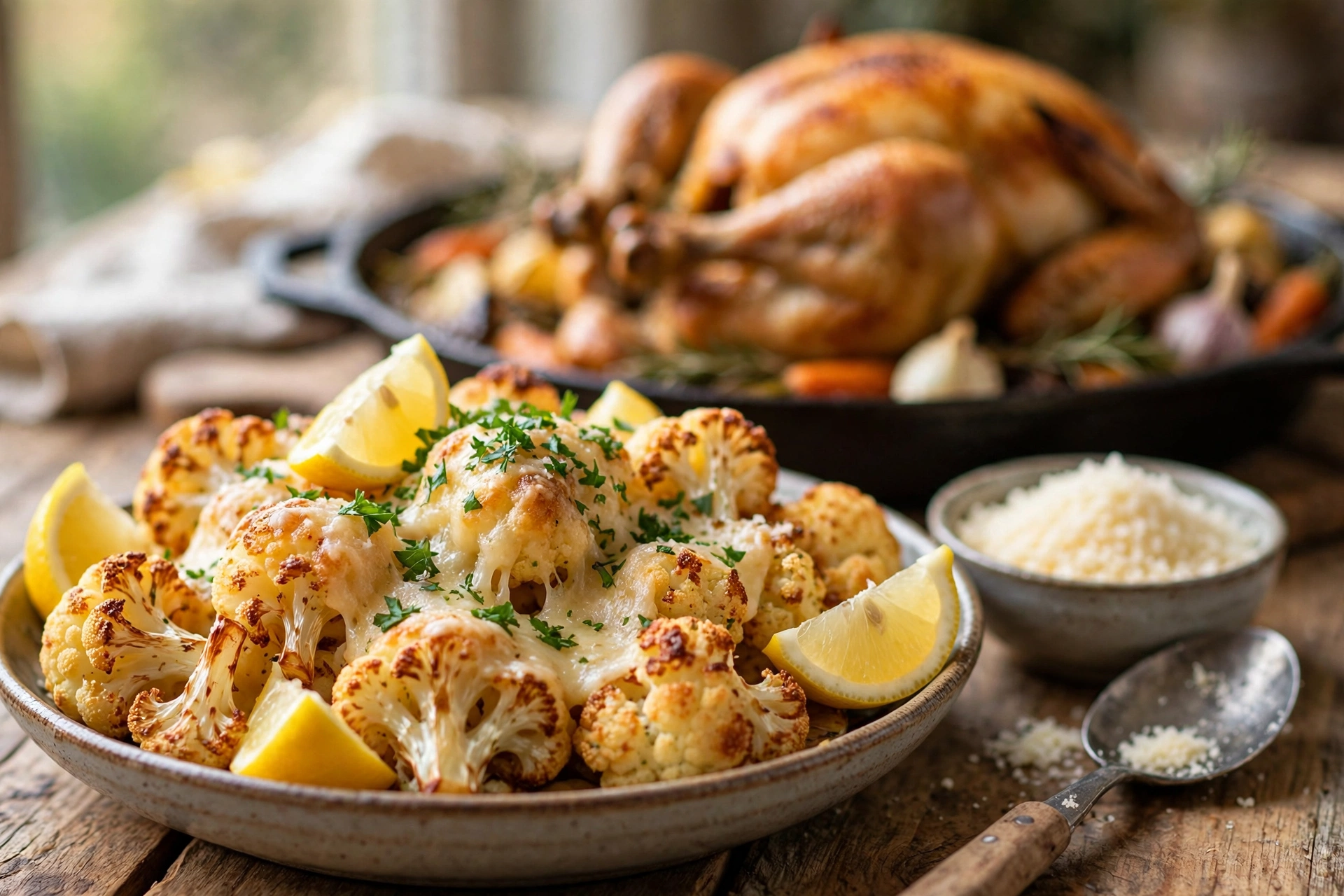
This easy parmesan roasted cauliflower is the kind of side dish that goes with almost everything. It is wonderful next to roast chicken or a holiday turkey, where its salty, crispy edges play beautifully against rich, savory meat. It is just as happy beside a simple weeknight dinner of grilled salmon or pork chops, and it turns a plain bowl of pasta into a proper meal.
For a vegetarian dinner, serve a big portion over a bed of rice or quinoa with a dollop of yogurt and a handful of toasted nuts. For a holiday table, it sits happily next to roasted garlic mashed potatoes and crispy garlic Parmesan roasted broccoli, giving guests two roasted vegetables with completely different personalities. And if you have leftovers, tuck them into a wrap with hummus, pile them onto a grain bowl, or chop them into an omelet the next morning. Few side dishes are this versatile.
Frequently Asked Questions
Can I use frozen cauliflower for this parmesan roasted cauliflower?
Yes, you can, but thaw the florets completely first and pat them very dry with clean kitchen towels. Frozen cauliflower releases much more water than fresh, so it needs that extra drying time plus about 5 more minutes in the oven at 425 degrees Fahrenheit. Fresh cauliflower still gives the crispest, most golden edges, so use fresh whenever you can.
Why did my roasted cauliflower turn out soggy?
Soggy roasted cauliflower almost always comes down to three things: a crowded pan, wet florets, or an oven that is not hot enough. Spread the florets in a single layer with space between them, dry them well after washing, and roast at 425 degrees Fahrenheit on a parchment-lined sheet pan. If the florets touch, they steam instead of roast, and no amount of extra time will crisp them up.
Can I make parmesan roasted cauliflower ahead of time?
Yes. Cut the cauliflower into florets and toss them with the oil and seasonings up to 24 hours ahead, then cover and refrigerate the bowl. Roast just before serving so the Parmesan crust stays crisp. Leftovers keep in the fridge for 3 to 4 days and reheat best in a 400 degree Fahrenheit oven for 8 to 10 minutes, which brings back some of the crunch.
Can I use pre-shredded Parmesan instead of freshly grated?
Yes, it works, but finely grated fresh Parmesan melts into a crisper, lacier crust. Pre-shredded Parmesan is coated to keep it from clumping, so it browns a little less evenly. Use the same 1/2 cup either way, and grate it fine if you have a block on hand.
Rate this recipe
Be the first to rate it!
2 thoughts on “Easy Parmesan Roasted Cauliflower”