
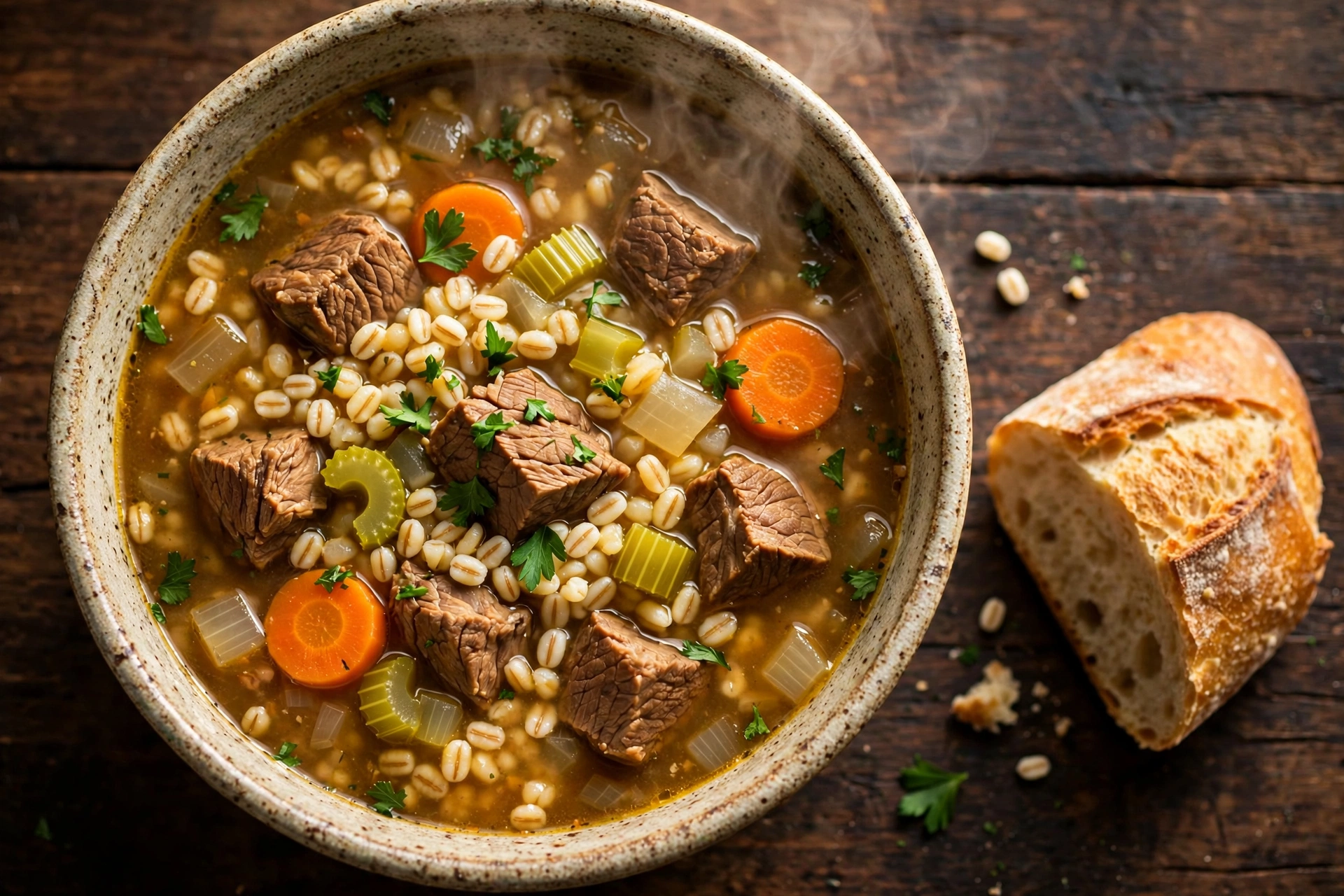
There are some dinners that practically cook themselves, and this slow cooker beef and barley soup is the best of them. You spend about 15 minutes in the morning browning beef and chopping vegetables, you tuck everything into the slow cooker, and about 7.5 hours later the whole house smells like a cozy country kitchen and dinner is ready. The beef turns so tender it shreds with a fork, the barley swells up plump and chewy, and the broth turns rich and golden from a full day of slow simmering.
This is the soup I make when the weather turns cold and I want dinner to feel like a warm blanket. It is hearty enough to be the whole meal, especially with a hunk of crusty bread for dunking, but it never feels heavy or greasy. The carrots go sweet, the celery stays gentle, the onion melts right into the broth, and the barley gives every spoonful a satisfying, nutty bite.
The magic here is time, not effort. A slow cooker on LOW holds the soup at a steady, gentle simmer for 7 to 8 hours, and that long, patient heat is exactly what tough stew beef needs. The connective tissue in the beef slowly breaks down into silky gelatin, which is why the meat turns fork-tender instead of chewy and why the broth tastes so much richer than anything you could rush on the stovetop. Barley loves the same treatment, soaking up the beefy broth as it cooks and turning plump and tender while thickening the soup just enough to feel substantial.
And here is the part that makes this recipe a weeknight hero even though it takes about 7.5 hours: almost none of that time is your time. Fifteen minutes of morning prep is all it asks, and the slow cooker does the other seven hours while you work or run errands. Set it up before you leave in the morning and walk back into a house that smells like dinner is already done, because it is.
If you love cozy soups, try this one alongside our Slow Cooker Beef Stew, a thicker, potato-packed cousin of this soup, and our Easy Creamy Potato Soup for another bowl that warms you from the inside out. For a cheesy weeknight option, our Easy Broccoli Cheddar Soup is ready in 30 minutes. But today, the slow cooker does the work.
Recipe at a Glance
- Prep time: 15 minutes
- Cook time: 7 to 8 hours on LOW (or 4 to 5 hours on HIGH)
- Total time: About 7.5 hours
- Servings: 6 servings (about 1 and 1/2 cups each)
- Method: Slow cooker
- Best served: Hot, with crusty bread for dunking
Why This Slow Cooker Beef and Barley Soup Works So Well
The first secret is browning the beef, and it is worth the ten minutes it takes. When beef hits a hot, oiled skillet, the outside sears into a deep brown crust, and that browning is the Maillard reaction at work, the same chemistry that makes toast taste better than plain bread. Those browned bits carry a huge amount of flavor, and when you pour a splash of broth into the hot pan and scrape them up, all of that flavor goes straight into the soup.
The second secret is the barley itself. Barley is one of the oldest cultivated grains in the world, and it was practically made for slow cooking. Pearl barley, the kind with the tough outer hull polished away, cooks up plump and tender with a pleasantly chewy bite, and it releases just enough starch to give the broth a silky body without turning the soup into porridge. Three-quarters of a cup might not look like much in the measuring cup, but barley nearly triples as it cooks, so it is exactly right for six hearty servings.
The third secret is the low, slow heat. A slow cooker on LOW keeps the soup gently simmering, never boiling hard, and that matters for two reasons. First, the beef stays tender instead of tightening up and turning tough, which is what happens when stew meat boils. Second, the flavors have hours to marry, so the finished soup tastes like one deep, unified thing instead of a pot of separate ingredients floating in broth.
Finally, the vegetables are cut with intent. The carrots are sliced into thick rounds so they stay sweet and distinct instead of dissolving into mush over seven hours, the celery is cut into chunky pieces for the same reason, and the onion is diced fine because it is meant to melt away and sweeten the broth.
Ingredients
- 1 and 1/2 pounds beef stew meat, cut into 1-inch cubes
- 1 teaspoon fine salt, plus more to taste
- 1/2 teaspoon black pepper, plus more to taste
- 2 tablespoons olive oil
- 1 medium yellow onion, diced
- 3 medium carrots, peeled and sliced into thick rounds
- 2 celery ribs, sliced into chunky pieces
- 4 garlic cloves, minced
- 2 tablespoons tomato paste
- 6 cups low-sodium beef broth
- 3/4 cup pearl barley, rinsed
- 2 bay leaves
- 1 teaspoon dried thyme
- 1/4 cup chopped fresh parsley, for serving
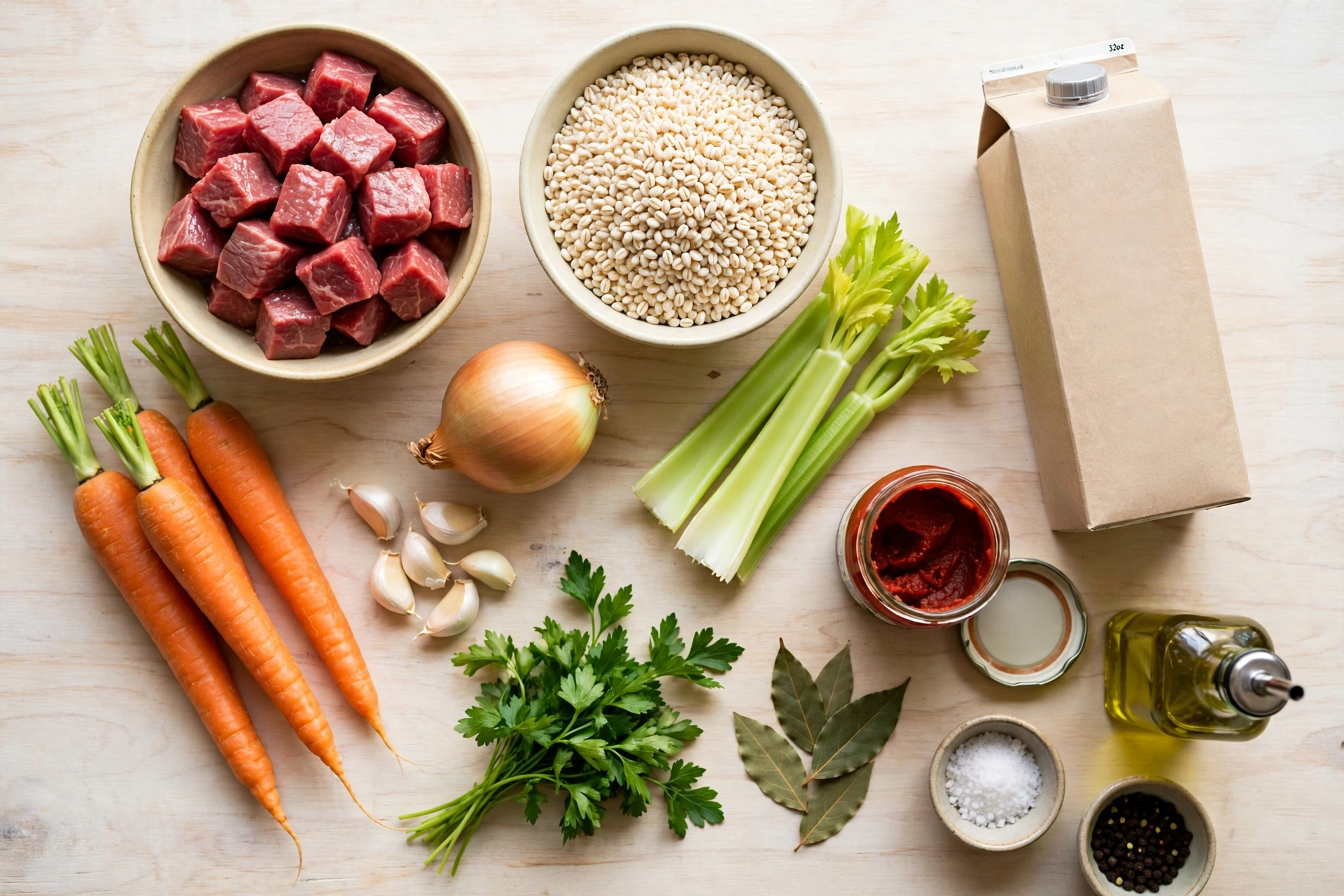
A word about the beef: look for beef stew meat, which is usually cut from the chuck, because chuck is full of the connective tissue that turns silky and tender over a long, slow cook. If your butcher only has a whole chuck roast, buy about 1 and 3/4 pounds and cut it into 1-inch cubes yourself, trimming off any big pieces of fat as you go. Avoid lean cuts like sirloin here. Lean beef dries out over a long cook, while chuck just gets more tender.
Use pearl barley, not quick-cooking barley and not hulled barley, for this recipe. Quick-cooking barley is pre-steamed and cut small, so it would turn to mush over 7 to 8 hours. Hulled barley still has its tough outer bran layer and needs a much longer cook than this recipe gives it. Pearl barley is the sweet spot, and you will find it in the rice and grains aisle of most grocery stores. Rinse it in a fine-mesh strainer before adding it, because that washes away surface dust and stray husks.
Low-sodium beef broth is the right call because the soup reduces a little and the flavors concentrate over seven hours, and regular broth can turn too salty by dinnertime. You can always add more salt at the end, but you cannot take it out. The tomato paste is a small amount with a big job: it deepens the color of the broth and adds a quiet, savory richness that makes the soup taste like it simmered even longer than it did.
Directions
Read through the steps once before you start. The morning prep moves quickly, and having the vegetables chopped and the slow cooker plugged in before you brown the beef keeps everything smooth.
- Season the beef. Pat the beef stew meat dry with paper towels, then season it all over with the salt and black pepper. Dry beef browns far better than wet beef, because moisture in the pan turns to steam and steams the meat instead of searing it. Take the extra thirty seconds to pat it dry. It matters.
- Brown the beef in batches. Heat the olive oil in a large skillet over medium-high heat until it shimmers. Add half the beef in a single layer, leaving space between the cubes, and sear for 2 to 3 minutes per side until deep golden brown on at least two sides. Move the browned beef to the slow cooker, then repeat with the second batch. Do not crowd the pan. Crowded beef steams instead of browning, and you lose all the flavor you are working for.
- Soften the onion and bloom the tomato paste. Turn the heat down to medium and add the diced onion to the same skillet, scraping up the browned bits from the bottom of the pan as the onion releases its moisture. Cook for 3 to 4 minutes until the onion is soft and translucent. Stir in the minced garlic and tomato paste and cook for 1 minute more, until the garlic smells fragrant and the tomato paste darkens a shade. This short bloom wakes up the tomato paste and takes away any raw, tinny edge.
- Deglaze the pan. Pour about 1 cup of the beef broth into the hot skillet and scrape the bottom firmly with a wooden spoon until every browned bit lifts off. Those bits are pure flavor, and leaving them stuck to the pan would be like throwing away the best part of the soup. Pour everything from the skillet into the slow cooker.
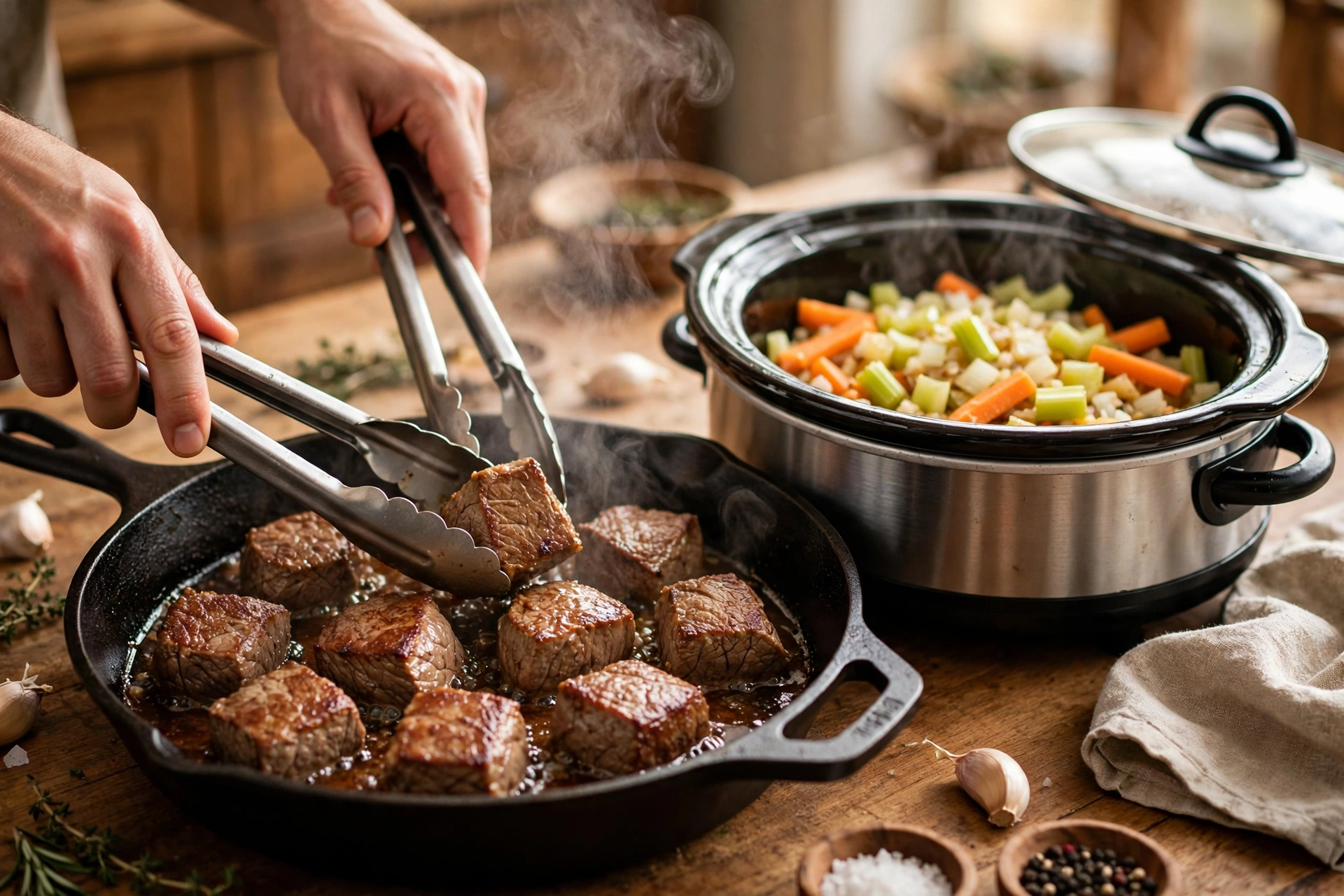
- Load the slow cooker. Add the sliced carrots, celery, pearl barley, bay leaves, and dried thyme to the slow cooker, then pour in the remaining 5 cups of beef broth. Stir everything together gently. The liquid should just cover the ingredients. If the beef and vegetables peek out above the broth, add up to 1 more cup of broth or water so everything cooks evenly.
- Cook low and slow. Cover with the lid and cook on LOW for 7 to 8 hours, until the beef shreds easily with a fork and the barley is plump and tender. Resist the urge to lift the lid and peek. Every time the lid comes off, heat escapes and the cook time stretches by 20 to 30 minutes. Trust the slow cooker and let it do its job. If you are short on time, cook on HIGH for 4 to 5 hours instead, but know that LOW gives the most tender beef and the richest broth.
- Check for doneness. The soup is done when the beef is completely fork-tender and shreds with almost no resistance, the barley is soft and chewy, and the carrots yield easily to a spoon. Beef cooked this long in a slow cooker reaches temperatures far above the 145°F safe minimum for beef, so doneness here is about texture, not temperature. If the beef still resists the fork, give it another 30 to 60 minutes on LOW.
- Season and serve. Fish out the bay leaves and discard them. Taste the soup and add more salt and black pepper as needed. Remember that the flavors concentrate as the soup sits, so season boldly but taste as you go. Ladle into warm bowls, sprinkle with fresh parsley, and serve hot with crusty bread.
Serving Ideas
The classic way to serve this soup is the simplest: a big warm bowl, a sprinkle of fresh parsley, and a thick slice of crusty bread for dunking. The bread is not optional in our house. It soaks up the rich broth, and there is something deeply satisfying about chasing the last spoonfuls of barley around the bowl with a piece of bread.
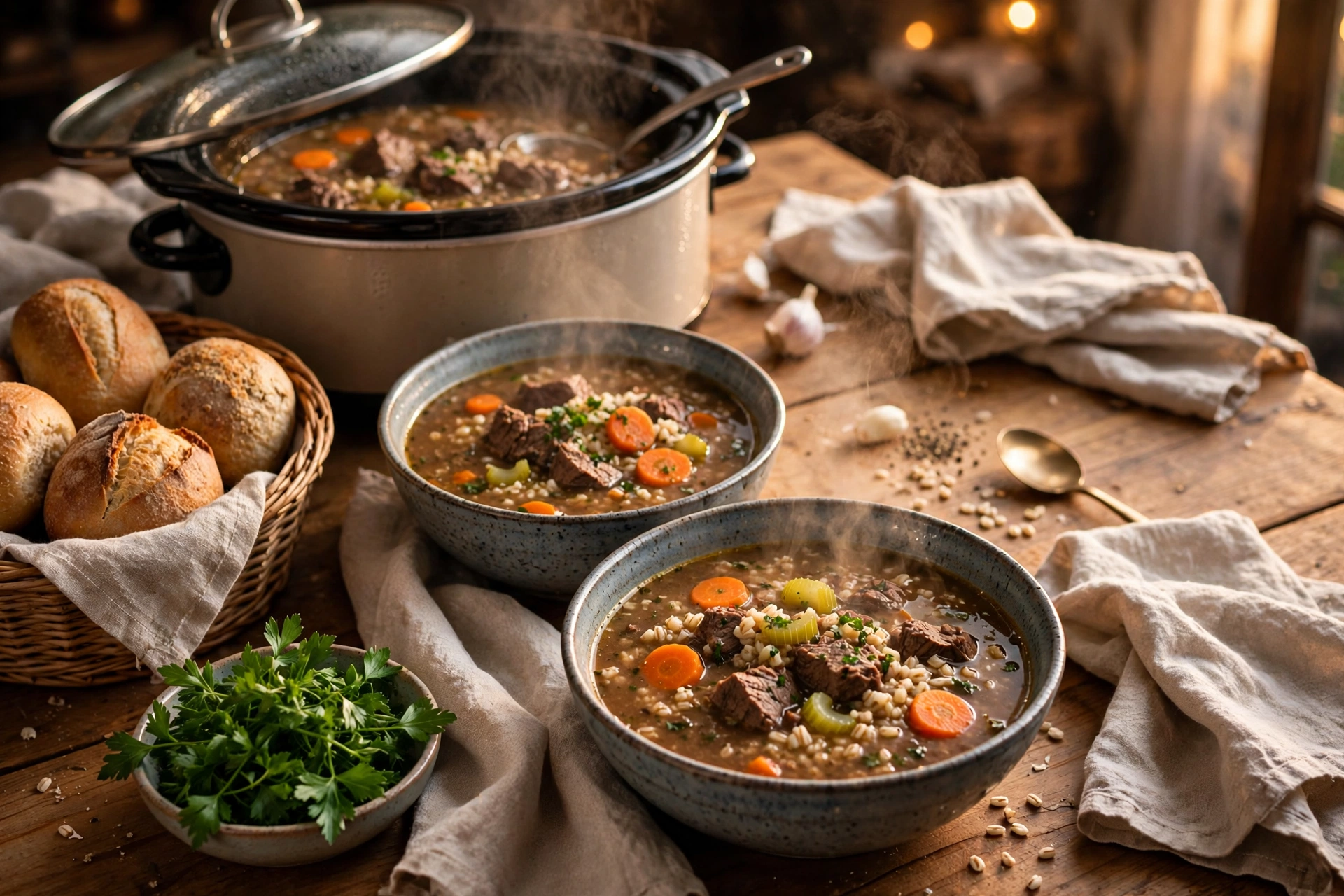
For a full family dinner, set the slow cooker right on the table with a ladle and let everyone serve themselves. Put out a basket of warm dinner rolls, a simple green salad with a sharp vinaigrette, and a wedge of cheddar or a crumble of parmesan for sprinkling over the top.
This soup also makes a wonderful lunch the next day, which is really when it shines. The barley continues to soak up broth overnight, so the flavors deepen and the soup tastes even heartier. Pack it in a thermos for a school or work lunch, and tuck a roll and an apple alongside it.
Pro Tips for the Best Beef and Barley Soup
Brown in batches, every time. It is tempting to dump all the beef into the skillet at once, but a crowded pan is the single biggest flavor mistake in this recipe. Beef needs space and high heat to brown. Two batches take ten minutes instead of five, and the difference in the finished soup is enormous.
Do not lift the lid. A slow cooker works by trapping steady heat and moisture, and every peek costs you 20 to 30 minutes of cooking time. Set the timer, walk away, and trust the process. The soup will be there when you come back, and it will be better for having been left alone.
Add the barley at the start, not the end. Pearl barley needs the full 7 to 8 hours to turn plump and tender while absorbing the beefy broth. Stirring it in late gives you crunchy, undercooked grains floating in thin soup.
Season at the end, not the beginning. The broth reduces and concentrates over a long cook, so salt added at the start tastes much stronger by dinnertime. Season the beef before browning, then hold off on adjusting the soup itself until the last step, when you can taste the finished soup and season it exactly right.
Common Mistakes and How to Fix Them
The beef is tough instead of tender. Tough beef in a slow cooker almost always means it needed more time, not less. Stew beef goes through a stubborn phase where it feels chewy before the connective tissue finally breaks down, and the only fix is patience. Give it another 30 to 60 minutes on LOW and test it again with a fork. Cooking on HIGH can also be the culprit, because high heat tightens the meat fibers, so stick with LOW for the full 7 to 8 hours next time.
The barley is mushy. Mushy barley usually means quick-cooking barley went into the pot instead of pearl barley, or the soup cooked much longer than 8 hours. Quick barley is pre-steamed and falls apart over a long cook. If your soup is already made and the barley has gone soft, there is no way to firm it back up, but the soup will still taste wonderful, just thicker and more porridge-like. Next time, check the bag: it should say pearl barley.
The soup is too thin. Barley thickens the soup as it cooks, so a thin soup usually means the barley was measured short or the lid was lifted too often, which lets steam escape and slows the barley down. For the pot you have now, stir in a spoonful of tomato paste and let it simmer with the lid off for 20 minutes, or mash a few spoonfuls of the cooked barley against the side of the pot and stir it back in. Both tricks add body without changing the flavor.
The soup is too thick the next day. This is not a mistake, it is just barley doing its job. The grains keep drinking up broth overnight, so leftover soup always thickens. Stir in a splash of beef broth or water when you reheat it, a little at a time, until it is back to the consistency you like. Taste and re-season after adding liquid, since the extra broth dilutes the salt.
The flavor is flat. A long, slow cook can round flavors off so much that the soup tastes muted. The fix is almost always acid or salt, not more cooking. Stir in a teaspoon of red wine vinegar or a squeeze of lemon juice at the end and taste again. That small splash of brightness wakes the whole pot up, and so does the fresh parsley, which adds a green, herbal lift right at the end.
Easy Substitutions
No beef stew meat? A chuck roast cut into 1-inch cubes is the best substitute, and honestly it is what stew meat is cut from anyway. In a pinch, you can use short ribs, cut into chunks, though you will want to skim a little more fat off the top at the end. Avoid lean cuts like sirloin or round steak, which dry out over a long cook.
No pearl barley? Farro makes a wonderful swap and holds its chewy bite even better than barley over 7 to 8 hours, though it gives the soup a slightly nuttier flavor. Brown rice works too, but add it for the last 2 hours only, because it turns mushy over a full cook. Do not use white rice or pasta in this recipe; both dissolve into the broth over seven hours.
No beef broth? Chicken broth works in a pinch, though the soup will taste lighter and less deeply beefy. Vegetable broth is also fine, and mushroom broth is a surprisingly good match because it adds its own savory depth. Whichever you use, choose low-sodium so you can control the salt at the end.
Want more vegetables? A cup of diced potatoes, a cup of frozen peas stirred in during the last 30 minutes, or a handful of sliced mushrooms added at the start all fit this soup beautifully. Just keep the total added vegetables to about 2 cups so the broth stays rich rather than watered down.
Gluten note: Barley contains gluten, so this soup is not gluten-free as written. If you need a gluten-free version, swap the barley for brown rice added in the last 2 hours, or for quinoa added in the last 30 minutes, and check that your broth is certified gluten-free.
Storage and Make-Ahead
This soup is one of those rare recipes that genuinely tastes better the next day. The barley keeps absorbing broth overnight and the flavors settle into each other, so if you can, make it a day ahead and reheat it gently.
Let the soup cool for no more than 2 hours at room temperature, then transfer it to airtight containers and refrigerate for up to 4 days. When you reheat it, add a splash of beef broth or water first, because the barley will have thickened the soup considerably overnight. Warm it gently over medium-low heat on the stovetop or in the microwave, stirring now and then, until it is steaming all the way through.
To freeze, let the soup cool completely, then ladle it into freezer-safe containers or bags, leaving about an inch of space at the top for expansion. It keeps well in the freezer for up to 3 months. Thaw overnight in the fridge, then reheat gently with a splash of broth. One honest note: the barley softens a little more after freezing and thawing, so the texture is slightly less chewy than fresh, but the flavor stays wonderful. For nutrition details on the ingredients in this soup, the USDA FoodData Central database is a reliable place to look up the foods you use most.
You can also prep the night before: chop the onion, carrots, and celery and store them in a covered container in the fridge, and cube and season the beef too. In the morning, all you have to do is brown the beef and load the slow cooker, which cuts the morning work down to about 10 minutes.
Frequently Asked Questions
Can I cook beef and barley soup on HIGH instead of LOW?
Yes. Cook it on HIGH for 4 to 5 hours instead of 7 to 8 hours on LOW, and the total time becomes about 4.5 hours instead of about 7.5 hours. The beef will still turn tender and the barley will still cook through, but LOW gives the most tender beef and the richest broth, so use HIGH only when you are short on time. Either way, the soup is done when the beef shreds easily with a fork.
Do I really need to brown the beef first?
Browning is strongly recommended but not strictly required. Searing the beef in a hot skillet builds deep, savory flavor through the Maillard reaction, and scraping up the browned bits from the pan adds richness to the broth that you cannot get any other way. If you skip it, the soup will still cook through and taste good, just lighter and less complex. If you are in a real rush, skip the browning and add the seasoned beef straight to the slow cooker, but try the browned version at least once so you can taste the difference.
Can I use quick-cooking barley in this soup?
No, not for the full cook. Quick-cooking barley is pre-steamed and cut small, so it turns to mush over 7 to 8 hours in the slow cooker. Use pearl barley, which holds its shape and turns plump and chewy over the long cook. If quick-cooking barley is all you have, cook the soup without it and stir it in during the last 30 minutes on HIGH, then check that it is tender before serving.
How long does beef and barley soup last in the fridge and freezer?
The soup keeps in the fridge for up to 4 days in an airtight container, and it freezes well for up to 3 months. Let it cool for no more than 2 hours at room temperature before refrigerating or freezing. The barley will keep absorbing broth as it sits, so stir in a splash of beef broth or water when you reheat it, and taste and re-season after adding the liquid. Reheat gently until the soup is steaming all the way through.
That is the whole recipe, and it is one of those quiet, reliable dinners that earns a permanent spot in the rotation. Fifteen minutes in the morning, about 7.5 hours in the slow cooker, and a pot of tender beef, plump barley, and rich golden broth waiting for you at dinnertime. Make it on a cold Sunday, make it for a busy Tuesday, make it for anyone who needs a warm bowl and a little comfort.
Rate this recipe
Be the first to rate it!