
There is a special kind of magic in a pan of pasta that smells like fresh basil and garlic at the same time. It is bright and cozy all at once: the butter melts, the garlic turns sweet and golden, the cream goes in, and then the pesto wakes the whole thing up with a fresh, herby spark. Our easy creamy pesto pasta is exactly that dinner. Penne twirled through a silky basil pesto cream sauce, showered with Parmesan and toasted pine nuts, with sweet little cherry tomatoes tucked in like jewels, on the table in 25 minutes flat.
Here is the best part: the whole thing comes together in one pot and one skillet, with about 10 minutes of toasting, chopping and measuring and 15 minutes of actual cooking. The penne boils while the sauce comes together right beside it, so by the time the pasta is done, dinner is basically done too. No oven, no baking dish, no waiting around for anything to brown. Just a big, sunny skillet of creamy green pasta that makes the whole kitchen smell like a little Italian garden.
This is the kind of weeknight dinner that earns a permanent spot in the rotation. It is rich enough to feel like a treat, fresh enough to never feel heavy, and quick enough for a Tuesday. Kids love it because it tastes buttery and cheesy with a gentle basil sweetness. Grown-ups love it because it is a real dinner with real flavor that took almost no effort. And you will love it because the ingredient list is short, the steps are simple, and the leftovers — if there are any — reheat beautifully for lunch the next day.
If your family already has a soft spot for creamy pasta nights, this one fits right in alongside our easy creamy lemon garlic pasta and our easy creamy tomato pasta. And if the creamy sauce is what hooked you, our easy creamy garlic butter noodles are just as quick on a busy night, and they use the same one-skillet trick.
One more thing before we start: this recipe is built for real weeknights, not perfect ones. The pesto can be the jar from the fridge or the tub from the deli counter. The Parmesan can be the wedge you meant to use last week. The basil can be the bunch that is slightly less perky than it was on Sunday. Nothing here needs to be fancy or freshly bought to turn out beautifully, and if the baby is crying or the homework needs checking, the sauce will wait on low heat for a few minutes without any complaint. That is the whole point of a 25-minute dinner: it bends around your evening instead of demanding that your evening bend around it.
Recipe at a Glance
- Prep Time: 10 minutes
- Cook Time: 15 minutes
- Total Time: 25 minutes
- Serves: 4
- Ingredients: 12
- Course: Dinner
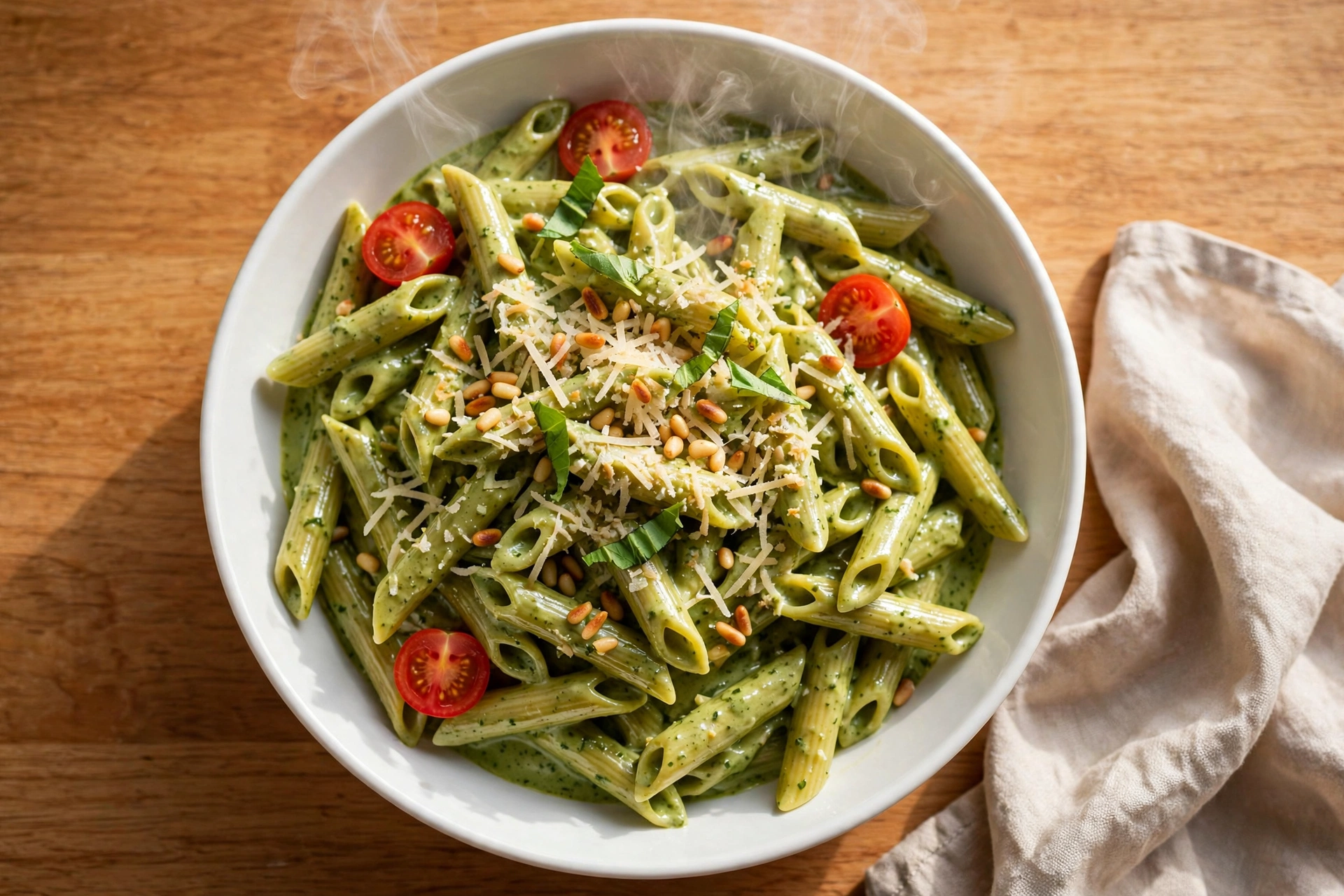
Why You Will Love This Creamy Pesto Pasta
Some recipes ask you to choose between fast and delicious. This one refuses. The sauce is built from butter, cream, Parmesan and a generous cup of basil pesto, which means it turns thick and glossy in minutes with no flour, no roux, and no long simmer. The pesto brings a fresh, herby brightness that cuts through the richness so the pasta never feels heavy, and the cherry tomatoes stirred in at the very end pop with a sweet little burst in every few bites.
It is also a wonderfully forgiving recipe. The sauce is hard to break, the pasta finishes cooking in the skillet so it soaks up flavor, and the ingredient list is made of things you probably already have or can grab on one quick store run. This is weeknight cooking the way it should be: fast, warm, and just a little bit green and garden-fresh.
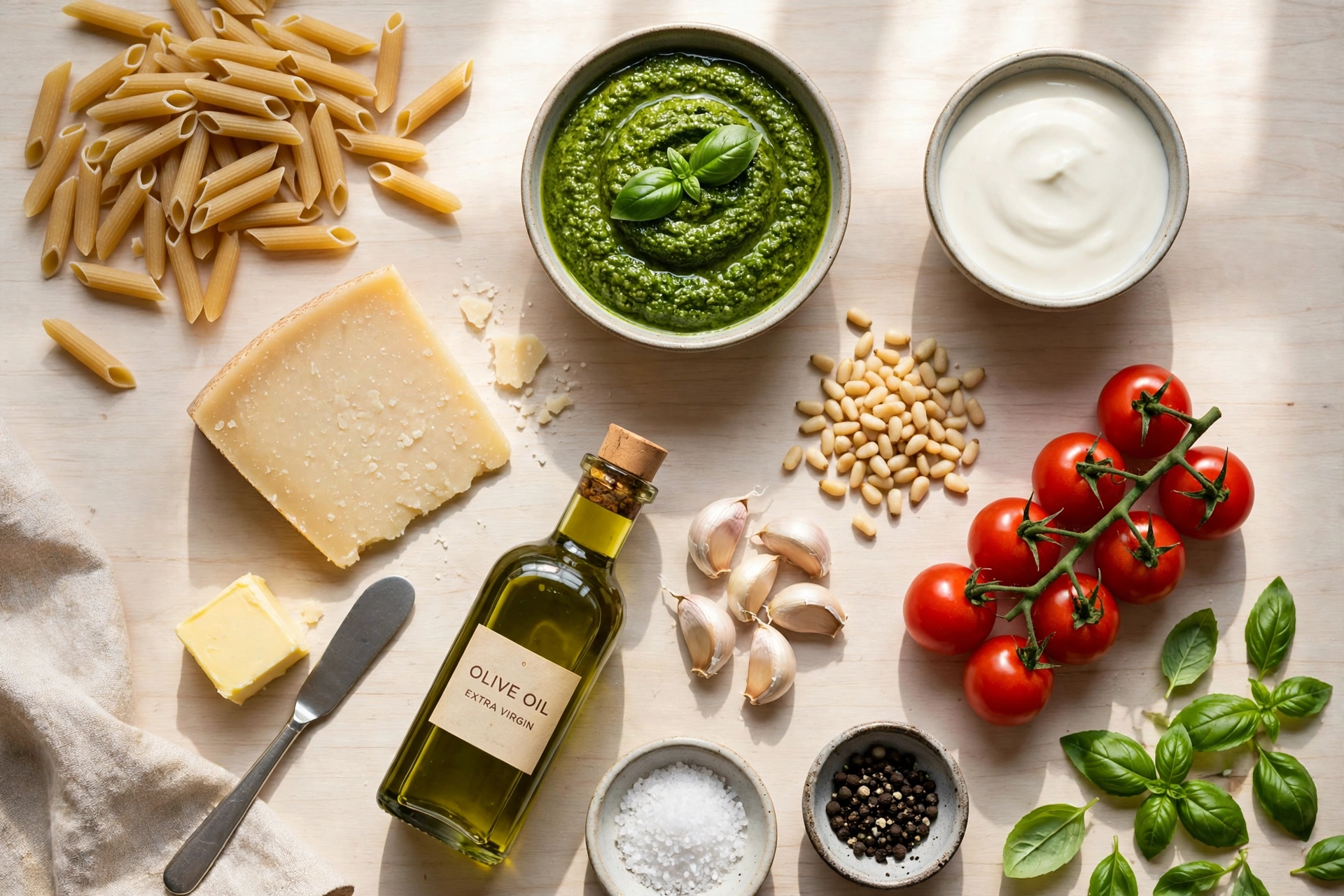
Ingredients
Everything below serves 4 generous portions. If you are cooking for two, halve the recipe and use a smaller skillet; if you are feeding a crowd, double it and use your biggest pan so the pasta has room to toss.
- 12 oz penne pasta
- 1 cup basil pesto (store-bought or homemade)
- 1 cup heavy cream (or half-and-half)
- 3/4 cup freshly grated Parmesan cheese, plus more for serving
- 2 tablespoons unsalted butter
- 1 tablespoon olive oil
- 3 cloves garlic, minced
- 1 cup cherry tomatoes, halved
- 1/2 teaspoon kosher salt, plus more for the pasta water
- 1/4 teaspoon black pepper
- 1/4 cup toasted pine nuts
- 1/4 cup torn fresh basil leaves, plus more for serving
Choosing Your Pesto
The pesto is the star of this pasta, and the jar you pick matters more than anything else in the recipe. A good basil pesto should taste like fresh basil first, with garlic, Parmesan, pine nuts and olive oil backing it up. The refrigerated tubs from the deli or produce section are usually the brightest and freshest-tasting, while shelf-stable jars vary a lot: some are wonderful, some taste mostly of oil. Taste a spoonful before you cook with it. If it tastes flat, a squeeze of lemon and an extra pinch of salt will wake it right up.
If you have a food processor and a bunch of basil, homemade pesto takes about 5 minutes and is unbeatable here, but this recipe was written for the jar, and it shows. Pesto has been made in Genoa for centuries from basil, garlic, pine nuts, Parmesan and olive oil pounded together, and that classic combination is exactly why it melts so happily into warm cream. Whichever pesto you use, keep it at room temperature for 10 minutes before it goes in the pan; cold pesto straight from the fridge can make the sauce seize up and look grainy for a minute before it relaxes.
Directions
- Toast the pine nuts and grate the Parmesan (3 minutes). Toast the pine nuts in a dry skillet over medium heat for 2 to 3 minutes, shaking the pan often, until they turn golden and smell nutty. Watch them closely: pine nuts go from pale to burnt in seconds. Tip them onto a plate right away so they stop cooking. Grate the Parmesan fresh if you can; it melts far more smoothly than the pre-grated kind.
- Halve the tomatoes and mince the garlic (4 minutes). Cut the cherry tomatoes in half and set them aside for the end. Mince the garlic and tear the basil leaves. Everything should be within arm’s reach before the stove turns on, because once the garlic hits the butter, this recipe moves fast.
- Measure the pesto and cream (3 minutes). Measure out the pesto and the heavy cream and set the butter beside the stove. Put the pasta pot on to boil now, before you do anything else. Room-temperature pesto stirs into the sauce far more smoothly than a cold tub straight from the fridge.
- Boil the penne (9 minutes). Bring a large pot of generously salted water to a rolling boil and cook the penne for 1 minute less than the package directions, usually about 9 minutes. Before draining, scoop out 1 cup of the starchy pasta water and set it aside; it is liquid gold for loosening the sauce later. Drain the pasta and set it aside.
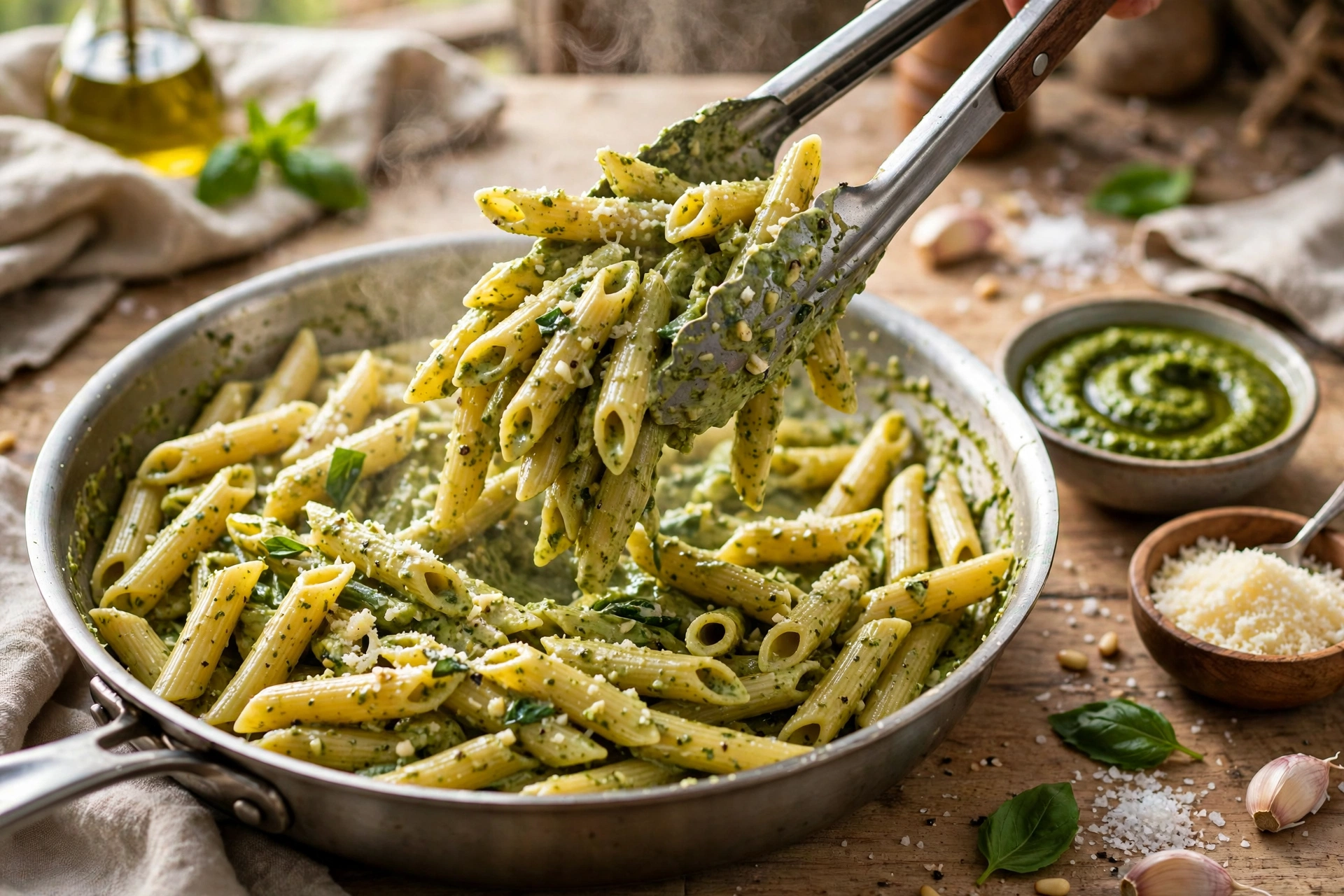
- Melt the butter and bloom the garlic (2 minutes). While the pasta cooks, melt the butter with the olive oil in a large, deep skillet over medium heat. Add the garlic and cook for just 30 seconds, until it smells sweet and fragrant. Blooming the garlic in butter first sweetens it and gives the sauce a warm, savory base that plain pesto alone cannot build.
- Build the pesto cream sauce (2 minutes). Pour in the heavy cream and let it come to a lazy simmer, about 1 minute. Stir in the pesto, Parmesan, salt, and black pepper, and stir until the Parmesan melts in. Keep the heat at medium or a touch below: the sauce should simmer lazily, never boil hard, or the cheese can turn grainy and the basil can lose its bright green color.
- Toss it all together (2 minutes). Add the drained penne to the skillet and toss everything together so every tube is coated, then fold in the cherry tomatoes and half the basil. If the sauce feels too thick, splash in a little of the reserved pasta water, a few tablespoons at a time, until it clings to the pasta like a silk scarf. The sauce should coat the back of a spoon and slide slowly off, never runny and never stiff.
- Taste, adjust, and serve. Taste a bite and adjust: a pinch more salt if it tastes flat, another spoonful of pesto if it tastes too mild, an extra spoonful of pasta water if it has thickened while you were deciding. Serve right away in warm bowls with the toasted pine nuts, the rest of the basil, and extra Parmesan on top.
Why This Works
Every step in this recipe has a reason, and knowing the reasons is what turns a good pasta into a great one. First, blooming the garlic in butter before anything else goes in the pan: fat carries flavor, and 30 seconds in warm butter is enough to sweeten the garlic and build a savory base under the pesto. Any longer and garlic turns bitter fast, which is why it goes in alone and the cream follows immediately.
Second, the pesto is split into two jobs on purpose. Most of it goes into the sauce, where its basil oils bloom in the warm cream and spread through the whole pan. But the fresh basil leaves torn over the top at the end are a second, brighter layer of basil flavor that never touched the heat, so the finished bowl smells like a garden instead of just tasting like one. Sauce basil for depth, fresh basil for brightness: that is the whole trick.
Third, the Parmesan does double duty. It is not just there for flavor; it is the thickener that turns the cream and pesto into a sauce that clings. Freshly grated Parmesan melts into the warm cream and helps the sauce coat every tube, which is why this sauce turns glossy with almost no effort. Adding it over gentle heat, a little at a time, is the small step that keeps it silky instead of grainy.
Fourth, the pasta finishes in the sauce, not just beside it. Cooking the penne 1 minute shy of al dente and tossing it in the skillet for the last 2 minutes lets the pasta absorb a little of the sauce as it finishes cooking, so the flavor runs all the way through instead of sitting on top. The reserved pasta water helps here too: its starch loosens the sauce just enough to coat every tube without thinning the flavor.
Finally, the tomatoes and pine nuts are there for contrast, not decoration. The cherry tomatoes go in at the very end so they stay bright and juicy instead of cooking down into the sauce, and their sweet pop cuts through the richness in every few bites. The toasted pine nuts add a buttery crunch that makes the whole bowl feel finished. If you like knowing what is in your food, the USDA FoodData Central database has the full nutritional profile for basil, pine nuts and Parmesan, and it is a handy way to see exactly what the ingredients in your dinner bring to the table.
Pro Tips
- Start the pasta water first. Put the pot on before you do anything else, and build the sauce in the skillet while the penne boils. The two pans run side by side, which is how the whole dinner lands in 25 minutes.
- Salt the pasta water like the sea. The pasta absorbs that water as it cooks, so well-salted water seasons the penne from the inside out. Unsalted pasta water makes even the best sauce taste a little flat.
- Always reserve the pasta water before draining. It is the easiest fix in the kitchen: a few spoonfuls loosen a thick sauce, help it cling to the pasta, and rescue a pan that tightened up while you were setting the table. Scoop it out before you drain, because once it is down the sink, it is gone.
- Toast the pine nuts first. Raw pine nuts taste waxy and dull; two minutes in a dry skillet turns them golden, buttery and fragrant. Tip them out the second they color, because they keep cooking in the hot pan.
- Grate the Parmesan yourself. Pre-grated Parmesan is coated to keep it from clumping in the bag, and that coating keeps it from melting smoothly in a sauce. A small wedge and a box grater take 2 minutes and the difference is obvious.
- Keep the sauce at a lazy simmer. Once the Parmesan and pesto go in, medium-low heat is your friend. A hard boil can make cheese sauces grainy and turn the pesto dull, while a gentle simmer keeps everything silky and bright green.
- Do not rinse the pasta. That cloudy starch clinging to the drained penne is exactly what helps the sauce grab hold. Rinsing washes it away and leaves the pasta slippery, so the sauce slides off instead of coating every tube.
- Warm your bowls. Cream sauces tighten up fast in a cold bowl. A quick rinse of each bowl under hot tap water, dried just before serving, keeps the pasta silky for the whole meal instead of just the first two minutes.
Common Mistakes and How to Fix Them
The sauce is too thin. This usually means the Parmesan did not fully melt in, or the pasta brought extra water with it. Let the sauce simmer for another 1 to 2 minutes, stirring gently, and it will thicken as the cream reduces. If it still looks loose, a spoonful of extra Parmesan stirred in off the heat will tighten it right up.
The sauce tastes bitter. The garlic browned too far before the cream went in. Garlic goes from sweet to bitter in seconds once it browns, and there is no fixing burnt garlic: start that step over with fresh butter and fresh garlic; it only costs a minute and saves the whole pan. Next time, keep the garlic moving in the pan and add the cream the moment it smells sweet.
The sauce looks grainy. The heat was too high when the Parmesan went in, or the pesto went in straight from the fridge. Take the skillet off the burner, add a splash of the reserved pasta water, and stir steadily for 30 seconds. The sauce usually smooths out as it cools slightly. Next time, add the Parmesan over low heat and let the pesto come to room temperature first.
The pesto flavor is too mild. Some jarred pestos are shy on basil. Next time, taste the pesto before you cook and stir in an extra spoonful, plus a squeeze of lemon and a pinch of salt. For the pan in front of you, fold in another spoonful of pesto off the heat and top each bowl with extra torn basil.
The pasta is mushy. It cooked too long before it hit the skillet. Remember that the penne keeps cooking for 2 minutes in the hot sauce, so pulling it 1 minute shy of al dente is not a suggestion, it is the whole trick. Set a timer; pasta waits for no one.
Substitutions
- Pasta shape: Fusilli, rotini, or farfalle all work beautifully. Short shapes with ridges and twists catch this sauce best; long shapes like spaghetti or linguine work too, but they hold less of the creamy pesto in every bite.
- Heavy cream: Half-and-half is the easiest swap and is already listed in the recipe. Whole milk works as well, but add an extra spoonful of Parmesan so the sauce still turns thick and glossy.
- Butter: Salted butter works fine; just cut the added kosher salt back to 1/4 teaspoon and taste before adding more.
- Parmesan: Pecorino Romano is a saltier, sharper cousin that melts just as well; use a little less salt if you swap it in.
- Pine nuts: Toasted walnuts or slivered almonds are a fine swap and cost far less. Sunflower seeds work too if there is a nut allergy at the table; just toast them the same way.
- Make it heartier: Stir in shredded rotisserie chicken, a can of drained white beans, or quickly sautéed shrimp in the last 2 minutes for extra protein without changing the timing.
- Make it a little lighter: Use half-and-half instead of cream and cut the butter to 1 tablespoon. The sauce will be a touch thinner, so let it simmer an extra minute before the pasta goes in.
Storage and Make-Ahead
Let the pasta cool for no more than 2 hours at room temperature, then pack it into an airtight container and refrigerate for 3 to 4 days. The sauce thickens as it sits, which is completely normal. To reheat, warm it gently in a skillet over low heat with a splash of milk or cream, stirring often, until it is hot all the way through. The microwave works in a pinch: reheat in 30-second bursts, stirring between each one, with a spoonful of milk to loosen the sauce. A few fresh basil leaves over the reheated pasta bring the brightness right back.
You can also make the sauce a day ahead: cook it through step 6, cool it, and refrigerate it in a covered container. When dinner time comes, boil the pasta fresh, warm the sauce gently, and toss them together with the tomatoes and basil. Fresh pasta with a made-ahead sauce tastes just as good as the all-at-once version and makes a busy evening even easier.
Freezing is not recommended for this one. Cream and Parmesan sauces tend to separate and turn grainy when frozen and thawed, and the basil loses its bright green color, so the texture never quite comes back. The fridge life of 3 to 4 days covers a whole week of lunches, so freeze nothing and enjoy the leftovers instead.
Serving Ideas
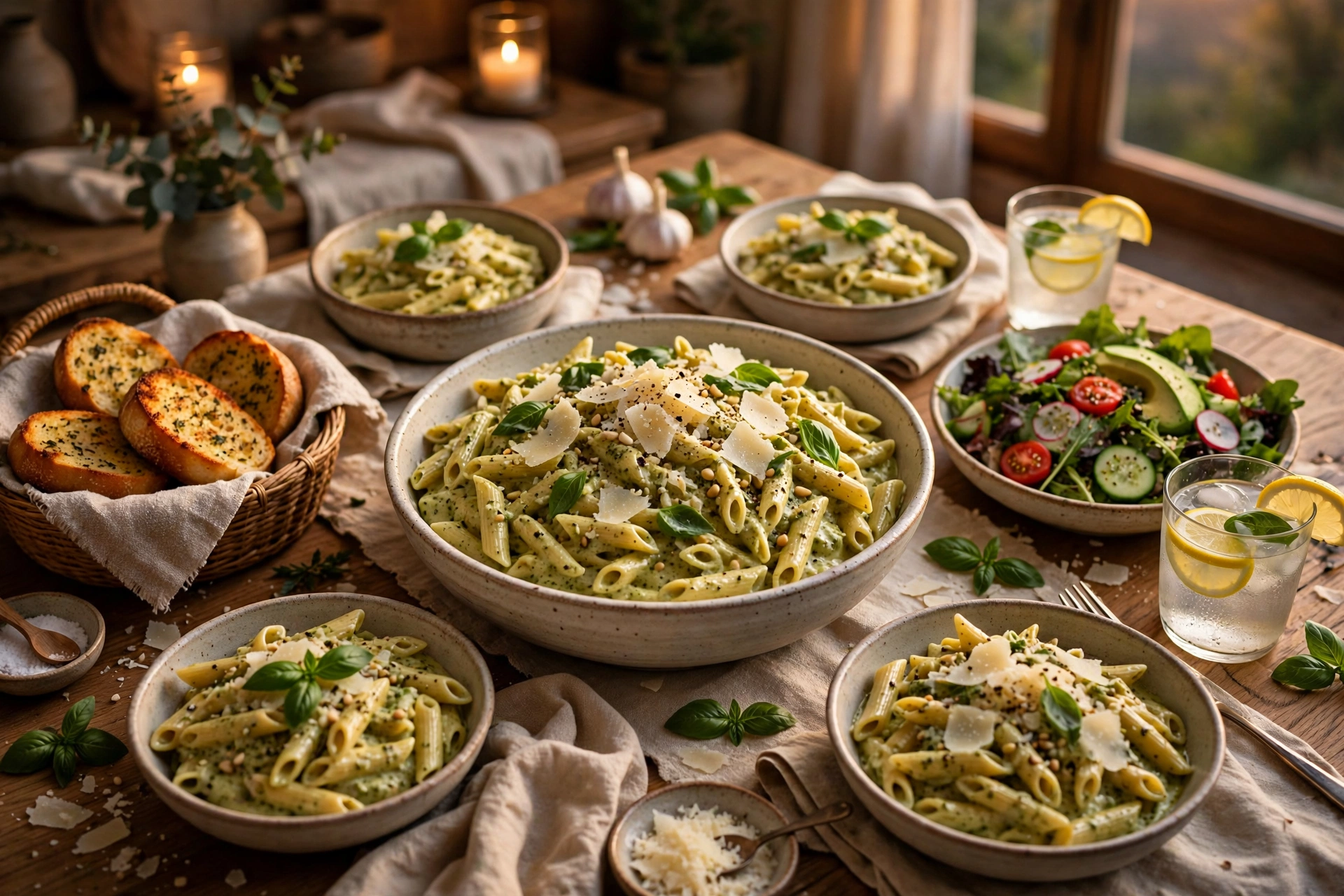
This pasta is a full dinner all by itself, but a couple of simple sides turn it into a real occasion. Warm, crusty garlic bread is the obvious partner: it is made for mopping up the last of the sauce, and nobody at the table will leave a drop behind. A simple green salad with lemon and olive oil keeps things bright and gives the plate a fresh crunch. Roasted asparagus or green beans add color and another vegetable without any extra effort. And a few lemon wedges on the table let everyone brighten their own bowl exactly the way they like it.
For a bigger spread, serve it family-style in the middle of the table with the bread basket and the salad bowl, and let everyone help themselves. That is how this pasta tastes best: passed around, second helpings encouraged, and the skillet scraped clean before anyone thinks about dessert.
Frequently Asked Questions
Can I use jarred pesto for creamy pesto pasta?
Yes, jarred basil pesto works beautifully in this recipe and is what it was written for. The refrigerated tubs from the deli or produce section usually taste the brightest, while shelf-stable jars vary more, so taste a spoonful first. If the pesto tastes flat, add a squeeze of lemon and a pinch of salt to wake it up. Use the same 1 cup either way, and let the pesto sit out for 10 minutes so it is not fridge-cold when it hits the sauce.
Can I make creamy pesto pasta ahead of time?
Yes, up to 2 days ahead. Cook the pasta and sauce, combine them, and store the finished pasta in an airtight container in the fridge. Reheat it gently in a skillet over low heat with a splash of milk or cream, stirring often, until it is hot all the way through. The sauce thickens as it sits, so the extra liquid brings it back to silky. And since the whole recipe only takes 25 minutes from start to finish, making it fresh is nearly as fast as reheating it.
What can I use instead of heavy cream in pesto pasta?
Half-and-half is the easiest swap and is already listed in the recipe. Whole milk works too, but add an extra spoonful of Parmesan so the sauce still turns thick and glossy. Avoid skim milk, which is too thin to coat the pasta and can split when it simmers.
Can I add chicken or shrimp to creamy pesto pasta?
Yes, both work beautifully. Stir in shredded rotisserie chicken or sliced grilled chicken with the pasta in step 7 so it heats through in the sauce. For shrimp, saute peeled shrimp in the skillet for 2 minutes before the garlic goes in, set them aside, and stir them back in at the end. Either way the timing stays at 25 minutes, and the basil pesto sauce flatters both.
Rate this recipe
Be the first to rate it!