
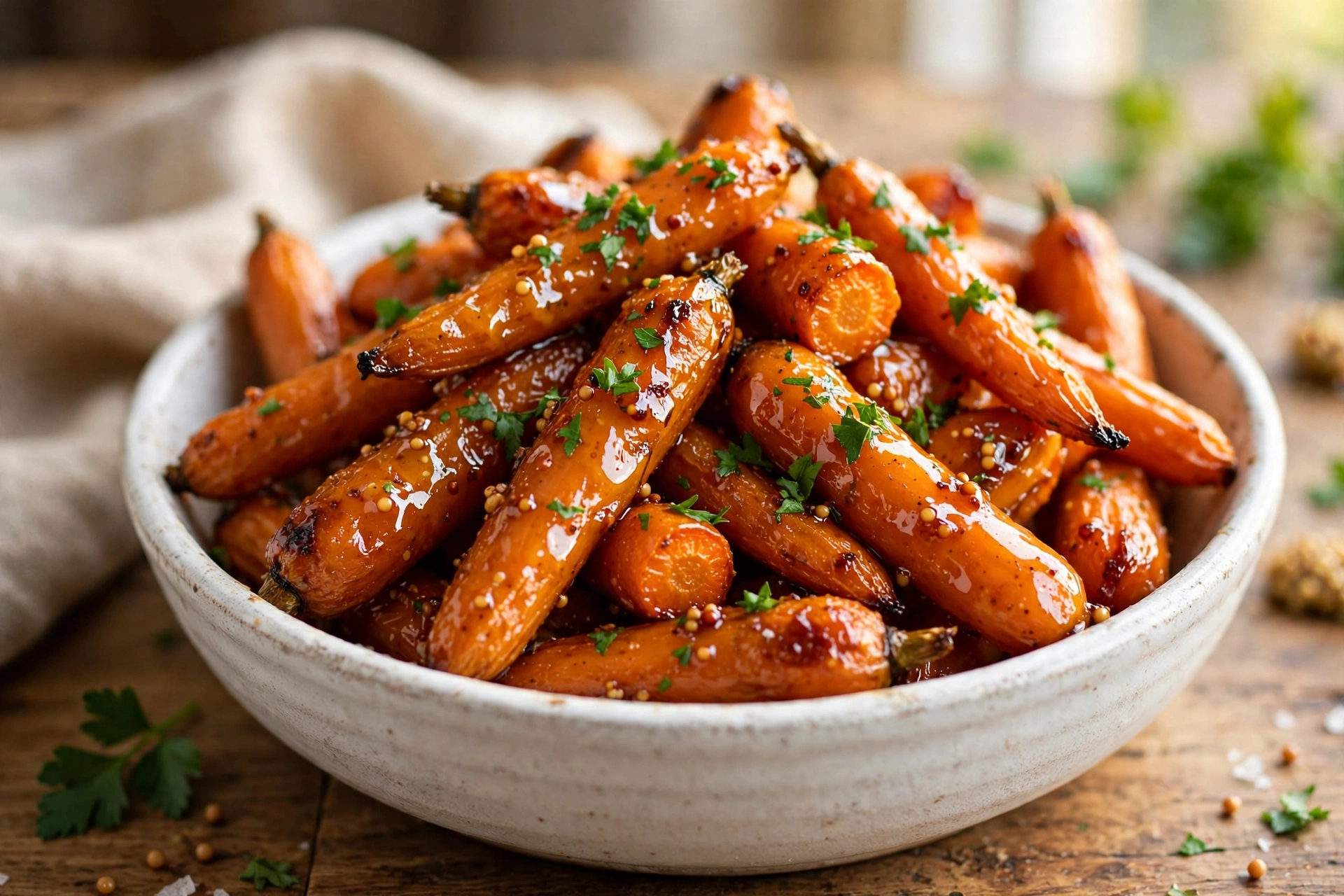
Some side dishes just sit quietly on the plate, doing their job and nothing more. These Easy Honey Mustard Roasted Carrots are not that kind of side dish. They come out of the oven glossy and golden, sticky at the edges, sweet in the middle with a little mustardy kick, and they have a habit of disappearing before the main course is even served. If your family usually pushes carrots to the side of the plate, this is the recipe that changes their mind.
The whole thing takes 35 minutes from start to finish, and most of that is oven time while you get on with the rest of dinner. You whisk together a simple glaze of honey, Dijon mustard, olive oil and a splash of apple cider vinegar, toss it with the carrots, and let a hot oven do the magic. The honey caramelizes into those dark golden edges, the Dijon keeps the sweetness in check, and the garlic turns soft and mellow. It is the kind of easy side dish that makes a plain weeknight dinner feel like you tried much harder than you did.
Recipe at a Glance
- Prep time: 10 minutes
- Cook time: 25 minutes
- Total time: 35 minutes
- Servings: 4 servings
- Course: Side dish
- Cuisine: American, family-friendly
- Method: Roasted in the oven at 425°F (220°C)
Why You’ll Love It
First, it is genuinely fast. Ten minutes of peeling, whisking and tossing, then the oven takes over for 25 minutes. There is no babysitting, no complicated technique, and no pile of washing up afterwards. One bowl, one sheet pan, one happy family.
Second, the flavor is the kind everyone agrees on. The honey brings sweetness, the Dijon brings a gentle tang, the vinegar brightens the whole thing, and the garlic adds a warm savory note underneath. Kids love the sticky sweetness, grown-ups love that it is not one-note, and the caramelized edges give every bite a little crunch before the soft, sweet middle. It is a side dish that works just as well next to a Sunday roast as it does next to chicken nuggets on a busy Tuesday.
Third, it is endlessly useful. Make it for a holiday table, a potluck, a lunchbox side, or a quiet dinner for two with the quantities halved. The carrots hold up beautifully, they reheat well, and they look gorgeous on the plate with almost no effort at all. If you are building a little collection of reliable roasted vegetables, this one earns its place fast, right next to our Easy Roasted Sweet Potato Wedges, which use the same high-heat roasting trick for crispy edges.
Choosing the Best Carrots
Good roasted carrots start at the shop, and the choice you make there decides how sweet the finished dish tastes. Look for carrots that are firm and smooth, with a bright orange color and no soft spots or cracks. Slim to medium carrots roast the most evenly, because very thick ones take longer to cook through and can stay firm in the middle while the glaze darkens. If you can only find thick carrots, just halve them lengthwise and cut them a little thinner than you think you need. They shrink slightly as they roast, so a stick that looks generous raw comes out just right.
Fresh carrots with their green tops still attached are usually the sweetest and freshest, and they make a beautiful photo, but ordinary bagged carrots work perfectly well in this recipe. If you buy them with tops, twist the greens off as soon as you get home, because the tops keep pulling moisture out of the roots. Rainbow carrots are a lovely swap if you spot them. Purple, yellow and white carrots roast in exactly the same time and glaze, and the mixed colors look stunning on a holiday table. Just know that purple carrots can stain the glaze a little, which is harmless and rather pretty.
One thing worth knowing is that carrots are naturally sweet, and roasting concentrates that sweetness as moisture evaporates. That is why the glaze works with so little honey. The USDA FoodData Central entry for carrots shows what is in them, but what matters at the stove is simpler. Pick firm, bright carrots, cut them evenly, and the oven does the rest.
Ingredients
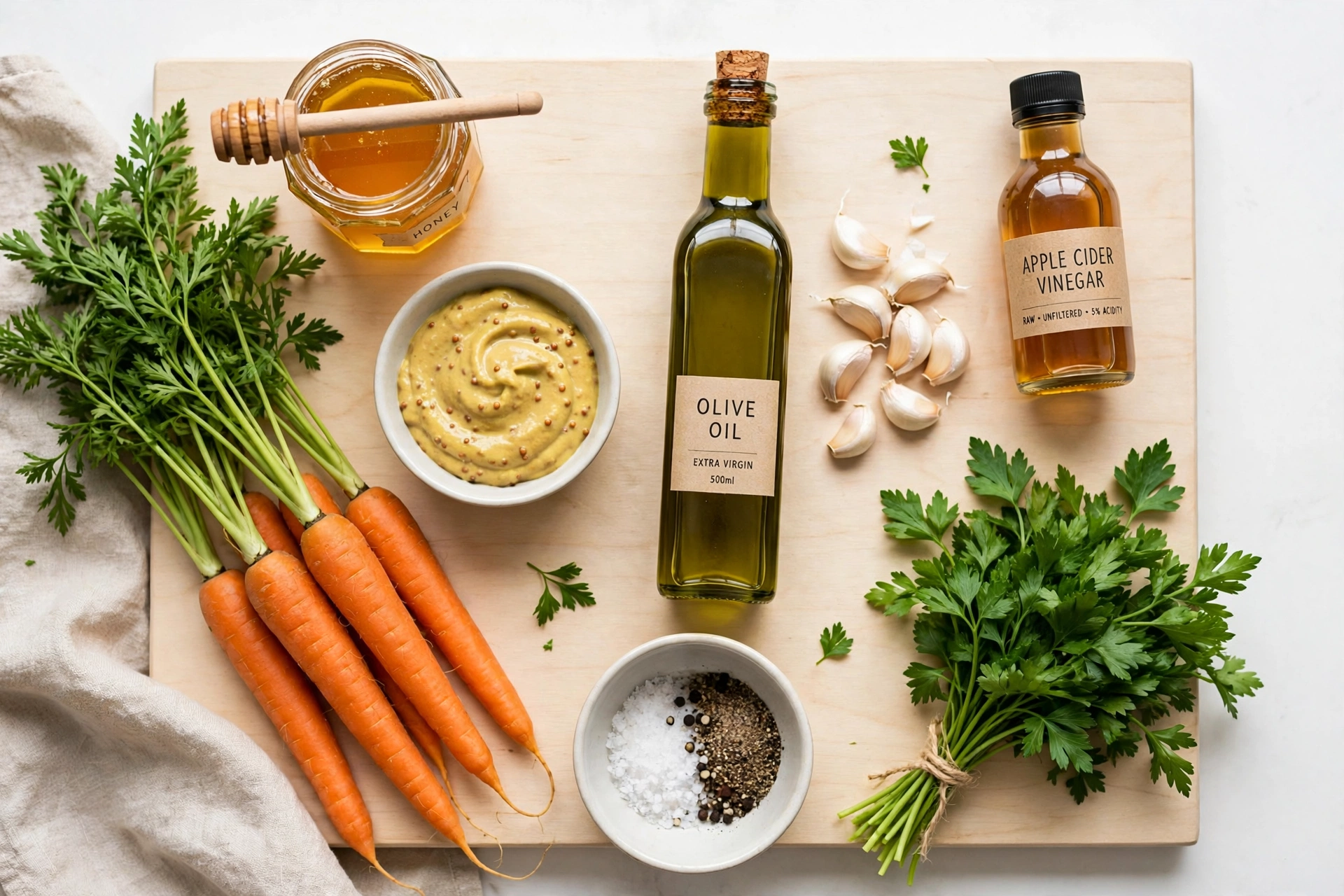
- 2 lb carrots (about 8 medium carrots), peeled and cut into sticks or halved lengthwise
- 3 tablespoons honey
- 2 tablespoons Dijon mustard
- 2 tablespoons olive oil
- 1 tablespoon apple cider vinegar
- 2 garlic cloves, minced
- 1/2 teaspoon fine sea salt
- 1/4 teaspoon black pepper
- 2 tablespoons fresh parsley, chopped, for garnish
- Flaky sea salt, to finish
- Parchment paper, for lining the sheet pan
Directions
- Preheat the oven and line the pan (2 minutes). Heat the oven to 425°F (220°C) and line a large rimmed sheet pan with parchment paper. A hot oven is the whole secret here, so give it the full time to come up to temperature before the carrots go in. A lukewarm oven steams carrots instead of roasting them, and steamed carrots never get those golden edges.
- Peel and cut the carrots (5 minutes). Peel the carrots and cut them into sticks about 1/2 inch thick, or halve them lengthwise if they are slim. The key is keeping every piece roughly the same size so they all finish at the same time. If some pieces are much thicker than others, cut the thick ones in half again. Thick ends and thin tips cook at different speeds, and even sizing is what saves you from a pan that is half burnt and half raw.
- Whisk the honey mustard glaze (3 minutes). In a large bowl, whisk together the honey, Dijon mustard, olive oil, apple cider vinegar, minced garlic, salt and black pepper until smooth and glossy. Taste it if you like. It should be sweet first, tangy second, with a gentle warmth from the garlic. If your honey is thick and slow to pour, warm it for a few seconds so it blends easily. Honey mustard is a classic pairing for a reason, and here the vinegar keeps it bright instead of cloying.
- Toss and spread in a single layer. Add the carrot sticks to the bowl and toss until every piece is coated in the glaze. Tip them onto the lined sheet pan and spread them out in a single layer with a little breathing room between pieces. This step matters more than it looks. Carrots piled on top of each other steam, while carrots with space around them roast, and roasting is where the caramelized edges come from.
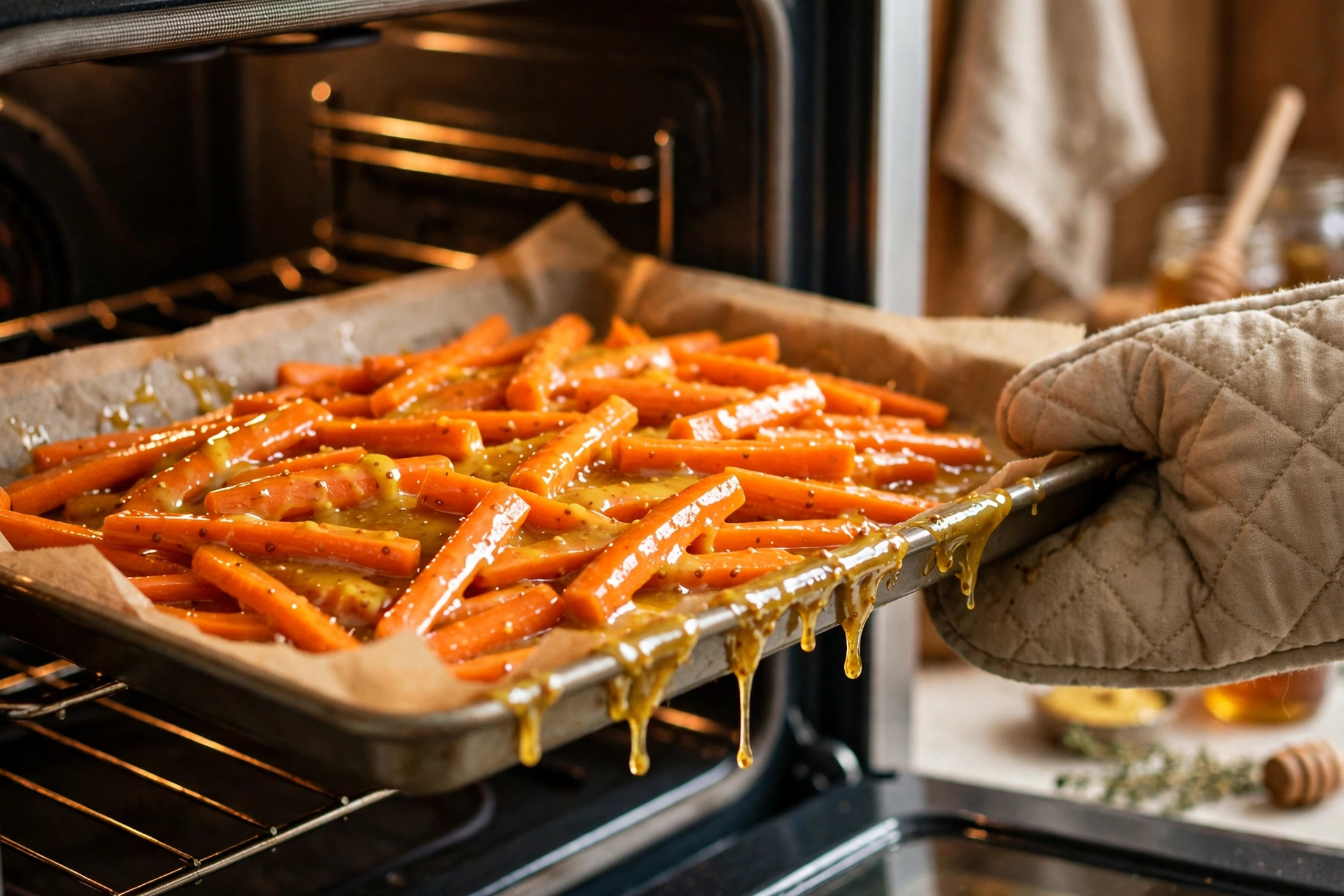
- Roast for 13 minutes. Slide the pan into the hot oven and roast for 13 minutes without opening the door. The carrots will start to soften and the glaze will begin to bubble and darken at the edges. Resist the urge to peek too early. Every time the door opens, the oven loses heat, and heat is doing the work.
- Toss halfway. Pull the pan out, flip and toss the carrots with tongs so the pale sides face up and the glazed sides get their turn against the hot pan. Work quickly so the oven stays hot, then slide the pan straight back in. This halfway toss is what gives you even browning instead of one burnt side and one pale side.
- Roast 12 more minutes. Roast for a final 12 minutes, for 25 minutes of roasting in total, until the carrots are tender and deeply golden at the edges. Test one with a knife. It should slide through with zero resistance, and the edges should be caramelized and a little sticky. If the glaze is darkening too fast in the last few minutes, move the pan to a lower rack or tent it loosely with foil.
- Garnish and serve. Transfer the carrots to a serving dish, drizzle over any sticky glaze left on the pan, and scatter the chopped parsley and a pinch of flaky sea salt over the top. Serve warm, while the edges are still crisp and the glaze is still glossy. These carrots are at their very best in the first 20 minutes out of the oven.
Why This Works
The recipe is short, but every part of it earns its place, and understanding the why makes it easier to get right every single time.
The honey caramelizes. Honey is mostly natural sugars, and at 425°F those sugars brown and thicken into a sticky glaze. That is where the deep golden color and the slightly crisp, almost candied edges come from. The trick is that honey browns fast, which is exactly why the oven temperature and the single layer matter so much. Too cool, and the honey stays syrupy without ever browning. Too crowded, and the moisture from the carrots keeps the temperature at the surface too low for caramelization to happen at all.
The Dijon cuts the sweetness. Honey on its own would make the carrots taste like dessert, and that is a lot for a side dish. Dijon mustard brings sharpness and a little heat, and its tang balances the honey so the finished carrots taste sweet and savory at the same time. Wholegrain mustard works too if you like the little pops of mustard seed, but smooth Dijon coats more evenly and gives a cleaner glaze.
The vinegar brightens everything. A single tablespoon of apple cider vinegar does more work than it looks like it should. It lifts the glaze, keeps the sweetness from turning heavy, and adds a fresh note that makes you want another bite. Without it, the glaze can taste flat. With it, the flavors stay lively right through the meal.
High heat makes the edges. Roasting at 425°F drives moisture off the surface of the carrots quickly, so the outside dries out enough to brown while the inside steams itself tender. That contrast, crisp caramelized edges against a soft sweet center, is the whole point of roasting vegetables instead of boiling them. Boiled carrots are soft all the way through. Roasted carrots have texture, color and flavor in every bite. If you want to see the same high-heat principle in action on a main dish, our Easy Honey Mustard Chicken uses the same glaze idea on chicken thighs, and it works for exactly the same reasons.
Pro Tips
- Cut evenly or nothing else matters. Even sizing is the single biggest factor in a pan of carrots that all finish at the same time. Take the extra minute to halve the thick pieces.
- Dry the carrots before you glaze them. After peeling and cutting, pat the carrots dry with a clean towel. Water on the surface dilutes the glaze and slows browning.
- Use the biggest sheet pan you own. Space is the difference between roasting and steaming. If the carrots look crowded, split them across two pans rather than squeezing them onto one.
- Warm thick honey first. A few seconds in the microwave or a warm water bath makes honey pour and whisk smoothly instead of clumping on cold carrots.
- Save the pan glaze. The sticky browned bits left on the parchment are the most flavorful part of the whole dish. Scrape them over the carrots before serving.
- Season at the end too. A pinch of flaky sea salt over the finished carrots wakes up the sweetness and gives a little crunch. Taste before you add more, because the glaze already carries salt.
- Serve them hot. The crisp edges soften as the carrots cool, so aim to have them on the table within 20 minutes of leaving the oven.
Common Mistakes and How to Fix Them
The carrots came out soggy. Almost always, this is crowding. The pan was too full, the pieces were piled up, and they steamed instead of roasting. Fix it next time by using a bigger pan or two pans, and spreading the carrots out with space between them. If it has already happened, spread the carrots out on a fresh hot pan and roast for another 5 to 8 minutes.
The glaze burned before the carrots were tender. This usually means the pieces were cut too thin, or the honey pooled and scorched on the pan. Cut the carrots a little thicker next time, toss them well so the glaze coats rather than pools, and move the pan to a lower oven rack for the last few minutes if the edges are darkening too fast.
The carrots are pale and the glaze is still runny. The oven was probably not fully preheated, or the temperature was set too low. Give the oven the full time to reach 425°F, and check with an oven thermometer if you suspect yours runs cool. A few extra minutes at the right temperature fixes it.
Some carrots are burnt and some are raw. Uneven cutting is the culprit. Next time, sort the pieces by thickness as you cut, and halve any thick ones so everything matches. On this batch, pull the finished pieces off early and let the thick ones keep roasting.
The glaze slid off and pooled on the pan. The carrots were probably wet when they were tossed, or the glaze was too thin. Pat the carrots dry, whisk the glaze until it is thick and glossy, and toss in a bowl rather than pouring the glaze over the carrots on the pan, so every piece gets coated.
Substitutions
Maple syrup instead of honey. Swap the honey for the same amount of pure maple syrup. The flavor turns a little woodier and the glaze browns slightly faster, so check the carrots a couple of minutes early.
Wholegrain mustard instead of Dijon. Use the same amount. The little mustard seeds add pops of texture and a slightly milder tang. It looks lovely on the finished carrots.
White wine vinegar or lemon juice instead of apple cider vinegar. Either works in the same amount. Lemon juice makes the glaze a touch brighter, which is nice in spring and summer.
Baby carrots instead of full-size carrots. Use them whole, no peeling or cutting needed. They roast a little faster, so start checking for doneness at around 20 minutes.
Parsnips or sweet potatoes in the mix. Swap half the carrots for parsnips or sweet potato sticks cut to the same size. Both roast beautifully in the same glaze and at the same temperature, and the mixed pan looks gorgeous.
Fresh thyme instead of parsley. A teaspoon of fresh thyme leaves stirred into the glaze adds a warm herbal note that suits the honey beautifully. Add it before roasting rather than as a garnish.
Variations to Try
Once you have the basic recipe down, it is easy to bend it toward whatever dinner you are making. For a little heat, add a pinch of red pepper flakes or a teaspoon of sriracha to the glaze. The warmth sits quietly behind the sweetness and makes the carrots taste more grown-up without scaring off the kids. For a smoky note, stir in half a teaspoon of smoked paprika. It deepens the color of the glaze and gives the carrots a campfire edge that is wonderful next to grilled meats.
For a herby version, toss a few sprigs of fresh thyme or rosemary onto the pan with the carrots and let them crisp up in the oven alongside. Pull out any woody stems before serving and leave the crisped leaves scattered over the top. For a nutty finish, scatter a handful of toasted chopped pecans or walnuts over the carrots just before serving. The crunch against the soft carrots is lovely, and it turns a simple side into something that feels a little bit special. For a holiday table, add a spoonful of orange zest to the glaze. The citrus lifts the honey and makes the whole dish smell like winter in the best possible way.
Storage and Make-Ahead
Leftovers keep well in an airtight container in the fridge for 3 to 4 days. Reheat them in a hot oven or an air fryer for 5 to 8 minutes until they are warmed through and the edges crisp up again. The microwave works in a pinch, but it softens the caramelized edges, so the oven is worth the extra minutes. Do not freeze these carrots. Freezing turns them soft and watery when they thaw, and the glaze loses its sticky shine.
To get ahead, you can peel and cut the carrots up to a day in advance and keep them in cold water in the fridge, then drain and pat them very dry before glazing. The glaze itself can be whisked together a day ahead and kept covered in the fridge. Bring it back to room temperature before tossing so it coats evenly. Roast just before serving for the best texture, since the crisp edges are at their peak straight from the oven.
Food safety is simple here. Cooked carrots should not sit out at room temperature for more than 2 hours. If dinner runs long, get the leftovers into the fridge within that window and they will be fine for days.
Serving Ideas
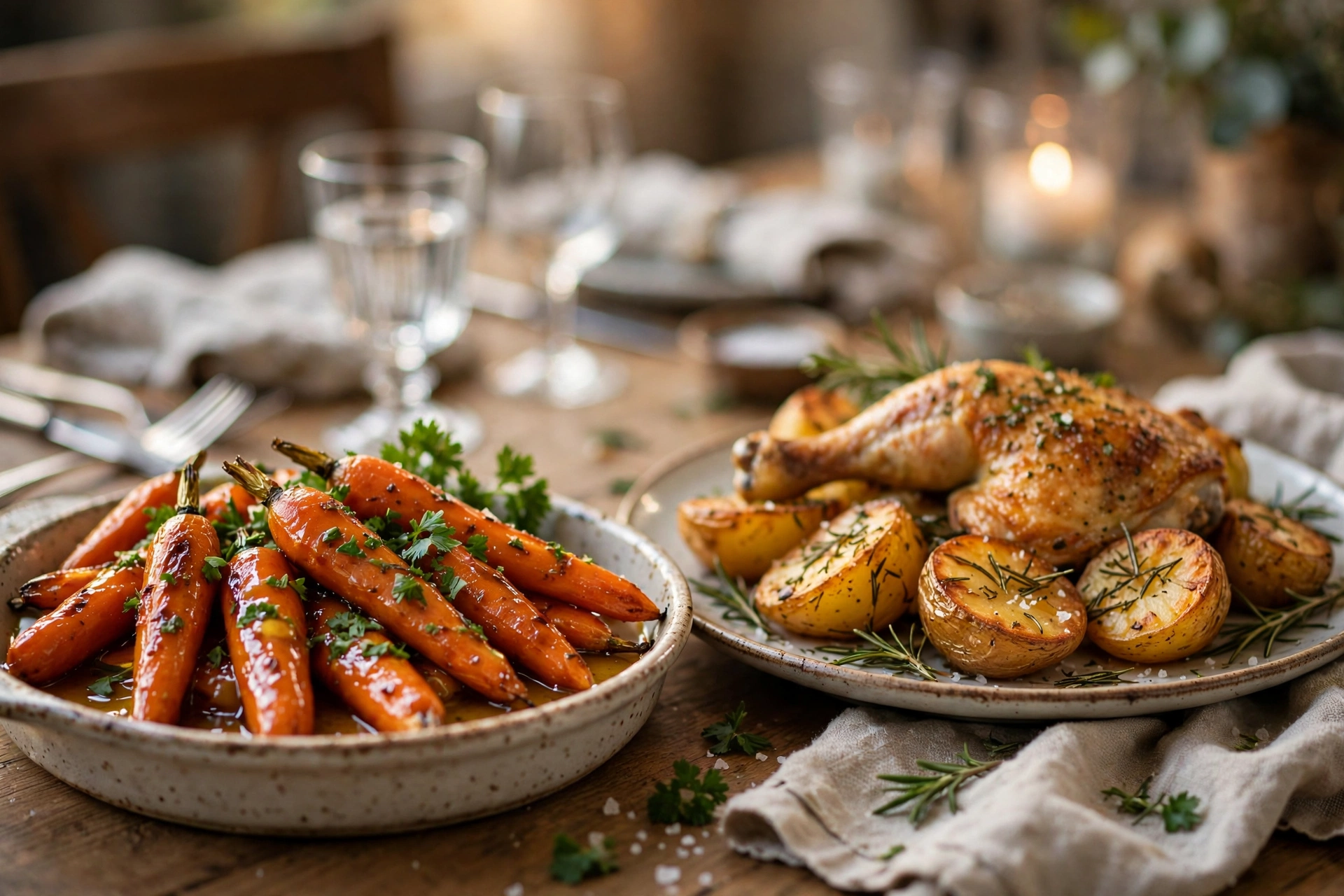
These carrots are the side dish that goes with almost everything, but they shine brightest next to a roast. Serve them with our Easy Lemon Herb Roasted Chicken for a Sunday-style dinner that tastes like you spent all afternoon in the kitchen, or next to pan-seared pork chops, baked salmon, or a simple meatloaf on a weeknight. The sweet glaze is especially good against salty, savory mains.
For a holiday table, double the recipe and roast on two sheet pans, rotating them halfway through so both pans brown evenly. The carrots sit happily next to mashed potatoes, stuffing and cranberry sauce without fighting for attention. For a lighter lunch, pile them over a grain bowl with quinoa, chickpeas and a spoonful of yogurt, or tuck them into wraps with hummus and greens. And if you are building a whole roasted-vegetable spread, they pair beautifully with our Easy Roasted Sweet Potato Wedges, which roast at a similar temperature and can share the oven.
Frequently Asked Questions
Can I use baby carrots for honey mustard roasted carrots?
Yes, baby carrots work beautifully and save you the peeling and cutting. Use them whole, toss them in the same glaze, and start checking for doneness at around 20 minutes, since they are smaller and roast a little faster. A knife should slide through with zero resistance when they are ready.
Why are my roasted carrots soggy instead of caramelized?
Soggy carrots are almost always caused by a crowded pan. When the pieces are piled on top of each other, they steam instead of roasting, and the glaze never gets hot enough to caramelize. Spread the carrots in a single layer with space between the pieces, use a bigger pan or two pans if needed, and make sure the oven is fully preheated to 425°F before the pan goes in.
Can I make honey mustard roasted carrots ahead of time?
You can prep ahead, but roast just before serving for the best texture. Peel and cut the carrots up to a day in advance and keep them in cold water in the fridge, and whisk the glaze a day ahead too. Roast when dinner is nearly ready, since the caramelized edges are at their crispest straight from the oven. Leftovers keep in the fridge for 3 to 4 days and reheat best in the oven or air fryer.
What main dishes go well with honey mustard roasted carrots?
Roast chicken is the classic partner, especially lemon herb roasted chicken, and the sweet glaze is also wonderful next to pork chops, baked salmon, meatloaf, or a holiday turkey. For a lighter meal, serve the carrots over a grain bowl with quinoa and chickpeas, or tuck them into wraps with hummus and greens.
That is the whole recipe. Ten minutes of prep, 25 minutes in the oven, and a pan of glossy, sticky, golden carrots that taste like you fussed over them for hours. Make them once, and they will become one of those recipes you reach for without thinking, the reliable side dish that turns an ordinary dinner into something worth sitting down for.
Rate this recipe
Be the first to rate it!