

How to Build Your Own Breakfast Combo
The formula is simple, and once you know it you will never stare into the fridge on a Saturday morning again. For each plate, pick:- 1 egg style — scrambled, fried, or boiled
- 1 sweet and golden item — pancakes, waffles, or French toast
- 1 breakfast meat — bacon, sausage, or a little of both
- 1 scoop of crispy potatoes — the crunchy glue that holds the plate together
- Fresh fruit — a small handful for color and freshness
- 1 drink — coffee, juice, milk, or a smoothie
Step 1: Pick Your Eggs — 3 Ways
Eggs are the heart of any breakfast plate, and each style brings a different personality. Make one style for the whole table, or split the batch and let everyone choose. One golden rule for all three: eggs are done when the whites are completely set. The FDA’s egg safety guidance recommends cooking eggs until both the white and yolk are firm, and scrambled eggs should never be runny — keep that as your doneness compass.
Soft and Fluffy Scrambled Eggs
Cloud-soft, buttery, and ready in minutes. The secret is low heat and patience — high heat is what makes scrambled eggs rubbery and dry, because it squeezes the moisture right out of the curds. Ingredients:- 8 large eggs
- 2 tablespoons milk or cream
- 1 tablespoon butter
- 1/2 teaspoon fine salt
- 1/4 teaspoon black pepper
- 1 tablespoon chopped chives (optional, for serving)
- Whisk the eggs, milk, salt, and pepper in a bowl until the yolks and whites are completely blended and a little frothy, about 30 seconds.
- Melt the butter in a nonstick skillet over medium-low heat until it foams. Pour in the eggs and let them sit undisturbed for 20 seconds.
- Using a rubber spatula, slowly push the eggs from the edges toward the center, forming big, soft folds. Keep the heat low and keep folding gently for 4–5 minutes.
- Pull the pan off the heat when the eggs look just barely set and still glossy — the residual heat finishes them on the way to the plate. They should be firm and creamy, never runny or wet. Scatter with chives and serve immediately.
Fried Eggs with Golden, Lacy Edges
A fried egg with crisp, lacy edges and a glossy yolk is diner gold. The little puddle of hot butter or oil is what frills the edges of the white into that irresistible crunch. Ingredients:- 4–8 large eggs (1–2 per person)
- 1 tablespoon butter or neutral oil
- Salt and black pepper, to taste
- Heat the butter or oil in a nonstick or cast-iron skillet over medium heat until the butter foams and sizzles gently.
- Crack the eggs into the pan, spacing them apart. Cook undisturbed for 2–3 minutes, until the whites are completely set, the edges are golden and lacy, and the yolk has thickened and turned glossy.
- For over-easy eggs, slide a thin spatula underneath and flip carefully; cook 30 seconds more. For over-hard eggs (firm yolk all the way through — the safest choice for young kids), flip and cook 1–2 minutes more, until the yolk feels firm when gently pressed.
- Season with salt and pepper and slide straight onto warm plates.
Boiled Eggs — Jammy to Firm
Boiled eggs are the make-ahead heroes of the combo plate: slice them in half, hit them with flaky salt, and they look like you planned this all week. The timing below starts when the eggs go into the hot water bath, using the cover-and-steep method, which gives you gentle, even cooking and yolks that stay bright. Ingredients:- 8 large eggs
- Water, to cover
- A big bowl of ice water, for cooling
- Flaky salt and black pepper, for serving
- Arrange the eggs in a single layer in a saucepan and cover with cold water by 1 inch. Bring to a full rolling boil over high heat.
- The moment it boils, cover the pan, take it off the heat, and start your timer: 6–7 minutes for jammy yolks with just-set whites, 9 minutes for medium eggs with a mostly firm yolk, or 12 minutes for fully hard-boiled eggs with firm yolks (the family-safe pick for little kids).
- Move the eggs straight into the ice bath for at least 5 minutes. The cold shock stops the cooking — that is what keeps the yolks sunny yellow instead of turning that sad gray-green color — and it makes the shells slip off easily.
- Peel, halve, and season with flaky salt and pepper.
Step 2: Add Something Sweet and Golden
Every great combo needs a sweet anchor — something warm and golden to drag through maple syrup and balance the salty bacon. Pick one of these three (or make pancakes for the table and French toast for the grown-ups; nobody is stopping you).Fluffy Pancakes
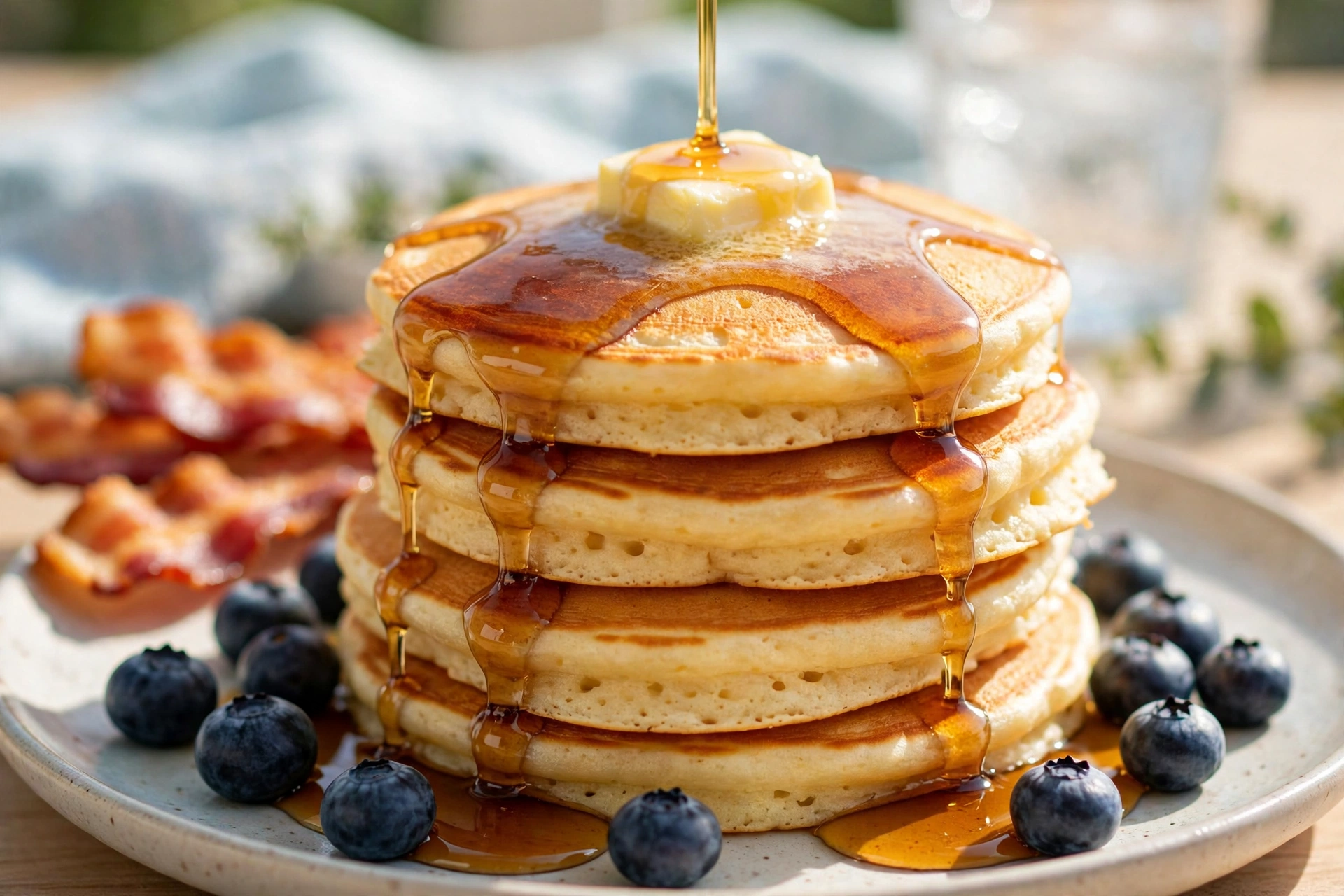
Tall, golden, and soft as a pillow. Two rules make them fluffy: mix the batter until it is just combined — lumps are your friends, because overmixing develops gluten and turns pancakes tough — and give the batter a short rest so the baking powder can start puffing before the pan even gets involved. Ingredients:- 1 1/2 cups all-purpose flour
- 3 1/2 teaspoons baking powder
- 1 tablespoon granulated sugar
- 1/2 teaspoon fine salt
- 1 1/4 cups milk
- 1 large egg
- 3 tablespoons melted butter, plus more for the pan
- 1 teaspoon vanilla extract
- Maple syrup and butter, for serving
- Whisk the flour, baking powder, sugar, and salt in a large bowl. In a second bowl, whisk the milk, egg, melted butter, and vanilla.
- Pour the wet ingredients into the dry and stir with a spoon just until no dry flour remains — about 10–12 strokes. The batter should be lumpy. Rest it for 5 minutes.
- Heat a griddle or nonstick skillet over medium heat (about 350°F if your griddle shows temperature) and brush with butter. The pan is ready when a drop of water dances across it.
- Pour 1/4 cup of batter per pancake. Cook 2–3 minutes, until bubbles cover the surface and the edges look set, then flip once and cook 1–2 minutes more, until deep golden. You will know they are right when they spring back when poked.
- Keep finished pancakes warm on a sheet pan in a 200°F oven while you finish the batch. Feeling fruity? Our fluffy blueberry pancakes use this same base batter with berries folded right in.
Crisp Belgian-Style Waffles
All deep pockets and shattering-crisp edges. Whipping the egg whites separately is the extra two-minute step that makes waffles taste like they came from a café — the beaten whites fold in a cloud of air, so the outside crisps while the inside stays light. Ingredients:- 2 cups all-purpose flour
- 1 tablespoon baking powder
- 2 tablespoons granulated sugar
- 1/2 teaspoon fine salt
- 1 3/4 cups milk
- 2 large eggs, separated
- 1/2 cup melted butter or neutral oil
- 1 teaspoon vanilla extract
- Berries, whipped cream, and maple syrup, for serving
- Preheat your waffle iron. Whisk the flour, baking powder, sugar, and salt in a large bowl.
- In a second bowl, whisk the milk, egg yolks, melted butter, and vanilla. In a third bowl, beat the egg whites with a hand mixer until soft peaks form, 1–2 minutes.
- Stir the milk mixture into the flour mixture until just combined, then gently fold in the whipped whites with a spatula until no white streaks remain.
- Lightly grease the iron, add batter to cover (about 1/2–3/4 cup for a standard Belgian iron), and cook 3–5 minutes, until deeply golden and crisp — the waffle is done when the steam slows to a wisp. Rest each waffle on a wire rack (never a plate) so the bottom stays crisp, and hold them in a 200°F oven.
Classic French Toast
Custard-soaked, cinnamon-kissed, and griddled until the edges caramelize. Thick slices are non-negotiable: bread that is too thin drinks up the custard and falls apart, while a sturdy 3/4-inch slice of brioche goes creamy in the middle and crisp at the edges. Ingredients:- 8 thick slices brioche or challah (3/4 to 1 inch thick; day-old bread works best)
- 3 large eggs
- 3/4 cup milk
- 1 tablespoon granulated sugar
- 1 teaspoon vanilla extract
- 1/2 teaspoon ground cinnamon
- Pinch of salt
- Butter, for the pan
- Powdered sugar and maple syrup, for serving
- Whisk the eggs, milk, sugar, vanilla, cinnamon, and salt in a shallow dish until completely smooth.
- Lay the bread slices in the custard and soak 20–30 seconds per side — long enough to feel heavy and saturated, not so long that they go soggy.
- Melt butter in a skillet over medium heat. Cook the slices 2–3 minutes per side, until deeply golden with slightly crisp edges and a center that feels set, not wet, when pressed.
- Dust with powdered sugar and serve with warm syrup. For a dippable kid favorite, try our easy cinnamon French toast sticks — same cozy flavor, built for little hands.
Step 3: Crispy Bacon and Juicy Sausage
The salty, savory backbone of the plate. Cooking both meats in the oven or air fryer keeps your stovetop free for eggs and keeps splatter off everything you own. For sausage, color is not a reliable doneness test — use the temperatures below. Per USDA guidance, ground pork sausage must reach 160°F, and ground turkey or chicken sausage must reach 165°F; a quick poke with an instant-read thermometer is the only way to know for sure.Oven or Air Fryer Bacon
You will need: 12 slices regular-cut bacon (about 12 ounces).- Oven method (best for a crowd): Heat the oven to 400°F. Lay the bacon in a single layer on a parchment-lined rimmed sheet pan — the rim matters, bacon fat renders a lot. Bake 15–20 minutes for regular-cut (20–25 minutes for thick-cut), no flipping needed, until deep mahogany and crisp at the edges.
- Air fryer method: Arrange slices in a single layer (cut in half if they do not fit) and cook at 375°F for 8–10 minutes, checking at 7 minutes, until crisp. Work in batches so the air can circulate.
- Drain on paper towels for 1–2 minutes. Bacon keeps crisping as it cools, so pull it when it is one shade shy of your perfect crisp.
Breakfast Sausage Patties or Links
You will need: 1 pound pork breakfast sausage, formed into 8 patties, or 8 sausage links (about 12 ounces).- Skillet: Cook patties over medium heat 4–5 minutes per side, and links 12–15 minutes, turning often, until deeply browned with a caramelized crust — that browning is pure flavor — and the centers reach 160°F (pork) or 165°F (turkey or chicken).
- Oven: Bake on a sheet pan at 400°F for 18–22 minutes, flipping halfway, until browned and at temperature.
- Air fryer: Cook patties at 400°F for 8–10 minutes, flipping halfway; links take 9–12 minutes. Confirm 160°F for pork or 165°F for poultry sausage in the thickest piece.
- Rest the sausage 2–3 minutes before serving so the juices settle back into the meat instead of running onto the plate.
Step 4: Crispy Breakfast Potatoes
Golden cubes with shattering edges and fluffy centers — the part everyone picks at straight off the serving plate. The two secrets are a quick parboil, which roughens the surface of the potato so it crisps like a dream, and space: potatoes crowded on a pan steam instead of fry, and steamed potatoes never crunch. Ingredients:- 1 1/2 pounds Yukon Gold or russet potatoes, scrubbed and cut into 1/2 to 3/4-inch cubes
- 2 tablespoons olive oil or melted butter
- 1 teaspoon smoked paprika
- 1/2 teaspoon garlic powder
- 3/4 teaspoon fine salt
- 1/4 teaspoon black pepper
- 1/2 small onion and 1/2 bell pepper, diced (optional, very diner-authentic)
- Cover the potato cubes with cold salted water, bring to a boil, and simmer 5 minutes, until the edges look slightly soft and fluffy. Drain well and let the steam dry off for 2 minutes — dry potatoes crisp, wet potatoes do not.
- Toss the potatoes with the oil, paprika, garlic powder, salt, and pepper (and the onion and bell pepper, if using).
- Oven: Spread on a large sheet pan in a single layer with breathing room and roast at 425°F for 25–30 minutes, flipping at the 15-minute mark, until deeply golden and crisp on at least two sides. Air fryer: Cook at 400°F for 15–18 minutes, shaking the basket halfway.
- Taste for salt and serve hot, while the edges still crackle.
Step 5: Fresh Fruit and Drink Pairings
Fruit is the plate’s reset button — bright, juicy bites that cut through all the rich, golden goodness. Plan on about 1 cup of fruit per person, using whatever looks good: melon wedges, a tumble of berries, orange slices, halved grapefruit with a tiny sprinkle of sugar, or sliced bananas over the pancakes themselves. Keep it dead simple and let the fruit do its fresh, pretty thing. For drinks, match the mood of the plate:- Coffee — a full 8-cup pot for the table; it is the classic combo’s best friend.
- Orange juice — 4 cups, poured over ice, for that true diner feel.
- Milk or chocolate milk — the kid-table (and sweet tooth) favorite.
- A smoothie — when you want the drink to count as the fruit course too, our easy banana peanut butter smoothie turns the drink into part of the protein plan.
- Hot cocoa or tea — for slow, cozy weekend plates.
4 Ready-Made Combo Plate Ideas
Decision fatigue? Skip the choosing and build one of these four proven plates. Each one uses the components above, timed so everything lands hot together. These plates are close cousins of the traditional full breakfast served across Britain and Ireland for generations — our way just lets you remix it American-diner style.1. The Classic Diner
Two fried or scrambled eggs, 3 slices of oven bacon, a scoop of crispy breakfast potatoes, 2 fluffy pancakes with butter and warm maple syrup, orange slices, and coffee with a glass of orange juice alongside. This is the plate that built the American diner: salty, sweet, crunchy, fluffy, all in one orbit. Order of operations: potatoes into the oven first, bacon right behind them, pancake batter resting while the meats cook, eggs in the last 5 minutes.2. The Sweet Tooth
Classic French toast (or a crisp Belgian waffle) dusted with powdered sugar, a mountain of berries with a dollop of whipped cream, 2 sausage links for that salty-sweet contrast, and chocolate milk or hot cocoa to drink. Keep the fruit fresh rather than cooked — the juicy pop against the caramelized toast is the whole point. A tiny pitcher of warm syrup at the table makes it feel like a celebration.3. The Protein-Packed
Three eggs any style (boiled eggs make this one meal-prep friendly), 2 sausage patties plus 2 slices of bacon, crispy potatoes, a full glass of milk, and fruit on the side. It is easily the most filling plate of the four — the kind of breakfast that carries you straight through to lunch. Swap in turkey sausage (cooked to 165°F) and add a smoothie, and it becomes a genuinely balanced big breakfast.4. The Kid-Friendly
Fully scrambled eggs (cooked firm, as little eaters should always have them), French toast sticks or silver-dollar pancakes with a small cup of syrup for dipping, one sausage patty cut into coins, a small scoop of potatoes, banana slices and berries, and a glass of milk. Everything is dip-able, nothing is spicy, and the portions are sized for small appetites with seconds standing by.Pro Tips for Combo Success
- Cook in order of cooking time. Potatoes first (longest), then oven bacon and sausage, then the batter items, and eggs absolutely last. Eggs wait for no one; everything else waits happily for eggs.
- Use the 200°F oven as your holding zone. Finished pancakes, waffles, meats, and potatoes stay hot and crisp in a low oven while you finish the eggs.
- Warm the plates. A quick rinse under hot water or 2 minutes in the warm oven keeps a hot breakfast hot. Cold plates steal heat fast.
- Season scrambled eggs at the end. Salting beaten eggs long before they hit the pan can pull out moisture and make the curds weep; season in the pan for the creamiest result.
- Rest the pancake batter. Five quiet minutes lets the flour hydrate and the baking powder wake up — that is the difference between flat and fluffy.
- Trust the thermometer, not the color. Sausage can look perfectly browned and still be under 160°F in the middle. One quick check saves the whole plate.
Common Mistakes to Avoid
- Crowding the potato pan. Piled-up potatoes steam and go soft. Use two pans if you need to — crisp needs space.
- Overmixing pancake batter. Stirring until smooth sounds right and is completely wrong: it develops gluten and flattens your pancakes. Lumps are fine.
- Blasting the eggs on high heat. Fast eggs are rubbery eggs. Low and slow for scrambled, steady medium for fried.
- Soaking French toast until it falls apart. Twenty to thirty seconds per side is the sweet spot. If slices break going into the pan, the soak was too long or the bread too thin.
- Cooking bacon in a cold, crowded skillet for a crowd. The oven method gives you 12 even, crisp slices at once with zero splatter babysitting.
- Skipping the meat thermometer. See above — especially with sausage patties, which brown long before the centers are safe.
Easy Substitutions
- Turkey or chicken sausage and bacon: a lighter swap that still crisps — remember poultry sausage cooks to 165°F, not 160°F.
- Sweet potato cubes in place of regular potatoes for a sweeter, caramelized edge; same method, same timing.
- Whole wheat flour for half the all-purpose flour in pancakes or waffles for a heartier, nuttier bite.
- Egg whites or egg substitute for scrambled eggs — cook gently over low heat and pull them the moment they set, since they dry out faster.
- Dairy-free: use your favorite plant milk in the batters and cook in oil instead of butter.
- No waffle iron? The waffle batter cooks up as pancakes in a pinch — they will be a little richer, and nobody will complain.
Make-Ahead and Storage
A breakfast combo is secretly meal-prep friendly. Hard-boiled eggs keep up to a week in the refrigerator in their shells, so boil a batch on Sunday. Pancakes and waffles freeze beautifully: cool completely, freeze in a single layer, then bag with parchment between them for up to 2 months; reheat straight from frozen in the toaster until hot and crisp at the edges. Cooked bacon and sausage keep 3 to 4 days in the fridge in an airtight container; reheat bacon in a 375°F oven or air fryer for 3–4 minutes to bring the crisp back, and sausage in a skillet over medium heat until steaming hot. Leftover breakfast potatoes re-crisp in a 425°F oven or 400°F air fryer for about 5 minutes — never the microwave, which turns them soft. French toast reheats best in the toaster or a dry skillet. Scrambled and fried eggs are happiest made fresh, so cook those to order. Whatever you make, get leftovers into the refrigerator within 2 hours, and reheat cooked breakfast meats until they are steaming hot all the way through.Frequently Asked Questions
What goes on a classic breakfast combo plate?
A classic breakfast combo plate has five parts: eggs (scrambled, fried, or boiled), a sweet and golden item like pancakes, waffles, or French toast, a breakfast meat such as bacon or sausage, crispy breakfast potatoes, and fresh fruit, plus a drink like coffee or orange juice. One pick from each group gives you the full diner-style spread.How long does it take to make a full breakfast combo at home?
About 40 minutes for four plates. The components cook in parallel: potatoes roast for 25 to 30 minutes, bacon and sausage cook in the oven at the same time, pancake or waffle batter mixes in minutes, and the eggs take the final 5 minutes. Cooked in the right order, everything finishes hot together.What temperature should pork breakfast sausage be cooked to?
Cook ground pork breakfast sausage to an internal temperature of 160°F, measured with an instant-read thermometer in the thickest part. Turkey or chicken sausage needs 165°F. Color is not a reliable test — browned sausage can still be underdone in the center.Can I make breakfast combo components ahead of time?
Yes. Hard-boiled eggs keep up to a week in the fridge in their shells, pancakes and waffles freeze for up to 2 months and reheat in the toaster, and sausage and bacon can be cooked a day ahead and reheated. Scrambled and fried eggs are best cooked fresh, so make those last.How do I keep everything warm while I finish cooking breakfast?
Heat your oven to 200°F and hold finished components on a sheet pan inside as you cook. Waffles and pancakes stay crisp on a wire rack in the warm oven, meats and potatoes hold beautifully, and warm plates under hot water before serving so the food does not hit a cold surface.Rate this recipe
☆☆☆☆☆
Be the first to rate it!