
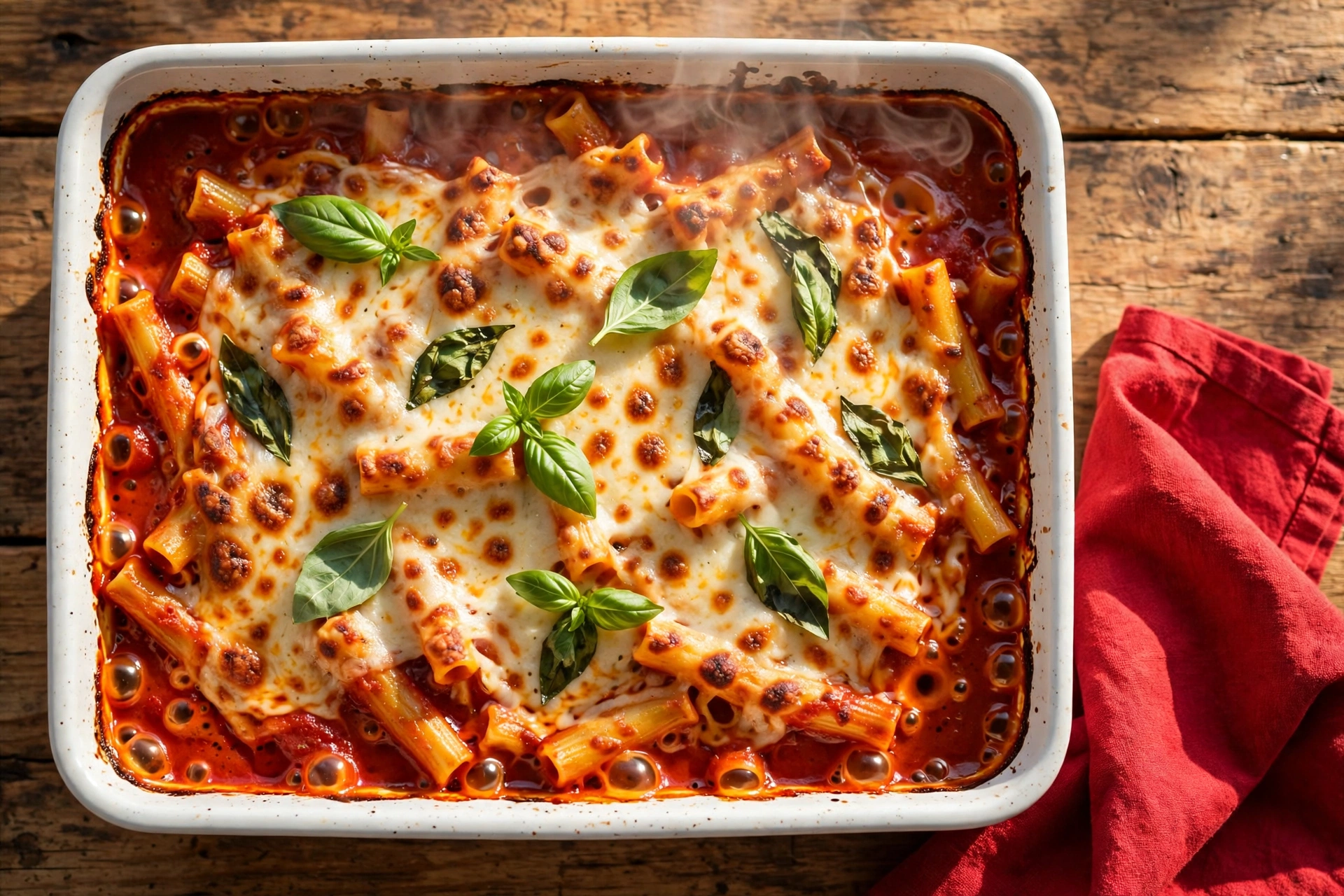
There is a smell that tells you dinner is going to be a good one, and it is the smell of baked ziti coming out of the oven: bubbling marinara, golden mozzarella turning spotty brown, and warm basil drifting through the kitchen. This easy baked ziti is the weeknight version of that smell, and it is on the table in 40 minutes, with six generous servings and only one baking dish to wash.
It tastes like the best kind of Italian-American comfort food. Tender tubes of ziti are wrapped in a rich tomato sauce, layered with a creamy ricotta mixture, and buried under a blanket of mozzarella that melts into long, stretchy pulls. Every spoonful has a little bit of everything: saucy pasta, soft cheese, and a golden, slightly crisp top. It is the same cozy, baked-pasta comfort as our easy baked mac and cheese, but with marinara and basil instead of a cream sauce, and it feeds a whole family from a single pan.
What makes it so easy is that there is nothing fussy hiding in it. Fourteen simple ingredients, most of them already in your pantry, and a method that is really just three moves: boil the pasta, stir the cheese, and layer it all up and bake. The oven does the heavy lifting, and the five-minute rest at the end does the rest, letting the cheese set so every serving holds its shape instead of sliding into a puddle. If you can boil pasta, you can make this baked ziti.
Recipe at a Glance
- Prep Time: 10 minutes
- Bake Time: 25-30 minutes
- Rest Time: 5 minutes
- Total Time: 40 minutes
- Servings: 6
- Oven Temperature: 375°F
- Difficulty: Easy
- Category: Weeknight dinner
- Equipment: 9×13-inch baking dish
Ingredients
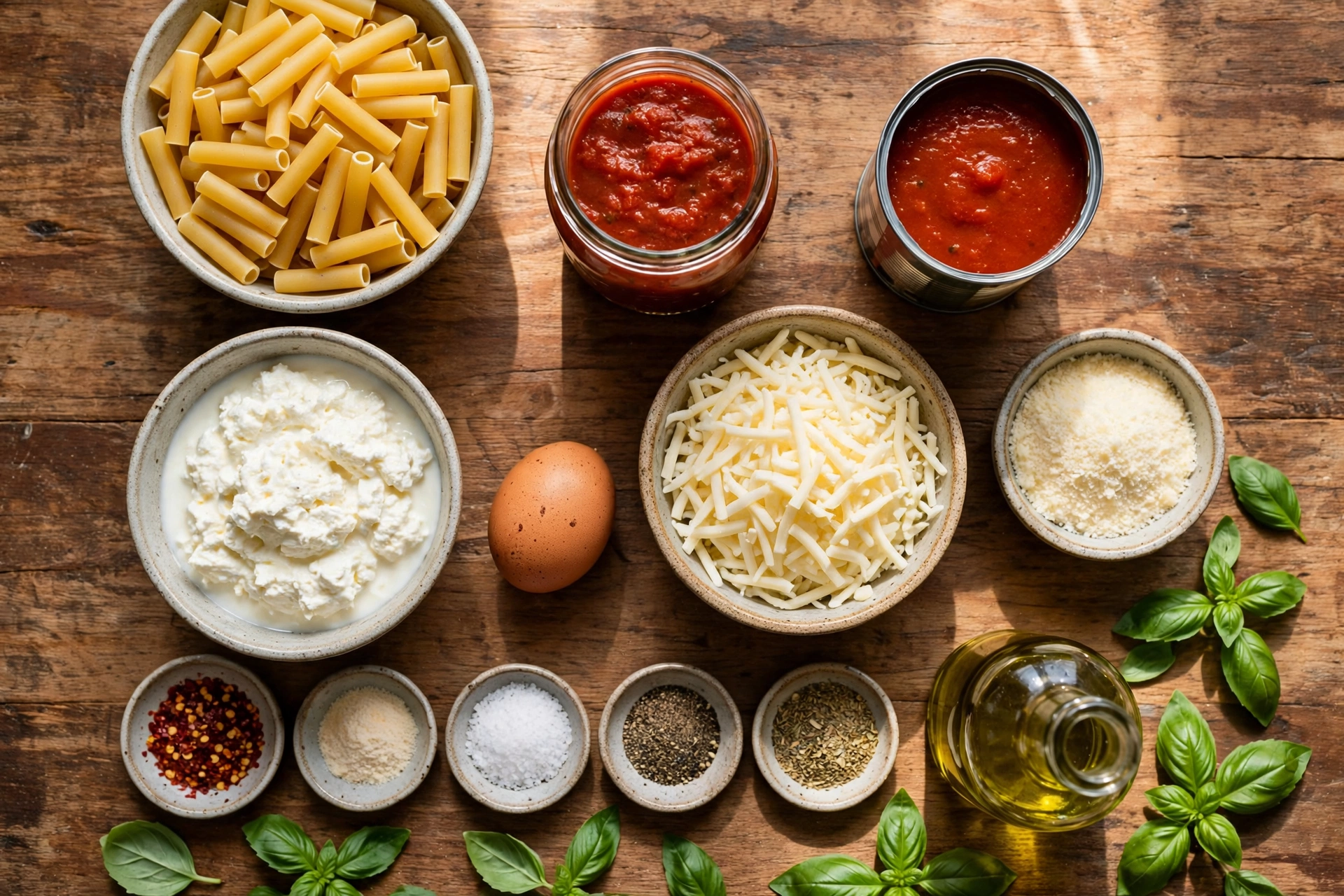
Fourteen simple ingredients, and the ziti, the sauce, and the three cheeses do all the heavy lifting. A pound of ziti and two kinds of tomato sauce make the base, ricotta and an egg make the creamy layer, and mozzarella and Parmesan bring the golden, bubbly top. Everything is measured for six servings.
- 1 pound ziti pasta
- 1 jar (24 ounces) marinara sauce
- 1 can (15 ounces) tomato sauce
- 1 container (15 ounces) whole-milk ricotta cheese
- 1 large egg
- 2 cups shredded low-moisture mozzarella cheese, divided
- 1/2 cup grated Parmesan cheese, divided
- 1 teaspoon Italian seasoning
- 1/2 teaspoon garlic powder
- 1/2 teaspoon fine sea salt
- 1/4 teaspoon freshly ground black pepper
- 1/4 teaspoon red pepper flakes (optional, for a little warmth)
- 2 tablespoons olive oil, for greasing the baking dish
- 1/4 cup fresh basil leaves, torn, plus more for serving
A quick note on the sauce: one jar of marinara on its own is not quite enough sauce for a full pound of pasta, which is why this recipe adds a can of plain tomato sauce. The two together make about five cups of sauce, which is exactly the amount that keeps every tube of ziti saucy without turning the dish soupy. If your marinara is already very thick and rich, use the full can anyway and let the oven do the thickening; if your marinara is thin, the tomato sauce still earns its place, because it gives the sauce the body it needs to cling to the pasta.
Directions
- Heat the oven and get the water going. Set the oven to 375°F and lightly grease a 9×13-inch baking dish with the olive oil. Put a large pot of water on high heat and bring it to a rolling boil, then salt it generously, about a tablespoon of salt. Starting the water first is the quiet trick that keeps this a 40-minute dinner: the water heats while you mix the cheese, so nothing is ever waiting on anything else.
- Stir the ricotta mixture. While the water heats, put the ricotta, the egg, 1 cup of the mozzarella, 1/4 cup of the Parmesan, the Italian seasoning, garlic powder, salt, black pepper, and red pepper flakes (if using) in a medium bowl and stir until everything is creamy and evenly combined. The egg is not there for flavor, it is the glue: it sets as it bakes and holds the soft ricotta in creamy pockets instead of letting it melt away into the sauce. Do not taste the mixture raw, because it contains a raw egg, and it will be fully cooked once the ziti is baked.
- Boil the pasta 2 minutes shy of al dente. When the water is at a rolling boil, add the ziti and cook it for 2 minutes less than the time on the package, usually about 8 minutes. The pasta should still be firm in the center when you bite a piece, because it finishes cooking in the oven, soaking up sauce as it bakes. Drain the pasta well and return it to the pot. Do not rinse it: the starch clinging to the tubes is what helps the sauce grab hold.
- Toss the pasta with the sauce. Pour the marinara and the tomato sauce over the drained ziti, holding back about 1 cup of sauce for the top, and toss until every tube is coated in red. Taste a piece and add another pinch of salt if your marinara is mild, because the pasta itself is unsalted inside and the sauce is doing all the seasoning work here.
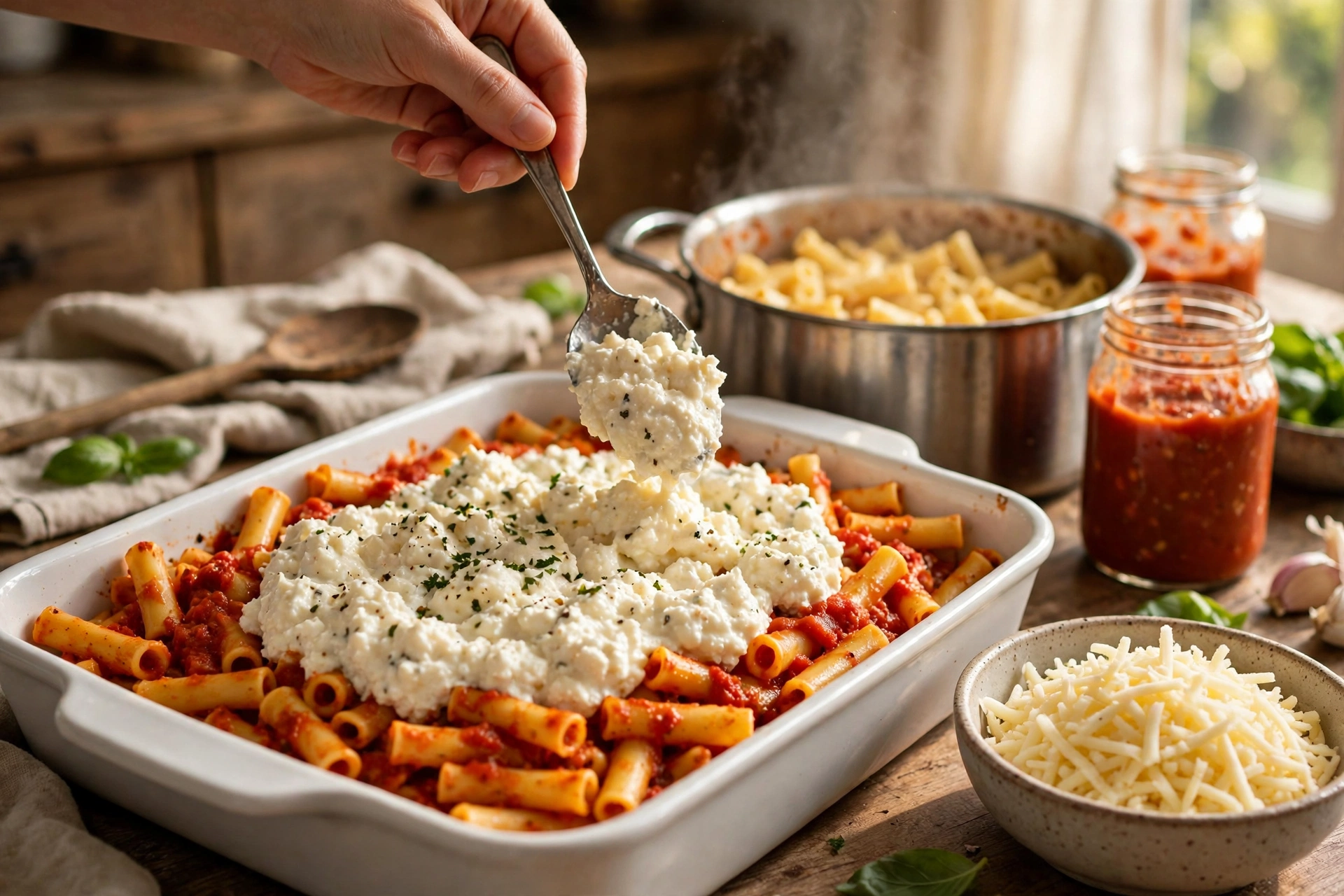
- Layer the first half. Spread half of the sauced ziti in the greased baking dish, then dollop the ricotta mixture over it in spoonfuls and spread it gently into an even layer. Do not worry about perfect coverage, because the ricotta melts and spreads as it bakes, and a few uneven patches only mean more creamy surprises in the finished dish.
- Layer the rest and top with cheese. Spoon the remaining ziti over the ricotta layer, pour the reserved cup of sauce over the top, and sprinkle with the remaining 1 cup of mozzarella and 1/4 cup of Parmesan. Spread the cheese all the way to the edges of the dish, because the top layer of cheese is what turns golden and spotty in the oven, and bare edges dry out.
- Bake for 25 to 30 minutes. Cover the dish loosely with foil and bake for 15 minutes, then remove the foil and bake 10 to 15 minutes more, until the cheese on top is golden and bubbling and the sauce is simmering around the edges. The foil first is the secret to a juicy center: it traps the steam so the pasta finishes cooking without drying out, and the uncovered finish is what browns the cheese. The center should be bubbling hot all the way through, about 165°F on an instant-read thermometer, which is safely above the 160°F minimum for egg dishes.
- Rest for 5 minutes, then serve. Let the baked ziti rest for 5 minutes before you serve it. The cheese needs that time to set, and a rested ziti scoops out in neat, layered squares instead of slumping into a puddle. Scatter the torn basil over the top and serve it straight from the dish, while the cheese is still stretchy.
Why This Works
Every part of this recipe is doing a specific job, and once you see the jobs, the whole dish makes sense.
Boiling the pasta 2 minutes shy of al dente
The pasta goes into the oven firm in the center on purpose. A tube of ziti that is already fully cooked keeps absorbing sauce for another 25 minutes in a hot oven, and it comes out soft, swollen, and mushy. A tube that is 2 minutes shy finishes cooking in the sauce instead, soaking up flavor as it softens, and it holds its shape when you scoop it out. The two minutes you leave on the table are the difference between a ziti with bite and a ziti that falls apart on the spoon.
Layering the cheese instead of stirring it all in
The ricotta mixture goes in as its own layer, not stirred through the pasta, and that is what makes the finished dish taste like baked ziti instead of pink pasta. Stirred in, the ricotta disappears into the sauce and you lose the creamy pockets entirely. Layered, it stays where you put it, soft and distinct, so every serving has a band of creamy white running through the middle. The mozzarella does the opposite job on top: spread edge to edge, it melts into a single golden blanket that seals the moisture in and browns in spots.
The foil-then-uncovered bake
The dish bakes covered for the first 15 minutes and uncovered for the last 10 to 15, and each half has a job. Under the foil, the steam trapped in the dish finishes cooking the pasta gently and keeps the sauce from reducing into a dry crust. With the foil off, the dry heat of the oven browns the mozzarella and lets the sauce bubble and thicken around the edges. Bake it uncovered the whole time and the top dries out before the center is hot; bake it covered the whole time and the cheese stays pale and soft. The switch halfway is the whole technique.
Resting for 5 minutes before serving
The hardest step in this recipe is waiting five minutes, and it is also the one that decides whether the ziti looks like a dish or a puddle. Straight out of the oven, the cheese is liquid and the sauce is thin, so a spoonful slides apart the moment it hits the plate. Five minutes is enough for the mozzarella to firm up and the sauce to thicken around the pasta, so each serving lifts out in a neat, layered square with the cheese still stretchy. It is still hot after five minutes, so nothing is lost, and everything is gained.
What Is Ziti, Anyway?
Ziti is a smooth, medium-length tube of pasta from southern Italy, and its name comes from the Italian word for bridegroom: the pasta was traditionally served at weddings in Naples, sold in long tubes that were broken by hand before cooking. The Ziti page on Wikipedia has a lovely overview of how the pasta went from a wedding-day special to an everyday shape, and how the Italian-American baked version, layered with cheese and sauce, became a dish of its own. The smooth tubes are the point: unlike ridged penne, ziti has a slick surface that lets the sauce slide around it, and the hollow center fills with sauce as it bakes, so every bite is saucy inside and out.
Choosing the Best Cheese and Sauce
The cheese matters more here than in most pasta dishes, because there are three of them and each one has a job. Use whole-milk ricotta, not part-skim, because whole-milk ricotta is thick and creamy while part-skim ricotta is watery, and watery ricotta turns the middle layer runny. Use low-moisture mozzarella, the firm block or bagged shreds, not fresh mozzarella, because fresh mozzarella releases a surprising amount of water as it bakes and can leave a puddle on top of the finished dish. For the Parmesan, freshly grated melts more smoothly than pre-grated, which is coated to keep it from clumping, but pre-grated works fine if that is what you have. And for the sauce, use a marinara you actually like the taste of, because there is nowhere for a bad sauce to hide in a dish this simple; a jar with a short ingredient list and a bright tomato flavor is the right choice. If you want the exact nutrition numbers for the pasta, cheese, and sauce in this dish, the USDA’s FoodData Central database lists the nutrition of every ingredient.
Pro Tips
- Put the water on first. The whole 40-minute timeline depends on the water heating while you mix the cheese. If you mix the cheese first and then wait for the water, you have added ten minutes to dinner for nothing.
- Salt the pasta water like you mean it. About a tablespoon of salt in a large pot is the right amount. The pasta absorbs that salt as it cooks, and it is the only chance the pasta itself ever gets seasoned.
- Shred your own mozzarella if you have five spare minutes. Bagged shreds are coated to keep them from clumping, and that coating makes them melt a little less smoothly. A block of low-moisture mozzarella and a box grater give you the stretchiest top.
- Save a little pasta water. Before you drain the ziti, scoop out half a cup of the starchy cooking water. If the sauced pasta ever looks dry, a splash of it loosens the sauce without thinning the flavor.
- Use the right dish. A 9×13-inch baking dish gives the ziti a wide, shallow bed, so the top browns evenly and every serving gets some of the golden cheese. A deep, narrow dish leaves the middle pale and the top overdone.
- Let it rest, even when everyone is hungry. The five-minute rest is not optional garnish, it is the step that turns a sloppy scoop into a neat, layered serving. Set a timer and use the time to put the salad on the table.
Common Mistakes
Cooking the pasta all the way before it goes in the oven. Fully cooked ziti plus 25 minutes in hot sauce equals mush. Cook it 2 minutes shy of the package time, and if you realize too late that the pasta is already soft, shorten the bake to about 20 minutes and keep the foil on for most of it.
Not using enough sauce. A pound of pasta drinks a lot of sauce, and a dry baked ziti is almost always a short-sauce baked ziti. Use the full jar of marinara and the full can of tomato sauce, about five cups in total, and if the finished dish still looks dry, stir in a splash of the reserved pasta water before it goes in the oven.
Baking it uncovered the whole time. An uncovered dish loses its moisture to the oven, and the top dries into a crust before the center is hot. The foil goes on for the first 15 minutes and comes off only for the browning finish.
Cutting into it the second it leaves the oven. Hot cheese is liquid cheese, and a ziti served straight from the oven slumps into a puddle on the plate. Five minutes of rest lets the cheese set, and the ziti is still steaming hot when you serve it.
Forgetting to season the pasta water. Unsalted pasta tastes flat no matter how good the sauce is, and salting the finished dish cannot fix it, because the salt sits on the surface instead of inside the pasta. Salt the water, not the rescue attempt.
Substitutions
Pasta: Penne or rigatoni are the easiest swaps, and they behave almost exactly like ziti in the oven. Penne is slightly smaller, so check it a minute earlier; rigatoni is wider and holds even more sauce in its tubes. Gluten-free ziti works too, but cook it 1 minute less than the package says, because gluten-free pasta softens faster in the oven.
Ricotta: Cottage cheese is the classic stand-in. Use small-curd cottage cheese, drain off any excess liquid, and blend it smooth first if you want the same creamy texture; left chunky, it gives the middle layer a little more bite, which some families actually prefer.
Cheese on top: Provolone melts beautifully in place of half the mozzarella, and a little extra Parmesan on top browns even deeper. Dairy-free mozzarella shreds work, but they brown less, so give them the full uncovered time and do not expect the same golden spots.
Make it meaty: Brown half a pound of mild Italian sausage, casings removed, until no pink remains, drain it well, and stir it into the sauced pasta before you layer. There is a full note on this in the FAQ below, including the safe cooking temperature.
Add vegetables: A couple of handfuls of baby spinach, wilted and squeezed very dry, or a cup of sauteed mushrooms stirred into the sauce, both disappear happily into this dish. Squeeze the spinach hard, because any water it carries will thin the sauce.
Sauce: Any tomato pasta sauce works in place of marinara. Arrabbiata sauce adds a warm kick, in which case skip the red pepper flakes, and a roasted garlic marinara adds a deeper, sweeter flavor without changing anything else.
Storage and Make-Ahead
In the fridge: Let the baked ziti cool until it is no longer steaming, then cover the dish tightly and refrigerate it for 3 to 4 days. Never leave it sitting on the counter for more than 2 hours. To reheat, cover the dish with foil and warm it in a 350°F oven for 15 to 20 minutes, until the center is hot, or reheat single servings in the microwave with a spoonful of sauce or water on top so the pasta does not dry out.
In the freezer: This dish freezes beautifully, and the unbaked version freezes best. Assemble it completely, wrap the dish tightly in two layers of foil, and freeze for up to 3 months. Bake it straight from frozen at 375°F, covered, for about 45 minutes, then uncovered for 15 minutes more, until the center is bubbling hot. Baked leftovers freeze too: portion them into airtight containers and freeze for up to 3 months, then thaw overnight in the fridge before reheating.
Make it ahead: Assemble the ziti up to 24 hours before you plan to bake it, cover the dish tightly, and refrigerate it. Add about 10 minutes to the covered part of the bake, because a cold dish takes longer to heat through, and check that the center is bubbling before you take the foil off.
Serving Ideas
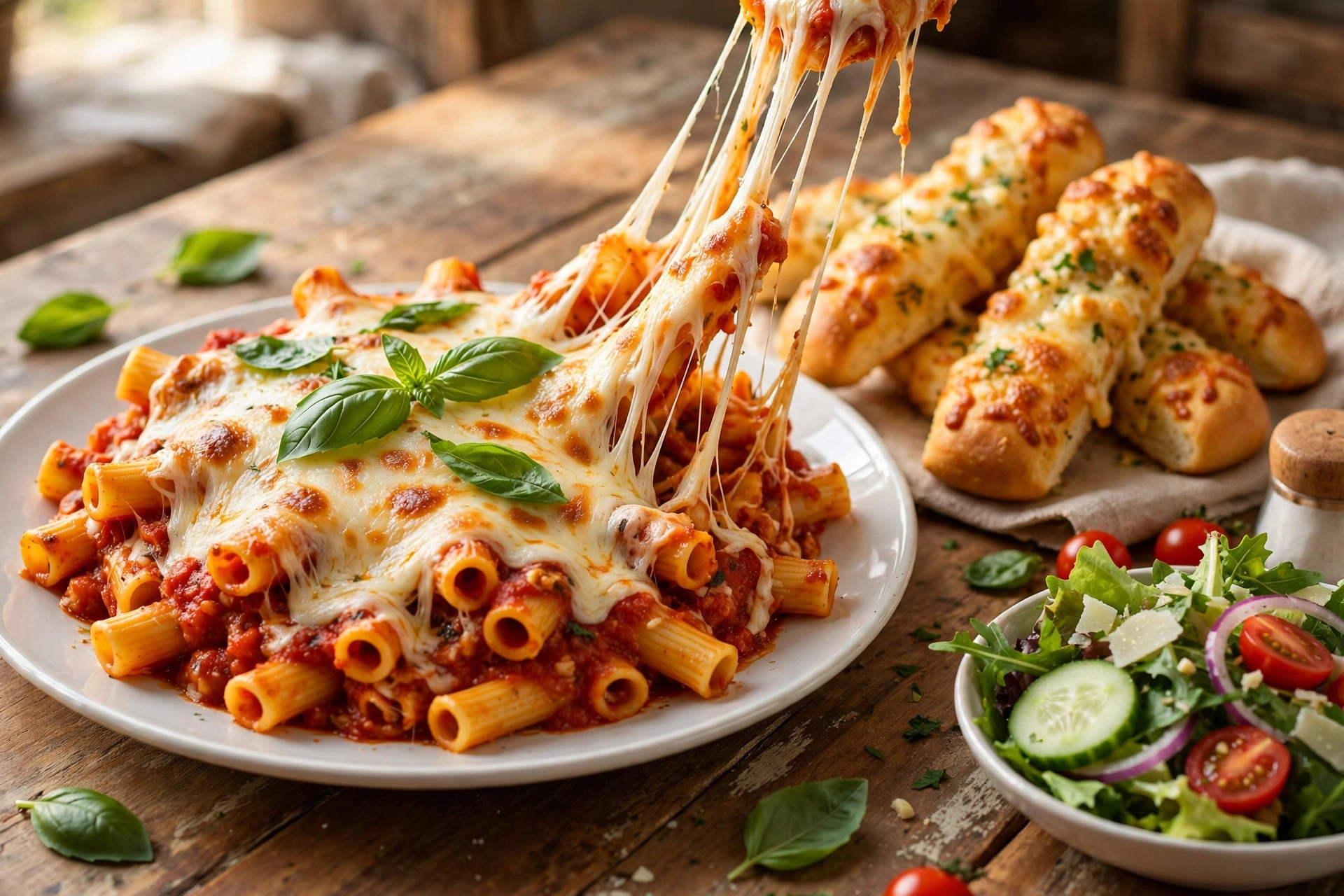
Serve this baked ziti straight from the dish, family style, with a big spoon and a stack of warm plates. A basket of warm easy cheesy garlic breadsticks is the first thing to put on the table, because there is always sauce left in the dish and someone always wants to mop it up. A simple green salad with lemon vinaigrette cuts through the richness, and roasted broccoli or green beans round out the plate without competing with the main event. If you want to turn it into a full Italian-American spread, our easy chicken parmesan uses the same marinara-and-mozzarella flavors and sits happily next to a pan of ziti on a Sunday table. A glass of sparkling water with lemon, or a light red wine for the grown-ups, finishes it off.
Frequently Asked Questions
Can I make baked ziti ahead of time?
Yes. Assemble the ziti completely, cover the dish tightly, and refrigerate it for up to 24 hours. When you are ready to bake, add about 10 minutes to the covered part of the bake, because a cold dish takes longer to heat through, and check that the center is bubbling before you take the foil off. You can also freeze the unbaked dish for up to 3 months; bake it straight from frozen at 375 degrees F, covered, for about 45 minutes, then uncovered for 15 minutes more.
Can I add Italian sausage to this baked ziti?
Yes, and it is the most popular variation. Brown half a pound of mild Italian sausage with the casings removed, breaking it into small crumbles, until no pink remains and it reaches 160 degrees F, then drain it well and stir it into the sauced pasta before you layer. The sausage adds a savory, meaty depth, and because it is cooked before it goes into the dish, the bake time stays exactly the same.
Why is my baked ziti dry?
A dry baked ziti almost always comes down to one of three things: not enough sauce, pasta that was fully cooked before it went into the oven, or a dish baked uncovered the whole time. This recipe uses about five cups of sauce for a pound of pasta, which is the right ratio, and it bakes covered for the first 15 minutes so the steam keeps everything moist. If your finished ziti still looks dry, stir a splash of starchy pasta water into the sauced pasta before you layer it, and make sure the foil stays on for the first half of the bake.
How long does easy baked ziti take to make?
Easy baked ziti takes 40 minutes in total: 10 minutes of prep, 25 to 30 minutes in the oven, and 5 minutes of rest before serving. The prep time covers heating the oven, mixing the ricotta filling, and boiling the pasta, because the water heats while you mix the cheese, so the whole dinner comes together in one smooth 40-minute flow.
Rate this recipe
Be the first to rate it!
1 thought on “Easy Baked Ziti”