
There is something pure magic about a bowl of butternut squash soup on a chilly evening. It is velvety, golden and sweet in the coziest way, the kind of soup that makes the whole kitchen smell like fall. This easy butternut squash soup comes together in just 35 minutes in one pot, no roasting tray, no fancy equipment and no long simmer, and it tastes like you spent all afternoon on it. Grab a spoon, tear off some crusty bread, and get ready for the creamiest, dreamiest bowl of the season.
Recipe at a Glance
Prep Time: 10 minutes | Cook Time: 25 minutes | Total Time: 35 minutes | Servings: 6 servings (about 1.5 cups each)

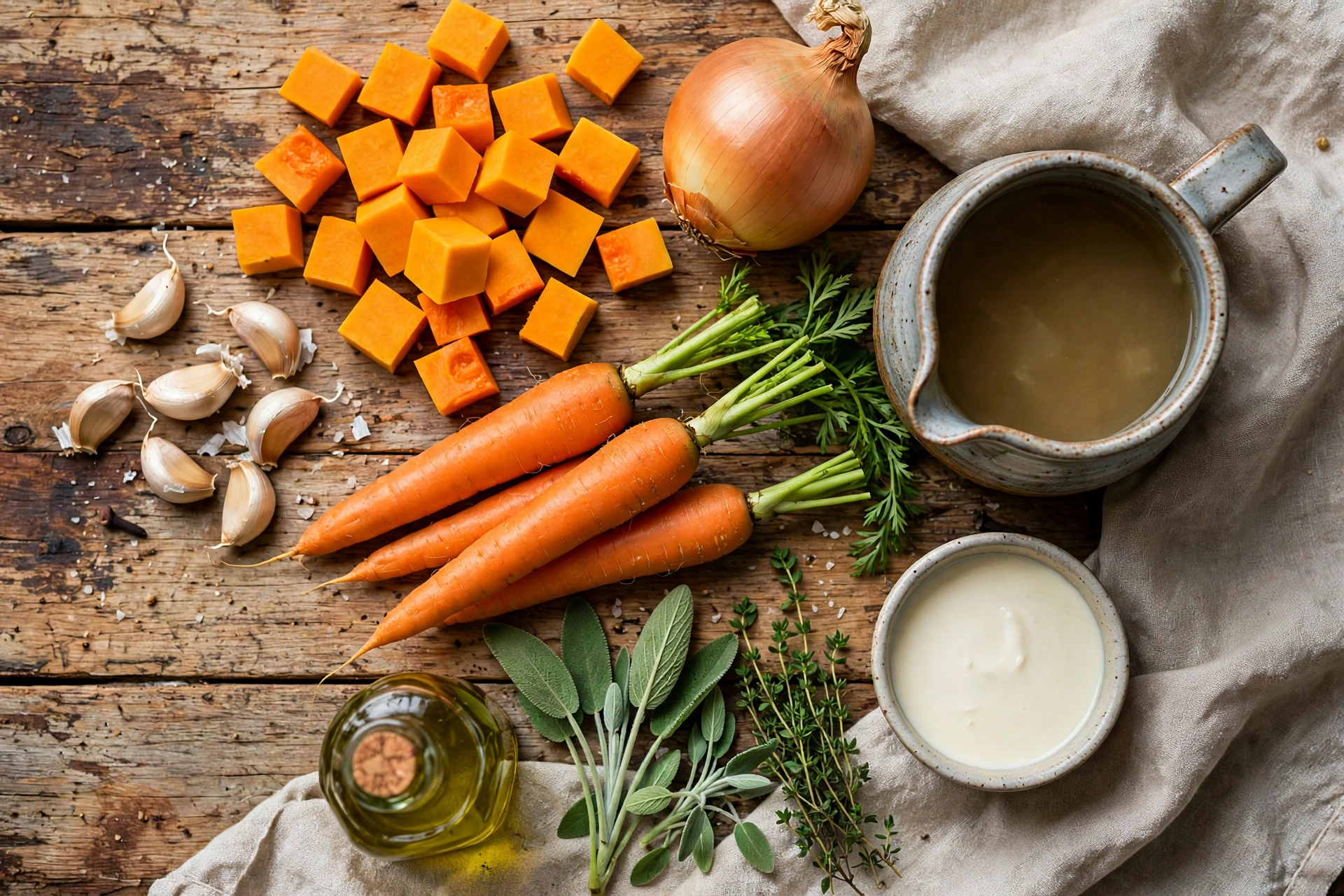
Ingredients
- 2 tablespoons olive oil
- 1 medium yellow onion, diced
- 2 medium carrots, peeled and chopped
- 3 cloves garlic, minced
- 1 large butternut squash (about 2.5 to 3 pounds), peeled, seeded and cut into 1-inch cubes (about 7 to 8 cups)
- 4 cups low-sodium vegetable broth
- 1 teaspoon fresh thyme leaves (or 1/2 teaspoon dried thyme)
- 1/2 teaspoon fine sea salt, plus more to taste
- 1/4 teaspoon black pepper
- Pinch of ground nutmeg
- 1/2 cup heavy cream (or full-fat coconut milk for dairy-free)
- 1 teaspoon apple cider vinegar or lemon juice
- Toasted pumpkin seeds and fresh sage leaves, for serving
- Crusty bread, for serving
Directions
- Saute the aromatics (5 minutes). Heat the olive oil in a large pot or Dutch oven over medium heat. Add the onion and carrots with a pinch of salt and cook for 5 minutes, stirring often, until the onion is soft and translucent and the carrots are just starting to soften.
- Add the garlic (1 minute). Stir in the garlic and cook for 1 minute, just until fragrant. Do not let the garlic brown, or it will turn bitter.
- Simmer until fork-tender (15 minutes). Add the cubed butternut squash, vegetable broth, thyme, salt, pepper and nutmeg. Bring to a boil, then reduce the heat to a gentle simmer, cover and cook for 15 minutes, until the squash is completely fork-tender and a cube collapses easily when pressed with a spoon.
- Blend until velvety smooth (3 minutes). Take the pot off the heat. Blend with an immersion blender right in the pot for about 3 minutes, moving it slowly through the soup, until completely smooth with no lumps. If you use a countertop blender, blend in batches, filling the jar no more than halfway, removing the center cap and covering the lid with a folded towel so steam can escape safely.
- Finish with cream and acid (1 minute). Stir in the cream and the apple cider vinegar or lemon juice off the heat for 1 minute. Taste and adjust the salt. Ladle into bowls and top with toasted pumpkin seeds, fresh sage and an extra swirl of cream. Serve with crusty bread.

Why This Method Works
Every step in this easy butternut squash soup has a job, and skipping one is the difference between a good soup and a great one. Sauteing the onion and carrots first builds a sweet, savory base that plain boiled vegetables can never give you: as the onion softens, its sharp bite mellows into sweetness, and the carrots add body and a gentle earthiness that rounds out the squash. Garlic goes in last because it burns fast, and burnt garlic would turn the whole pot bitter.
Simmering until the squash is completely fork-tender before blending is the real secret to that velvety texture. If even a few cubes are still firm, the blender will leave tiny gritty bits behind, no matter how long you blend. When the squash collapses at the touch of a spoon, it breaks down into a naturally thick, silky puree with no flour or starch needed. Blending in the pot with an immersion blender keeps everything hot and easy, and blending a countertop blender in small batches with the lid vented lets steam escape instead of building pressure and blowing the lid off.
Finally, finishing with cream and a splash of acid off the heat is what makes the flavor pop. Cream stirred in while the soup is still boiling can split and look grainy, so it goes in after the pot comes off the heat. The vinegar or lemon juice does not make the soup sour; it brightens the natural sweetness of the squash, the way a pinch of salt wakes up a dessert. That little lift is why restaurant squash soup tastes so much more alive than a plain boiled version.
Butternut squash is a winter squash with sweet, dense orange flesh that turns beautifully creamy when cooked, which is why it is such a natural fit for soup. You can read more about the squash itself on Wikipedia’s butternut squash page, and Healthline’s guide to butternut squash nutrition covers what makes this golden vegetable such a wholesome choice.
Pro Tips
- Cut the squash into even 1-inch cubes so every piece cooks at the same rate and the whole pot turns tender at once.
- Buy pre-cut butternut squash from the store to cut the prep time down even further on busy weeknights.
- Toast the pumpkin seeds in a dry skillet over medium heat for 2 to 3 minutes, shaking the pan often, until they pop and smell nutty. Watch them closely, as they go from toasted to burnt fast.
- For an extra-silky finish, pass the blended soup through a fine-mesh strainer before adding the cream.
- Warm the bowls with hot water for a minute before serving so the soup stays hot at the table.
Common Mistakes and How to Fix Them
- Blending too early. If the soup feels gritty, the squash was not fully tender yet. Return it to the pot and simmer a few minutes more, then blend again until smooth.
- Burnt garlic. If the garlic turns dark brown, start the aromatics again. Bitter garlic will flavor the whole pot, and no amount of cream will hide it.
- Soup too thick. Stir in vegetable broth a splash at a time until it flows like thick cream. Soup thickens as it cools, so keep a little extra broth handy.
- Soup too thin. Simmer uncovered for a few minutes to reduce it, or blend in a handful of extra cooked squash. Avoid adding flour, which dulls the fresh squash flavor.
- Flat flavor. If the soup tastes dull, it usually needs salt first, then the splash of vinegar or lemon juice. Taste after each small addition until the sweetness brightens.
Substitutions
- Dairy-free: swap the heavy cream for full-fat coconut milk and skip any cheese garnish.
- No carrots: leave them out and add an extra cup of squash, or use a chopped sweet potato for a similar sweetness.
- Different herbs: fresh sage is lovely here; use 6 to 8 fresh sage leaves, added with the broth, or 1/2 teaspoon dried sage.
- Spicier version: add 1/4 teaspoon cayenne pepper or a pinch of red pepper flakes with the broth.
- Richer version: saute the aromatics in butter instead of olive oil for a deeper, rounder flavor.
What to Serve With It
Crusty bread is the classic partner for this soup, perfect for dunking. For a fuller meal, pair it with a simple green salad or a grilled cheese sandwich. If you love cozy fall baking, these Cozy Fall Muffins make a wonderful sweet finish after the soup. For another comforting bowl in the same spirit, try our Olive Garden Zuppa Toscana Soup or the silky Creamy Tomato Basil Soup on another chilly night.
Storage and Make-Ahead
This soup is a wonderful make-ahead meal. Let it cool, then store it in airtight containers. Do not leave the soup at room temperature for more than 2 hours. Refrigerate it for up to 4 days, or freeze it for up to 3 months. Leave the cream swirl and pumpkin seed topping off until serving if you plan to freeze it, and freeze in portion-sized containers so you can thaw only what you need. Thaw overnight in the refrigerator, then reheat gently over low heat, stirring often. Stir in a splash of broth if the soup has thickened, and add the cream swirl and toasted pumpkin seeds just before serving.

Frequently Asked Questions
Can I make butternut squash soup ahead of time?
Yes. Cook and cool the soup, then refrigerate it for up to 4 days or freeze it for up to 3 months. Reheat it gently over low heat, stir in a splash of broth if it has thickened, and add the cream swirl and toasted pumpkin seeds just before serving.
Do I need to peel butternut squash for soup?
Yes, peel it before cooking. The skin stays tough even after simmering and will not blend smooth, so peel the squash, scoop out the seeds, and cut the flesh into even 1-inch cubes.
Can I make this soup dairy-free?
Yes. Use full-fat coconut milk instead of heavy cream and serve it without a cheese garnish. The soup stays creamy and rich, with a gentle coconut flavor that pairs well with squash and sage.
What should I serve with butternut squash soup?
Crusty bread is the classic partner, and a simple green salad or grilled cheese sandwich turns the soup into a full lunch or dinner. Toasted pumpkin seeds and a cream swirl add crunch and richness on top.
Rate this recipe
Be the first to rate it!