
There is a special kind of magic in a chicken pot pie. You slide a golden, flaky pie out of the oven, cut into it, and the steam rises up carrying the smell of buttery crust, thyme, and creamy chicken. The filling is thick and velvety, studded with tender carrots, sweet peas, and soft potatoes, and every spoonful tastes like the coziest dinner you have ever had. This easy chicken pot pie brings all of that comfort to your table in 65 minutes, and the shortcut is a beautiful one: rotisserie chicken does the heavy lifting, so there is no poaching, no shredding a whole bird, and no pile of dishes.
Recipe at a Glance: Prep Time: 20 minutes | Cook Time: 30 minutes | Rest Time: 15 minutes | Total Time: 1 hour 5 minutes | Servings: 6 | Course: Dinner
Why You Will Love This Easy Chicken Pot Pie
This is comfort food that respects your evening. The rotisserie chicken shortcut is the whole secret: the chicken is already juicy, seasoned, and cooked, so you skip the longest step of a classic pot pie entirely and go straight to the good part, which is building a silky sauce and a shatteringly flaky crust. The filling uses frozen peas and everyday vegetables, so there is no fussy chopping marathon, and the sauce thickens in minutes with a simple butter-and-flour roux.
Ingredients
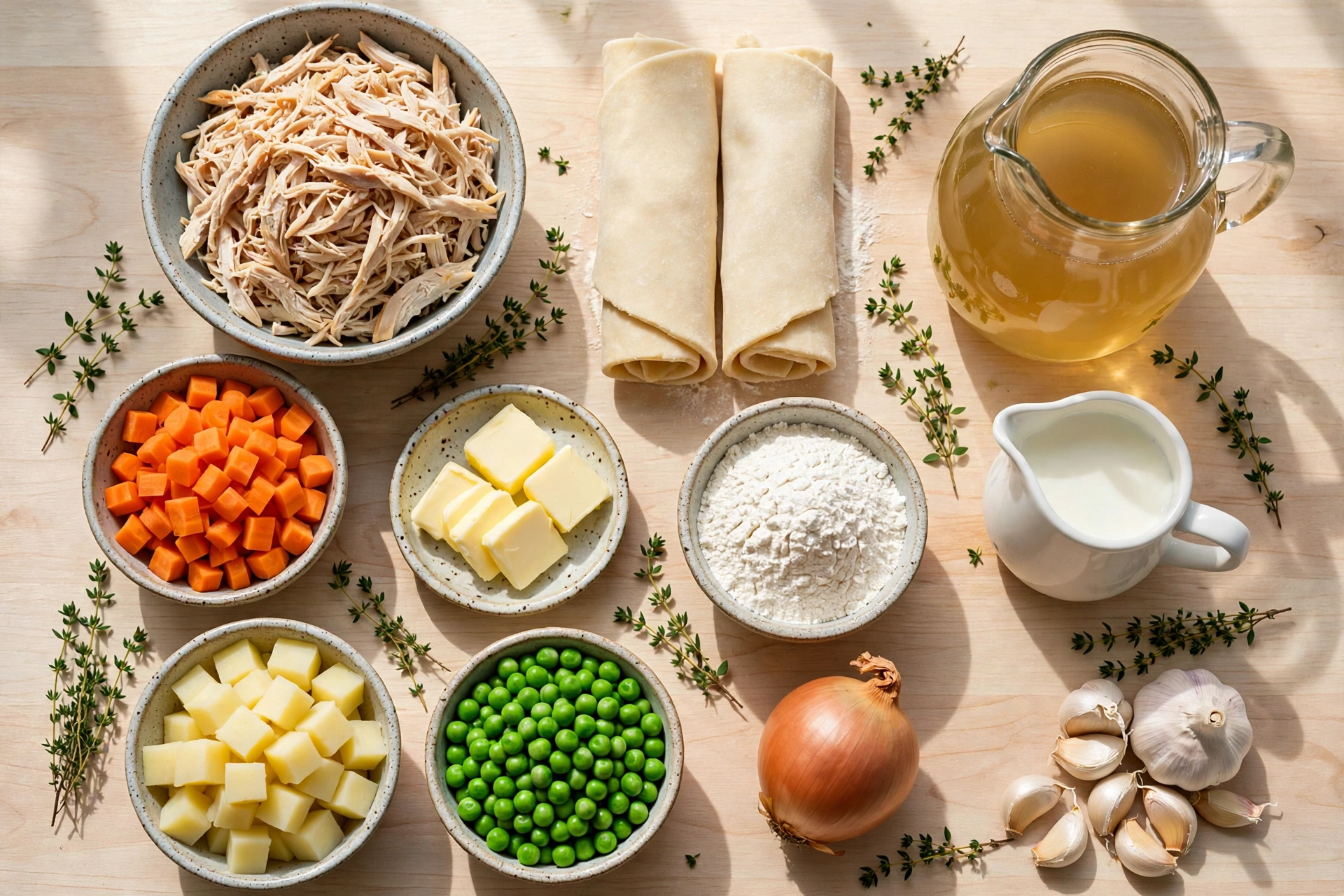
- 3 cups shredded rotisserie chicken (from about 1 store-bought rotisserie chicken)
- 2 refrigerated pie crusts (one 14-ounce package)
- 4 tablespoons unsalted butter
- 1 small yellow onion, finely diced
- 2 celery stalks, finely diced
- 2 garlic cloves, minced
- 1/3 cup all-purpose flour
- 2 cups low-sodium chicken broth
- 1/2 cup whole milk
- 1 cup diced carrots (about 2 medium carrots, cut into 1/2-inch pieces)
- 1 cup diced potatoes (about 2 small Yukon Gold potatoes, cut into 1/2-inch pieces)
- 1 cup frozen peas
- 1 teaspoon dried thyme (or 1 tablespoon fresh thyme leaves)
- 1/2 teaspoon fine sea salt, plus more to taste
- 1/4 teaspoon freshly ground black pepper
- 1 large egg, beaten with 1 tablespoon water (for the egg wash)
Directions
- Heat the oven and prep the dish. Place a rack in the lower third of the oven and heat it to 425°F (220°C). Set a rimmed baking sheet on the rack while the oven heats; the hot sheet catches any drips and helps the bottom crust crisp. Unroll one pie crust and gently press it into a 9-inch pie dish, leaving the overhang in place for now.
- Soften the vegetables. Melt the butter in a large saucepan or deep skillet over medium heat. Add the onion, celery, and carrots and cook for 5 minutes, stirring now and then, until the onion turns translucent and the carrots start to soften at the edges. Stir in the garlic and cook for 30 seconds more, just until fragrant.
- Build the roux. Sprinkle the flour over the vegetables and stir constantly for 1 full minute. The flour should coat everything and turn pale golden. This minute matters: it cooks out the raw flour taste and gives the sauce its thick, velvety body.
- Make the sauce. Pour in the chicken broth a little at a time, stirring constantly so no lumps form, then stir in the milk. Bring the sauce to a gentle simmer and cook for 3 to 4 minutes, stirring often, until it thickens enough to coat the back of a spoon. Season with the thyme, salt, and black pepper, then taste and adjust the salt.
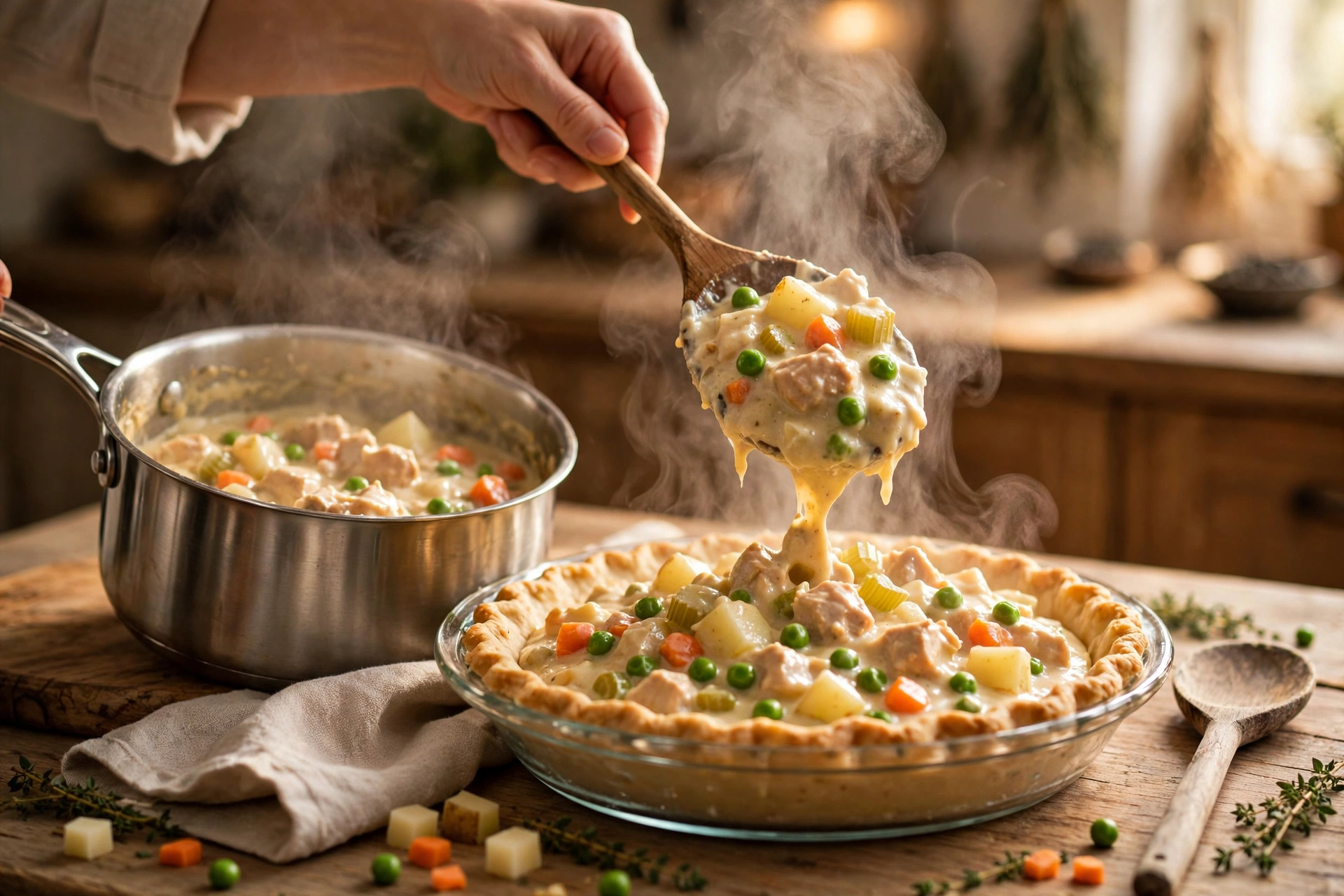
- Fold in the chicken and vegetables. Take the pan off the heat and stir in the shredded chicken, diced potatoes, and frozen peas. The peas go in frozen on purpose: they finish cooking in the oven and stay bright green instead of turning grey and mushy. The filling should look thick and spoonable, not runny. If it seems loose, simmer it for 1 to 2 minutes more before moving on.
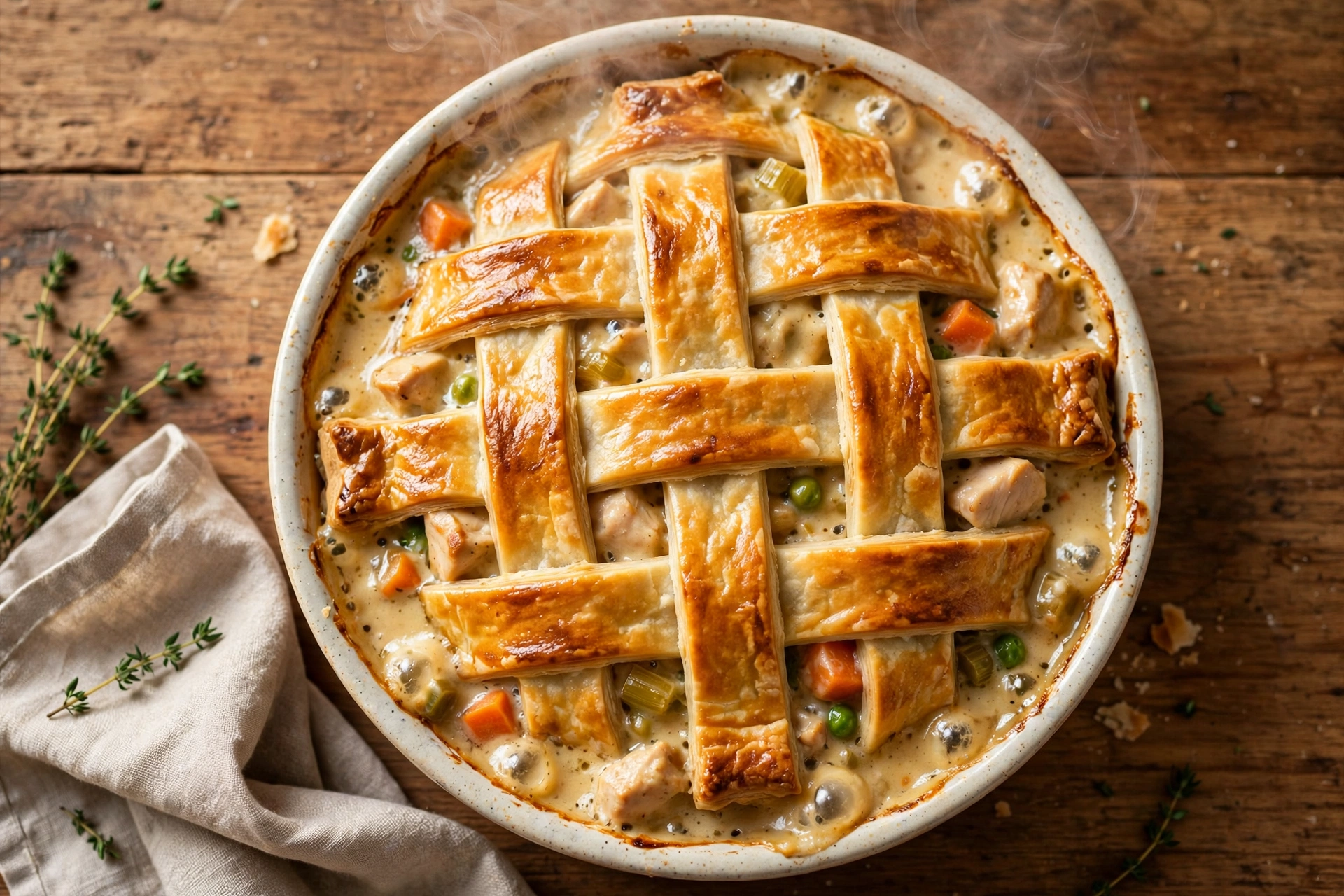
- Fill the pie. Spoon the filling into the prepared bottom crust and spread it into an even layer. Unroll the second pie crust over the top, or cut it into strips and weave a simple lattice like the one in the photo. Trim the overhang to about 1/2 inch, fold the edges under, and crimp firmly with your fingers or a fork so the filling stays sealed inside.
- Vent and wash. Cut 4 or 5 small slits in the top crust so steam can escape while the pie bakes; trapped steam is what makes a top crust soggy from underneath. Brush the whole top generously with the beaten egg wash, which is what gives the crust its deep golden shine.
- Bake until golden and bubbling. Set the pie dish on the hot baking sheet and bake for 30 to 35 minutes, until the crust is deep golden brown and the filling is bubbling up through the vents. Bubbling is your doneness cue: it means the filling is steaming hot all the way through, well past 165°F, and the potatoes are tender. If the edges brown too fast, cover them loosely with strips of foil for the last 10 minutes.
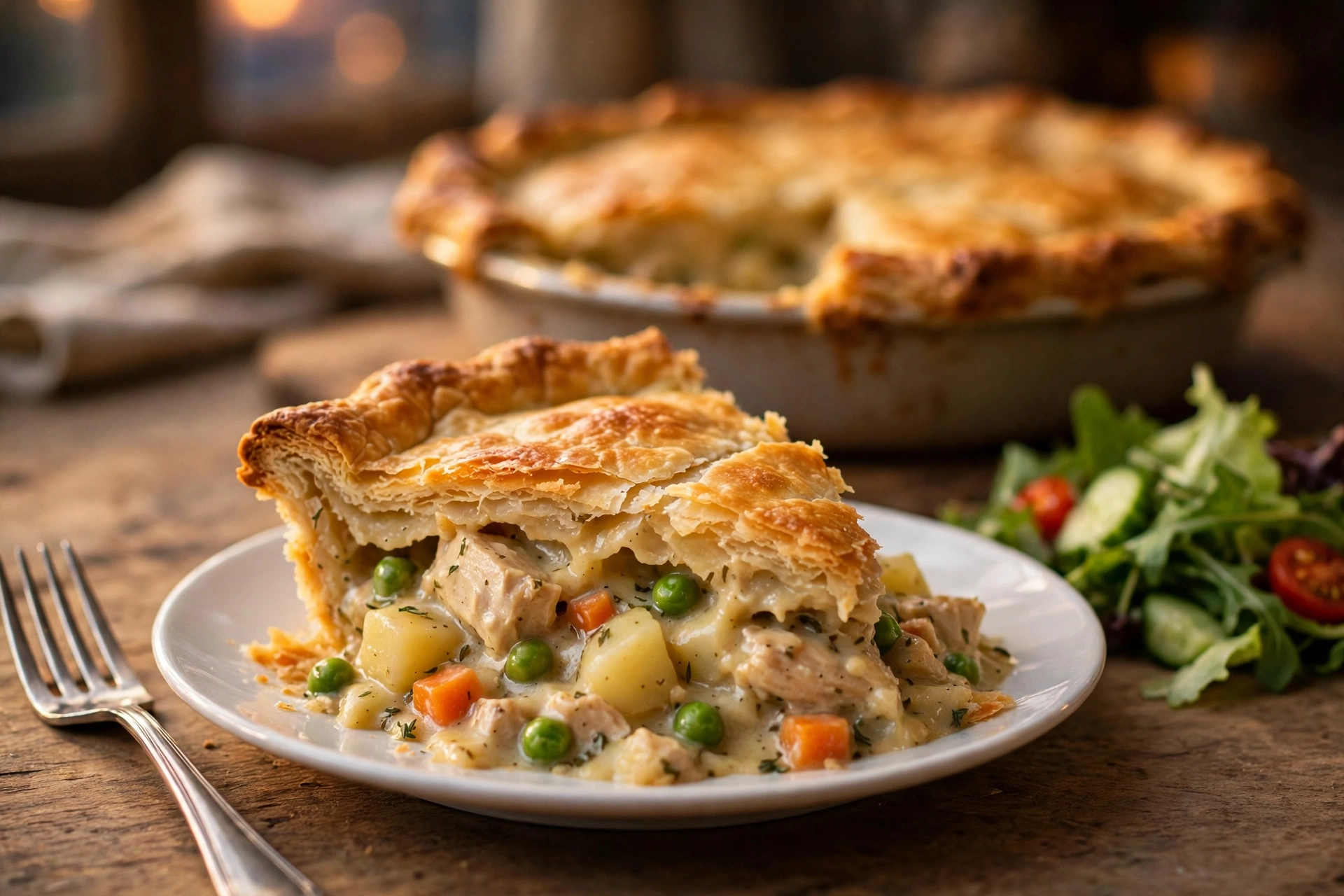
- Rest before slicing. Let the pie rest for 15 minutes before cutting into it. This is the hardest step and the most important one: the hot filling needs those minutes to set, so your slices hold their shape instead of running across the plate. Slice with a sharp knife, serve warm, and watch it disappear.
Why This Works
A great pot pie is really two small pieces of kitchen science working together: a roux-thickened sauce and a hot, sealed crust. The roux is the first piece. When you cook flour in butter for a full minute, the flour’s starch granules are coated in fat, which keeps them from clumping when the broth hits the pan. Then, as the sauce simmers, those starch granules swell and trap liquid, which is what turns thin broth into a sauce thick enough to coat a spoon. Adding the broth a little at a time while stirring lets the starch hydrate evenly instead of forming lumps, and it is the difference between a silky filling and a grainy one.
The second piece is heat management in the crust. A bottom crust goes soggy when cool, wet filling sits on it for a long time before the oven heat reaches it, so this recipe attacks that problem three ways. The baking sheet is preheated with the oven, so the bottom crust starts crisping the moment the pie goes in. The filling goes into the crust hot, straight from the saucepan, so it does not cool the pastry down. And the top crust is vented, so steam escapes instead of condensing under the lid and dripping back down.
The rotisserie chicken shortcut is not a compromise, it is a genuine upgrade for a weeknight. A store-bought rotisserie chicken is brined, roasted, and rested by professionals, so the meat is juicier and more seasoned than chicken you quickly poach at home. Because it is already fully cooked, it only needs to heat through in the filling, which means it never gets the chance to dry out in the oven. And chicken is a lean, protein-rich choice that keeps this comfort dinner on the lighter side of rich, especially next to a simple salad.
Pro Tips
Keep the pie crusts cold until the moment you use them. Cold pastry makes flaky pastry: the little bits of fat in the dough melt in the oven and leave behind the layers that shatter when you cut a slice. If your kitchen is warm and a crust goes soft and sticky while you work, slide the whole pie dish into the fridge for 10 minutes before baking and the crust will reward you.
Cut the potatoes and carrots small, about 1/2 inch, and keep the pieces even. At that size they cook through in the 30-minute bake and turn tender without going mushy. Bigger chunks stay crunchy in the middle, and nobody wants to bite into a raw potato in a pot pie. Frozen peas are your friend here: they need no prep, they hold their color, and they go in last so they never overcook.
Taste the sauce before the filling goes into the crust, because once the pie is sealed you cannot fix the seasoning. It should taste a touch saltier than you think it needs, since the unsalted crust and the potatoes will mellow it. Brush the rim of the bottom crust with a little egg wash before you lay the top crust on, which helps the two layers seal together so the filling stays inside instead of bubbling out the sides. And always bake on the rimmed baking sheet: even a perfectly sealed pie can bubble over a little, and the sheet saves your oven floor.
Common Mistakes
The most common pot pie mistake is slicing too soon. A pie cut straight from the oven looks dramatic for about three seconds, and then the filling runs everywhere and the slice collapses. Fifteen minutes of resting feels like forever when the kitchen smells this good, but it is what lets the starch in the sauce firm up and hold the slice together.
The second mistake is a runny filling, and it almost always comes from rushing the roux. If you add the broth before the flour has cooked for a full minute, or if you stop simmering the sauce before it coats a spoon, the filling will be thin and soupy in the finished pie. The spoon test is your friend: drag a finger across the back of a coated spoon, and the line should hold cleanly. If it fills back in right away, simmer for another minute or two.
The third mistake is skipping the vents. An unvented top crust traps steam, and that steam has only one place to go: down into the filling and back up into the pastry, leaving a pale, soggy lid. Four or five short slits are all it takes, and they also give you a window to see the filling bubbling, which is your best sign that the pie is done.
Finally, do not use raw chicken in this recipe. The bake time is only 30 minutes, which is not enough to cook raw chicken pieces safely all the way through inside a sealed pie. The recipe is built around already-cooked chicken, and the filling only needs to get steaming hot, well past 165°F. If you only have raw chicken breasts, poach them first until they reach 165°F in the thickest part, then shred and carry on.
Substitutions
Swap the protein without changing the method. Leftover roast turkey works beautifully in place of the chicken, which is exactly how our easy turkey pot pie is built, and cooked ham or shredded pork are just as good. For a vegetarian version, leave out the chicken and add 2 cups of sliced mushrooms, sauteed with the onions, plus an extra cup of potatoes; use vegetable broth and the filling is every bit as comforting.
The vegetables are flexible too. Swap the peas for frozen corn or green beans, trade the potatoes for sweet potatoes, or add a cup of sliced mushrooms for a deeper, earthier filling. Keep the total volume of vegetables about the same, around 3 cups, so the sauce-to-filling ratio stays right. If you add mushrooms, cook them with the onions until their liquid evaporates, or the filling will thin out.
For the dairy, whole milk gives the classic creamy result, but half-and-half makes the sauce even richer. A puff pastry top is a delicious shortcut that bakes up tall and golden. If gluten is a concern, use a gluten-free pie crust and swap the flour for an equal amount of gluten-free flour blend or cornstarch, whisked into the cold milk first.
Storage & Make-Ahead
Leftovers keep beautifully. Cool the pie completely, then cover the dish tightly and refrigerate for up to 3 to 4 days. Reheat individual slices in a 350°F oven for 15 to 20 minutes, until the filling is steaming hot all the way through, which also re-crisps the crust; the microwave works in a pinch, but the crust will soften. Never leave the pie at room temperature for more than 2 hours.
To freeze, bake the pie and let it cool completely, then wrap the whole dish tightly in plastic wrap and foil, or freeze individual slices in airtight containers, for up to 3 months. Thaw overnight in the fridge and reheat in a 350°F oven until the center is steaming hot. For the best texture, freeze the unbaked pie instead: assemble it fully, wrap it well, and freeze for up to 2 months. Bake straight from frozen at 375°F for 55 to 65 minutes, covering the edges with foil if they brown too fast, until the crust is golden and the filling bubbles.
For a make-ahead dinner, assemble the pie up to a day ahead and keep it covered in the fridge, unbaked. Brush on the egg wash just before it goes into the oven, and add 5 minutes to the bake time since the pie starts cold. You can also make the filling a day ahead and refrigerate it separately, then fill and top the crust when you are ready to bake.
This pie is a natural partner for the rest of a cozy winter table. Serve it next to our creamy chicken gnocchi soup on a soup-and-pie night, or follow it with something warm from the slow cooker another evening, like our slow cooker beef stew, for a week of comfort dinners that practically cook themselves.
Frequently Asked Questions
How long does easy chicken pot pie take to make?
This easy chicken pot pie takes 65 minutes total: 20 minutes of prep, 30 minutes in the oven, and 15 minutes of resting before slicing. Using rotisserie chicken and refrigerated pie crusts is what keeps it this fast, since there is no chicken to cook and no pastry to make from scratch.
Can I use raw chicken instead of rotisserie chicken?
Yes, but cook it first. Poach or roast chicken breasts until they reach 165°F in the thickest part, then shred them and use 3 cups in the recipe. Do not put raw chicken in the pie, because the 30-minute bake is not long enough to cook it safely all the way through inside a sealed crust.
How do I keep the bottom crust from getting soggy?
Bake the pie on a preheated rimmed baking sheet set on the oven’s lower rack, spoon the filling in hot, and cut vents in the top crust so steam escapes. Those three steps keep the bottom crust crisp: the hot sheet crisps it from below, the hot filling does not cool it down, and the vents stop steam from condensing back into the pastry.
Can I freeze chicken pot pie?
Yes. Freeze the baked pie, fully cooled and well wrapped, for up to 3 months, or freeze the unbaked assembled pie for up to 2 months and bake it straight from frozen at 375°F for 55 to 65 minutes. Thaw baked slices overnight in the fridge and reheat in a 350°F oven until the filling is steaming hot.
Rate this recipe
Be the first to rate it!