
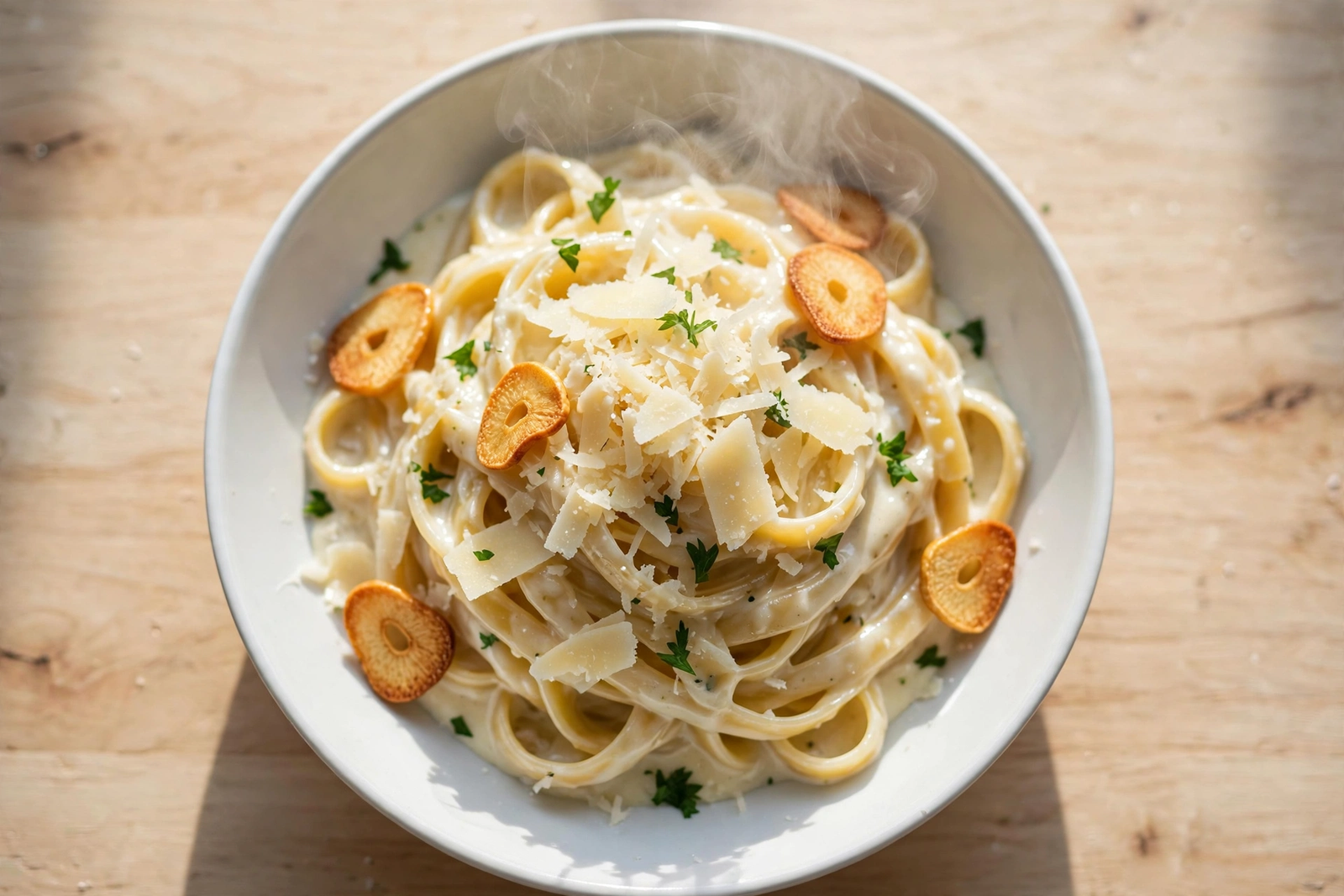
If there is one dinner that has never, ever let me down on a chaotic weeknight, it is this one. Picture glossy ribbons of fettuccine swirled through a silky garlic-butter sauce, every strand glossed with real Parmesan, crispy golden garlic chips scattered on top like little edible confetti. It tastes like something from a cozy Italian trattoria, but it cooks in a single pot in 15 minutes flat, with ingredients you probably already have. This creamy garlic parmesan pasta is about to become the recipe your family requests on repeat.
Recipe at a Glance
- Prep time: 5 minutes
- Cook time: 10 minutes
- Total time: 15 minutes
- Servings: 4
- Method: one pot, stovetop
Why This Method Works
Great one-pot pasta is not about luck — it is about three small technique choices. First, the garlic gets bloomed in butter before anything else goes in. Fat carries flavor, so melting garlic’s sweetness into butter (instead of boiling raw garlic in liquid) gives you a deep, mellow garlic backbone with zero harsh bite. Second, the dry pasta cooks directly in the broth-and-cream mixture, and as it simmers the starch it releases thickens the sauce for you — no flour, no roux, no separate saucepan. Third, and this is the big one: the Parmesan goes in OFF the heat. Parmesan proteins seize and clump in boiling liquid, which is why so many homemade cream sauces turn grainy. Pull the pan off the burner first, add the cheese a handful at a time, and it melts into a glossy, restaurant-smooth emulsion. Finish with a two-minute rest — carryover heat and cooling starches tighten the sauce into the kind of coating that clings to every ribbon.
Ingredients
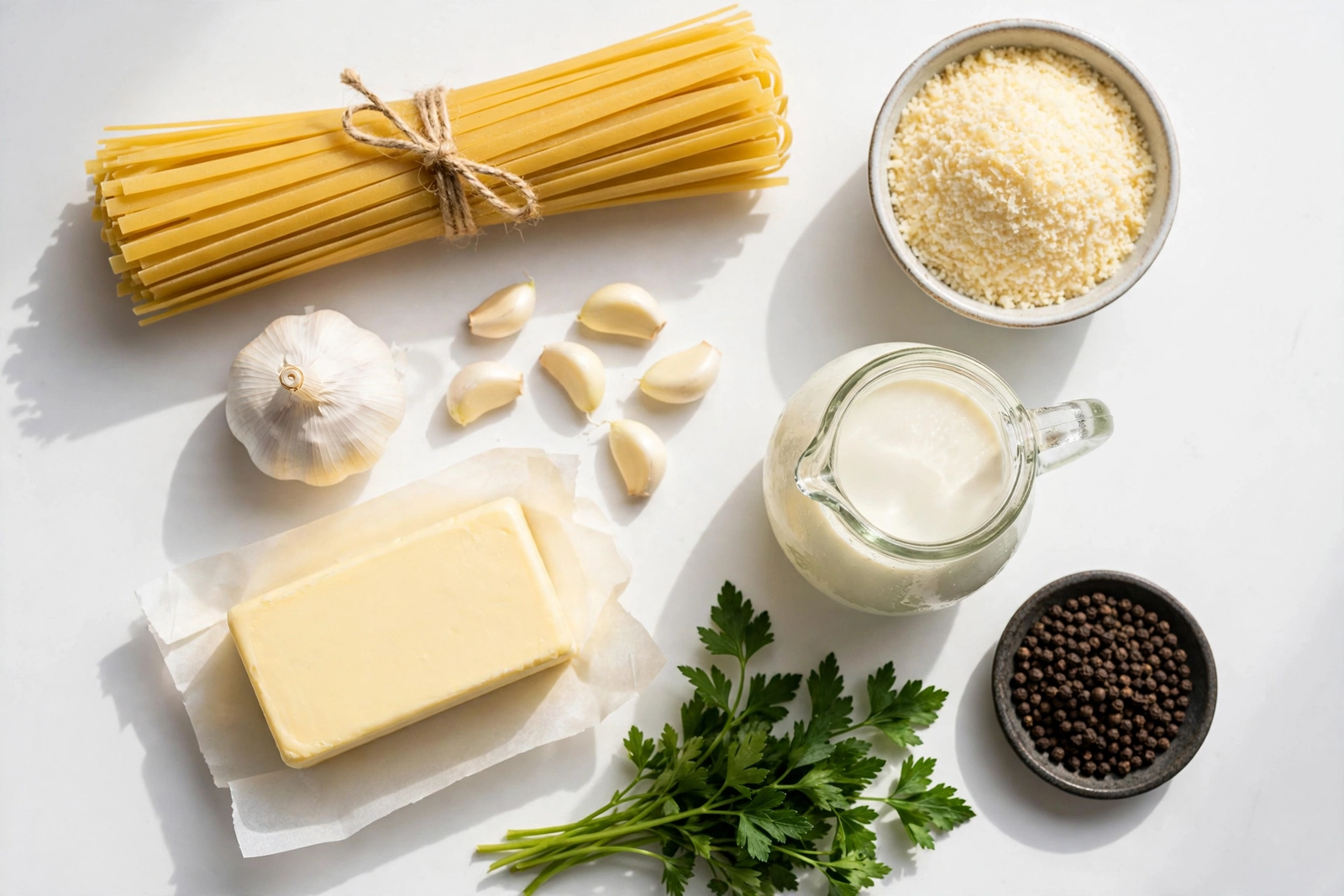
- 12 oz (340 g) fettuccine (or linguine)
- 4 tbsp unsalted butter
- 6 cloves garlic, thinly sliced
- 3 cups low-sodium chicken or vegetable broth
- 1 cup heavy cream
- 1 1/2 cups freshly grated Parmesan cheese, plus more to serve
- 1/2 tsp freshly cracked black pepper
- Salt, to taste
- 1/4 cup chopped fresh parsley
- Red pepper flakes, optional
Directions
- Bloom the garlic. Melt the butter in a large deep skillet or Dutch oven over medium heat. Add the sliced garlic and cook 1 to 2 minutes, stirring, until golden and fragrant. Do not let it brown — dark garlic turns bitter.
- Build the cooking liquid. Pour in the broth and cream, add the black pepper and a pinch of salt, and bring to a gentle simmer.
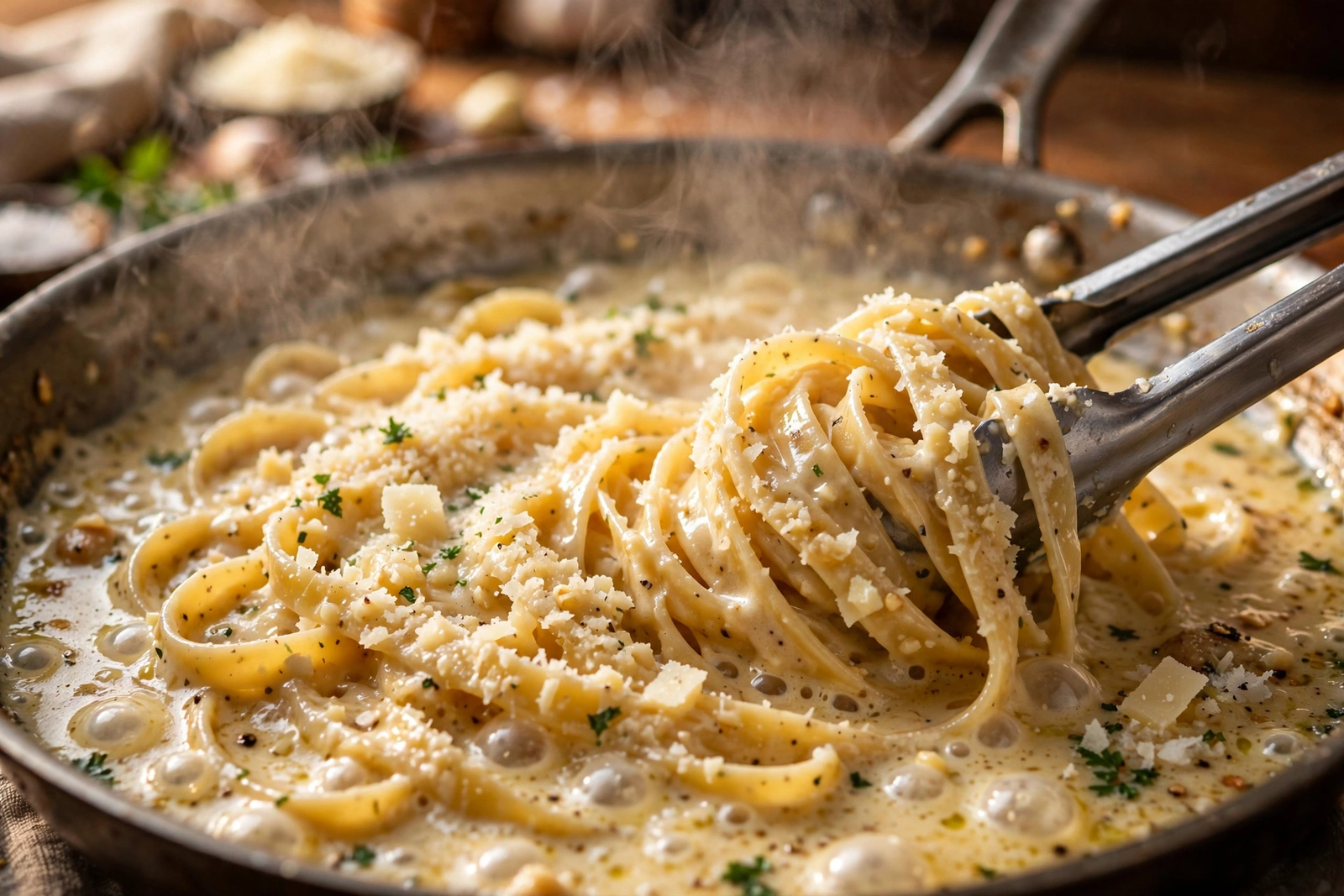
- Cook the pasta in the sauce. Add the dry fettuccine (break the strands in half if they don’t fit), press them down into the liquid, and simmer 9 to 11 minutes, stirring every minute or two, until the pasta is al dente and the liquid has thickened into a creamy sauce.
- Melt in the Parmesan. Take the pan OFF the heat. Sprinkle in the Parmesan a handful at a time, stirring well after each addition, until the sauce turns silky and smooth. Taste and adjust the salt.
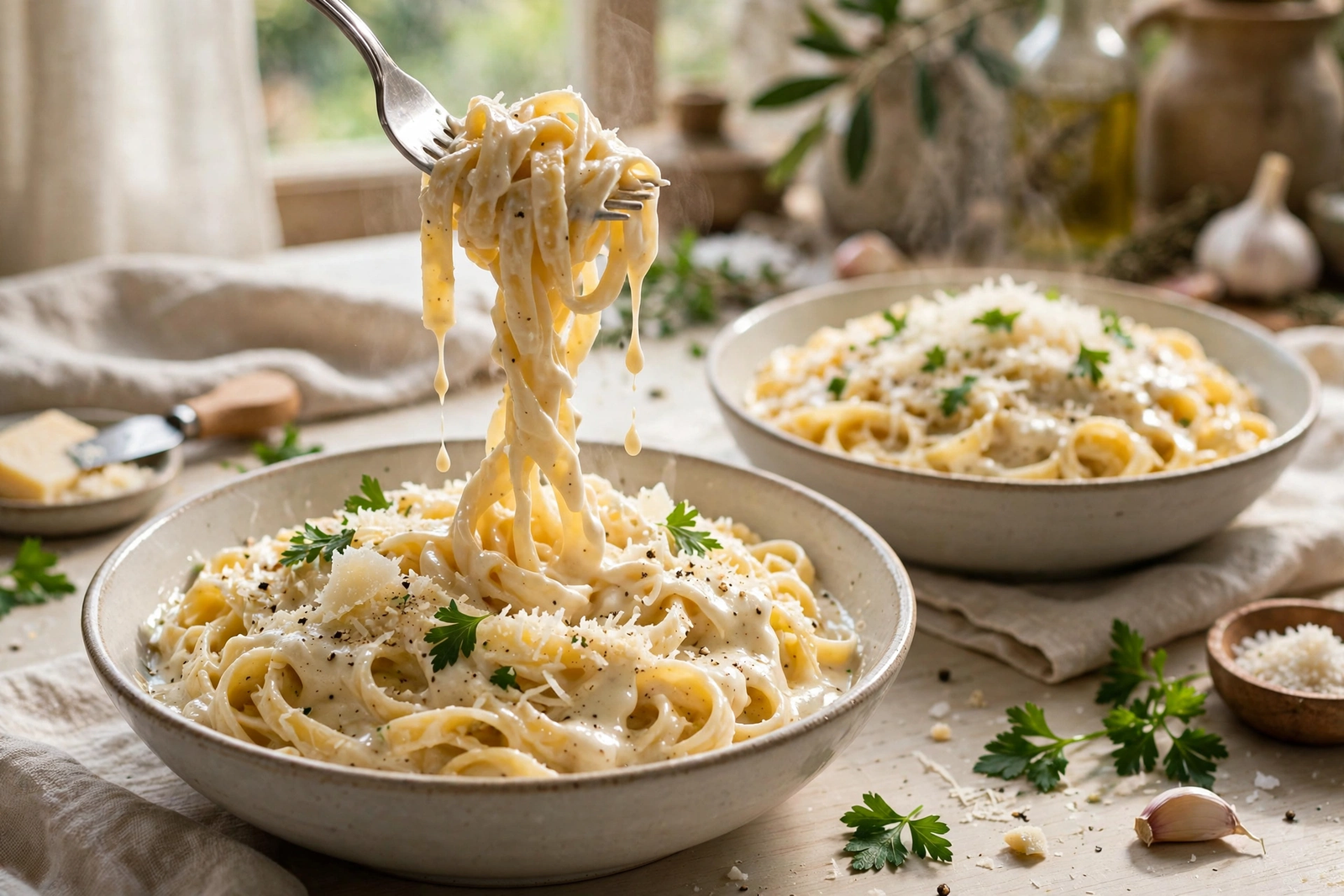
- Rest and serve. Let the pasta rest 2 minutes — the sauce will thicken and coat every strand. Twirl into bowls, shower with extra Parmesan and parsley, and add red pepper flakes if you like a little heat.
Pro Tips
- Grate your own Parmesan. A wedge of Parmigiano-Reggiano and a box grater take two minutes and melt dramatically smoother than pre-shredded cheese, which is coated in anti-caking starches.
- Slice the garlic thin and even — a mandoline or sharp knife — so the chips crisp at the same rate.
- Stir the pasta often during the first 3 minutes; that is when dry strands are most likely to stick together.
- Sauce too thin? Simmer one more minute. Sauce too thick? Splash in a little warm broth or milk until it loosens.
Common Mistakes (and How to Fix Them)
- Burnt garlic: garlic goes from golden to bitter in seconds. Keep the heat at medium, stir constantly, and pull the pan off the heat the moment it smells nutty.
- Grainy sauce: this happens when cheese hits boiling-hot liquid. Off heat, handful by handful — that order is non-negotiable.
- Sticky pasta clumps: dry pasta needs a wide pan and frequent stirring in the first few minutes. A Dutch oven or large skillet beats a tall narrow pot here.
- Bland sauce: taste at the end and salt in layers. Parmesan is salty, so season after the cheese melts, not before.
Substitutions
- No heavy cream? Use half-and-half whisked with 1 teaspoon cornstarch, or whole milk — the sauce will be a little thinner but still delicious.
- Different cheese: Pecorino Romano works beautifully; it is saltier, so cut the added salt in half.
- Gluten-free: use your favorite gluten-free fettuccine and start checking doneness a minute or two early.
- Add protein: top with sliced grilled chicken (our one-pot chicken alfredo pasta is the natural next step) or sauteed shrimp.
- Add vegetables: stir in a few handfuls of baby spinach, sliced mushrooms, or sweet peas in the last 2 minutes of cooking.
Storage and Make-Ahead
This pasta is at its absolute best fresh from the pan, but leftovers keep well. Refrigerate in an airtight container for up to 3 to 4 days. Reheat gently in a skillet over low heat with a splash of milk or broth, stirring until the sauce loosens and turns glossy again — avoid the microwave on high, which can split the sauce. Freezing is not recommended; cream-based sauces separate when thawed. To get ahead, slice the garlic and grate the Parmesan the morning of — dinner then comes together in the promised 15 minutes.
What to Serve With It
This rich, garlicky pasta loves simple company. Tear into warm cheesy garlic bread pizza for mopping up every last drop of sauce, or keep things green with a quick side of garlic butter green beans. A simple arugula salad with lemon cuts through the richness beautifully.
A Note on the Star Ingredients
Garlic does more than taste amazing — Healthline rounds up the research on its well-studied nutritional properties. And the cheese matters here: true Parmigiano-Reggiano is aged a minimum of 12 months, which is where those deep, nutty crystals of flavor come from. It is worth the wedge.
Frequently Asked Questions
Can I use pre-shredded Parmesan instead of grating it fresh?
You can, but freshly grated melts much smoother. Pre-shredded Parmesan is coated with anti-caking agents that can make the sauce slightly grainy. If it is all you have, add it extra slowly off the heat and stir patiently.
Why did my Parmesan sauce turn grainy?
Graininess almost always comes from adding cheese to liquid that is too hot. Parmesan proteins seize in boiling liquid. Take the pan completely off the heat first, then add the cheese a handful at a time, stirring until each addition melts before adding the next.
Can I make this creamy garlic pasta with milk instead of cream?
Yes. Whole milk works if you whisk 1 teaspoon of cornstarch into it first; the sauce will be a touch thinner but still silky. Half-and-half is the closest swap and needs no changes at all.
How do I keep the pasta from sticking together while it cooks?
Use a wide skillet or Dutch oven rather than a tall pot, keep the liquid at a gentle simmer, and stir every minute or two during the first 3 minutes while the dry strands are hydrating. After that the released starch keeps everything moving freely.
Rate this recipe
Be the first to rate it!
1 thought on “Easy 15-Minute Creamy Garlic Parmesan Pasta (One-Pot Recipe)”