
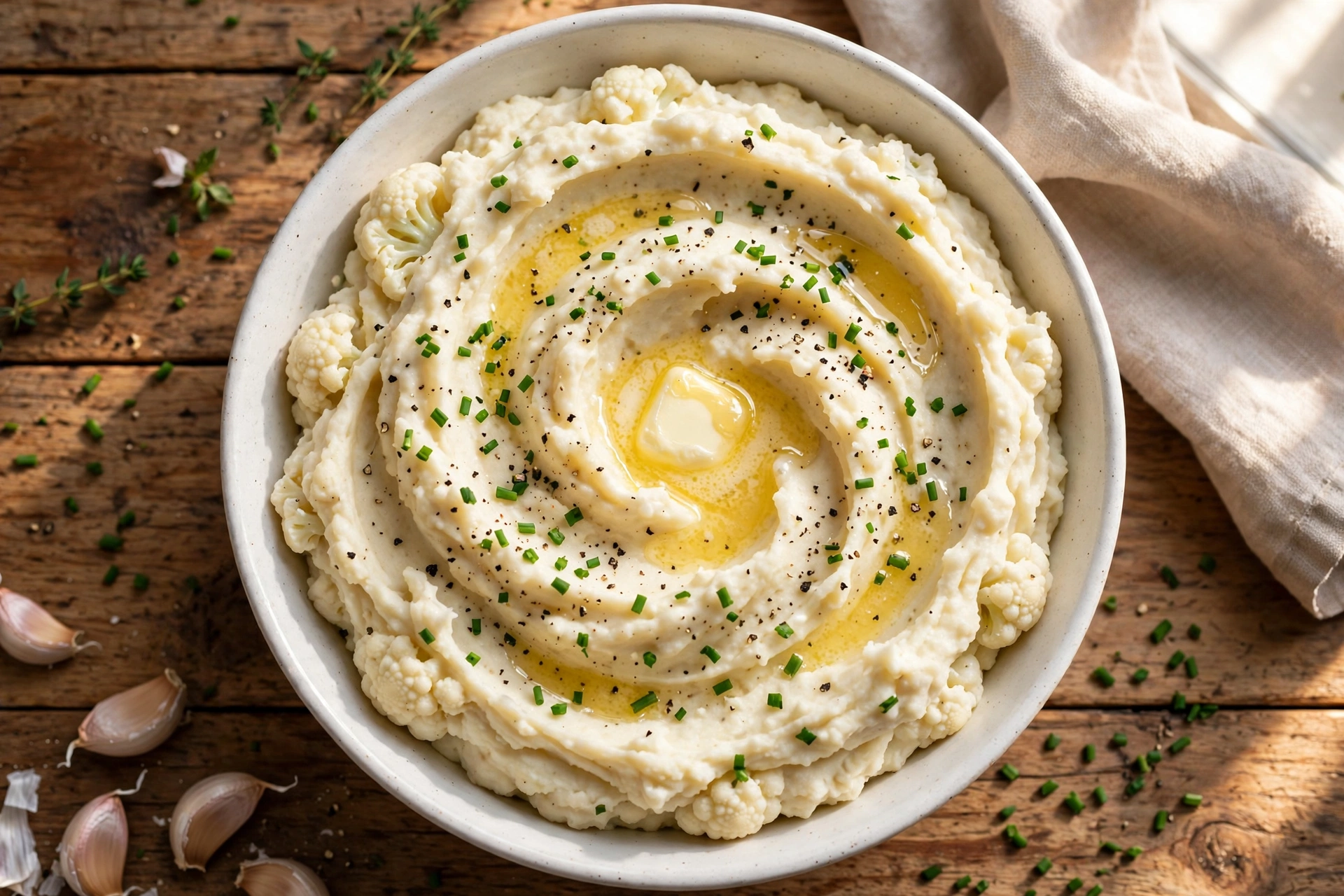
There is a moment at every Thanksgiving table when someone takes a spoonful of the mashed potatoes, pauses, and asks what is in them, because they taste richer than usual, silkier than usual, almost suspiciously good. This easy garlic mashed cauliflower is built for exactly that moment. It looks like a bowl of the creamiest mashed potatoes you have ever served, it swirls the same way under the spoon, it holds a melting pool of butter in the middle just like the real thing, and then it surprises everyone with a gentle garlicky warmth and a lightness that lets you go back for seconds without regret. In 30 minutes flat, one humble head of cauliflower turns into the side dish people talk about on the drive home.
What makes this recipe so lovable is how little it asks of you. There is no roasting pan to babysit, no food processor to wash, no fancy technique to learn. You boil the cauliflower until it is very tender, you bloom garlic in butter while it cooks, and you mash everything together with cream cheese, cream, and parmesan until it turns into a cloud. That is the whole job. The garlic butter does the heavy lifting, the cream cheese gives the mash its body, and the parmesan sneaks in a salty, savory depth that makes the cauliflower taste like it was always meant to be mashed. It is the kind of side dish that earns a permanent spot in the holiday rotation after a single appearance.
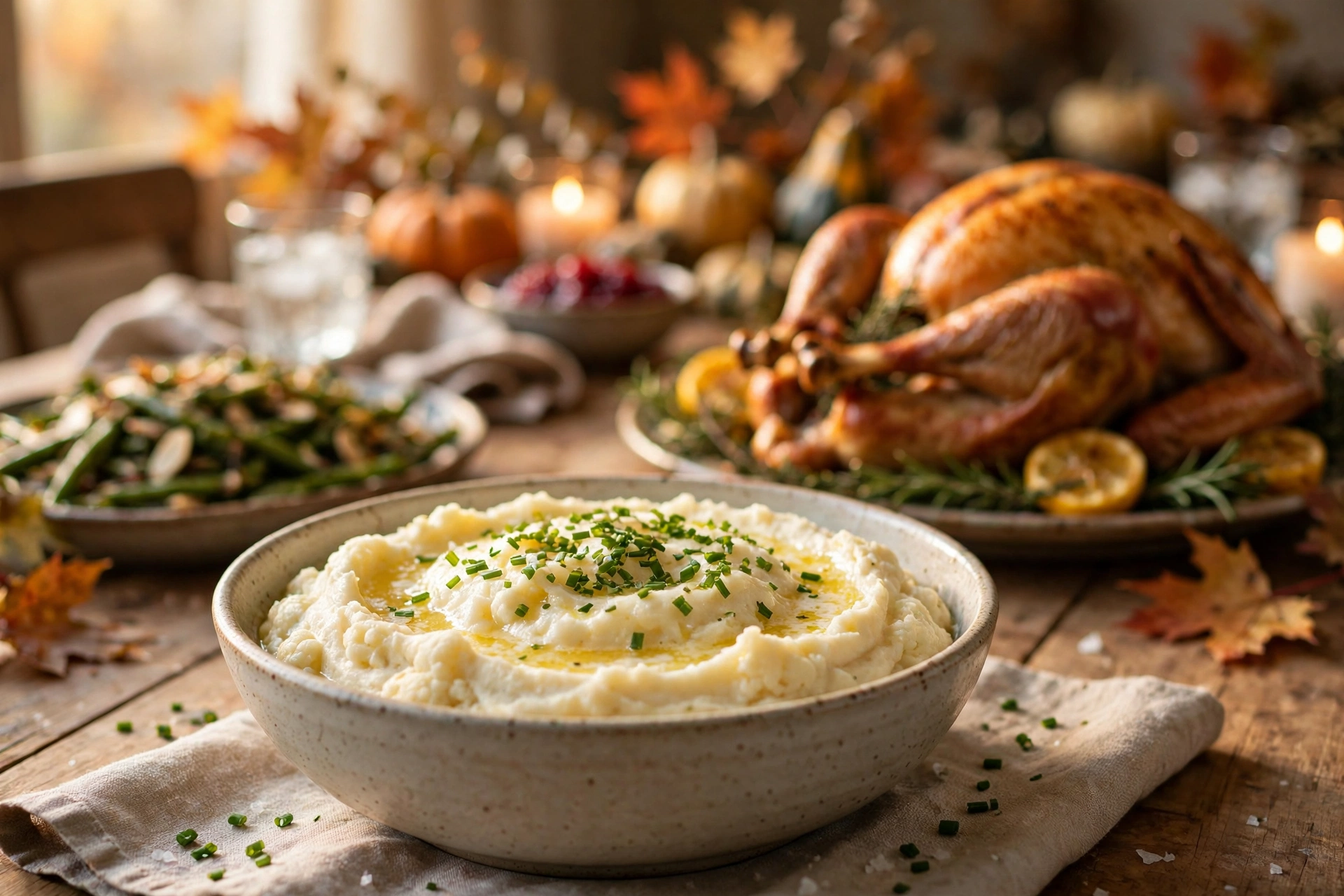
It also happens to be the smartest side dish on the Thanksgiving table. Cauliflower is naturally low in carbs and light in calories, so this mash gives everyone who is watching their plate a generous, satisfying scoop without the food coma that follows a mountain of potatoes. At the same time, nobody at the table needs to know it is the lighter option, because it does not taste like a compromise. Serve it beside the turkey with a drizzle of melted butter and a shower of fresh chives, and watch it disappear before the cranberry sauce does. If your family loves classic mashed potatoes, our easy roasted garlic mashed potatoes is the potato version of this same cozy idea, but for a lighter holiday table, this cauliflower mash is the one to make.
Recipe at a Glance
- Prep Time: 10 minutes
- Cook Time: 20 minutes
- Total Time: 30 minutes
- Servings: 6 servings
- Yield: about 4 cups
- Category: Dinner, Thanksgiving side dishes
Why This Recipe Works
Cook the cauliflower past tender. The single biggest difference between silky mashed cauliflower and a sad, watery bowl of it is how long you cook it. Potatoes forgive a little undercooking, but cauliflower does not. Here the florets simmer for a full 12 to 14 minutes, until a fork slides through them with zero resistance and they are soft enough to squash against the side of the pot with a spoon. That extra tenderness is what lets the mash turn truly smooth instead of grainy, because fully softened cauliflower breaks down evenly under the masher instead of leaving little stubborn lumps behind. If you can crush a floret easily between your fingers, it is ready. If it still fights back, give it two more minutes. Patience here is the whole secret.
Dry the cauliflower before you mash it. Cauliflower holds a surprising amount of water, and that water is the enemy of a creamy mash. Boiled cauliflower straight from the colander will give you a thin, soupy mash no matter how much butter you add, because the water dilutes everything. So after draining, the florets go straight back into the hot, empty pot for one to two minutes over low heat, where the leftover heat steams the surface moisture away. You will see faint wisps of steam and the florets will look matte instead of glossy. That one small step is the reason this mash comes out thick and spoonable instead of runny, and it costs you nothing but ninety seconds.
Bloom the garlic in butter, never raw. Raw garlic in mashed cauliflower tastes sharp and bossy, the kind of bite that lingers and overpowers everything else. Butter changes the story completely. When the garlic simmers gently in melted butter for about two minutes, its harsh edge mellows into a warm, sweet, almost nutty flavor that spreads evenly through the whole bowl. This technique, called blooming, works because fat carries flavor: the butter pulls the garlic’s aromatic compounds out of the cloves and distributes them through the mash. Keep the heat low and pull the pan off the moment the garlic smells fragrant and looks pale gold, because browned garlic turns bitter fast. Two quiet minutes in butter is all it takes.
Cream cheese is the body builder. Butter and cream make a mash rich, but they cannot make it thick on their own, and cauliflower has no potato starch to do the thickening for you. That is where cream cheese earns its place. Two tablespoons melt into the hot cauliflower and act like a gentle glue, giving the mash a velvety body that holds a swirl and clings to the spoon instead of sliding off it. The slight tang of the cream cheese also brightens the whole dish, the same way a squeeze of lemon brightens a sauce, so the mash tastes rich without tasting heavy. Parmesan plays the same game from a different angle, adding salty, savory depth that makes the cauliflower taste deeply seasoned even before you reach for the salt shaker.
Season in layers and taste at the end. Cauliflower is a mild vegetable, which means it needs confident seasoning, but it also means it is easy to overshoot. This recipe seasons in two layers: a little salt goes into the boiling water so the florets are seasoned from the inside out, and the rest goes in at the mashing stage, when you can actually taste what you have. Always taste the finished mash before you serve it, and adjust with a pinch more salt or a few grinds of pepper. The difference between a good mash and a great one is almost always that final tasting spoon, so do not skip it.
Ingredients
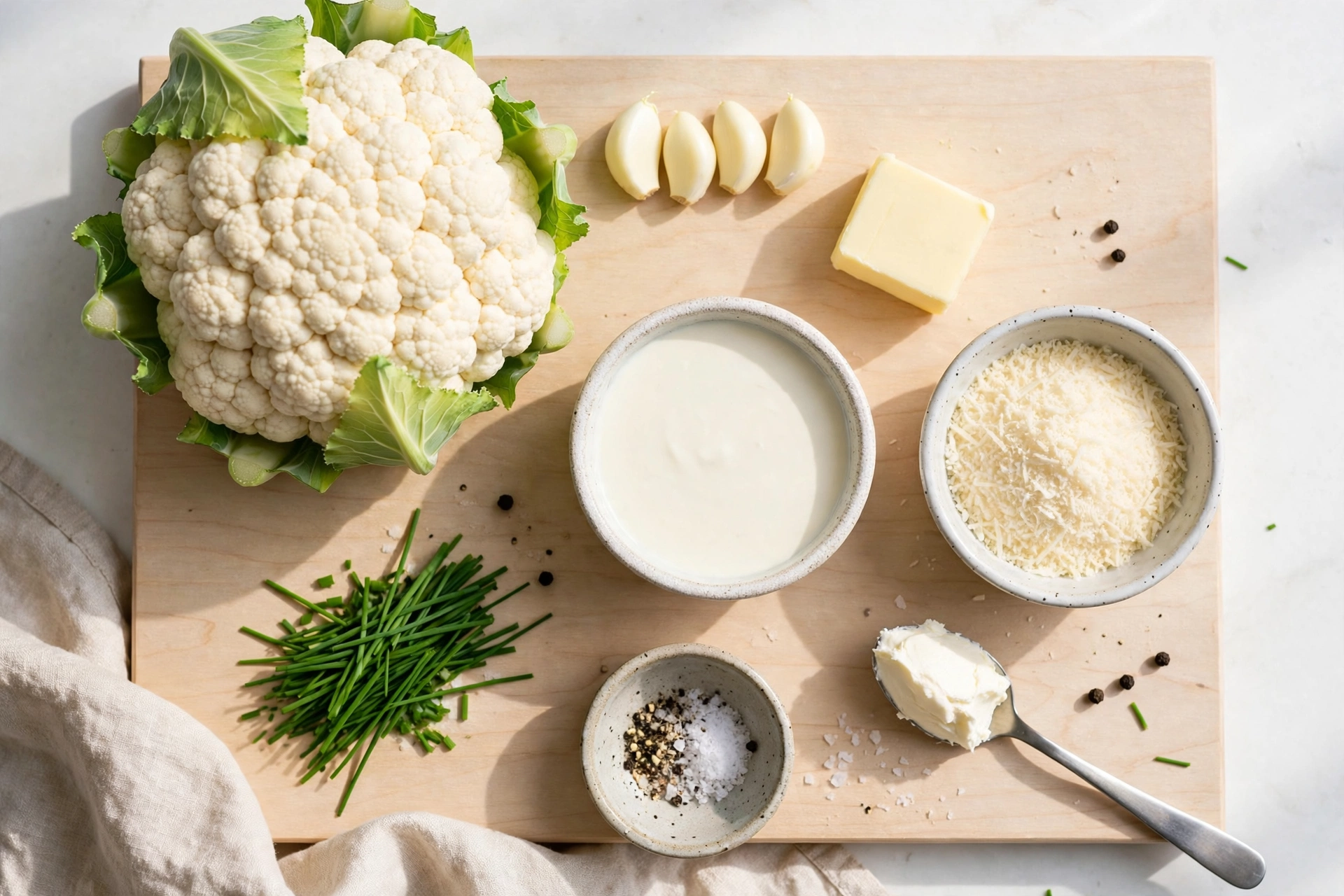
- 1 large head cauliflower, about 2 pounds, cut into even florets (about 6 to 7 cups)
- 4 cloves garlic, peeled and thinly sliced
- 3 tablespoons unsalted butter, divided (2 tablespoons for the garlic butter, 1 tablespoon for serving)
- 2 tablespoons cream cheese, at room temperature
- 1/4 cup heavy cream, warmed
- 1/4 cup finely grated parmesan cheese
- 1 teaspoon fine sea salt, divided (1/2 teaspoon for the boiling water, 1/2 teaspoon for seasoning)
- 1/2 teaspoon freshly ground black pepper
- 1/4 teaspoon ground nutmeg (optional, but lovely)
- 2 tablespoons finely chopped fresh chives, for serving
Pick a cauliflower head that feels heavy for its size, with tight, creamy-white florets and fresh green leaves still attached. A two-pound head gives you about six to seven cups of florets, which mashes down to roughly four cups, enough for six generous side-dish servings. Cut the florets into even pieces, about one and a half inches across, so they all cook at the same speed; uneven pieces mean some turn to mush while others stay firm. The cream cheese should be at room temperature so it melts smoothly into the hot mash instead of sitting in cold lumps, so set it on the counter when you start cutting the cauliflower. Warm the cream for thirty seconds in the microwave or in a small pan, because cold cream cools the mash down and can make it seize up. If you only have salted butter, use it and cut the added salt in half, then taste and adjust at the end.
Directions
- Cut the cauliflower (about 6 minutes). Trim the leaves and the thick stem from the cauliflower head, then cut it into even florets about one and a half inches across. Slice any very large florets in half so everything is roughly the same size. Rinse the florets and set them aside. While you work, set the cream cheese on the counter to soften and measure out the butter, cream, parmesan, salt, pepper, and nutmeg so everything is within reach when the pot comes off the heat.
- Boil until very tender (12 to 14 minutes). Bring a large pot of water to a rolling boil and stir in 1/2 teaspoon of the salt. Add the cauliflower florets, return the water to a gentle boil, and cook for 12 to 14 minutes, until the florets are very tender and a fork slides through the thickest piece with zero resistance. Do not stop at just tender, because slightly firm cauliflower makes a grainy mash. The florets should be soft enough to squash easily against the side of the pot.
- Bloom the garlic in butter (about 2 minutes). While the cauliflower boils, melt 2 tablespoons of butter in a small skillet over low heat. Add the sliced garlic and cook gently for about 2 minutes, stirring often, until the garlic smells sweet and fragrant and looks pale gold. Keep the heat low and do not let the garlic brown, because browned garlic turns bitter and that bitterness will run through the whole bowl. As soon as it smells wonderful, take the skillet off the heat.
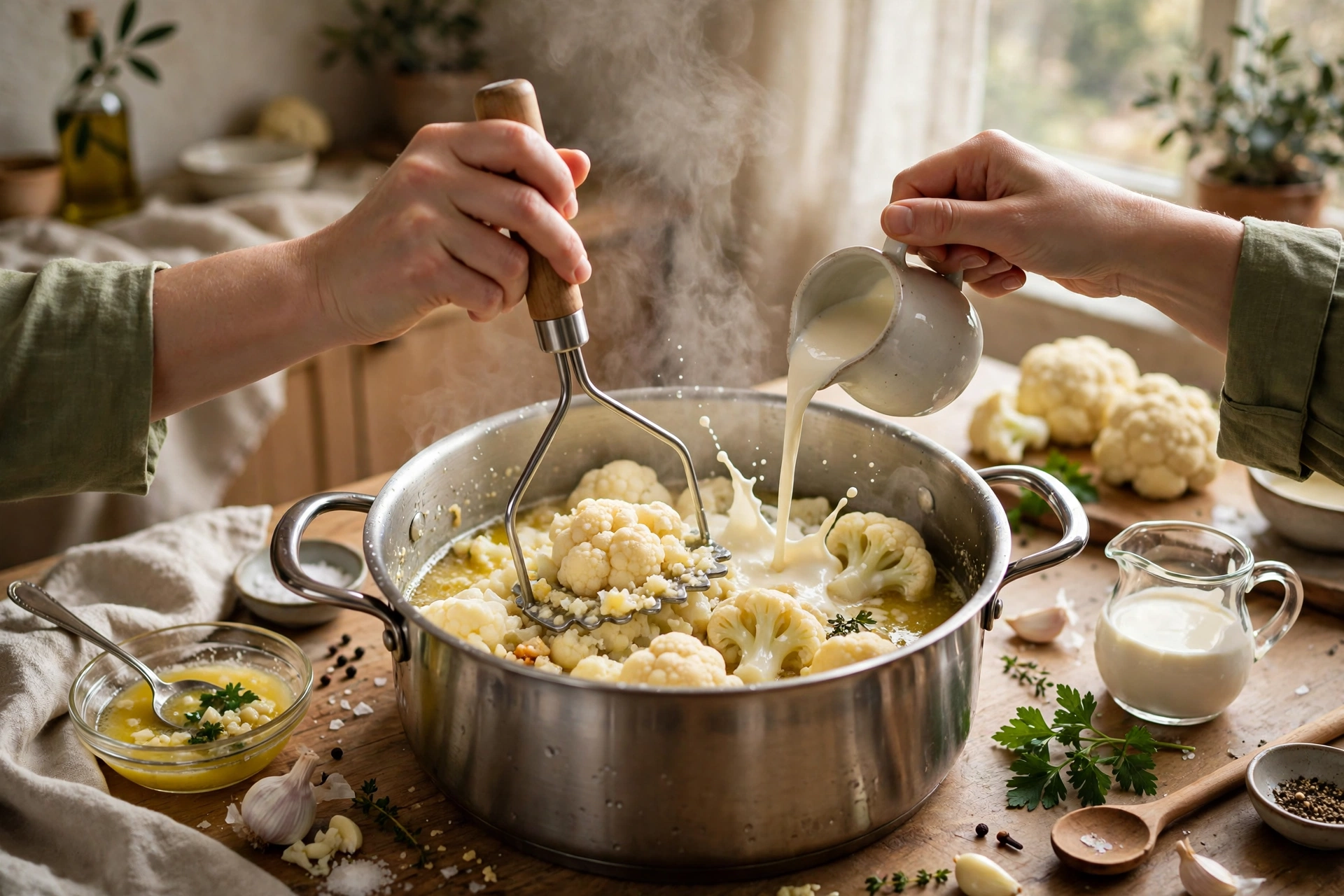
- Drain and dry the cauliflower (1 to 2 minutes). Drain the cauliflower well in a colander, shaking it a few times to knock out as much water as you can, then return the florets to the hot, empty pot over low heat. Let them sit for 1 to 2 minutes, shaking the pot once or twice, until the steam fades and the florets look matte and dry on the outside. This drying step is what keeps the mash thick and creamy instead of watery, so do not skip it.
- Mash with the good stuff (about 2 minutes). Pour the warm garlic butter over the hot cauliflower, then add the cream cheese, the warmed heavy cream, and the parmesan. Mash with a potato masher until the mixture is smooth and creamy, about 2 minutes of steady mashing. For an extra-silky texture, you can finish it with an immersion blender or a quick blitz in a food processor, but do not over-process it, because too much blending can make the mash gluey. A few tiny flecks of texture are perfectly fine and honestly charming.
- Season and taste (about 1 minute). Stir in the remaining 1/2 teaspoon of salt, the black pepper, and the nutmeg if you are using it. Taste a spoonful and adjust: a little more salt if it tastes flat, another grind of pepper if you like warmth, or an extra spoonful of parmesan if you want more savory depth. The mash should taste rich, garlicky, and well seasoned, never bland and never salty.
- Serve warm. Spoon the mash into a warm serving bowl and swirl the top with the back of a spoon. Dot with the remaining 1 tablespoon of butter so it melts into golden pools, then shower with the chopped chives and a final crack of black pepper. Serve right away while it is steaming, alongside turkey, ham, or roast chicken. One bowl serves six, and it will be the first side dish to disappear.
Pro Tips
- Warm the bowl before serving. Rinse your serving bowl with hot water and dry it before spooning in the mash. A cold bowl steals heat fast, and this dish is at its best steaming hot, with the butter still melting on top.
- Cut the florets evenly. Uneven pieces are the quiet cause of lumpy mash. Take the extra minute to halve the big florets so everything cooks at the same pace and turns tender at the same moment.
- Use a potato masher, not a whisk. A masher crushes the florets without overworking them, while a whisk or a long session with a blender can turn the mash gluey. Mash just until smooth, then stop.
- Warm the cream. Cold cream dropped into hot cauliflower cools the whole pot and can make the mash seize. Thirty seconds in the microwave is all it takes, and the mash stays hot and silky.
- Make the garlic butter ahead. If the holiday kitchen is chaotic, bloom the garlic in butter up to two days early and keep it in a small jar in the fridge. Warm it gently before mashing day and you have saved yourself a pan and a task.
- Double it for a crowd. This recipe doubles cleanly for twelve servings: use two heads of cauliflower and a wider pot so the florets cook evenly. Add about two extra minutes to the boil and mash in the pot, not in batches, so the texture stays consistent.
Common Mistakes and How to Fix Them
Watery mash. This is the number one complaint with mashed cauliflower, and it almost always means the florets went into the masher still wet. The fix is the drying step in the hot pot, and if you have already mashed and it looks thin, return the mash to the pot over low heat and stir for two to three minutes until the extra moisture steams off. A spoonful of extra parmesan stirred in at the end also helps it thicken.
Grainy or lumpy texture. Graininess means the cauliflower was undercooked. There is no mashing trick that fixes firm florets, so the real cure is prevention: cook until a fork slides through with zero resistance. If the mash is already made and still lumpy, a quick blitz with an immersion blender will smooth it out, but blend in short bursts and stop as soon as it looks creamy.
Bitter garlic flavor. Bitterness comes from garlic that browned in the pan. If your garlic butter tastes sharp, start that one step over, because there is no way to un-bitter it once it is in the mash. Next time, keep the heat on low, stir constantly, and pull the pan off the burner the moment the garlic turns pale gold and smells sweet.
Bland mash. Cauliflower is mild, so it needs to be seasoned with confidence. If the finished mash tastes flat, the answer is almost always more salt, added a pinch at a time and tasted after each addition. A squeeze of lemon juice or an extra spoonful of parmesan can also wake it up, because both add the brightness and savoriness that mild vegetables need.
Gluey texture from over-blending. A food processor or blender can take this mash from silky to gluey in about ten seconds flat. If it happens, fold in a spoonful of warm cream and a little extra butter by hand to loosen it back up. Next time, mash by hand and use the blender only for a few short pulses at the very end if you want it extra smooth.
Substitutions
Dairy-free version: Swap the butter for olive oil or a good plant-based butter, use a dairy-free cream cheese, and replace the heavy cream with full-fat coconut milk or oat milk. Skip the parmesan or use a dairy-free parmesan, and finish with nutritional yeast for that same savory depth. The mash stays creamy and the garlic flavor still shines.
Lower-fat version: Use whole milk instead of heavy cream and cut the butter to two tablespoons total. The mash will be a little lighter and a touch less rich, but still delicious, especially with the full amount of parmesan and chives. Do not skip the cream cheese, because it is doing the thickening work that the missing fat used to do.
Extra-cheesy version: Stir in a handful of shredded sharp cheddar or Gruyere along with the parmesan. The mash turns golden and extra savory, and it is wonderful spooned into a baking dish, topped with a little more cheese, and broiled for two minutes until bubbly.
Herb swaps: Chives are classic here, but chopped parsley, snipped dill, or a little fresh thyme all work beautifully. For a Thanksgiving table, try a mix of chives and parsley. If you love roasted garlic, roast a whole head until soft and mash the cloves in instead of blooming sliced garlic, but keep the amount modest so the garlic stays warm rather than overpowering. For a little heat, add a pinch of red pepper flakes with the black pepper.
Steaming instead of boiling: If you prefer, steam the florets for 14 to 16 minutes instead of boiling them. Steamed cauliflower holds less water, so the mash comes out even thicker, and you can skip most of the drying step. The trade-off is a slightly longer cook time, but the result is worth it on a day when the stove is crowded.
Storage and Make-Ahead
This mash keeps beautifully, which is exactly what you want from a Thanksgiving side dish. Let leftovers cool to room temperature, then store them in an airtight container in the fridge for three to four days. Never leave the mash sitting out on the table for more than two hours, because the cream cheese and cream are dairy and need to stay cold. To reheat, warm it gently in a saucepan over low heat with a splash of milk or cream, stirring often, until it is steaming hot all the way through and reaches 165°F in the center. You can also reheat it in the microwave in short bursts, stirring between each one. If it thickens in the fridge, a spoonful of warm cream stirred in while reheating brings back the silky texture.
For make-ahead holiday cooking, prepare the mash up to two days before the big meal and keep it in a buttered baking dish, covered tightly, in the fridge. On the day, reheat it covered in a 350°F oven for about 20 minutes, then uncover it, stir in a splash of warm cream, and top with fresh butter and chives just before serving. It freezes well too: spread the cooled mash in a freezer bag, press it flat, and freeze for up to three months. Thaw it overnight in the fridge, then reheat gently with a splash of cream. The texture after freezing is slightly softer, but the flavor is just as good, and a fresh shower of chives hides any difference. This mash also plays beautifully with the rest of the holiday table, so if you are planning the full spread, our easy green beans almondine brings a crisp, nutty contrast, and our easy creamed spinach is the rich, classic partner that rounds out the plate.
Frequently Asked Questions
Can I make garlic mashed cauliflower ahead of time?
Yes, and it is one of the best make-ahead Thanksgiving side dishes you can choose. Make the mash up to two days ahead, store it in a covered baking dish in the fridge, and reheat it covered in a 350°F oven for about 20 minutes. Stir in a splash of warm cream before serving and top with fresh butter and chives, and it will taste just made.
Why is my mashed cauliflower watery?
Watery mash almost always means the florets were mashed while they were still wet. After draining, return the cauliflower to the hot, empty pot for one to two minutes so the surface moisture steams off before you mash. If the mash is already made and looks thin, stir it over low heat for two to three minutes until it thickens, and add an extra spoonful of parmesan.
Can I use frozen cauliflower for this recipe?
Yes, frozen cauliflower works well and saves the cutting step. Use about six cups of frozen florets and boil them for 10 to 12 minutes, until very tender. Frozen cauliflower holds even more water than fresh, so the drying step in the hot pot matters even more. Drain it very well, dry it in the pot, and then mash exactly as written.
Is garlic mashed cauliflower low-carb and keto-friendly?
Yes, this mash is naturally low in carbs and fits a keto-friendly table. One head of cauliflower has far fewer carbs than the same weight of potatoes, and the butter, cream cheese, cream, and parmesan are all low-carb ingredients. A serving has roughly 6 grams of net carbs, so it is a generous, satisfying side dish for anyone watching carbs at Thanksgiving.
Cauliflower itself is a wonderfully versatile vegetable, a member of the cabbage family that has gone from overlooked to beloved in home kitchens, and the Wikipedia page on cauliflower has a lovely overview of its history and varieties if you are curious. For nutrition details, the USDA FoodData Central database lists the full nutrient profile for raw cauliflower, including its fiber and vitamin C content.
Rate this recipe
Be the first to rate it!