
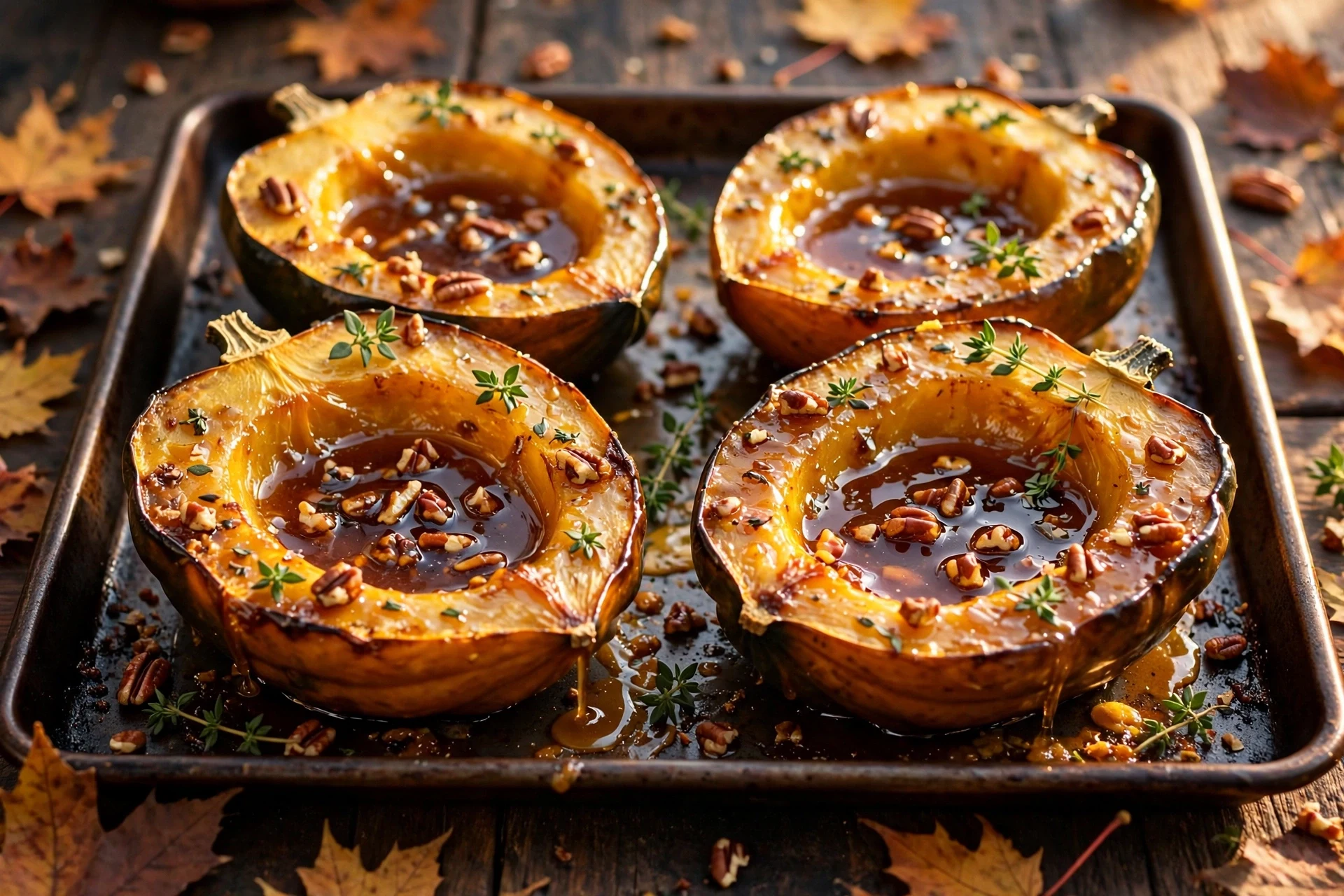
There is a moment every fall when the first acorn squash shows up at the market, dark green and ridged like a little lantern, and the whole Thanksgiving table suddenly starts to make sense. This Easy Roasted Acorn Squash with Maple Butter is that moment, turned into a side dish. The squash roasts until the flesh is soft and sweet, the edges turn golden and caramelized, and a warm maple butter glaze soaks into every scored line. A sprinkle of toasted pecans adds crunch, fresh thyme adds a savory whisper, and suddenly the humble squash is the dish everyone asks about.
The best part is how little work it takes. Ten minutes of prep, one pan, and 40 minutes in a hot oven, and you have a side dish that looks like you fussed over it all afternoon. There is no peeling, no cubing, no standing over the stove. You halve the squash, scoop out the seeds, score the flesh, brush on the maple butter, and let the oven do the rest.
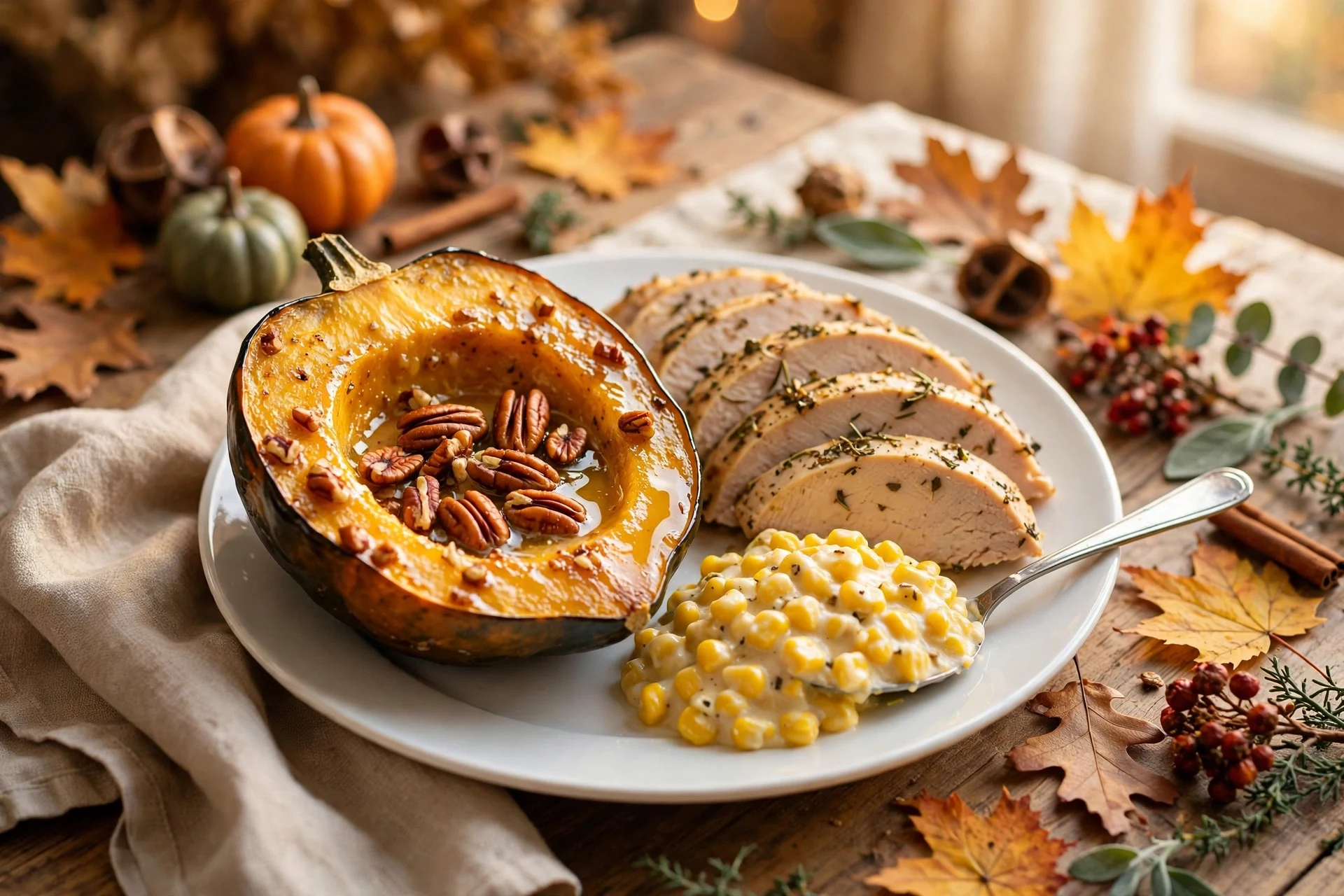
Acorn squash is one of the friendliest vegetables to cook, and that is exactly why it belongs on a holiday table. It holds its shape beautifully, so each person gets their own golden half, glossy with maple butter, right on the plate. It pairs with just about everything, from our Herb Butter Roasted Turkey Breast to a spoonful of Easy Creamed Corn, and it is naturally vegetarian, so it gives everyone at the table something beautiful to eat.
Acorn squash has a mild, sweet, nutty flavor, a little like pumpkin crossed with sweet potato, and roasting is what brings it fully to life. The dry heat of the oven concentrates the natural sugars, the maple butter adds a warm caramel note, and the cinnamon and nutmeg make the whole dish taste like fall itself. The USDA FoodData Central entry for acorn squash lists fiber and vitamin C among its nutrients, a nice bonus for a dish that tastes this indulgent. Serve it with Honey Butter Cornbread on the side and you have a Thanksgiving plate that tastes like the season, from first bite to last.
Recipe at a Glance
Prep Time: 10 minutes | Cook Time: 40 minutes | Total Time: 50 minutes | Servings: 4 servings (1 squash half per serving) | Method: Roasted | Oven: 400 degrees Fahrenheit
Ingredients
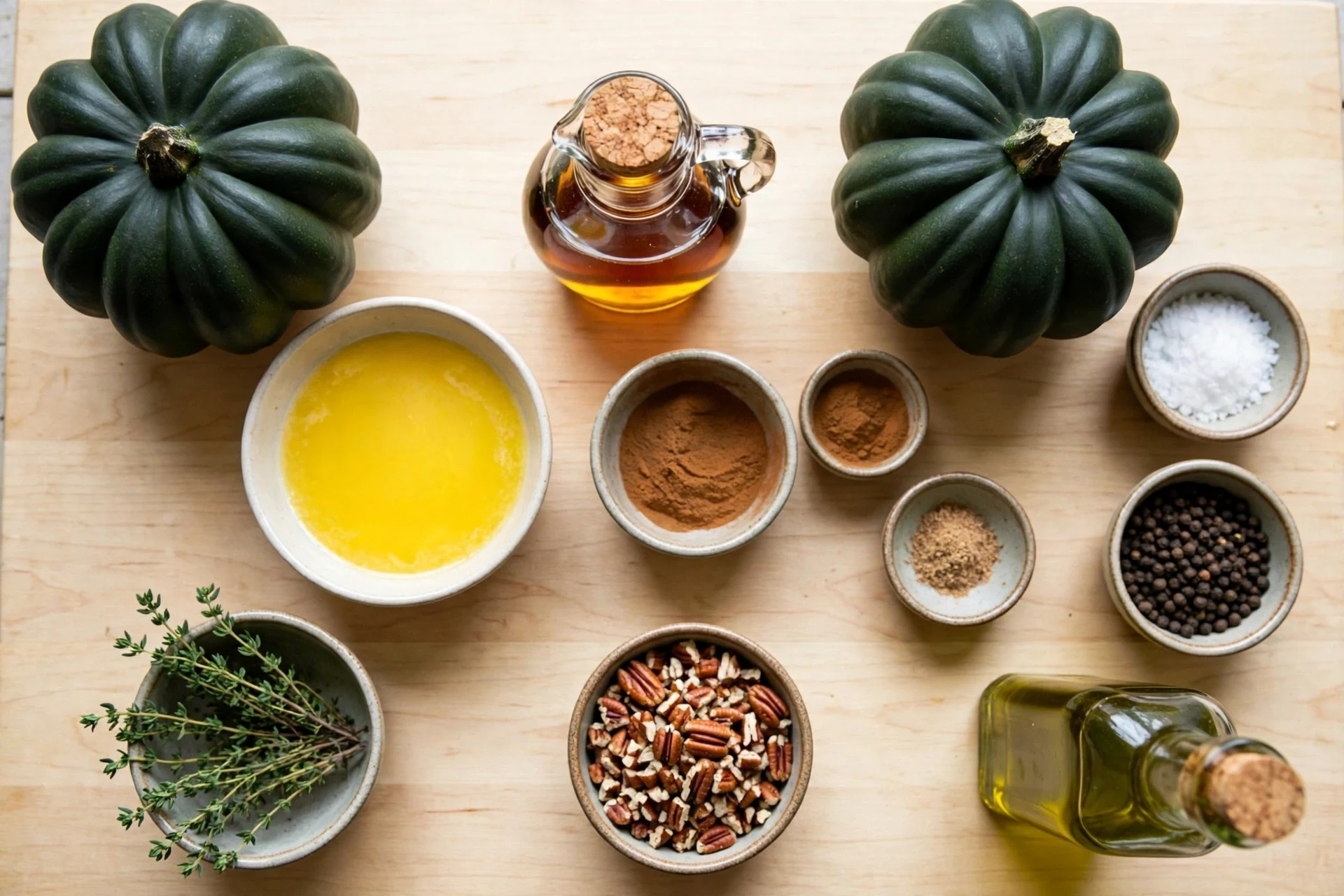
Everything here is simple, and that is the point. Two squash, a little butter and maple syrup, warm spices, and a crunchy, herby finish. No special equipment, no trip to a specialty store, just pantry staples and one baking sheet.
- 2 medium acorn squash (about 1 1/2 pounds each)
- 1 tablespoon olive oil
- 3 tablespoons unsalted butter, melted
- 2 tablespoons pure maple syrup
- 1 teaspoon ground cinnamon
- 1/4 teaspoon ground nutmeg
- 1/2 teaspoon fine salt
- 1/4 teaspoon black pepper
- 2 tablespoons chopped toasted pecans, for serving
- 1 tablespoon fresh thyme leaves, for serving
Directions
- Heat the oven and prepare the pan. Preheat the oven to 400 degrees Fahrenheit and line a large rimmed baking sheet with parchment paper. The parchment keeps the maple glaze from sticking to the pan and makes cleanup as easy as lifting the paper away.
- Halve and seed the squash. Cut each acorn squash in half from stem to tip with a large, sharp chef’s knife, rocking the blade gently through the tough skin. A steady hand and a sharp knife are safer than force, so take your time and keep your fingers well clear of the blade. Scoop out the seeds and stringy fibers from each half with a sturdy spoon, scraping the cavity clean so the maple butter has a smooth hollow to pool in later.
- Score the flesh and season. Use a small knife to score the cut flesh of each half in a shallow crosshatch pattern, cutting about 1/4 inch deep without piercing the skin. These little cuts are the secret of the recipe, because they let the maple butter seep deep into the flesh instead of sitting on top. Brush the cut sides lightly with the olive oil, then season evenly with the salt and black pepper.
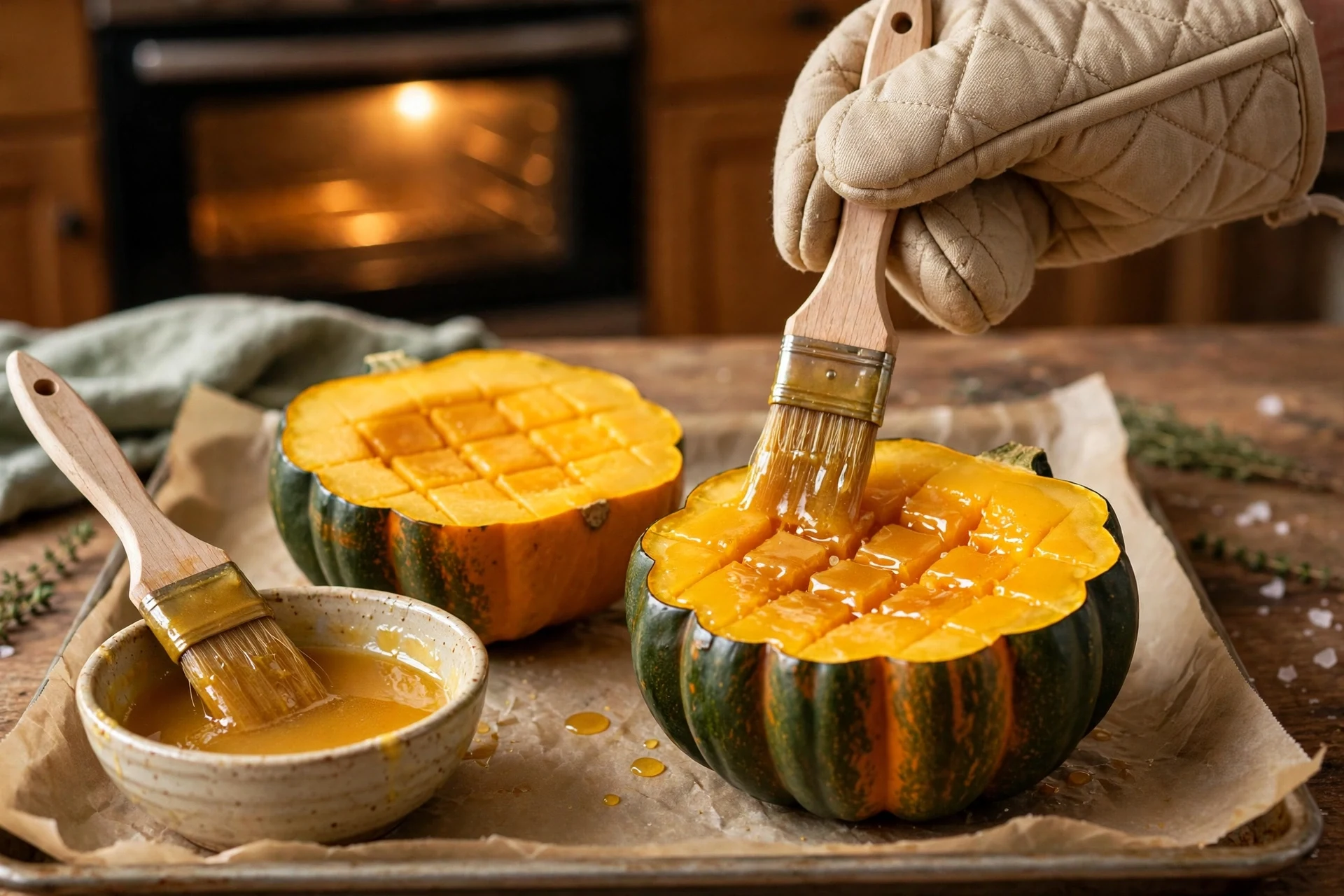
- Whisk the maple butter. In a small bowl, whisk together the melted butter, maple syrup, cinnamon, and nutmeg until the mixture is smooth and glossy. The cinnamon will bloom in the warm butter, releasing its fragrance right away, which is your first hint of how good the kitchen is about to smell. Keep this bowl close to the pan, because you will brush it on twice.
- Roast cut-side down. Place the squash halves cut-side down on the prepared baking sheet and slide the pan into the oven. Roast for 25 minutes. Roasting them face down first is what makes the flesh steam gently in its own moisture, so it turns tender all the way through instead of drying out at the edges. The cut side will pick up a little golden color from the hot pan while the skin protects the rest.
- Flip, glaze, and finish. Carefully flip the halves cut-side up with a spatula and an oven mitt, then brush them generously with the maple butter mixture, letting it pool a little in the hollow of each half. Return the pan to the oven and roast for 15 minutes more, until a fork slides into the thickest part of the flesh with no resistance at all and the edges look golden and caramelized. If the glaze is bubbling and the cut surfaces are glossy and lightly browned at the ridges, the squash is ready.
- Rest and serve. Let the squash rest on the pan for 5 minutes, which lets the flesh settle and the glaze thicken just slightly so it clings instead of running off. Spoon any maple butter left in the bowl over the halves, sprinkle with the chopped toasted pecans and fresh thyme leaves, and serve warm, one golden half per plate.
Why This Works
Every step in this recipe has a job, and understanding the jobs is what turns a good side dish into the one everyone remembers. The 400 degree Fahrenheit oven is hot enough to caramelize the natural sugars in the squash, which is where the deep, toasty flavor comes from, but not so hot that the maple syrup burns before the flesh is tender. Roasting cut-side down first is the other half of the magic. The flesh steams gently against the hot pan, cooking through evenly, while the skin acts like a little bowl that holds in the moisture.
The crosshatch scoring matters more than it looks. Acorn squash flesh is dense, and a glaze brushed onto a smooth surface mostly slides off. Those shallow cuts open up dozens of little channels, so the maple butter sinks in as the squash roasts, flavoring the flesh from the inside out instead of just coating the top. That is why each bite tastes sweet and buttery all the way through, not just on the surface.
The maple butter itself does two jobs at once. The butter carries flavor and helps the cut surfaces brown, while the maple syrup adds sweetness and encourages caramelization at the edges. The cinnamon and nutmeg are not just decoration, either. Warm spices make the maple taste richer and more complex, and they are the flavors your nose notices first when the pan comes out of the oven. A pinch of salt in the glaze keeps the sweetness from turning one-note, which is the difference between a side dish that tastes sweet and one that tastes seasoned.
Finally, the pecans and thyme are a finishing touch with real purpose. The toasted pecans add crunch against the soft, silky flesh, and the fresh thyme adds a savory, slightly lemony note that keeps the dish from leaning too far into dessert territory. Together they make each half look finished and taste complete, which is exactly what a holiday side dish should do.
Pro Tips
- Pick heavy squash with no soft spots. A good acorn squash feels heavy for its size, has dull, dark green skin, and has no soft spots or cracks. Heavy means dense, moist flesh inside, and dull skin means it was picked ripe.
- Use a sharp knife and a stable board. Acorn squash skin is tough, and a dull knife is the real danger here. Use your sharpest chef’s knife, cut on a damp towel under the board so nothing slides, and rock the blade through the squash slowly. If a squash wobbles, slice a thin piece off the bottom of one half so it sits flat.
- Use pure maple syrup, not pancake syrup. Real maple syrup caramelizes cleanly and tastes warm and woody. Pancake syrup is mostly corn syrup with maple flavoring, and it can burn quickly and taste flat. The two tablespoons here are worth the real thing.
- Save half the maple butter for the second brushing. The first brushing flavors the squash as it roasts, and the second brushing, after the flip, is what creates that glossy, caramelized finish. If you use it all at once, the glaze pools and burns on the pan instead of clinging to the flesh.
- Toast the pecans while the oven is hot. Spread the chopped pecans on a small baking sheet and toast them for 5 minutes at 400 degrees Fahrenheit while the squash roasts, shaking the pan once. Toasted pecans taste nuttier and crunchier than raw ones, and the warm oven is already on, so it costs nothing.
Common Mistakes
Roasting at too low a temperature. A 325 or 350 degree oven will eventually soften the squash, but it will not caramelize the edges or concentrate the flavor the same way. The flesh comes out pale and a little watery instead of golden and toasty. Keep the oven at 400 degrees Fahrenheit, and let the heat do the work.
Skipping the scoring. Without the crosshatch cuts, the maple butter sits on the surface and slides off into the pan, leaving the flesh underneath plain. Scoring takes one minute and is the difference between squash that tastes buttery all the way through and squash that only tastes buttery on top.
Crowding the pan. Four halves need room to roast, and a crowded pan steams instead of roasting. Use a large rimmed baking sheet and leave at least an inch between the halves so hot air can circulate. If your pan is small, use two pans rather than squeezing them together.
Cutting through the skin while scoring. The cuts should be shallow, about 1/4 inch deep, just into the flesh. If you cut all the way through the skin, the maple butter leaks out the bottom and the half loses its shape. A light hand is all it takes.
Overcooking until the squash collapses. Acorn squash is done when a fork slides in easily and the edges are caramelized, which takes 40 minutes at 400 degrees Fahrenheit for medium squash. Much longer than that, and the halves go limp and fall apart when you try to lift them. Check at 40 minutes and trust the fork test more than the clock.
Adding the pecans too early. Pecans sprinkled on before roasting will burn in the hot oven and turn bitter. Always add them at the end, after the squash has rested, so they stay crunchy and sweet.
Substitutions
- Maple syrup: Honey works as a one-to-one swap for the maple syrup, using the same 2 tablespoons. It caramelizes a little faster, so check the squash a few minutes early. Brown sugar also works: whisk 2 tablespoons of packed brown sugar into the melted butter instead.
- Butter: Swap the butter for an equal amount of olive oil or melted coconut oil if you prefer a dairy-free version. The flavor will be a little less rich, but the squash still roasts beautifully and the glaze still caramelizes.
- Pecans: Toasted walnuts or pepitas make a lovely swap for the pecans, using the same 2 tablespoons. Walnuts are a little more bitter and earthy, while pepitas add a lighter, seed-like crunch. Leave the nuts out entirely for a nut-free table.
- Thyme: Fresh sage leaves are a wonderful swap for the thyme, especially at Thanksgiving. Use 4 to 5 small sage leaves per half, and if you like, crisp them in a little butter first. Dried thyme works too: use 1 teaspoon instead of the tablespoon of fresh leaves.
- Spices: Swap the nutmeg for a pinch of ground ginger or allspice if you do not have it, or add 1/4 teaspoon of ground cloves for a deeper, warmer spice note. A little smoked paprika, just 1/4 teaspoon, gives the glaze a savory edge that pairs beautifully with turkey.
- Squash: Delicata squash can replace the acorn squash, using the same method and timing. Its skin is edible and thinner, so slice it into rings instead of halves and roast for about 30 minutes total. Butternut squash works too, peeled and cut into wedges, roasted for 35 to 40 minutes.
Storage & Make-Ahead
Roasted acorn squash keeps beautifully, which makes it a forgiving dish for a busy holiday. Let the cooked halves cool completely, then store them in an airtight container in the refrigerator for up to 4 days. Reheat them in a 350 degree Fahrenheit oven for 10 to 12 minutes, until warmed through, and add the pecans and thyme fresh after reheating so they stay crunchy. The squash also freezes well: wrap cooled halves tightly in foil, then place them in a freezer bag for up to 3 months, and thaw them overnight in the refrigerator before reheating.
For make-ahead planning, you can halve, seed, and score the squash up to 1 day ahead. Wrap the halves tightly in plastic wrap and refrigerate them, then brush with oil and maple butter and roast as directed on the day. The maple butter mixture can also be whisked together a day ahead and kept covered in the refrigerator; warm it gently for a few seconds in the microwave so it is pourable again before brushing.
Frequently Asked Questions
Do you peel acorn squash before roasting it?
No, and you should not try. The skin of acorn squash is tough when raw, but it softens as it roasts and becomes tender enough to eat, and it holds each half together like a little bowl while it cooks. Peeling a raw acorn squash is hard work and completely unnecessary. Just scrub the outside clean, halve it, and roast it with the skin on. If anyone at the table prefers not to eat the skin, the soft flesh scoops out easily with a spoon.
How do you know when acorn squash is done roasting?
Push a fork into the thickest part of the flesh. When it slides in with no resistance at all, the squash is done. The cut surfaces should look golden and glossy, the edges should be lightly caramelized and browned at the ridges, and the maple butter should be bubbling gently in the hollow. For medium squash, that takes 40 minutes at 400 degrees Fahrenheit: 25 minutes cut-side down, then 15 minutes cut-side up after glazing. If the fork meets resistance, give the squash 5 more minutes and test again.
Can I make roasted acorn squash ahead of time?
Yes, and it reheats well. Roast the squash as directed, let the halves cool completely, and store them in an airtight container in the refrigerator for up to 4 days. Reheat them in a 350 degree Fahrenheit oven for 10 to 12 minutes, until warmed through, and add the pecans and thyme fresh after reheating so they stay crunchy. You can also prep the squash a day ahead: halve, seed, and score it, wrap it tightly, and refrigerate it, then roast it on the day. The maple butter mixture can be whisked together a day ahead too and warmed gently before brushing.
Can I use honey instead of maple syrup?
Yes, honey works as a one-to-one swap, using the same 2 tablespoons in the maple butter mixture. The flavor will be a little different, more floral and less woody than maple, but just as delicious with the cinnamon and nutmeg. Honey caramelizes a little faster than maple syrup, so check the squash a few minutes early during the final 15 minutes of roasting. If you prefer, packed brown sugar also works: whisk 2 tablespoons into the melted butter instead of the syrup.
Rate this recipe
Be the first to rate it!
1 thought on “Easy Roasted Acorn Squash with Maple Butter”