
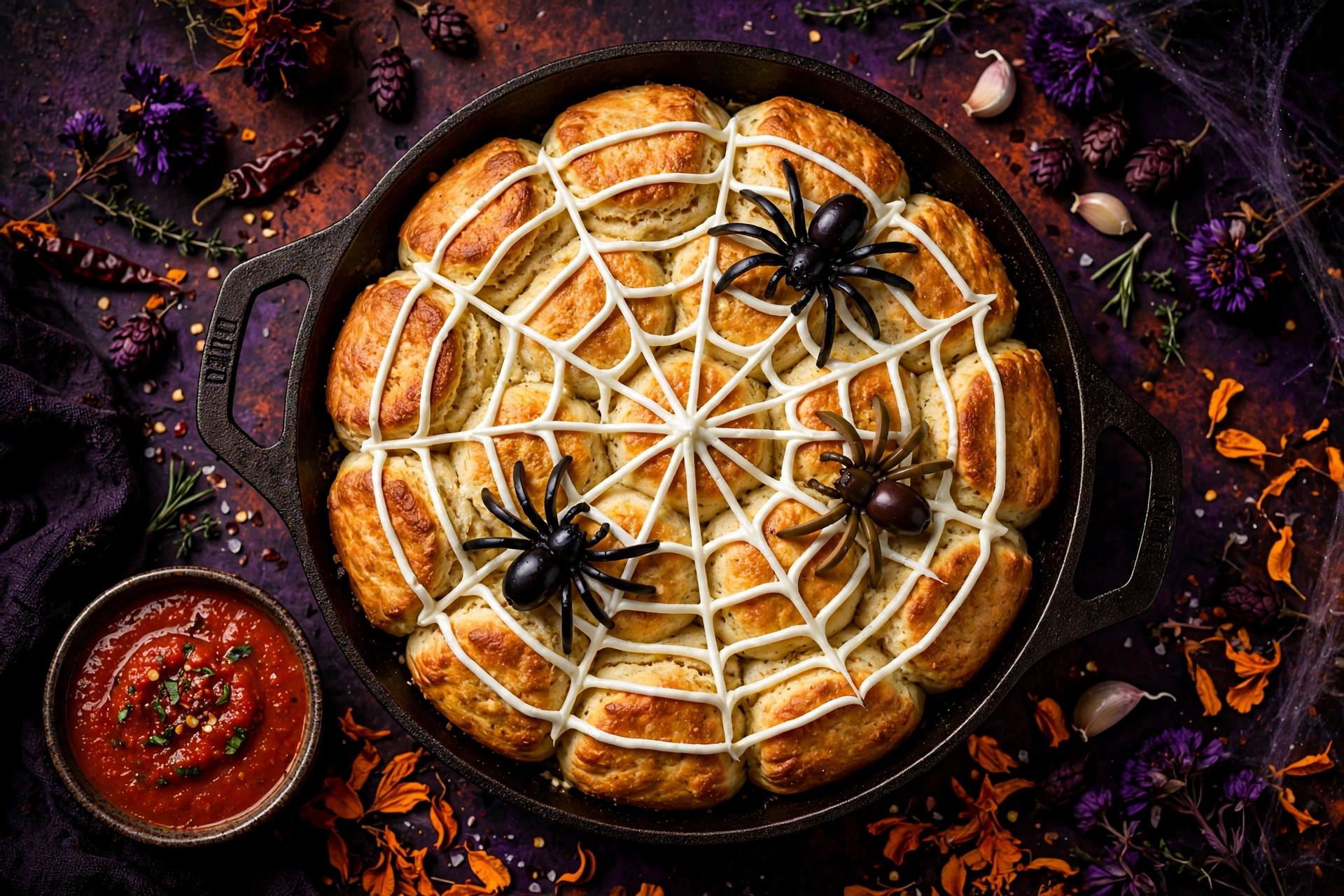
There is party food, and then there is party food that makes people gasp a little when you set it down. This spiderweb pull-apart bread is the second kind. Picture a skillet of golden, garlicky biscuit balls, each one hiding a pocket of molten mozzarella, all of them baked snugly together until the tops turn crisp and bronzed. Then comes the magic: a lacy cream-cheese spiderweb piped right across the top, with little black olive spiders scurrying over it. It looks like Halloween exploded in the most delicious way, and it tastes like the best garlic bread you have ever had, dipped in warm marinara.
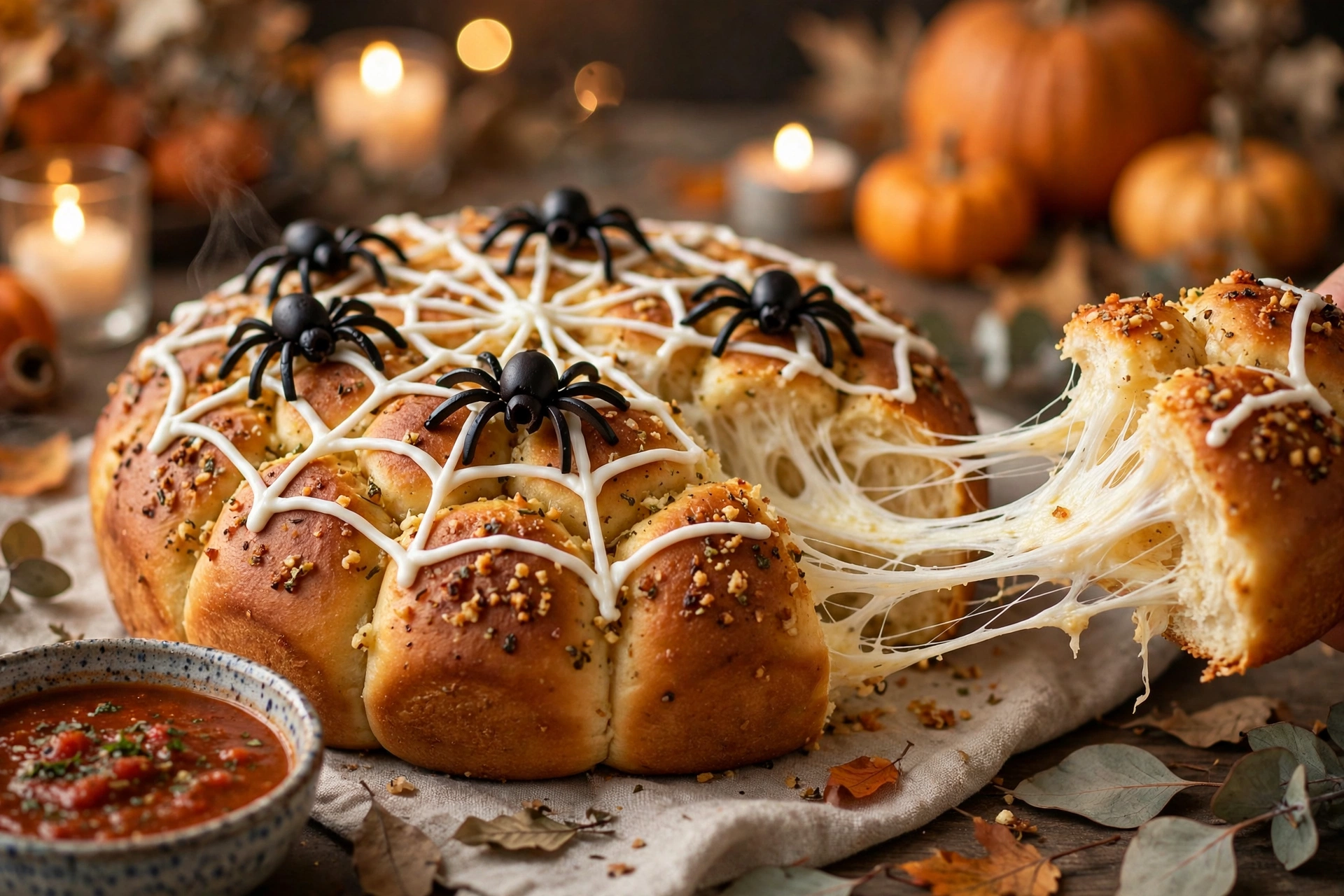
Best of all, this is a true pull-apart situation. No knife, no cutting board, no fuss. Guests just reach in, grab a piece, and watch the cheese stretch for a solid foot. It takes about 50 minutes from start to finish, and most of that is hands-off oven time while your kitchen smells like a pizzeria on the best day of its life. Make it once and it will haunt your party menu in the best possible way, every single October.
Recipe at a Glance
- Prep Time: 20 minutes
- Cook Time: 30 minutes
- Total Time: 50 minutes
- Servings: 12 (about 32 cheese-stuffed pieces)
- Difficulty: Easy
Ingredients
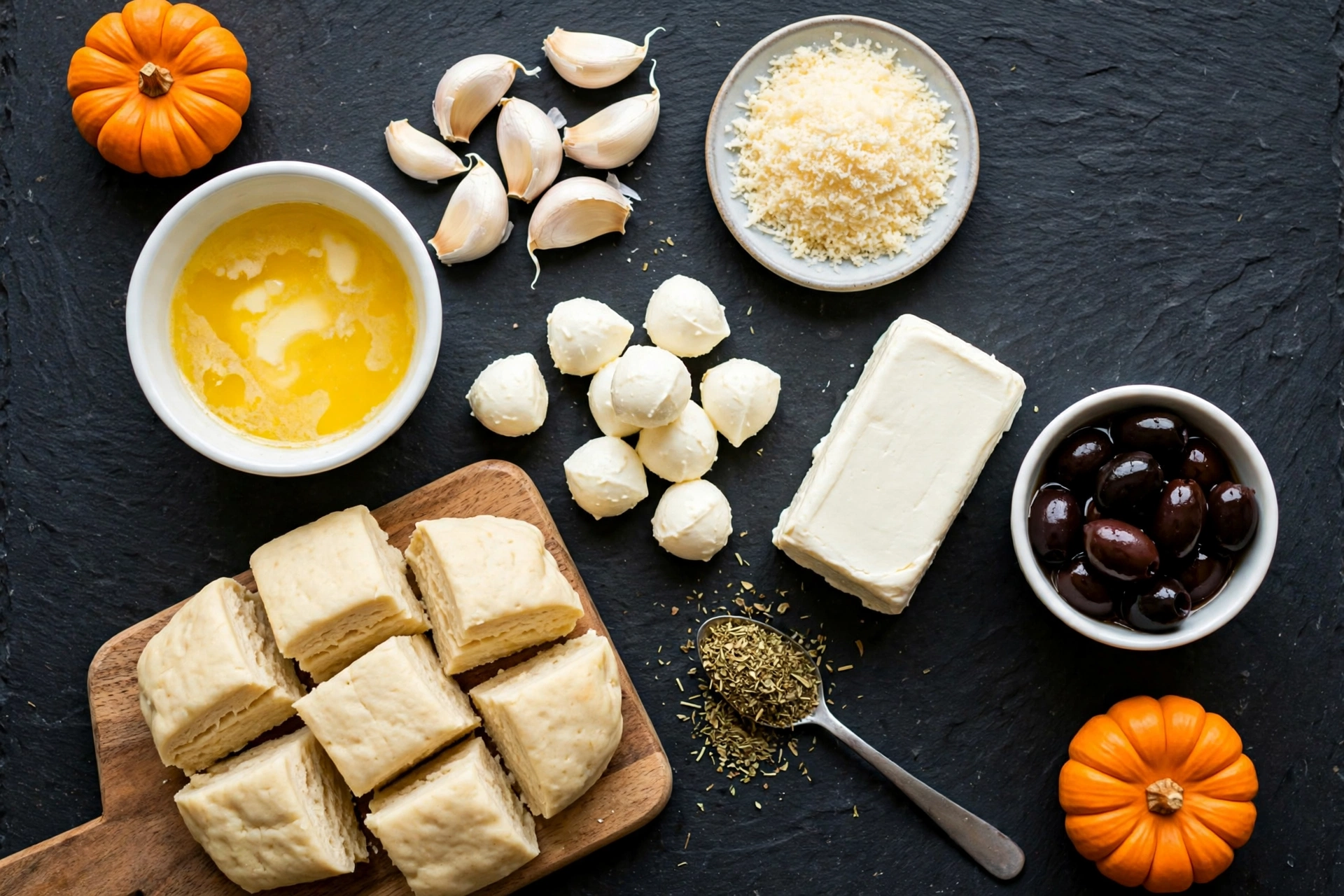
- 2 cans (16.3 oz each) refrigerated buttermilk biscuit dough (16 biscuits total)
- 32 mini mozzarella balls (ciliegine), drained and patted very dry
- 1/2 cup (1 stick) unsalted butter, melted
- 4 cloves garlic, finely minced
- 2 tablespoons chopped fresh parsley (or 2 teaspoons dried Italian seasoning)
- 1/2 cup finely grated parmesan cheese
- 1/2 teaspoon fine sea salt
- 1 1/2 cups marinara sauce, warmed, for dunking
For the spiderweb and spiders
- 4 oz cream cheese, softened to room temperature
- 2 tablespoons milk
- 12 to 16 pitted black olives (for edible olive spiders) or food-safe decorative plastic spiders, removed before serving
Directions
- Heat the oven and prep the pan. Heat your oven to 350°F (175°C). Brush a 12-inch cast-iron skillet (or a 10-inch round cake pan) generously with some of the melted butter.
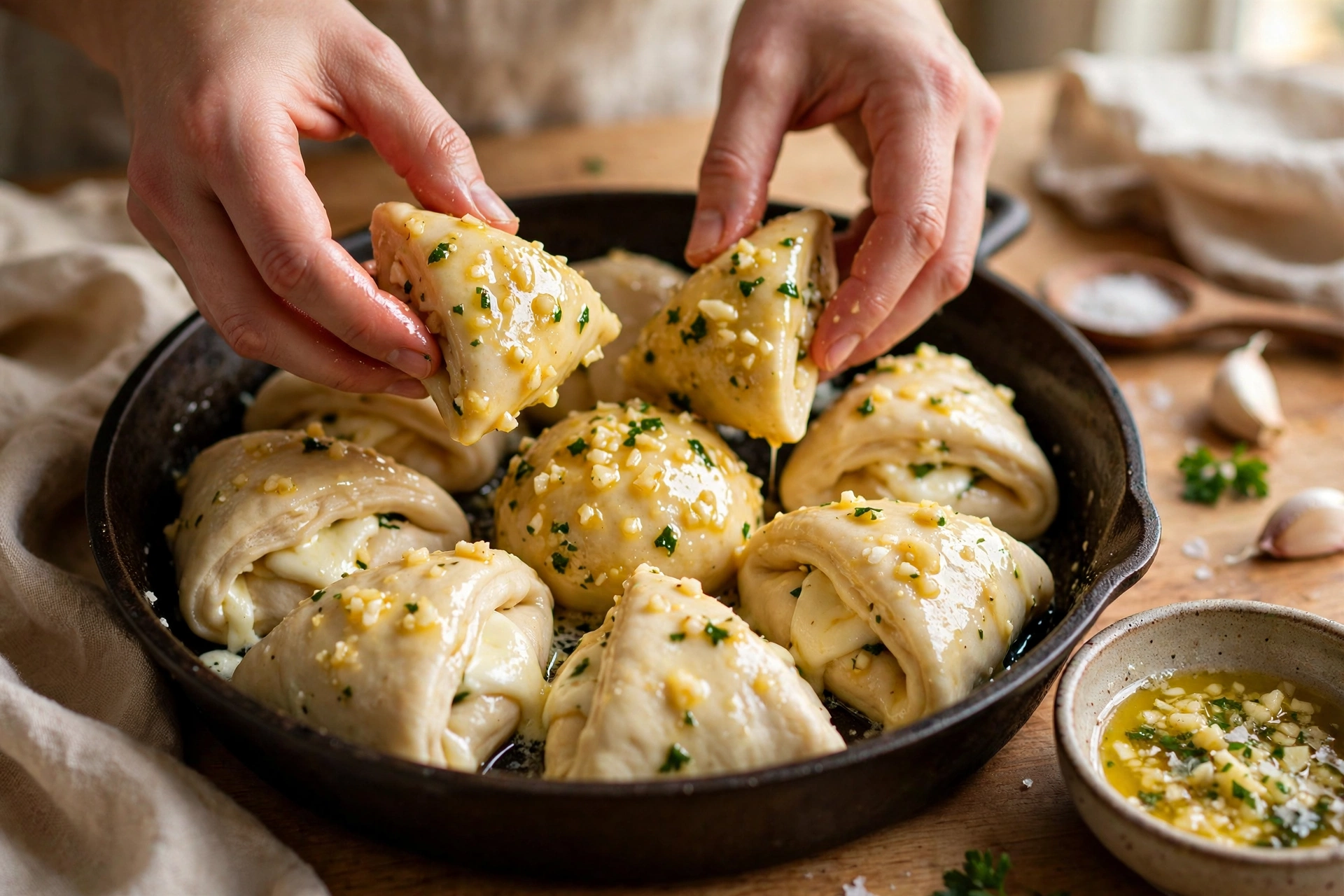
- Stuff the dough. Separate the biscuits and cut each one in half. Flatten each half into a rough 3-inch round with your fingers, place one mini mozzarella ball in the center, pinch the dough firmly closed around it, and roll it gently into a smooth ball. Arrange the balls seam-side down in the prepared pan, snug against each other but not squashed.
- Butter them up. Stir the minced garlic, parsley and salt into the remaining melted butter. Brush this garlicky butter generously over every dough ball, getting into the crevices, then shower the whole pan with the grated parmesan.
- Bake. Bake for 30 to 35 minutes, until the tops are deep golden brown and the biscuits are cooked through with no doughy spots in the center. A quick peek at one center piece should show steamy, fully set dough. If the tops brown too fast, tent loosely with foil for the last 10 minutes.
- Cool slightly, then pipe the web. Let the bread rest for 5 minutes. Meanwhile, whisk the softened cream cheese with the milk until smooth and pipeable. Transfer to a zip-top bag, snip a small corner, and pipe 3 to 4 concentric circles over the warm bread. Drag a toothpick from the center outward through the circles, wiping the toothpick each time, to create the spiderweb effect.
- Add the spiders and serve. For olive spiders, halve one olive for the body and cut paper-thin strips from another for the legs, pressing them onto the web. Or perch decorative plastic spiders on top (remove them before serving). Serve warm with the marinara for dunking.
Why This Method Works
Pull-apart bread belongs to the same family as monkey bread, the classic share-and-tear bread where dough pieces bake in close contact, and the science is delightfully simple. Packing the cheese-stuffed balls snugly together means they can only rise upward, so instead of spreading into flat puddles they stay plump and soft, steaming each other from the sides while the exposed tops crisp in the oven heat. The result is that perfect contrast: crunchy golden crown, pillowy pull-apart interior.
Stuffing the mozzarella inside the dough rather than scattering it on top is a deliberate move. Inside, the cheese is insulated from the oven’s direct heat, so it melts into a molten pocket instead of drying out or burning. Garlic goes into the melted butter rather than on top for a similar reason: butter is a fat, and garlic’s best flavor compounds are fat-soluble, so the butter carries that savory punch deep into every crevice while protecting the minced garlic from scorching and turning bitter. Finally, piping the web after a short rest matters because a piping-hot surface would melt the cream cheese into a blurry mess; five minutes of cooling sets the crust just enough to hold crisp web lines.
Pro Tips
- Dry the mozzarella like you mean it. Pat the mini mozzarella balls very dry with paper towels. Excess moisture turns the inside of each dough ball gummy instead of gloriously melty.
- Pinch the seams tight. Any gap in the dough lets the cheese escape and pool on the pan. A tight seal means the cheese stretch happens inside, where it belongs.
- Snug, not smashed. The balls should touch each other all around with no big gaps, but do not force them in. Overcrowding squeezes the dough and gives you dense, doughy centers.
- Brush the butter into the crevices. Those little valleys between the balls are where the garlic butter pools and caramelizes into the best bites in the pan.
- Pipe the web on warm, not hot, bread. Five minutes of rest is the sweet spot. Too hot and the web melts; too cold and the cream cheese sits stiffly instead of settling into the grooves.
Common Mistakes (and How to Fix Them)
- Doughy centers. This almost always means the pan was overcrowded or the oven ran cool. Give the balls breathing room in a full 12-inch skillet, and if the tops are golden but centers look wet, bake 5 to 8 minutes more with foil on top.
- Burnt garlic. Garlic minced onto dry tops scorches fast. Keeping it suspended in the butter (step 3) shields it and infuses the flavor instead.
- Cheese leaking everywhere. Under-pinched seams are the culprit. Take the extra ten seconds per ball to seal and smooth; it pays off in that dramatic cheese pull.
- Soggy bottom. Do not skip preheating the oven fully, and serve the bread within 20 minutes of baking. Cast iron keeps it hot and crisp far better than a thin pan.
Substitutions
- Dough: Refrigerated pizza dough cut into 2-inch squares works beautifully; so does one batch of homemade pizza dough. Crescent roll dough is flakier but less sturdy, so pinch extra carefully.
- Cheese: Swap the mozzarella pearls for cubes of low-moisture mozzarella, or use string cheese cut into 1-inch pieces. Fresh mozzarella is too wet and will make the dough soggy.
- Herbs: Dried Italian seasoning, fresh basil, or a pinch of red pepper flakes for heat all work in the garlic butter.
- Dairy-free: Use plant-based butter, dairy-free mozzarella-style shreds rolled into balls, and a dairy-free cream cheese alternative for the web.
- No olives: Make spiders from halved cherry tomatoes and chive legs, or skip edible spiders entirely and use decorative plastic ones (remove before serving).
Storage and Make-Ahead
Leftovers keep in an airtight container in the refrigerator for up to 3 days. Reheat in a 350°F oven for 8 to 10 minutes to re-crisp the tops; the microwave works in a pinch but softens the crust. For a make-ahead option, assemble the stuffed, buttered dough balls in the skillet the night before, cover tightly, and refrigerate. Bake straight from the fridge, adding 5 extra minutes. The cream-cheese web is best piped fresh just before serving, since it loosens in the fridge.
Set this beauty on the table next to our spiderweb taco dip and you have an instant spiderweb-themed spread. It also plays well with spooky spider web pizza for a full creepy-crawly dinner, or with mummy pizza rolls if you want your Halloween snack table to look like it crawled straight out of a haunted house.
Frequently Asked Questions
Can I make spiderweb pull-apart bread ahead of time?
Yes. Assemble the cheese-stuffed, buttered dough balls in the skillet, cover tightly, and refrigerate overnight. Bake straight from the fridge at 350°F, adding about 5 extra minutes. Pipe the cream-cheese web fresh just before serving so the lines stay crisp.
What dough works best for pull-apart bread: biscuits, pizza dough, or crescent rolls?
Refrigerated biscuit dough is the easiest and most reliable because it is thick enough to seal around the cheese and bakes up fluffy. Pizza dough also works well. Crescent roll dough is tasty but thinner and flakier, so the seals need extra care to keep the cheese inside.
Why did the center of my pull-apart bread stay doughy?
The pan was likely overcrowded, or the oven was not fully preheated. Use a full 12-inch skillet so the balls touch but are not compressed, preheat completely, and if the tops brown before the centers set, tent with foil and bake 5 to 8 minutes longer.
How do I store and reheat leftover pull-apart bread?
Refrigerate leftovers in an airtight container for up to 3 days. Reheat at 350°F for 8 to 10 minutes to bring back the crisp tops and re-melt the cheese. Avoid the microwave if you can, since it makes the crust soggy.
Rate this recipe
Be the first to rate it!