
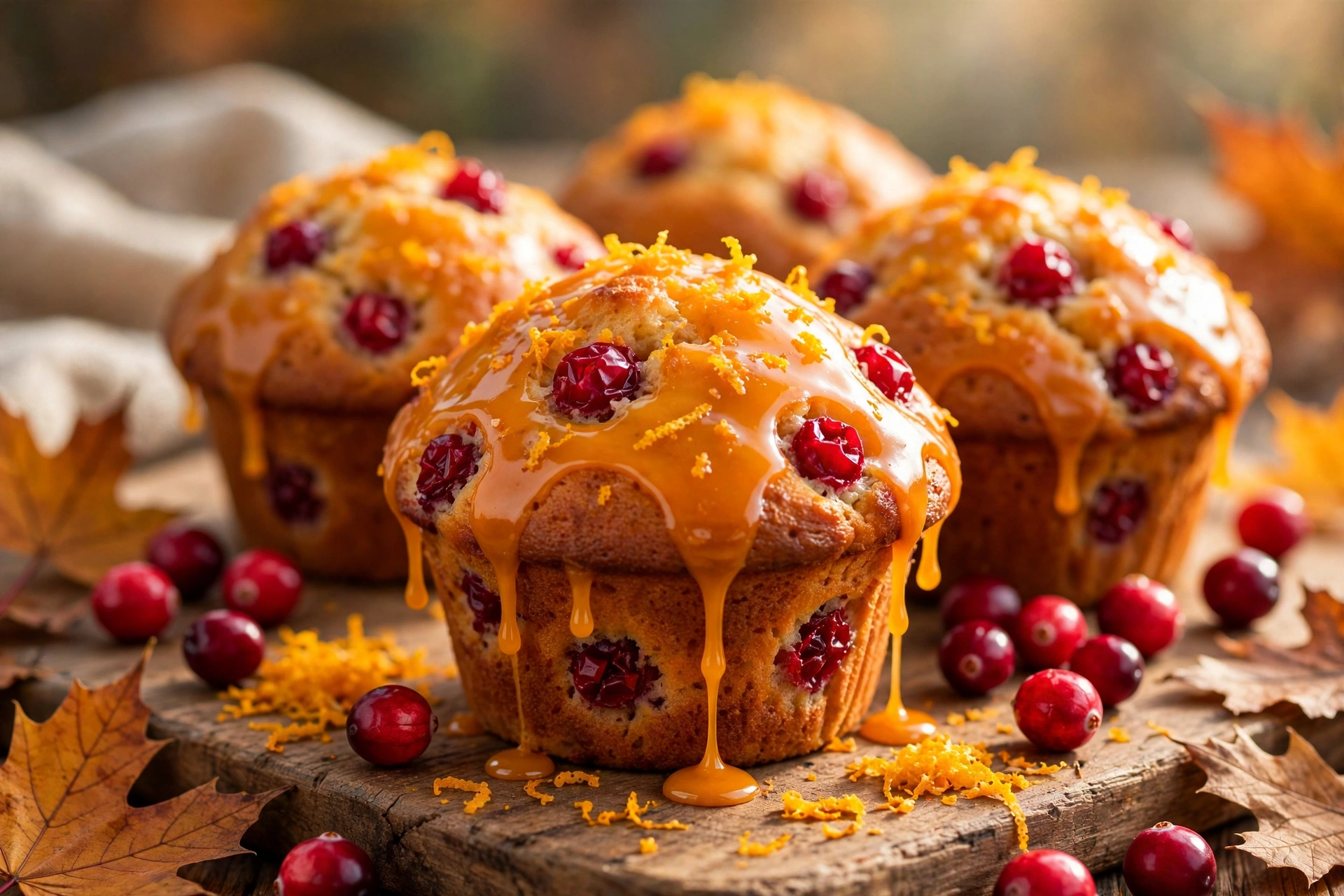
There is a smell that means Thanksgiving week has officially started, and it is not the turkey. It is oranges and cranberries baking together in a warm oven, bright and tart and sweet all at once, drifting down the hallway while the coffee brews. These easy cranberry orange muffins are that smell in edible form: tall, golden, bakery-style muffins with ruby-red cranberries tucked into every bite, a sunny hit of fresh orange zest, and a glossy sweet orange glaze dripping down the domed tops. They take just 35 minutes of prep and baking, and they taste like the holidays decided to show up early for breakfast.
If you have ever bitten into a muffin that looked gorgeous and tasted like sweetened cardboard, this recipe is the fix. The crumb here is soft and tender, never dry, because the batter uses melted butter for richness, milk and fresh orange juice for moisture, and a gentle hand with the mixing spoon. The cranberries stay tart and juicy instead of sinking to the bottom, the orange zest perfumes the whole muffin, and the glaze sets into a thin crackly shell that makes each one look straight out of a bakery case. They are the cranberry orange star of our cozy fall muffins collection, now in a full standalone recipe with every tip, trick, and answer you could want.
Recipe at a Glance
- Prep time: 15 minutes
- Cook time: 20 minutes
- Total time: 35 minutes
- Servings: 12 muffins
- Difficulty: Easy
- Course: Breakfast
- Method: Mix, fill, and bake in one muffin tin
Why You Will Love These Cranberry Orange Muffins
First, they are fast. Fifteen minutes of measuring and stirring, twenty minutes in the oven, and breakfast is done before the rest of the house has even decided what it wants. Second, they are a one-bowl, one-tin bake, which means almost no washing up and no mixer to drag out of the cupboard. Third, they look spectacular with almost no effort. Those glossy glazed tops, the bright red cranberries peeking through the golden crumb, and the little shower of orange zest make them the prettiest thing on a holiday breakfast table, and nobody needs to know how little work went into them.
They also play beautifully with everything else on a Thanksgiving-week menu. The tart cranberries and bright citrus cut through rich, buttery dishes, so they sit happily next to a plate of scrambled eggs or a slice of our 5-ingredient pumpkin loaf on a holiday brunch spread. Bake a double batch and freeze half, and you have instant breakfasts for the whole busy week. Make them once and they will earn a permanent spot in your fall baking rotation, right next to the gingerbread pancakes you save for Christmas morning.
Ingredients
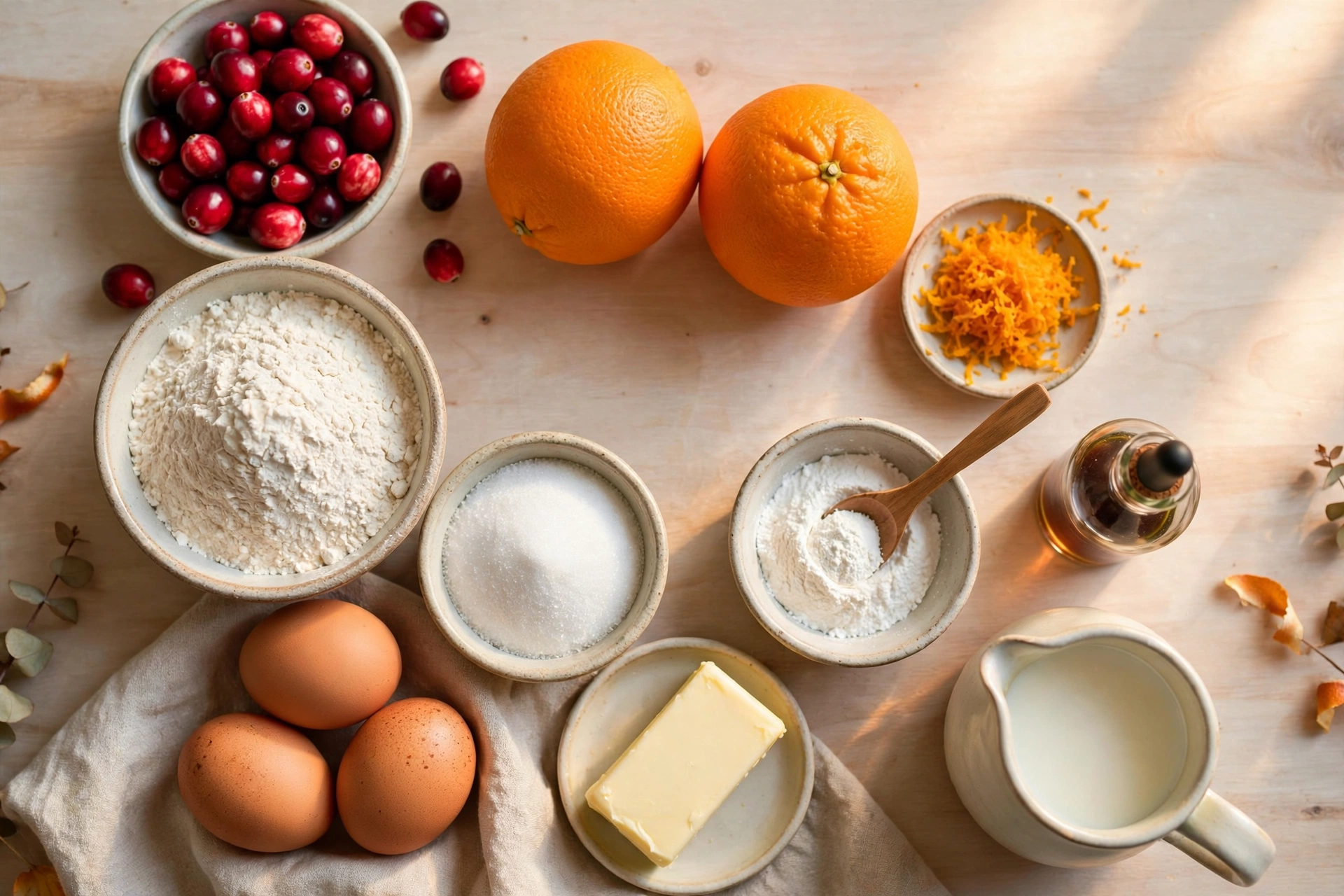
- 2 cups all-purpose flour, spooned and leveled
- 3/4 cup granulated sugar
- 2 teaspoons baking powder
- 1/2 teaspoon baking soda
- 1/2 teaspoon fine sea salt
- 1 tablespoon fresh orange zest (from 1 to 2 large oranges)
- 1/2 cup unsalted butter, melted and slightly cooled
- 2 large eggs, at room temperature
- 1/2 cup whole milk
- 1/4 cup fresh orange juice
- 1 teaspoon vanilla extract
- 1 1/2 cups fresh cranberries, halved
- 1 tablespoon all-purpose flour, for tossing the cranberries
For the sweet orange glaze:
- 1 cup powdered sugar, sifted
- 2 to 3 tablespoons fresh orange juice
- 1/2 teaspoon fresh orange zest
Directions
- Heat the oven and prep the tin. Preheat the oven to 400°F (200°C). Line a standard 12-cup muffin tin with paper liners, or grease each cup well with butter. A hot oven is the secret to tall, domed muffin tops, so do not start mixing until the oven is fully preheated.
- Whisk the dry ingredients. In a large bowl, whisk together the 2 cups flour, sugar, baking powder, baking soda, and salt until evenly combined. Rub the orange zest into the sugar with your fingertips for 30 seconds before adding it, if you like; the friction releases the citrus oils and perfumes the whole batter.
- Whisk the wet ingredients. In a medium bowl or large measuring jug, whisk the melted butter, eggs, milk, orange juice, and vanilla until smooth and glossy. The butter should feel warm, not hot, when you touch the bowl; hot butter can start cooking the eggs.
- Combine gently. Pour the wet ingredients into the dry ingredients and stir with a spatula just until the flour disappears, about 10 to 12 strokes. The batter should look thick, lumpy, and slightly uneven. A few small streaks of flour are fine; they will vanish in the oven. Overmixing is the number one cause of tough, rubbery muffins, so stop early.
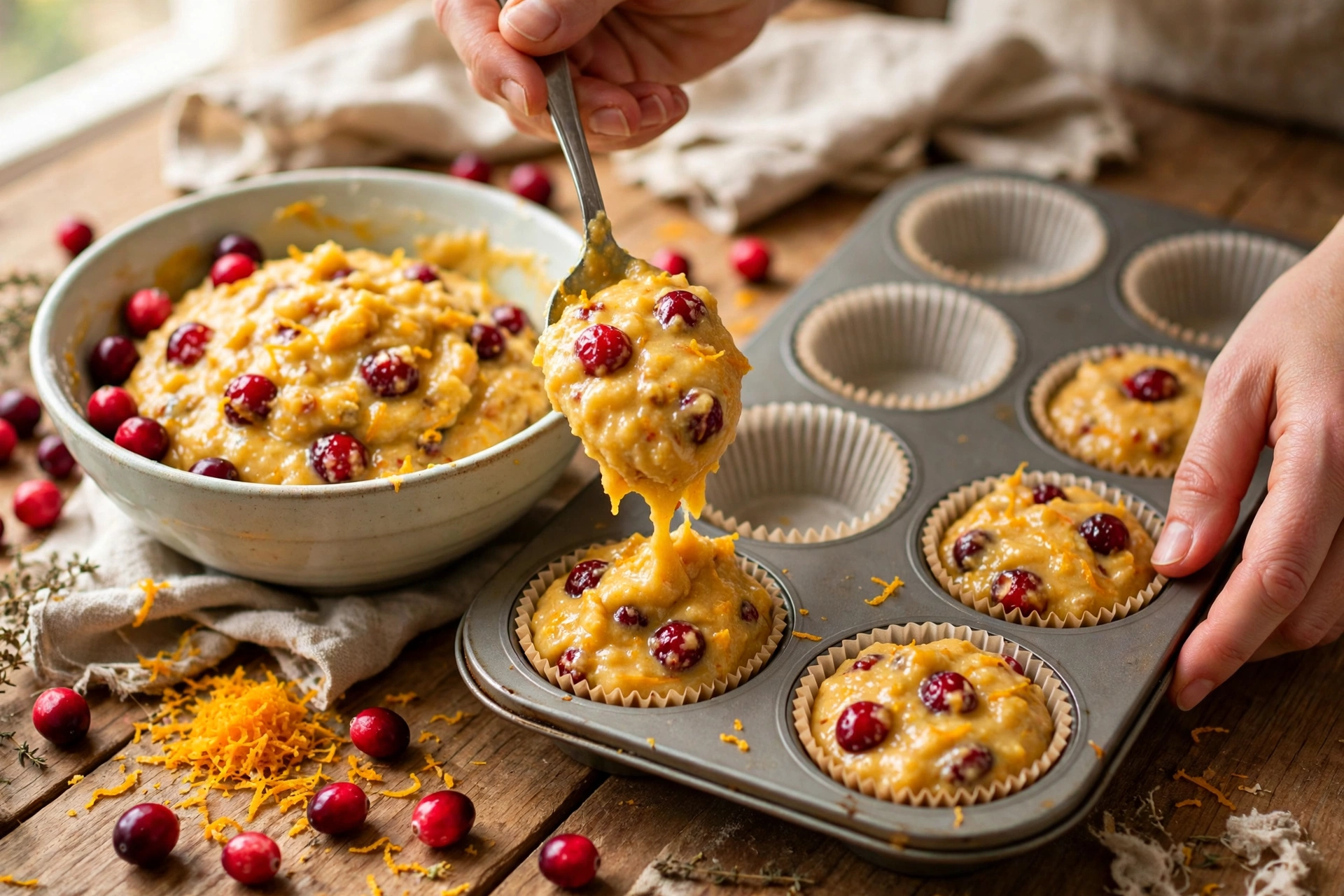
- Fold in the cranberries. Toss the halved cranberries with the tablespoon of flour in a small bowl, then fold them into the batter with 3 or 4 gentle strokes. The light flour coating helps the berries grip the batter instead of sinking to the bottom of the cups.
- Fill and bake. Divide the batter evenly among the 12 cups, filling each about three-quarters full. A large cookie scoop or a 1/4-cup measure keeps the muffins even so they all bake at the same rate. Bake for 18 to 22 minutes, until the tops are golden and a toothpick inserted into the center of a muffin comes out clean or with a few moist crumbs. The muffins are fully baked when the centers reach about 200°F, well past the point where the eggs are safely set.
- Cool before glazing. Let the muffins cool in the tin for 5 minutes, then lift them out onto a wire rack. Cool for at least 15 minutes more. Glazing warm muffins melts the glaze into a thin, invisible layer; glazing cool muffins gives you that pretty opaque drizzle that sets into a crackly shell.
- Glaze and serve. Whisk the powdered sugar with 2 tablespoons of orange juice and the zest until smooth, adding the third tablespoon a teaspoon at a time until the glaze ribbons off the spoon. Drizzle over the cooled muffins, sprinkle with a little extra zest, and let the glaze set for 10 minutes before serving.
Why This Works
Great muffins are a small piece of kitchen science, and every choice in this recipe has a job. The high 400°F oven is the first one: the blast of heat makes the baking powder and baking soda release gas fast, pushing the batter upward before the crust sets, which is how bakery muffins get those tall, proud domes instead of flat tops. Drop the temperature to 350°F and the same batter bakes up squat and pale, so the hot oven is not a suggestion, it is the whole trick.
The second piece is the muffin method itself, the classic technique behind nearly every muffin you have ever loved: wet and dry ingredients are mixed separately, then combined with as few strokes as possible. Stirring develops gluten, and gluten is wonderful in bread but terrible in muffins, turning a tender crumb tough and tunneled. That is why the recipe says twelve strokes and means it. A lumpy batter is a happy batter.
The third piece is the cranberry problem, solved twice. Halving the berries makes them lighter so they stay suspended, and tossing them in a spoonful of flour gives the batter something to grip. Together they keep the fruit scattered through every bite instead of pooled at the bottom. And the orange zest rubbed into the sugar is the quiet flavor hero: zest carries the orange oils that juice alone cannot, so the muffins taste like oranges, not just sweet.
Pro Tips
Measure flour the bakery way. Spoon the flour into your measuring cup and level it with a knife. Scooping straight from the bag packs in up to 25 percent extra flour, which is the most common reason muffins turn out dry and dense.
Room-temperature eggs matter. Cold eggs make the melted butter seize into little flecks and the batter goes lumpy in the wrong way. Set the eggs in a bowl of warm water for 5 minutes if you forgot to take them out of the fridge.
Fill the cups generously. Three-quarters full is the sweet spot for a domed top. Underfilled cups bake flat, and overfilled cups spill over the edges and stick to the tin.
Zest before you juice. Always zest the oranges first, then cut and squeeze them. Trying to zest a squeezed orange half is a frustrating, slippery job, and you need that zest for both the batter and the glaze, plus the juice for both as well.
Glaze on a rack over a tray. Set the wire rack over a baking sheet before drizzling so the drips land on the tray, not your counter, and the muffins stay crisp on the bottom instead of sitting in a puddle of glaze.
Common Mistakes and How to Fix Them
Tough, chewy muffins: the batter was overmixed. Stir only until the flour disappears, even if the batter looks lumpy. Next time, count your strokes and stop at twelve.
Cranberries all at the bottom: the berries were whole and untossed. Halve them and coat them in a tablespoon of flour before folding them in, and make sure the batter is thick enough to hold them.
Flat, pale tops: the oven was not hot enough, or the tin went in before the oven finished preheating. Bake at a full 400°F and give the oven a full 10 minutes past the moment the light says it is ready.
Glaze soaked in and vanished: the muffins were still warm when glazed. Wait until they are fully cool to the touch, and make the glaze thick enough to ribbon off the spoon rather than run like water.
Muffins stuck to the liners: they were left in the tin too long, or the liners were cheap and thin. Lift the muffins out after 5 minutes, and use parchment-style liners for the cleanest release.
Substitutions
Frozen cranberries: use them straight from the freezer, no thawing, and add 1 to 2 minutes to the bake time. Thawed cranberries bleed juice into the batter and turn the crumb pink.
Dried cranberries: use 1 cup instead of 1 1/2 cups fresh, and soak them in warm orange juice for 10 minutes first so they plump up instead of staying chewy and hard.
Buttermilk instead of milk: swap the 1/2 cup milk for 1/2 cup buttermilk and reduce the baking powder to 1 1/2 teaspoons. The tang is lovely with cranberries, and the crumb stays just as tender.
Dairy-free: use melted coconut oil or a neutral vegetable oil in place of the butter, and oat milk or almond milk in place of the whole milk. The muffins stay soft, with a very faint coconut note if you choose coconut oil.
Gluten-free: a 1-to-1 gluten-free baking blend works well here; add an extra tablespoon of milk, since gluten-free flours drink up more liquid. The tops will be slightly less domed but just as delicious.
No glaze: skip it and sprinkle the tops with coarse sugar before baking instead. You get a crunchy, sparkly crust and the muffins stay a little less sweet.
What to Serve with Cranberry Orange Muffins
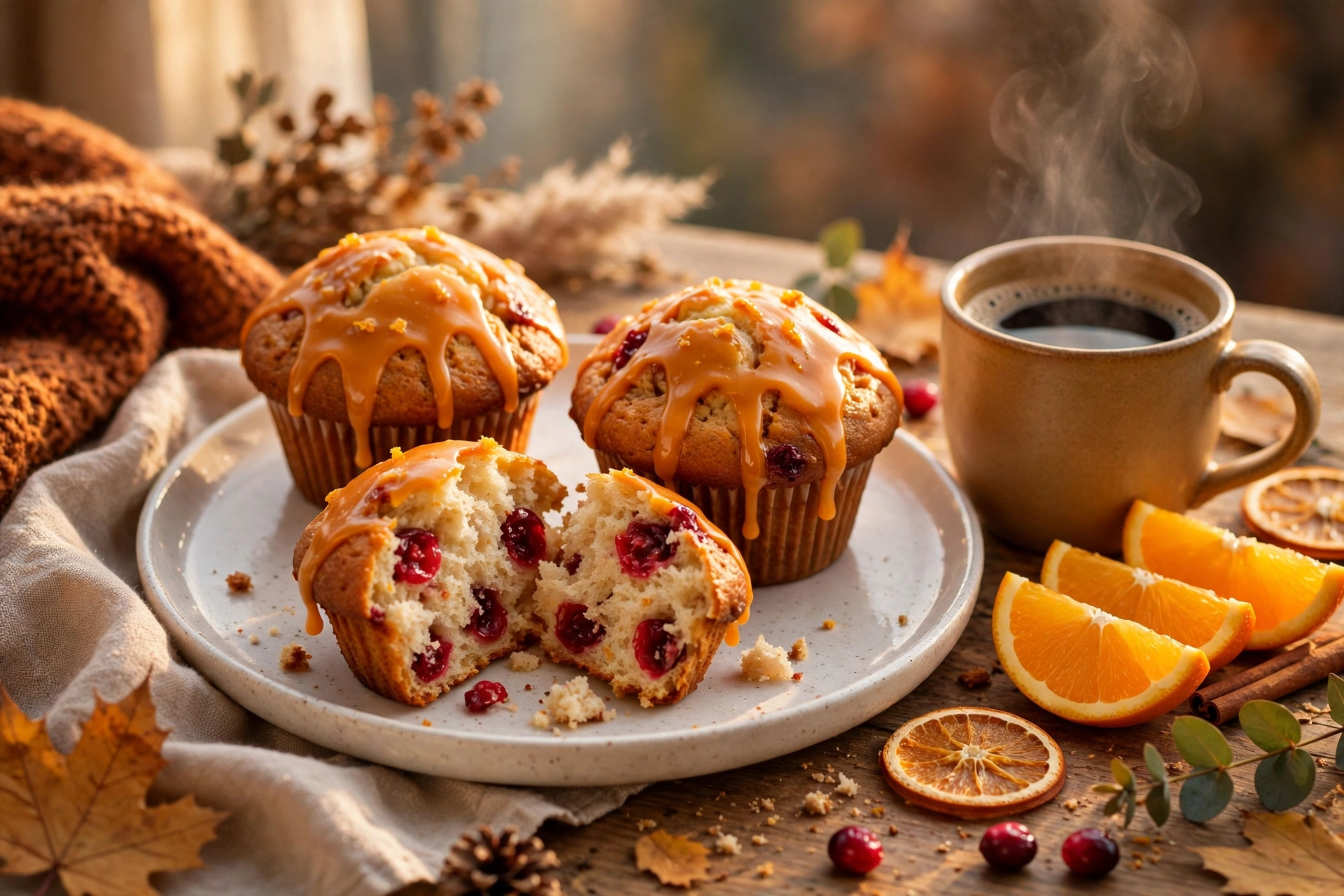
These muffins are happiest as part of a slow, cozy breakfast spread. Set them out with a pot of hot coffee or a mug of spiced tea, a bowl of fresh fruit, and something savory like scrambled eggs or crispy bacon to balance the sweetness. On a holiday morning, they are lovely next to a fruit salad and a pitcher of orange juice, and they make a wonderful lunchbox treat tucked beside a sandwich, since they hold up beautifully without refrigeration for the school day. If you are building a full Thanksgiving-week brunch table, pair them with the pumpkin overnight oats you prepped the night before and a plate of warm cranberry brie bites for a sweet-and-savory spread that looks far fancier than the effort it took.
Storage and Make-Ahead
Store the glazed muffins in an airtight container at room temperature for up to 3 days. Slip a paper towel into the container to absorb moisture and keep the tops from going sticky. They keep in the fridge for up to 5 days, though the glaze softens a little; bring them back to room temperature or warm one for 10 seconds in the microwave before serving.
For the freezer, skip the glaze and freeze the plain muffins in a zip-top bag for up to 3 months. Thaw overnight in the fridge or on the counter for an hour, warm in a 300°F oven for 8 minutes, then glaze fresh. The batter itself can be mixed the night before and refrigerated in a covered bowl; give it a gentle stir, fill the tin, and bake in the morning, adding 1 to 2 minutes to the bake time since the batter starts cold. As with all baked goods, do not leave the muffins out at room temperature for more than 2 hours, and refrigerate any leftovers promptly.
Frequently Asked Questions
Can I use frozen cranberries instead of fresh cranberries?
Yes. Use the frozen cranberries straight from the freezer without thawing, and add 1 to 2 minutes to the bake time. Thawed cranberries release juice into the batter and turn the crumb pink, so keep them frozen until they go into the bowl.
Can I make these cranberry orange muffins ahead of time?
Yes. The muffins keep in an airtight container at room temperature for 3 days or in the fridge for 5 days, and they freeze beautifully for up to 3 months. For the best result, freeze them unglazed, then thaw, warm, and glaze fresh on the day you serve them.
Why did my cranberries sink to the bottom of the muffins?
Whole, heavy cranberries sink through thin batter. Halve the cranberries so they are lighter, toss them in a tablespoon of flour so the batter can grip them, and fold them in last with just a few gentle strokes. A thick batter and floured berries keep the fruit scattered through every bite.
Can I skip the orange glaze on these muffins?
Yes, the muffins are delicious without it. For a simpler finish, sprinkle the tops with coarse sugar before baking for a crunchy, sparkly crust, or dust the cooled muffins with a little powdered sugar. The glaze adds sweetness and a bakery look, but it is entirely optional.
Rate this recipe
Be the first to rate it!