
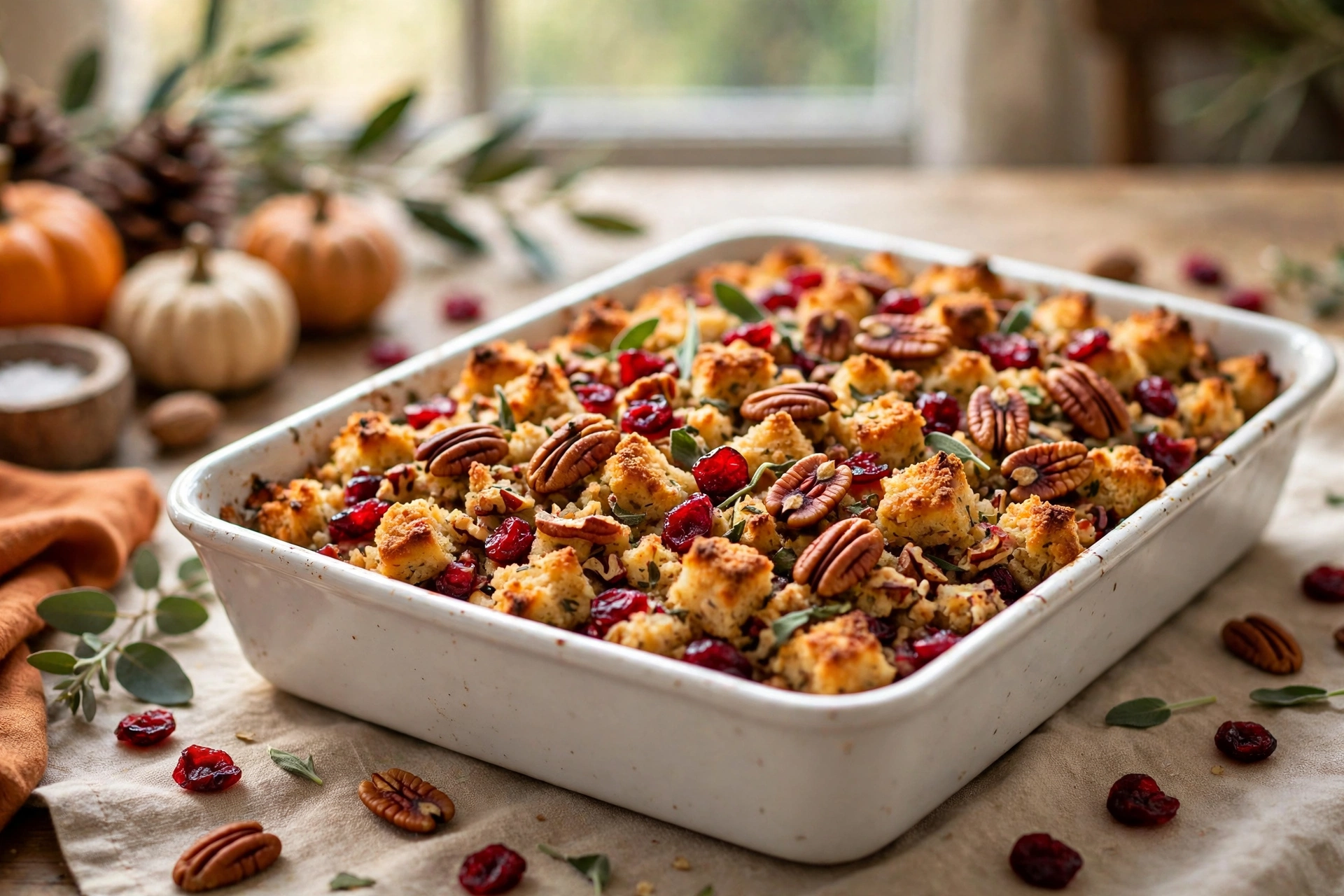
There is a moment at every Thanksgiving table when the turkey gets carved, the gravy boat makes its rounds, and everyone quietly reaches for the same dish first. In our house, that dish is the stuffing. This easy cranberry pecan stuffing is the one that disappears before the second helping of turkey even happens: golden, buttery bread cubes with crispy edges, savory sausage, sweet-tart pops of dried cranberry, and toasted pecans that stay crunchy all the way through. It is sweet, savory, buttery, and nutty in the very same bite, and it comes together in just 45 minutes with one skillet and one baking dish.
What makes this stuffing so good is the balance. The cranberries bring a bright, jammy sweetness that cuts through the rich sausage. The pecans bring warmth and crunch. The sage and thyme bring that unmistakable Thanksgiving smell that fills the whole house while it bakes. And because the bread cubes are day-old and sturdy, they soak up the broth and egg without turning to mush, so every spoonful has soft centers and golden, crispy tops. If you have ever been disappointed by soggy, bland stuffing, this is the recipe that fixes it.
It is also wonderfully practical on the busiest cooking day of the year. The stuffing goes into the oven while the turkey rests, which is exactly when the oven frees up and the turkey needs those 20 minutes to relax before carving anyway. One dish, one bake, and it comes out golden and bubbling just as everyone sits down. No last-minute frying, no extra pans to wash, and no hovering over the stove while your guests are arriving.
This is a true 45-minute Thanksgiving side dish: 10 minutes of prep, 35 minutes of cooking, and it feeds 8 people from a single 9×13 dish. You can assemble it the day before, bake it while the turkey rests, and serve it straight from the dish with a big spoon. It sits happily next to roasted garlic mashed potatoes, a ladle of easy turkey gravy, and a spoonful of cranberry orange relish for the full Thanksgiving plate. Whether you call it stuffing or dressing, whether it goes inside the bird or bakes in its own dish, this is the version your family will ask for again next year.
Recipe at a Glance
- Prep Time: 10 minutes
- Cook Time: 35 minutes
- Total Time: 45 minutes (plus a 5-minute rest before serving)
- Servings: 8 servings
- Yield: one 9×13-inch baking dish (about 10 cups)
- Oven: 350°F (175°C)
- Category: Thanksgiving side dish
Ingredients
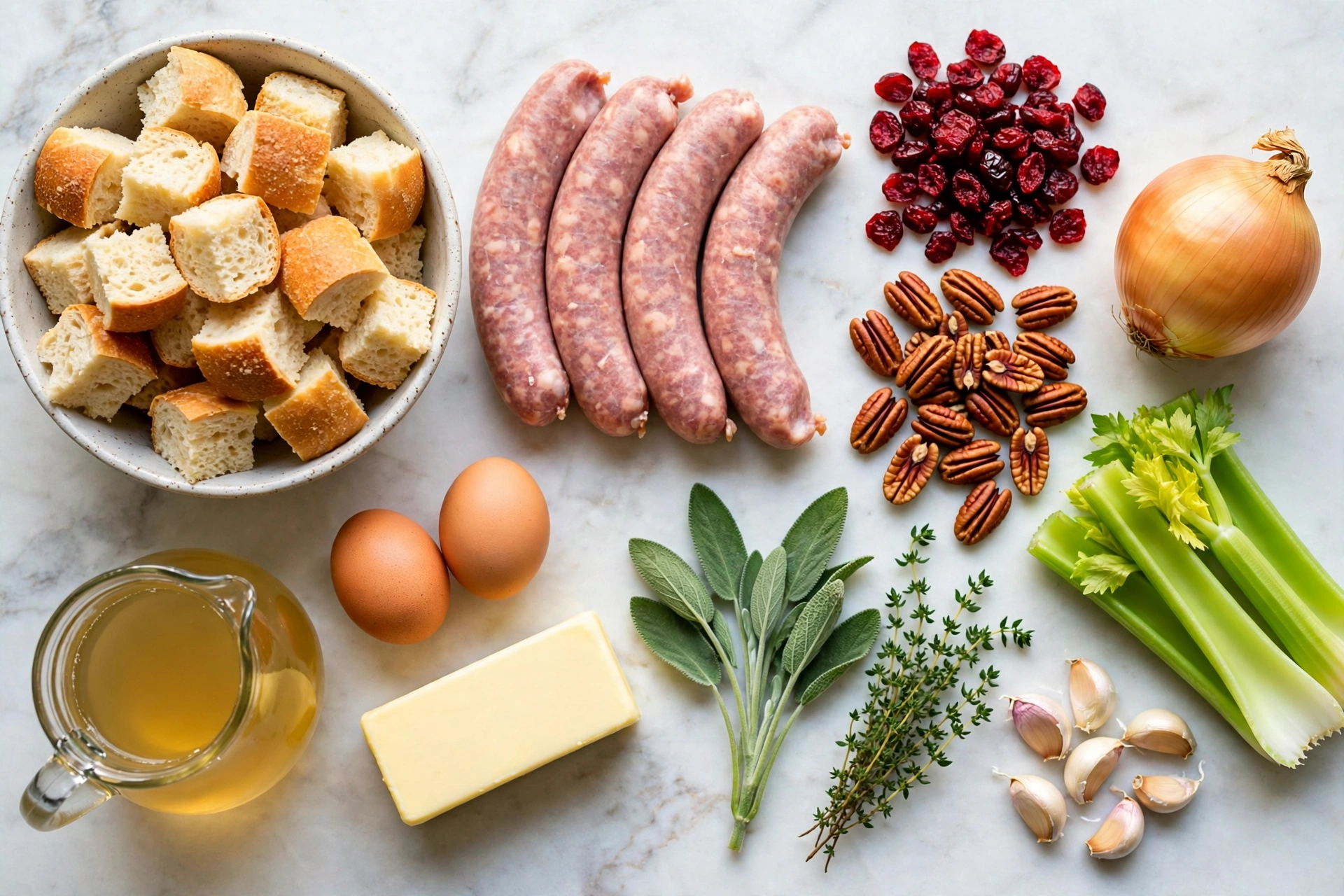
Every ingredient here earns its place. The bread gives structure, the sausage gives savory depth, the cranberries give sweetness, the pecans give crunch, and the herbs give that classic Thanksgiving flavor. Measure everything before you start and the whole recipe moves fast.
- 1 pound day-old French bread, cut into 1-inch cubes (about 10 cups)
- 1 pound pork sausage links, casings removed (or bulk pork sausage)
- 2 tablespoons unsalted butter
- 1 medium yellow onion, finely diced (about 1 1/2 cups)
- 3 celery ribs, finely diced (about 1 1/2 cups)
- 3 garlic cloves, minced
- 1 cup dried cranberries
- 1 cup pecan halves, roughly chopped and toasted
- 2 teaspoons chopped fresh sage (or 1 teaspoon dried rubbed sage)
- 1 teaspoon chopped fresh thyme leaves (or 1/2 teaspoon dried thyme)
- 1 teaspoon kosher salt
- 1/2 teaspoon black pepper
- 2 cups low-sodium chicken broth
- 2 large eggs, beaten
Directions
- Heat the oven and toast the pecans (3 minutes of prep). Heat the oven to 350°F (175°C) and butter a 9×13-inch baking dish. Put the chopped pecans in a dry skillet over medium heat and toast them for about 2 minutes, shaking the pan often, until they smell warm and nutty. Tip them onto a plate right away so they do not keep cooking in the hot pan. Toasting matters: it wakes up the oils in the nuts, so they taste richer and stay crisper in the finished stuffing.
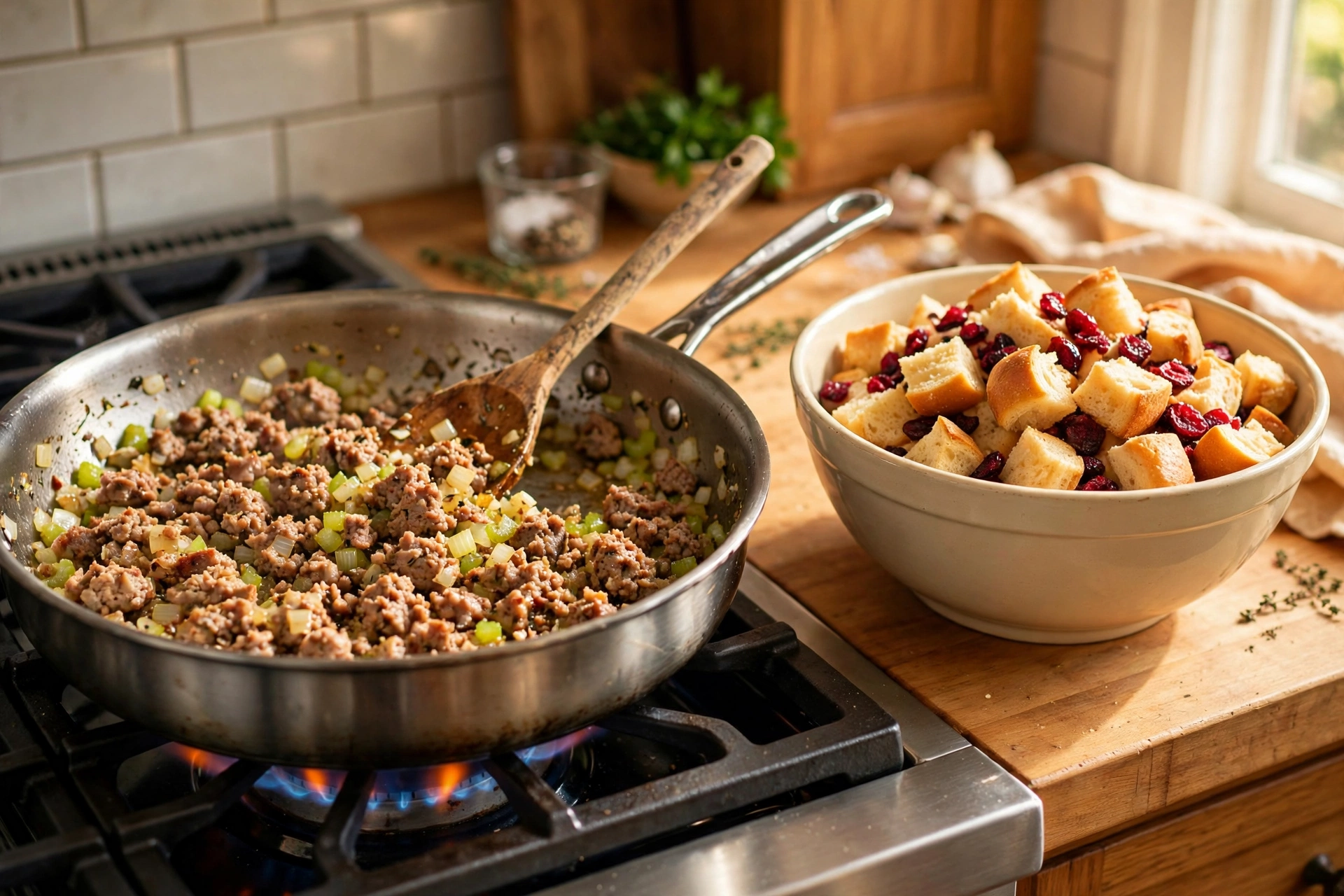
- Brown the sausage (8 minutes). In the same large skillet over medium-high heat, crumble in the sausage and cook for about 8 minutes, breaking it into small pieces with a wooden spoon, until it is browned all over and no pink remains. Pork sausage is a ground meat, so cook it to 160°F (71°C) to be safe. Drain off all but about 1 tablespoon of the drippings and set the sausage aside in a bowl. Those browned bits left in the pan are pure flavor, and they go straight into the next step.
- Soften the vegetables (7 minutes). Melt the butter in the same skillet over medium heat. Add the onion and celery with a pinch of salt and cook for about 6 minutes, stirring often, until the onion turns soft and translucent and the celery loses its raw crunch. Stir in the garlic, sage, and thyme and cook for 1 minute more, just until fragrant. Cooking the vegetables first is the secret to stuffing that tastes seasoned all the way through instead of tasting like raw onion in the middle.
- Toss everything together (2 minutes). In your largest mixing bowl, combine the bread cubes, the browned sausage, the softened vegetables, the dried cranberries, and the toasted pecans. Toss gently with your hands or two big spoons until everything is evenly mixed, with cranberries and pecans in every handful. The bread cubes should still look like cubes at this point. If they are already breaking apart, you are tossing too hard.
- Pour over the broth and egg (1 minute). In a measuring jug, whisk the chicken broth, the beaten eggs, the salt, and the pepper. Pour the mixture evenly over the bread, then toss gently again until every cube is moistened. The bread should look damp and glistening, not swimming. If there is a puddle of broth at the bottom of the bowl, let it sit for 2 minutes so the bread can drink it up before you move on. This is where the egg earns its keep: it binds the stuffing so it slices and scoops cleanly instead of falling apart.
- Bake covered (12 minutes). Tip the mixture into the buttered baking dish and press it down lightly with the back of a spoon so the top is level. Cover tightly with foil and bake for 12 minutes. The covered bake is what cooks the stuffing through gently: the steam softens the bread centers and brings the whole dish up to temperature without drying out the top.
- Bake uncovered, rest, and serve (8 minutes plus a 5-minute rest). Remove the foil and bake for 8 more minutes, until the top is golden brown and crispy at the edges. The center of the stuffing should reach 165°F (74°C) on an instant-read thermometer, which is the safe temperature for stuffing baked outside the bird. Let it rest for 5 minutes before serving so the egg sets and the stuffing holds together when you spoon it out. Scatter a few extra sage leaves over the top and serve warm, straight from the dish.
Why This Stuffing Works
Great stuffing is a balancing act between moist and crisp, and this recipe is built around three small techniques that make that balance easy. First, the bread. Day-old French bread is the hero here because it is sturdy and dry. Fresh, soft bread soaks up broth like a sponge and collapses into porridge, but day-old cubes drink up just enough liquid to turn soft in the middle while keeping their shape. If your bread is still fresh, cut it into cubes and dry it in a 300°F oven for 10 minutes, or leave the cubes out on a sheet pan overnight. The cubes should feel dry and slightly hard on the outside before they ever meet the broth.
Second, the two-stage bake. Baking covered first traps steam, which cooks the stuffing evenly all the way to the center and lets the egg set without drying anything out. Baking uncovered second lets the top dry out just enough to turn golden and crisp. Skip the foil and the top dries out before the middle is cooked. Skip the uncovered finish and the top stays pale and soft. The 12-minutes-covered, 8-minutes-uncovered split gives you both textures in one dish, and it is why the total cook time is a tidy 35 minutes: 8 minutes browning sausage, 7 minutes softening vegetables, and 20 minutes in the oven.
Third, the flavor trio of sausage, cranberry, and pecan. Sausage brings salt and savory fat, which seasons the bread from the inside out. Dried cranberries bring sweetness and a little tartness, so the stuffing never tastes heavy or one-note. Pecans bring a buttery crunch that survives baking, which is why we toast them first and fold them in whole rather than chopping them to dust. Sage and thyme tie it all together with that warm, earthy Thanksgiving flavor. Stuffing has been the centerpiece side of the holiday table for generations, and this version keeps the tradition while making the flavors brighter and the method simpler.
Pro Tips for the Best Cranberry Pecan Stuffing
- Dry your bread properly. This is the single biggest difference between great stuffing and soggy stuffing. The cubes should feel dry and firm, almost like croutons, before you add the broth. If in doubt, dry them longer rather than shorter.
- Do not over-wet the bread. Two cups of broth plus two eggs is exactly right for 10 cups of bread cubes. Pour the liquid over slowly and toss as you go. The cubes should be evenly damp, with no puddle in the bowl. You can always add a splash more broth, but you cannot take it back out.
- Toast the pecans. Two minutes in a dry pan turns pecans from mild to deeply nutty. Watch them closely, because they go from toasted to burnt in about 30 seconds. Tip them out of the pan the moment they smell fragrant.
- Season the vegetables, not just the bread. A pinch of salt in the skillet while the onion and celery cook seasons the whole dish from the inside. Stuffing that is only salted at the end always tastes flat in the middle.
- Let it rest before serving. Five minutes out of the oven lets the egg finish setting, so the stuffing scoops in neat, golden spoonfuls instead of slumping. It also lets the flavors settle and the top stay crisp.
- Use a thermometer, not a guess. The center should read 165°F (74°C). That number matters because this stuffing contains egg and sits next to poultry on the table, and it is also the most reliable way to know the middle is fully cooked without cutting into the dish.
Common Mistakes to Avoid
- Using fresh, soft bread. Fresh bread collapses into mush. Always use day-old bread, or dry fresh cubes in the oven first.
- Skipping the foil. Baking uncovered the whole time dries out the top before the center is cooked. The covered-then-uncovered bake is what gives you a moist middle and a crispy top.
- Adding too much broth. More liquid does not mean moister stuffing. It means soggy stuffing. Stick to 2 cups of broth and let the bread absorb it before deciding whether it needs more.
- Undercooking the sausage. Ground pork sausage must reach 160°F (71°C) with no pink remaining. Brown it fully in the skillet before it goes into the bowl, because the oven bake will not fix undercooked sausage in the middle of the dish.
- Packing the dish too tightly. Press the stuffing down lightly to level it, but do not compress it into a brick. A loosely packed dish bakes evenly and keeps a light, fluffy texture.
- Serving it straight from the oven. Cutting into stuffing the second it leaves the oven makes it fall apart. Five minutes of rest is the difference between a neat scoop and a pile.
Substitutions and Variations
This stuffing is easy to adapt without losing what makes it good. The structure stays the same, so swap one thing at a time and keep the liquid and the bake time the same.
- Vegetarian version: skip the sausage and use 8 ounces of sliced cremini mushrooms, browned in butter until golden, plus an extra 1/2 cup of pecans for heartiness. Swap the chicken broth for vegetable broth. The stuffing stays savory and satisfying, and the mushrooms bring the same deep, earthy flavor the sausage did.
- Turkey sausage: swap the pork sausage for turkey sausage, one for one. It is a little leaner, so add an extra tablespoon of butter to the skillet so the vegetables still soften nicely and the stuffing stays rich.
- Different bread: sourdough, challah, or a rustic country loaf all work beautifully, as long as the bread is day-old and sturdy. Avoid soft sandwich bread, which turns to paste, and avoid heavily seeded loaves, which fight with the pecans.
- Different dried fruit: dried cherries or golden raisins can stand in for the cranberries. Cherries are a little sweeter and darker, golden raisins are milder, but both keep the sweet-tart balance that makes this stuffing special.
- Different nuts: walnuts are the closest swap for pecans, with the same buttery crunch. Toast them the same way. If nut allergies are a concern, leave the nuts out entirely and add an extra 1/2 cup of celery for crunch instead.
- Gluten-free: use a sturdy gluten-free loaf, cubed and dried the same way. Gluten-free bread dries out faster, so check the cubes after 8 minutes in the oven and pull them before they turn hard.
- Extra herbs: a tablespoon of chopped fresh rosemary folded in with the sage gives the stuffing a piney, woodsy note that is lovely with turkey. Keep the total fresh herbs around 1 tablespoon so they season rather than overwhelm.
- A little heat: a pinch of red pepper flakes in the skillet with the garlic gives the finished stuffing a gentle warmth at the back of the throat without making it spicy.
Storage and Make-Ahead
Stuffing is one of the best make-ahead dishes on the Thanksgiving table, because almost all of the work happens before the turkey ever goes in the oven. You can prep it in stages, and it reheats beautifully, which is exactly what you want on a day when the oven is already doing three jobs at once.
- Make ahead (up to 1 day): assemble the stuffing completely, right through step 5, and press it into the buttered baking dish. Cover tightly with plastic wrap and refrigerate for up to 24 hours. On the day, let the dish sit on the counter for 20 minutes while the oven heats, then bake as directed, adding 5 extra minutes to the covered bake since the dish starts cold.
- Freeze unbaked (up to 1 month): assemble the stuffing in a freezer-safe dish, wrap tightly in plastic wrap and then foil, and freeze for up to 1 month. Thaw overnight in the fridge, then bake as directed with 5 extra minutes covered. The texture holds up well because the bread is sturdy and the egg binds everything together.
- Fridge (3 to 4 days): store leftover baked stuffing in an airtight container in the fridge for 3 to 4 days. The 2-hour rule applies here as it does to all Thanksgiving leftovers: get the stuffing into the fridge within 2 hours of serving, and never leave it sitting on the table all afternoon.
- Reheat: the best way to reheat stuffing is in a buttered baking dish, covered with foil, at 350°F for 15 to 20 minutes, then uncovered for 5 minutes to crisp the top again. For a single serving, the microwave works fine: 1 to 2 minutes, covered, with a splash of broth sprinkled over the top first so it steams instead of drying out.
- Do not freeze baked stuffing with the egg already set and then reheat it twice. Freeze it unbaked instead, or freeze baked leftovers once and reheat them only once. Repeated reheating dries out the bread and dulls the cranberry flavor.
- Leftover ideas: leftover stuffing is wonderful the next day. Press it into a hot buttered skillet and fry it like a patty until both sides are crisp, then top it with a fried egg for breakfast. Or stuff it into bell peppers with a little shredded cheese and bake until bubbly. Or fold it into an omelet with leftover turkey for a next-day brunch that tastes like Thanksgiving all over again.
Serving Ideas
This stuffing is built for the Thanksgiving plate, and it plays well with everything on it. Serve it straight from the baking dish with a big spoon so people can take as much as they like, and put it near the turkey so the gravy is within reach.
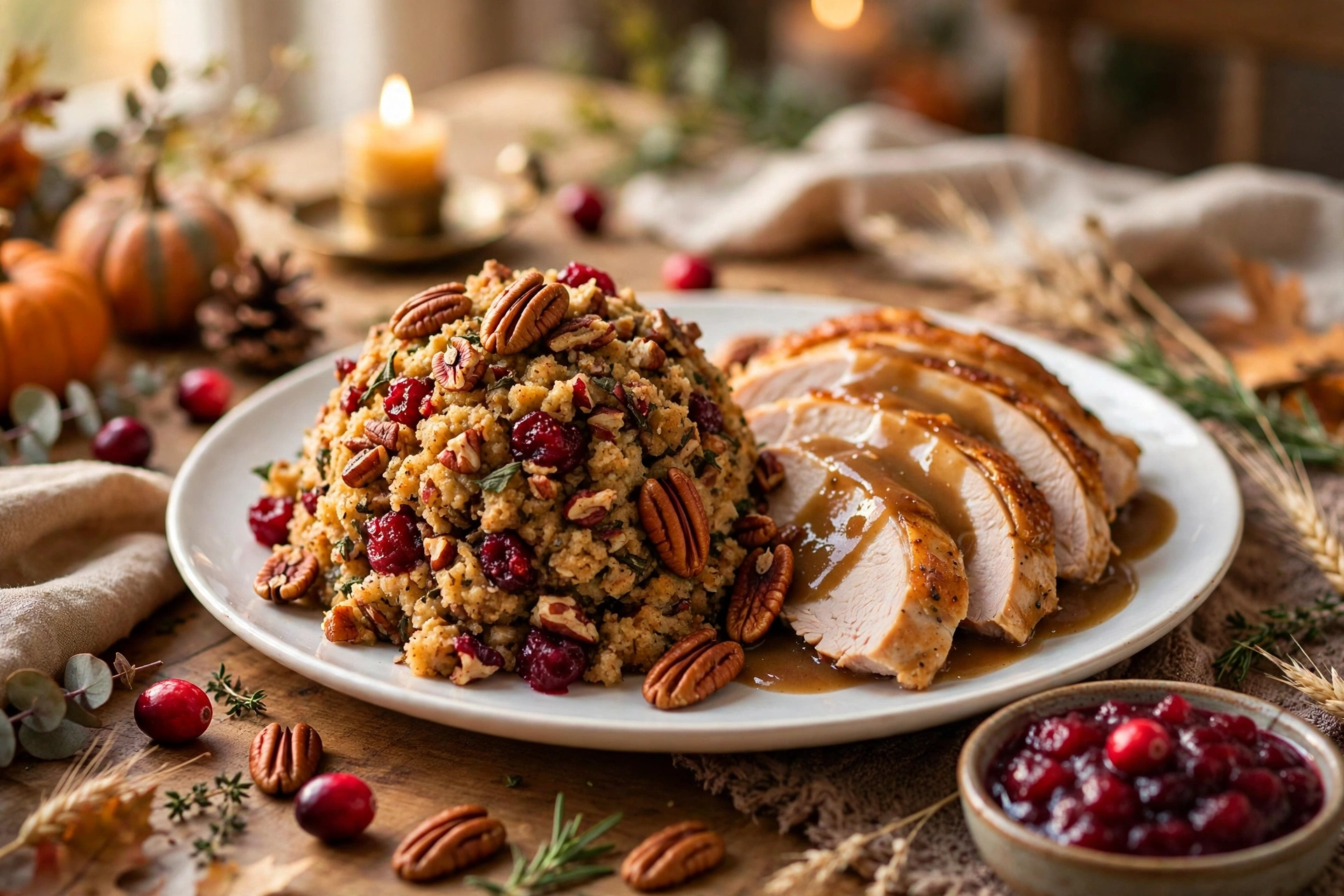
- The classic plate: a generous scoop of stuffing next to sliced turkey, roasted garlic mashed potatoes, and a ladle of turkey gravy over everything. The gravy soaks into the crispy edges of the stuffing in the best possible way.
- With cranberry sauce: a spoonful of cranberry orange relish on the side doubles down on the cranberry flavor and adds a bright, fresh contrast to the rich, buttery stuffing.
- As a holiday side any night: this stuffing does not need a holiday to earn its place. Serve it with roast chicken, pork chops, or even a simple weeknight rotisserie chicken, and dinner suddenly feels like a celebration.
- For a crowd: the recipe doubles cleanly into two 9×13 dishes. Bake them side by side, swapping their oven positions halfway through so both tops brown evenly. A doubled batch feeds 16, which covers even the biggest family gathering.
- Garnish: a scattering of fresh sage leaves and a few extra toasted pecan halves on top just before serving makes the dish look as good as it tastes, and it tells everyone at the table exactly what is inside.
Frequently Asked Questions
Can I make cranberry pecan stuffing ahead of time?
Yes, and it is one of the best Thanksgiving dishes to make ahead. Assemble the stuffing completely, press it into the buttered baking dish, cover tightly, and refrigerate for up to 24 hours. On the day, let the dish sit at room temperature for 20 minutes, then bake as directed, adding about 5 minutes to the covered bake since it starts cold. You can also freeze it unbaked for up to 1 month; thaw overnight in the fridge before baking.
Can I cook stuffing inside the turkey?
You can, but baking it separately is easier and safer. Stuffing cooked inside the bird must reach 165°F (74°C) in the very center, which often means the turkey itself overcooks while you wait for the stuffing to catch up. Baking separately gives you a golden, crispy top, even cooking, and full control over the temperature. If you do stuff the bird, pack it loosely, never overfill the cavity, and check the stuffing temperature with a thermometer before serving. For more background on how this classic dish is traditionally made, see the stuffing article on Wikipedia.
What bread is best for stuffing?
Day-old, sturdy bread is best: French bread, sourdough, challah, or a rustic country loaf. The bread needs to be dry enough to hold its shape when it meets the broth, so it turns soft in the middle instead of collapsing. If your bread is fresh, cut it into 1-inch cubes and dry it in a 300°F oven for about 10 minutes, or leave the cubes out on a sheet pan overnight. Soft sandwich bread is the one bread to avoid, because it turns to mush no matter how carefully you handle it.
Can I make this stuffing vegetarian?
Yes. Skip the sausage and brown 8 ounces of sliced cremini mushrooms in butter until golden, then use them in place of the sausage. Swap the chicken broth for vegetable broth and add an extra 1/2 cup of pecans for heartiness. The mushrooms bring a deep, savory flavor that stands up to the cranberries and herbs, and the bake time and temperatures stay exactly the same. Cranberries are a good source of fiber and vitamin C, and you can look up their nutrition details in the USDA FoodData Central database.
Rate this recipe
Be the first to rate it!