
Some dinners just feel like a little celebration, even on a regular Tuesday. This easy creamy Tuscan salmon is exactly that kind of dinner. Picture it: golden salmon fillets with a crisp, crackly sear, nestled in a silky garlic parmesan cream sauce studded with sweet sun-dried tomatoes and bright green spinach, all of it spooned over mashed potatoes or twirled through pasta while the sauce pools on the plate like liquid gold. One bite and you get buttery, garlicky, tangy, and savory all at once, and somehow the whole thing only takes 30 minutes from fridge to table.
That is the whole magic of this recipe. It tastes like something from a little trattoria on a Tuscan hillside, the kind of place with checkered tablecloths and the smell of garlic drifting out the door, but it is built from one pan, a short list of everyday ingredients, and a technique so simple you will wonder why you ever saved salmon for special occasions. You sear the salmon, build the sauce in the same pan, and let everything finish together in one glorious creamy simmer. No oven, no second pot, no pile of dishes. Dinner is on the table before anyone has time to ask what is for dinner, which is exactly how a weeknight dinner should work.
The sauce does most of the heavy lifting here, and that is a good thing. Garlic bloomed in butter, sun-dried tomatoes softening in cream, Parmesan melting into a sauce that coats the back of a spoon, and fresh spinach wilting in at the very end so it stays bright and just tender. The salmon itself stays the star: a hard sear gives it that golden crust and keeps the inside moist and flaky, and the gentle simmer in the sauce finishes it to a perfect 145°F, which is the USDA safe minimum internal temperature for fish. This is restaurant-fancy food made with supermarket ingredients, and it is about to become the dinner your family asks for by name.
If you love creamy one-pan dinners, this recipe sits right in the family with our creamy garlic butter salmon and our creamy Tuscan chicken skillet. Same cozy Italian-inspired comfort, same one-pan ease, but the salmon version is lighter, faster, and honestly a little more elegant. Serve it with crusty bread for mopping up the sauce and you will understand why Tuscan-style cooking has conquered dinner tables all over the world.
Recipe at a Glance
- Prep time: 10 minutes (pat dry and season the salmon, 3 minutes; mince the garlic, slice the sun-dried tomatoes, and measure the cream and Parmesan, 4 minutes; wash the spinach and halve the lemon, 3 minutes)
- Cook time: 20 minutes (sear the salmon, 8 minutes; garlic and sun-dried tomatoes, 2 minutes; cream sauce simmer, 4 minutes; spinach and lemon, 2 minutes; salmon finishes in the sauce, 4 minutes)
- Total time: 30 minutes
- Servings: 4 (one 6-ounce fillet per person)
- Difficulty: Easy
- Method: One-pan, stovetop
- Best served with: mashed potatoes, pasta, rice, or crusty bread

Ingredients
- 4 salmon fillets (about 6 ounces each, skin on or skinless, 1 to 1 1/2 inches thick)
- 1 teaspoon kosher salt
- 1/2 teaspoon black pepper, freshly ground
- 1 teaspoon paprika
- 2 tablespoons olive oil
- 1 tablespoon unsalted butter
- 4 cloves garlic, minced
- 1/2 cup sun-dried tomatoes in oil, drained and thinly sliced
- 1 cup heavy cream
- 1/2 cup low-sodium chicken broth or vegetable broth
- 1/2 cup Parmesan cheese, freshly grated
- 1 teaspoon Italian seasoning
- 3 cups baby spinach, loosely packed
- 1 tablespoon fresh lemon juice (from about 1/2 lemon)
- 1/4 teaspoon red pepper flakes (optional, for a gentle warmth)
- Fresh basil leaves and extra shaved Parmesan, for serving

Directions
- Sear the salmon (8 minutes). Pat the salmon fillets very dry with paper towels, then season all over with the salt, black pepper, and paprika. Heat the olive oil in a large skillet over medium-high heat until it shimmers. Place the fillets presentation-side down (skin-side up if skinless) and cook undisturbed for 4 minutes, until a deep golden crust forms. Flip and cook 4 minutes more. The salmon will not be fully cooked yet, and that is exactly right. Transfer to a plate and set aside.
- Bloom the garlic and tomatoes (2 minutes). Reduce the heat to medium and add the butter to the same skillet. Once it melts, add the minced garlic and sun-dried tomatoes. Cook, stirring constantly, for 2 minutes, until the garlic is fragrant and just turning golden at the edges. Do not let the garlic brown, or it will taste bitter.
- Build the cream sauce (4 minutes). Pour in the heavy cream and broth, scraping up all the golden browned bits from the bottom of the pan with a wooden spoon. Those browned bits are pure flavor, and the cream will pick every bit of it up. Stir in the Parmesan, Italian seasoning, and red pepper flakes if using. Simmer gently for 4 minutes, stirring now and then, until the sauce thickens enough to coat the back of a spoon.
- Wilt the spinach and brighten (2 minutes). Add the baby spinach a handful at a time, stirring until each handful wilts before adding the next. This takes about 2 minutes total. Squeeze in the lemon juice and taste the sauce. It should be rich and savory with a little tang from the tomatoes and lemon. Add a pinch more salt if it needs it.
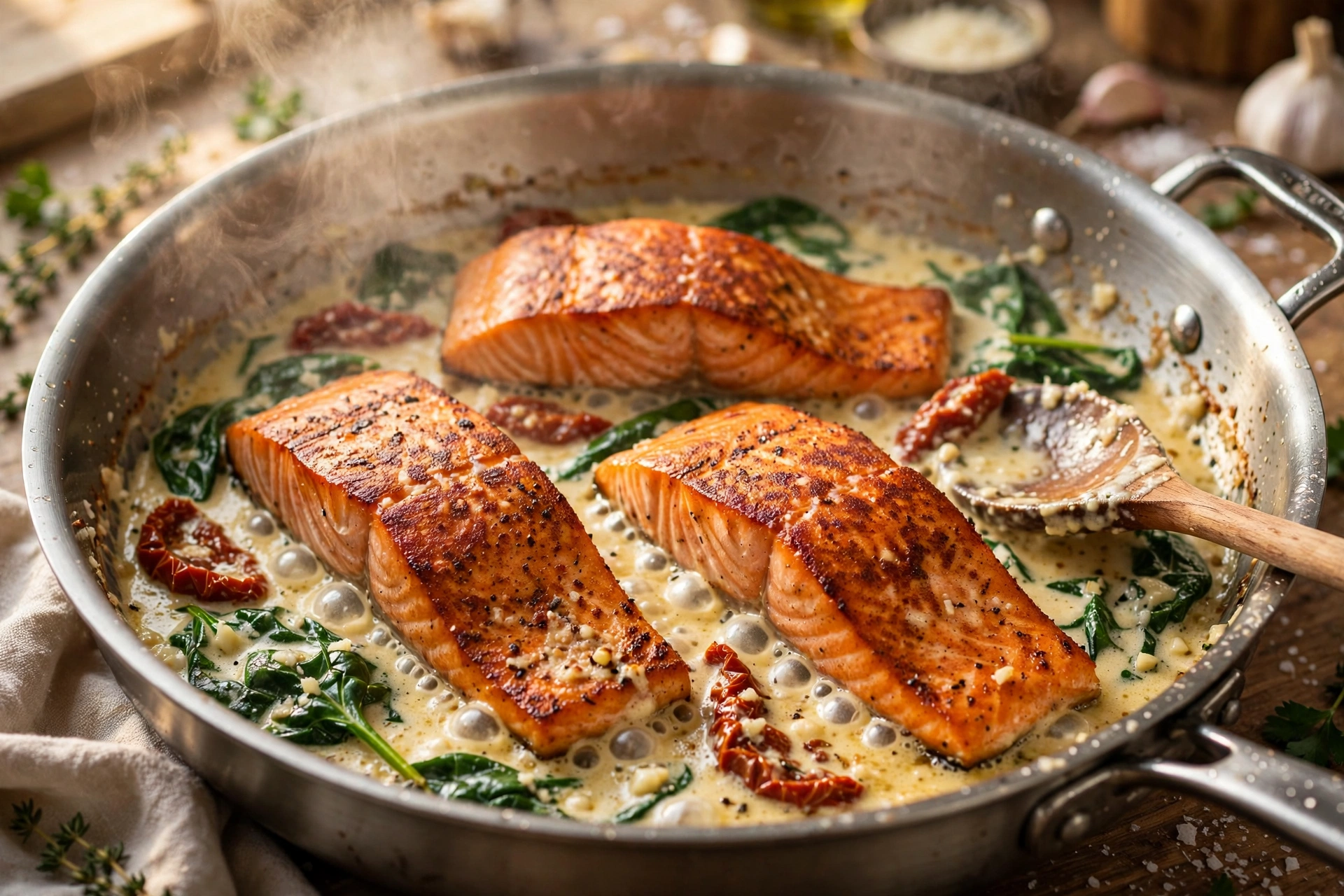
- Finish the salmon in the sauce (4 minutes). Nestle the seared salmon fillets back into the skillet, spooning some of the sauce over the top. Reduce the heat to low, cover, and simmer gently for 4 minutes. The salmon is done when an instant-read thermometer reads 145°F (63°C) at the thickest part, the flesh flakes easily with a fork, and the center is opaque with just the faintest blush of translucency. If your fillets are thicker than 1 1/2 inches, give them 1 to 2 minutes more.
- Rest and serve. Take the skillet off the heat and let it rest for 2 minutes. Resting lets the sauce settle and the salmon relax, so every bite is juicy instead of rushed. Spoon the salmon onto plates with plenty of sauce, spinach, and sun-dried tomatoes, and scatter fresh basil leaves and shaved Parmesan over the top. Serve right away with mashed potatoes, pasta, rice, or crusty bread to catch every drop of that sauce.
That is the whole recipe, and it really is that simple. The hardest part is waiting those 2 minutes of resting while the kitchen smells like a Tuscan trattoria.
Why This Works
Every step in this recipe has a job, and understanding the why makes the difference between good salmon and unforgettable salmon. First, the hard sear. Salmon is a fatty, flavorful fish, and a hot pan does two things at once: it builds a golden crust through the Maillard reaction, which is the same browning that makes toast and seared steak taste so good, and it drives moisture out of the surface so the fish does not steam in its own juices. That is why patting the fillets very dry matters so much. A wet fillet cannot brown; it just simmers in the pan and turns pale and soft.
Second, the sauce is built in the same pan on purpose. The browned bits left behind after searing, called fond, are concentrated salmon and seasoning flavor. When the cream and broth hit the hot pan, they dissolve that fond straight into the sauce. This is the same trick that makes pan sauces in restaurants taste so much richer than anything made in a clean pot, and it costs you nothing but a wooden spoon and thirty seconds of scraping.
Third, the order of the sauce matters. The garlic goes in before the cream, not after, because garlic blooms in fat: its flavor compounds dissolve into the butter and oil and spread evenly through the whole sauce. If you added raw garlic to the finished cream, you would get sharp little pockets of raw garlic instead of a smooth, mellow background warmth. The Parmesan goes in while the sauce is simmering, not boiling, because hard cheese can turn grainy and clump if the liquid is too hot. A gentle simmer lets it melt in silkily. The spinach goes in last because it only needs about 2 minutes to wilt; any longer and it turns dark, slimy, and sad. The lemon juice goes in at the very end for the same reason: acid added early can make cream sauces taste flat and can even encourage curdling, while acid at the end lifts everything bright and fresh.
Finally, finishing the salmon in the sauce instead of cooking it all the way through during the sear is what keeps it moist. Salmon dries out fast once it passes 145°F, and a gentle 4-minute simmer in the sauce lets the heat creep in slowly and evenly. The sauce also bastes the fish from the outside, so the top stays glossy and moist instead of drying out under direct heat. If you have ever had salmon that was dry on the outside and perfect inside, or perfect outside and raw inside, this two-stage method is the fix.
Pro Tips
Buy fillets of even thickness. Ask the fish counter for center-cut fillets, and if one end of a fillet is much thinner than the other, tuck the thin tail end underneath so the whole piece cooks evenly. Even thickness is the single biggest factor in getting all four fillets done at the same moment.
Let the salmon come to cool room temperature for 10 minutes. Fridge-cold salmon hits a hot pan and the outside overcooks while the center is still catching up. Ten minutes on the counter while you prep the garlic and tomatoes is enough to take the chill off without any food-safety worry.
Use heavy cream, not milk or half-and-half. Heavy cream has enough fat to simmer without curdling, which is exactly what this sauce needs. Milk or half-and-half can split when simmered with lemon juice and tomatoes, leaving you with a grainy, broken sauce. If you want a lighter version, see the substitutions below, but start with heavy cream for the best result.
Grate your own Parmesan. Pre-grated Parmesan is coated in anti-caking starch, and that starch can make a cream sauce turn gritty or gluey. A wedge of Parmesan and a box grater take one minute and melt into a sauce that is noticeably silkier.
Do not crowd the pan. Four fillets need a 12-inch skillet. If your pan is smaller, sear in two batches. Crowded fish steams instead of searing, and you lose the golden crust that makes this dish special.
Taste the sauce before the salmon goes back in. This is your one easy chance to fix the seasoning. The sauce should be rich, garlicky, and savory with a bright edge from the lemon. If it tastes flat, it almost always needs a pinch more salt or another squeeze of lemon, not more cheese.
Common Mistakes
Moving the salmon too soon. The number one mistake with seared salmon is fiddling with it. Once a fillet goes in the pan, leave it alone for the full 4 minutes. It will release itself from the pan when the crust is ready. If you try to flip it early, the crust tears off and sticks to the pan, and you are left with pale, patchy fish.
Cooking the salmon all the way through during the sear. Remember, the salmon goes back into the sauce for another 4 minutes. If it is fully cooked after searing, it will be overcooked by the time it reaches the table. Pull it at the golden-crust stage, even if the center still looks underdone. The sauce finish is part of the cooking time.
Boiling the cream sauce hard. A rolling boil is the enemy of a cream sauce. It can split the cream, turn the Parmesan grainy, and reduce the sauce too fast so it gets thick and pasty. Keep it at a gentle simmer, with just a few lazy bubbles breaking the surface, and you will get a sauce that pours like silk.
Adding the spinach too early. Spinach wilts in about 2 minutes and keeps wilting from residual heat. If it goes in before the sauce is ready, it overcooks into dark, stringy ribbons. It is always the last ingredient before the salmon returns.
Skipping the rest. Two minutes of resting feels like forever when dinner smells this good, but it matters. The salmon relaxes, the juices redistribute, and the sauce thickens slightly as it cools. Serve straight from the pan and the sauce runs thin and the first bites are dry.
Substitutions
Salmon: Any firm, fatty fish works in this sauce. Trout fillets are the closest swap and cook in the same time. Cod or halibut also work beautifully, though they are leaner, so shave 1 minute off each sear side and watch the temperature closely. Even shrimp is lovely here: sear 2 minutes per side and finish 2 minutes in the sauce.
Heavy cream: For a lighter sauce, use 3/4 cup of half-and-half plus 2 tablespoons of cream cheese, whisked in off the heat. The cream cheese stabilizes the sauce so it does not curdle. Full-fat coconut milk also works and adds a subtle sweetness, though the flavor leans less Tuscan and more tropical.
Sun-dried tomatoes: If you only have fresh cherry tomatoes, halve a cup of them and add them with the garlic. They will soften into the sauce and give a brighter, fresher flavor. Roasted red peppers, chopped, are another excellent swap with the same sweet-tangy character.
Parmesan: Pecorino Romano is the classic Tuscan cousin and works one-for-one, though it is saltier, so taste before adding extra salt. Grana Padano is a milder option that melts just as smoothly.
Spinach: Baby kale, chopped Swiss chard, or even arugula can stand in. Kale and chard need 3 to 4 minutes to soften, so add them a little earlier. Arugula wilts in about 1 minute and adds a peppery bite.
Broth: A splash of dry white wine (about 1/2 cup, replacing the broth) adds a lovely acidity and is very Tuscan. Let it bubble for 1 minute before adding the cream so the alcohol cooks off. If you prefer to keep it alcohol-free, the broth version is just as good.
Storage & Make-Ahead
Fridge: Let leftovers cool to room temperature within 2 hours, then store the salmon and sauce together in an airtight container in the fridge for up to 2 days. Salmon dries out faster than chicken or beef, so 2 days is the honest limit for good texture and flavor. Reheat gently in a covered skillet over low heat with a splash of cream or broth, about 4 to 5 minutes, until just warmed through. Never microwave on high: it will overcook the fish and split the sauce in seconds.
Freezer: Cooked salmon in cream sauce does not freeze well. The cream sauce can separate and turn grainy when thawed, and the fish loses its delicate texture. If you must freeze, freeze the seared salmon fillets alone, without the sauce, for up to 1 month, and make a fresh batch of sauce when you reheat. Honestly, this recipe is so fast that a fresh batch beats a thawed one every time.
Make-ahead: You can prep everything up to a day ahead: season the salmon and keep it covered in the fridge, mince the garlic, slice the sun-dried tomatoes, grate the Parmesan, and wash the spinach. With everything ready, the actual cooking takes 20 minutes, which makes this a genuinely practical weeknight dinner rather than a weekend project. The sauce itself is best made fresh, since reheated cream sauce never tastes quite as silky as the first batch.
Serving Ideas
The sauce is the best part of this meal, so build the plate around something that catches it. Creamy mashed potatoes are the classic partner: a soft, buttery mound that soaks up the garlic parmesan sauce and turns every spoonful into comfort food. If you want something a little lighter, buttered pasta is just as good. Toss fettuccine or penne right into the skillet with the sauce for the last minute, and the pasta drinks up the cream while the salmon rests on top. Rice is the third easy option, especially a simple buttered rice or a lemony rice pilaf that echoes the lemon in the sauce.
For a lighter, fresher plate, skip the starch and serve the salmon with crusty bread and a simple green salad. A thick slice of sourdough or ciabatta, warmed in the oven, is made for mopping up a sauce like this, and a salad of mixed greens with a sharp lemon vinaigrette cuts through the richness beautifully. Roasted asparagus, green beans, or broccoli on the side add color and crunch without competing with the main event. If you are feeding a crowd, double the sauce ingredients and keep the same four fillets: extra sauce means nobody has to ration the good part, and the bread basket will empty fast.
For drinks, keep it simple. A cold glass of sparkling water with lemon, or a crisp white wine like a Pinot Grigio, pairs perfectly with the creamy sauce and the rich salmon. And if you are planning a full dinner-party menu, start with a light soup or salad, serve the salmon as the main, and finish with something bright and simple like fresh berries. The salmon is rich enough to anchor the whole evening, and the 30-minute cook time means you can actually enjoy your own party instead of hiding in the kitchen.

Frequently Asked Questions
Can I use frozen salmon for this creamy Tuscan salmon?
Yes, but thaw it completely first, and thaw it the right way. Move the fillets to the fridge the night before, or seal them in a zip-top bag and submerge in cold water for about 30 minutes, changing the water once. Never thaw salmon at room temperature, and never cook it from frozen for this recipe: a frozen fillet will not sear, it will steam, and you will lose the golden crust that makes the dish. Once thawed, pat the fillets extra dry, because thawed fish releases more surface moisture than fresh.
How do I know when the salmon is done?
The reliable answer is a thermometer: 145°F (63°C) at the thickest part, which is the USDA safe minimum internal temperature for fish. Without a thermometer, look for three cues together: the flesh flakes easily when pressed gently with a fork, the outside is opaque, and the center has just a faint blush of translucency rather than raw, glossy pink. If the flakes separate with zero resistance and the fish looks dry and chalky, it has gone past done, so check a minute early rather than a minute late.
Can I make this creamy Tuscan salmon dairy-free?
Yes. Use full-fat coconut milk in place of the heavy cream, olive oil in place of the butter, and a dairy-free Parmesan-style cheese or 2 tablespoons of nutritional yeast for the cheesy note. The sauce will be a little sweeter and lighter than the original, and it will not thicken quite as much, so simmer it 1 to 2 minutes longer. The sun-dried tomatoes, garlic, and spinach carry so much flavor that the dairy-free version still tastes rich and satisfying.
What should I serve with creamy Tuscan salmon?
The sauce is the best part of the meal, so serve something that soaks it up. Mashed potatoes are the classic choice, and creamy garlic mashed potatoes are especially good here. Pasta is a close second: toss the salmon and sauce with fettuccine or penne and you have a complete one-bowl dinner. Rice works beautifully too, and a simple buttered rice lets the creamy sauce shine. For a lighter plate, serve it with crusty bread and a simple green salad, and let the bread do the work of catching every last drop.
If salmon is your thing, do not stop here. Our easy Thai peanut noodles are another fast, family-friendly dinner with a completely different flavor profile, and salmon itself is one of the most versatile fish you can cook, rich in omega-3 fatty acids according to USDA FoodData Central. Once you have this Tuscan version in your back pocket, weeknight dinners get a whole lot easier and a whole lot more delicious.
Rate this recipe
Be the first to rate it!