
There is a very specific smell that means fall has officially arrived in our house, and it is not pumpkin spice. It is warm apple cider, cinnamon, and sugar drifting out of the oven on a Saturday morning. These easy apple cider donuts are the reason I keep a jug of cider in the fridge all autumn long. They are soft, tender, and full of real apple flavor, with a crackly cinnamon sugar coat that sticks to your fingers in the best possible way. And the whole batch is ready in about 30 minutes, from the first whisk to the first warm bite.
Here is the best part: these are baked apple cider donuts, not fried. There is no pot of hot oil to babysit, no splatter on the stovetop, and no greasy cleanup. You whisk one bowl of dry ingredients, one bowl of wet ingredients, stir them together, and spoon the batter into a donut pan. Twelve to fourteen minutes later, the kitchen smells like an apple orchard in October and you are rolling warm donuts in cinnamon sugar.
What makes these donuts taste like actual apples instead of vaguely sweet cake? Two things. First, real apple cider goes straight into the batter, not apple juice and not water. Cider is unfiltered and full of apple character, so the flavor survives the oven instead of baking away. Second, a spoonful of unsweetened applesauce keeps the crumb moist and doubles down on the apple flavor without making the batter heavy. The cinnamon, nutmeg, and ginger do the rest, warming everything up the way a good fall breakfast should.
This is a breakfast that works for slow weekend mornings and busy school mornings alike, because the donuts bake fast and travel beautifully. Pack two in a lunchbox and you have a school snack that disappears before recess. Set a plate next to mugs of hot cider and watch them vanish before the coffee is finished brewing.
If you love fall breakfasts, try these alongside our Easy Apple Cider Donut Holes, the bite-size fried cousins of this recipe, and our Easy Cinnamon French Toast Sticks for another cinnamon sugar morning favorite. For a holiday morning when you want something you can make the night before, our Christmas Morning Breakfast Casserole is the one to reach for. But today, the donuts come first.
Recipe at a Glance
- Prep time: 10 minutes
- Bake time: 12 to 14 minutes
- Cooling time: 5 minutes
- Total time: About 30 minutes
- Servings: 12 donuts
- Oven temperature: 350°F (175°C)
- Method: Baked in a standard 12-cup donut pan
- Best served: Warm, the same morning they are baked
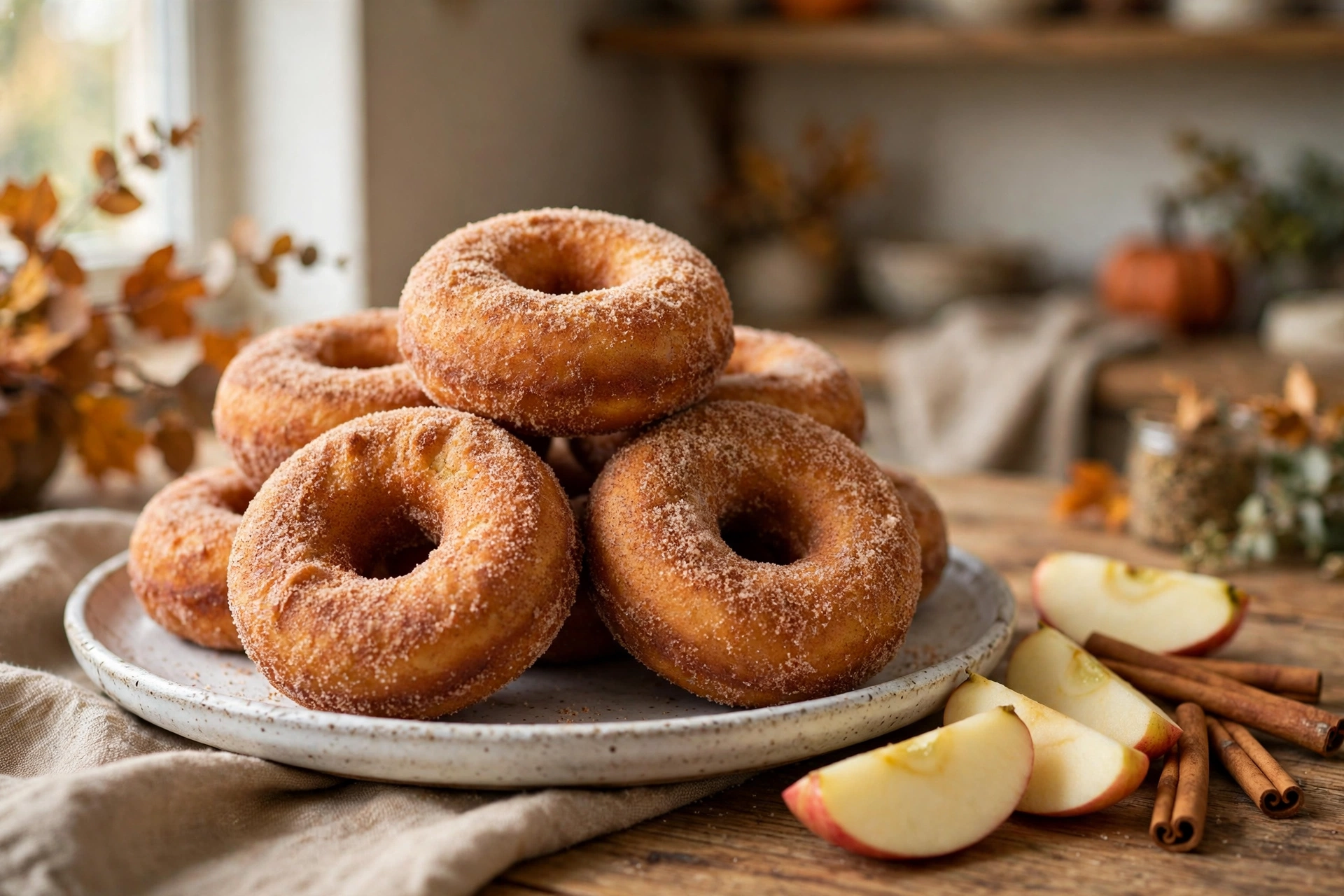
Why These Apple Cider Donuts Work So Well
A great baked donut walks a fine line. Too much liquid and it turns into a muffin with a hole. Too little and it bakes up dry and sad. This recipe stays on the right side of that line because the liquid is measured with intent: two-thirds of a cup of apple cider plus half a cup of applesauce gives the batter enough moisture to stay tender, while two cups of flour give it the structure it needs to hold a ring shape. The batter should look thick and spoonable, like a very soft cake batter, not runny like pancake batter.
The leavening matters more than most people think. Baking powder does the heavy lifting here, puffing the donuts up in the hot oven, while a small amount of baking soda reacts with the natural acidity in the cider and applesauce to add a little extra lift and a deeper golden color. That acid-and-soda reaction is also why you should not let the batter sit around. Once the wet and dry ingredients meet, the clock is ticking, so have the oven hot and the pan greased before you stir.
Then there is the coating, which is where a good donut becomes a great one. Brushing the warm donuts with melted butter while they are still warm does two jobs at once: it gives the cinnamon sugar something to cling to, and it seals in moisture so the donuts stay soft instead of drying out. The sugar must go on while the butter is still wet. Wait until the donuts are cool and the sugar just slides off in a sad little pile. Work quickly, coat generously, and do not be shy.
One more thing worth knowing: apple cider is not the same as apple juice. Cider is raw, unfiltered pressed apple juice, cloudy and full of flavor, while apple juice is filtered until it is clear and much milder. In this recipe the difference is real, because cider gives the donuts a deeper, tangier apple flavor that survives baking, while juice would mostly disappear.
Ingredients
For the donuts
- 2 cups all-purpose flour, spooned and leveled
- 1 teaspoon baking powder
- 1/2 teaspoon baking soda
- 1 teaspoon ground cinnamon
- 1/2 teaspoon ground nutmeg
- 1/4 teaspoon ground ginger
- 1/2 teaspoon fine salt
- 1/2 cup granulated sugar
- 1/2 cup packed light brown sugar
- 2 large eggs, at room temperature
- 2/3 cup apple cider
- 1/2 cup unsweetened applesauce
- 1/4 cup unsalted butter, melted and slightly cooled
- 1/4 cup vegetable oil
- 1 teaspoon vanilla extract
For the cinnamon sugar coating
- 1/2 cup granulated sugar
- 1 tablespoon ground cinnamon
- 4 tablespoons unsalted butter, melted
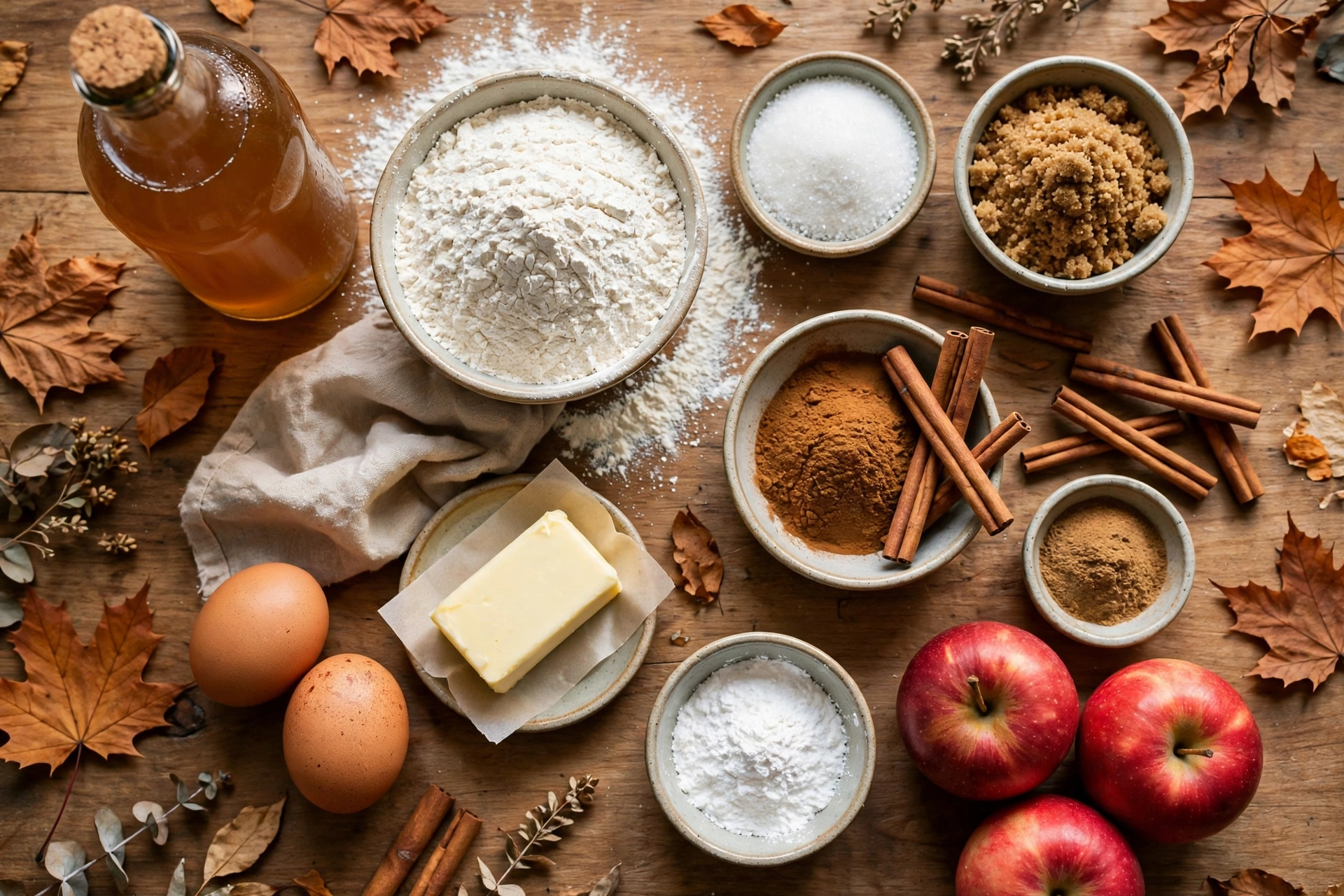
A quick note on the applesauce: use plain unsweetened applesauce, the kind that lists only apples and maybe a little water on the label. Sweetened applesauce throws off the sugar balance and can make the donuts sticky instead of tender. If all you have is sweetened, cut the granulated sugar in the batter down to one-third of a cup. If you are out of applesauce entirely, the same amount of plain yogurt works, though the apple flavor will be a little lighter.
The butter and oil work as a team here, and each one earns its place. Butter brings flavor, that warm, rich, bakery taste that oil alone can never give. Oil brings moisture that lasts, so the donuts stay soft the next day instead of turning dry and crumbly. Using only butter would give you a drier donut by afternoon. Using only oil would give you a softer donut with a flatter flavor. Together, they give you the best of both.
Directions
Read through the steps once before you start. The recipe moves fast once the batter is mixed, and having the pan greased and the oven hot before you stir is the difference between tall, fluffy donuts and flat, tired ones.
- Heat the oven and prep the pan. Preheat the oven to 350°F (175°C). Grease a standard 12-cup donut pan generously with butter or nonstick spray, getting into every curve of each ring. If you only have a 6-cup pan, bake in two batches and keep the second half of the batter covered at room temperature while the first batch bakes.
- Whisk the dry ingredients. In a large bowl, whisk together the flour, baking powder, baking soda, cinnamon, nutmeg, ginger, and salt until everything is evenly mixed and there are no little pockets of baking powder hiding in the flour. A thorough whisk now means you do not have to over-stir later.
- Whisk the wet ingredients. In a second bowl, whisk the granulated sugar and brown sugar with the eggs until the mixture looks smooth and slightly lighter in color, about 30 seconds. Whisk in the apple cider, applesauce, melted butter, oil, and vanilla extract until everything is combined.
- Combine, gently. Pour the wet ingredients into the dry ingredients and stir with a spatula just until the last streak of flour disappears. Stop the moment you cannot see dry flour anymore. The batter will be thick and soft, and a few small lumps are completely fine. Overmixing is the number one reason baked donuts turn dense, so resist the urge to keep stirring until it is perfectly smooth.
- Fill the pan and bake. Spoon the batter into the prepared donut pan, filling each ring about two-thirds full. A piping bag or a zip-top bag with the corner snipped off makes this neat and fast, but a spoon works just as well. Bake for 12 to 14 minutes, until the donuts are golden brown, spring back when you press the top gently, and a toothpick inserted into the thickest part comes out clean.
- Cool briefly, then turn out. Let the donuts cool in the pan for 5 minutes. This short rest lets them firm up enough to hold their shape. Then run a thin knife around the edges if needed and turn the donuts out onto a wire rack. If a donut sticks, give the pan a gentle tap on the counter and try again. Do not let them sit in the pan longer than 10 minutes, or the trapped steam will make the bottoms soggy.
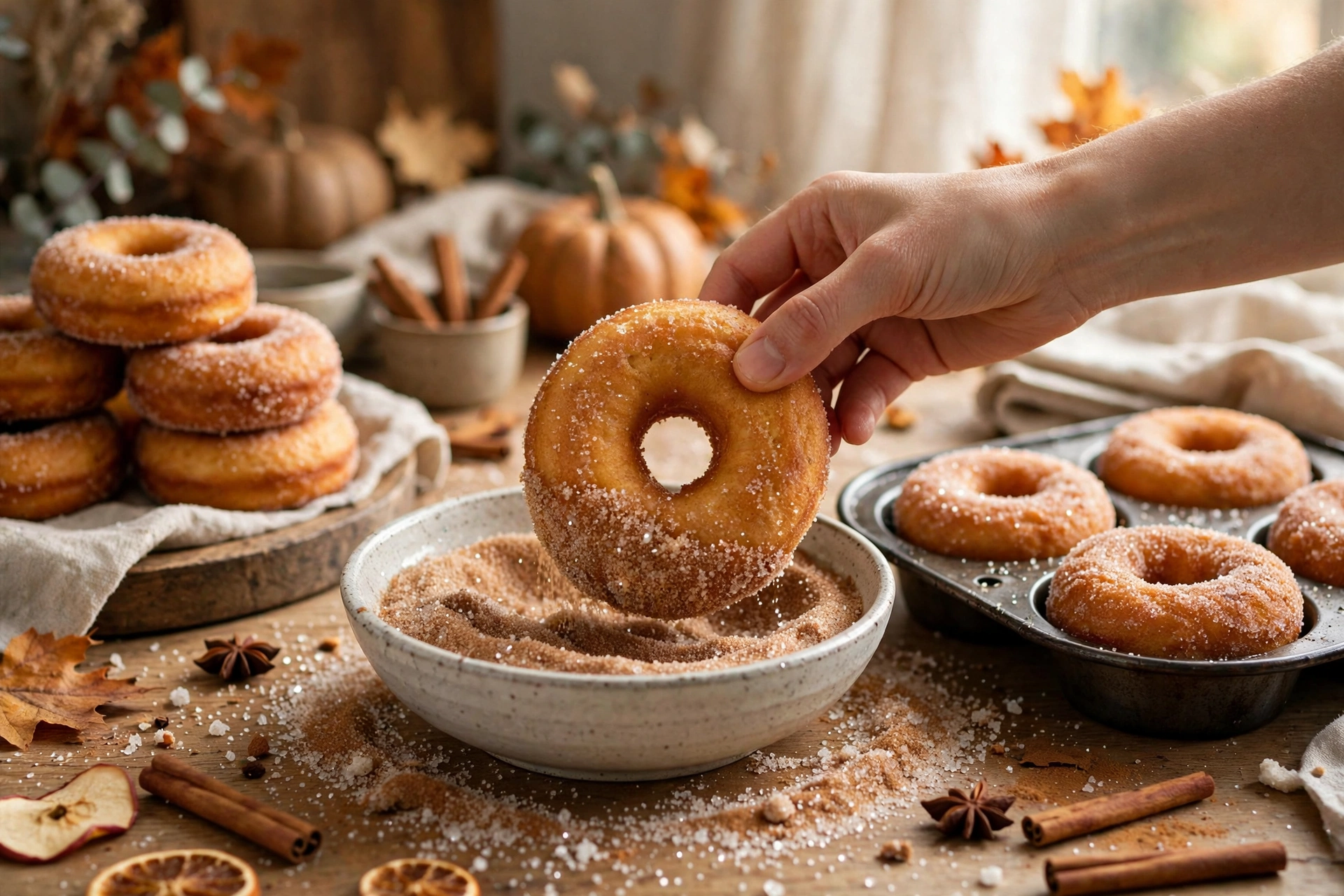
- Coat while warm. While the donuts are still warm, brush each one all over with the melted butter for the coating, then roll it in the cinnamon sugar mixture until it is covered on all sides. Work one donut at a time so the butter stays wet enough for the sugar to stick.
- Serve warm. These donuts are at their absolute best served warm, within the first hour, when the centers are still soft and the cinnamon sugar shell is crisp. Set them out on a plate with hot apple cider or coffee and let everyone help themselves.
Pro Tips for the Best Apple Cider Donuts
Measure the flour the right way. Spoon the flour into your measuring cup and level it off with a knife. Scooping straight from the bag packs the flour down and can add three or four extra tablespoons without you noticing. That extra flour is often the real reason a donut recipe turns out dry or dense.
Use room-temperature eggs. Cold eggs do not blend as smoothly into the batter, and they can make the melted butter seize up into little flecks. If you forgot to take the eggs out of the fridge, set them in a bowl of warm tap water for five minutes.
Do not overfill the pan. Two-thirds full is the sweet spot. Fill the rings to the top and the batter will puff over the center hole and bake into something that looks more like a muffin than a donut.
Reduce the cider if you have ten extra minutes. For the deepest apple flavor, simmer one cup of apple cider in a small saucepan over medium heat for about 8 to 10 minutes, until it has reduced to two-thirds of a cup, then let it cool before using it in the batter. The flavor concentrates beautifully. Just remember this adds about 10 minutes to the recipe, so the total time becomes about 40 minutes instead of about 30 minutes.
Common Mistakes and How to Fix Them
The donuts are dense and heavy. This is almost always overmixing. Once the wet and dry ingredients meet, stir only until the flour disappears. If your batter looks perfectly smooth and glossy, you have probably gone too far. Next time, stop earlier and accept a few lumps. The other suspect is old baking powder. Test it by dropping half a teaspoon into a cup of hot water. If it fizzes energetically right away, it is fine. If it barely bubbles, throw it out and buy fresh.
The donuts stuck to the pan. Donut pans have a lot of curves for batter to grab onto, so greasing matters more here than in a muffin tin. Use softened butter and a pastry brush to get into every ring, or spray generously with nonstick spray and then dust the pan lightly with flour, tapping out the excess. Also, do not skip the five-minute cooling rest. Turning the donuts out while they are still piping hot is asking them to fall apart in your hands.
The cinnamon sugar will not stick. The coating needs wet butter to cling to, and the donuts need to be warm. If the donuts have cooled completely, the butter soaks in before the sugar can grab hold. Brush and roll one donut at a time while it is still warm, and if the sugar still slides off, brush on a little more butter.
The centers are wet or gummy. Either the donuts came out of the oven too early, or the batter was overfilled. A toothpick test never lies: if it comes out with wet batter on it, give the donuts two more minutes. Ovens vary, and a pan sitting on a lower rack bakes more slowly than one in the center. Bake on the center rack, and trust the toothpick over the timer.
Easy Substitutions
No donut pan? Use a 12-cup muffin tin instead. Fill each cup two-thirds full and bake at 350°F for 12 to 15 minutes, until a toothpick comes out clean. You will get round donut muffins rather than rings, and they are just as delicious. A mini muffin tin works too for bite-size donuts; bake for 9 to 11 minutes and watch them closely.
No applesauce? Plain yogurt, sour cream, or even mashed banana can stand in for the applesauce in the same amount. Yogurt keeps the crumb tangy and tender, sour cream makes it richer, and banana adds its own flavor. Applesauce is the best choice for the strongest apple flavor, but do not skip the recipe just because the jar is empty.
Dairy-free? Swap the butter for the same amount of melted coconut oil or a neutral vegetable oil. The donuts will still be soft and flavorful. Brush with melted coconut oil instead of butter for the coating, and the cinnamon sugar will stick just as well.
Gluten-free? A cup-for-cup gluten-free flour blend that contains xanthan gum works well here. The donuts will be slightly more delicate, so let them cool the full five minutes in the pan before turning them out, and handle them gently while coating.
Different spices? The cinnamon, nutmeg, and ginger trio is classic, but you can shift it to suit your pantry. Apple pie spice works as a one-for-one swap for all three spices combined, using one and three-quarter teaspoons total. A pinch of ground cloves or allspice adds a deeper, darker warmth for late fall.
Storage and Make-Ahead
These donuts are best the day they are baked, and honestly, most batches never survive to day two. But if you do have leftovers, store cooled donuts in an airtight container at room temperature for up to 2 days. Keep them in a single layer if you can, with a sheet of parchment between layers, so the cinnamon sugar coating does not get crushed or rubbed off.
For longer storage, move the container to the fridge, where the donuts will keep for up to 5 days. Bring them back to room temperature before serving, or warm them for five minutes in a 300°F oven. The coating softens a little in the fridge, so a quick roll in fresh cinnamon sugar after warming brings back the crunch.
To freeze, let the donuts cool completely, then freeze them uncoated in a single layer on a baking sheet for one hour. Once they are firm, transfer them to a freezer bag, squeeze out the air, and freeze for up to 2 months. Thaw at room temperature, warm for five minutes in a 300°F oven, then brush with melted butter and roll in fresh cinnamon sugar. Freezing them uncoated is the secret, because a sugar coating that has been frozen and thawed turns damp, while a fresh coating on a thawed donut tastes like it was just baked.
As with any baked good, do not leave the donuts sitting out at room temperature for more than 2 hours, especially on a warm day. The eggs and butter in the batter mean they belong in the fridge or the freezer once that window has passed. For nutrition details on the ingredients in this recipe, the USDA FoodData Central database is a reliable place to look up the foods you use most.
Serving Ideas
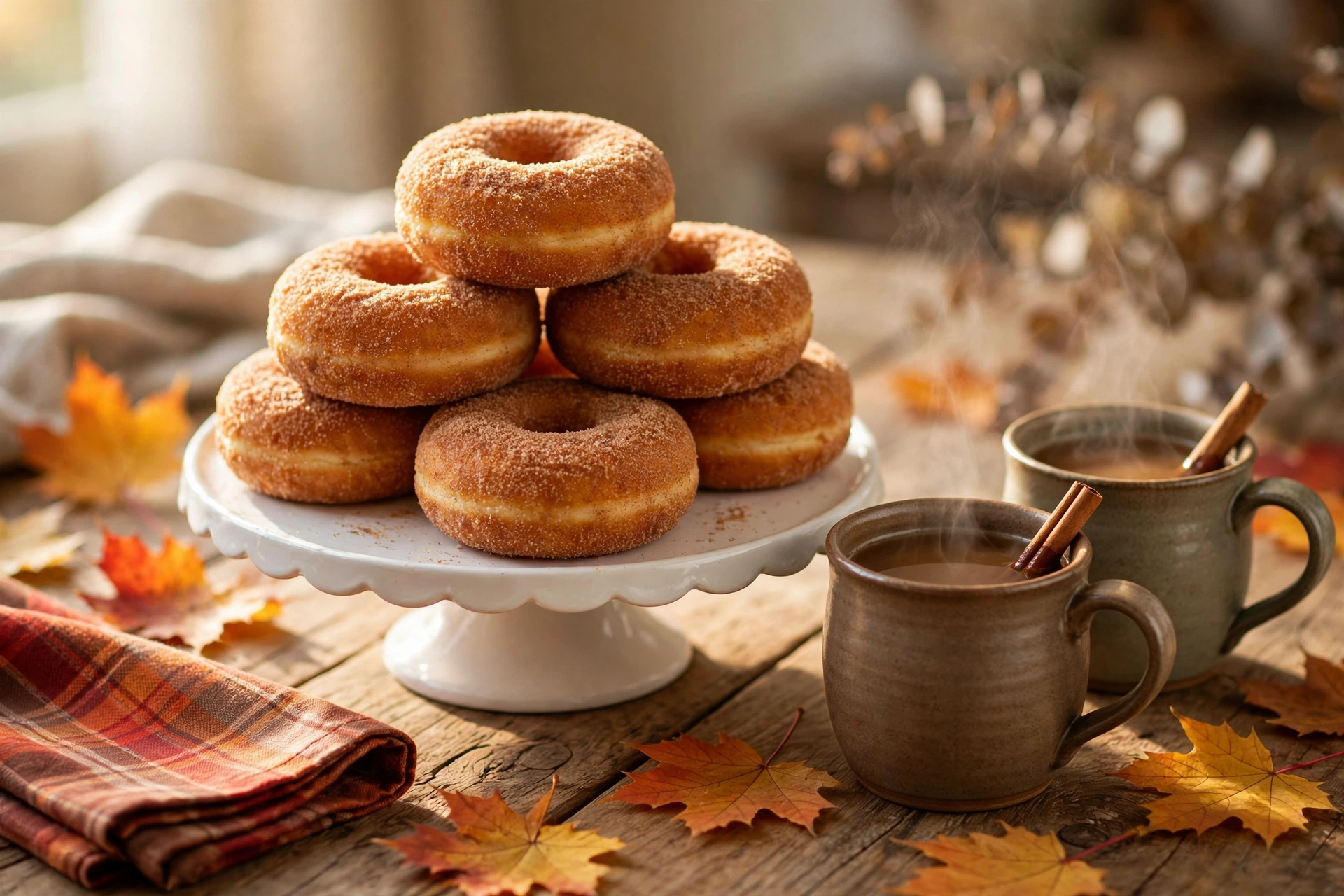
The classic way to serve these donuts is warm, on a plate, with a mug of hot apple cider beside them. It is simple, it is perfect, and nobody has ever complained. But if you want to turn a batch into a full fall breakfast spread, here are a few ideas that work beautifully.
Set the donuts out with scrambled eggs, crispy bacon, and fresh fruit for a weekend brunch that feels like a special occasion without any extra work. The salty bacon against the sweet cinnamon sugar is one of those combinations that should not work as well as it does. For a school morning, tuck two donuts into a lunchbox with apple slices and a cheese stick.
For a fall party, stack the donuts on a cake stand and put a bowl of warm caramel sauce beside them for dipping. Add a pot of hot cider with cinnamon sticks and orange slices, and you have a dessert table that looks like you planned it for weeks. The donuts also make a lovely edible gift. Stack six in a cellophane bag, tie it with twine, tuck in a cinnamon stick, and you have a hostess gift that beats a bottle of wine.
Frequently Asked Questions
Can I make apple cider donuts without a donut pan?
Yes. Spoon the batter into a greased 12-cup muffin tin, filling each cup about two-thirds full, and bake at 350°F for 12 to 15 minutes, until a toothpick comes out clean. You will get round donut muffins instead of rings, so brush them with butter and roll them in cinnamon sugar the same way. A mini muffin tin also works for bite-size donuts; bake for 9 to 11 minutes.
Can I fry these apple cider donuts instead of baking them?
Yes, the same batter fries well. Heat 2 inches of neutral oil to 350°F to 375°F, drop in spoonfuls of batter, and fry for 2 to 3 minutes per side until deep golden brown. Drain on a wire rack, then brush with melted butter and toss in cinnamon sugar while still warm. Baking is the easier everyday option, but frying gives a crispier crust.
Why did my apple cider donuts turn out dense?
Dense donuts almost always come from overmixing the batter or from old leavening. Stir the wet and dry ingredients together only until the last streak of flour disappears, because extra stirring builds gluten and makes the crumb heavy. Check that your baking powder is fresh by dropping half a teaspoon into hot water; if it does not fizz right away, replace it. Spoon flour into the measuring cup and level it off instead of scooping, since a packed cup can add several extra tablespoons.
Can I make apple cider donuts ahead of time?
Yes. The donuts keep in an airtight container at room temperature for up to 2 days, or in the fridge for up to 5 days. For longer storage, freeze them uncoated for up to 2 months, thaw at room temperature, warm them for 5 minutes in a 300°F oven, and then brush with butter and roll in fresh cinnamon sugar. The coating stays crunchiest when it goes on the day you serve them.
That is the whole recipe, and it is a good one to keep in your back pocket all fall long. A bowl, a whisk, a donut pan, and about 30 minutes stand between you and a plate of warm, cinnamon-sugared apple cider donuts. Make them on a slow Saturday, make them for the school run, make them for the neighbors.
Rate this recipe
Be the first to rate it!