
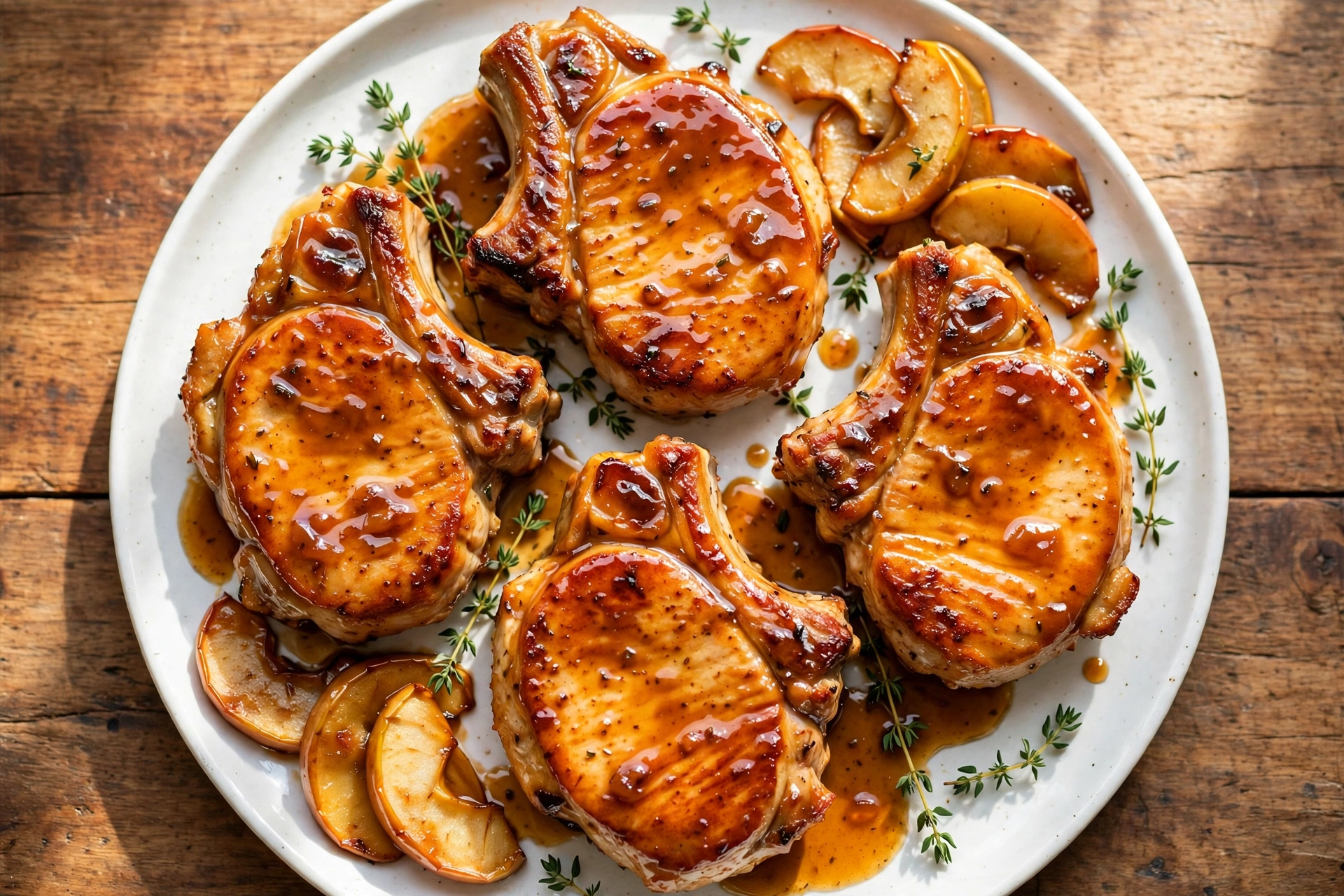
There is a particular kind of magic that happens when a pork chop hits a hot skillet. The sizzle, the smell of browning butter, that deep golden crust forming at the edges. Now imagine that same chop, glossy and sticky-sweet, draped in a warm apple cider glaze with soft caramelized apple slices tucked alongside it. That is dinner tonight, and it is ready in thirty minutes flat.
These Easy Apple Cider Glazed Pork Chops are the kind of weeknight dinner that tastes like you spent all afternoon on it. Thick, juicy bone-in chops get a hard sear for a crust you can hear, then finish in a sweet-tangy glaze made from real apple cider, brown sugar, Dijon mustard, and a knob of butter. The apples cook right in the pan until they turn soft and syrupy at the edges, and fresh thyme ties the whole pan together. It is fall on a plate, and it comes together in one skillet with almost no cleanup.
What makes this recipe a keeper is how forgiving it is. The glaze does all the heavy lifting, so even if you have overcooked pork chops in the past (and who has not), the cider sauce keeps every bite moist and flavorful. Pair it with mashed potatoes and something green and you have a dinner that looks like a Sunday supper on a Tuesday budget of time. Keep this one in your back pocket for busy weeknights, last-minute guests, and every crisp autumn evening in between.
Recipe at a Glance
- Prep Time: 10 minutes
- Cook Time: 20 minutes
- Total Time: 30 minutes
- Servings: 4 (1 pork chop per person)
- Rest Time: 3 minutes (after cooking, before serving)
Ingredients
- 4 bone-in pork chops, about 1 inch thick (about 8 ounces each)
- 1 teaspoon kosher salt
- 1/2 teaspoon black pepper
- 1/2 teaspoon garlic powder
- 1/2 teaspoon smoked paprika
- 1 tablespoon olive oil
- 2 tablespoons unsalted butter
- 1 medium apple, Honeycrisp or Gala, cored and cut into thin wedges
- 3 cloves garlic, thinly sliced
- 1 cup apple cider (the cloudy, unfiltered kind, not apple juice)
- 2 tablespoons brown sugar
- 1 tablespoon Dijon mustard
- 1 tablespoon apple cider vinegar
- 4 to 5 fresh thyme sprigs

Directions
- Season the chops generously. Pat the pork chops completely dry with paper towels, then season both sides with the salt, pepper, garlic powder, and smoked paprika. Dry meat is the secret to a good sear, so do not skip the patting. Let the seasoned chops sit at room temperature for 10 minutes while you slice the apple and measure the glaze ingredients. Cold chops straight from the fridge seize up in a hot pan and cook unevenly.
- Heat the skillet until it is properly hot. Set a large cast iron or heavy stainless steel skillet over medium-high heat and add the olive oil. When the oil shimmers and a drop of water flicked in sizzles instantly, the pan is ready. A pan that is not hot enough will steam the chops instead of searing them, and you will lose the crust that makes this dish so good.
- Sear the chops 4 to 5 minutes per side. Lay the chops in the pan without crowding them and do not touch them for a full 4 minutes. Listen for a steady, confident sizzle. Flip once and sear the second side for another 4 to 5 minutes until deeply golden brown. Transfer the chops to a plate. They will not be fully cooked yet, and that is exactly right. They finish in the glaze.
- Soften the apples and garlic. Lower the heat to medium, add the butter to the same skillet, and let it melt into all those browned bits on the bottom of the pan. Add the apple wedges in a single layer and cook for 2 minutes, turning once, until they start to soften and pick up golden edges. Stir in the sliced garlic and cook for 30 seconds more, just until fragrant. Garlic burns fast, so keep it moving.
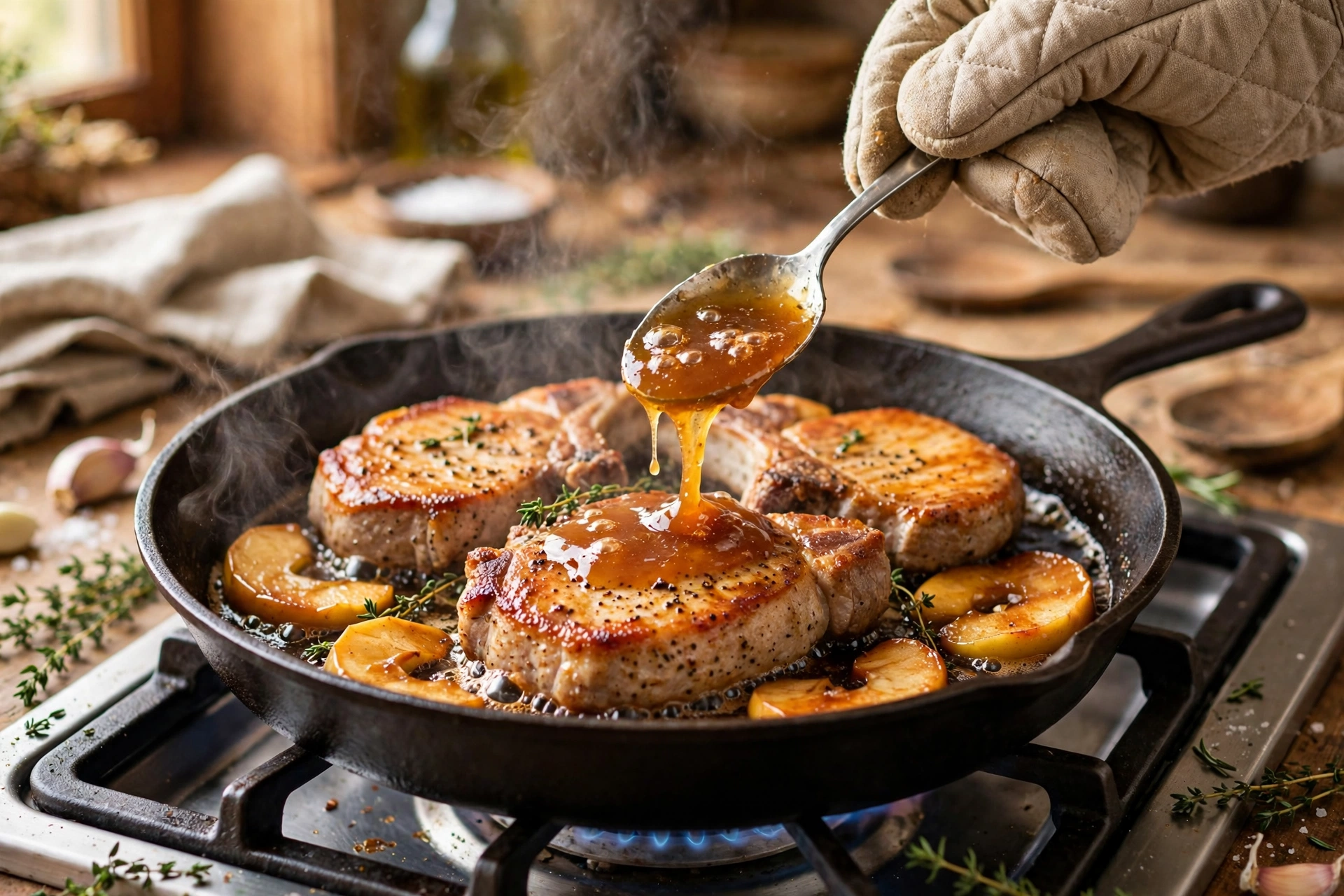
- Build the glaze. Pour in the apple cider, then whisk in the brown sugar, Dijon mustard, and apple cider vinegar, scraping up the browned bits from the bottom of the pan with a wooden spoon. Those bits are pure flavor. Let the sauce bubble and simmer for 5 to 6 minutes until it reduces by about half and thickens enough to coat the back of a spoon. It should look glossy and syrupy, not watery.
- Return the chops to the pan. Nestle the seared pork chops back into the skillet along with any juices from the plate. Tuck the thyme sprigs around them. Spoon the hot glaze over the tops of the chops and let everything simmer together for 2 to 3 minutes, basting once or twice, until the sauce clings to the meat in a shiny coat.
- Check the temperature. The chops are done when an instant-read thermometer inserted into the thickest part reads 145°F. The center may still show the faintest blush of pink, and that is perfectly safe at this temperature. If you do not have a thermometer, cut into the thickest chop: the juices should run clear and the meat should be firm to the touch with no raw, translucent pink in the center.
- Rest for 3 minutes, then serve. Move the chops to plates or a serving platter, spoon the apples and extra glaze over the top, and let them rest for 3 minutes before cutting in. Resting lets the juices settle back into the meat instead of running out onto the plate, which is the difference between a juicy chop and a dry one. Serve warm with the pan sauce drizzled over everything.
Why This Works
A great pork chop is a balancing act between a browned crust and a juicy center, and this recipe wins on both fronts because each step has a job. The hard sear comes first, before any liquid enters the pan, because the Maillard reaction, the browning that creates deep savory flavor, only happens on a dry surface at high heat. That is why the recipe insists on patting the chops dry and leaving them alone in the pan. Moving them around or crowding the skillet drops the temperature and steams the meat instead of browning it.
The glaze works because apple cider brings both sugar and acid to the party. As the cider reduces, its natural sugars concentrate and caramelize into a sticky, glossy sauce, while the Dijon mustard and apple cider vinegar keep it from turning cloyingly sweet. The mustard also acts as a gentle emulsifier, helping the butter blend into the sauce instead of splitting into a greasy slick. This is the same sweet-sour balance that makes a good barbecue sauce sing, just dressed up in fall clothes.
Cooking the apples in the same pan is not just a pretty garnish. The wedges absorb the buttery pan drippings and the cider as they soften, so they taste like the sauce itself, and their gentle sweetness echoes the glaze. Thyme goes in at the end because its flavor is delicate; a long simmer would dull it, while a short bath in the hot glaze releases its woodsy aroma right when the dish hits the table.
Finally, finishing the chops in the glaze instead of cooking them through in the dry pan protects them from drying out. The sauce surrounds the meat with gentle, moist heat for the last few minutes, and the 145°F target with a 3-minute rest is the USDA safe minimum for pork. Pulling the chops at exactly that temperature, rather than cooking them well past it, is the single biggest reason these come out juicy instead of tough. As a bonus, pork chops are a naturally protein-rich cut, and the USDA FoodData Central database lists them as a good source of B vitamins and minerals like selenium and zinc, so this cozy fall dinner is as nourishing as it is delicious.
Pro Tips
- Buy thick chops. Chops about 1 inch thick are the sweet spot. Thin chops overcook in the time it takes to get a good sear, while very thick chops need a lower finish. If your chops are thicker than 1 1/4 inches, give them an extra minute per side and check the temperature early.
- Bone-in beats boneless here. The bone insulates the meat beside it, so the chop cooks more gently and stays juicier, and it adds flavor to the pan sauce. Boneless chops work in a pinch, but shave a minute off each side and watch the temperature closely.
- Use real apple cider. The cloudy, unfiltered cider sold in the produce section or at farm stands has body and tartness that shelf-stable apple juice simply does not. Juice makes a thinner, sweeter glaze that never quite thickens the same way.
- Let the glaze reduce properly. Five to six minutes of simmering feels long, but it is what turns cider into a sauce that coats a spoon. If you rush it, the glaze slides right off the chops and pools on the plate.
- Warm your serving plates. A quick 2 minutes in a low oven keeps the glaze glossy and the chops hot while you rest them. Cold plates steal heat fast, and a lukewarm chop is a sad chop.
- Save the pan sauce. There will be extra glaze in the skillet. Spoon it over mashed potatoes or roasted vegetables at the table. It is far too good to leave in the pan.
Common Mistakes
- Skipping the pat-dry step. Wet chops steam instead of searing. Take the extra thirty seconds with paper towels. It is the cheapest flavor upgrade in the whole recipe.
- Crowding the skillet. Four chops need a 12-inch skillet. If they are touching, moisture gets trapped between them and no crust forms. Cook in two batches if your pan is smaller, and keep the first batch warm under foil.
- Flipping too early or too often. A chop that is still pale and stuck to the pan is not ready to flip. When the crust is properly formed, the meat releases on its own. One flip is all it needs.
- Cooking past 145°F. Pork dries out fast once it climbs past 150°F. Trust the thermometer and pull the chops at 145°F. The 3-minute rest finishes the job while the juices settle.
- Burning the garlic. Garlic goes from fragrant to bitter in under a minute. Add it after the apples have softened and keep it moving, then get the cider in quickly to cool the pan down.
- Cutting into the chops immediately. Slicing a chop straight out of the pan lets all the juice run out onto the cutting board. Three minutes of rest feels like forever, but it is the difference between juicy and dry.
Substitutions
- Boneless pork chops: Use the same recipe but sear 3 to 4 minutes per side and start checking the temperature a minute earlier. They cook faster without the bone.
- Pork tenderloin: Cut a tenderloin into 1-inch medallions and follow the recipe as written. The medallions sear beautifully and soak up the glaze.
- Chicken thighs: Boneless, skin-on chicken thighs make a lovely swap. Sear skin-side down for 6 minutes, flip, and finish in the glaze the same way, cooking to 165°F.
- Apple varieties: Honeycrisp and Gala hold their shape best, but Fuji, Braeburn, or Jonagold all work. Avoid Red Delicious, which turns mealy, and Granny Smith, which stays too tart unless you add an extra teaspoon of brown sugar.
- No apple cider: In a pinch, use unfiltered apple juice plus an extra tablespoon of apple cider vinegar. The glaze will be a touch thinner and sweeter, so let it reduce an extra minute.
- No Dijon mustard: Whole-grain mustard works beautifully and adds a little texture. Yellow mustard is a last resort; use half the amount so it does not overpower the cider.
- Maple syrup instead of brown sugar: Swap in 2 tablespoons of pure maple syrup for a deeper, woodsier sweetness. It leans the dish even further into fall.
- Fresh herbs: If thyme is not on hand, a few sage leaves or a sprig of rosemary tucked into the glaze gives the same cozy, woodsy note. Dried thyme works too; use 1 teaspoon and add it with the cider.
Storage & Make-Ahead
Leftover pork chops keep in an airtight container in the refrigerator for 3 to 4 days, with the glaze and apples stored right on top of them so the meat stays moist. Reheat gently in a covered skillet over medium-low heat with a splash of apple cider or water, about 4 to 5 minutes, until warmed through. Avoid the microwave if you can; it tightens the meat and makes the glaze separate. The chops also freeze well for up to 2 months. Wrap each chop with its apples and a spoonful of glaze, thaw overnight in the fridge, and reheat the same gentle way.
The glaze itself can be made up to 3 days ahead and kept in a jar in the refrigerator. Warm it in a skillet and proceed from the searing step, or use it as a quick sauce for grilled chicken or roasted vegetables later in the week. The seasoned chops can be salted up to 24 hours ahead and kept uncovered in the fridge, which actually improves the crust, since the surface dries out overnight. Just bring them to room temperature for 10 minutes before searing.
What to Serve With
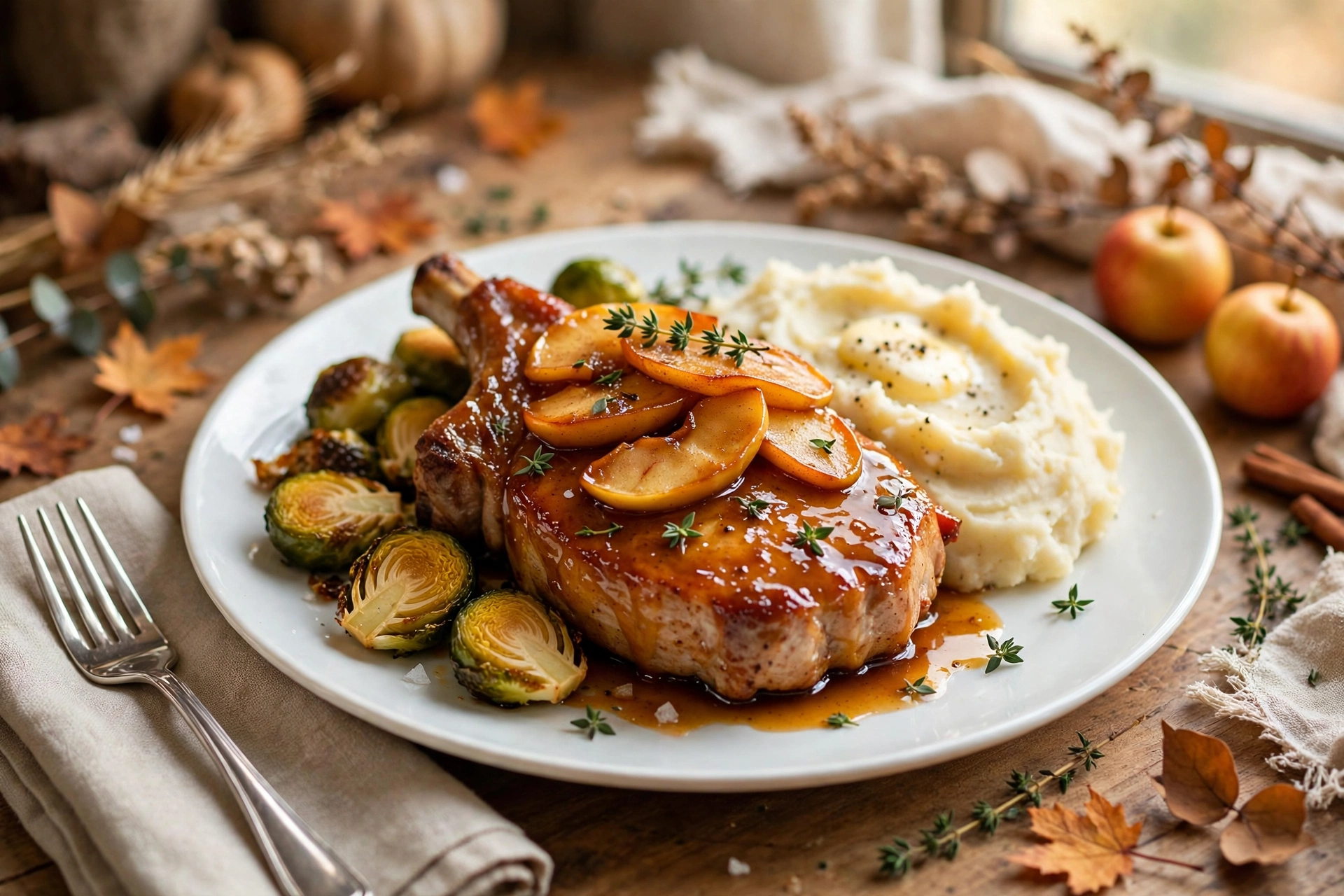
This is a chop that loves a soft, creamy partner to catch the glaze. Buttery mashed potatoes are the classic choice, and our Easy Dinner Rolls are perfect for mopping up whatever sauce escapes the plate. For something green, Easy Maple Roasted Brussels Sprouts echo the sweet fall flavors without repeating them, and Easy Creamed Corn adds a cozy, spoonable side that kids love. A simple green salad with a sharp vinaigrette cuts through the richness if you want something lighter, and a glass of the same apple cider you cooked with ties the whole table together.
FAQ
Can I use boneless pork chops instead of bone-in?
Yes, boneless chops work well, but they cook faster without the bone to slow things down. Sear them for 3 to 4 minutes per side instead of 4 to 5, and start checking the internal temperature a minute earlier. Pull them at 145°F and rest them for 3 minutes just the same. Bone-in chops stay a little juicier, but boneless chops are easier to slice and serve, so use whichever you have on hand.
What is the difference between apple cider and apple juice, and does it matter here?
Yes, it matters. Apple cider is raw, unfiltered pressed apple juice, cloudy with apple solids, and it has a fuller, tarter flavor. Apple juice is filtered and pasteurized, clearer and sweeter. Cider reduces into a thicker, more complex glaze, while juice makes a thinner, sweeter sauce. If you only have juice, use it with an extra tablespoon of apple cider vinegar and let the glaze reduce one minute longer.
How do I know the pork chops are done without a thermometer?
The safest and most reliable check is an instant-read thermometer reading 145°F in the thickest part, followed by a 3-minute rest. Without one, cut into the thickest chop: the juices should run clear, the meat should feel firm to the touch, and the center should show at most a faint blush of pink, never raw or translucent. If the center still looks raw or the juices are pink, return the chops to the glaze for another 2 minutes and check again.
Can I make apple cider glazed pork chops ahead of time?
The glaze can be made up to 3 days ahead and kept in a jar in the refrigerator, which makes the actual cooking night much faster. The chops themselves are best cooked fresh, since reheated pork dries out easily, but leftovers keep for 3 to 4 days in the fridge and reheat gently in a covered skillet with a splash of cider. For a dinner party, sear the chops up to an hour ahead, hold them tented in foil, and finish them in the hot glaze just before serving.
Rate this recipe
Be the first to rate it!