
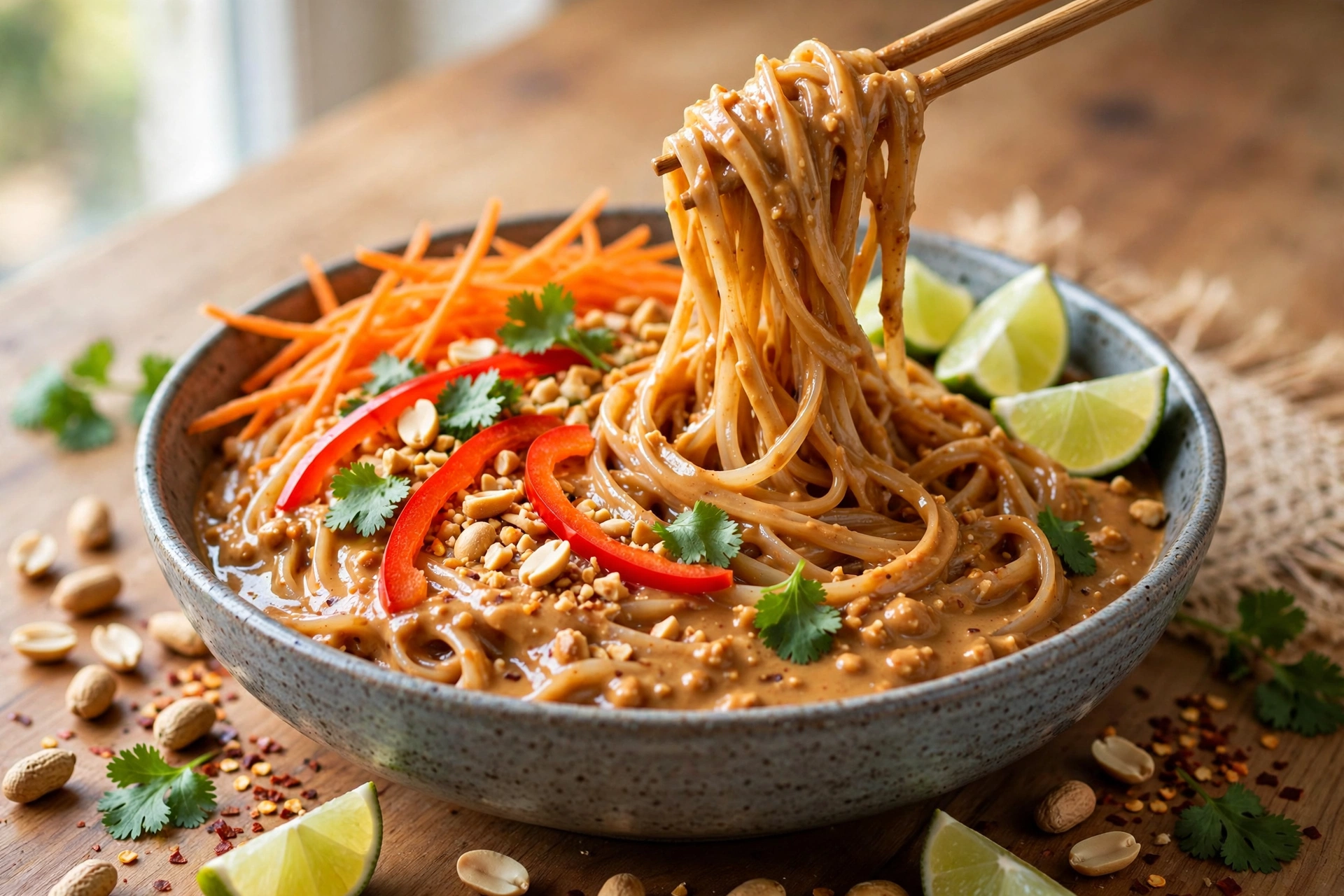
There is a moment, about twenty minutes into making these Easy Thai Peanut Noodles, when the whole kitchen smells like your favourite Thai takeaway, and you realise dinner is nearly ready and you have barely lifted a finger. Picture it: glossy rice noodles wrapped in a creamy peanut sauce that is salty, sweet, tangy and just a little bit spicy, with crunchy shredded carrots, bright red peppers, fresh cilantro and a squeeze of lime on top. Every bite is rich and nutty, then fresh and bright, then warm with a gentle chilli glow. It tastes like a restaurant dish, it eats like comfort food, and it comes together in one pot and one bowl in 25 minutes flat.
Thai peanut noodles are one of those dishes that travelled from Thai street-food stalls and home kitchens to weeknight tables all over the world, because the formula is so forgiving. Peanut sauce is a classic Southeast Asian sauce built on ground peanuts, soy sauce, lime, sweetness and heat, and it clings to noodles the way a good sauce should. This home version keeps the spirit of the dish and skips the takeaway queue entirely. One bowl of whisked sauce, one pot of noodles, and a handful of fresh vegetables give you the same glossy, saucy, crunchy bowl in less time than delivery takes to arrive, which is the whole point of a 25-minute dinner.
This version keeps everything simple and honest. The sauce is seven ingredients whisked in one bowl, the noodles cook in four minutes, and the vegetables go in raw at the end so they stay crisp and bright. There is no wok, no special equipment, and no fussy technique. If you can whisk a bowl and boil a pot of water, you can make Thai peanut noodles, and once you have made them, you will understand why they have become one of the most loved quick dinners on the planet.
What makes these Easy Thai Peanut Noodles such a reliable favourite is how flexible they are. The sauce welcomes small changes, the vegetables can be whatever is in your fridge, and the whole meal lands in bowls in minutes once the noodles are cooked. Serve the noodles piled high in bowls with extra chopped peanuts and lime wedges on the side, and watch how fast they disappear. Four servings, 25 minutes, one pot, and a dinner that tastes like your favourite takeaway, made better at home.
Peanut allergy note: peanuts are a major allergen, and this recipe is built entirely around them, so it is not suitable for anyone with a peanut allergy. If you are cooking for a mixed table, please check with everyone first, and see the Substitutions section for a sunflower seed butter alternative that changes the flavour but keeps the same creamy idea.
Recipe at a Glance
Prep time: 10 minutes | Cook time: 15 minutes | Total time: 25 minutes | Servings: 4 servings | Yield: 4 generous bowls
Why This Recipe Works
Great Thai peanut noodles are not an accident. They are the result of a few small technique choices that each do a real job, and once you understand the why behind them, the recipe becomes yours forever. The first choice is whisking the sauce with warm water before it ever meets the noodles. Peanut butter is thick and stubborn straight from the jar, and cold water makes it seize into lumps. Warm water loosens it gently, the soy sauce and lime juice dissolve into it, and the whole mixture turns into a smooth, pourable sauce that coats every strand instead of sitting in clumps. If your sauce still looks too thick, add warm water a tablespoon at a time until it ribbons off the whisk, because a sauce that pours is a sauce that coats.
The second choice is warming the sauce gently, never boiling it. Peanut butter splits and turns oily when it is blasted with high heat, and a split sauce looks greasy and tastes flat. Two to three minutes over low heat is all it takes to warm the sauce through and let the garlic and ginger bloom, and the noodles go in the moment it is warm. Blooming matters here: garlic and ginger release far more flavour into warm fat and liquid than they do raw, which is why the sauce tastes rounded and fragrant instead of sharp. Keep the heat low, keep the pan moving, and the sauce stays glossy and smooth.
The third choice is rinsing the noodles after cooking. Rice noodles release a lot of surface starch as they cook, and if you leave that starch on, the noodles glue themselves into one solid clump the moment they hit the bowl. A quick rinse under cold water washes the sticky starch away and stops the cooking at exactly the right moment, so the noodles stay separate, springy and ready to drink up the sauce. Drain them well after rinsing, because a puddle of rinse water thins the sauce and washes the flavour away.
The fourth choice is adding the vegetables at the very end, off the heat. Shredded carrots and sliced peppers are there for crunch and colour, and cooking them turns them soft and dull. Folded into the warm noodles at the last moment, they stay crisp and bright, and the warmth of the noodles takes just the raw edge off them. The cilantro and green onions go on after plating for the same reason: fresh herbs lose their perfume the moment they hit a hot pan, so they belong on top, where their fragrance hits you first.
The fifth choice is the lime, and it earns its place. Peanut sauce is rich, and richness without acid eats heavy. Lime juice in the sauce and lime wedges on the side cut through the creaminess and wake the whole bowl up, and a final squeeze at the table brightens flavours that the heat has softened. That sweet, salty, sour and spicy balance is the heart of Thai cooking, and the lime is the ingredient that holds the other three together. Taste the finished noodles before serving and add another squeeze if they taste flat, because a flat peanut noodle is almost always a noodle that needs more lime.
Rice noodles and fresh vegetables are a naturally strong pair nutritionally as well as in flavour. Peanuts supply protein and healthy fats, while carrots, peppers and cilantro add freshness, fibre and vitamin C to the bowl. The USDA FoodData Central database lists the nutrient profiles for peanuts, rice noodles and fresh vegetables, and it is a useful reminder that a simple dinner built from real ingredients can be both satisfying and nourishing without any effort at all. Nothing here makes a medical claim; it is simply good food, made from good ingredients, in a sensible portion for four people.
Finally, this recipe works because it respects the 25-minute promise. The sauce is whisked while the water comes to the boil, the noodles cook while the vegetables are sliced, and the assembly takes three minutes at the end. Every step overlaps with the next, which is how 10 minutes of prep and 15 minutes of cooking add up to a dinner that tastes like it took all evening.
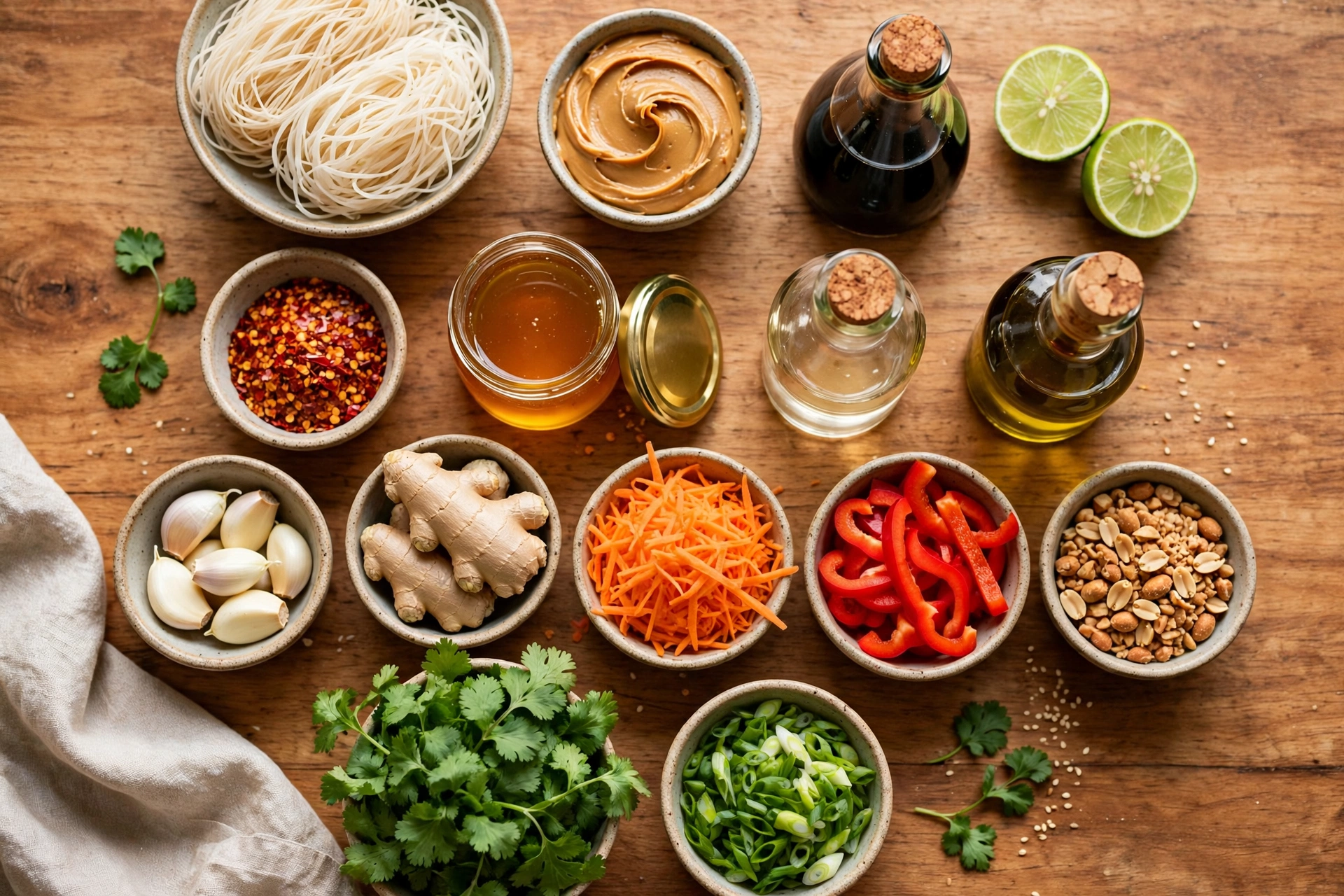
Ingredients
For the noodles
- 8 ounces flat rice noodles, medium width
- 1 tablespoon sesame oil, for tossing
For the peanut sauce
- 1/2 cup creamy peanut butter
- 3 tablespoons soy sauce (low-sodium works well)
- 2 tablespoons fresh lime juice (from 1 lime)
- 1 tablespoon honey
- 1 tablespoon rice vinegar
- 1 teaspoon sesame oil
- 1 teaspoon sriracha (optional, for gentle heat)
- 2 garlic cloves, minced
- 1 teaspoon fresh ginger, finely grated
- 1/4 cup warm water, plus more as needed
For the vegetables and toppings
- 1 cup shredded carrots
- 1 red bell pepper, thinly sliced
- 3 green onions, thinly sliced
- 1/4 cup chopped roasted peanuts
- 1/4 cup chopped fresh cilantro
- Lime wedges, for serving
- 1/2 teaspoon red pepper flakes, for garnish (optional)
Directions
- Whisk the peanut sauce (3 minutes). In a medium bowl, add the peanut butter, soy sauce, lime juice, honey, rice vinegar, sesame oil, sriracha, minced garlic and grated ginger. Pour in the warm water and whisk until the sauce is completely smooth and pourable, like thick cream. If it still looks too thick to pour, whisk in warm water one tablespoon at a time until it ribbons off the whisk. Taste it now: it should be salty, sweet, tangy and warm with heat all at once. Add another squeeze of lime if it tastes flat, or another teaspoon of honey if it tastes sharp.
- Slice the vegetables and chop the toppings (7 minutes). Shred the carrots, thinly slice the red bell pepper and the green onions, chop the roasted peanuts and the cilantro, and cut the remaining lime into wedges. Set everything out in small bowls near the stove. Put a large pot of water on to boil while you work, so the water is ready the moment the vegetables are done, and no minute is wasted.
- Cook the rice noodles (8 minutes). When the water is at a rolling boil, add the rice noodles and cook for about 4 minutes, stirring once or twice so they do not stick together. Rice noodles go from perfect to mushy very fast, so start tasting at 3 minutes and pull them the moment they are tender with a slight spring, never soft and floppy. Drain the noodles in a colander, rinse them briefly under cold water to wash away the sticky surface starch, and drain them very well. Toss them with the tablespoon of sesame oil so they stay separate while you warm the sauce.
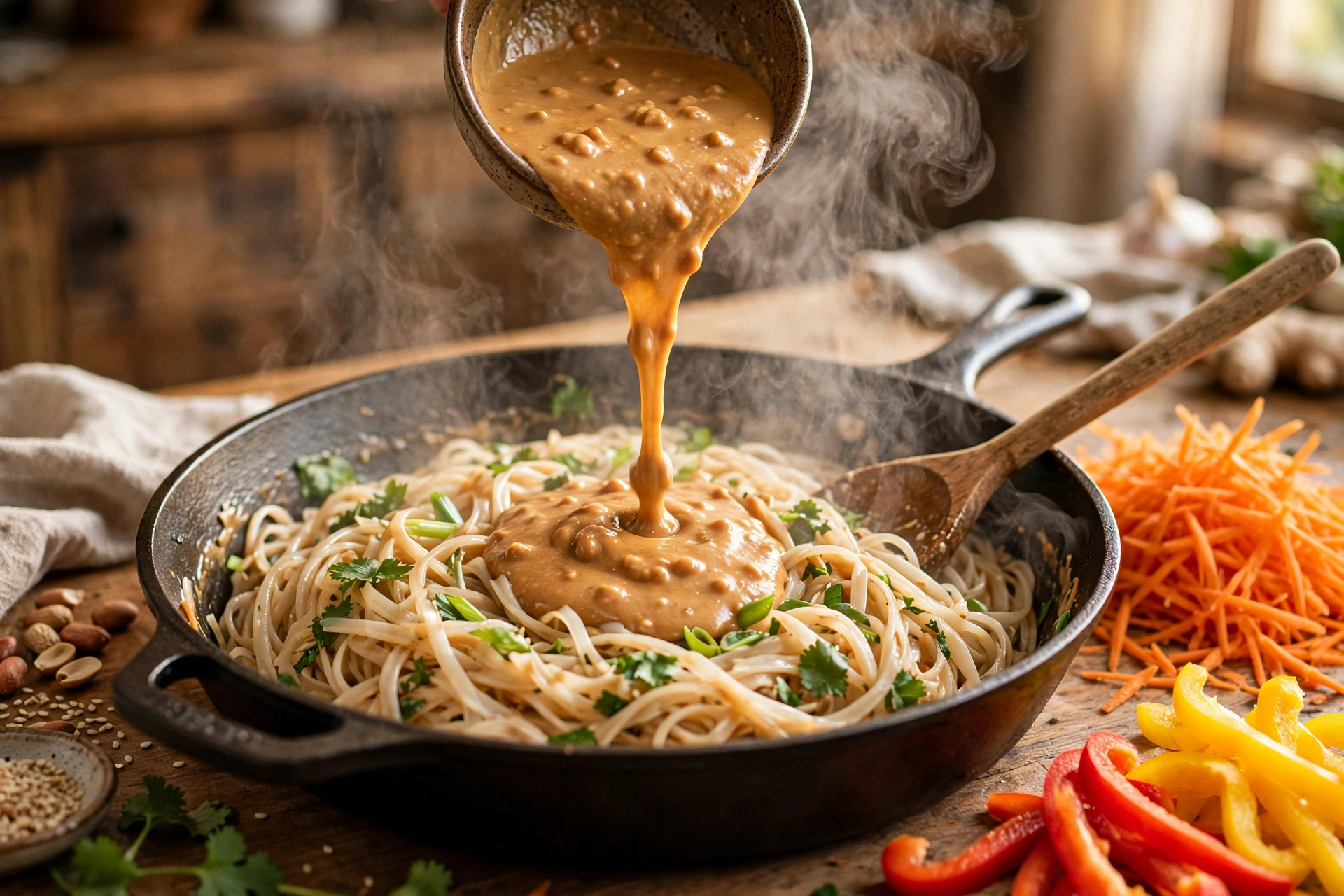
- Warm the sauce and toss the noodles (4 minutes). Set a large skillet or wok over low heat and pour in the peanut sauce. Warm it gently for 1 to 2 minutes, stirring constantly, until it is heated through and glossy. Do not let it boil, because high heat splits peanut butter and turns the sauce oily. Add the drained noodles to the pan and toss for 2 minutes with tongs or two wooden spoons, lifting and turning until every strand is coated in sauce. If the sauce tightens as it warms, splash in a tablespoon of warm water and keep tossing until it loosens again.
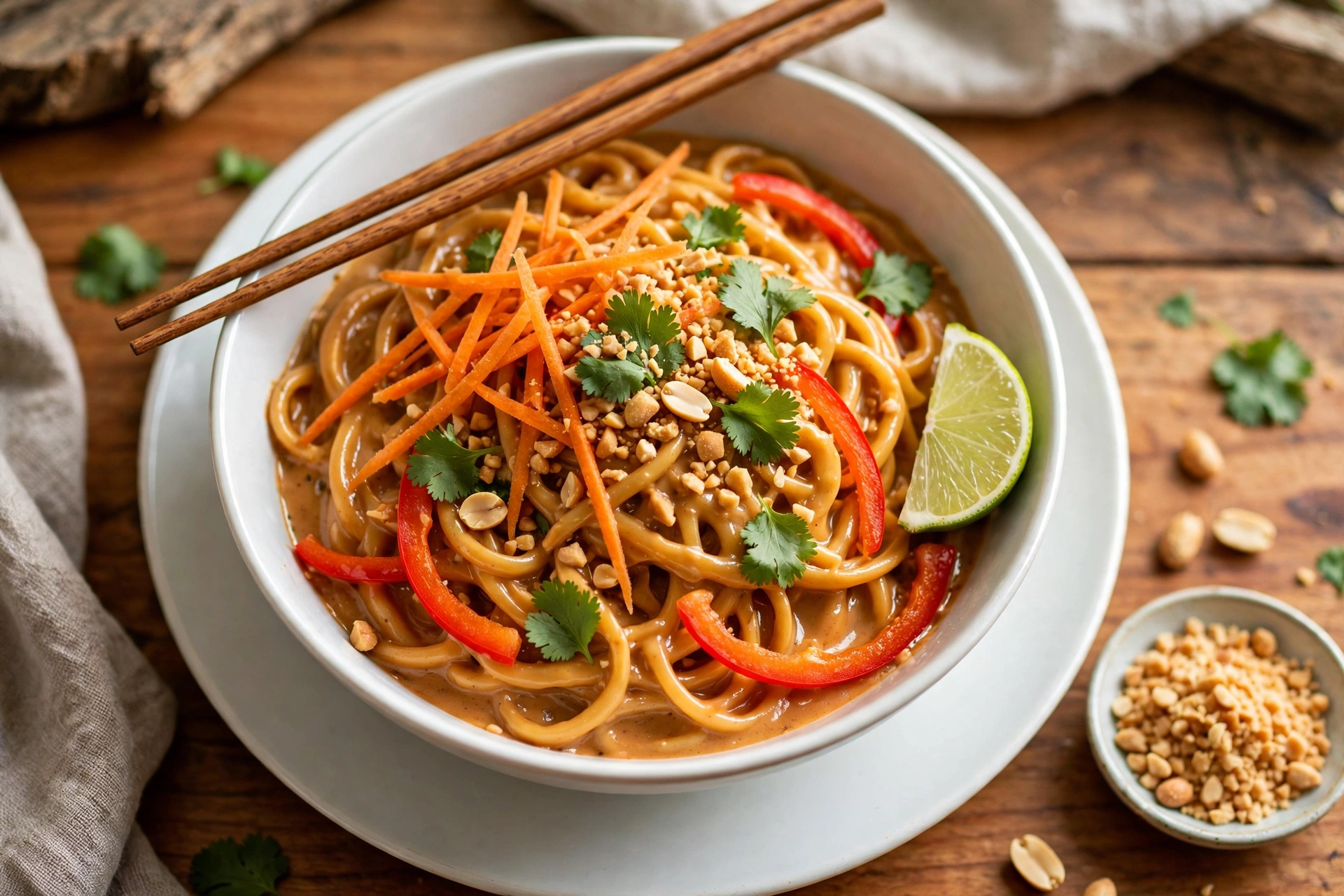
- Fold in the vegetables and serve (3 minutes). Take the pan off the heat and fold in the shredded carrots, sliced bell pepper and most of the green onions, tossing just until they are mixed through and lightly warmed. The vegetables should stay crisp and bright, never soft. Divide the noodles between four bowls, top with the chopped peanuts, the remaining green onions, the cilantro and a pinch of red pepper flakes if you like heat, and serve immediately with lime wedges on the side for squeezing at the table.
Pro Tips
The difference between good Thai peanut noodles and unforgettable Thai peanut noodles lives in the small details, and these are the ones that matter most. First, whisk the sauce until it is truly smooth before it meets the noodles. Peanut butter hides lumps easily, and a lump in the bowl is a lump in your noodles. Whisk for a full minute, scrape the sides of the bowl, and whisk again, because a silky sauce is the whole dish. If you are using natural peanut butter that separates in the jar, stir the jar very well first, or the sauce will be either too oily or too dry.
Second, do not overcook the rice noodles. This is the single most common reason home peanut noodles turn mushy instead of springy. Rice noodles have a tiny window between tender and overdone, so taste early and pull them the moment they bend easily with a slight chew. They keep cooking from their own heat for a minute after draining, and they soften a little more in the warm sauce, so slightly underdone at the colander is exactly right. If they do clump, rinse them again under cold water and toss them with a little more sesame oil, and they will separate.
Third, keep the heat low when the sauce warms. A gentle warmth is all the sauce needs, and a rolling boil is how it splits. If the sauce does separate and look oily, take the pan off the heat and whisk in a tablespoon of warm water until it comes back together. The sauce will also thicken as it cools on the plate, so serve the noodles the moment they are tossed, and keep a little warm water nearby if you are serving a second helping later.
Fourth, salt with the soy sauce, not with the shaker. The soy sauce carries most of the salt in this dish, and different brands vary a lot in saltiness, so taste the sauce before adding any extra salt at all. Low-sodium soy sauce gives you more control, and a final squeeze of lime at the table brightens the flavours far better than another pinch of salt ever could. If the finished noodles taste flat, reach for the lime first, then the sriracha, then the salt, in that order.
Fifth, save the toppings for the top. Chopped peanuts, cilantro and green onions lose their crunch and perfume the moment they are buried in hot noodles, so scatter them over each bowl at the table. A little extra peanut crunch on top is also what makes the first bite so satisfying. Keep a small bowl of chopped peanuts and lime wedges on the table, because someone always asks for more.
Sixth, if you love noodle dinners in general, this recipe is a gateway. The same quick-toss thinking works across the whole noodle family, and the peanut sauce is wonderful over other bases too. For another fast noodle night, try our easy chicken lo mein, which uses the same quick-sear, quick-toss method in a savoury soy-ginger sauce. And if your family loves one-pan rice dinners, our easy one-pan garlic butter chicken and rice puts chicken and rice in the same skillet for an even easier clean-up.
Common Mistakes
The most common peanut noodle mistake is a sauce that is too thick. Peanut butter straight from the jar makes a paste, not a sauce, and a paste sits on top of the noodles instead of coating them. The fix is warm water, added a tablespoon at a time while whisking, until the sauce pours in a ribbon. Remember that the sauce thickens as it cools, so whisk it slightly thinner than you think it needs to be, and keep warm water nearby when you toss the noodles.
The second mistake is cooking the noodles too long. Mushy rice noodles turn the whole bowl gluey, and no amount of sauce can fix them. The fix is simple: start tasting at 3 minutes, pull the noodles the moment they are tender with a spring, and rinse them under cold water to stop the cooking immediately. If your noodles are already mushy, the best rescue is to toss them very gently and serve them right away, because extra tossing breaks them apart further.
The third mistake is boiling the peanut sauce. High heat splits the sauce into oil and solids, and a split sauce looks greasy and tastes flat. The fix is low heat and constant stirring, and never letting the sauce bubble hard. If it does split, take the pan off the heat and whisk in warm water a tablespoon at a time until it comes back together, and it usually does.
The fourth mistake is adding the vegetables too early. Carrots and peppers that cook in the pan go soft and dull, and the crunch is half the pleasure of this dish. Fold them in off the heat at the very end, and they stay bright and crisp against the soft, saucy noodles. The same goes for the cilantro and green onions: they belong on top at the table, never in the pan.
The fifth mistake is forgetting the lime. Without acid, peanut sauce eats heavy and one-note, and the whole bowl tastes flat. The fix is lime juice in the sauce and lime wedges on the side, with a fresh squeeze over each bowl at the table. If your finished noodles taste dull, squeeze lime over them before you reach for anything else, and taste again, because that one squeeze usually fixes it.
Substitutions
This recipe is wonderfully flexible, and most swaps keep the spirit of the dish intact. If you do not have rice noodles, spaghetti or linguine work beautifully and cook in about 8 to 10 minutes, so adjust the noodle step to the packet time and rinse them the same way. Soba noodles are another good swap, with a nuttier flavour that suits the peanut sauce, and they cook in about 4 to 5 minutes just like rice noodles.
The vegetables are flexible too. Swap the carrots for shredded cabbage, which stays crunchier in a warm noodle bowl, or add snap peas, edamame or shredded red cabbage for colour and crunch. Thinly sliced cucumber is lovely folded in at the end for a cool, fresh contrast, and a handful of bean sprouts scattered on top adds the classic Thai street-food finish. If cilantro is not your herb, Thai basil or mint are equally good, and a little fresh mint adds a cool note that suits the warm peanut sauce.
For the sauce, the peanut butter can shift to suit your pantry. Crunchy peanut butter gives a lovely texture if you like a little bite in the sauce, and almond butter makes a milder, sweeter version that still coats the noodles beautifully. For a peanut-free table, sunflower seed butter is the closest swap, with the same creamy body, though the flavour is earthier and less sweet, so taste and add a little more honey. Please note that sunflower seed butter is made in facilities that often process nuts, so always check the label when an allergy is involved, and never serve this dish to someone with a peanut allergy without checking with them first.
The sweetness and heat can flex as well. Swap the honey for maple syrup or brown sugar, using the same tablespoon, and adjust to taste, because different sweeteners land differently against the lime. If you like more heat, add another teaspoon of sriracha, or a pinch of chilli flakes to the sauce, and if you like it mild, leave the sriracha out entirely, because the sauce is delicious without it. A splash of coconut milk, about 2 tablespoons whisked into the sauce, makes it richer and a little more Thai-restaurant in flavour.
To turn the noodles into a heartier dinner, add protein. Leftover cooked chicken, sliced and warmed through in the sauce, is the easiest choice, and it should be heated until it is steaming all the way through, to 165 degrees Fahrenheit, before the noodles go in. Cooked shrimp work beautifully too, added at the very end and tossed just until warm, and they are done when they turn pink and opaque throughout, which takes about 2 minutes. Crispy tofu cubes are the best meat-free protein here, and they soak up the peanut sauce wonderfully. And if your family loves quick vegetable rice dinners, our easy veggie fried rice uses the same fast, fresh, weeknight thinking in a rice bowl, which makes a great second night for the same bag of carrots and peppers.
Storage & Make-Ahead
Thai peanut noodles are at their best fresh from the pan, but every part of them is a brilliant make-ahead cook. Whisk the peanut sauce ahead and keep it in a sealed jar in the fridge for up to 5 days, and it will thicken as it chills, so let it come to room temperature for 20 minutes and whisk in warm water a tablespoon at a time until it pours again. Slice the vegetables and keep them in a separate container in the fridge, and cook the noodles fresh when you are ready to eat, because noodles stored in sauce go soft overnight.
If you do have leftovers, store the dressed noodles in an airtight container in the fridge for up to 2 days. The noodles will drink up the sauce as they sit and the vegetables will soften, so revive them with a splash of warm water and a squeeze of lime, and warm them gently in a skillet over low heat, never in a screaming-hot pan, which splits the sauce. A fresh scattering of peanuts, cilantro and green onions on top makes day-two noodles taste nearly as good as fresh.
The 2-hour room-temperature rule applies here as it does to all cooked food: never leave the finished noodles sitting out on the counter for more than 2 hours. Reheated noodles will be slightly softer than fresh, so a little extra lime and an extra spoonful of sauce go a long way. Do not freeze peanut noodles. The noodles turn mushy on thawing, the sauce separates in a way that reheating cannot fix, and the vegetables lose all their crunch.
For a busy week, the smartest move is a double batch of sauce on Sunday. One batch becomes Sunday dinner, and the second batch waits in the fridge for a ten-minute Monday noodle bowl that feels like a treat. The whisking, the measuring, and the tasting are already done; all that is left is the joyful part, boiling the noodles and tossing them in that glossy, nutty sauce. Dinner is ready before the kettle boils.
Frequently Asked Questions
Can I make Thai peanut noodles ahead of time?
Yes, whisk the peanut sauce ahead and keep it in a sealed jar in the fridge for up to 5 days, and slice the vegetables and keep them in a separate container. Cook the noodles fresh when you are ready to eat, because noodles stored in sauce go soft overnight. Let the sauce come to room temperature for 20 minutes, whisk in warm water a tablespoon at a time until it pours again, then warm it gently and toss with the fresh noodles.
Why is my peanut sauce too thick?
Peanut butter straight from the jar makes a paste, not a sauce, and it thickens further as it cools, so a thick sauce is the most normal peanut noodle problem there is. Whisk in warm water one tablespoon at a time until the sauce pours in a ribbon off the whisk, and whisk it slightly thinner than you think it needs to be, because it tightens again in the warm pan. If the sauce splits and looks oily, take the pan off the heat and whisk in warm water until it comes back together.
Can I add chicken or shrimp to Thai peanut noodles?
Yes, both are wonderful. Add leftover cooked chicken to the warm sauce and heat it until it is steaming all the way through, to 165 degrees Fahrenheit, before the noodles go in. For shrimp, add raw shrimp at the very end and toss for about 2 minutes until they turn pink and opaque throughout, which is the sign they are done. Crispy tofu cubes are the best meat-free protein here, and they soak up the peanut sauce beautifully.
What kind of noodles should I use for Thai peanut noodles?
Flat rice noodles, medium width, are the classic choice, and they cook in about 4 minutes, which keeps this a 25-minute dinner. Spaghetti or linguine work well too, cooked to the packet time of about 8 to 10 minutes and rinsed the same way. Soba noodles are another good swap with a nuttier flavour that suits the peanut sauce, and they cook in about 4 to 5 minutes. Whichever noodle you use, rinse it under cold water after cooking so it stays separate and springy, and toss it with a little sesame oil.
That is the whole joy of these Easy Thai Peanut Noodles: one bowl of sauce, one pot of noodles, 25 minutes, four bowls, and a dinner that tastes like your favourite Thai takeaway. It is the kind of dinner that turns an ordinary weekday into a small celebration, and once it is on your table, it will not stay there for long. Whisk the sauce, boil the water, listen for the noodles to soften, and let the smell of peanuts, lime and ginger do the inviting. Dinner is ready.
Rate this recipe
Be the first to rate it!
1 thought on “Easy Thai Peanut Noodles”