
There are breakfasts that just fill you up, and then there are breakfasts that make the whole house smell like the holidays walked in and hugged you. These easy cranberry orange scones are firmly the second kind. Picture it: a golden, buttery wedge that shatters into tender, flaky layers, studded with jewel-red fresh cranberries that burst tart and bright, all of it kissed with fragrant orange zest and finished with a glossy orange glaze that drips down the sides. One bite and your kitchen officially smells like Christmas morning.
The cranberry-orange combination is one of winter’s greatest hits for a reason. Fresh cranberries bring that lively, mouth-puckering tartness that cuts right through rich butter and sweet glaze, while orange zest contributes its sunny citrus oils that perfume every crumb. A scone is a quick bread with deep roots in Scotland, as the history of the scone tells it, and the American bakery version has evolved into something gloriously craggy and tender, closer to a flaky biscuit’s sophisticated cousin. This recipe honors that heritage while keeping things weeknight-easy: one bowl, no mixer, no fussy shaping, and warm scones on the table in about 35 minutes flat.
What makes this version special is how much technique is packed into how little effort. Freezing-cold butter grated into the flour creates the steam pockets that lift the crumb into distinct, buttery layers. A light hand with the mixing keeps everything tender instead of tough. And the simple orange glaze, drizzled over scones that are still a touch warm, melts into every nook for a finish that tastes like you fussed for hours. Whether you are baking for a holiday brunch, a cozy weekend morning, or a gift-worthy treat box, these scones deliver that bakery-window beauty with pantry-staple simplicity.
Recipe at a Glance: Prep time: 15 minutes | Bake time: 18-20 minutes | Total time: about 35 minutes | Yield: 8 scones | Category: Breakfast

Ingredients
For the scones:
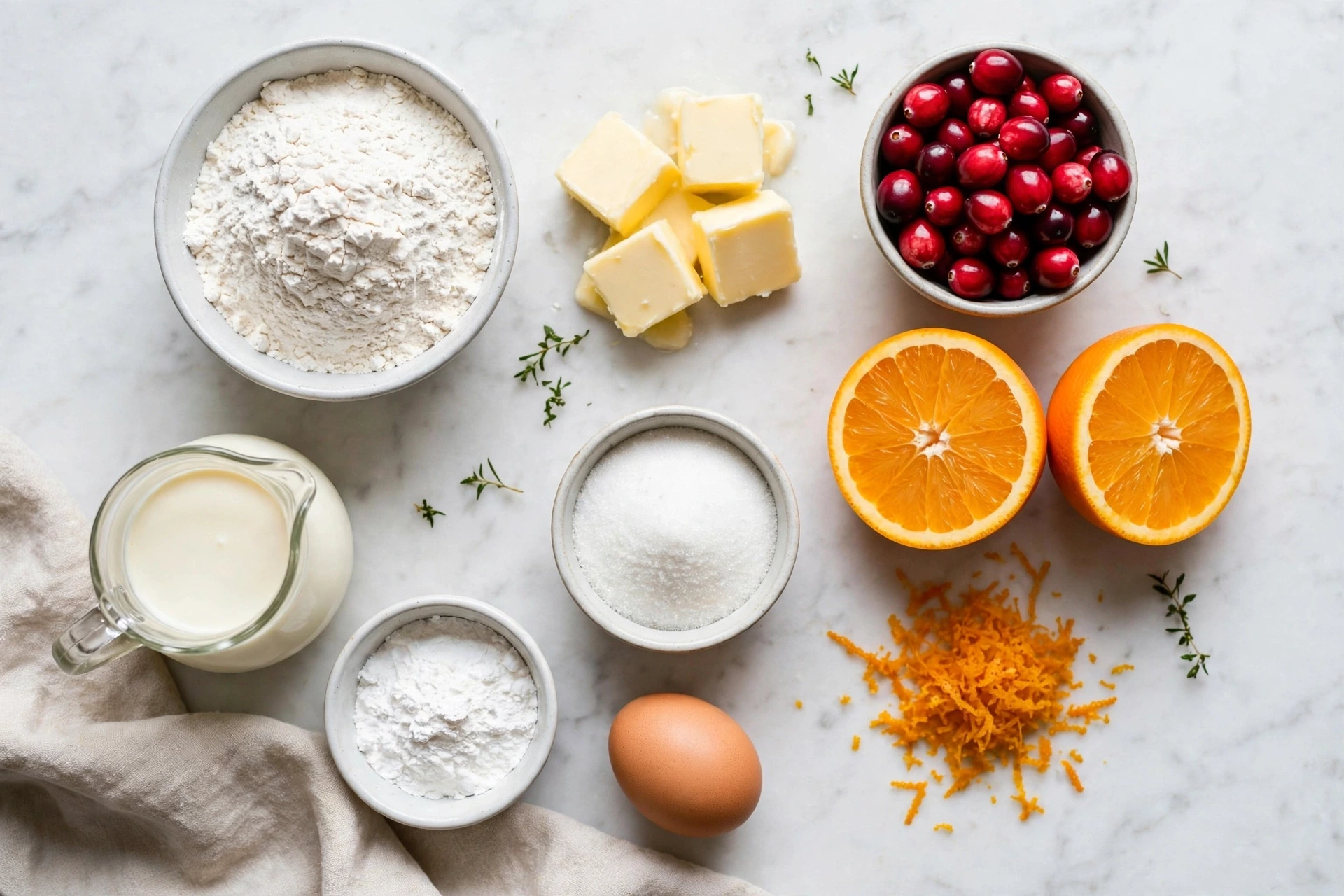
- 2 cups (250g) all-purpose flour, plus extra for dusting
- 1/2 cup (100g) granulated sugar
- 1 tablespoon baking powder
- 1/2 teaspoon fine salt
- 1 tablespoon freshly grated orange zest (from 1 large orange)
- 1/2 cup (113g) very cold unsalted butter, cut into small cubes
- 1 cup (100g) fresh cranberries, halved
- 1/2 cup (120ml) cold heavy cream, plus 1 tablespoon more for brushing
- 1 large egg, cold
- 1 teaspoon pure vanilla extract
- Coarse sugar, for sprinkling
For the orange glaze:
- 1 cup (120g) powdered sugar, sifted
- 2 to 3 tablespoons fresh orange juice
- 1 teaspoon freshly grated orange zest
Directions
- Heat the oven. Position a rack in the center and preheat to 400°F (200°C). Line a baking sheet with parchment paper.
- Whisk the dry ingredients. In a large bowl, whisk together the flour, granulated sugar, baking powder, and salt. Rub the orange zest into the sugar-flour mixture with your fingertips until it smells intensely fragrant; this releases the zest’s citrus oils right into the dough.
- Cut in the cold butter. Add the cold butter cubes and cut them in with a pastry blender or your fingertips until you have a mix of pea-sized and oat-sized flakes. Visible butter bits are your friends; they are what bake into flaky layers.
- Fold in the cranberries. Toss the halved fresh cranberries through the flour-butter mixture so each berry gets a light flour coating, which helps keep them suspended evenly instead of sinking.
- Bring in the wet ingredients. In a small bowl or measuring cup, whisk the cold heavy cream, cold egg, and vanilla until smooth. Pour over the flour mixture and stir gently with a fork just until a shaggy dough forms with no dry flour pockets. Stop the moment it comes together; a few streaks of flour are fine.
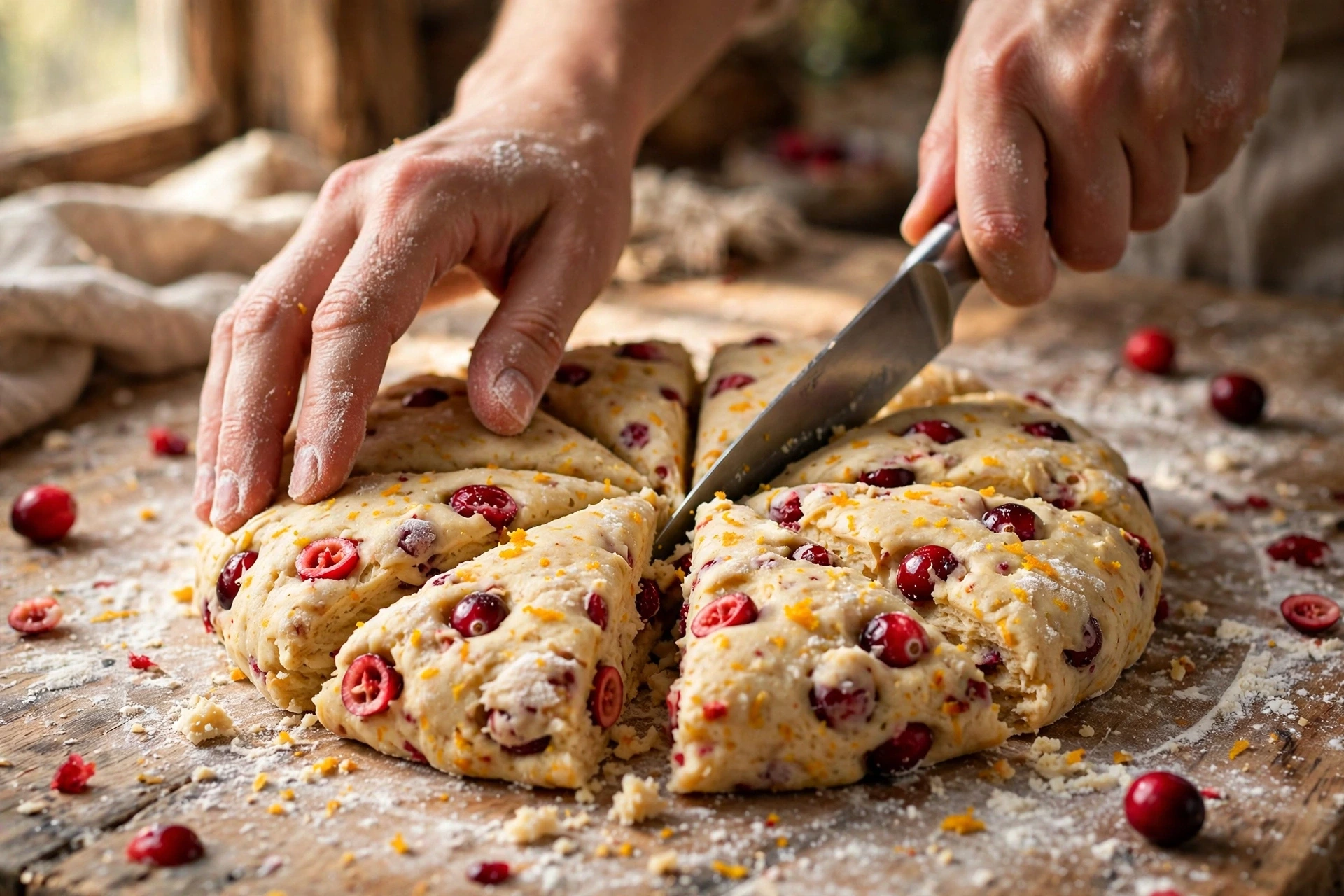
- Shape and cut. Turn the dough onto a lightly floured surface, gently pat it into an 8-inch round about 3/4 inch thick, and cut into 8 equal wedges with a sharp knife, flouring the blade between cuts. Transfer the wedges to the prepared baking sheet, spacing them about 1 inch apart.
- Brush and bake. Brush the tops lightly with the extra tablespoon of cream and sprinkle generously with coarse sugar for that bakery sparkle. Bake 18 to 20 minutes, until the tops are golden, the edges are deeply golden-brown, and a toothpick inserted in the center comes out clean. Let cool on the pan for 10 minutes.
- Glaze while warm. Whisk the powdered sugar, 2 tablespoons of orange juice, and the orange zest until smooth and thick but pourable, adding the last tablespoon of juice only if needed. Drizzle generously over the still-warm scones so the glaze melts into the craggy tops and sets into a glossy finish. Serve warm or at room temperature.
Why This Works
Cold butter is the whole game
Flaky scones are really just steam engineering. When pea-sized pieces of very cold butter hit a 400°F oven, the water inside the butter flashes into steam, pushing the layers of dough apart before the butter fully melts and sets the crumb around those air pockets. That is where the tender, pull-apart layers come from. If the butter warms up and smears into the flour, you lose the pockets and gain density. Keep everything cold: cube the butter straight from the fridge, use cold cream and a cold egg, and if your kitchen is warm, chill the shaped wedges for 10 minutes before baking.
A light hand beats a long mix
Scone dough is the opposite of bread dough; developing gluten is the enemy. Every extra stroke of the spoon knits the flour’s proteins into tighter strands, and tight strands mean tough, bready scones instead of short, tender ones. Stop mixing the second the dough holds together, and pat rather than roll when shaping. That shaggy, slightly rough look going into the oven is exactly right; the rustic surface becomes the craggy, glaze-catching top you want.
Glaze while warm, not hot
Timing the glaze is a small detail with a big payoff. On a piping-hot scone, the glaze melts into a thin, almost invisible layer that soaks in and disappears. On a completely cold scone, it sits on top like a separate shell and can look chalky. On a warm scone, roughly 10 minutes out of the oven, the glaze softens just enough to flow into every crevice and then sets into that glossy, bakery-style finish with an intense fresh-orange flavor. Drizzle boldly; the tang of the orange juice in the glaze is the perfect foil for the sweet crumb.
Pro Tips
- Halve the cranberries. Whole cranberries are dramatic, but they are also tart bombs and they roll. Halving them distributes the tartness evenly and gives you those gorgeous ruby pockets in every slice.
- Zest before you juice. You need both the zest and the juice from the same orange, and zesting a whole orange is far easier than zesting a squeezed half. Zest first, then halve and juice.
- Freeze the butter for 10 minutes. Even refrigerator-cold butter softens fast in warm hands. A quick stint in the freezer after cubing buys you insurance for maximum flakiness.
- Flour the knife between cuts. A sticky blade drags the dough and seals the cut edges, which stops the wedges from rising tall and splitting open along the layers. A clean cut is a taller scone.
- Coarse sugar is worth it. That sparkly, crunchy lid on bakery scones comes from coarse or turbinado sugar sprinkled over the cream wash. It will not fully melt in the oven, so the crunch survives to the table.

Common Mistakes and How to Fix Them
- Tough, dense scones. Almost always overmixing or warm butter. Fix it next time by stopping at a shaggy dough, chilling the butter, and handling the dough as little as possible. If your scones already baked up tough, warm them and serve with salted butter and jam; the extra fat softens every bite.
- Flat, spreading wedges. The dough got too warm before baking, or the baking powder is old. Check your baking powder by dropping half a teaspoon into hot water; if it does not fizz vigorously, replace it. For warm dough, chill the cut wedges 10 minutes before they go in.
- Pale, sad tops. You skipped the cream wash or your oven runs cool. The cream wash is what browns, so do not skip it, and verify your oven with an inexpensive thermometer; many ovens run 25 degrees off.
- Glaze too thin or too thick. Orange juice varies in strength and sugar measures vary by packing. Start with 2 tablespoons of juice, then adjust: a teaspoon more juice thins, a spoonful more powdered sugar thickens. You want a ribbon that flows off the spoon but holds its shape for a second.
- Cranberries sank to the bottom. Tossing the berries in the flour mixture before adding the liquid coats them lightly and helps them stay suspended. Do not skip that toss; it takes ten seconds and makes a visible difference.
Storage and Make-Ahead
Baked scones keep beautifully, which makes them a dream for holiday mornings. Cool them completely within 2 hours of baking, then store glazed scones in an airtight container at room temperature for up to 2 days, or refrigerate for up to 4 days. The glaze protects the crumb from drying out, so glazed scones actually keep their texture better than plain ones. For longer storage, freeze unglazed scones in a single layer, then bag them for up to 3 months; reheat from frozen at 350°F for 10 to 12 minutes and glaze while warm.
To get ahead, shape and cut the wedges the night before, then cover the tray tightly with plastic wrap and refrigerate overnight. In the morning, brush with cream, sprinkle with sugar, and bake straight from the fridge, adding 1 to 2 minutes to the bake time. You can also freeze unbaked cut wedges for up to 3 months; bake from frozen with 3 to 5 extra minutes. The dough itself should not sit unbaked longer than overnight in the fridge, since the baking powder starts reacting the moment it meets liquid.
If you love a make-ahead holiday breakfast spread, pair these scones with our cinnamon apple overnight oats for a no-cook companion, or pour a gingerbread smoothie alongside for a lighter sip. And for the cookie platter that shares the brunch table, our easy Christmas sugar cookies are the classic crowd-pleaser.
Substitutions
- Frozen cranberries: use them straight from the freezer, halved if you can manage it; do not thaw, or they bleed into the dough. Add 1 to 2 minutes to the bake time.
- Dried cranberries: swap in 3/4 cup dried cranberries for the fresh. They are sweeter and less juicy, so reduce the sugar in the dough to 1/3 cup to keep the balance.
- No heavy cream: buttermilk makes a slightly tangier, extra-tender scone and is a classic swap. Half-and-half works too, though the crumb will be a touch less rich.
- Gluten-free: use a 1-to-1 gluten-free flour blend with xanthan gum. The dough will be a bit stickier; flour your hands well and expect a slightly more delicate crumb.
- Lemon or lime instead of orange: the method is identical and delicious. Lemon gives a brighter, sharper glaze; orange keeps the warm holiday flavor this recipe is built around.
Frequently Asked Questions
Can I make cranberry orange scones ahead of time?
Yes, and they are one of the best make-ahead holiday bakes. Shape and cut the wedges the night before, refrigerate the tray covered overnight, and bake straight from the fridge in the morning with 1 to 2 extra minutes. You can also freeze unbaked wedges for up to 3 months and bake from frozen, adding 3 to 5 minutes to the bake time.
Why are my scones dry or crumbly instead of tender?
Dry scones usually come from too much flour or overbaking. Measure flour by spooning it into the cup and leveling it off rather than scooping, which can pack in 20 percent extra. Pull the scones when the edges are deeply golden but the centers still look just set; carryover heat finishes the job. Overmixing also toughens the crumb, so stop stirring the moment the dough comes together.
Can I use frozen cranberries instead of fresh?
Absolutely. Use frozen cranberries straight from the freezer without thawing, since thawed berries bleed color into the dough. Halve them if they are not too icy, or use them whole and add 1 to 2 minutes to the bake time so the centers bake through.
How do I keep the glaze from soaking in and disappearing?
Glaze the scones while they are warm, about 10 minutes out of the oven, not piping hot. On hot scones the glaze melts thin and vanishes; on warm scones it softens just enough to flow into the crevices and then sets glossy. If your glaze still looks thin, whisk in more powdered sugar a spoonful at a time until it ribbons off the spoon.
Rate this recipe
Be the first to rate it!