
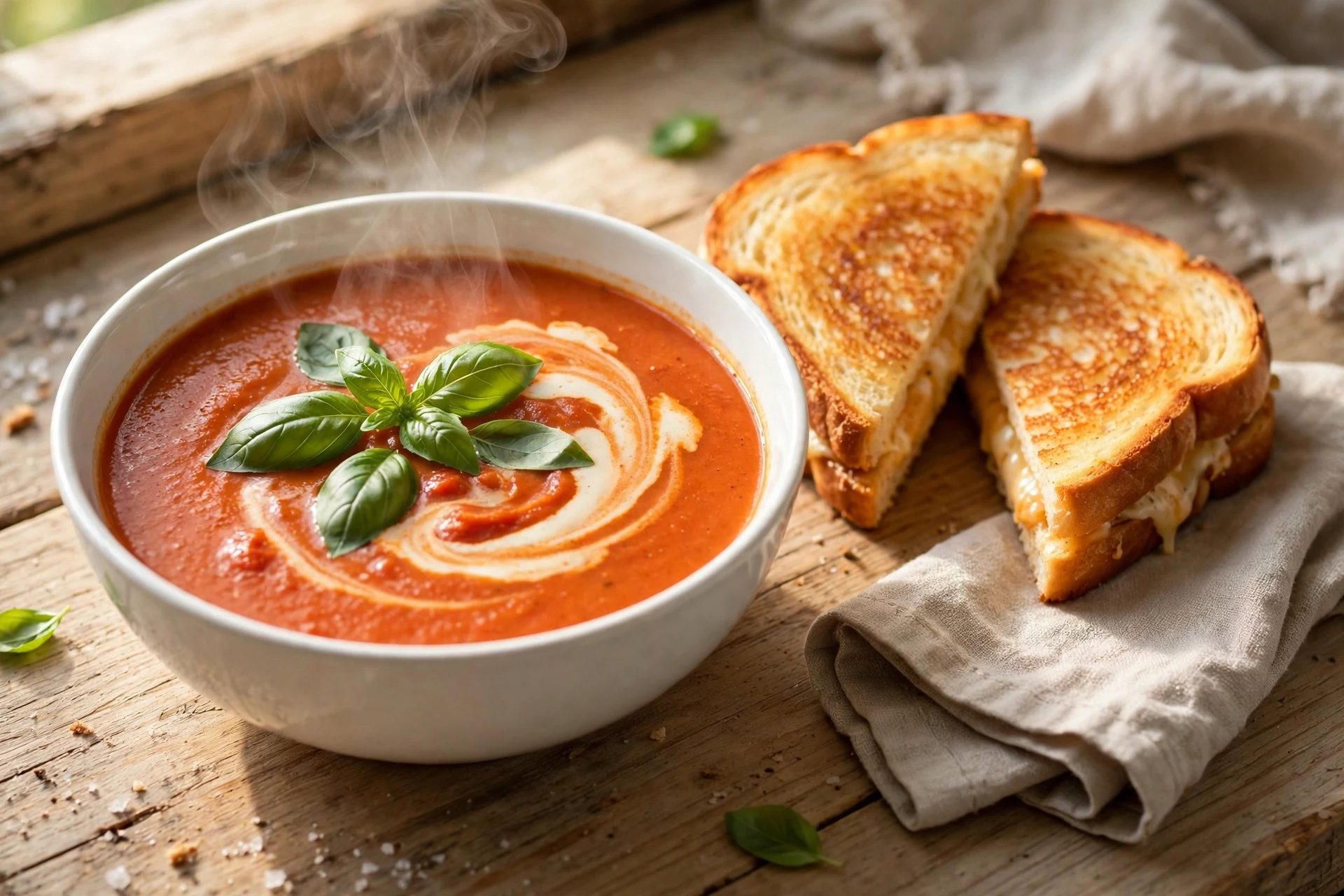
There is a special kind of magic in a bowl of tomato soup done right. Not the thin, tired stuff from a can, but a real bowl: deep red, velvety smooth, with a swirl of cream curling through it and the fresh green pop of basil on top. The kind of soup that makes you close your eyes for a second after the first spoonful. This easy creamy tomato soup is exactly that bowl, and it is ready in 30 minutes from the moment you pick up the knife.
Here is the honest truth about tomato soup: most homemade versions fail in one of two ways. Either they taste sharp and acidic, or they come out bland and watery. This recipe fixes both problems with a handful of small, deliberate moves. Butter and olive oil build a rich base. Tomato paste, cooked for a full minute until it turns brick red, adds a deep roasted sweetness that canned tomatoes alone cannot give you. A pinch of sugar and a short, gentle simmer round off the sharp edges. And the cream goes in at the very end, off the boil, so it stays silky instead of splitting. Every step earns its place, and none of them takes more than a few minutes.
What you get for those 30 minutes is a soup that tastes like it simmered all afternoon: thick enough to coat the back of a spoon, smooth enough to feel luxurious, and bright enough that the tomato flavor still shines through the cream. It is vegetarian, it feeds six generously, and it is the rare weeknight dinner that both kids and grown-ups ask for again. Pair it with a golden grilled cheese sandwich and you have the most comforting dinner combination ever invented, and yes, dunking is strongly encouraged.
Recipe at a Glance
- Prep Time: 10 minutes (3 minutes dicing the onion, 2 minutes mincing the garlic, 3 minutes opening the cans and measuring the broth and cream, 2 minutes gathering everything)
- Cook Time: 20 minutes (5 minutes sauteing the onion, 1 minute cooking the garlic and tomato paste, 12 minutes simmering, 2 minutes warming the cream through)
- Total Time: 30 minutes
- Serves: 6 (about 1 and 1/2 cups per serving)
- Yield: about 9 cups of soup
- Course: Soup, lunch or light dinner
- Cuisine: American comfort food with an Italian soul
- Diet: Vegetarian, easily made vegan and dairy-free, naturally gluten-free
- Equipment: Large heavy-bottomed pot or Dutch oven, immersion blender or countertop blender, wooden spoon
Ingredients
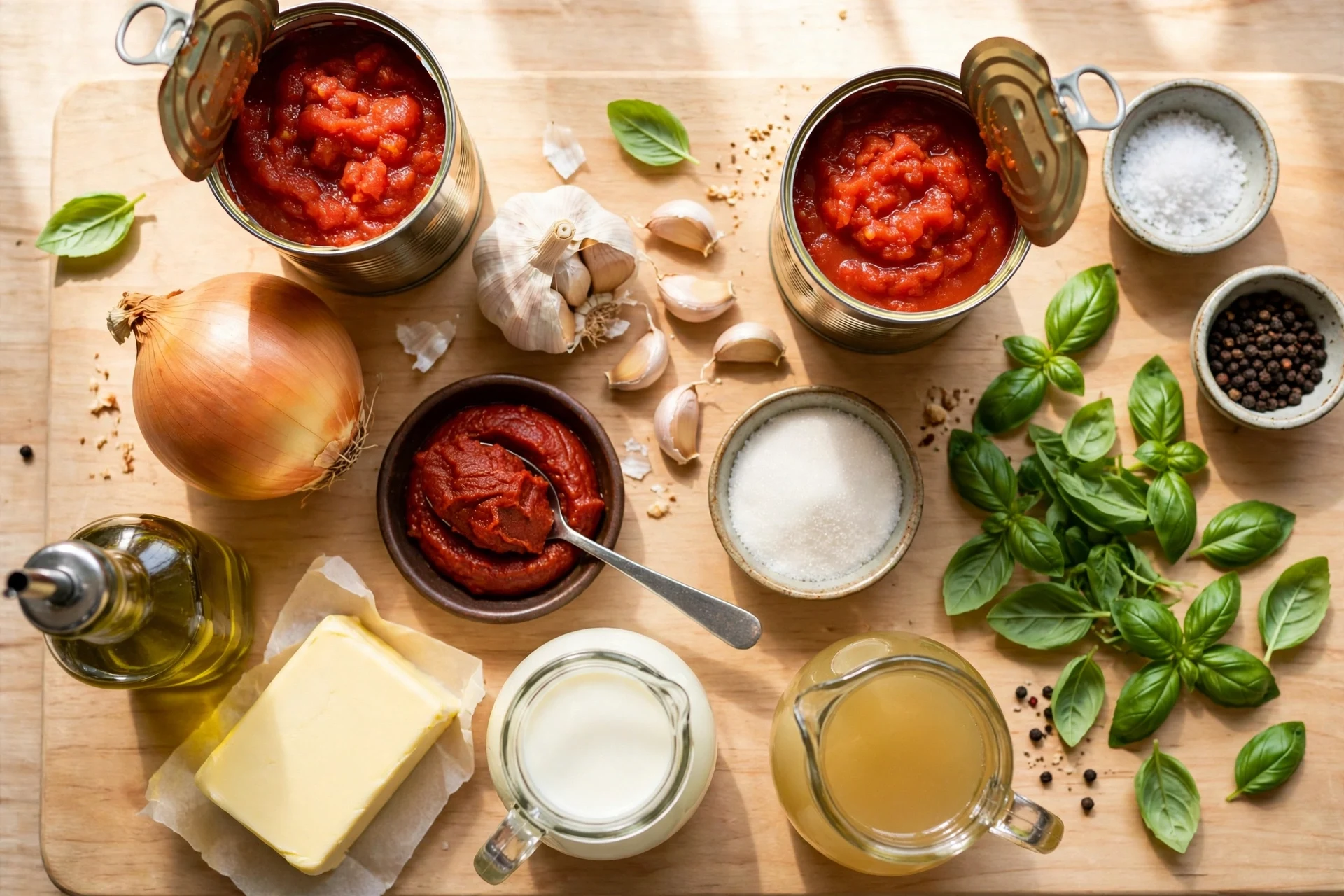
Almost all of this is probably in your kitchen already. Use the best canned tomatoes you can find, because tomatoes are the star here and their quality sets the ceiling for the whole pot; look for cans that list only tomatoes and maybe a little salt or basil. The quantities below make six generous servings, about 1 and 1/2 cups each.
- 2 tablespoons unsalted butter
- 1 tablespoon olive oil
- 1 medium yellow onion, finely diced (about 1 and 1/2 cups)
- 4 cloves garlic, minced (about 1 and 1/2 tablespoons)
- 2 tablespoons tomato paste
- 2 cans (28 ounces each) crushed tomatoes, undrained
- 2 cups low-sodium vegetable broth
- 1 teaspoon granulated sugar, plus more to taste
- 1/2 teaspoon fine sea salt, plus more to taste
- 1/4 teaspoon freshly ground black pepper, plus more to taste
- Pinch of red pepper flakes (optional, for a whisper of warmth)
- 1/2 cup heavy cream, plus a little extra for swirling on top
- 1/4 cup fresh basil leaves, torn, plus extra whole leaves for garnish
To serve (optional but wonderful): grilled cheese sandwiches cut into triangles, crusty bread for dunking, a drizzle of good olive oil, extra torn basil, and a few grinds of black pepper over each bowl.
Directions
Read the steps once before you start, because the whole recipe moves quickly and the first five minutes set the flavor for the entire pot. Keep the heat at medium, not high, for the sauteing stage, because browned onion edges and scorched garlic are the two fastest ways to a bitter soup.
- Get everything ready (3 minutes of the 10-minute prep). Dice the yellow onion finely, so the pieces soften fast and disappear into the finished soup. Mince the garlic. Open both cans of crushed tomatoes. Measure the broth, the cream, the sugar, and the tomato paste, and tear the basil leaves. Setting everything within arm’s reach is the difference between a calm 30-minute cook and a frantic one.
- Melt the butter and oil, then soften the onion (5 minutes). Set a large heavy-bottomed pot or Dutch oven over medium heat. Add the butter and the olive oil together; the oil keeps the butter from browning too fast while the butter brings the rich, rounded flavor that oil alone cannot give. When the butter has melted and the foam settles, add the diced onion and a pinch of salt. Cook, stirring often, for about 5 minutes, until the onion is soft, sweet-smelling, and translucent, with the edges just starting to turn the palest gold. If it starts to color deeply, turn the heat down; you want sweet and soft here, not browned, because this soup should taste bright and fresh.
- Add the garlic and tomato paste (1 minute). Stir in the minced garlic and cook for 30 seconds, just until it smells fragrant and warm. Garlic burns fast and turns a whole pot bitter in seconds, so do not walk away for this half minute. Then add the tomato paste and cook for a full minute more. Watch it change: the paste darkens from bright red to a deep brick red and starts to smell sweet and almost caramel-like. This is the single most important minute in the recipe. Cooking the paste in the fat wakes up its concentrated tomato flavor and takes away the raw, tinny edge that uncooked paste carries. Skip it, and the soup tastes flat. Do it, and the soup tastes like it cooked for hours.
- Add the tomatoes, broth, and seasonings. Pour in both cans of crushed tomatoes, juice and all, and the vegetable broth. Stir well, scraping the bottom of the pot with your wooden spoon to lift up any golden bits of onion and paste. Add the sugar, the salt, the black pepper, and the pinch of red pepper flakes if you are using them. Give everything a good stir and bring the pot to a gentle simmer over medium-high heat, with slow, lazy bubbles breaking the surface, not a rolling boil.
- Simmer gently for 12 minutes. Once the soup reaches that gentle simmer, turn the heat down to medium-low, set the lid on the pot slightly ajar so steam can escape, and let it cook for 12 minutes, stirring every few minutes. The soup will darken a shade, thicken slightly, and the sharp raw edge of the tomatoes will soften into something rounder and sweeter. If the soup starts bubbling hard, turn the heat down further; a violent boil toughens tomato flavor and can scorch the bottom of the pot. Twelve minutes is the sweet spot: long enough to marry the flavors and cook off the acidity, short enough that the tomato still tastes bright and alive rather than stewed and dull.
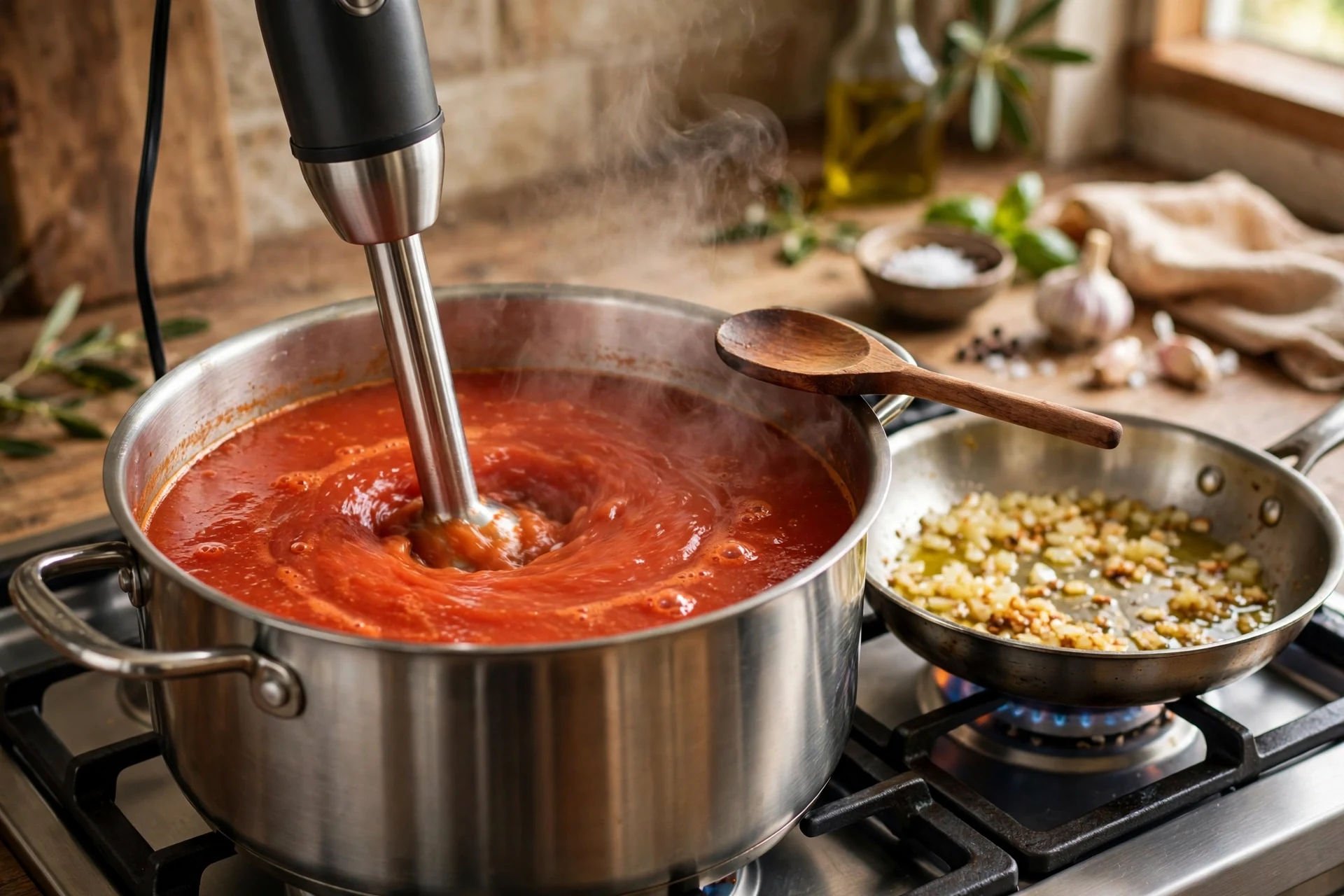
- Blend until completely silky. Take the pot off the heat and let it sit for 2 minutes so it stops bubbling. Blend the soup right in the pot with an immersion blender, moving it slowly through the soup for 2 to 3 minutes until it is completely smooth and velvety, with no visible flecks of onion or tomato skin. If you are using a countertop blender instead, work in two batches, filling the jar no more than halfway, and hold the lid down firmly with a folded kitchen towel while leaving the center cap off to let steam escape. Hot soup in a sealed blender builds pressure fast, so never fill it to the top or lock the lid down tight. Blend a little longer than you think you need to; one extra minute of blending is often the difference between a good tomato soup and a great one.
- Stir in the cream and basil, then warm through (2 minutes). Return the blended soup to low heat if you took it off the stove. Pour in the heavy cream in a slow stream, stirring constantly, and add the torn basil leaves. Warm the soup for 2 minutes, stirring gently, until it is hot all the way through and the basil has wilted into the soup. Do not let it boil again once the cream is in, because boiling makes cream split into little white flecks and turns a silky soup grainy. Pull the pot off the burner the moment the soup is steaming and hot.
- Taste, adjust, and serve. Taste a spoonful and ask it what it needs. A little more salt? Almost always, yes. Another pinch of sugar if the tomatoes still taste sharp? Go ahead, a quarter teaspoon at a time. A grind of black pepper for warmth? Lovely. Ladle into warm bowls, swirl a spoonful of extra cream over the top of each one, scatter a few whole basil leaves, and finish with a drizzle of olive oil if you like. Serve right away with grilled cheese triangles on the side.
Why This Soup Works So Well
Great tomato soup is not about a secret ingredient. It is about understanding what tomatoes need and giving it to them in the right order. Tomatoes are naturally acidic, and that acid is why so many tomato soups taste sharp enough to make you wince. Everything in this recipe is a small, deliberate answer to that acidity.
First, fat tames acid. Butter and olive oil coat your tongue and soften the sharp edges of the tomatoes, which is why the soup tastes rich rather than sour. Second, cooking the tomato paste in the fat before the tomatoes go in builds a deep, roasted sweetness that raw tomatoes and raw paste simply do not have. Third, the sugar is not there to make the soup sweet. A single teaspoon across six servings is barely a pinch per bowl, but it is enough to round off the acidic bite without anyone tasting sweetness. Think of it the way a pinch of salt works in cookie dough: you do not taste the salt, you taste everything else more clearly.
Fourth, the short simmer matters more than a long one. Twelve minutes is enough for the onion, garlic, paste, and tomatoes to become one flavor, and short enough that the tomatoes keep their fresh brightness. Simmer it for an hour and it turns dark and stewed; simmer it for twelve minutes and it tastes like summer. Finally, the cream goes in last and never boils, so it stays smooth and glossy, and the basil goes in with the cream, because basil warmed for two minutes stays green and fragrant while basil cooked for half an hour turns dull. Every one of these choices is small. Together, they are the whole recipe.
The choice of crushed tomatoes is deliberate too. Crushed tomatoes break down into a smooth soup faster than diced tomatoes, which hold their shape stubbornly, and they give a thicker, more velvety body than tomato sauce. If you have ever wondered why restaurant tomato soup feels so luxurious, this is a large part of it: the right tomato product, blended thoroughly, with fat and cream added in the right order. Tomato soup has been a comfort-food staple for generations precisely because it is this simple at heart.
Pro Tips for the Silkiest Tomato Soup
- Blend longer than feels necessary. Two to three full minutes with an immersion blender, moving it slowly through every corner of the pot, is what turns a good soup into a velvety one. If your soup still shows flecks after blending, it is not blended enough yet.
- Strain it if you want restaurant-level silk. For a truly luxurious texture, pour the blended soup through a fine-mesh strainer back into the pot before you add the cream. It takes two minutes and removes every last bit of tomato skin and seed. Totally optional, completely worth it on a night when you want to impress someone.
- Use low-sodium broth. Canned tomatoes and butter already carry salt, and regular broth can push the soup over the edge before you have had a chance to season it properly. Starting low-sodium means you control the salt.
- Make the grilled cheese while the soup simmers. The 12-minute simmer is the perfect window to butter the bread, grate the cheese, and fry two golden sandwiches, so everything lands on the table hot at the same moment.
Common Mistakes to Avoid
Burning the garlic. Garlic goes from fragrant to bitter in under a minute, and there is no fixing a pot once it has scorched. Add it after the onion is soft, cook it for just 30 seconds, and have the tomato paste ready to go in right after. If the garlic ever smells sharp and acrid instead of warm and sweet, start over; a fresh onion and fresh garlic cost pennies, and a bitter soup costs dinner.
Skipping the tomato paste step. Dumping the paste in with the tomatoes and never letting it fry in the fat is the most common shortcut, and it shows in the final flavor. That one minute of cooking the paste until it darkens is what gives the soup its depth.
Boiling the soup after adding the cream. Cream and a rolling boil are enemies. Once the cream is in, keep the heat low and the soup below a simmer, just steaming and hot. If the soup does split a little, do not panic: take it off the heat and whisk in a splash of cold cream, which usually brings it back together.
Under-seasoning, then blaming the tomatoes. Tomato soup needs more salt than you think, and the salt should go in layers: a pinch with the onions, the measured amount with the tomatoes, and a final adjustment after the cream is in. Taste at the end every single time; a soup that tastes dull usually needs salt, not more ingredients.
Blending a boiling pot or an overfilled blender. Hot soup and a sealed blender lid are a genuine safety hazard, because steam builds pressure fast. Let the soup rest off the heat for two minutes first, fill a countertop blender only halfway, and hold the lid down with a towel with the center cap off. An immersion blender in the pot avoids the whole problem and is the safer choice for this recipe.
Substitutions and Variations
- Dairy-free and vegan: Use 1 tablespoon of olive oil instead of the butter and swap the heavy cream for 1/2 cup of full-fat coconut cream. The soup stays silky and rich, with the faintest tropical note that works surprisingly well with tomato and basil. Check that your vegetable broth is vegan, and use a plant-based butter if you prefer a buttery flavor without dairy.
- No heavy cream: Half-and-half works in the same amount, though the soup will be a touch lighter. Whole milk also works, but add it off the heat and warm it very gently, because milk splits more easily than cream. For a cream-free version, blend in 1/2 cup of soaked raw cashews with the soup, or stir in 1/4 cup of mascarpone for a tangy richness.
- Fresh tomatoes instead of canned: Use about 3 pounds of ripe Roma tomatoes, chopped, in place of the two cans. Add them in step 4 the same way, but extend the simmer from 12 minutes to 20 minutes so the fresh tomatoes break down fully, which makes the total time 38 minutes rather than 30. Canned tomatoes are the better choice for this recipe because they taste consistent all year round, but fresh tomatoes work beautifully in late summer when they are at their sweetest.
- Roasted red pepper twist: If you love smoky-sweet soup, blend in one jar of drained roasted red peppers with the tomatoes. It turns this into a close cousin of our Easy Roasted Red Pepper Soup, and it is a lovely change of pace when you want something a little different from the same pantry.
- Make it spicy: Increase the red pepper flakes to 1/2 teaspoon, or stir in a spoonful of harissa or Calabrian chili paste with the tomato paste. The heat blooms in the fat the same way the paste does, and it warms the soup up without overwhelming the tomato flavor.
Storage and Make-Ahead
This soup tastes even better the next day, because an overnight rest in the fridge lets the flavors settle into each other. If you are cooking for the week, make a double batch on Sunday and thank yourself on Wednesday.
- Fridge: Let the soup cool to room temperature within 2 hours of cooking, never leave it sitting out on the counter longer than that, then store it in airtight containers in the fridge for 3 to 4 days. Reheat gently in a pot over medium-low heat, stirring often, until steaming hot all the way through, adding a splash of broth or cream if it has thickened more than you like.
- Freezer: For the best texture, freeze the soup before adding the cream. Cool it completely, then freeze in airtight containers or freezer bags laid flat, leaving an inch of headspace, for up to 3 months. Thaw overnight in the fridge, reheat gently on the stove, and stir the cream and torn basil in fresh after reheating. Soup frozen with the cream already mixed in is still perfectly safe to eat, but the cream can separate a little when thawed; whisking it well while reheating usually brings it back together.
- Make-ahead: The soup can be made completely, including the cream, up to 2 days ahead and kept in the fridge. Reheat it low and slow, and garnish with fresh cream and basil only when you serve it. The basil garnish should always go on at the last minute so it stays bright green instead of wilting into the soup.
Food safety note: this is a vegetarian soup with no meat, poultry, or eggs, so no meat or egg temperature rules apply here. The rules that do apply are the storage ones: cool within 2 hours, refrigerate for 3 to 4 days, freeze for up to 3 months, and always reheat until the soup is steaming hot throughout. Nutrition values for canned tomato soup vary by brand; the USDA FoodData Central database is a reliable place to look up the values for the exact products you use.
Serving Ideas
Tomato soup is a team player, and the right partner turns a good bowl into a meal everyone remembers. The classic pairing is a golden grilled cheese sandwich, cut into triangles for dunking, and honestly, if you serve this soup with anything else, you are missing out on one of life’s great combinations. Use a good melting cheese, butter the outside of the bread generously, and fry it low and slow until the bread is deep gold and the cheese runs when you pull the halves apart.
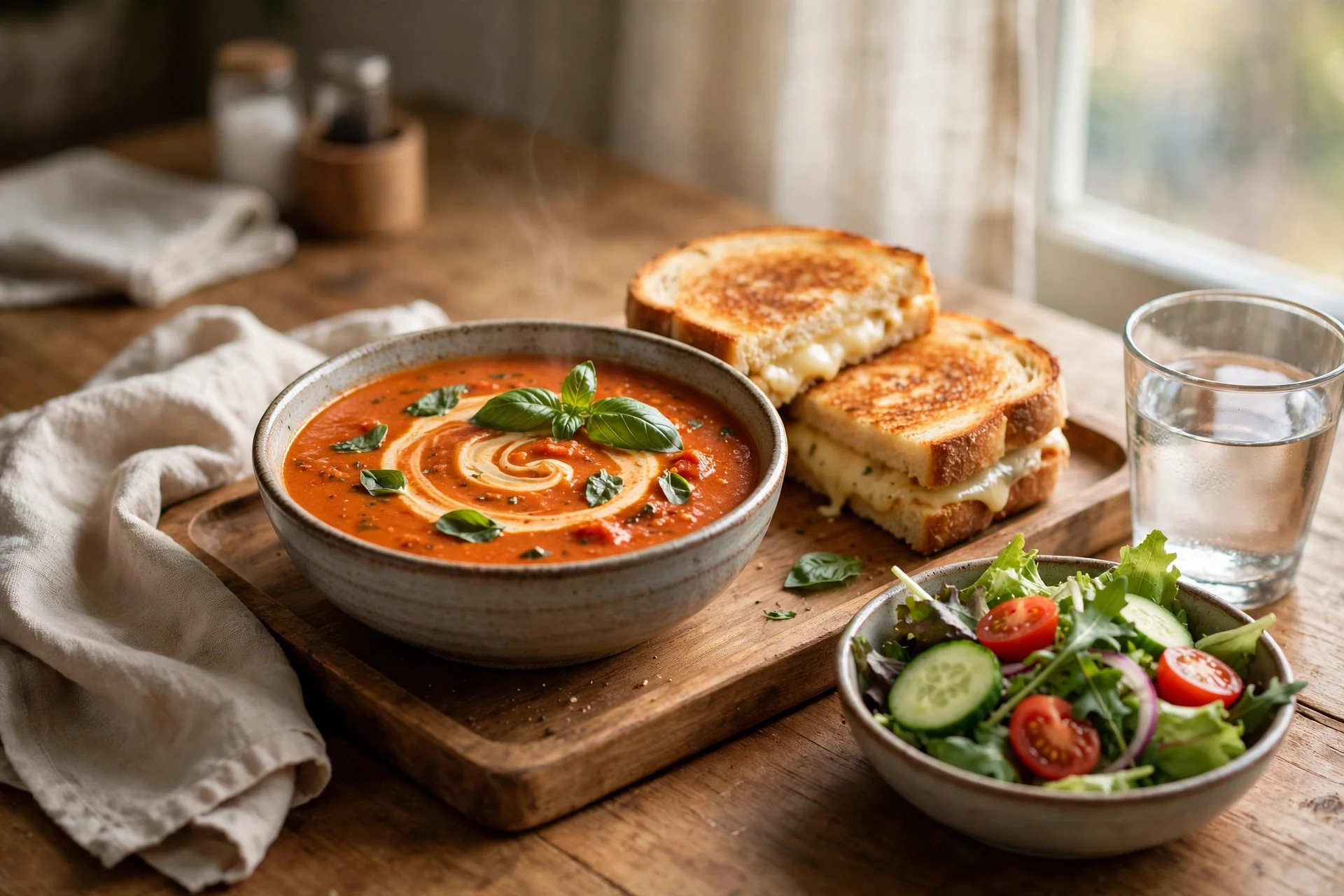
Beyond grilled cheese, this soup loves anything crunchy and dunkable. A thick slice of crusty sourdough, brushed with olive oil and rubbed with a cut clove of garlic, is a five-minute upgrade that tastes like a restaurant bread course. Buttery crackers, warm garlic bread, or a toasted baguette all work the same way. For a lighter lunch, serve a smaller bowl alongside a crisp green salad with a sharp vinaigrette, or next to half a turkey and cheese sandwich. For a heartier dinner, serve it as a starter before pasta, or ladle it next to a simple frittata.
If you are building a soup night around this recipe, add one more soup for variety. Our Creamy Tomato Basil Soup is a close cousin with a stronger fresh-basil character, and our Easy Butternut Squash Soup brings a sweet, golden contrast next to this deep red bowl.
Frequently Asked Questions
Can I use fresh tomatoes instead of canned tomatoes in this soup?
Yes, you can. Use about 3 pounds of ripe Roma tomatoes, chopped, in place of the two 28-ounce cans of crushed tomatoes. Simmer the soup for 20 minutes instead of 12 so the fresh tomatoes break down fully, which makes the total time 38 minutes instead of 30. Canned tomatoes are still the better choice for this recipe because they taste consistent all year round, but fresh tomatoes are wonderful in late summer when they are at their sweetest.
How do I make this creamy tomato soup dairy-free or vegan?
Use 1 tablespoon of olive oil instead of the butter and swap the heavy cream for 1/2 cup of full-fat coconut cream. Check that your vegetable broth is vegan, and skip the grilled cheese topping or use a dairy-free cheese. The soup stays silky and rich, with only the faintest tropical note from the coconut cream.
Can I freeze creamy tomato soup?
Yes, but freeze it before you add the cream for the best texture. Let the blended soup cool completely, then freeze it in airtight containers for up to 3 months. Thaw it overnight in the fridge, reheat it gently on the stove, and stir the cream and basil in fresh after reheating. Soup frozen with the cream already in it is still safe to eat, but the cream can separate slightly when thawed; a good whisk usually brings it back together.
Why does my tomato soup taste acidic, and how do I fix it?
Tomatoes are naturally acidic, and canned tomatoes vary from batch to batch, so some pots taste sharper than others. The recipe already builds in the fixes: cooking the tomato paste until brick red, a teaspoon of sugar, butter and olive oil in the base, and cream at the end. If your soup still tastes sharp after all that, simmer it for 5 more minutes, add another pinch of sugar a quarter teaspoon at a time, and taste after each addition. Adjust the salt last, once the acidity is balanced, so you can judge the seasoning properly.
Rate this recipe
Be the first to rate it!