
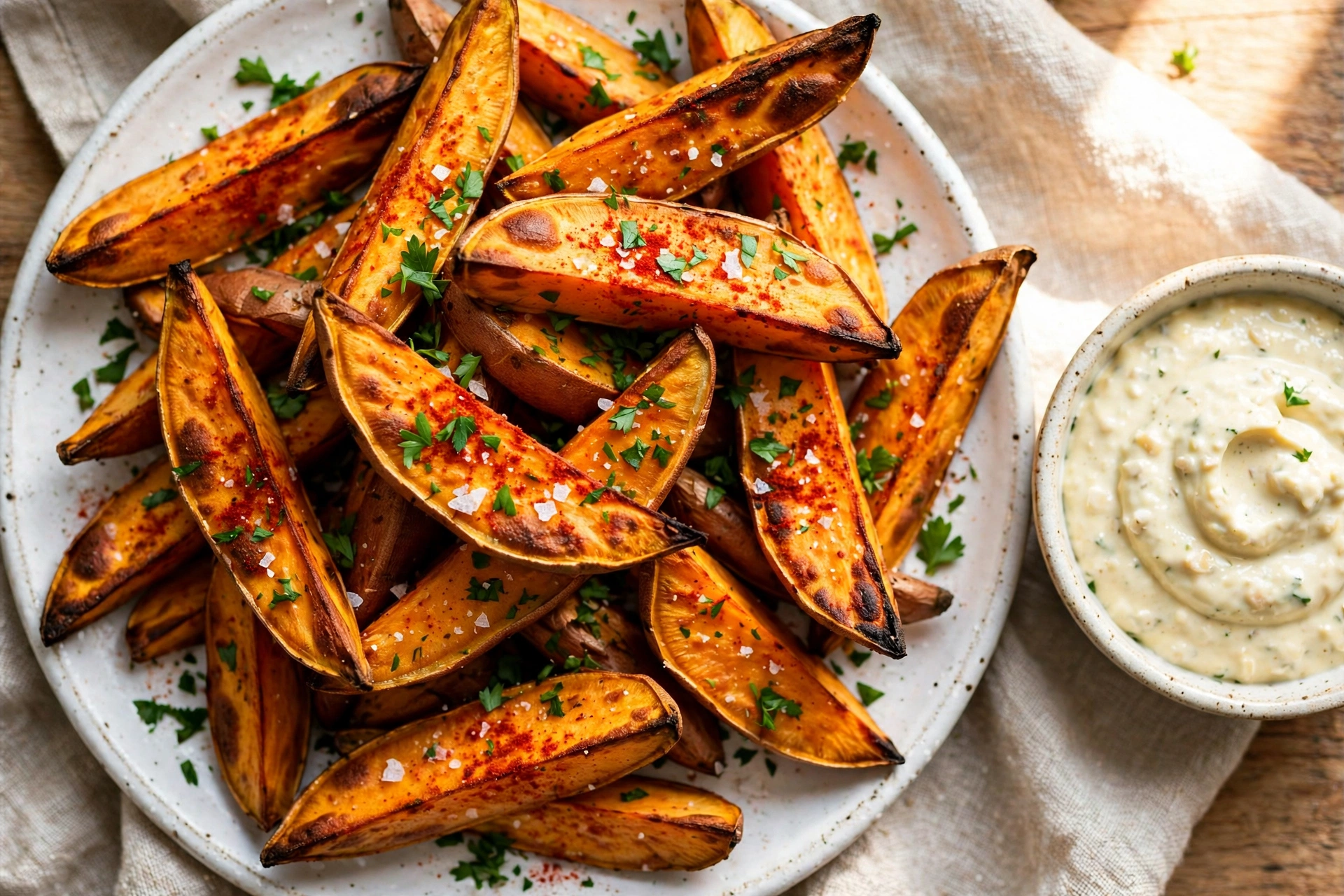
Some side dishes just sit quietly next to the main course, and then there are sweet potato wedges — the kind of side dish that steals the show before the chicken or the salmon even gets a look in. These easy roasted sweet potato wedges come out of the oven with burnished golden edges, soft fluffy centers, and a smoky paprika warmth that makes the whole kitchen smell like a cozy little bistro. They are sweet, salty, a little bit smoky, and crisp in exactly the places where crisp matters. Thirty minutes from the moment you switch on the oven to the moment you set the platter on the table, and most of that time the oven is doing all the work while you get on with the rest of dinner.
What makes this recipe so good is how little stands between you and a restaurant-worthy side dish. There is no peeling, no parboiling, no deep fryer, and no fussy technique to memorize. You scrub the sweet potatoes, cut them into thick wedges, toss them with olive oil and a handful of warm spices, and let a hot oven do the magic. The high heat is the whole secret: it caramelizes the natural sugars in the sweet potatoes so the edges turn golden and slightly crisp while the insides go soft and almost creamy. A spoonful of cornstarch in the toss is the quiet little trick that helps the outside dry out and crisp up instead of steaming soft, and spacing the wedges out on the pan means every single one gets its fair share of that hot air.
These wedges are the side dish that goes with absolutely everything. Serve them next to roast chicken on a Sunday, pile them beside burgers on a Friday night, tuck them into a lunchbox with a little pot of garlic dip, or set them out as a snack with friends and watch them disappear before the main course is even ready. They are naturally gluten-free, easy to make vegan by skipping the yogurt dip, and friendly enough for picky eaters and grown-up spice lovers alike — just leave out the cayenne if the kids are eating, and add an extra pinch if you like a little heat. If your weeknight dinners have been stuck in a mashed potato rut, these golden wedges are your way out.
There is one more thing worth saying before we start: this recipe is genuinely hard to mess up. The wedges forgive you if they are a little uneven, the spices forgive you if you measure with a generous hand, and the oven forgives you if you leave them in for an extra minute or two. Follow the spacing rule, keep the heat high, and flip them once halfway through, and you will pull out a pan of wedges that look like they came from your favorite cafe. That is the promise of this recipe, and it keeps it every single time.
Recipe at a Glance
Prep Time: 10 minutes
Cook Time: 20 minutes (18 minutes roasting, plus a 2-minute rest on the hot pan)
Total Time: 30 minutes
Serves: 4
Category: Dinner
Method: Roasting at 425°F (220°C)
Ingredients
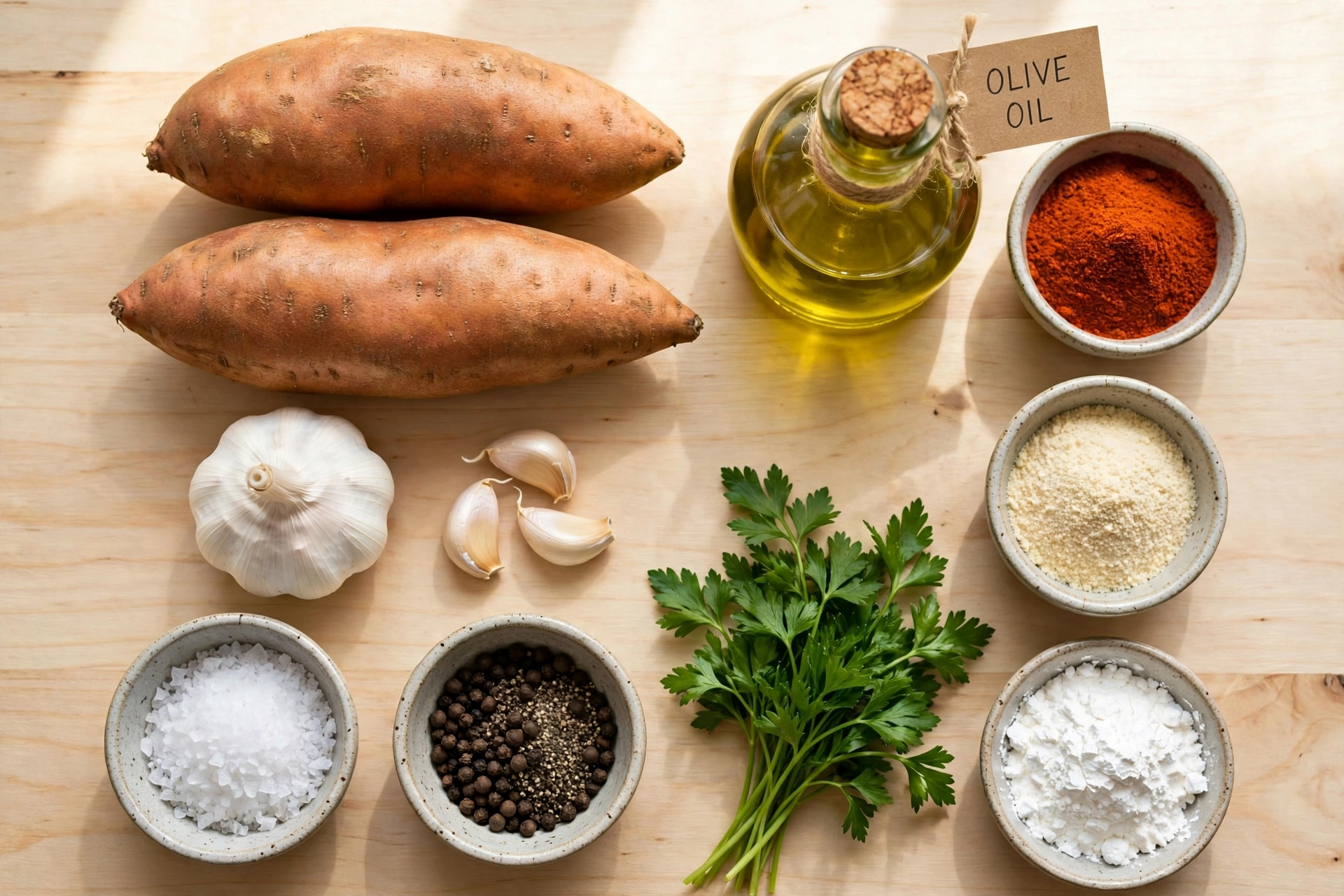
Everything on this list is easy to find at any grocery store, and you probably have most of the spices already. The smoked paprika is the one ingredient worth seeking out — it is what gives the wedges their warm, campfire depth instead of plain sweetness.
- 2 large sweet potatoes, about 2 pounds total, scrubbed well
- 3 tablespoons olive oil
- 1 tablespoon cornstarch
- 1 teaspoon smoked paprika
- 1 teaspoon garlic powder
- 1/2 teaspoon onion powder
- 1/2 teaspoon ground cumin
- 3/4 teaspoon fine sea salt, plus flaky sea salt to finish
- 1/2 teaspoon black pepper, freshly cracked
- 1/4 teaspoon cayenne pepper (optional, for a little heat)
- 2 tablespoons fresh parsley, finely chopped, to serve
Optional garlic-herb dip: 1/2 cup plain Greek yogurt, 2 tablespoons mayonnaise, 1 small garlic clove finely grated, 1 teaspoon lemon juice, and a pinch of salt, stirred together. It takes two minutes and it is the perfect cool, creamy partner for the warm spiced wedges.
Directions
Read through the steps once before you start. The whole recipe moves fast once the oven is hot, and having everything measured and ready means the wedges go from bowl to pan without a pause.
- Heat the oven and prep the pan. Place a rack in the middle of the oven and heat it to 425°F (220°C). Line a large rimmed baking sheet with parchment paper. A hot oven is not a suggestion here — it is the whole method. Sweet potatoes roasted at a low temperature steam and turn soft all the way through, but at 425°F the outside crisps and caramelizes while the inside stays fluffy. Give the oven a full 10 minutes to reach temperature before the wedges go in.
- Cut the wedges. Scrub the sweet potatoes under cold running water and pat them very dry with a clean towel — dry skin is the first step to a crisp edge. There is no need to peel them; the skin crisps beautifully and holds each wedge together. Cut each potato in half lengthwise, then cut each half into 4 even wedges, so you get 8 wedges per potato and 16 in total. Aim for wedges about 3/4 inch thick at their widest point, and try to keep them roughly the same size so they finish cooking at the same time. If a wedge comes out much thicker than the rest, cut it in half again — even thickness is the difference between a pan where everything is golden and a pan where half the wedges are perfect and the other half are still pale.
- Coat with cornstarch first. Put the wedges in your largest mixing bowl and sprinkle the cornstarch over them. Toss with your hands until every wedge wears a thin, even white dusting. This is the step most people skip, and it is the step that makes the biggest difference. Cornstarch soaks up the surface moisture on the potato, and a dry surface is what lets the hot oven build a crisp crust instead of steaming the outside soft. You will not taste the cornstarch at all — it simply disappears into the crunch.
- Toss with oil and spices. Drizzle the olive oil over the wedges, then sprinkle over the smoked paprika, garlic powder, onion powder, cumin, fine sea salt, black pepper, and cayenne if you are using it. Toss again with your hands, turning every wedge so the seasoning reaches all sides. The oil does two jobs at once: it carries the spices onto the potato and it helps heat travel into the surface so the edges brown. Every wedge should look glossy and evenly rust-red from the paprika before it goes on the pan.

- Spread them out — and give them space. Arrange the wedges on the lined baking sheet in a single layer, cut-side down, with at least an inch of space between neighbors. This is the golden rule of roasting, and it is worth repeating: crowded wedges steam, spaced wedges crisp. If your pan is too small to hold all 16 wedges with room to breathe, use two pans rather than squeezing them onto one. A wedge touching its neighbor is a wedge that will never get a crisp edge on that side.
- Roast, then flip. Slide the pan into the hot oven and roast for 9 minutes. Then, working quickly, flip each wedge over with tongs or a thin spatula so the other cut side faces the heat. The first side should already be turning golden at the edges. Roasting cut-side down on both sides is what builds that beautiful caramelized crust on the flat faces, instead of leaving one side browned and the other pale and soft.
- Finish roasting and rest on the pan. Roast for 9 more minutes, until the wedges are deeply golden with crisp, darkened edges and a fork slides into the thickest part with no resistance at all. That fork test is your doneness cue: golden and crisp on the outside, soft and fluffy on the inside, with no firm or starchy bite left in the center. Switch off the oven and let the wedges rest on the hot pan for 2 minutes — the leftover heat from the pan keeps crisping the edges while you grab the dip and the plates. This rest is part of the 20-minute cook time, not extra time on top of it.
- Season, garnish, and serve. Transfer the wedges to a serving platter or a wide bowl while they are still hot, sprinkle over the flaky sea salt and the chopped fresh parsley, and serve right away with the garlic-herb dip alongside. Wedges are at their absolute best in the first 10 minutes out of the oven, when the edges are still crackling and the centers are steaming. If you wait too long, the steam trapped underneath them softens the crust — so get them onto the table while they are still singing.
Serving Ideas
These wedges are the friendliest side dish in the kitchen because they go with almost any main course you can think of. Here are the pairings that work best at our table:
- With roast chicken or turkey: the smoky-sweet wedges are a natural partner for simply roasted poultry, and they mop up pan juices beautifully. Try them next to easy lemon herb roasted potatoes on a holiday table for a two-potato spread that guests talk about for weeks — one classic, one smoky-sweet.
- With burgers and grilled meats: pile the wedges into a basket lined with parchment next to burgers, grilled chicken, or steak, with the garlic-herb dip and a bottle of ketchup on the side. They do everything fries do, only better, with a fraction of the fuss.
- With salmon or shrimp: the sweet heat of the paprika wedges balances rich fish wonderfully, especially a simple baked salmon or garlic shrimp. Keep the rest of the plate light — a green salad or some steamed green beans — and let the wedges be the star.
- As a snack or appetizer: set out a big platter of wedges with two or three dips — the garlic-herb yogurt dip, chipotle mayo, and plain ketchup — and let everyone graze. They disappear faster than any chip bowl ever has.
- In a lunchbox: pack cooled wedges with a small pot of dip and a handful of cucumber sticks. They are sturdy enough to travel, tasty at room temperature, and far more exciting than a sandwich on its third day in a row.
- Next to eggs: leftover wedges reheated until crisp again are wonderful with fried or scrambled eggs for a weekend brunch that feels like a cafe breakfast without the cafe prices.
For a full vegetable-forward dinner, round out the plate with easy honey garlic green beans or easy garlic parmesan roasted zucchini — all three sides roast at similar temperatures, so they can share the oven on a busy night.
Pro Tips and Why This Technique Works
Great roasted wedges are not about luck; they are about three small pieces of kitchen science working together. Once you understand the why behind each one, you will get golden wedges every single time, no matter whose oven you are cooking in.
Why high heat matters. At 425°F, the outside of the wedge heats fast enough that its surface moisture evaporates before it can soak back into the potato. That dry surface is what browns. At the same time, the heat triggers caramelization — the natural sugars in the sweet potato turning golden and nutty — and the Maillard reaction, the browning that gives roasted food its deep savory flavor. A cooler oven, say 350°F, never gets the surface dry enough, so the wedges steam in their own moisture and turn soft and pale instead of crisp and golden. If your oven runs cool, an oven thermometer is a ten-dollar investment that pays for itself in better roasts.
Why spacing the wedges apart matters. Every wedge releases steam as it roasts. When wedges sit shoulder to shoulder, that steam gets trapped between them and the pan turns into a steamer instead of a roaster. A full inch of space lets the steam escape and lets hot air circulate around every face of every wedge. That is also why a second pan beats a crowded first pan every time, and why you should never cover the pan with foil — foil traps the steam you are working so hard to drive off.
Why cornstarch helps crispness. A raw sweet potato wedge is wet on the cut surface, and wet surfaces do not brown — they steam. Cornstarch is a pure starch that absorbs that surface moisture and then, in the hot oven, dries into a microscopically thin, crackly crust. It is the same trick used for extra-crispy oven fries, and it works because starch gelatinizes and then dries out at high heat, leaving a delicate crunch behind. One tablespoon is all you need; more than that leaves a chalky coating, so measure it rather than eyeballing a heavy-handed pour.
Why cut-side down, and why flip once. The flat cut face of a wedge pressed against the hot pan gets direct conductive heat, which browns it far faster than hot air alone ever could. Flipping halfway gives the second flat face the same treatment. Skip the flip and one side stays pale; flip too often and you interrupt the browning every time you move them. Once is the magic number.
More tips from the RecipeNest kitchen: cut the wedges as evenly as you can, because a thin wedge will burn while a thick one is still raw in the middle. Pat the potatoes dry after scrubbing — water on the surface is the enemy of crispness. Use parchment paper, not a bare greased pan, because parchment stops the natural sugars from gluing the wedges to the metal and tearing the crust when you flip them. And season the wedges after they come out of the oven with flaky salt, not before, because flaky salt added at the end stays crunchy and visible instead of dissolving into the roast.
Common Mistakes and How to Fix Them
Even an easy recipe has a few traps. Here are the ones that catch people most often, and the quick fix for each:
- Soggy wedges: almost always caused by crowding the pan or an oven that was not fully preheated. Fix it next time with a bigger pan or two pans, a full 10-minute preheat, and a tablespoon of cornstarch. If this batch came out soft, spread them out and pop them back into a 425°F oven for 5 more minutes — they will crisp up.
- Burnt tips, raw middles: the wedges were cut unevenly, or the thin ends were too thin. Cut the tapered ends off the potatoes and save them for another use, or tuck the thin tips under the thicker part of the wedge so they are shielded from direct heat.
- Spices burned and bitter: garlic powder and paprika scorch if they sit in a pool of oil at the bottom of the pan, or if the oven is hotter than 450°F. Keep the oven at 425°F and make sure the spices are tossed onto the wedges, not loose on the pan.
- Bland wedges: sweet potatoes are naturally sweet, so they need a confident hand with salt. Three-quarters of a teaspoon of fine salt in the toss plus flaky salt at the end is the right amount for 2 pounds of potato — do not be shy with it.
- Limp leftovers: microwaving leftover wedges makes them soft. Reheat them in a 400°F oven or an air fryer for 5 to 7 minutes instead, and the edges crisp right back up.
Substitutions
This recipe is easy to bend to whatever your pantry holds:
- Regular potatoes: russet or Yukon Gold potatoes work with the same method and timing — just add 5 extra minutes of roasting, since white potatoes are denser than sweet potatoes.
- Oil: avocado oil is a fine swap for olive oil and handles high heat beautifully. Melted butter adds richness but browns faster, so watch the last few minutes closely.
- Smoked paprika: sweet paprika works if that is what you have, though you will lose the smoky depth. A pinch of chipotle powder gives smokiness with more heat — use half a teaspoon instead of a full one.
- Cornstarch: arrowroot powder or potato starch work the same way. Rice flour also crisps nicely. Plain flour is not a good swap — it stays pasty instead of crisping.
- Spice blends: swap the paprika, cumin, and cayenne for 2 teaspoons of your favorite seasoning blend — Cajun seasoning, taco seasoning, or an Italian herb blend all work. Just check whether the blend already contains salt, and cut the added salt in half if it does.
- Fresh herbs: parsley is classic, but chopped cilantro, chives, or a little rosemary are all lovely. Add woody herbs like rosemary before roasting and soft herbs like parsley after, so the delicate leaves do not burn.
- The dip: swap the Greek yogurt dip for sour cream, plain hummus, ranch dressing, or a simple ketchup and hot sauce mix. For a dairy-free table, use a coconut yogurt base for the dip.
Storage and Make-Ahead
These wedges are at their best fresh from the oven, but they keep well with the right handling. Let any leftovers cool completely on the pan — never put hot wedges into a sealed container, because the trapped steam will soften the crust in minutes. Once cool, store them in an airtight container in the fridge for 3 to 4 days. Do not leave cooked wedges at room temperature for more than 2 hours.
To reheat, spread the wedges on a baking sheet and warm them in a 400°F oven for 5 to 7 minutes, or in an air fryer at 380°F for 3 to 4 minutes, until the edges crisp again. Do not microwave them unless you are happy with soft wedges — the microwave steams the crust away. Freezing is not recommended: sweet potatoes turn watery and grainy when frozen and thawed, and no amount of reheating brings the texture back.
For make-ahead prep, you can cut the wedges up to a day in advance and store them in a bowl of cold water in the fridge so they do not brown. Drain them very well and pat them completely dry before tossing with cornstarch and oil — remember, a dry surface is the whole secret to crispness, and wet wedges will never crisp properly.
Frequently Asked Questions
Why are my sweet potato wedges soggy instead of crispy?
Soggy wedges are almost always caused by crowding the pan, an oven that was not fully preheated, or skipping the cornstarch. Sweet potatoes release a lot of steam as they roast, and when wedges sit too close together that steam gets trapped and turns the pan into a steamer. Give every wedge at least an inch of space, use two pans if you need to, preheat the oven fully to 425°F, and toss the wedges with a tablespoon of cornstarch before adding the oil and spices. Those four fixes solve soggy wedges every time.
Do I need to peel sweet potatoes for wedges?
No, and we recommend leaving the skin on. The skin crisps beautifully in a hot oven, holds each wedge together so it does not fall apart when you flip it, and adds a pleasant earthy bite against the soft, sweet flesh. Just scrub the potatoes well under cold running water and pat them dry. If you do prefer peeled wedges, peel them with a vegetable peeler and reduce the roasting time by about 2 minutes, since peeled wedges brown a little faster.
How long do roasted sweet potato wedges take, and can I make them ahead?
These easy roasted sweet potato wedges take 30 minutes in total: 10 minutes of prep and 20 minutes of cooking, which is 18 minutes of roasting plus a 2-minute rest on the hot pan. They are best served fresh, within 10 minutes of leaving the oven, when the edges are still crisp. Leftovers keep in the fridge for 3 to 4 days and reheat beautifully in a 400°F oven for 5 to 7 minutes. You can also cut the wedges a day ahead and keep them in cold water in the fridge, then drain and dry them well before roasting. Freezing is not recommended, because sweet potatoes turn watery and grainy after thawing.
What dip goes best with roasted sweet potato wedges?
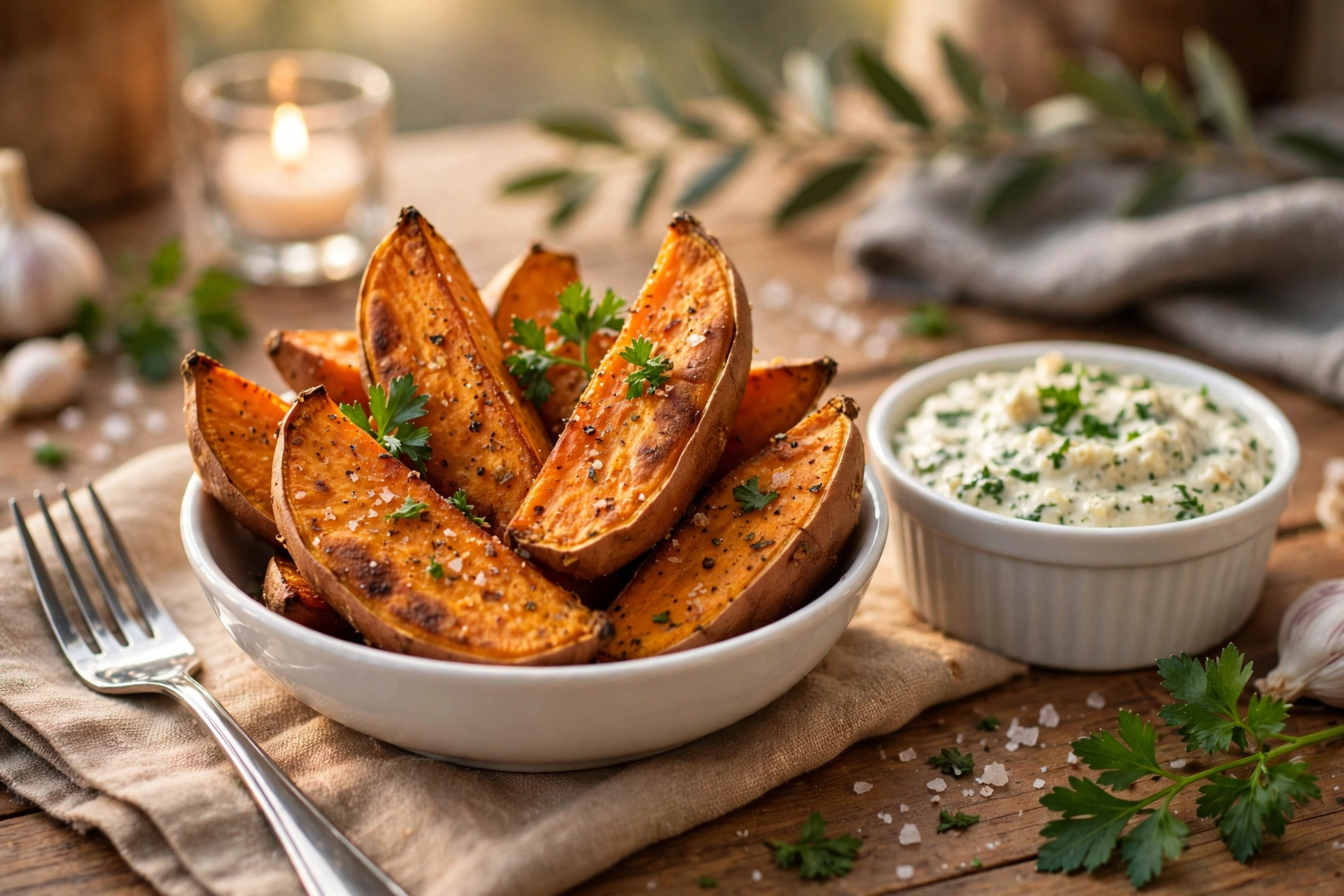
A cool garlic-herb yogurt dip is the classic partner: stir together 1/2 cup plain Greek yogurt, 2 tablespoons mayonnaise, 1 small grated garlic clove, 1 teaspoon lemon juice, and a pinch of salt. The cool creaminess balances the warm smoky paprika perfectly. Chipotle mayo, ranch dressing, plain ketchup, or hummus all work too. For more ideas on the nutrition side of sweet potatoes, the USDA FoodData Central entry for sweet potatoes is a useful reference.
Rate this recipe
Be the first to rate it!