
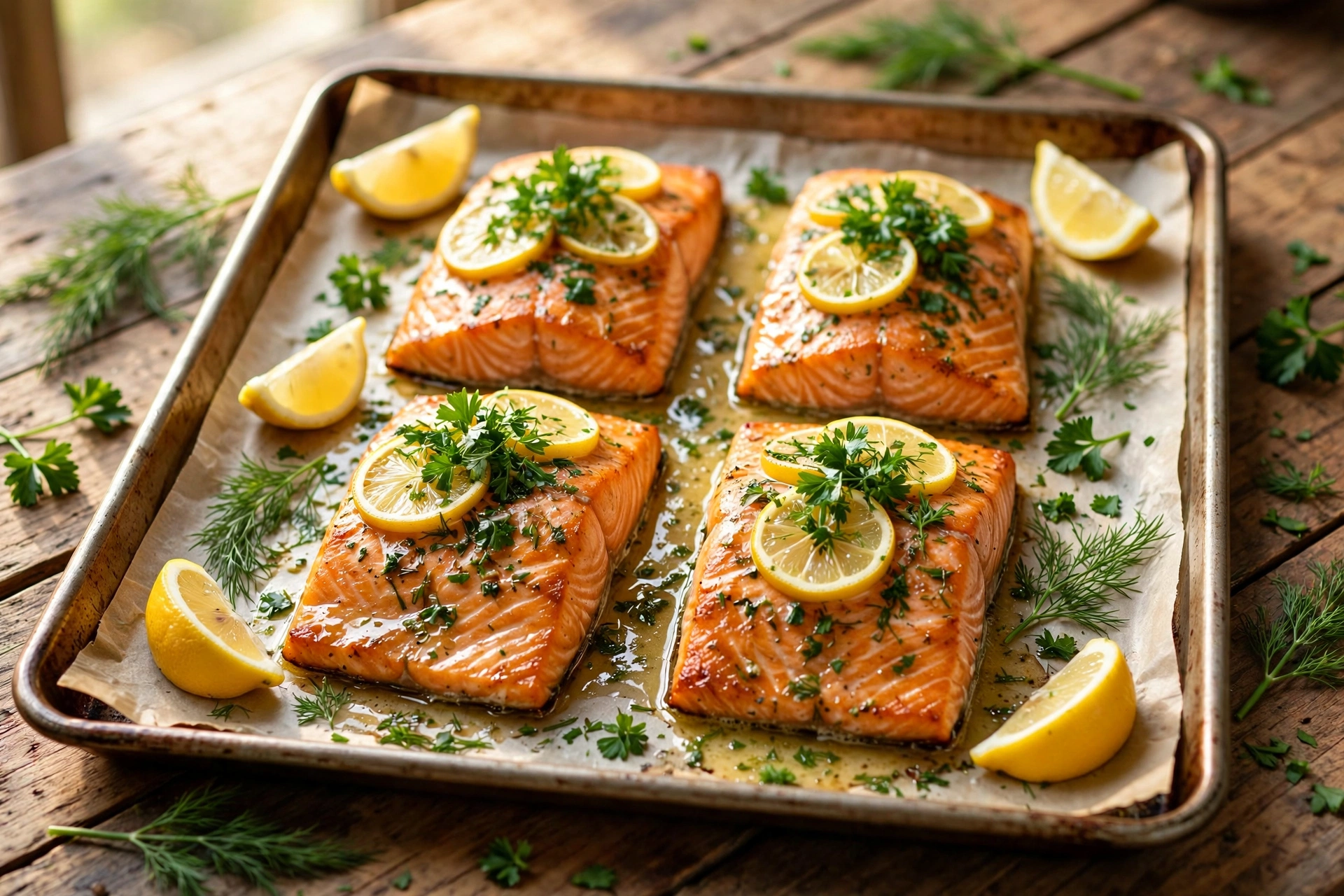
There is a moment, about twelve minutes into baking, when the whole kitchen starts to smell like a seaside restaurant on a summer evening. Bright lemon, warm garlic butter, and fresh herbs drift out of the oven, and suddenly everyone in the house wanders in to ask what is for dinner. This easy lemon herb baked salmon is ready in just 25 minutes, uses only 11 simple ingredients, and turns four plain salmon fillets into flaky, buttery, golden-edged fish that tastes like you spent all evening on it.
What makes this recipe a keeper is how little it asks of you. One sheet pan, one small bowl for the sauce, and no fancy technique at all. You whisk melted butter with olive oil, lemon juice, garlic, and herbs, brush it generously over the fillets, lay thin lemon slices on top, and slide the pan into a hot oven. The salmon bakes into tender, flaky layers, the lemon slices soften and caramelize at the edges, and the pan juices turn into a golden sauce you will want to spoon over everything. It is the kind of dinner you can start after work and finish before anyone has set the table, and it still tastes like a special occasion.
Salmon is one of the easiest fish to cook well, and that is exactly why it belongs in a weeknight rotation. The fillets are thick and forgiving, they cook quickly and evenly, and they carry bright flavors beautifully. Lemon is salmon’s best friend: the acid cuts through the richness of the fish, the zest adds a fragrant citrus note that juice alone cannot give, and the fresh herbs bring the whole thing to life. Garlic butter ties it together, keeping the fish moist while it bakes and adding a savory depth that makes every bite taste complete.
This is also a dinner the whole family genuinely loves, and that matters on busy weeknights. Kids love the mild, buttery flavor and the fun of squeezing a lemon wedge over their own piece, grown-ups love that it is quick and made from real ingredients, and everyone loves a plate that looks this beautiful with almost no effort. The recipe serves 4 people with one generous fillet each, and it scales easily when friends come over or when you want leftovers for tomorrow’s lunch. The salmon is just as good cold the next day, flaked over a salad or tucked into a wrap.
Once you make baked salmon this way, the plain version will be hard to go back to. The sauce comes together in about 3 minutes, the fish needs only 12 to 15 minutes in the oven, and the whole dinner is on the table in 25. The recipe below gives you the balanced starting point our family loves, and the tips section shows you exactly how to keep the salmon moist, how to tell when it is perfectly done, and how to make it your own with different herbs, a touch of honey, or a spicy kick.
Recipe at a Glance
Prep Time: 10 minutes
Cook Time: 15 minutes
Total Time: 25 minutes
Serves: 4 (1 fillet each)
Yield: 4 salmon fillets
Course: Dinner
Cuisine: American
Keyword: easy lemon herb baked salmon
Why This Easy Lemon Herb Baked Salmon Works So Well
The secret to great baked salmon is not a secret at all: a hot oven, a flavorful butter sauce, lemon slices on top, and pulling the fish out at exactly the right moment. But there are a few small technique choices in this recipe that make a real difference, and once you understand them, you will get perfectly flaky salmon every single time.
A hot oven cooks salmon fast and keeps it moist
Salmon baked at 400 degrees Fahrenheit cooks through in just 12 to 15 minutes, which is fast enough that the fish stays juicy instead of drying out. A lower oven temperature means a longer bake, and a longer bake means moisture slowly escapes from the fillets. The hot oven also gives the top of the salmon a lightly golden edge while the inside stays tender and flaky. If your oven runs cool, give it a full 10 minutes to preheat, because putting salmon into an oven that is still heating up is one of the easiest ways to overcook it.
Lemon juice and zest do two different jobs
Fresh lemon juice and lemon zest are not interchangeable in this recipe, and that is why both are in the sauce. The juice brings bright acidity that cuts through the richness of the salmon and the butter, while the zest carries the fragrant citrus oils that live in the lemon peel, adding a floral lemon flavor that juice alone cannot give. Together they make the salmon taste fresh and vivid instead of flat. Always zest the lemon before you cut it in half to juice it, because zesting a cut lemon is awkward and you will get far less zest.
Butter and olive oil are better together
The sauce in this recipe uses both melted butter and olive oil, and each one earns its place. Butter brings rich flavor and helps the sauce cling to the fish, while olive oil keeps the butter from burning in the hot oven and adds its own fruity note. The two fats together coat the salmon in a golden layer that bastes the fish as it bakes, so the top stays moist and the edges turn lightly crisp. Brushing the sauce on generously, rather than pouring it all into the pan, is what makes sure every bite is seasoned.
Lemon slices on top baste the fish as it bakes
Laying thin lemon slices directly on top of each fillet is more than decoration. As the salmon bakes, the lemon slices soften, release their juice, and gently steam the top of the fish, keeping it moist while adding a fresh citrus flavor to every bite. The slices also turn lightly golden at the edges, which makes the finished dish look like it came from a restaurant. Use thin slices, about an eighth of an inch thick, so they soften fully in the short baking time instead of staying raw and sharp.
Ingredients
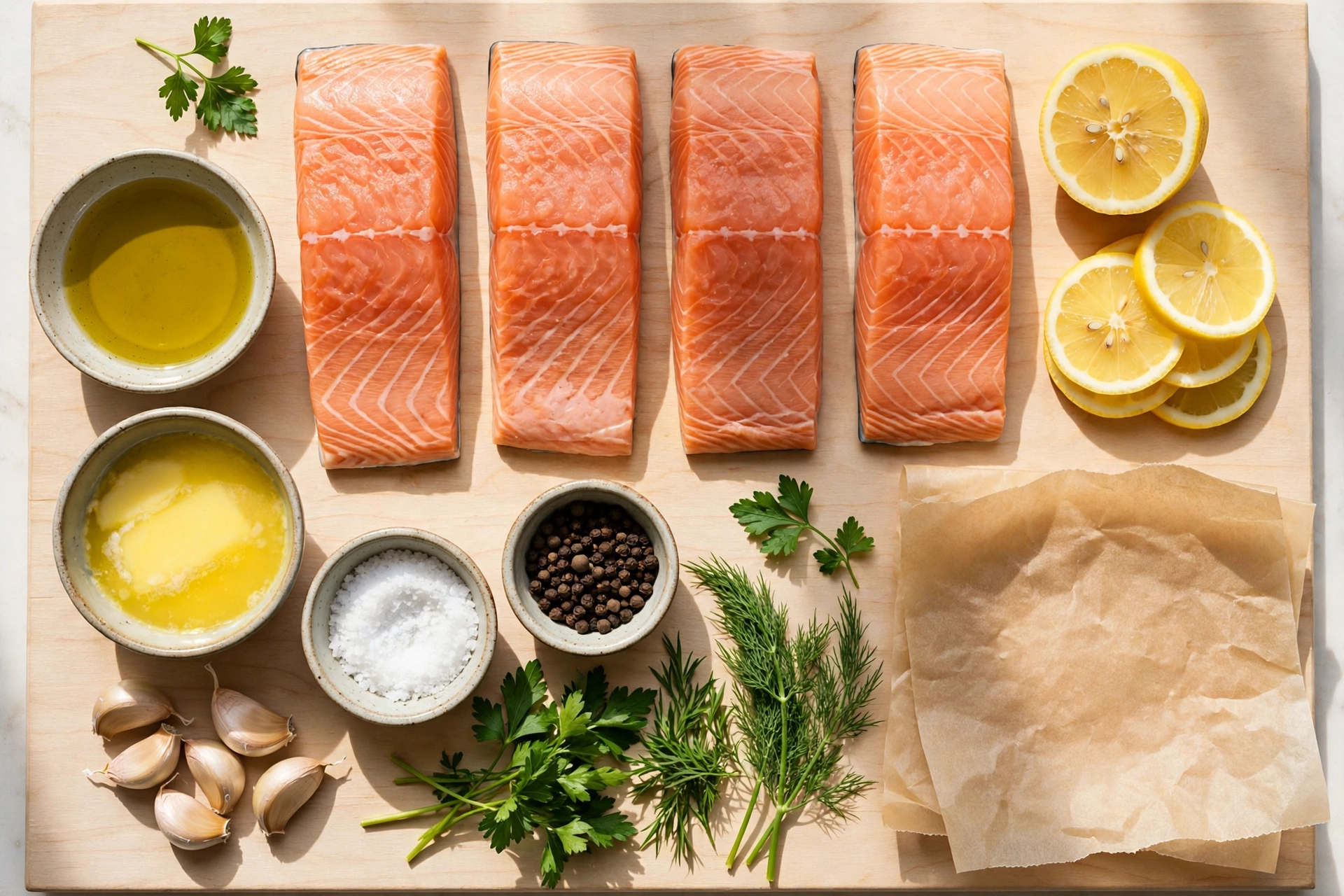
You only need 11 ingredients for this easy lemon herb baked salmon, and most of them are probably already in your kitchen. The salmon is the star, so pick fillets that are similar in size and thickness, so they all finish cooking at the same time.
- 4 salmon fillets (about 6 ounces each, 1 1/2 pounds total), skin on or off
- 3 tablespoons unsalted butter, melted
- 2 tablespoons olive oil
- 2 lemons, 1 juiced and zested, 1 thinly sliced, plus wedges for serving
- 4 garlic cloves, minced
- 1 teaspoon lemon zest
- 1 tablespoon fresh dill, chopped (or 1 teaspoon dried dill)
- 2 tablespoons fresh parsley, chopped, plus more for garnish
- 1 teaspoon dried oregano
- 3/4 teaspoon salt
- 1/2 teaspoon black pepper
Directions
Follow these 8 simple steps and you will have flaky, golden lemon herb baked salmon on the table in 25 minutes flat. One sheet pan, one small bowl, no fuss.
- Preheat the oven and prepare the pan. Preheat the oven to 400 degrees Fahrenheit. Line a rimmed sheet pan with parchment paper so the salmon does not stick and cleanup takes seconds. This takes about 2 minutes, and the oven will be fully hot by the time the fish is ready.
- Pat the salmon dry and season it. Place the salmon fillets skin-side down on the prepared pan, leaving a little space between them. Pat the tops dry with paper towels, which helps the sauce stick and the edges turn golden. Season evenly with the salt and black pepper. This takes about 3 minutes.
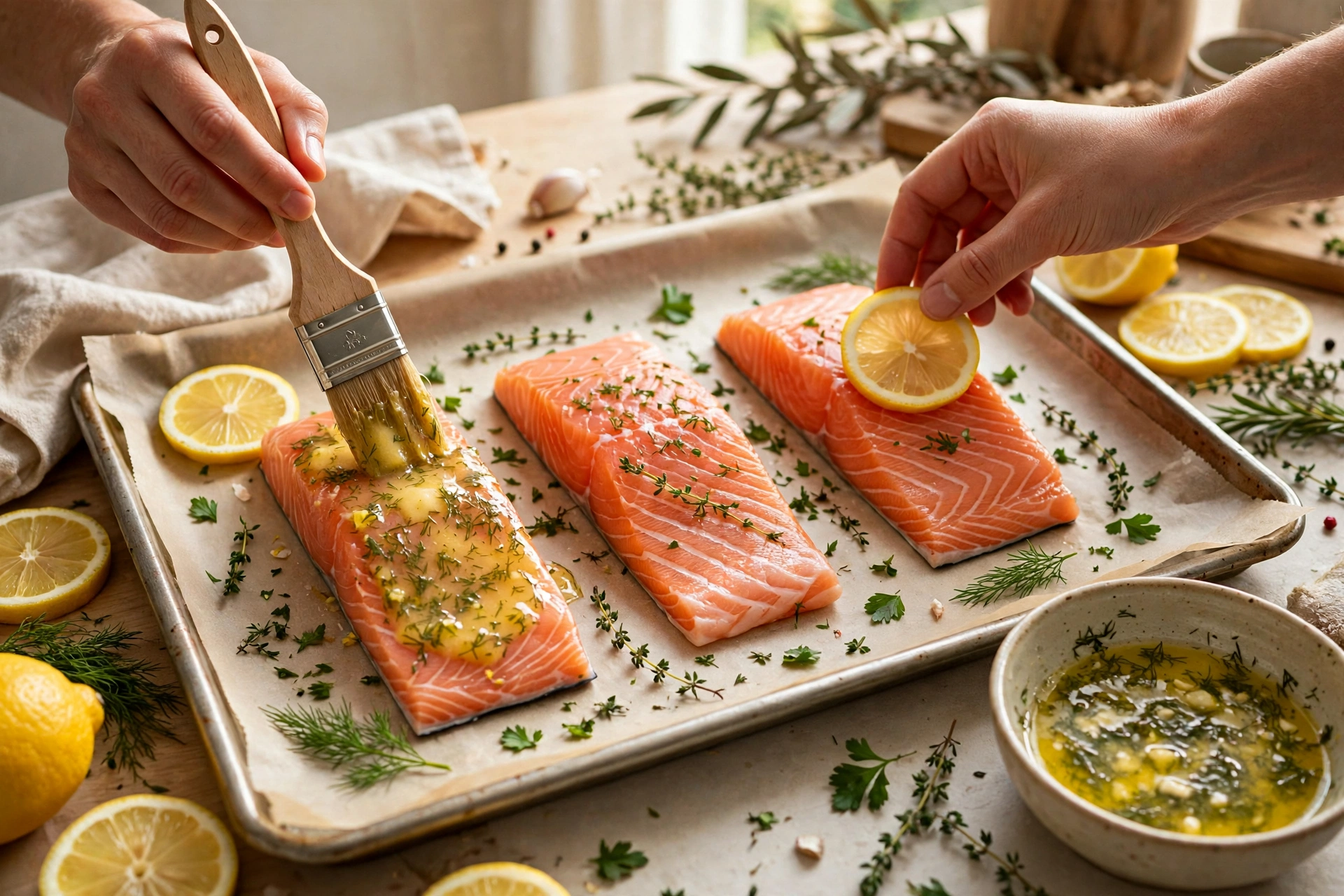
- Whisk the lemon herb butter sauce. In a small bowl, whisk together the melted butter, olive oil, lemon juice, lemon zest, minced garlic, and dried oregano until combined. The sauce should smell bright and garlicky, with the lemon coming through clearly. This takes about 2 minutes.
- Brush the sauce on and top with lemon slices. Brush the sauce generously over the top and sides of each fillet, using it all. Sprinkle the chopped dill over the fillets, then lay 2 thin lemon slices on top of each piece. The lemon slices will baste the fish as it bakes. This takes about 3 minutes.
- Bake until just done. Slide the pan into the hot oven and bake for 12 to 15 minutes. The salmon is done when it reaches 145 degrees Fahrenheit at the thickest part and flakes easily when you press it gently with a fork, with the flesh opaque all the way through and no translucent raw center. Most fillets about 1 inch thick are done at 12 minutes, which leaves the 3-minute rest inside the 15-minute cook time; very thick fillets may need the full 15 minutes in the oven, in which case the total time stretches a few minutes past 25.
- Rest the salmon for 3 minutes. Take the pan out of the oven and let the salmon rest right on the pan for 3 minutes. The fish keeps cooking gently from its own heat during this short rest, which finishes it perfectly, and the juices settle back into the flesh instead of running out when you cut into it. Do not skip the rest, because salmon cut straight from the oven loses moisture fast.
- Spoon the pan juices over and garnish. Spoon the golden pan juices from the sheet pan over each fillet, then sprinkle with the chopped fresh parsley. The pan juices are the best part of this recipe, so do not leave them behind. Serve the lemon slices on the fish, or squeeze them over the top for extra brightness.
- Serve warm with lemon wedges. Move the salmon to plates with a wide spatula, keeping the skin on the pan if it sticks, and serve right away with lemon wedges on the side. The salmon is best hot from the oven, when the edges are golden and the inside is tender and flaky.
Pro Tips for the Best Baked Salmon
These are the small details that take this salmon from good to the one everyone asks you to make again.
- Pick fillets of the same thickness. Salmon fillets that are all about 1 inch thick at the center will finish at the same time. If one fillet is much thinner than the rest, it will overcook while the thick one is still raw in the middle, so ask for center-cut fillets when you can.
- Pat the salmon dry before seasoning. A dry surface lets the butter sauce cling instead of sliding off, and it helps the top of the fish turn lightly golden. Wet salmon steams instead of roasting, and the sauce pools in the pan instead of coating the fish.
- Do not overbake, even by a minute. Salmon goes from perfectly flaky to dry and chalky fast, so start checking at 12 minutes. The fish is done when it flakes easily with a fork and the center is opaque, and it will keep cooking a little during the 3-minute rest, so pulling it out a touch early is safer than leaving it in too long.
- Use a rimmed sheet pan. A rimmed pan catches the butter sauce and pan juices as they bubble, so nothing drips onto the oven floor and smokes. A flat cookie sheet without a rim will let the juices run off, and you will lose the golden sauce you want to spoon over the fish.
- Zest the lemon before you juice it. A whole lemon is easy to zest, and a cut lemon is not. Zest first, then cut the lemon in half and squeeze it, and you will get a full teaspoon of zest with no waste and no frustration.
- Let the salmon rest before serving. Three minutes on the pan is all it takes for the juices to settle and the fish to finish cooking gently. Salmon cut straight from the oven sheds moisture onto the plate, while rested salmon stays juicy in every bite.
Common Mistakes to Avoid
Baked salmon is forgiving, but these are the mistakes that trip people up most often. All of them are easy to avoid once you know about them.
Overbaking the salmon
The most common salmon mistake is leaving it in the oven too long, and it is also the most damaging one. Salmon that is baked even 3 minutes past done turns dry, chalky, and tough, and no sauce can fully save it. Start checking at 12 minutes, use a fork to test whether it flakes easily, and remember that the fish keeps cooking during the 3-minute rest. When in doubt, pull it out early rather than late.
Skipping the pat-dry step
Salmon straight from the package is wet, and a wet fillet will not brown or hold sauce well. The butter sauce slides right off a damp surface, the top stays pale, and the fish steams instead of roasting. A quick pat with paper towels takes 30 seconds and makes a visible difference in both color and flavor.
Using bottled lemon juice
Bottled lemon juice tastes flat and slightly bitter compared with fresh lemons, and this recipe depends on bright, fresh lemon flavor. Fresh lemon juice and fresh zest are what make the sauce sing, and a bottled substitute will leave the salmon tasting dull. One fresh lemon gives you both the juice and the zest you need, so there is no reason to reach for the bottle.
Baking at too low a temperature
An oven set below 375 degrees Fahrenheit bakes salmon slowly, which dries it out before it finishes cooking. The fish needs the quick, hot bake at 400 degrees to stay juicy inside while the top turns golden. If your oven runs cool, use an oven thermometer to check it, and give the oven a full 10 minutes to reach temperature before the pan goes in.
Crowding the pan
Fillets packed tightly together trap steam between them, and steamed salmon is pale and soft instead of golden and flaky. Leave at least an inch of space between fillets so the hot air can circulate around each piece. If your fillets are large, use two sheet pans rather than squeezing them onto one.
Easy Variations and Substitutions
Once you have the basic recipe down, it is easy to make it your own. These are the variations our family reaches for most.
- Honey lemon salmon: Whisk 1 tablespoon of honey into the butter sauce before brushing it on. The honey caramelizes lightly in the oven and adds a gentle sweetness that balances the lemon beautifully.
- Spicy lemon herb salmon: Add 1/2 teaspoon of red pepper flakes to the sauce for a warm, gentle heat. The spice wakes up the lemon and garlic without overpowering the fish.
- Capers and lemon salmon: Scatter 2 tablespoons of drained capers over the fillets before baking. The salty, briny capers are a classic partner for lemon and salmon, and they add little pops of flavor in every bite.
- Different fresh herbs: Swap the dill for fresh thyme, tarragon, or basil, or use a mix of whatever herbs you have. Thyme adds an earthy note, tarragon brings a light anise flavor, and basil keeps it summery and sweet.
- Garlic butter without lemon: Leave out the lemon juice and zest, and add an extra tablespoon of butter and a pinch of smoked paprika instead. The salmon turns rich and savory, with a warm golden color from the paprika.
- Salmon with vegetables on the same pan: Toss asparagus spears or green beans in a little olive oil and salt, spread them around the salmon on the same sheet pan, and bake everything together. The vegetables cook in the same 12 to 15 minutes, and dinner is done on one pan.
- Dairy-free version: Swap the butter for 3 tablespoons of olive oil, so the sauce is all olive oil with the lemon, garlic, and herbs. The salmon stays just as moist and bright, and the flavor leans more Mediterranean.
If you love quick salmon dinners like this one, our Easy Creamy Tuscan Salmon wraps the same flaky fish in a rich sun-dried tomato cream sauce, and the Easy Honey Garlic Shrimp brings the same sweet and savory weeknight energy to the table in just 20 minutes. For another lemon and herb favorite, the Easy Lemon Herb Roasted Potatoes are the perfect golden side to serve right next to this salmon. Salmon is one of the most popular fish in the world, and you can read more about the different salmon species and where they come from on Wikipedia’s salmon page. If you are curious about the nutrition of the ingredients, the USDA FoodData Central database is the best place to look them up.
Storage and Make-Ahead
Baked salmon is best the evening you make it, when the edges are golden and the inside is tender and flaky. But it keeps well enough that you can absolutely make it ahead for busy lunches, as long as you store it the right way.
- In the fridge: Store leftover salmon in a covered container in the refrigerator for 3 to 4 days. Keep the lemon slices on top, because they help the fish stay moist, and spoon any leftover pan juices over the fillets before you close the lid.
- In the freezer: Freeze cooked salmon for up to 3 months. Let it cool completely, then wrap each fillet tightly in plastic wrap and place the wrapped fillets in a freezer bag. Thaw overnight in the fridge before reheating, and expect the texture to be slightly softer than fresh.
- Room temperature: Do not leave cooked salmon at room temperature for more than 2 hours. After serving, cool it quickly and move it to the fridge. This is a food-safety rule worth following every time, especially with fish.
- Reheating: Warm leftover salmon gently so it does not dry out. Heat it in a 275 degree Fahrenheit oven for about 10 minutes, covered loosely with foil, or microwave it at 50 percent power in 30-second bursts until just warm. A squeeze of fresh lemon wakes the flavor back up.
- Make-ahead sauce: The lemon herb butter sauce can be mixed up to 2 days ahead and kept covered in the fridge. Let it come back to room temperature for 10 minutes so it is pourable again, whisk it once, and brush it on as usual.
- Make-ahead prep: The salmon can be seasoned and brushed with sauce up to 4 hours ahead, covered, and kept in the fridge. Take the pan out 10 minutes before baking so the fish is not ice cold going into the oven, then bake as the recipe directs.
Serving Ideas
Lemon herb baked salmon is welcome almost anywhere, but it truly shines in a few settings.
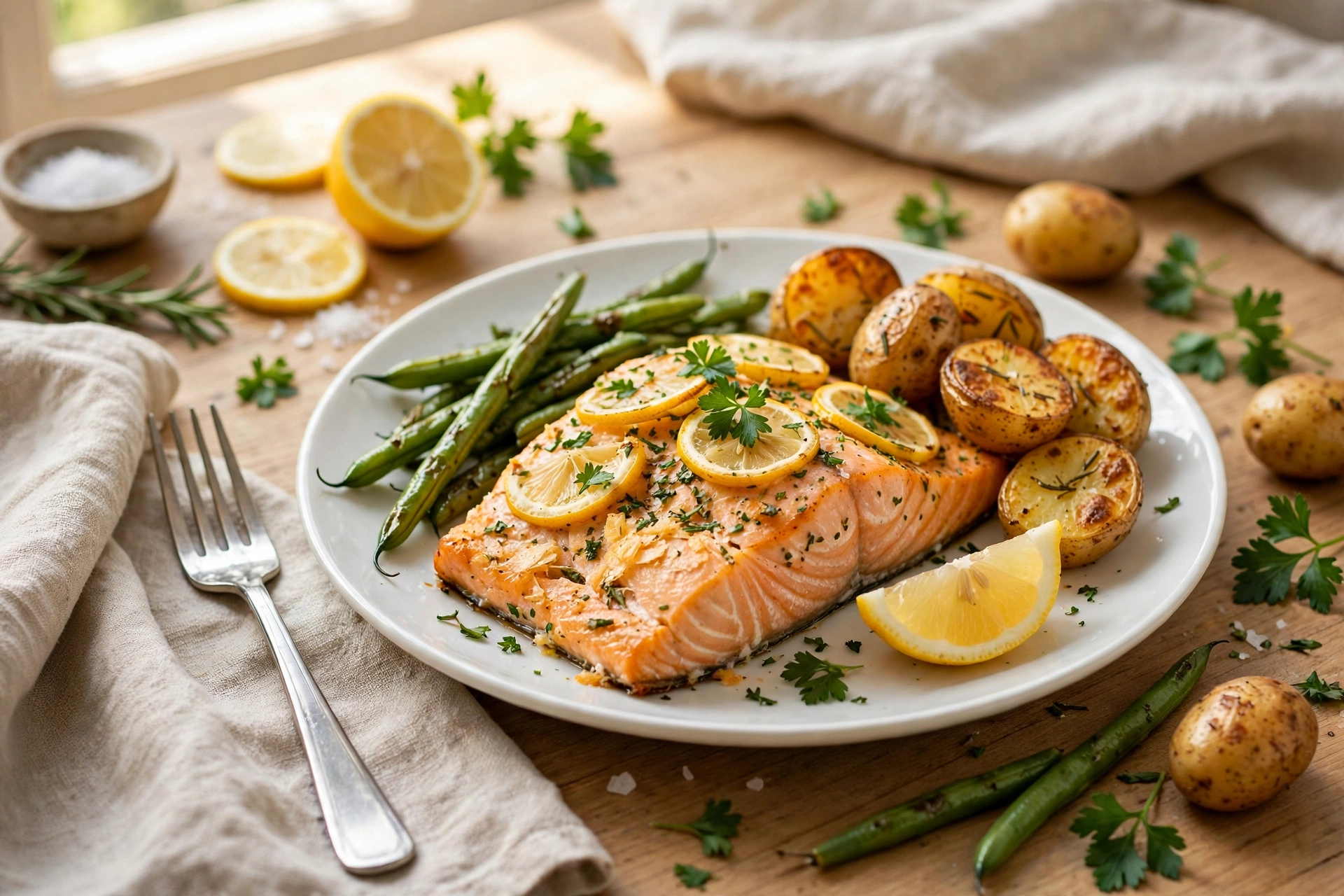
- With roasted potatoes and green beans: Golden roasted potatoes and crisp green beans are the classic partners for this salmon, and they soak up the lemon butter pan juices beautifully.
- Over fluffy rice: Serve the salmon over steamed rice with the pan juices spooned on top. The rice catches every drop of the lemon herb butter, and nothing goes to waste.
- Flaked into a salad: Let the salmon cool slightly, flake it into large pieces, and serve it over a green salad with cucumber, tomatoes, and a light vinaigrette. It makes a fresh, satisfying lunch.
- In a wrap or sandwich: Tuck cold leftover salmon into a warm wrap with lettuce, tomato, and a little yogurt sauce. It is one of the best packed lunches you will ever make.
- For a dinner party: Double the recipe on two sheet pans, garnish with extra fresh herbs and lemon wedges, and serve it family style in the middle of the table. It looks impressive, tastes like a restaurant meal, and takes almost no effort.
Frequently Asked Questions
How do I know when baked salmon is done?
Baked salmon is done when it reaches 145 degrees Fahrenheit at the thickest part and flakes easily when you press it gently with a fork, with the flesh opaque all the way through and no translucent raw center. At 400 degrees Fahrenheit, that usually takes 12 to 15 minutes for fillets about 1 inch thick, with most done at 12 minutes. Start checking at 12 minutes, and remember the fish keeps cooking during the 3-minute rest, so pulling it out a touch early is safer than leaving it in too long.
Can I use frozen salmon for this recipe?
Yes, you can use frozen salmon for this recipe, but thaw it fully first. Move the fillets to the fridge the night before and let them thaw overnight, then pat them very dry with paper towels before seasoning. Salmon that is still partly frozen bakes unevenly, with the outside drying out while the center stays cold, and extra moisture on the surface keeps the sauce from sticking. Never bake salmon straight from frozen for this recipe, because the timing and the texture will both be off.
Should I leave the skin on the salmon?
Yes, leaving the skin on is the best choice for baked salmon. The skin protects the flesh from the heat of the pan, helps the fillet hold its shape, and keeps the bottom moist while the top turns golden. After baking, the skin usually sticks to the parchment paper, so you can lift the fillet right off it with a spatula. If you prefer skinless salmon, the recipe still works, but watch the baking time closely, because skinless fillets can dry out a minute or two sooner.
What should I serve with lemon herb baked salmon?
Lemon herb baked salmon goes beautifully with roasted potatoes, green beans, asparagus, steamed rice, or a simple green salad. The pan juices are so good that the best side dishes are the ones that can soak them up, like fluffy rice or crusty bread. For a complete weeknight dinner, serve the salmon with roasted potatoes and green beans, and add a lemon wedge on every plate for an extra squeeze of brightness.
Rate this recipe
Be the first to rate it!