
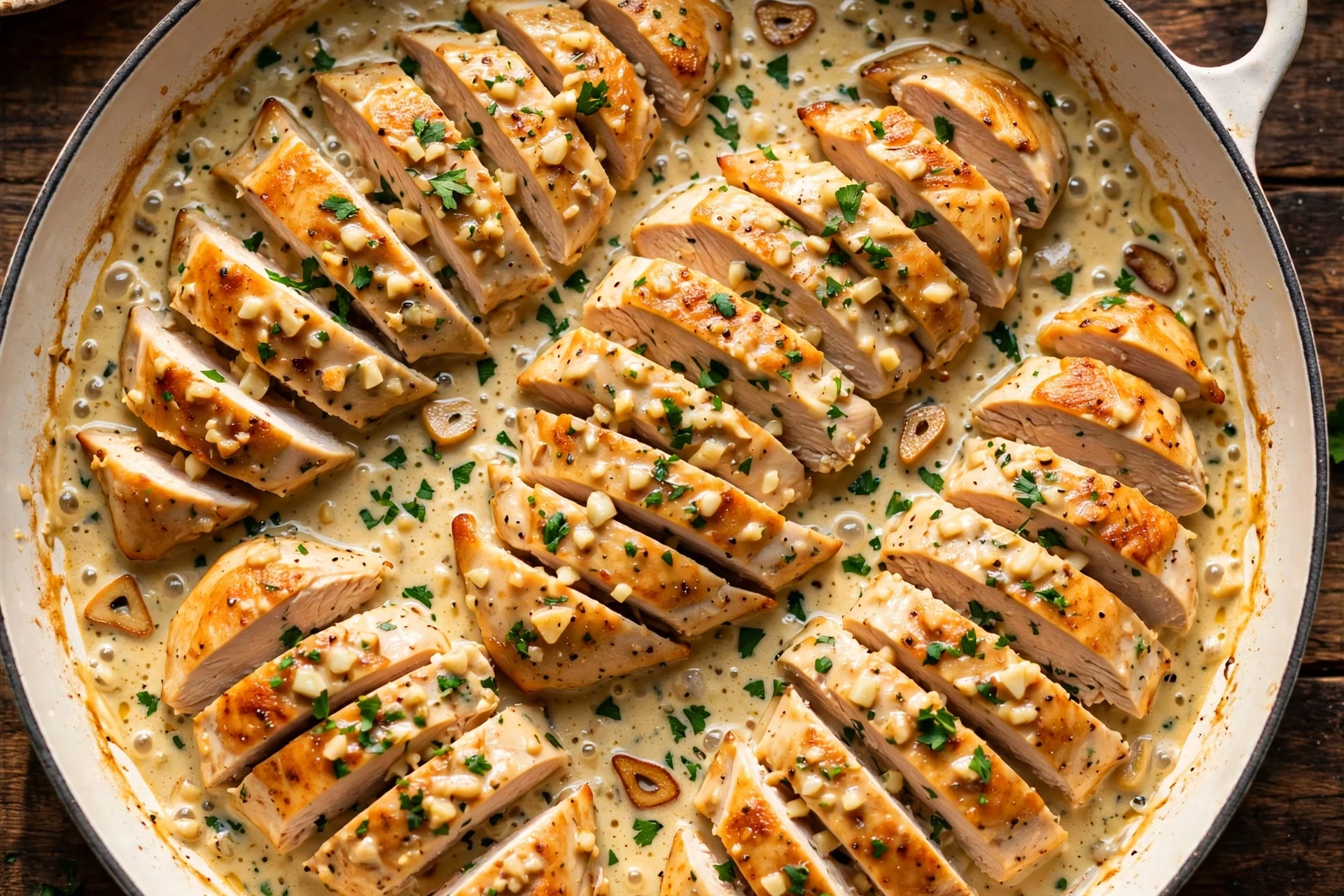
There is a particular kind of weeknight magic that happens when butter hits a hot pan, garlic goes in, and the whole kitchen suddenly smells like a little French bistro decided to move in for the evening. This easy creamy garlic chicken is exactly that kind of dinner. Golden seared chicken breasts rest in a silky garlic butter cream sauce that tastes like it simmered all afternoon, except the whole thing is on the table in 30 minutes, in one pan, with ingredients you probably already have. It is rich without being heavy, fancy enough for guests, and easy enough for a Tuesday when nobody has the energy for anything complicated.
What makes this recipe so beloved is the way the sauce comes together from the browned bits left behind by the chicken. You sear the chicken first until the outside turns deep golden, and those caramelized bits stuck to the pan become the foundation of the sauce. A splash of chicken broth lifts them straight off the pan, a handful of garlic softens in the butter until it smells sweet and nutty, and then the cream and parmesan melt in to make a sauce that coats the back of a spoon and clings to every slice of chicken. Nothing about it is fussy, and yet the result tastes like the kind of dish you would happily pay for at a restaurant.
This is a 30-minute dinner in the truest sense: 10 minutes of prep and 20 minutes of cooking, and the clock starts when you pick up the knife, not when dinner is already half made. The chicken cooks in the same pan as the sauce, so there is only one pan to wash, and the sauce is forgiving enough that a beginner can make it with confidence. Serve it over mashed potatoes, rice, or pasta, with something green on the side, and you have a complete family dinner that will have everyone asking for the recipe before the plates are even cleared.
If you love the kind of chicken dinner that feels like a warm hug, this one belongs in your regular rotation. It is the dinner to make when friends drop by unannounced, when the day has been long and everyone is hungry, or when you simply want something delicious without a sink full of dishes. Keep reading for the technique that keeps the sauce silky, the mistakes that can make it grainy, and all the easy swaps that let you make it your own.
Recipe at a Glance
Prep Time: 10 minutes | Cook Time: 20 minutes | Total Time: 30 minutes | Servings: 4 servings | Yield: 4 chicken breasts in creamy garlic sauce (about 4 cups of sauce and chicken)
Ingredients
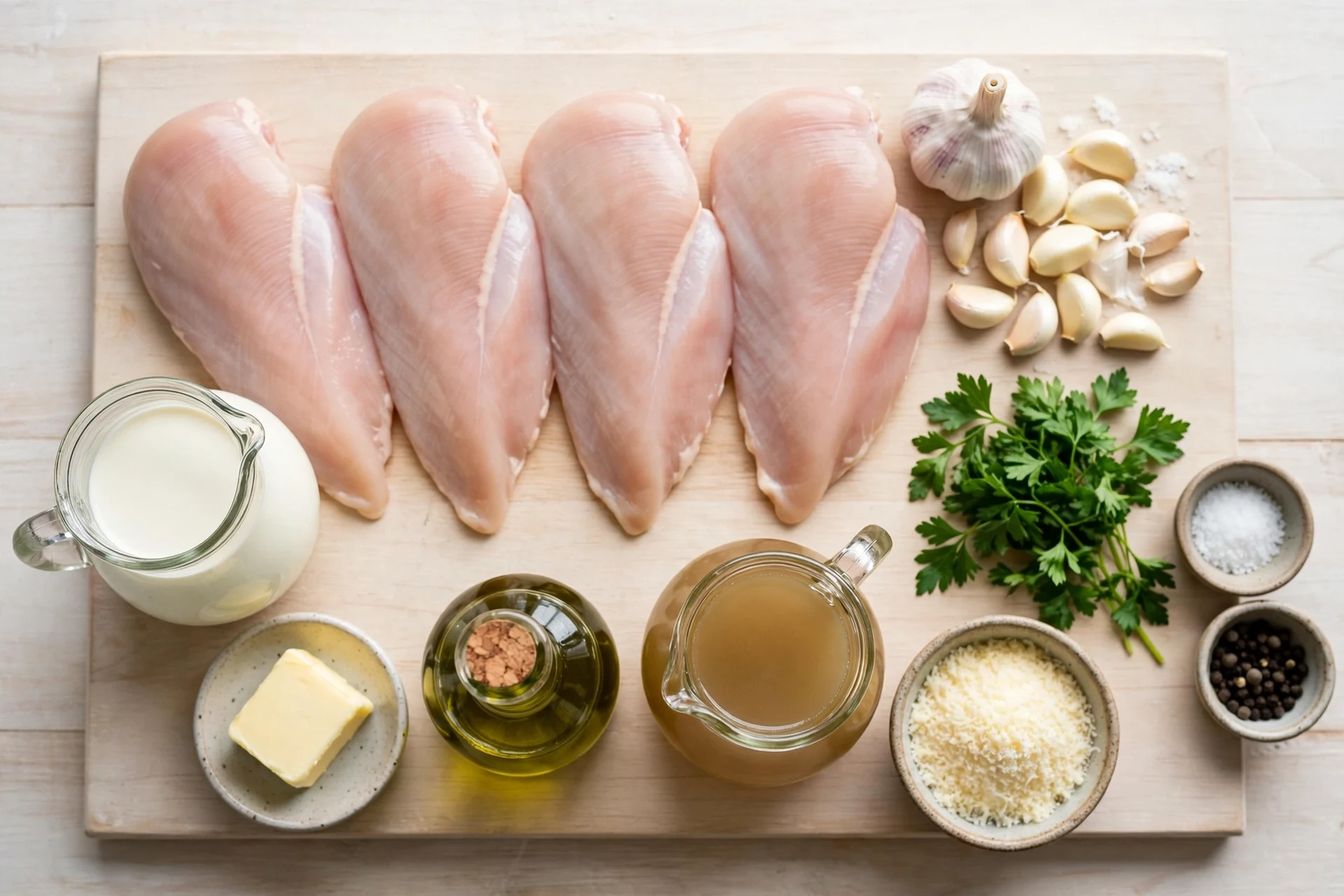
- 4 boneless, skinless chicken breasts (about 1 1/2 pounds total), pounded to an even 3/4-inch thickness
- 1 teaspoon kosher salt
- 1/2 teaspoon black pepper, freshly ground
- 1/2 teaspoon paprika
- 2 tablespoons olive oil
- 2 tablespoons unsalted butter
- 6 garlic cloves, minced (about 2 tablespoons)
- 1/2 cup low-sodium chicken broth
- 1 cup heavy cream
- 1/2 cup freshly grated parmesan cheese
- 1/2 teaspoon Italian seasoning
- 2 tablespoons fresh parsley, finely chopped, plus extra for serving
Directions
- Pat the chicken breasts dry with paper towels and pound them to an even 3/4-inch thickness between two sheets of plastic wrap or parchment. Season both sides generously with the salt, black pepper, and paprika. Dry chicken sears instead of steaming, and even thickness means every breast finishes cooking at the same time, so take the extra minute here.
- Heat the olive oil in a large skillet over medium-high heat until it shimmers. Lay the chicken breasts in the pan in a single layer, leaving a little space between them, and sear undisturbed for 5 minutes, until the underside is deep golden brown. Do not move the chicken around while it sears, because lifting it early tears the crust you are trying to build.
- Flip the chicken and sear the second side for 4 minutes. The chicken will not be fully cooked yet, and that is exactly right. Transfer the chicken to a clean plate and tent it loosely with foil. Check that the thickest part reads 165 degrees F (74 degrees C) on an instant-read thermometer later, after the chicken finishes in the sauce; the juices should run clear and there should be no pink in the center.
- Reduce the heat to medium and add the butter to the same skillet. When the butter melts and foams, add the minced garlic and cook for 30 seconds, stirring constantly, just until the garlic smells sweet and fragrant. Garlic burns quickly and turns bitter, so pull the pan off the heat for a moment if the garlic starts to color too fast.
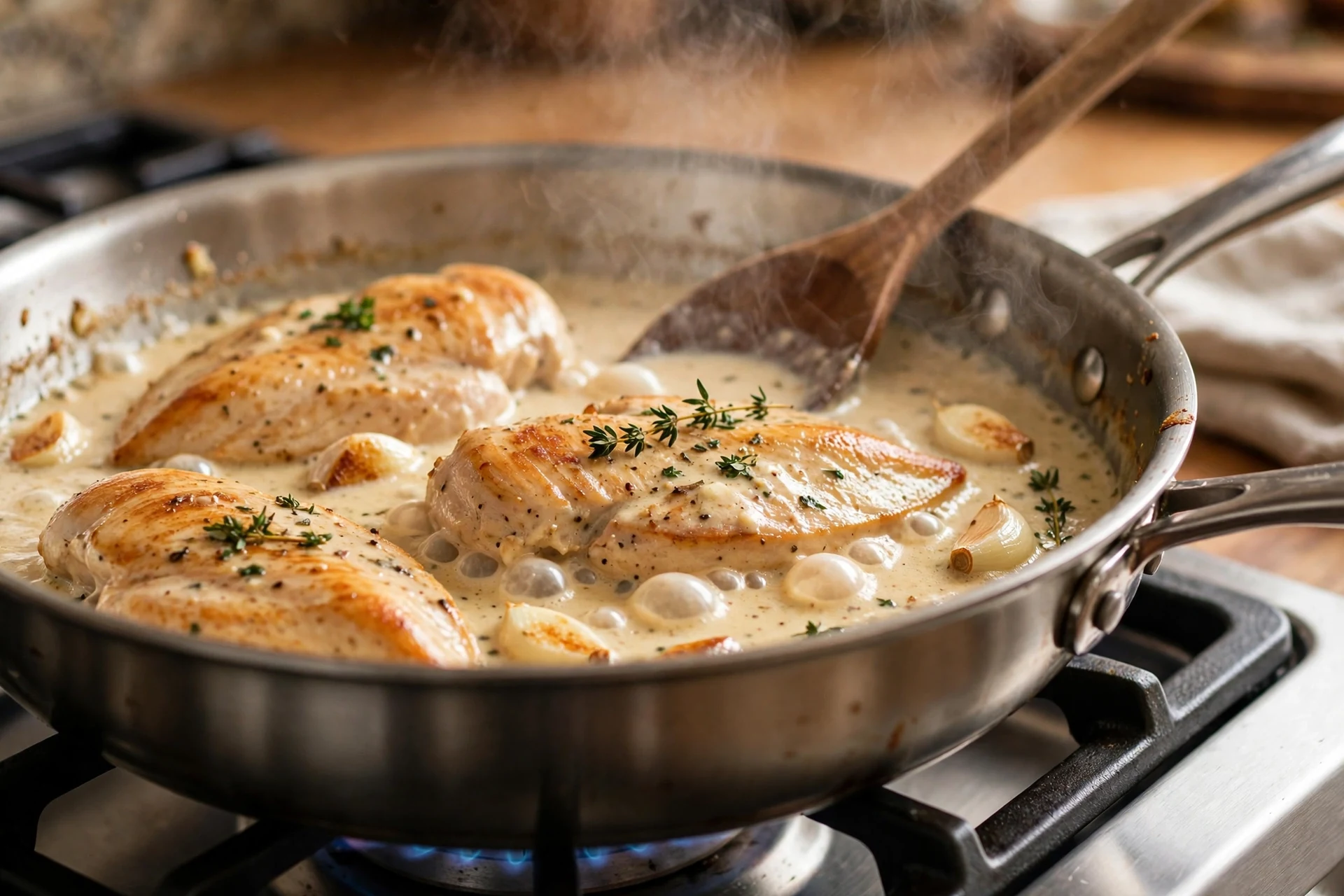
- Pour in the chicken broth and scrape the bottom of the pan with a wooden spoon to lift up all the golden browned bits. This is called deglazing, and those bits are pure flavor, so do not skip this step. Let the broth bubble for about 1 minute until it reduces slightly.
- Stir in the heavy cream and the Italian seasoning, then reduce the heat to medium-low and let the sauce simmer gently for 3 minutes. The sauce should bubble lazily around the edges and thicken just enough to coat the back of a spoon. Keep the heat gentle here, because a hard boil can make a cream sauce split.
- Sprinkle in the parmesan a little at a time, stirring after each addition until it melts completely into the sauce. Taste and adjust the salt and pepper. Slide the chicken breasts and any juices from the plate back into the pan, spoon sauce over the top, and simmer for 3 minutes more, until the chicken is cooked through to 165 degrees F (74 degrees C) and the sauce is glossy and clinging.
- Remove the pan from the heat and let the chicken rest in the sauce for 2 minutes. The rest lets the juices settle back into the meat so every slice stays moist. Scatter the chopped parsley over the top, slice the chicken against the grain if you like, and serve immediately with plenty of sauce spooned over each portion.
Why This Works
The secret of this easy creamy garlic chicken is that the sauce is built in layers, and every layer has a job. The sear comes first for a reason: when chicken hits a hot, well-oiled pan, the surface browns through the Maillard reaction, the same browning that makes toast taste better than plain bread and gives roast chicken its savory depth. That golden crust is not just color, it is flavor, and the browned bits left in the pan carry that flavor straight into the sauce when the broth goes in. This is why the chicken is seared before the sauce is made, never the other way around, and why the pan is never washed between the two steps.
Garlic goes in after the chicken comes out, and the timing matters just as much. Garlic cooked in butter turns sweet, mellow, and nutty in about 30 seconds, but left a minute too long it turns bitter and can ruin the whole sauce. Cooking it briefly in the butter, with the heat already lowered, blooms its flavor into the fat so the garlicky warmth spreads evenly through every spoonful of sauce instead of sitting in sharp little pockets. Garlic has been the backbone of savory cooking across countless cuisines for centuries, and this recipe lets it do exactly what it does best: make everything around it taste more like itself.
The cream and parmesan finish the sauce, and they work as a team. Heavy cream is rich in fat, and fat is what carries flavor to your tongue and gives the sauce its luxurious, velvety body. Parmesan does two jobs at once: it melts into the sauce to thicken it gently, and it adds a salty, savory depth that makes the garlic taste even more garlicky. The parmesan must be added off a hard boil and stirred in a little at a time, because parmesan clumps when it hits a violently boiling sauce. Stirred in gradually over gentle heat, it disappears into the cream and leaves the sauce smooth and glossy. A pinch of Italian seasoning ties the whole thing together with a faint herbal warmth that keeps the richness from feeling one-note.
Pounding the chicken to an even thickness is the quiet technique that makes the whole recipe reliable. Chicken breasts are naturally thick at one end and thin at the other, and without evening them out, the thin end dries out long before the thick end is safe to eat. At an even 3/4 inch, each breast cooks through in the same few minutes, the sear is even, and the chicken stays juicy. Resting the chicken in the sauce at the end does the final bit of work: the fibers relax, the juices redistribute, and the sauce clings to the meat instead of running off onto the plate.
Pro Tips
Start with chicken at room temperature for the best sear. Take the breasts out of the fridge 15 to 20 minutes before cooking and pat them very dry. Cold, wet chicken drops the temperature of the pan and steams instead of browning, and a pale, steamed chicken breast is the single most common reason this dish disappoints. A dry surface and a properly hot pan are the whole game.
Use a large skillet, at least 12 inches across, so the chicken has room. Crowded chicken releases moisture faster than the pan can evaporate it, and the breasts end up simmering in their own juices instead of searing. If your pan is smaller, sear the chicken in two batches and add a little more oil for the second batch. The extra few minutes are worth it for the golden crust.
Grate your own parmesan if you can. Pre-grated parmesan is coated with anti-caking agents that keep it from melting smoothly, and it can turn a silky sauce slightly gritty. A small wedge of parmesan and a box grater take less than a minute and make a visible difference in how glossy the sauce turns out. If pre-grated is all you have, stir it in very gradually over the lowest heat and give each handful time to melt before adding the next.
Let the sauce tell you when it is ready. A sauce that coats the back of a spoon, leaving a clean line when you run your finger through it, is thick enough. If it looks too thick, loosen it with a splash of chicken broth or cream, a tablespoon at a time. If it looks too thin, let it simmer another minute or two over gentle heat before the chicken goes back in. The sauce will thicken a little more as it sits, so pull it off the heat when it is just a touch looser than you want it on the plate.
Slice the chicken against the grain for the most tender bite. Look for the fine lines running through the meat and cut across them, not along them. Short fibers chew more easily than long ones, and this one small habit makes a noticeable difference, especially if you are serving the chicken sliced over pasta or rice.
When you want to look up exactly what is in the ingredients you are cooking with, the USDA FoodData Central database is a reliable reference for chicken, cream, and parmesan. It is the same source professional recipe developers turn to when they want solid, trustworthy food facts rather than guesswork.
Common Mistakes and How to Fix Them
Moving the chicken too soon. If you try to flip the chicken and it sticks to the pan, it is not ready. A proper sear releases on its own once the crust has formed. Wait another minute and try again. Forcing it tears the golden surface right off the meat.
Burning the garlic. Garlic goes from fragrant to bitter in seconds. If the garlic turns dark brown or smells sharp and acrid, the sauce will carry that bitterness, and there is no fixing it. Start over with a fresh knob of butter and fresh garlic, it takes less than a minute, and it is far better than serving a bitter sauce. Keep the heat at medium and stir constantly during those 30 seconds.
Boiling the cream sauce hard. A rolling boil can cause a cream sauce to split into an oily, grainy mess. If your sauce splits, take the pan off the heat immediately and whisk in a tablespoon of cold cream or a splash of broth, whisking constantly until it comes back together. Prevention is easier than the cure, so keep the simmer gentle, with small lazy bubbles around the edges rather than a vigorous boil.
Overcooking the chicken. Chicken breasts go from juicy to dry in a very short window. The sauce gives you some protection, because the chicken finishes gently in liquid, but it is not a magic shield. Use an instant-read thermometer and pull the chicken the moment the thickest part reaches 165 degrees F (74 degrees C). Remember that the chicken keeps cooking for a minute or two from residual heat while it rests, so do not chase a higher number.
Skipping the rest. Cutting into the chicken the second it leaves the pan lets the juices run out onto the cutting board instead of staying in the meat. Two minutes of rest in the warm sauce is all it takes, and the difference in juiciness is easy to taste.
Substitutions
Chicken thighs make a wonderful swap if you prefer dark meat. Use 4 boneless, skinless thighs, about 1 1/2 pounds total, and sear them the same way, giving them an extra minute or two per side, since thighs are a little thicker and more forgiving. They finish in the sauce at the same 165 degrees F (74 degrees C), and their extra richness suits the creamy sauce beautifully.
Half-and-half can stand in for heavy cream in a pinch, but the sauce will be thinner and a little more delicate. To help it along, simmer it a minute longer before adding the parmesan, and stir in an extra tablespoon or two of parmesan to thicken it. Whole milk is not recommended here, because it is far more likely to curdle when it meets the heat and the parmesan. If you need a lighter sauce, half-and-half is the safer compromise.
No fresh garlic on hand? Use 2 teaspoons of garlic powder, stirred in with the Italian seasoning, instead of the minced cloves. The flavor is milder and less bright than fresh garlic, so add an extra pinch and taste the sauce before serving. Jarred minced garlic works too; use the same 2 tablespoons and cook it for the same 30 seconds, watching it closely since it can brown faster than fresh.
For a dairy-free version, use a good-quality unsweetened oat cream or cashew cream in place of the heavy cream, plant-based butter for the butter, and a dairy-free parmesan-style cheese or 2 tablespoons of nutritional yeast for the cheesy depth. The sauce will taste a little different, lighter and nuttier, but it still comes together beautifully. Check that your plant cream is one that tolerates simmering without splitting.
Fresh herbs are flexible here. If parsley is not in the fridge, a little chopped fresh basil gives the dish a softer, sweeter finish, and fresh thyme adds a woodsy note that suits the garlic perfectly. Dried herbs work in a smaller amount: use 1 teaspoon of dried parsley stirred into the sauce with the Italian seasoning, and save the fresh garnish for the end if you have any herbs at all.
Storage and Make-Ahead
Leftovers keep beautifully, which is one more reason this easy creamy garlic chicken earns a spot in the weekly rotation. Let the chicken and sauce cool to room temperature, but never leave it sitting out for more than 2 hours, then transfer it to an airtight container and refrigerate for 3 to 4 days. The sauce will thicken and set as it chills, which is completely normal.
To reheat, warm the chicken gently in a skillet over low heat with a splash of chicken broth or cream, spooning the sauce over the top as it warms. Low and slow is the rule: a microwave on high or a hard boil on the stove can split the sauce and dry out the chicken. Reheat only until the chicken is hot all the way through and the sauce is smooth again, about 5 to 7 minutes. If the sauce looks a little thick, a tablespoon of broth at a time brings it back to a silky consistency.
Freezing is possible but comes with an honest caveat. Cream sauces do not freeze as gracefully as tomato sauces, because the cream can separate slightly when thawed. If you do freeze it, use a freezer-safe airtight container, freeze for up to 2 months, and thaw overnight in the fridge. Reheat very gently over low heat with a splash of fresh cream, whisking the sauce as it warms, and it will come back together well enough for a weeknight dinner, though the texture will never be quite as silky as the day it was made. For the best results, freeze the cooked chicken in the sauce rather than freezing the sauce on its own.
For make-ahead planning, the chicken can be seasoned and pounded the night before and kept covered in the fridge, which makes the actual cooking even faster the next day. The sauce is best made fresh, since it only takes a few minutes once the chicken is seared, and a freshly made cream sauce is always silkier than a reheated one. If you are cooking for guests, you can sear the chicken up to an hour ahead, hold it tented in foil, and finish the sauce and the final simmer just before serving.
Serving Ideas
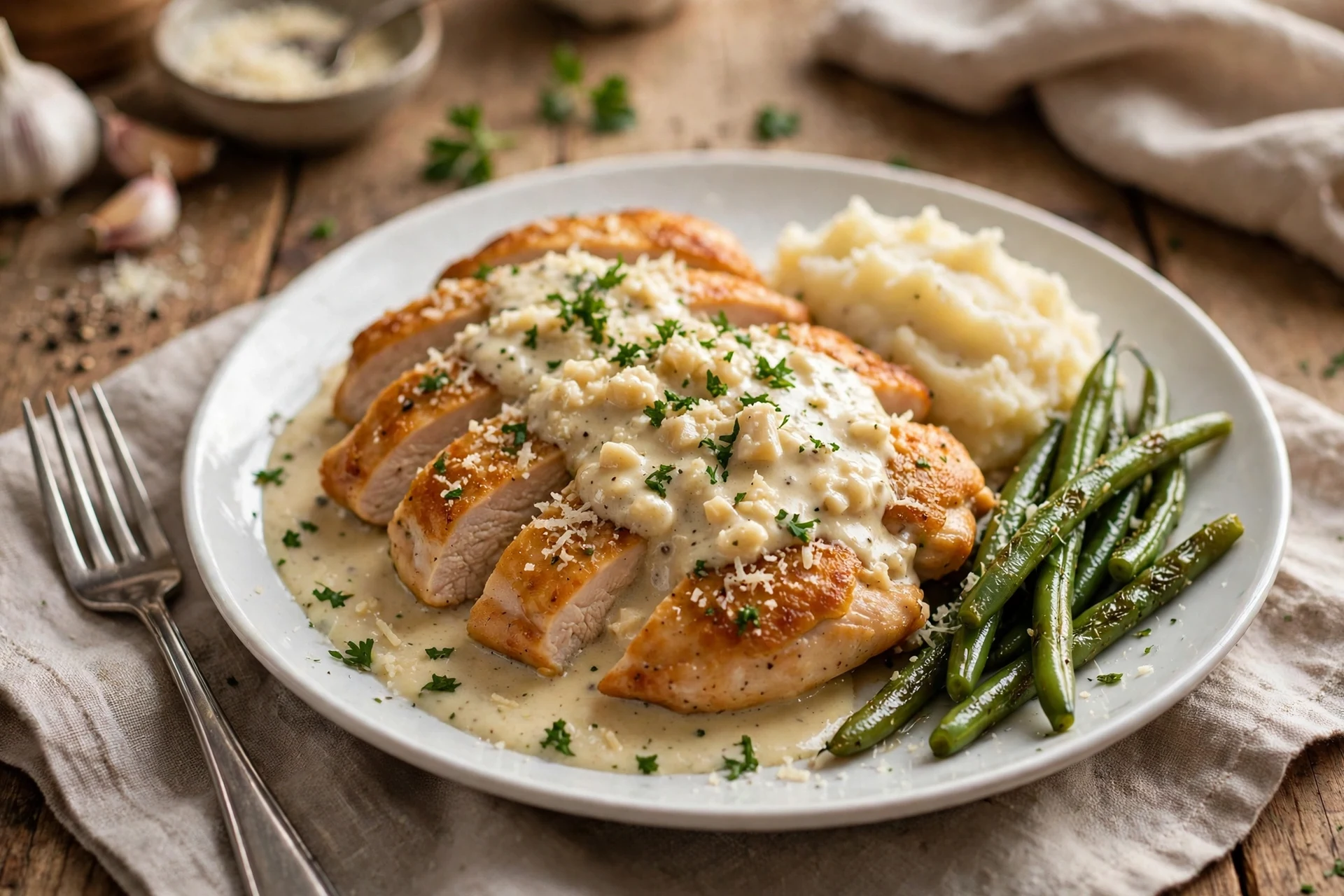
This easy creamy garlic chicken is happiest served with something that soaks up the sauce, because leaving that sauce behind in the pan would be a small tragedy. Buttery mashed potatoes are the classic partner: a spoonful of potatoes, a sliced chicken breast on top, and a generous ladle of sauce over everything. Buttered egg noodles or fettuccine are just as good, twirled up with the creamy garlic sauce clinging to every strand.
For a lighter plate, serve the chicken with fluffy white rice or a simple cauliflower mash, plus a green vegetable that cuts through the richness. Steamed green beans, roasted broccoli, or a crisp green salad with a sharp lemon dressing all work beautifully. A hunk of crusty bread for mopping up the sauce is never a bad idea, and a glass of something cold and sparkling turns an ordinary Tuesday into a little occasion.
For a dinner party, slice the chicken and fan it over a platter of pasta, spoon the sauce over the whole thing, and shower it with extra parmesan and parsley at the table. It looks generous and abundant, it serves easily, and it lets everyone help themselves. If you enjoy bright, citrusy chicken dinners, the easy lemon herb roasted chicken is a wonderful contrast for another night. For a different kind of weeknight luxury, the easy creamy Tuscan salmon uses the same one-pan creamy sauce idea with flaky salmon, and the easy honey garlic shrimp is the 20-minute answer for nights when even 30 minutes feels like too much.
Frequently Asked Questions
Can I use chicken thighs instead of chicken breasts?
Yes, boneless skinless chicken thighs work beautifully in this recipe. Use 4 thighs, about 1 1/2 pounds total, and sear them for 6 minutes on the first side and 5 minutes on the second side, since thighs are a little thicker. They finish in the sauce the same way, and they are done when the thickest part reaches 165 degrees F (74 degrees C) with clear juices and no pink in the center. Thighs stay extra juicy, so they are a great choice if you often find chicken breasts dry out.
Can I make creamy garlic chicken ahead of time?
Yes, you can make this creamy garlic chicken up to 3 days ahead and store it in an airtight container in the fridge. Reheat it gently in a skillet over low heat with a splash of chicken broth or cream, about 5 to 7 minutes, until hot all the way through. Do not reheat it on high heat or boil the sauce hard, because the cream sauce can split. The chicken can also be seasoned and pounded the night before, then cooked fresh the next day in 30 minutes.
What should I serve with creamy garlic chicken?
Creamy garlic chicken is best served with something that soaks up the sauce, such as buttery mashed potatoes, buttered egg noodles, fettuccine, or fluffy white rice. Add a green vegetable like steamed green beans, roasted broccoli, or a crisp green salad with lemon dressing to balance the richness. Crusty bread for mopping up the sauce is always a good idea, and the whole meal comes together in 30 minutes.
How do I keep the cream sauce from splitting?
Keep the heat gentle and never let the cream sauce boil hard. Once the cream goes in, reduce the heat to medium-low so the sauce simmers with small lazy bubbles, and stir the parmesan in a little at a time off a hard boil. If the sauce does split, take the pan off the heat right away and whisk in a tablespoon of cold cream or a splash of chicken broth until it comes back together. Using heavy cream rather than milk also makes splitting much less likely.
Rate this recipe
Be the first to rate it!