
There are weeknights when dinner needs to happen fast, and then there are weeknights when dinner needs to happen fast and still taste like something you actually wanted to eat. This easy veggie fried rice is the answer to both. It takes 25 minutes from an empty wok to a steaming bowl, it uses the lonely container of day-old rice sitting in the fridge, and it turns a handful of ordinary vegetables into a golden, garlicky, soy-kissed lunch that disappears faster than you can set the table.
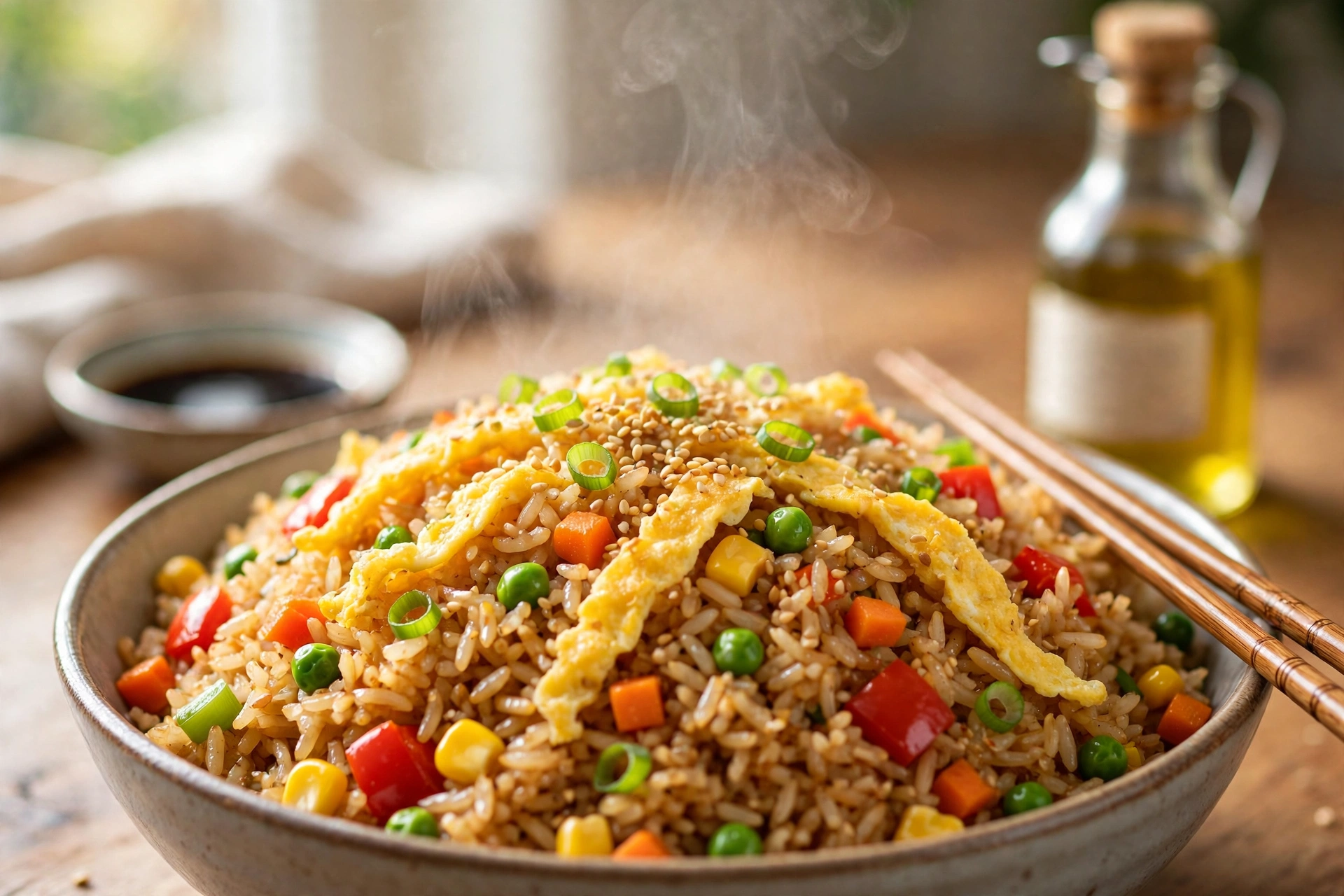
Picture it: fluffy rice grains, each one separate and lightly crisped at the edges, tossed with sweet carrots, bright green peas, sunny corn kernels, and ruby-red bell pepper, ribbons of golden scrambled egg folded all through it, and a shower of sliced green onions and toasted sesame seeds on top. A drizzle of sesame oil at the end gives it that warm, nutty aroma that makes the whole kitchen smell like your favorite takeout spot, except you made it yourself, in one wok, with vegetables you chose.
What makes this one special is that it is built on the one rule every great fried rice follows: cold, day-old rice. Fresh, warm rice is soft and steamy, and it turns to mush the moment it hits the wok. Day-old rice has dried out just enough in the fridge that the grains stay separate, fry up golden, and soak up the soy sauce without going soggy. That is the whole secret, and once you know it, you will never throw away leftover rice again. Four servings, one wok, and a lunch that tastes like you planned it all along.
Recipe at a Glance
- Prep Time: 10 minutes
- Cook Time: 15 minutes
- Total Time: 25 minutes
- Servings: 4 servings (about 6 cups)
- Yield: 4 servings, about 1 1/2 cups each
- Course: Lunch, Quick Dinner
- Cuisine: Asian-Inspired, Vegetarian
- Keyword: easy veggie fried rice, 25-minute fried rice, vegetarian fried rice
Why This Recipe Works
A great fried rice is not about a long ingredient list. It is about three small technique choices that make a huge difference, and once you understand them, you will use them in every stir-fry you make from here on out.
First, day-old rice fries, fresh rice steams. Cooked rice that has spent a night in the fridge loses surface moisture, so the grains stay separate in the hot wok instead of clumping into a sticky mass. When each grain is free, the hot oil can crisp its edges and the soy sauce can coat it evenly, which is how you get that golden, restaurant-style fried rice instead of a soft, pale pile. Fried rice has been the clever cook’s answer to leftover rice for centuries, and the day-old rule is the reason the classic versions taste so good. If you only have freshly cooked rice, spread it on a baking sheet and chill it in the freezer for 20 minutes, or fan it on a tray until it is completely cool and dry to the touch. The same trick is why our 15-Minute Chicken Fried Rice works so well with leftover rice too, and it is the single most important thing in this whole recipe.
Second, a screaming-hot wok and a little patience. Fried rice needs real heat. The wok should be hot enough that the oil shimmers and the garlic sizzles the second it lands, and the rice should sit undisturbed for a minute at a time between stirs so the grains touching the metal get a chance to crisp and brown. Constant stirring is the enemy here: it cools the wok down and steams the rice instead of frying it. Let it sit, listen for the sizzle, then toss and let it sit again. That rhythm is what builds the toasty, slightly smoky flavor that makes fried rice taste like fried rice.
Third, seasoning in the right order. The soy sauce goes in with the rice, so it has time to coat every grain and caramelize just a little against the hot wok. The sesame oil goes in last, off the heat, because it is a finishing oil, not a cooking oil: its nutty aroma is delicate and burns off if it cooks too long. The green onions go in at the very end too, so they stay bright and fresh instead of wilting into the rice. Small order, big difference.
Vegetables are the quiet heroes here as well. Carrots bring sweetness, peas bring little pops of green, corn brings sunny sweetness, and red bell pepper brings color and a gentle crunch. According to USDA FoodData Central, these everyday vegetables are good sources of fiber, vitamin A, and vitamin C, so a bowl of this fried rice pulls more than its weight nutritionally. Grab your wok and that container of leftover rice, and let us make the fastest lunch of the week.
Ingredients
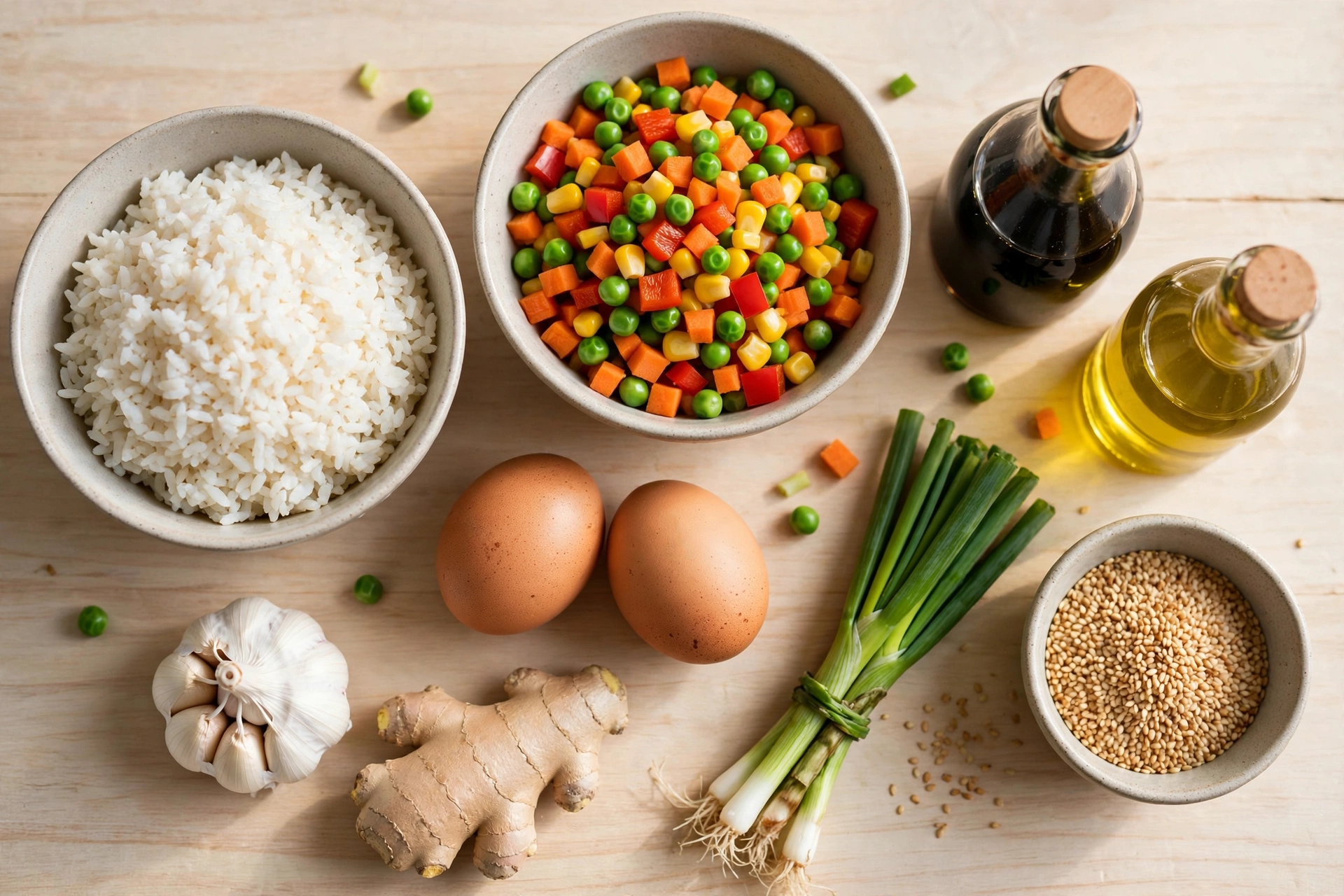
- 3 cups cooked day-old white rice, chilled (about 1 cup uncooked)
- 2 tablespoons vegetable oil, divided
- 2 large eggs, lightly beaten
- 3 cloves garlic, minced
- 1 teaspoon fresh ginger, grated
- 1/2 cup carrots, diced small
- 1/2 cup frozen peas
- 1/2 cup frozen corn kernels
- 1/2 cup red bell pepper, diced
- 3 tablespoons soy sauce (low-sodium works well)
- 1 teaspoon sesame oil
- 2 green onions, thinly sliced
- 1 tablespoon toasted sesame seeds
- 1/4 teaspoon black pepper
- Pinch of red pepper flakes (optional, for a little heat)
Directions
- Scramble the eggs (2 minutes). Heat 1 tablespoon of the vegetable oil in a large wok or wide skillet over medium-high heat. Pour in the beaten eggs and let them sit for about 20 seconds, then scramble them gently with a spatula into soft ribbons. Cook until the eggs are fully set and firm, with no runny or wet spots, about 2 minutes. Scoop the eggs out onto a plate and set them aside. Wiping the wok is not necessary, those little golden bits are flavor.
- Wake up the garlic and ginger (1 minute). Add the remaining 1 tablespoon of oil to the same wok and turn the heat up to high. When the oil shimmers, add the minced garlic and grated ginger and stir constantly for about 1 minute, just until fragrant. Do not let the garlic brown, because browned garlic turns bitter fast and there is no hiding it in fried rice.
- Stir-fry the vegetables (4 minutes). Add the diced carrots, peas, corn, and red bell pepper to the wok. Stir-fry for about 4 minutes, until the vegetables are tender-crisp and bright, with the carrots just soft enough to bite through easily. If you are using frozen peas and corn, they will thaw and cook in this step, no need to defrost them first. A splash of water, no more than a tablespoon, helps if anything starts to stick.
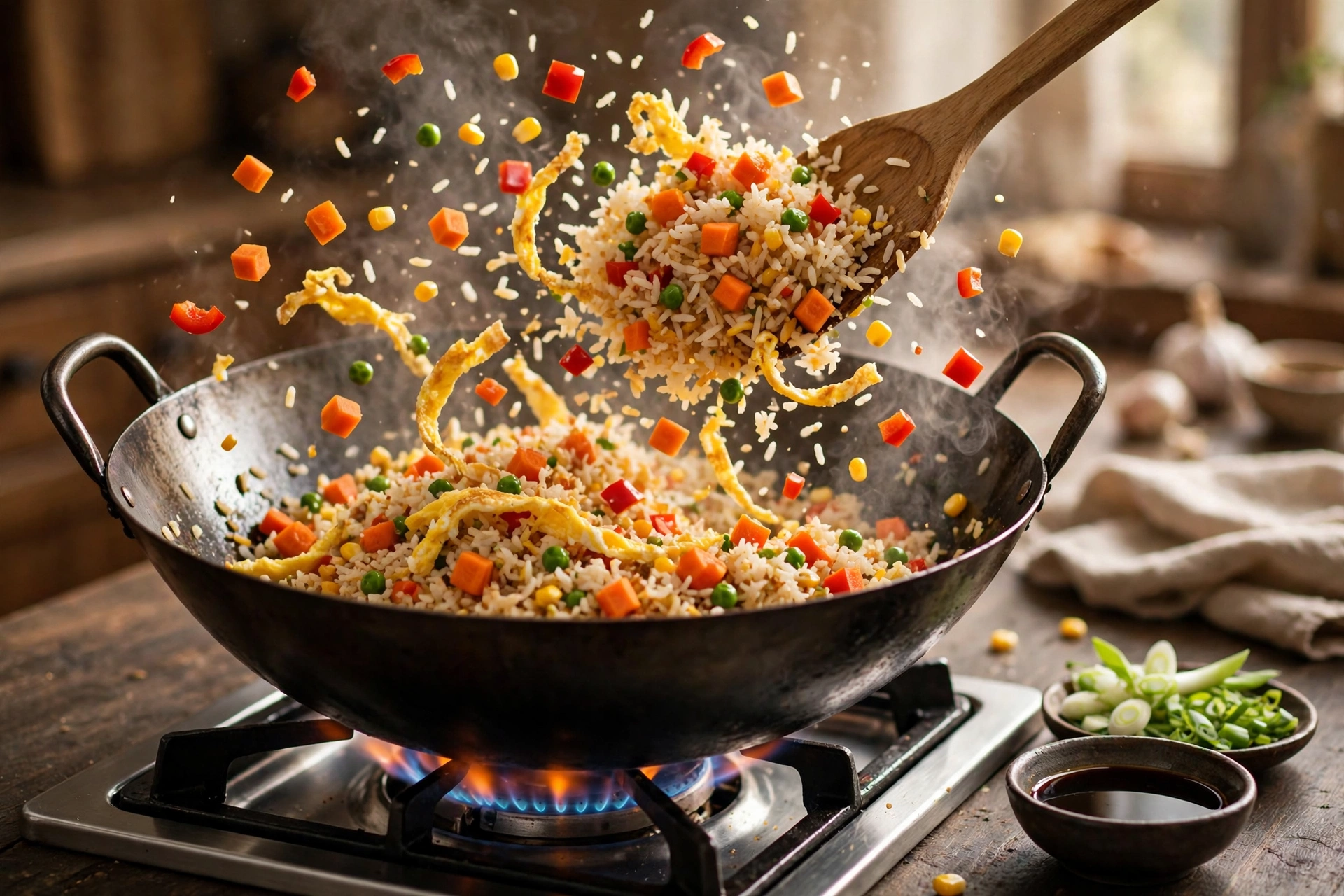
- Add the rice and soy sauce (6 minutes). Add the cold day-old rice to the wok, breaking up any clumps with your spatula or your fingers as it goes in. Pour the soy sauce evenly over the rice and toss everything together. Now let the rice sit undisturbed for about 1 minute so the grains touching the hot wok crisp and turn golden, then toss, then let it sit again. Repeat for about 6 minutes total, until the rice is heated through, lightly golden in spots, and smells toasty.
- Fold everything back together (2 minutes). Return the scrambled eggs to the wok and add the black pepper and red pepper flakes if you are using them. Toss gently for about 2 minutes, breaking the egg ribbons into bite-size pieces as you go, until everything is evenly mixed and steaming hot. Take the wok off the heat and drizzle the sesame oil over the top, then toss once more so the nutty aroma coats every grain.
- Serve it hot. Spoon the fried rice into warm bowls and top each one with sliced green onions and a sprinkle of toasted sesame seeds. Serve right away, while the rice is still steaming and the vegetables are bright and crisp. Extra soy sauce and a bottle of sriracha on the table let everyone season their own bowl, which is half the fun.
Pro Tips
Cold rice is non-negotiable. Warm, freshly cooked rice is soft and full of steam, and it will turn to mush in the wok no matter how good your technique is. Day-old rice from the fridge is the gold standard. If you forgot to plan ahead, cook the rice, spread it thin on a baking sheet, and chill it in the freezer for 20 minutes, or fan it on a tray until it is cool and dry to the touch. It will never be quite as good as overnight rice, but it will be close.
Break up the clumps before the rice hits the wok. Cold rice loves to stick together in solid blocks, and a block of rice in a hot wok cooks unevenly. Use your fingers or the back of a spoon to break the rice into individual grains while it is still in the bowl. It takes thirty seconds and it is the difference between golden, separate grains and a sad rice pancake.
Use the biggest wok or skillet you own. Fried rice needs space. A crowded wok steams instead of frying, because the rice piles up and the heat cannot reach the middle. If your wok is small, cook in two batches. It takes a few extra minutes, but the rice will actually fry instead of just getting warm, and the difference in texture is enormous.
Keep everything ready before you turn on the heat. A stir-fry moves fast, and there is no time to chop a pepper while the garlic is browning. Measure the soy sauce, slice the green onions, beat the eggs, and have every ingredient within arm’s reach before the wok gets hot. Cooks call this mise en place, and for a 15-minute cook time, it is not a luxury, it is the whole plan.
Taste before you add more salt. Soy sauce is salty, and different brands vary a lot. Three tablespoons is the right amount for most low-sodium soy sauces, but taste a spoonful after the rice is fried and add another teaspoon only if it needs it. The sesame seeds and green onions on top add flavor without salt, so let them do some of the work.
Common Mistakes and How to Fix Them
Using fresh, warm rice. This is the most common fried rice mistake, and it is the one that ruins the texture completely. Warm rice is soft and steamy, and it clumps and turns mushy in the wok. The fix is planning: use rice that has spent a night in the fridge, or spread fresh rice on a baking sheet and chill it in the freezer for 20 minutes until it is cold and dry. There is no shortcut that works as well as cold rice.
A wok that is not hot enough. If the wok is only warm, the rice steams instead of frying, and you end up with pale, soft rice that tastes boiled. The fix is heat and patience: let the wok get hot enough that the oil shimmers before anything goes in, and let the rice sit undisturbed for a full minute between tosses so the grains touching the metal can crisp and brown.
Overcrowding the wok. Too much rice in a small pan drops the temperature and traps steam, which is the enemy of crispy grains. The fix is simple: use your largest wok or skillet, and if you are doubling the recipe, cook in two batches. It takes a few extra minutes, but the rice will fry properly instead of steaming.
Adding the sesame oil too early. Sesame oil is a finishing oil with a delicate, nutty aroma, and it burns off if it cooks for more than a minute or two. The fix is to drizzle it in at the very end, off the heat, and toss once. You will smell the difference immediately: warm, toasty, and unmistakably sesame.
Eggs that are overcooked or undercooked. Eggs cooked until rubbery make dry little nuggets, and eggs that are still runny are not safe to fold into finished rice. The fix is to scramble them separately first, cooking just until they are fully set and firm with no wet spots, then set them aside and fold them back in at the end. They stay tender and golden instead of disappearing into the rice.
Substitutions
Vegan version: Skip the eggs and add an extra 1/2 cup of vegetables, or crumble in 1/2 cup of firm tofu that you have pressed and pan-fried until golden. Use tamari instead of soy sauce if you need it gluten-free, and the recipe stays completely plant-based. The sesame oil and green onions do most of the flavor work, so nothing feels missing.
Different vegetables: This recipe is a clean-out-the-fridge dream. Swap in diced zucchini, green beans, mushrooms, broccoli florets, or edamame, keeping the total at 2 cups. Harder vegetables like broccoli and green beans need the full 4 minutes of stir-frying, while softer ones like zucchini and mushrooms need only 2 to 3 minutes, so add them in order of firmness. A bag of frozen mixed vegetables works beautifully here and saves all the chopping.
Brown rice or jasmine rice: Brown rice works well and adds a nutty chew, but it needs to be fully cooked and chilled just like white rice, and it may need an extra minute in the wok. Jasmine rice is the classic choice for fried rice and fries up beautifully. Avoid short-grain or sushi rice, which is too sticky even when cold.
No sesame oil: If you are out of sesame oil, finish the rice with a drizzle of chili oil for heat, or a squeeze of lime juice and a handful of chopped cilantro for brightness. It will not taste the same, but it will still be delicious. Toasted sesame seeds on top bring back some of that nutty flavor even without the oil.
Add protein: This is a vegetarian recipe, but it welcomes extras. Fold in a cup of cooked shrimp, diced chicken, or crispy tofu at the same time as the eggs. If you want a chicken version as a starting point, our 15-Minute Chicken Fried Rice uses the same wok technique with chicken as the star. For a lunchbox-ready pairing, our 10 Asian Bento Box Ideas show how a scoop of fried rice anchors a whole packed lunch.
Make It Your Own: Easy Variations
Spicy sriracha fried rice. Stir 1 to 2 tablespoons of sriracha into the soy sauce before it goes in the wok, and finish with a drizzle of chili crisp on top. The heat builds slowly and plays beautifully against the sweet corn and carrots. A fried egg on top, cooked until the white is fully set, turns it into a proper brunch.
Pineapple veggie fried rice. Fold in 1 cup of diced fresh pineapple with the rice, and swap the green onions for chopped cilantro. The pineapple caramelizes a little in the hot wok and adds a sweet-tart pop that makes the whole dish taste like a beach holiday. A squeeze of lime at the end ties it all together.
Teriyaki veggie fried rice. Swap half the soy sauce for teriyaki sauce and add a teaspoon of honey to the sauce. The rice turns glossy and a little sweet, and it pairs wonderfully with grilled chicken. If teriyaki is your family’s love language, our Easy Teriyaki Chicken makes the perfect partner for a bowl of this rice.
Kimchi fried rice. Stir in 1/2 cup of chopped kimchi with the vegetables and add a spoonful of gochujang to the soy sauce. The kimchi brings tang, heat, and a deep savory funk that makes the rice completely addictive. Top with a fried egg and extra green onions and call it dinner.
Breakfast fried rice. This is the version for using up last night’s rice before school. Keep the eggs in the pan a little longer so they are fluffy, add a handful of diced ham or crumbled bacon if you like, and serve it with a side of fruit. It is faster than pancakes and a lot more filling.
Storage and Make-Ahead
This fried rice is a wonderful make-ahead lunch, and it reheats beautifully, which is exactly what you want from a 25-minute recipe. The flavors actually deepen as it sits, the soy sauce settles into the grains, and the second bowl tastes just as good as the first. Make it a day ahead, cool it completely, and keep it in a sealed container in the fridge for up to 4 days.
To reheat, warm the rice in a skillet over medium heat with a teaspoon of oil or a splash of water, stirring now and then, until it is steaming all the way through. A microwave works too: sprinkle a tablespoon of water over the rice, cover loosely, and heat in 1-minute bursts, stirring between each, until hot. Always reheat leftovers until they are steaming hot throughout, and add fresh green onions and sesame seeds at serving time so they stay bright and crunchy.
Never leave cooked rice sitting out at room temperature for more than 2 hours. Rice is one of the foods that needs prompt chilling, so get leftovers into the fridge as soon as they are cool enough to handle. To freeze, cool the rice completely and freeze it in portions for up to 3 months. Thaw overnight in the fridge, then reheat in a hot skillet with a little oil so the grains crisp up again. The vegetables will be a touch softer after freezing, but the flavor holds up wonderfully.
Frequently Asked Questions
Can I use freshly cooked rice for veggie fried rice?
You can, but day-old rice works much better. Freshly cooked rice is soft and full of steam, so it clumps and turns mushy in the wok. If you only have fresh rice, spread it thin on a baking sheet and chill it in the freezer for 20 minutes, or fan it on a tray until it is completely cool and dry to the touch, before you start cooking.
Can I make veggie fried rice vegan?
Yes. Skip the eggs and add an extra 1/2 cup of vegetables, or crumble in 1/2 cup of firm tofu that you have pressed and pan-fried until golden. Use tamari instead of soy sauce if you need it gluten-free, and the recipe stays completely plant-based while keeping all the same flavor.
Can I freeze veggie fried rice?
Yes, for up to 3 months. Cool the rice completely and freeze it in portions in sealed containers or freezer bags. Thaw overnight in the fridge, then reheat in a hot skillet with a little oil so the grains crisp up again. The vegetables will be a touch softer after freezing, but the flavor holds up wonderfully.
Can I use frozen mixed vegetables in fried rice?
Yes, and they work beautifully. Use 2 cups of frozen mixed vegetables, straight from the freezer with no defrosting, and stir-fry them for the full 4 minutes until they are tender-crisp and hot all the way through. Frozen peas, carrots, corn, and green beans are all excellent here and save all the chopping.
That is the whole recipe, 25 minutes from a cold container of leftover rice to a steaming, golden, garlicky bowl of veggie fried rice, and the hardest part is waiting for the wok to get hot while the kitchen starts to smell like your favorite takeout spot. Make it once and the fridge will never hold leftover rice again, because you will always know exactly what it is for. Scoop it up, shower it with green onions, and let the first hot, toasty spoonful do the talking. If fried rice night has you hooked, our 15-Minute Chicken Fried Rice uses the same wok technique with chicken as the star.
Rate this recipe
Be the first to rate it!
2 thoughts on “Easy Veggie Fried Rice (25-Minute Lunch Recipe)”